2024-03-28 06:52
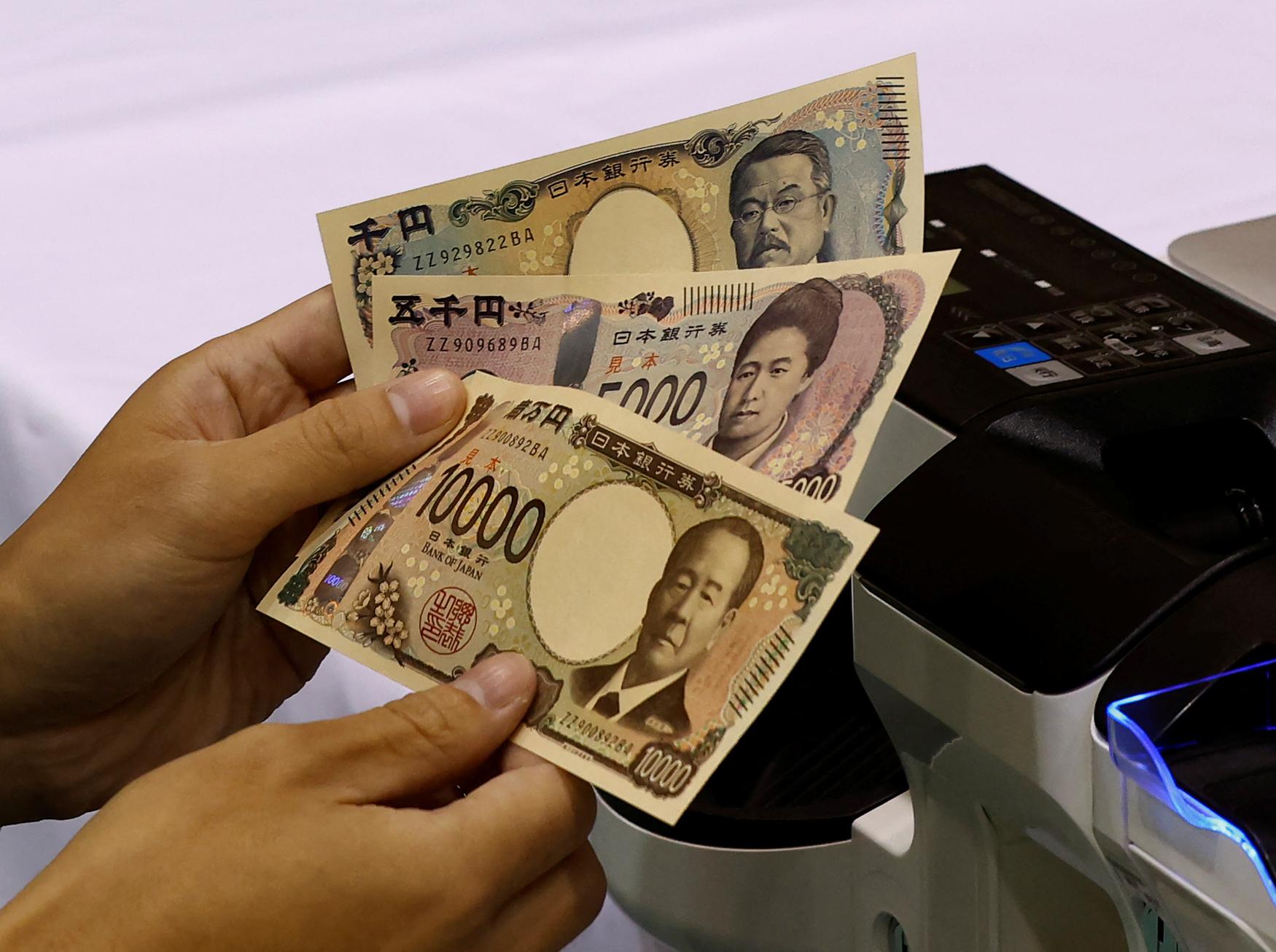
TOKYO, June 27 (Reuters) - Japanese authorities are facing renewed pressure to combat sharp declines in the yen, as traders drive down the currency on expectations the interest rate differentials between Japan and the United States will remain wide. Below are details on how yen-buying intervention works: LAST CONFIRMED YEN-BUYING INTERVENTION? Tokyo spent 9.8 trillion yen ($61 billion) intervening in the foreign exchange market in end-April and early May, after the Japanese currency hit a 34-year low of 160.245 per dollar on April 29. The move helped keep the yen from falling below the psychologically important 160 mark until Wednesday, when it sank to a nearly 38-year low of 160.82 as traders renewed their focus on the U.S.-Japan interest rate gap. WHY STEP IN? Yen-buying intervention had been rare. More often, the Ministry of Finance has sold yen to prevent its rise from hurting the export-reliant economy by making Japanese goods less competitive overseas. But yen weakness is now seen as problematic, with Japanese firms having shifted production overseas and the economy heavily reliant on imports for goods ranging from fuel and raw materials to machinery parts. WHAT HAPPENS FIRST? When Japanese authorities escalate their verbal warnings to say they "stand ready to act decisively" against speculative moves, that is a sign intervention may be imminent. Rate checking by the Bank of Japan - when central bank officials call dealers and ask for buying or selling rates for the yen - is seen by traders as a possible precursor to intervention. WHAT HAPPENED SO FAR? Japan's top currency diplomat Masato Kanda said on Wednesday authorities were "seriously concerned and on high alert" about the yen's decline, which he described as driven by speculators. He also said Tokyo was "preparing to act" against excessive volatility, signaling readiness for another intervention. The jawboning has failed to reverse the weak-yen tide with the Japanese currency hovering at 160.68 to the dollar in Asia on Thursday. The yen has also fallen sharply against other currencies such as the euro. CHANCE OF INTERVENTION? Authorities say they look at the speed of yen falls, rather than levels, and whether the moves are driven by speculators, to determine whether to step into the currency market. The yen's fast-pitch decline below the key 160-to-the-dollar level is heightening market alarm over the chance of imminent yen-buying intervention. "At this point, authorities are probably starting to worry not just about the speed but the level," Masafumi Yamamoto, chief currency strategist at Mizuho Securities, said in a research note. "Unless they intervene, there's a risk the yen will slide toward 162." WHAT'S THE TRIGGER? The decision is highly political. When public anger over the weak yen and a subsequent rise in the cost of living is high, that puts pressure on the administration to respond. This was the case when Tokyo intervened in 2022. Prime Minister Fumio Kishida may feel the need to prevent further yen falls from pushing up the cost of living with his approval ratings faltering ahead of a ruling party leadership race in September. But the decision would not be easy. Intervention is costly and could easily fail, given that even a large burst of yen buying would pale next to the $7.5 trillion that change hands daily in the foreign exchange market. HOW WOULD IT WORK? When Japan intervenes to stem yen rises, the Ministry of Finance issues short-term bills, raising yen it then sells to weaken the Japanese currency. To support the yen, however, the authorities must tap Japan's foreign reserves for dollars to sell for yen. In either case, the finance minister issues the order to intervene and the BOJ executes the order as the ministry's agent. CHALLENGES? Japanese authorities consider it important to seek the support of Group of Seven (G7) partners, notably the United States, if intervention involves the dollar. Finance leaders of the G7 advanced nations last month reaffirmed their commitment to warn against excessively volatile currency moves, language Japan sees as a green light to intervene in the market. Earlier this month, the U.S. Treasury added Japan to a foreign exchange "monitoring list" in its semi-annual currency report. While the step did not take into account Tokyo's latest intervention, it said "Treasury's expectation is that in large, freely traded exchange markets, intervention should be reserved only for very exceptional circumstances with appropriate prior consultations." There is no guarantee intervention will effectively shift the weak-yen tide, which is driven largely by expectations of prolonged low interest rates in Japan. The BOJ has been dropping signals its quantitative tightening (QT) plan in July could be bigger than markets think, and may even be accompanied by a rate hike. But the hawkish hints have failed to give the yen much boost, as any increase in the BOJ's current near-zero short-term policy target will still keep Japan's borrowing costs very low. ($1 = 160.6500 yen) Sign up here. https://www.reuters.com/markets/currencies/what-would-japanese-intervention-boost-weak-yen-look-like-2024-03-28/
2024-03-28 06:48
To run off some loans to high-emitting sectors First merger of two large banks in the net-zero era Will grow shipping loans; to assess CS products in 2024 LONDON, March 28 (Reuters) - UBS will look to increase lending to the shipping sector and run off some loans to fossil fuel clients inherited from Credit Suisse, executives told Reuters, in the biggest test yet of the impact of a mega-merger on banks' sustainability commitments. The shotgun marriage of Switzerland's two biggest lenders last year kick-started a complex integration process including weaving together the pair's variety of environmental, social and governance-related products, pledges and targets. Like many lenders, both had committed to reaching net-zero carbon emissions by mid-century as part of efforts to cap global warming, yet their plans for getting there were often quite different. From basic differences in defining 'sustainable finance' to assessing client net-zero plans - unheard of in the big bank mergers of the global financial crisis - the process was complex, said Chief Sustainability Officer Michael Baldinger. "It was the first time to align two major sustainability frameworks, methodologies and programmes together, with all the recalibration, re-baselining, re-analysing everything...it was quite an effort for us." As well as revising and expanding the combined group's sustainability and climate risk policy framework, which will govern all financing decisions, the group had to decide what to do with billions of dollars in legacy loans. While UBS long ago decided to focus on wealth management, a business that doesn't tie up a lot of capital, Credit Suisse was a major investment banking lender to climate-damaging sectors including energy, shipping and steel. The combined balance sheet of more than $1.6 trillion, nearly twice the size of the Swiss economy, has drawn warnings from regulators about the risk to the country, adding to scrutiny over how UBS plans to manage its lending practices. In the event, "every single deal" was discussed, Baldinger said, and loans in sectors that do not align with the bank's sustainability risk appetite, such as oil and gas companies with no transition plan, will be housed in a "non-core" unit and allowed to run off over time. As a result, and despite re-basing its emissions-reduction targets from 2021 rather than 2020, the bank said its plan to reduce fossil fuel sector emissions was broadly unchanged, aiming for a cut of 72% by 2030, from a previous target of 70%. UBS is also betting on shipping becoming cleaner and it plans to keep shipping-linked loans inherited from Credit Suisse. "There's so much innovation going on...do we want to grow over time a clean shipping business? Absolutely," said Baldinger. UBS also updated emissions reduction targets for real estate, power generation and cement and added a target for iron and steel for the first time, at 27%, below the 32% set by Credit Suisse. Christian Leitz, UBS' head of corporate responsibility, said one major task this year will involve assessing all of Credit Suisse's sustainable investing products to ensure they are in keeping with the new framework. "We have to go through each individual product. Whatever is on the shelf that Credit Suisse may have called sustainable, we go through." The Reuters Daily Briefing newsletter provides all the news you need to start your day. Sign up here. https://www.reuters.com/sustainability/sustainable-finance-reporting/ubs-looks-keep-grow-shipping-loans-post-merger-green-overhaul-2024-03-28/
2024-03-28 06:42
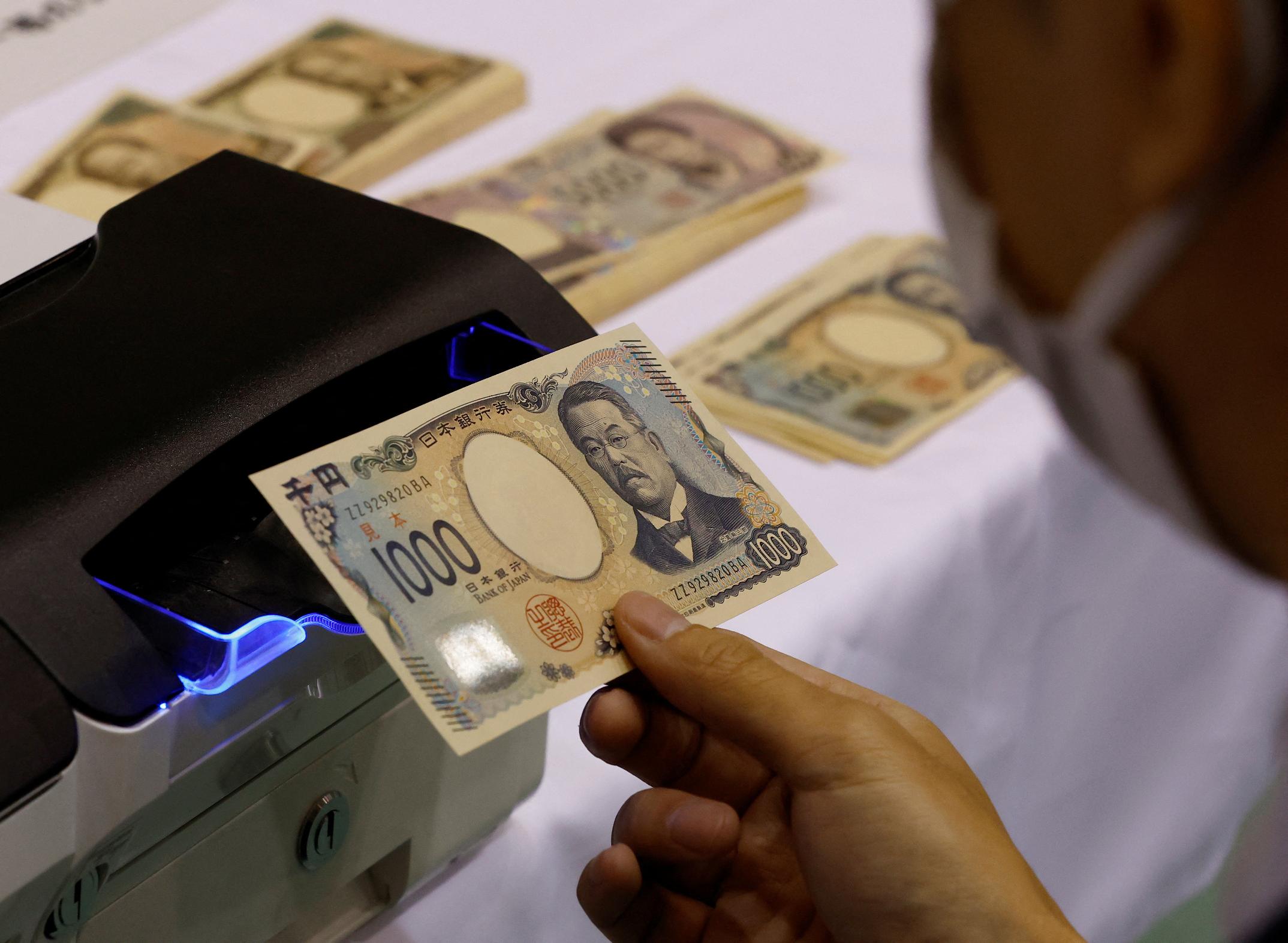
Tokyo will respond vs excessive moves, says PM Kishida Kishida says important for FX moves to reflect fundamentals Expectations of slow BOJ rate hike to weigh on yen, analyst says TOKYO, March 28 (Reuters) - Japanese Prime Minister Fumio Kishida said on Thursday the government will not rule out any options in addressing excessive moves in the currency market, stressing Tokyo's resolve to step into the market if it sees the yen's fall as overdone. "It's important for currency rates to move stably reflecting economic fundamentals," Kishida told a news conference, when asked about the yen's recent slide to three-decade lows. "We will monitor currency moves with a high sense of urgency, and respond appropriately without ruling out any options to deal with excessive currency moves," he said. His remarks echoed those by Japan's top currency diplomat Masato Kanda on Wednesday, when the yen hit a 34-year low against the dollar on expectations the Bank of Japan will go slow in raising interest rates, thereby maintaining the huge gap between Japanese and U.S. rates. On Wednesday the dollar briefly hit 151.975 yen , exceeding the 151.94 level at which Japanese authorities stepped in during October 2022 to buy the currency. On Thursday it lost some ground to stand at 151.370 yen. The yen's sharp declines come despite the BOJ's decision last week to end eight years of negative interest rates, as traders focused more on its dovish message suggesting that another rate hike will be some time off. Upon ending negative rates, many BOJ policymakers saw the need to go slow in phasing out ultra-loose monetary policy, a summary of opinions at last week's meeting showed on Thursday. "With the yen weakening to a fresh 34-year low against the dollar, the Ministry of Finance signalled that an intervention in the foreign exchange markets is imminent," said Marcel Thieliant, head of Asia-Pacific at Capital Economics. "However, the yen will certainly not get much support from Japan's monetary policymakers as inflation is more likely to undershoot than to overshoot the Bank of Japan's forecasts." Data due out on Friday is likely to show annual core inflation in Japan's capital, which is considered a leading indicator of nationwide trends, slowed to 2.4% in March after a 2.5% gain in February, according to a Reuters poll. Japanese policymakers have historically favoured a weak yen as it helps boost profits at the country's big manufacturers. But the yen's sharp declines have recently added to headaches for Tokyo by inflating the cost of raw material imports, hurting consumption and retail profits. Keep up with the latest medical breakthroughs and healthcare trends with the Reuters Health Rounds newsletter. Sign up here. https://www.reuters.com/markets/currencies/japan-wont-rule-out-any-options-currency-moves-says-government-spokesman-2024-03-28/
2024-03-28 06:31
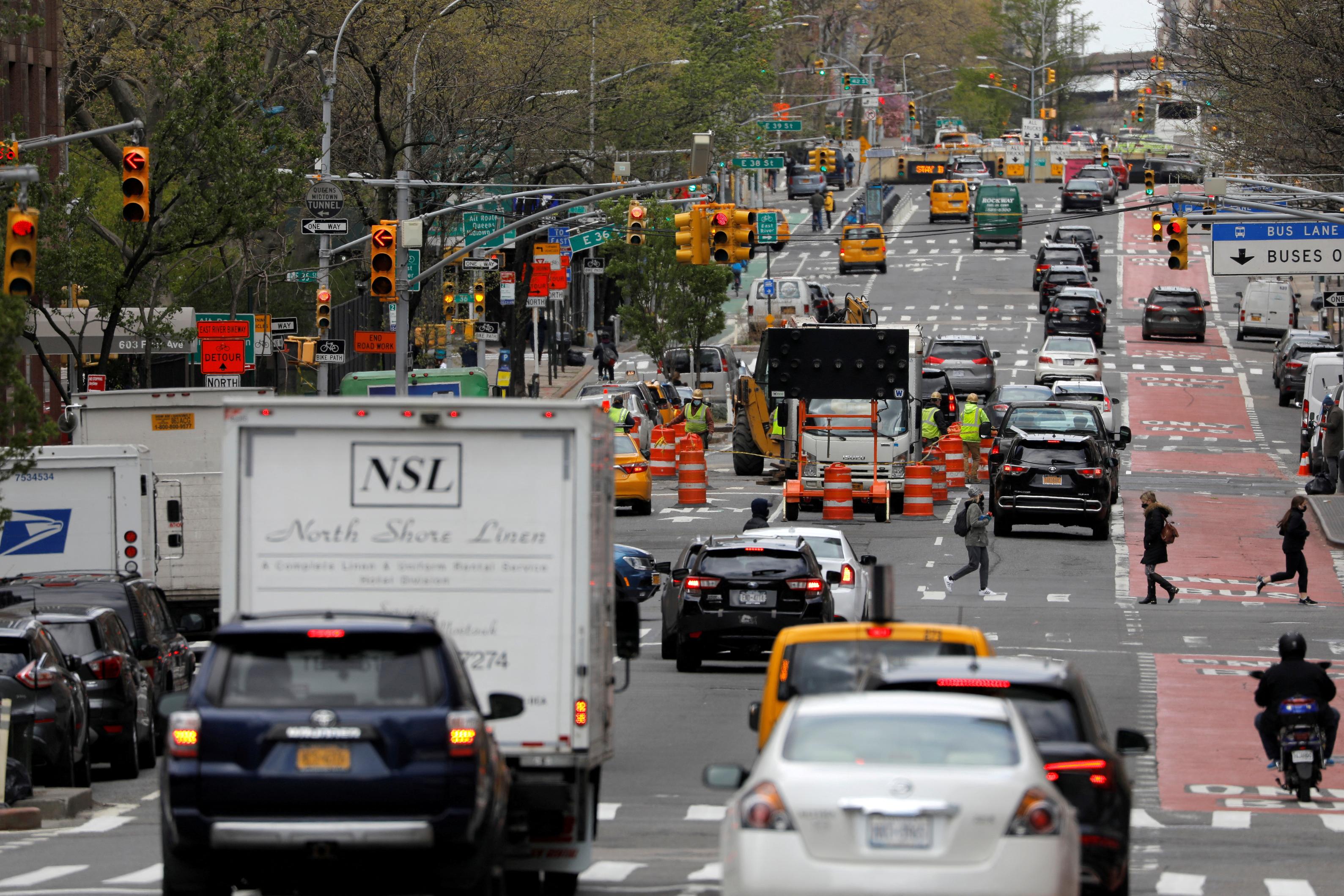
NEW YORK, March 27 (Reuters) - The Metropolitan Transportation Authority (MTA) board voted on Wednesday to approve the toll rates for Manhattan's congestion pricing program, the first of its kind in the United States. Under the plan, New York City will charge a daily toll of $15 during the day for passenger vehicles driving in Manhattan south of 60th Street starting in mid-June. It will charge up to $36 for larger trucks and buses. The plan still faces a number of legal challenges including from the state of New Jersey. "This program will reduce traffic in Manhattan's central business district, reduce pollution, and provide critical funding for transit improvements," the MTA said. New York says more than 900,000 vehicles enter the Manhattan Central Business District daily, reducing travel speeds to around 7 miles an hour (11 kph) on average. New York City, which has the most congested traffic of any U.S. city, is set to follow London, which implemented a similar charge in 2003. New York said the charge would cut traffic by 17% and improve air quality and increase transit use by 1% to 2%, as well as generate $1 billion to $1.5 billion a year and support $15 billion in debt financing for mass transit improvement. Passenger vehicle drivers who enter at night will pay $3.75 and motorcycle riders will pay up to $7.50 to enter the area, the MTA said. Drivers will only be charged once per day. Taxi users will pay a $1.25 surcharge, while Uber (UBER.N) , opens new tab and Lyft (LYFT.O) , opens new tab users will pay $2.50 per trip in the congestion zone. Those fees are in addition to New York's $2.50 congestion charge for taxis and $2.75 for for-hire vehicles in place since 2019. Vehicle owners whose adjusted gross annual income is no more than $50,000 or received low-income benefit may qualify for 50% discounts for some trips or for New York state tax credits under the plan. Get weekly news and analysis on the U.S. elections and how it matters to the world with the newsletter On the Campaign Trail. Sign up here. https://www.reuters.com/world/us/transportation-authority-approves-new-yorks-congestion-pricing-plan-2024-03-27/
2024-03-28 06:27
NEW YORK/LONDON, March 28 (Reuters) - A gauge of global share markets was barely changed on Thursday as it was poised to end the quarter with solid gains, while a strong dollar kept the yen near its weakest in decades amid the threat of intervention from Japanese authorities. Wall Street's main stock indexes finished the session with minimal changes as markets broadly were largely rangebound ahead of Friday's much-anticipated U.S. personal consumption expenditures (PCE) price index data, a closely watched inflation measure. Few markets will be open to assess and respond to the fresh data, however, given the long Easter weekend in many countries. “People are probably a little cautious about positioning ahead of PCE,” said Sameer Samana, senior global market strategist at the Wells Fargo Investment Institute. “For a lot of people today will be the last day of the week, they are probably squaring positions for the quarter, for the month.” Heightened focus was on the yen , which last weakened 0.05% against the greenback at 151.38 per dollar, having slid to a 34-year low of 151.975 in the previous session. Japan's three main monetary authorities held an emergency meeting on Wednesday to discuss the weak yen, and suggested they were ready to intervene in the market to stop what they described as disorderly and speculative moves in the currency. "Once dollar/yen touches 152, I think there will probably be a sharp move upward, and that's when intervention could take place," said Takeshi Ishida, a currency strategist at Resona Holdings. The dollar gained on the euro after a U.S. Federal Reserve policymaker said he wasn't in a hurry to cut rates. Fed Governor Christopher Waller said on Wednesday that recent disappointing inflation data affirms the case for the central bank to hold off on cutting its short-term interest rate target, but he did not rule out trimming rates later in the year. The dollar index gained 0.12% at 104.55, with the euro down 0.37% at $1.0786. MSCI's gauge of stocks across the globe (.MIWD00000PUS) , opens new tab fell 0.01 points, or basically no change, to 782.93. The index was set to post a gain of over 7% for the first quarter. On Wall Street, the Dow Jones Industrial Average (.DJI) , opens new tab rose 47.29 points, or 0.12%, to 39,807.37, the S&P 500 (.SPX) , opens new tab gained 5.86 points, or 0.11%, to 5,254.35 and the Nasdaq Composite (.IXIC) , opens new tab lost 20.06 points, or 0.12%, to 16,379.46. Data on Thursday showed the U.S. economy grew faster than previously estimated in the fourth quarter, lifted by strong consumer spending and business investment in nonresidential structures like factories. Gross domestic product increased at a 3.4% annualized rate last quarter, revised up from the previously reported 3.2% pace. U.S. Treasury yields were slightly firmer on the day ahead of the inflation data. The yield on benchmark U.S. 10-year notes rose to 4.206%, from 4.196% late on Wednesday. Oil prices rose, closing out the month higher on the prospect of OPEC+ staying the course on production cuts, ongoing attacks on Russia's energy infrastructure and a falling U.S. rig count tightening crude supplies. U.S. crude gained 2.04% to $83.01 a barrel and Brent rose to $87.5 per barrel, up 1.64% on the day. Get a look at the day ahead in U.S. and global markets with the Morning Bid U.S. newsletter. Sign up here. https://www.reuters.com/markets/global-markets-wrapup-1-2024-03-28/

2024-03-28 06:13
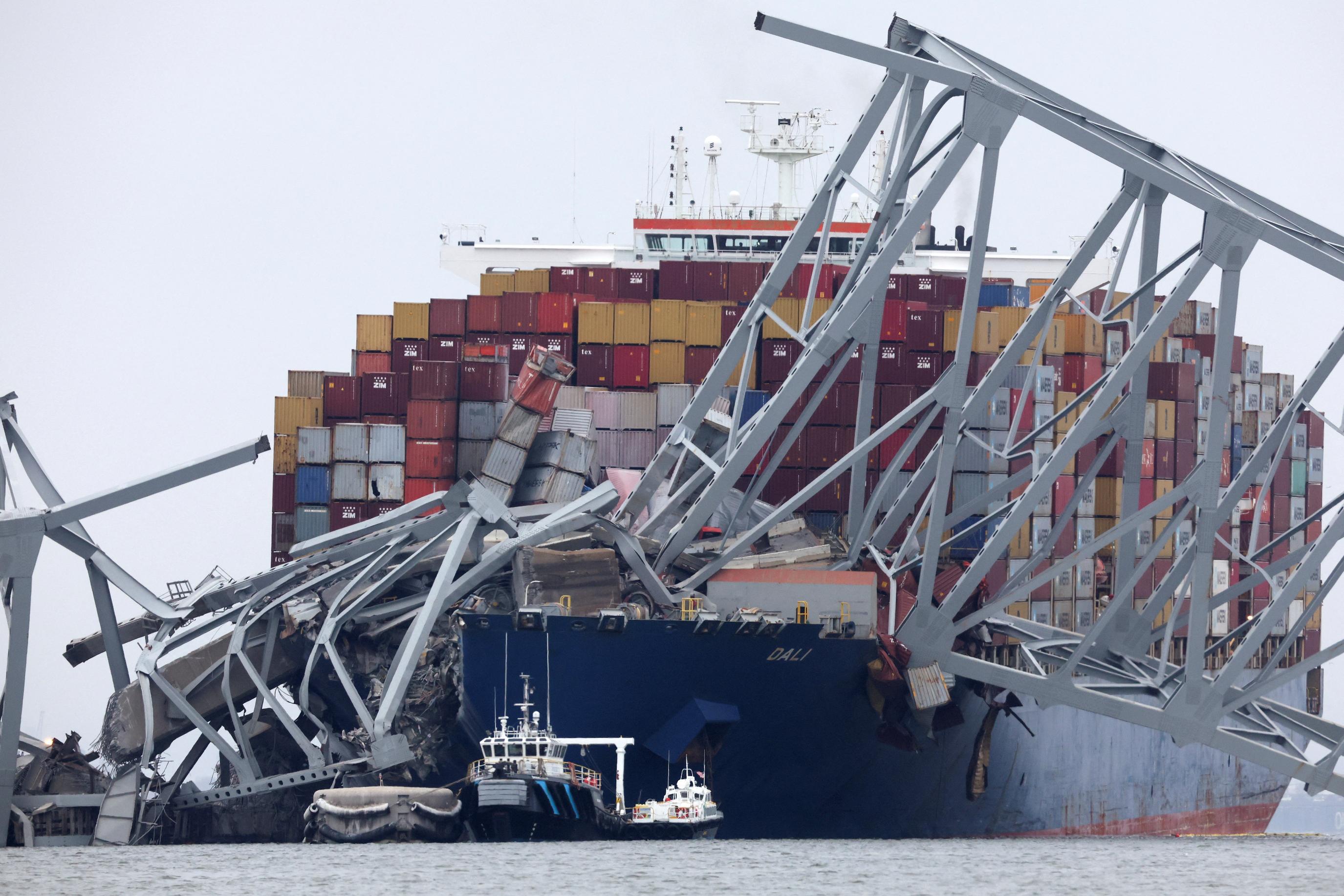
Claims could total up to $4 bln, record for shipping disaster Insurance lines affected include property, marine, liability International Group of P&I marine insurers have reinsurance cover of $3.1 bln AXA lead reinsurer on first layer of IG reinsurance cover-Insurance Information Institute LONDON, March 27 (Reuters) - Baltimore's Francis Scott Key Bridge collapse could cost insurers billions of dollars in claims, analysts say, with one putting it at as much as $4 billion, which would make the tragedy a record shipping insurance loss. Six people are still missing after a collision with a Singapore-flagged container ship destroyed the landmark bridge on Tuesday, forcing the closure of one of the busiest U.S. ports. With little clarity on when the Port of Baltimore would re-open, insurers and analysts are now assessing the likely losses borne by underwriters across several product lines including property, cargo, marine, liability, trade credit and contingent business interruption. "Depending on the length of the blockage and the nature of the business interruption coverage for the Port of Baltimore, insured losses could total between $2 billion and $4 billion," said Marcos Alvarez, managing director for global insurance ratings at Morningstar DBRS. That would surpass the record insured losses of the Costa Concordia luxury cruise liner disaster in 2012, he said. Mathilde Jakobsen, senior director, analytics at insurance ratings agency AM Best, also said the claims would likely run into "billions of dollars". Ship liability insurance, which covers marine environmental damage and injury, is provided through protection and indemnity insurers known as P&I Clubs. The International Group of P&I Clubs collectively insures approximately 90% of the world's ocean-going tonnage and member P&I clubs mutually reinsure each other by sharing claims above $10 million. The IG Group declined to comment. According to AM Best, the group holds general excess of loss reinsurance cover up to the value of $3.1 billion. SPREADING THE COST Moody's Ratings analyst Brandan Holmes said approximately 80 different reinsurers provided that cover to the ship's insurers. "While the total claim is expected to be high, it is unlikely to be significant for individual reinsurers since it will be spread across so many," he said. Insurer Britannia P&I said in a statement that vessel, named the Dali, was entered with the club, adding that it was working closely with the ship manager and relevant authorities "to establish the facts and to help ensure that this situation is dealt with quickly and professionally". Loretta Worters, spokesperson at the Insurance Information Institute, said AXA XL (AXAF.PA) , opens new tab was the lead reinsurer on the first layer of cover for IG's reinsurance programme, with other global reinsurers also involved. AXA XL did not immediately respond to request for comment. Alvarez said the disaster would likely put upward pressure on marine insurance rates globally. Worters added she believed Aon (AON.N) , opens new tab was the insurance broker for the property policy for the bridge. Insurance Insider reported that Chubb (CB.BN) , opens new tab was the lead underwriter for the policy. Aon and Chubb declined to comment. Initial estimates of the cost of rebuilding the bridge, which is likely to be paid by the federal government, are at $600 million, economic software analysis company IMPLAN said. The closure of the port for just one month could see a total loss of $28 million for the state of Maryland, according to IMPLAN analysis. "The economic disruption and pain felt by businesses and individuals in Maryland and the Baltimore economic area will be widespread and likely take years to fully comprehend and compensate those affected," said Julien Horn, partner, Ports & Terminals and Logistics, at insurance broker McGill and Partners. The Reuters Daily Briefing newsletter provides all the news you need to start your day. Sign up here. https://www.reuters.com/business/insurers-brace-multi-billion-dollar-losses-after-baltimore-ship-tragedy-2024-03-27/