2024-03-28 06:11
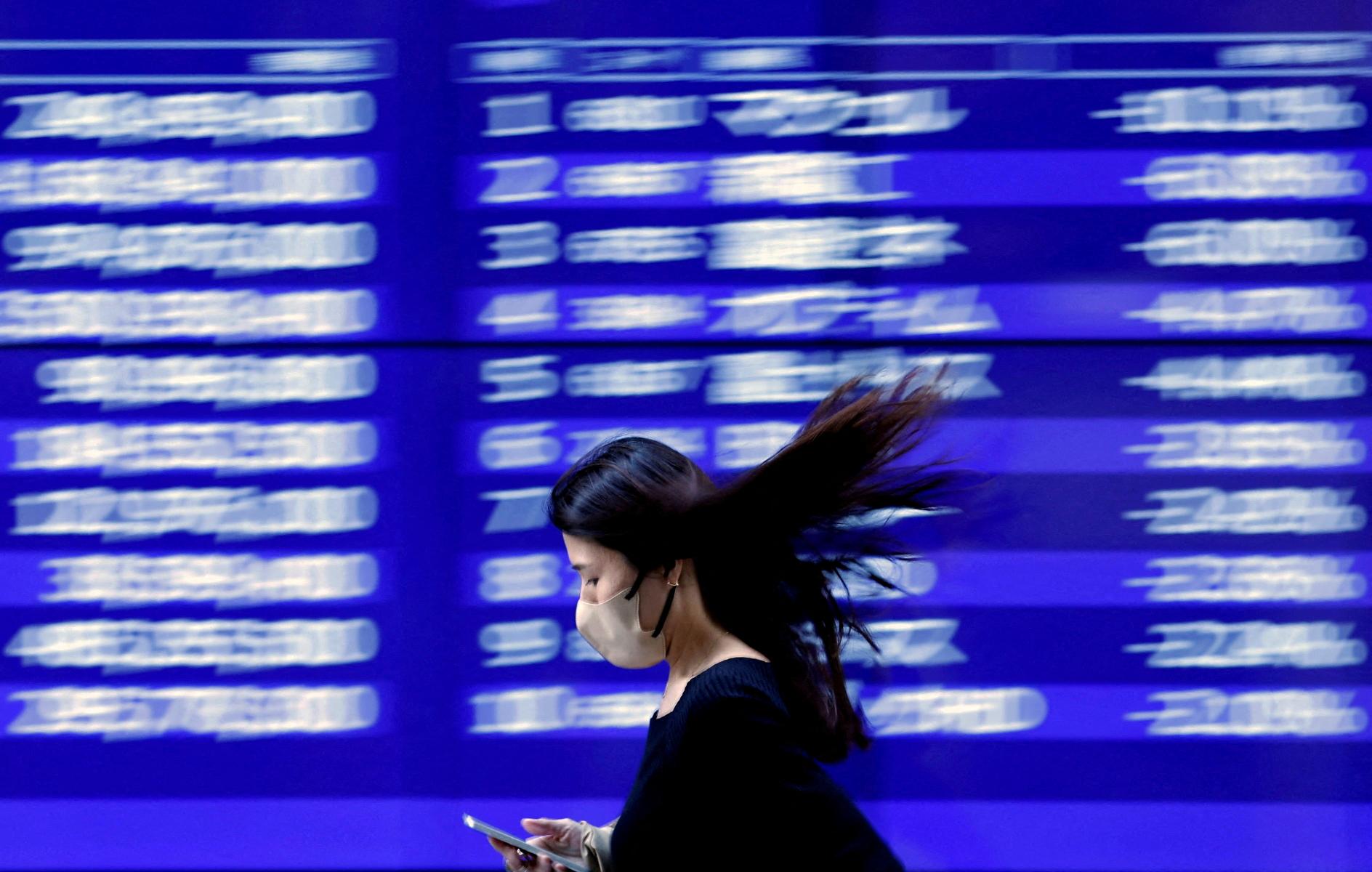
LONDON, March 28 (Reuters) - Global bond and equity markets are ending the first quarter on a high note, with investors poised for more wild swings ahead after months of the mood lurching between optimism and pessimism about prospective rate cuts from major central banks. MSCI's global share index (.MIWO00000PUS) , opens new tab, which smashed through record highs in March, is up 10% since mid January after traders dropped earlier bets for as many as seven U.S. rate cuts in 2024 but then chose to celebrate the idea of cuts starting in June. Switzerland last week kicked off an easing cycle among big, developed economies. And while traders almost fully expect the Federal Reserve to lower U.S. borrowing costs from 23-year highs in June and the European Central Bank to cut its deposit rate from 4% then too, caution could follow. Dennis Jose, head of equity strategy at Exane BNP Paribas, said central banks could lower borrowing costs in the summer but might then pause if economic growth improves -- raising the odds of further labour market tightness, wage growth and inflation. "I think it may be better to travel than arrive at that first rate cut," he said. EVERYTHING RALLY A global government bond index (.MERW0G1) , opens new tab posted its first monthly gain of 2024 in March as the quarter's rally became a buy-everything frenzy, sending Japanese stocks past their 1989 bubble-era high and powering stunning gains for emerging market debt. Wall Street's S&P 500 index (.SPX) , opens new tab and Europe's STOXX 600 index (.STOXX) , opens new tab are near record levels. Of major markets, only China was left out of the party as its once-roaring industrial growth engine continued to sputter. But it was really those high-yielding emerging market international bonds that enjoyed some stellar rises - as idiosyncratic reasons for optimism were magnified by U.S. rate cut hopes. Argentina's international bonds returned more than 25% in the first quarter, fired up by hopes over the radical reform agenda of chainsaw-wielding new President Javier Milei. Pakistan matched those gains when a new government emerged from delayed, inconclusive elections, now setting out to secure a fresh multi-billion IMF deal. Returns for embattled Ukraine also surpassed 25% while Egyptian debt benefited from capturing billions of dollars from Abu Dhabi and a new IMF deal. "High-yield EM sovereigns have strongly outperformed since 4Q23, buoyed risk-seeking from Fed pivot, easing of external financing conditions, and IMF and GCC financing support has been on the rise as China’s financing have stabilized," said Citi strategist Johann Chua. In commodity markets, a supply shortage has pushed cocoa futures to record highs, and in currencies the paring back of Fed rate cut bets has left the dollar sailing high again. The dollar index, which measures the greenback's value against other major currencies, ends the quarter up almost 3% . Its strength has created more pain for both major and developing economies, with markets alert to Japanese intervention to bolster a yen trading near 34-year lows . MIXED SIGNALS With investors now banking on a so-called "no landing" scenario of rate cuts without recessions, some analysts warned about the fallout from conflicting economic signals. "This is a weird (economic) cycle where nothing is quite what it seems and you've got all these conflicting signals right now," said Andrew Pease, global head of investment strategy at Russell Investments. "This is not the sort of environment where you want to sit back and buy in to the prevailing optimism." So, even as markets bet on rate cuts, purchasing managers' surveys show U.S , opens new tab. and euro zone business activity picking up. Brent crude oil is up 13% over the quarter, after the International Monetary Fund raised its global growth forecast in January and the International Energy Agency hiked its oil demand outlook in March. Zurich Insurance Group's chief market strategist Guy Miller said that while markets embraced the idea of better economic growth supporting companies' earnings, recession risks should not be forgotten. "There is still a risk of recession in the U.S. and that shouldn't be underestimated. And therefore as an investor, you have be clear on what is driving markets and what, if any, risks are being priced in." A Deutsche Bank survey of 250 investors this month found that almost half expected no U.S. recession and inflation to still be above the Fed's average 2% goal by end-2024. More than half of those investors surveyed believed the S&P 500, which influences the direction of stocks worldwide, was more likely to fall by 10% than to rise by that amount. "It would be a very different situation (to now) if inflation surprises to the upside and rate cuts have once again to be pushed further and further out. Financial markets would suffer," Zurich's Miller said. Get a look at the day ahead in U.S. and global markets with the Morning Bid U.S. newsletter. Sign up here. https://www.reuters.com/markets/global-markets-q1-pix-graphics-2024-03-28/
2024-03-28 05:56
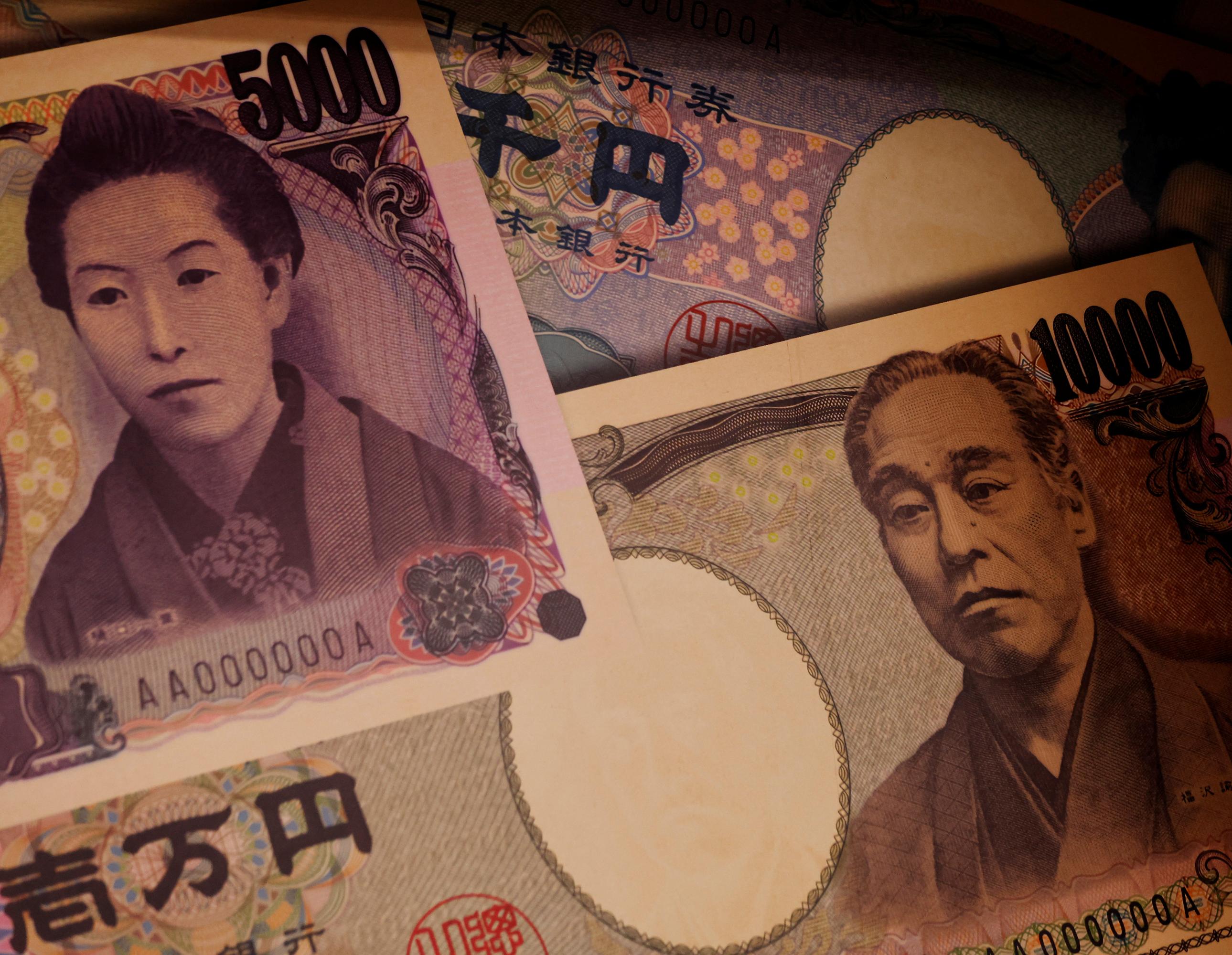
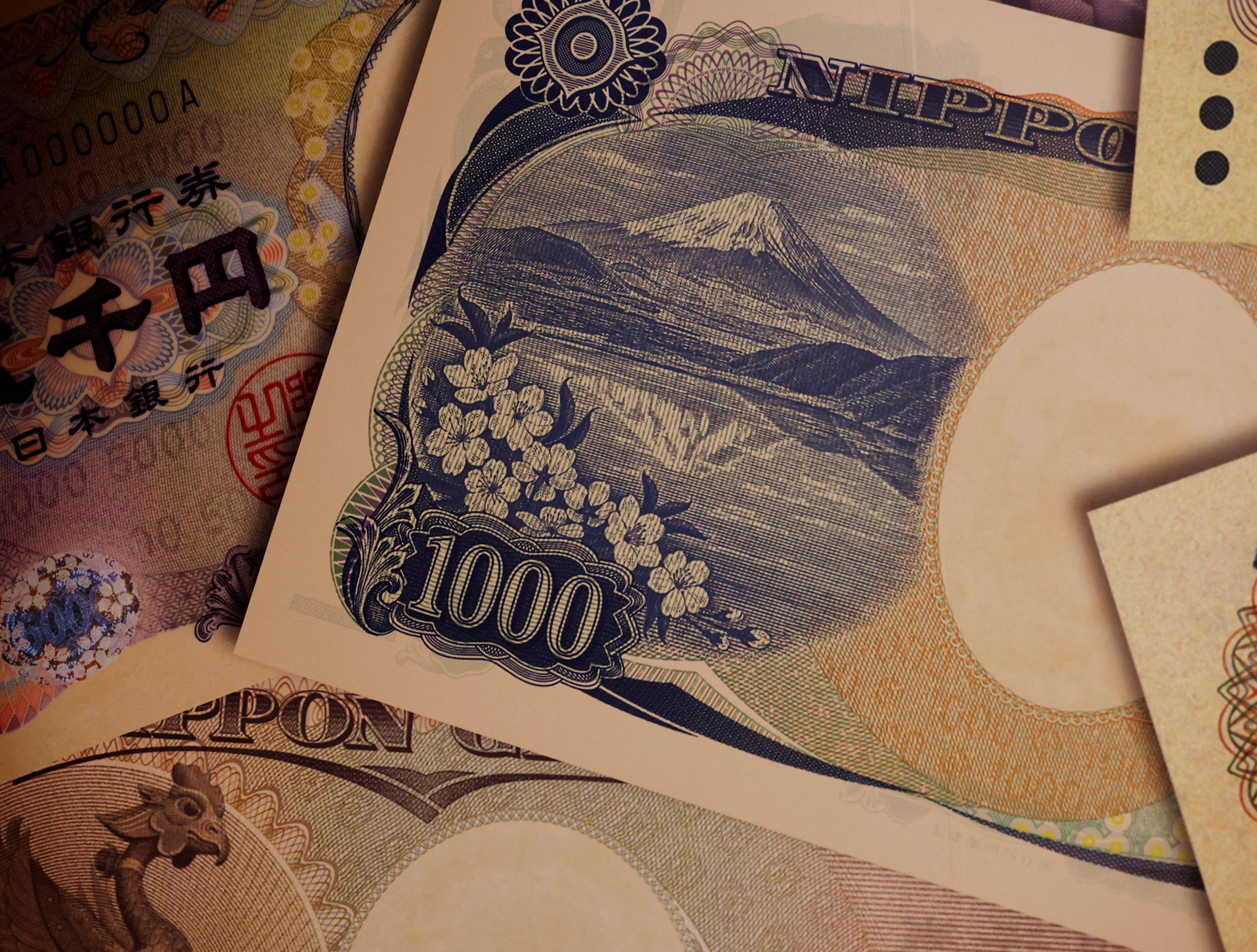
TOKYO, April 29 (Reuters) - Japan's yen strengthened sharply on Monday in a move market participants said pointed to yen-buying intervention from Japanese authorities to stabilise the sliding currency. After trading at its weakest level in 34 years at 160.245 per dollar in the Asian morning, the yen jumped from around 159.5 per dollar to 155.2 over an hour of one-way trade. The cause of the move was not immediately clear. Some traders cited yen buying by Japanese banks. Japan last intervened in October 2022 as the yen plumbed lows near 152 per dollar. It was then estimated to have spent as much as 9.2 trillion yen ($60.78 billion) defending the currency. Here is a timeline of moves in foreign exchange markets by the Bank of Japan (BOJ). March 27, 2024 - Bank of Japan, the Finance Ministry and Japan's Financial Services Agency held a meeting after the yen fell to a 34-year low against the dollar, and suggested they were ready to intervene. Oct. 21-24, 2022 - The dollar plunged more than 7 yen at one point on Oct. 21 in a decline sources attributed to authorities' yen buying. Japanese Finance Minister Shunichi Suzuki declined to confirm whether the government had intervened in the currency market. Sept. 7, 2022 - Top government spokesman Hirokazu Matsuno expresses concern about "rapid, one-sided" moves seen in the currency market after the yen weakens beyond 143 per dollar. June 10, 2022 - Japan's government and central bank issue a rare joint statement saying they are concerned by recent sharp falls in the yen after it weakens beyond 134 per dollar. Aug and Oct, 2011 - Japan intervenes to curb gains that officials fear could derail recovery from an economic slump triggered by a massive earthquake and tsunami on March 11, 2011. March 18, 2011 - Group of Seven (G7) nations jointly intervene to stem yen strength when the currency spikes to a record high in the aftermath of the earthquake. Sept. 15, 2010 - Japan intervenes in the currency market for the first time in six years, selling yen to stem a rise in the currency after the dollar hits a 15-year-low at 82.87 yen. March 2004 - A 15-month campaign to curb the yen's rise comes to an end after Japan has spent 35 trillion yen, or more than $300 billion, on intervention. May-June, 2002 - The BOJ intervenes to sell yen, often supported by the U.S. Federal Reserve and European Central Bank (ECB). The yen continues to gain. Sept 2001 - The BOJ intervenes to sell yen after the Sept. 11 attacks in the United States. The ECB and New York Fed operate on behalf of the BOJ. January 1999 to April 2000 - The BOJ sells yen at least 18 times, including once via the Fed and once via the ECB, due to worries the currency's strength will choke economic recovery. The yen continues to strengthen. 1997 - 1998 - The Asian financial crisis sees the yen weaken, reaching nearly 148 per dollar in August 1998, even after U.S. authorities join the BOJ to buy yen. April 1994 - August 1995 - The dollar sinks to a record low against the German mark and a post-war low against the yen. The United States intervenes repeatedly, often with Japanese and European central banks, to prop up the greenback. 1993 - The BOJ sells yen through much of the year to curb its strength. 1991 - 1992 - The BOJ intervenes to support the yen, selling U.S. dollars. 1988 - The dollar falls to 120.45 yen on Jan. 4, at that time a post World War Two low, in Tokyo trade. The BOJ intervenes to buy dollars and sell yen. 1987 - In February, six of the G7 nations sign the Louvre Accord, which aims to stabilise currencies and halt the dollar's broad decline. 1985 - The Group of Five industrial nations, the predecessor to the G7, sign the Plaza Accord, in which they agree that the dollar is overvalued and that they will move to weaken it. 1973 - Japanese monetary authorities decide to let the yen float freely against the greenback. ($1 = 151.3600 yen) Sign up here. https://www.reuters.com/markets/currencies/history-japans-intervention-currency-markets-2024-03-28/
2024-03-28 05:45
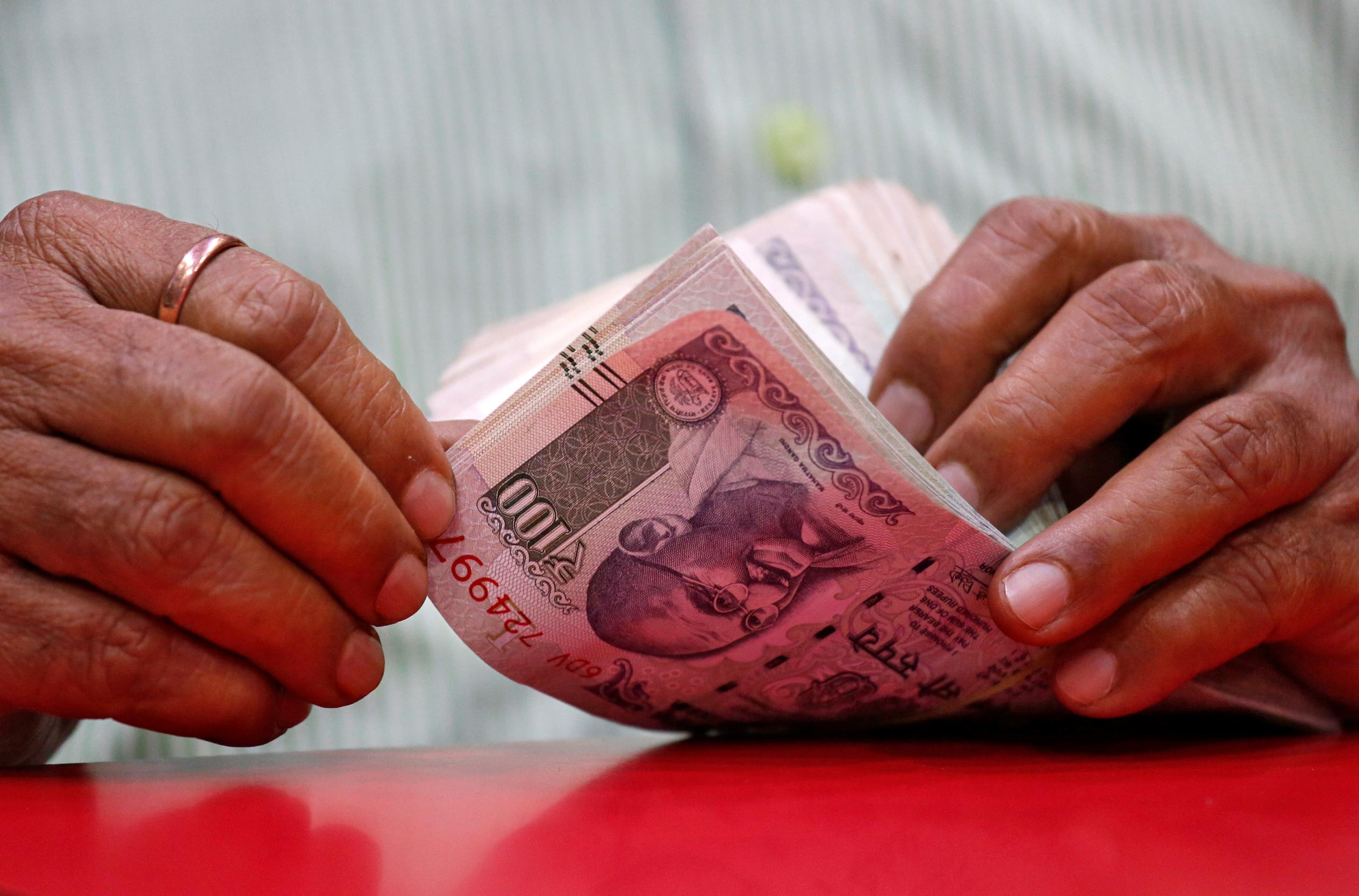
MUMBAI, March 28 (Reuters) - The Indian rupee was little changed on Thursday, paring early gains as dollar sales from state-run banks offset demand from local corporates and slight weakness in broader Asian peers. The rupee was at 83.3625 against the U.S. dollar as of 11:10 a.m. IST, compared to its previous close of 83.3725. It had opened at 83.3175. The local unit fell to a record low of 83.45 in the closing minutes of Wednesday's session but managed to recover on likely intervention from the Reserve Bank of India, traders said. State-run banks were "mildly" on offer early in the session on Thursday, four traders said. While dollar sales from state-run banks spurred speculation that the RBI might be intervening in the market, a senior FX trader at a private bank noted that it's hard to say for certain. "Banks may have their own activity to carry on as well given it's the end of the financial year," the trader added. Thursday is the last trading day of the current financial year, and currency markets will be closed on Friday and Monday. The dollar index was down slightly at 104.34, while most Asian currencies slipped with the Malaysian ringgit lower by nearly 0.3% and leading losses. The rupee is likely to hover between 83.25 and 83.45 during the day, said Arnob Biswas, head of foreign exchange research at SMC Global Securities. Meanwhile, the odds of a U.S. rate cut in June dipped to 64% from about 70% a day earlier, following remarks from Federal Reserve Governor Christopher Waller. Recent data "tells me that it is prudent to hold this rate at its current restrictive stance perhaps for longer than previously thought to help keep inflation on a sustainable trajectory toward 2%, Waller said on Wednesday. Keep up with the latest medical breakthroughs and healthcare trends with the Reuters Health Rounds newsletter. Sign up here. https://www.reuters.com/markets/currencies/rupee-little-changed-traders-cite-mild-dollar-sales-state-run-banks-2024-03-28/
2024-03-28 05:42
LAUNCESTON, Australia, March 28 (Reuters) - Asia's imports of crude oil are expected to rise to the highest in 10 months as heavyweights China and India lifted arrivals from Russia, but impending maintenance schedules and rising prices mean such levels may not be sustained. The world's top importing region is forecast to see arrivals of 27.48 million barrels per day (bpd) in March, up from 26.70 million bpd in February and January's 27.18 million bpd, according to data compiled by LSEG Oil Research. The bulk of oil arriving in March was arranged before the current increase in prices, which has seen Brent move from a six-month low in December to trade above $80 a barrel since early February. The rebound in imports is being driven by China, the world's biggest crude buyer, which is forecast to have arrivals of 11.75 million bpd in March, up from February's 11.16 million bpd and 10.44 million bpd in January. India is also chipping in to stronger demand, with imports expected to reach 4.93 million bpd, up from February's 4.55 million bpd and in line with January's 5.06 million bpd. China's imports have been boosted by refiners likely increasing throughput to build up inventories of fuel ahead of the maintenance season that normally runs from late March through to early June. As much of 800,000 bpd of refining capacity is likely to be offline at some point during this time, according to LSEG data. This raises the possibility that China's crude imports may moderate during the maintenance season, but much will depend on whether the tentative signs of economic recovery in the world's second-biggest economy continue to appear and accelerate. It's also worth noting that China's strong crude imports in the first quarter would have been secured at a time when global oil prices were below the current levels. Cargoes arriving in the first quarter would have largely been arranged in the fourth quarter of last year. Benchmark Brent futures dropped to $72.29 a barrel on Dec. 13, the lowest since June, having been on a downward trend since the 2023 peak of $97.06, reached on Sept. 27. Since the December trough, Brent has shifted higher, closing at $86.09 a barrel on Wednesday. It's possible that China's refiners may ease back on imports given the higher prices of recent weeks, turning toward their ample inventories, which they continued to add to in the first two months of 2024, with available crude exceeding refinery throughput by 570,000 bpd. Chinese refiners have also continued to favour Russian crude, with seaborne and pipeline arrivals expected at 2.44 million bpd in March, up from 2.19 million bpd. Imports from Saudi Arabia likely remained steady at 1.60 million bpd in March. INDIA IMPORTS India also kept imports of Russian crude elevated, with arrivals of 1.50 million bpd estimated for March, an eight-month high and up from February's 1.36 million bpd. Russian flows to India have been boosted by increased availability of crude for export in the wake of Ukrainian drone attacks on Russian refineries. However, there is a question mark over the outlook for coming months as some Indian refiners have stopped accepting cargoes transported by Russia's state-owned Sovcomflot in order to comply with new U.S. sanctions against Moscow. It's likely that India will import from U.S. crude if arrivals from Russia are cut by renewed sanctions, as U.S. oil is still cheaper than Middle East grades even allowing for higher freight costs. Asia's refiners are struggling with falling margins as higher crude prices aren't matched by rising prices for refined fuels. The profit for processing a barrel of Dubai crude at a typical Singapore refinery dropped to $5.43 a barrel on Wednesday, and it has been trending weaker since the high so far in 2024 of $9.91 on Feb. 13. The squeeze on margins means refiners will seek cheaper crudes, such as those priced against Brent or U.S. West Texas Intermediate, as opposed to those linked to more expensive Middle East grades. The opinions expressed here are those of the author, a columnist for Reuters. Get a look at the day ahead in U.S. and global markets with the Morning Bid U.S. newsletter. Sign up here. https://www.reuters.com/markets/commodities/asia-crude-imports-surge-china-india-snap-up-russian-oil-russell-2024-03-28/

2024-03-28 05:39
March 28 (Reuters) - Bank of England (BoE) interest-rate setter Jonathan Haskel said that rate cuts should be "a long way off," the Financial Times reported on Thursday, a week after the policymaker ditched earlier calls for higher rates and voted to hold rates. “Although the fall in headline inflation is very good news, it is not informative about what we really care about: what we really care about is the persistent and the underlying inflation” Haskel told the FT. “I think cuts are a long way off.” Governor Andrew Bailey said last week that Britain's economy was moving towards the point where the Bank of England can start cutting interest rates, after the central bank kept its benchmark rate at 5.25%, its highest level since 2008. Bailey had said there had been "further encouraging signs that inflation is coming down," but he also said the BoE needed more certainty that price pressures were fully under control. Haskel was joined by policymaker Catherine Mann in voting in favour of no change to rates from an earlier assessment to raise rates. Swati Dhingra again cast the lone vote for a cut. Haskel told the FT that he was trying to find out what the underlying, persistent measures in inflation are. "I just don’t think the headline figures give a good guide to the persistence.” The Reuters Daily Briefing newsletter provides all the news you need to start your day. Sign up here. https://www.reuters.com/markets/rates-bonds/boes-haskel-says-rate-cuts-are-long-way-off-ft-reports-2024-03-28/

2024-03-28 05:34
A look at the day ahead in European and global markets from Vidya Ranganathan. It's another day of nail-biting for currency traders as the will-they-won't-they debate swirls on Japan's yen-buying intervention. Friday's holiday in most of the world, barring Japan, China and some parts of U.S. markets, makes them all the more nervous. The currency's brief slide on Wednesday to a 34-year low near 152 per dollar triggered an emergency meeting of Japan's three main monetary authorities, which market participants interpreted as imminent direct intervention to stop what those authorities consider speculative currency trading. The dollar has pulled back to a 151.30-151.50 yen range, a move that will extend if hedge funds and speculators start covering their substantial short yen positions. Meanwhile, Chinese authorities are trying to mitigate the fallout of yen weakness on the yuan , which hit a four-month low last week. In Europe, the data calendar is unexciting: UK final fourth-quarter GDP data and German employment numbers. Britain's GDP shrank 0.3% in the final quarter of 2023 and 0.1% in the quarter before, meeting the definition of a technical recession widely used in Europe. The economy returned to growth in January. In Germany, the Bundesbank has already said Europe's biggest economy was possibly in recession in the first quarter of 2024. Germany has struggled for the past year with surging energy prices and rising borrowing costs, and the central bank's analysis did not point to any meaningful recovery. Still, the Bundesbank said firms continue to hold on to workers and unemployment may rise only slightly in the coming quarter. The U.S. releases the Federal Reserve's favoured inflation measure on Friday even as markets there are shut. The core personal consumption expenditures (PCE) price index is estimated to have risen 0.3% in February, which would keep the annual pace at 2.8%. Analysts see the headline index up 0.4% for the month and 2.4% for the year. Key developments that could influence markets on Thursday: Data: UK Q4 GDP, U.S. Q4 GDP, German employment, U.S. consumer spending, U.S. University of Michigan consumer sentiment Earnings: Scout24 (G24n.DE) , opens new tab, Sofina (SOF.BR) , opens new tab Debt auctions: UK reopening of one-month, three-month and six-month government debt Get a look at the day ahead in European and global markets with the Morning Bid Europe newsletter. Sign up here. https://www.reuters.com/markets/europe/global-markets-view-europe-2024-03-28/