2024-03-28 05:25
KUALA LUMPUR, March 28 (Reuters) - Malaysia's government has said it would consider extending a $10 billion China-led rail project to its border with Thailand to boost economic ties between the Southeast Asian neighbours. Part of China's Belt and Road Initiative, the 665-kilometre (413-mile), 50.27 billion ringgit ($10.63 billion) railway is on track to connect the east and west coasts of peninsular Malaysia by the end of 2026. Malaysia's Transport Minister Anthony Loke said on Wednesday the government was open to proposals to extend the track to the border with Thailand, for further integration into existing railway networks or future infrastructure developments. He did not provide further details. "When the connectivity of railway tracks between Malaysia and Thailand can be modernised and improved, the movement of cargo and passengers between the two countries will become faster, thus stimulating economic growth," Loke told Malaysia's Senate. A spokesperson for Thailand's transport ministry did not immediately respond to a request for comment. The original rail link was first proposed in 2017 and is being constructed by the Malaysian unit of China Communications Construction Co Ltd (601800.SS) , opens new tab. It was 60% complete as of March, according to Bernama state news agency. Thailand also has plans to invest in a massive land bridge project in the country's south to boost growth and global trade. The bridge would bypass the congested Strait of Malacca, a narrow sea lane between Malaysia and Indonesia. "Rather than a zero-sum game of competition, (Malaysia's) ministry of transport is confident that Malaysia and Thailand can explore closer cooperation in the areas of transport and national development for long-term mutual benefit," Loke said. ($1 = 4.7300 ringgit) ($1 = 36.3900 baht) The Reuters Daily Briefing newsletter provides all the news you need to start your day. Sign up here. https://www.reuters.com/world/asia-pacific/malaysia-open-extending-china-led-rail-project-thai-border-2024-03-28/

2024-03-28 00:53
NEW YORK, March 28 (Reuters) - The dollar gained on the euro on Thursday before key U.S. inflation data due on Friday and as investors squared positions for month- and quarter-end. The Japanese currency was also modestly weaker at 151.38 per dollar having traded just shy of the 152 mark at its weakest since 1990 on Wednesday before Japan's top monetary officials suggested they were ready to intervene to prevent further declines. This week's main U.S. economic focus is Personal Consumption Expenditures (PCE) data due on Friday, which will come after hotter than expected consumer and price inflation releases for January and February. Traders will look for any new clues on whether the Federal Reserve remains on track to cut rates as soon as June as inflation remains sticky and economic growth stays strong. Helen Given, FX trader at Monex USA, said that higher than expected inflation so far this year is unlikely to last, which should keep the Fed on pace for three 25 basis points cuts this year. The dollar rallied earlier on Thursday following comments from Fed Governor Christopher Waller late on Wednesday that recent disappointing inflation data affirms the case for the U.S. central bank holding off on cutting its short-term interest rate target. But Given said that move was “a little bit outsized and I think its really to do with the fact that there’s just slim flows across the world." U.S. Treasuries and stock markets will be closed for the Good Friday holiday and foreign exchange markets are likely to be lightly staffed, which may increase volatility. Fed Chair Jerome Powell is also due to speak on Friday. Data on Thursday showed that the U.S. economy grew faster than previously estimated in the fourth quarter, lifted by strong consumer spending and business investment in nonresidential structures such as factories. The euro reached $1.0775, its lowest in five weeks, and was last down 0.34% at $1.0789. The pound weakened 0.15% to $1.262. The dollar index rose 0.1% to 104.52, after earlier touching 104.73, its highest since mid-February. INTERVENTION WATCH Should the inflation data on Friday surprise on the upside and support the dollar, its most dramatic impact could be on the yen. Market participants say there is a dense thicket of options restricting moves in dollar/yen around the 152 level, and so a breakthrough could trigger more significant moves. "Once dollar/yen touches 152, I think there will probably be a sharp move upward, and that's when intervention could take place," Takeshi Ishida, a currency strategist at Resona Holdings, said. Japanese authorities held a meeting on Wednesday on the currency's weakness and ramped up their verbal warnings, putting the market on the lookout for any signs that words are being backed up with action. Japanese Prime Minister Fumio Kishida also said on Thursday the government will not rule out any options in addressing excessive moves in the currency market, stressing Tokyo's resolve to step into the market if it sees the yen's fall as overdone. “Each time that currency officials in Japan have talked about this, it’s had less and less of an impact on yen pricing,” Given said. “Because of that we are now looking at a real tangible intervention risk.” Japan intervened in the currency market three times in 2022, selling the dollar to buy yen, first in September and again in October as the yen slid towards a 32-year low of 152 to the dollar. A summary of opinions at the Bank of Japan's March meeting released last Thursday gave the currency little support, showing many policymakers saw the need to go slow in phasing out ultra-loose monetary policy. Meanwhile, China's central bank set the yuan fixing at the widest gap against Reuters' estimate in nearly five months, as authorities step up efforts to prevent sharp declines in the currency. The yuan slumped to a four-month low last Friday. CNY/ The onshore yuan was mostly flat at 7.2256 per dollar, while offshore it weakened to 7.2615 per dollar. The Australian dollar fell as low as $0.6486 , the weakest since March 5. As well as being hurt by Waller's remarks, data from Australia showed retail sales came in below economists’ expectations in February. AUD/ In cryptocurrencies, bitcoin gained 2.91% to $70,848.75. Get a look at the day ahead in U.S. and global markets with the Morning Bid U.S. newsletter. Sign up here. https://www.reuters.com/markets/commodities/dollar-firm-after-fed-comments-yen-under-close-watch-2024-03-28/
2024-03-28 00:52
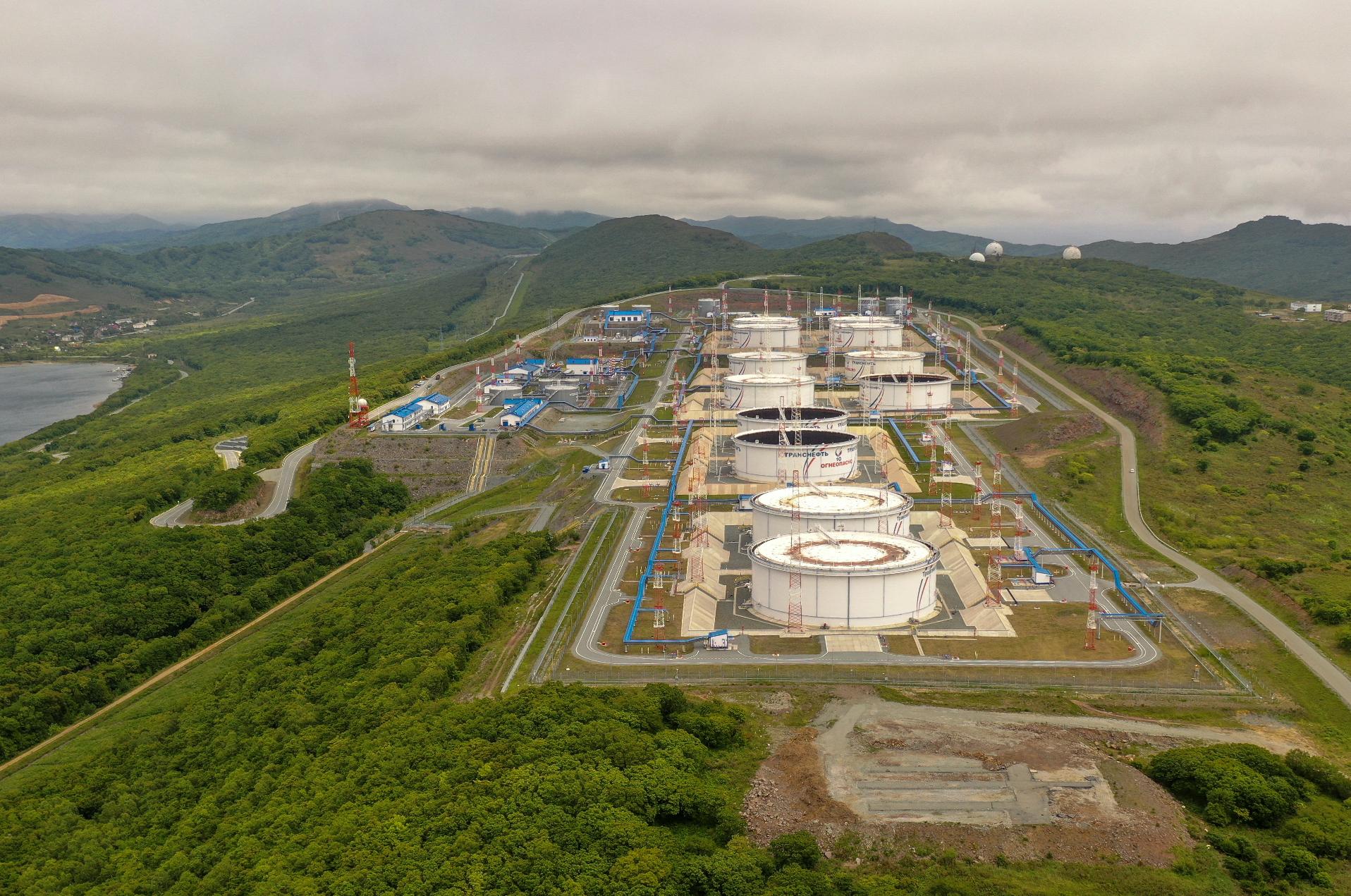
NEW YORK, March 28 (Reuters) - Oil prices jumped more than $1 a barrel on Thursday, closing out the month higher on the prospect of OPEC+ staying the course on production cuts, ongoing attacks on Russia's energy infrastructure and a falling U.S. rig count tightening crude supplies. Brent crude futures for May settled at $87.48 a barrel, its highest level since Oct. 27, after gaining $1.39, or 1.6%. The more actively traded June contract settled at $87 a barrel, rising $1.58, with the May contract expiring on Thursday. U.S. West Texas Intermediate (WTI) crude futures for May delivery settled at $83.17 a barrel, rising $1.82, or 2.2%. On the week, Brent rose 2.4% and WTI gained about 3.2%. Both benchmarks finished higher for a third consecutive month. In the prior session, oil prices had come under pressure from last week's unexpected rise in U.S. crude oil and gasoline inventories, driven by an increase in crude imports and sluggish gasoline demand, according to Energy Information Administration data. However, the crude stock increase was smaller than the build projected by the American Petroleum Institute, and analysts noted the increase was lower than expected for the time of year. "We ... expect U.S. inventories to rise less than normal in reflection of a global oil market in a slight deficit," SEB analyst Bjarne Schieldrop said. "This will likely hand support to the Brent crude oil price going forward." U.S. refinery utilisation rates, which rose 0.9 percentage point last week, also supported prices. The oil and gas rig count, an early indicator of future output, also fell by three to 621 in the week to March 28, according to energy services firm Baker Hughes (BKR.O) , opens new tab. The U.S. economy, meanwhile, grew faster than previously estimated in the fourth quarter. Gross domestic product increased at a 3.4% annualized rate from the previously reported 3.2% pace, the Commerce Department's Bureau of Economic Analysis said. "The strength in the stock market suggests strong forward earnings that are, in turn, hinting at a surprisingly strong US economy conducive toward better than expected energy product demand," said Jim Ritterbusch of energy consultancy Ritterbusch and Associates. Inflation data also affirmed the case for the U.S. Federal Reserve to hold off on cutting its short-term interest rate target, a Fed governor said on Wednesday, but he did not rule out trimming rates later in the year. "The market is converging on a June start to cuts for both the Fed and the European Central Bank," JPMorgan analysts said in a note. Lower interest rates typically support oil demand. Investors will watch for cues from a meeting next week of the Joint Monitoring Ministerial Committee of producer group the Organization of Petroleum Exporting Countries (OPEC). Increased geopolitical risk has raised expectations of possible supply disruption, but OPEC+ is unlikely to make any oil output policy changes until a full ministerial gathering in June. Attacks by Ukraine on Russian energy infrastructure have also boosted the sentiment around global crude supplies tightening and helped to support oil prices, said Again Capital LLC partner John Kilduff. "It's a prime target, and they appear to have not heeded the ask by the Biden administration to not attack Russian energy infrastructure," Kilduff said. Get a look at the day ahead in U.S. and global markets with the Morning Bid U.S. newsletter. Sign up here. https://www.reuters.com/markets/commodities/oil-prices-advance-investors-reassess-us-inventories-data-2024-03-28/
2024-03-28 00:09
March 28 (Reuters) - Britain's car production increased by 14.6% year-on-year in February, thanks to strong domestic demand, industry data showed on Thursday. However, with major manufacturers stemming production of some LNG-running models to focus on new electric variants, production volumes may be more variable in the months ahead, the Society of Motor Manufacturers and Traders (SMMT) said. A total of 79,907 units rolled out of factory lines in the country in February, compared with 69,707 units a year earlier. This was driven by domestic demand, which climbed 58% to 20,658 units. Meanwhile, production of electrified vehicles made up more than a third of all output in February to clock 29,038 units, but that was still slightly lower than the 29,590 units produced in January. Britain and the European Union, which are each other's largest market for exports of EVs, agreed in December to give EV makers until the end of 2026 to comply with local content rules, delaying the imposition of tariffs on EVs traded with the UK. "The UK industry faces stiff competition, however, as global competitors seek to secure new models and technologies so a commitment to our industrial competitiveness, from all political parties in this likely election year, must be maintained," SMMT Chief Executive Mike Hawes said in a statement. UK car production is up 17.8% to 162,904 units to date in 2024 - the best start to a year since 2021, SMMT added. Stay up to date with the latest news, trends and innovations that are driving the global automotive industry with the Reuters Auto File newsletter. Sign up here. https://www.reuters.com/business/autos-transportation/uk-car-output-up-146-february-says-industry-body-2024-03-28/

2024-03-28 00:00
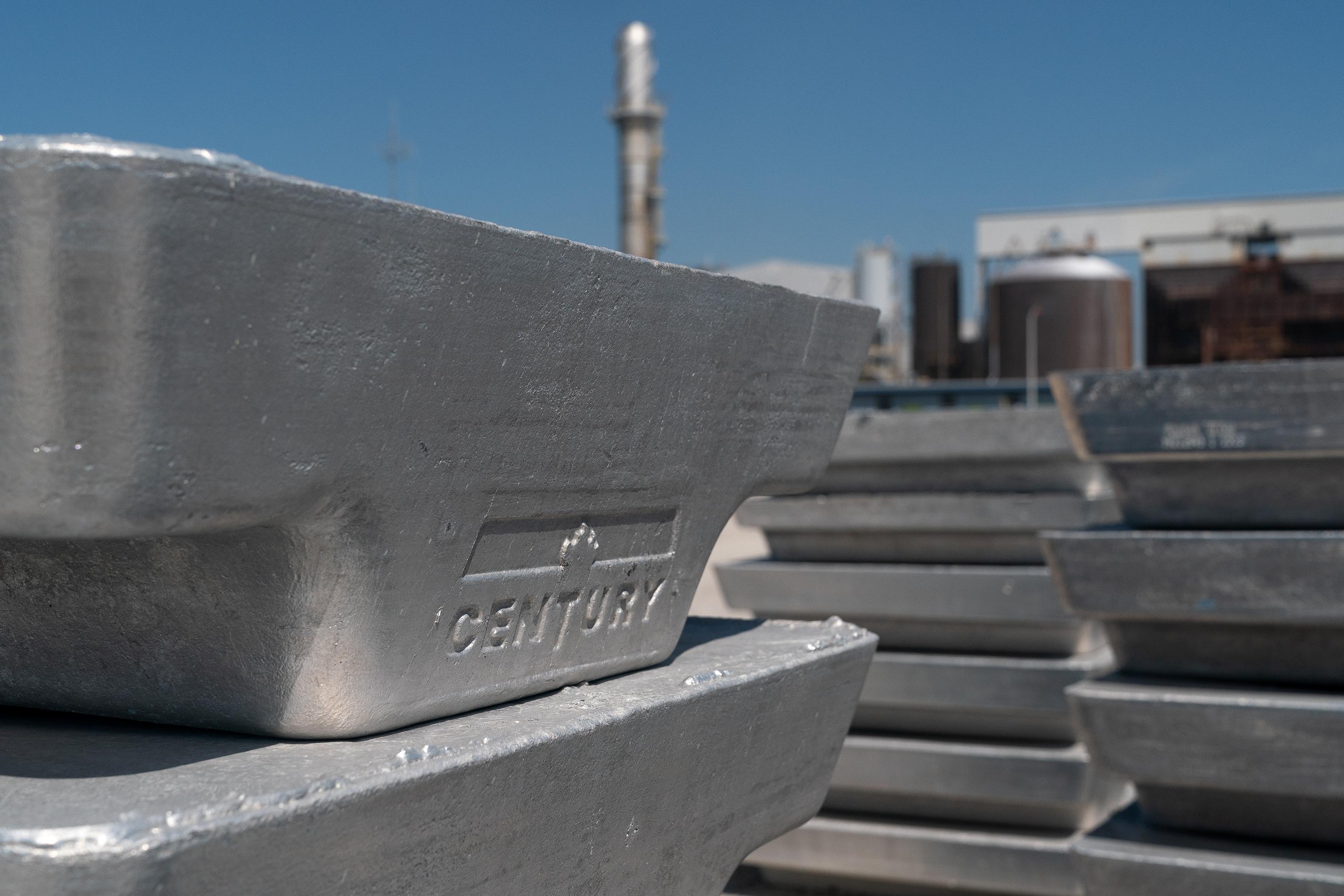
LONDON, March 27 (Reuters) - The U.S. is going to build its first primary aluminium smelter in 45 years. The Biden-Harris administration has awarded $500 million to Century Aluminum (CENX.O) , opens new tab towards the construction of a new "green" low-carbon smelter. The aim is to halt what U.S. consumers such as Ford Motor and PepsiCo have described , opens new tab as a crisis in a sector that has shrunk from 19 to just four operating domestic plants over the last two decades. With aluminium usage expected to grow strongly thanks to its use in energy transition applications such as solar power and wind turbines, the ambition is also to reduce the country's import dependency. However, translating ambition into actuality will depend on whether Century can find enough green power to run its new green smelter. SECTOR REBOOT U.S. production of primary aluminium fell from 3.8 million metric tons in 1999 to 785,000 tons last year. It will decline again this year due to the idling of the New Madrid smelter in Missouri in January. There are now just four operating plants, two owned by Alcoa (AA.N) , opens new tab and two by Century, with combined annual capacity of around 650,000 tons. The Trump's administration introduction of a 10% aluminium import tariff in 2018 marked only a brief pause in the long-term decline. U.S. import dependency is already large at just over four million tons every year and is set to grow further as the 2022 Inflation Reduction Act (IRA) stimulates investment in energy transition sectors such as electric vehicles and renewable energy. They all need aluminium. In 2020, the World Bank identified the metal as a "high-impact" and "cross-cutting" metal in all existing and potential green energy technologies. Global usage is forecast by the International Aluminium Institute to rise from 108 million tons in 2022 to 176 million by 2050. President Joe Biden's administration has channelled an estimated $1.25 trillion of funds into new green energy sectors, but the money available to aluminium's supply side stacks up at just $126 billion, according to U.S. think tank SAFE. ("Legislative Analysis for the U.S. Aluminum Industry", May 2023) Most of those funds have come in the form of IRA tax credits for advanced manufacturing rather than direct investment in more capacity. The combination of a shrinking domestic production base and fast-rising demand is a major challenge for a government looking to re-shore critical mineral supply chains. The inclusion of Century's aluminium project in a broader $6 billion package of industrial decarbonization grants shows the Biden administration is only too aware of the need for a reboot. POWER CHALLENGE Once completed, the new smelter "would double the size of the current U.S. primary aluminium industry," Century said. That implies it's going to be a sizeable smelter. It will also generate just 25% of the emissions of a traditional smelter thanks to what the Department of Energy (DOE) described , opens new tab as "state-of-the-art, energy-efficient design and use of carbon-free energy." Aluminium is produced from alumina by electrolysis, meaning smelters are massive and continuous power users. The decline and fall of the U.S. smelter sector has been as much about the lack of cheap power as anything else. Moreover, the remaining plants draw their power from fossil-fuel generators, meaning their metal comes with a relatively high carbon footprint. A new smelter drawing on carbon-free energy is the most obvious way to reconcile industrial revival and net-zero commitments. Century is looking at sites in the Ohio-Mississippi River Basin area, suggesting the company is eyeing the region's hydro power capacity. However, it remains to be seen whether there is sufficient spare capacity to guarantee power to a smelter of the size being proposed. It will also obviously take time to build and bring into production. SECONDARY REBOOT A shorter-term solution is offered by the secondary aluminium sector, which is intrinsically greener than the primary one because re-melting only uses around 5% of the energy needed to make virgin metal. Five metals projects were chosen for funds under the Industrial Demonstrations Program, which is managed by DOE's Office of Clean Energy Demonstrations. One of those is Century's new smelter. Constellium (3OK.F) , opens new tab will receive $75 million towards a first-of-its-kind zero-carbon aluminium casting plant in Virginia. The other three go to the secondary metals sector. Wieland will get up to $270 million for an advanced copper recycling project in Kentucky. Real Alloy Recycling is allocated up to $67.3 million for its plans to construct the first zero-waste salt slag recycling facility in the U.S. It's not quite as headline-grabbing as a new primary smelter, but recycling what currently goes to landfill would be a major enhancement of aluminium's circularity. So too would be Golden Aluminum's Next Generation Mini Mill project, which is getting $22.3 million of federal funding. The aim is to reduce natural gas consumption, improve process efficiency, and recycle 15% more mixed-grade aluminum scrap. "This project would be highly replicable among other U.S. aluminum producers and can help solidify the U.S. as a world leader in decarbonized secondary aluminum production," the DOE said. Advanced materials recycling is an area where Western metal operators still have a technical edge on Chinese competitors and it makes sense to invest in maintaining this green advantage. It also offers a short-term way of moderating U.S. import dependency while Century goes in search of power. The opinions expressed here are those of the author, a columnist for Reuters. Get a look at the day ahead in U.S. and global markets with the Morning Bid U.S. newsletter. Sign up here. https://www.reuters.com/markets/commodities/us-looks-reboot-aluminium-sector-with-new-smelter-2024-03-27/
2024-03-27 23:43
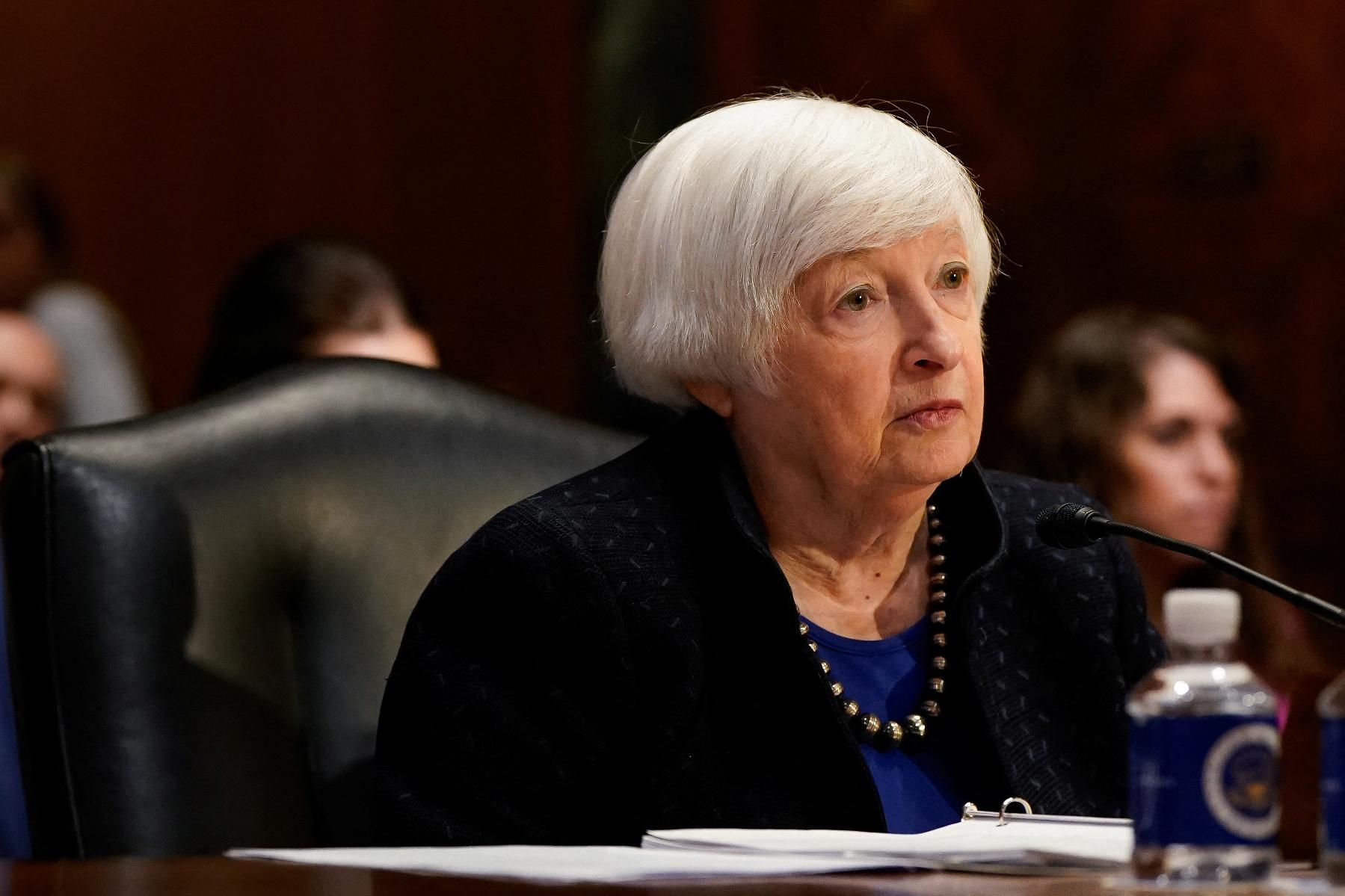
NORCROSS, Georgia/WASHINGTON, March 27 (Reuters) - U.S. Treasury Secretary Janet Yellen said on Wednesday she intends to warn China about the negative effects of Beijing's subsidies for its clean energy industries, including solar panels and electric vehicles, during a visit to the country. "I intend to talk to the Chinese when I visit about overcapacity in some of these industries, and make sure that they understand the undesirable impact that this is having - flooding the market with cheap goods - on the United States but also in many of our closest allies," Yellen told MSNBC in a live interview. Yellen traveled to the state of Georgia to visit a Suniva solar cell manufacturing plant that closed in 2017 due to competition from cheaper, subsidized solar panels from China. The plant is now reopening because of anticipated demand fueled by tax credits for U.S.-made clean energy technology in the 2022 Inflation Reduction Act worth hundreds of billions of dollars. Earlier on Wednesday, Suniva and Canada's Heliene announced a three-year, $400 million deal to join forces to cooperate on the production of fully U.S.-made complete solar panels that can be installed into solar power projects. A steady supply of U.S.-produced panels will enable solar project developers to claim a 10% bonus credit on top of the 30% tax credit on the cost of renewable energy facilities. Yellen said in remarks at the factory that she will raise concerns China is now overproducing solar panels, EVs and lithium-ion batteries in the same way that it built too much capacity to make steel and aluminum, distorting global markets and hurting jobs in other industrial and developing economies. Politico has reported that Yellen will travel to China in April. The Treasury Department has declined to confirm her travel plans. "I will convey my belief that excess capacity poses risks not only to American workers and firms and to the global economy, but also productivity and growth in the Chinese economy, as China itself acknowledged in its National People's Congress this month," Yellen said. "And I will press my Chinese counterparts to take necessary steps to address this issue." China's excess capacity is an increasing source of concern to Biden administration officials as its exports surge in the face of weak demand at home, while Chinese policymakers are pledging more support for strategically important sectors. At the same time, the U.S. is pouring hundreds of billions of dollars of tax incentives into clean energy to attract investments that can build viable EV and alternative power sectors that do not depend on China for crucial components such as batteries. Yellen highlighted the Suniva plant as an example of how the Biden administration's economic agenda is "lowering energy costs for American consumes and powering growth in strategic industries." Yellen told reporters the U.S. has been advocating a rebalancing of China's economy towards more consumer spending, but added that she was not prepared to discuss potential retaliation from the U.S. and its allies against China's policies. "We see, of course, the same concerns in Europe, for example, but I don't want to get into retaliation," Yellen said. "We want to see what we can do that's constructive." The Reuters Power Up newsletter provides everything you need to know about the global energy industry. Sign up here. https://www.reuters.com/business/energy/yellen-intends-warn-china-clean-energy-subsidies-excess-production-capacity-2024-03-27/