2024-03-27 17:34
March 27 (Reuters) - A federal judge in Manhattan on Wednesday said the U.S. Securities and Exchange Commission's lawsuit against Coinbase (COIN.O) , opens new tab can move forward, but dismissed one claim the regulator made against the largest U.S. cryptocurrency exchange. U.S. District Judge Katherine Polk Failla partly granted Coinbase's motion to dismiss the SEC's lawsuit which alleges the company is flouting its rules. While the decision is a partial win for Coinbase in what could be a lengthy and expensive court battle, it largely blesses the SEC's approach to cryptocurrency and agrees with other judges who have sided with the regulator. Shares in Coinbase were down about 1.5% in early afternoon trading. Coinbase Chief Legal Officer Paul Grewal said in a social media post on X that the exchange was prepared for the ruling and would continue to fight the SEC's claims. "We remain confident in our legal arguments, we look forward to proving we’re right," he said. A spokesperson for the SEC said the agency was "pleased that yet another court has confirmed that, while the term 'crypto' may be relatively new, the framework that courts have used to identify securities for nearly 80 years still applies." "We will continue to protect investors against risks in the crypto markets when, as here, the securities laws are implicated," the spokesperson said. HIGH-WATER MARK The SEC sued Coinbase in June, saying the firm facilitated trading of at least 13 crypto tokens that should have been registered as securities and was operating illegally as a national securities exchange, broker and clearing agency without registering with the regulator. Failla allowed most of the lawsuit to proceed, but dismissed the SEC's claim that Coinbase acted as an unregistered broker via its wallet application. The case against the world's largest publicly-traded cryptocurrency exchange is a high-water mark in the regulator's campaign to apply U.S. securities law to the digital asset companies. To do so, the SEC has largely relied on a U.S. Supreme Court ruling that set out a test for when an investment constitutes a security. A key piece is whether returns "come solely from the efforts of others." Coinbase has argued that crypto assets, unlike stocks and bonds, do not meet that definition, a position held by the vast majority of the crypto industry. Failla rejected that argument, saying the SEC has a plausible claim that at least some of the digital assets listed on the exchange are securities. The SEC has pointed to statements by developers, including Solana Labs, about efforts to build and improve their technology. "An objective investor in both the primary and secondary markets would perceive these statements as promising the possibility of profits solely derived from the efforts of others," Failla wrote. In the few cases that have gone to court, judges have mostly agreed with the SEC that the crypto assets at issue were securities. Unlike assets such as commodities that are strictly regulated, securities must be registered with the SEC by their issuer. They also require detailed disclosures to inform investors of potential risks. The Technology Roundup newsletter brings the latest news and trends straight to your inbox. Sign up here. https://www.reuters.com/technology/coinbase-must-face-us-securities-regulators-lawsuit-2024-03-27/
2024-03-27 16:51
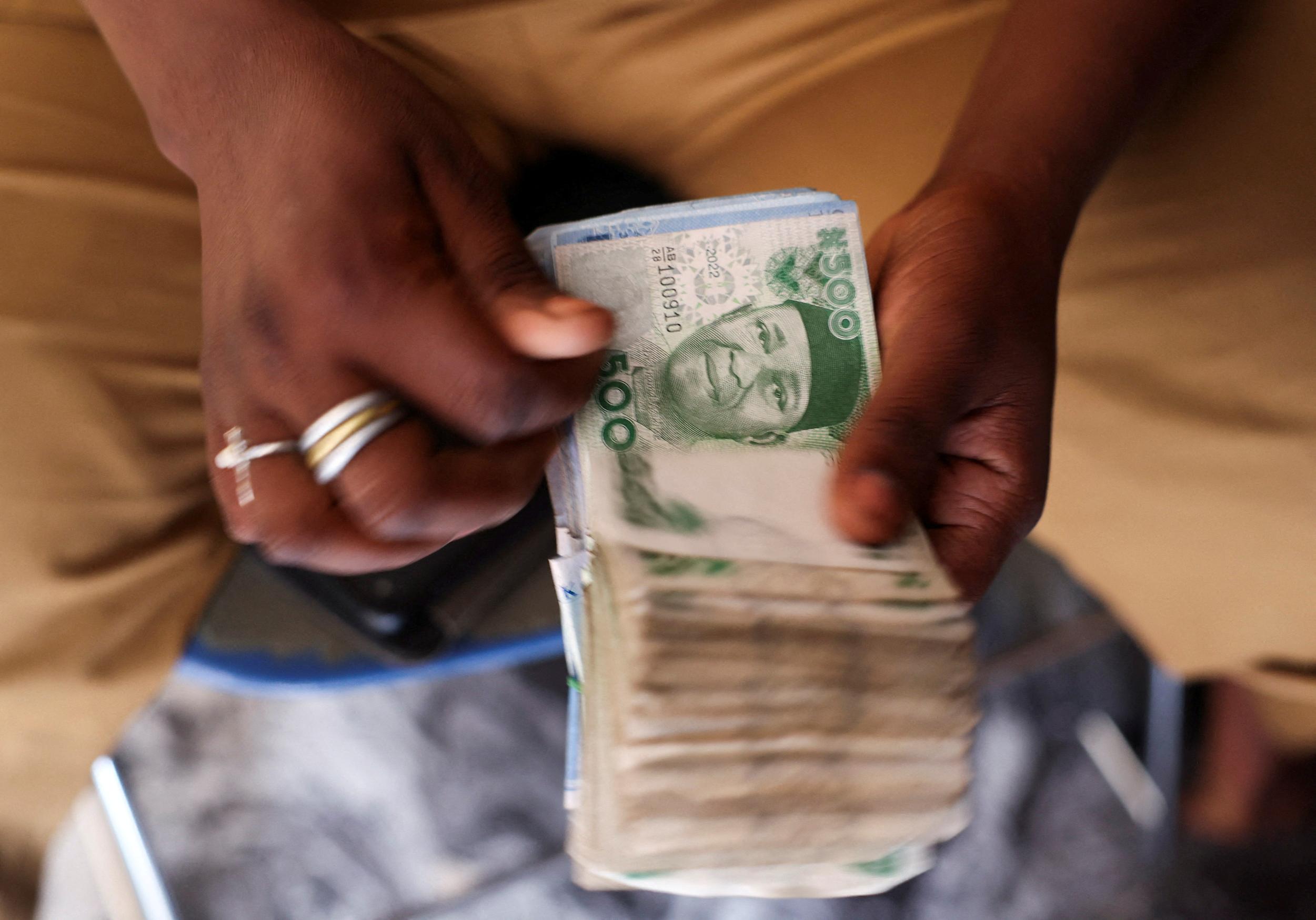
ABUJA, March 27 (Reuters) - Nigeria's naira rose to a five-week high against the dollar in intraday trading on Wednesday, a day after the central bank hiked interest rates to tame inflation and lifted restrictions on foreign investors participating in its fixed-income auctions. The currency rose to 1,200 per dollar on the official market, LSEG data showed, strengthening above the parallel market levels at about 1,340. Africa's largest economy has been grappling with dollar shortages that pushed its currency to a record low of 1,851 per dollar last month, though central bank Governor Olayemi Cardoso has said that dollar liquidity is improving. Last week, Nigeria's central bank said it had cleared all of its verified foreign exchange backlog, part of its strategy to stabilise the naira and tame soaring inflation. The central bank on Tuesday raised its monetary policy rate 200 basis points to 24.75% from 22.75% (NGCBIR=ECI) , opens new tab, a month after its largest hike in around 17 years. The central bank paid 26.6% for the one-year Treasury bill at its last auction two weeks ago, but investors at Wednesday's auction expect yields to rise above secondary market quotes of around 22.75% for the one-year bill and around 20.6% for the benchmark 10-year note. Goldman Sachs analysts Andrew Matheny and Bojosi Morule said the central bank's further rate hike and "the emphasis on improving monetary transmission mechanism by mopping up liquidity will help to rebuild policy credibility", boosting Treasury bill yields to about 28% to 29%. In the past, lenders faced constraints in fulfilling foreign investors' bids as they incurred extra costs on settlement day if they borrowed from the central bank's discount window to pay for bills. Foreign investors can now pre-fund their accounts and get naira at the prevailing exchange rate for the auctions, analysts said. "With this policy mix and with more inflows likely, including a Eurobond, we remain constructive on the naira, with our forex strategists forecasting an appreciation to 1,200 versus the dollar over the next 12 months," Matheny and Morule wrote in a research note to clients on Wednesday. The central bank hopes the auctions can attract sufficient foreign interest to boost dollar liquidity. Tellimer economist Patrick Curran said that "while forex liquidity has improved, it is still well below pre-pandemic levels and a boost in dollar supply will be needed to support further naira appreciation." Keep up with the latest medical breakthroughs and healthcare trends with the Reuters Health Rounds newsletter. Sign up here. https://www.reuters.com/markets/currencies/nigerias-naira-gains-spot-market-after-central-bank-rate-hike-2024-03-27/
2024-03-27 13:15
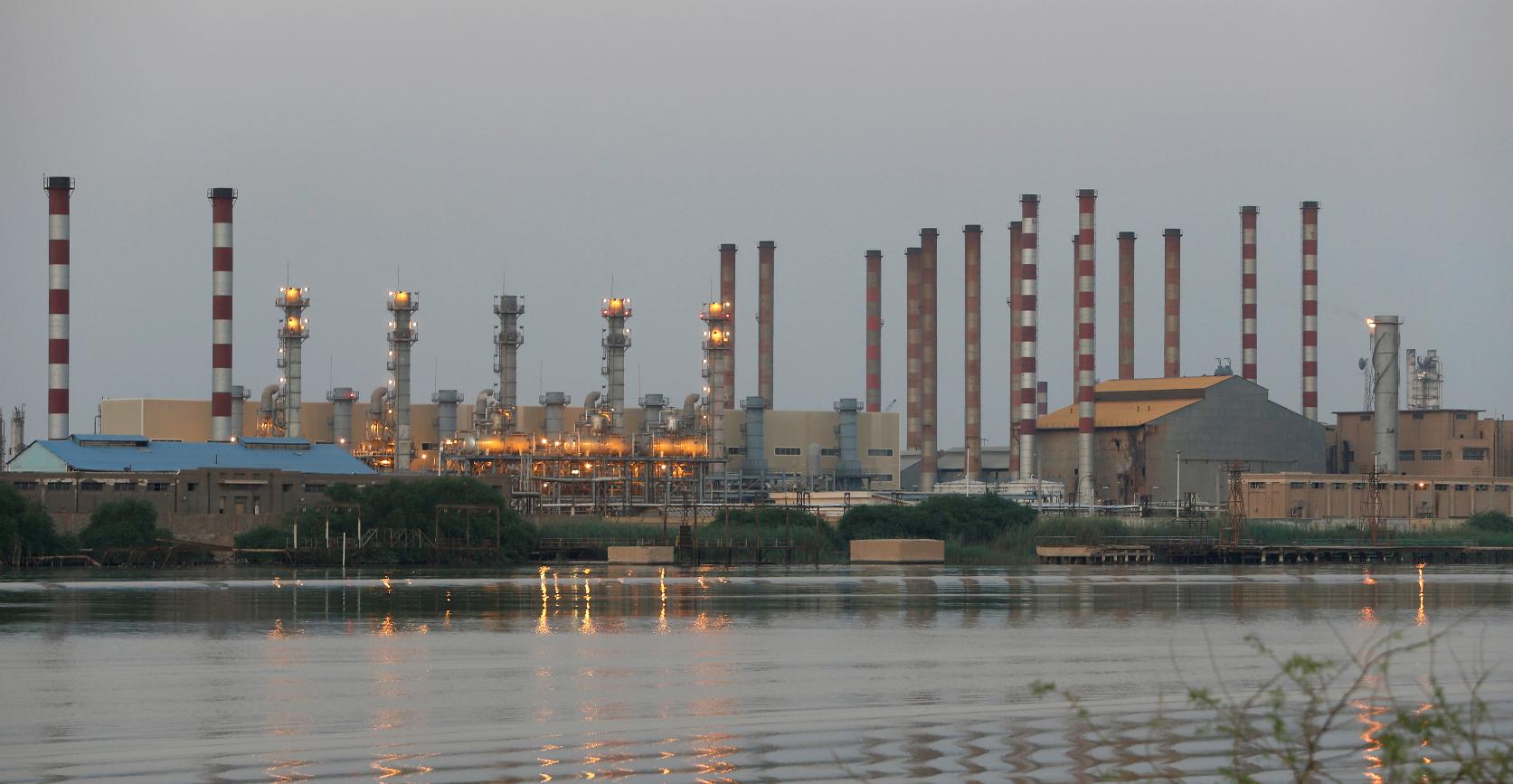
DUBAI, March 27 (Reuters) - Iraq signed a 5-year gas supply deal with Iran, with pumping rates of up to 50 million cubic meters per day according to the needs of Iraqi power stations, state media reported on Wednesday. The Reuters Power Up newsletter provides everything you need to know about the global energy industry. Sign up here. https://www.reuters.com/business/energy/iraq-signs-5-year-gas-supply-deal-with-iran-says-state-media-2024-03-27/
2024-03-27 13:08
SANTIAGO, March 27 (Reuters) - Chile's mining minister on Wednesday urged Chilean miner SQM and China's Tianqi Lithium Corp, a major shareholder in the company, to resolve their ongoing spat, but refrained from weighing into their private matter. Tianqi, which holds about 20% of SQM shares, last week raised concerns over transparency in the firm's talks on a partnership with state copper producer Codelco. The Chinese company's view was later challenged by SQM's board chairman. "We naturally urge the internal differences that SQM may have with its partners to be resolved," Mining Minister Aurora Williams told reporters, adding however that she had "no opinion" on how the firm deals with its board and shareholders. "It is not our place to give an opinion on that." Get a look at the day ahead in U.S. and global markets with the Morning Bid U.S. newsletter. Sign up here. https://www.reuters.com/markets/commodities/chiles-mining-minister-urges-sqm-tianqi-resolve-spat-2024-03-27/
2024-03-27 13:00
LAUNCESTON, Australia, March 27 (Reuters) - Decarbonising steel production is key to achieving global net-zero emission targets and the good news is that it can be achieved, and the cost isn't prohibitive for some uses. The bad news is decarbonising steel isn't likely to happen without regulation, coupled with price incentives that drive a shift in investment and consumption. Steel production accounts for about 8% of global carbon emissions and about 30% of emissions from industry, and the sector is the major consumer of metallurgical coal, which is a key source of heat and carbon needed to turn iron ore into steel. The determining factors in any discussion about switching to producing green steel is how much more will it cost than the current, well-established methods, and whether it can be scaled up fast enough. The cost premium shows how it can work, and equally why it likely won't. The good news is that the premium is not as big as many would fear, depending upon how and where you produce the green steel. The premium may be almost nothing or up to about $150 a metric ton, according to the consensus of presentations at last week's Global Iron Ore and Steel Forecast Conference, held in Perth in Western Australia, the state that produces the bulk of the world's exported iron ore. To put that in perspective, hot-rolled coil futures in Shanghai ended at 3,782 yuan a ton on Tuesday, equivalent to $524.24, while London-traded U.S. steel ended at $803. Figures from Monash University in Australia show that green steel could be made in Western Australia for about A$850 ($570) a ton using a mix of wind, solar, battery storage and hydrogen. The bad news is that even a relatively modest premium likely makes green steel unviable for much of the market, where costs are a major factor. CHINA STEEL Take China's steel demand as an example. China produces about half of the world's steel and buys just over 70% of global seaborne iron volumes. Its steel consumption in 2024 was 907.3 million tons, according to data from S&P Global Commodity Insights. The only sector that may be prepared to pay a premium for green steel is automotive manufacturing. This is because the volume of steel per car is probably around 1-1.5 tons, meaning that even assuming a premium of $150 a ton for green steel, the impact on the retail price of a vehicle is negligible. It's possible the marketing value of saying the car is produced with green steel may exceed the actual cost of using the environmentally friendly product. However, China's automotive sector used 54 million tons of steel in 2024, according to S&P Global, which is a mere 6% of total demand. The biggest steel consumers are property and infrastructure, which used a combined 518 million tons in 2024, or 57% of the total. A modern skyscraper building may use about 700 tons of steel per floor, meaning a 100-story building would use some 70,000 tons, which at a premium of $150 a ton would add about $10.5 million to the cost. High-speed rail can use between 30,000 and 60,000 tons of steel per km, and even using the lower figure means going green adds $4.5 million per km. Both of these numbers mean that green steel is likely unaffordable for these applications, especially in Asia, the world's most populous continent and the biggest driver of steel demand currently and likely for the next 30 years. INVESTMENT SWITCH The second major factor confronting green steel is how to switch from the current method of using a blast furnace to turn iron ore into pig iron using coal, and then using a basic oxygen furnace (BOF) to turn this into steel. There are several different paths available, but the one most likely to succeed involves using green energy to upgrade iron ore into direct reduced iron (DRI), which can then be turned into steel using an electric arc furnace or by using a hydrogen or natural gas powered BOF. However, DRI is too volatile to be shipped, meaning that if Australia was to upgrade its iron ore to DRI, it would have to be further beneficiated into hot briquetted iron (HBI), a solid form that can be shipped. It's possible that HBI could be shipped from Australia to steel mills in China, Japan and other producing countries in Asia, but these countries would have to have the green hydrogen or clean electricity available to produce the final steel products. All of this requires extensive capital investment, and currently the money isn't flowing in this direction given China and other countries across Asia are still building blast furnaces and BOFs designed to use coal. This is why the only way to drive a switch to green steel is likely through regulation and price signals such as carbon border taxes. But getting global agreement on a carbon pricing system for steel is likely to be fraught, as developing nations in Asia will almost certainly push back on having to pay more for their steel. The opinions expressed here are those of the author, a columnist for Reuters. Get a look at the day ahead in U.S. and global markets with the Morning Bid U.S. newsletter. Sign up here. https://www.reuters.com/markets/commodities/green-steel-is-possible-even-affordable-still-unlikely-russell-2024-03-27/
2024-03-27 12:40
Central bank hints at series of rate cuts in year ahead Says it's wary of setbacks and will proceed cautiously Foresees roughly three rate cuts this year Next monetary policy decision due on May 8 STOCKHOLM, March 27 (Reuters) - Sweden's central bank held its key rate at 4.00% on Wednesday, as expected, and said that if inflation continued to drop toward the 2% target there was a good chance of a series of rate cuts starting in May. With inflation seemingly tamed, central banks around the world are weighing up when to start easing policy. The Swiss National Bank was the first out of the blocks last week, with the U.S. Federal Reserve and the European Central Bank expected to follow suit in June. After peaking at over 10% in late 2022, headline inflation in Sweden is close to target and the Riksbank is almost ready to start reversing two years of policy tightening. "What we are saying is that if our forecasts in a broad sense turn out to be right, there is a high chance there will be a cut in May," Governor Erik Thedeen told reporters. The central bank's rate path gives a roughly 50% chance of a cut in May and a total of three rate cuts this year. Many analysts believe inflation will fall faster and that the Riksbank will speed up rate cuts. "We stick to our call that the Riksbank will start cutting rates in May," Nordea economist Torbjorn Isaksson said. "We see the policy rate at 2.50% at year-end 2024." The last time the central bank reduced rates was in 2016. CAUTION The Riksbank's outlook has shifted radically in the last few months. In November, it warned rates could rise further but said in February that it might be possible to relax policy in the first half of the year. Thedeen said it had been too early to cut at Wednesday's meeting and the Riksbank "wanted to be even more sure" inflation would remain low and stable. Rates are likely to come down gradually, he said. The central bank is worried, however, that the prospect of lower borrowing costs could prompt a spending spree by households. "To a certain extent it is good that we get improved demand and purchasing power when rates go down, but we don't want it to go too fast so we get setbacks," Thedeen said. Easier policy could also further weaken the Swedish crown, pushing up import prices. , (.KIXI) , opens new tab Analysts in a Reuters poll had forecast no change in rates this month, and for the central bank to flag a cut in May or June. The Riksbank announces its next monetary policy decision on May 8. Get a look at the day ahead in European and global markets with the Morning Bid Europe newsletter. Sign up here. https://www.reuters.com/markets/europe/swedish-central-bank-holds-rates-flags-cut-may-or-june-2024-03-27/