2024-03-27 12:16
AMSTERDAM, March 27 (Reuters) - The Netherlands' five largest pension funds on Wednesday said they were willing to invest billions in the country's energy transition and to help support investment in the electricity grid. In a letter, addressed to the political parties that are trying to form the country's next government, the funds offered their joint financial firepower and expertise to help finance electricity grid expansion and sustainable heating projects in the euro zone's fifth largest economy. "We want to make a bigger impact, we can and want to invest more in the Dutch energy transition," the funds, with a total of around 900 billion euros ($975 billion) in assets, said in the letter published on Wednesday. The funds said electricity shortages would risk "jeopardising our business climate and climate goals, will cripple construction and will keep us dependent on imported fossil fuels". They called for ambitious and reliable policies from a new government for the energy transition and better public/private cooperation to finance projects. The funds did not specify exactly how much they were willing to invest. One of the issues the new government will have to tackle is the congestion on the Dutch electricity grid, which is struggling to cope with a rapidly increasing demand for electricity and a surge in the supply of solar power. Dutch state-owned electricity grid operator TenneT in November said it will have to double its investments in the next decade to meet demand. Coalition talks in the Netherlands have dragged on since the election victory of far right leader Geert Wilders' PVV party in November last year. Wilders and his three prospective coalition partners resumed talks this month after weeks of standstill, but an agreement on a government pact is not yet in sight. Earlier this month, ABP, the Netherlands' largest pension fund, said it would cut investments with a large climate impact, while targeting more money to companies and projects that help to improve society and the environment. ($1 = 0.9237 euros) The Reuters Daily Briefing newsletter provides all the news you need to start your day. Sign up here. https://www.reuters.com/business/dutch-pension-funds-willing-invest-billions-energy-transition-2024-03-27/

2024-03-27 12:15
HELSINKI, March 27 (Reuters) - Finland's industrial, logistics and electrical workers have agreed to extend strikes in protest against planned labour market reforms to a fourth week, the head of trade union association SAK said on Wednesday. The workers have been on strike since March 11, targeting exports, imports and cargo transportation. "The strikes will continue from Monday morning onwards for a week," SAK President Jarkko Eloranta told Reuters. "We are trying to negotiate and compromise with the government but unfortunately there has been no response to these efforts." Several of Finland's largest companies have said the strikes, which are disrupting ports and the rail system, are negatively affecting their operations. Employers' organisation EK said in a statement that SAK had not presented credible alternatives to the planned reforms. It estimated that the strikes had a negative effect on GDP of nearly 300 million euros ($325 million). ($1 = 0.9233 euros) The Reuters Daily Briefing newsletter provides all the news you need to start your day. Sign up here. https://www.reuters.com/world/europe/finnish-unions-extend-strikes-over-labour-reforms-by-another-week-2024-03-27/

2024-03-27 12:09
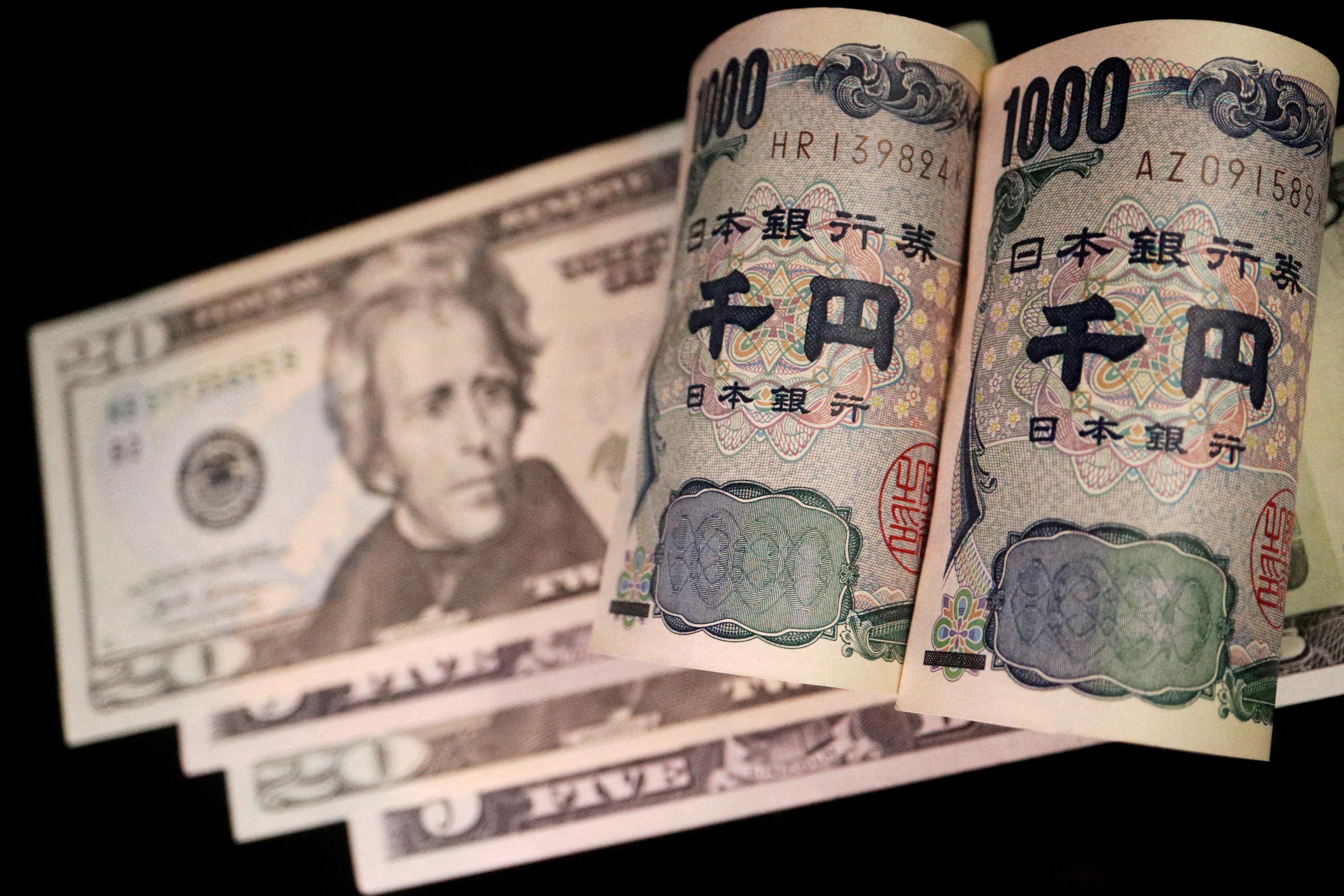
NEW YORK/LONDON, March 27 (Reuters) - The yen dropped to its lowest level since 1990 on Wednesday before rebounding slightly after Japan's top monetary officials met to discuss the rapidly weakening currency and suggested they were ready to intervene. The dollar reached 151.975 yen , its strongest against the yen since mid-1990, before easing 0.13% on the day to 151.36. The Bank of Japan, the Finance Ministry and Japan's Financial Services Agency held a meeting in Tokyo's late trading hours, after which top currency diplomat Masato Kanda said he "won't rule out any steps to respond to disorderly FX moves." Japanese authorities stepped in to defend the yen at 151.94 in 2022 and Finance Minister Shunichi Suzuki on Wednesday used the same words that preceded that intervention, warning Japan would take "decisive steps" against excessive currency moves. "They are swimming against the current here, to an extent. Intervention helps in the near term, but it's not a long-term solution," said Bipan Rai, global head of forex strategy at CIBC Capital Markets in Toronto. The yen has slumped more than 7% this year, driven by the widening gap between U.S. and Japanese bond yields, which the Bank of Japan's small interest rate hike last week did little to change. The key to stemming the Japanese currency's decline may now be the U.S. Federal Reserve beginning an interest rate cutting cycle and a decline in government bond yields outside Japan. "I suspect that intervention, or threats to conduct intervention, are really just a measure of buying time until we start to see things shift on a more sustained basis outside the country," Rai said. Traders will also be focused on options expirations on Thursday in case they increase volatility in the currency pair. About $3.13 billion in notional volumes struck around the 150-152 yen level are due to expire on Thursday, according to data compiled by Pepperstone market analyst Michael Brown. "You may see some position covering on any intervention, which will naturally raise volumes and increase volatility." However, any options-related market move is likely to be fleeting, he added. "The fundamental story remains the same in that sustained yen upside requires a move back in favor of the yen in terms of rate differentials which, unless the (Fed) is going to do some of the heavy lifting, seems unlikely," Brown said. KING DOLLAR The dollar is on course for solid quarterly gains after investors pared back their expectations for big rate cuts in the face of strong economic data and reticence from central bankers. Guy Miller, chief market strategist at Zurich Insurance group, said other currencies were suffering under the weight of a strong U.S. currency. "The U.S. economy has done much better than most had expected, particularly compared to other parts of the world," Miller said. The dollar index gained 0.05% at 104.34, and is up around 3% so far in 2024. The market's main focus this week is on U.S. core inflation figures due on Good Friday, though a bigger-than-expected jump in U.S. durable goods orders on Tuesday already has boosted the dollar against the yen. The euro fell 0.07% to $1.0821. Sterling rose 0.06% to $1.263. The dollar strengthened against Sweden's crown after the Swedish central bank held interest rates and hinted at rate cuts in the coming months. It reached 10.64 crowns, the highest since Nov. 14. The Swiss franc fell to its lowest since Nov. 3 at 0.9071 to the dollar. The Swiss currency is still reeling from a surprise rate cut in Switzerland last week, and is down around 7% this year. In cryptocurrencies, bitcoin fell 1.78% to $68,567.00. Keep up with the latest medical breakthroughs and healthcare trends with the Reuters Health Rounds newsletter. Sign up here. https://www.reuters.com/markets/currencies/dollar-steadies-yen-teeters-ahead-key-us-inflation-data-2024-03-27/
2024-03-27 11:56
MUMBAI, March 27 (Reuters) - India's gold imports are set to plunge by more than 90% in March from the previous month to hit their lowest level since the COVID pandemic as banks cut imports after record-high prices hit demand, a government official and two bank dealers told Reuters. Lower imports by India, the world's second biggest consumer of the precious metal, could limit a rally in global prices that hit a record high earlier this month on expectations that the Federal Reserve will cut interest rates this year. The drop in imports could also help India narrow its trade deficit and support the rupee . India's gold imports are likely to fall to 10 to 11 metric tons in March from 110 metric tons in February, said a government official, who declined to be named as he was not authorised to talk to the media. Gold imports in March 2024 are expected to be the lowest since the COVID pandemic, when air traffic restrictions limited imports and lockdowns led to the closure of jewellery shops. "A negligible quantity of gold is being cleared from customs this month after paying duty. There has been a sharp drop in gold imports compared to last month," the government official said. Two Mumbai-based bullion dealers from two leading gold-importing banks said they imported very little gold in March due to weak demand. "Jewellers weren't buying even with a discount exceeding $35 per ounce. No reason to import the metal at a record high price and wait for demand," one of the bullion dealers said. In India, domestic prices rose to a record 66,943 rupees per 10 grams earlier this month. This prompted dealers to offer discounts of about $38 an ounce over official domestic prices, including 15% import tax and 3% sales levies, the highest since March 2023. Gold demand usually stays strong in March as jewellers stock up for the Indian wedding season which is already in full swing and where gold is an intrinsic part. Also, customers are exchanging old jewellery for new because of the high prices, so jewellers have stopped buying gold from banks, the dealer said. Refiners have almost stopped imports of gold dore, a semi-pure alloy, because of their inability to offer steep discounts, said Harshad Ajmera, the proprietor of JJ Gold House, a wholesaler in the eastern city of Kolkata. India's duty on gold dore imports is 0.65% lower than the import tax on refined gold, but the market discount was more than 1%, making refining unviable, Ajmera said. Get a look at the day ahead in U.S. and global markets with the Morning Bid U.S. newsletter. Sign up here. https://www.reuters.com/markets/commodities/indias-march-gold-imports-set-drop-90-prices-surge-sources-2024-03-27/

2024-03-27 11:54
Agreement still needs approval from European Parliament Deal would mean tariffs on some imports above certain levels EU seeks balance between supporting Ukraine and placating farmers WARSAW/BRUSSELS, March 27 (Reuters) - Ambassadors from European Union countries reached a revised deal on Wednesday to extend tariff-free food imports from Ukraine - with restrictions - after some states complained the original agreement risked destabilising the bloc's agricultural markets. The agreement now goes to the European Parliament, where diplomats expect a push to add more restrictions, as the EU wrangles over how to continue with exemptions granted in 2022 to help Ukraine's economy following Russia's invasion. Some EU farming groups and countries such as France and Poland had argued the measures needed to be tightened to avoid making EU agricultural products uncompetitive. Ukraine and others argue the imports have little effect on EU markets. An EU diplomat said the new deal - which would run until June 2025 - was similar to a provisional agreement struck last week but changed the reference period used to determine when tariffs on some products would be applied. The original deal stipulated that tariffs would kick in on poultry, eggs, sugar, oats, maize, groats and honey if imports exceeded the average levels of 2022 and 2023. The compromise expands the reference period to include the second half of 2021, the diplomat said. That lowers the ceiling for the application of tariffs. Belgium, which holds the EU's rotating presidency, said the agreement secured "a balanced approach between support for Ukraine and protection of EU agricultural markets". It is estimated to cost Ukraine about 330 million euros ($357 million) in annual revenue - although the continued overall suspension of tariffs is worth much more to Kyiv. NO PRODUCTS ADDED No products were added to the list of those potentially subject to tariffs despite pressure from some countries, the diplomat said, speaking on condition of anonymity to discuss the confidential discussions. Earlier this week, both France and Hungary said wheat should be subject to tariffs if imports rose above average levels. The issue of food imports has sparked tensions between Ukraine and Poland, an otherwise staunch supporter of Kyiv. Polish Agriculture Minister Czeslaw Siekierski was due to meet his Ukrainian counterpart, Mykola Solsky, on Wednesday afternoon, with the governments of the countries due to convene on Thursday. Siekierski said that Ukraine wanted to maintain a liberal approach to trade while Poland thought that things like humanitarian and military aid should be treated separately from food exports to protect farmers' livelihoods in central and eastern Europe. Polish farmers say that much of the Ukrainian grain that is supposed to transit through Poland to other countries ends up in the domestic market instead. Ukraine says farmers' protests, which have included blockades of the border and the spilling of Ukrainian grain across rail tracks, are harming its war effort against Russia and its economy. It also says that only a small portion of the grain it exports transits through Poland. ($1 = 0.9243 euros) The Reuters Daily Briefing newsletter provides all the news you need to start your day. Sign up here. https://www.reuters.com/world/europe/poland-ukraine-close-agreement-grain-says-polish-lawmaker-2024-03-27/

2024-03-27 11:50
CAPE TOWN, March 27 (Reuters) - The proposed Africa Energy Bank, which will focus investment in oil and gas projects across the continent, is set to start operations later this year with an initial $5 billion authorized capital base, a senior official said on Wednesday. The bank, a partnership between Afreximbank and the African Petroleum Producers Organization (APPO), is meant to help plug a funding gap in Africa amid pressure on major banks from environmental groups to shift investment dollars away from climate-warming oil and gas projects. "Africa should set up its own financing capability so that we can still develop this strategic sector, that is the rationale," Zakaria Dosso, managing director of Africa Energy Investment Corporation (AEICORP), the investment arm of APPO, said. He told Reuters that Ghana on Friday deposited just over $20 million to AEICORP, becoming the third African country to pay after Africa's top two crude oil producers, Nigeria and Angola, each deposited $10 million last year to help fund the bank. "Africa Energy Bank is on the verge of becoming a reality and should be operational during the second half of 2024," Dosso said. It is envisaged that each African member country will contribute a minimum of $83 million for a total of around $1.5 billion, while Afreximbank and APPO as founder members of AFE are expected to match this amount. The outstanding $2 billion will potentially be sourced from other investors, including Middle Eastern sovereign wealth funds. Afreximbank did not immediately respond for comment. Dosso, who is part of the interim steering committee charged with setting up AFE, said six countries - Algeria, Benin, Cote d'Ivoire, Ghana, Nigeria and South Africa - are currently competing to host the headquarters of AFE. Egypt withdrew its initial application. "Angola, Libya, Senegal, Venezuela and Afreximbank as members of the selection committee will assess all applicants and present their results before ministers take a final decision," Dosso said. The Reuters Power Up newsletter provides everything you need to know about the global energy industry. Sign up here. https://www.reuters.com/business/energy/fossil-fuel-focused-africa-energy-bank-track-start-this-year-2024-03-27/