2024-03-27 11:44
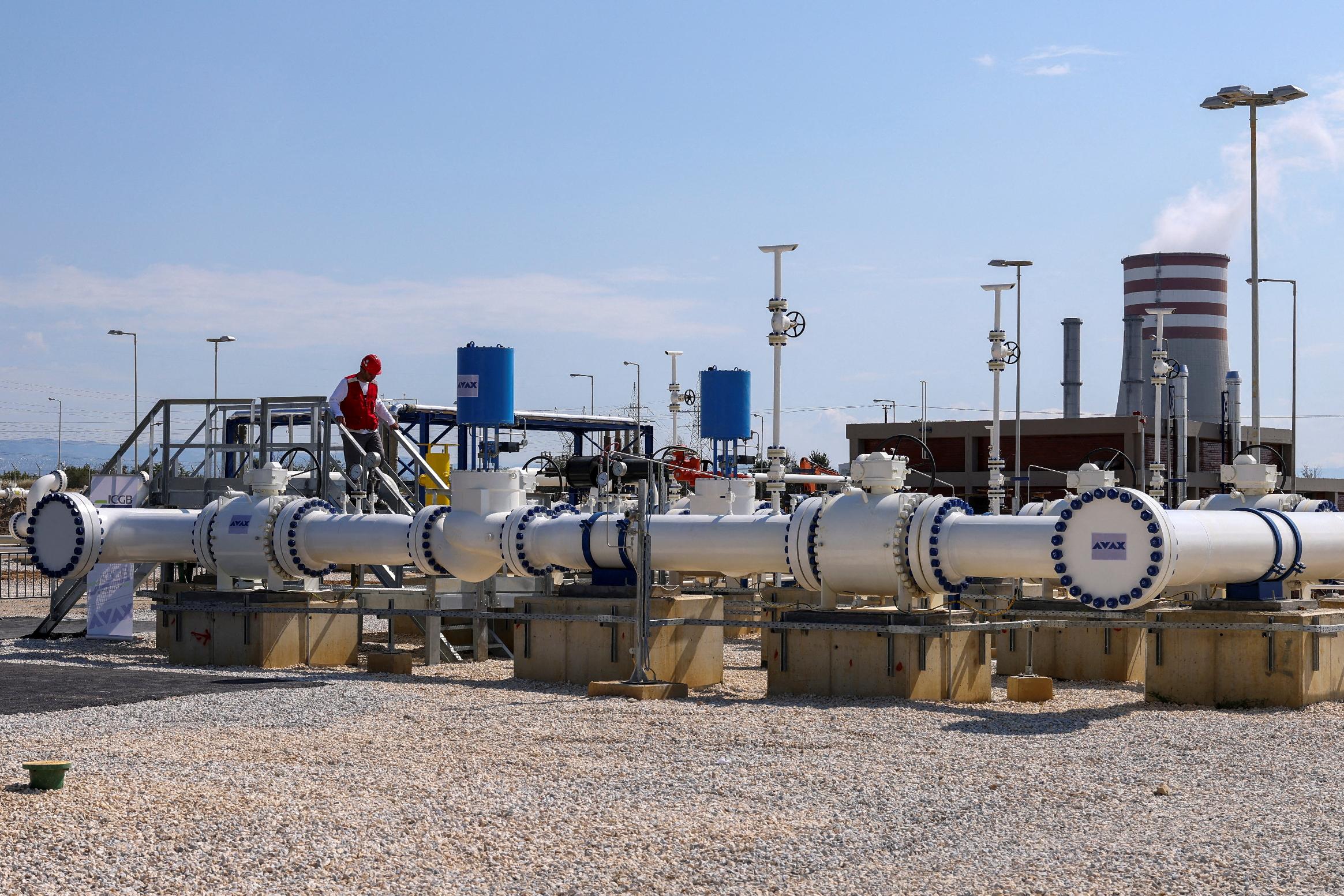
EU has ample gas stocks for next winter Deal for Russian gas to transit via Ukraine expires end-December Austria, Slovakia most vulnerable to potential disruptions European gas prices at pre-crisis levels LONDON, March 27 (Reuters) - The European Union will have plenty of gas in stock next winter and the remaining buyers of Russian pipeline gas in central Europe are working on alternative imports in case transit via Ukraine stops from January, analysts and companies said. European gas prices have fallen to levels seen prior to Russia's February 2022 invasion of Ukraine this year, touching a three-year low in February, as mild weather and high renewable power output curbed gas demand and reduced the amount of gas that has needed to be taken from storage. However, a deal signed in 2019 between Ukraine’s Naftogaz and Russia’s Gazprom allowing Russian gas to flow via Ukraine is set to expire at the end of the year, raising fresh concern about potential disruptions to European gas supply. Ukraine said earlier this month it does not plan to extend the deal although it's unclear whether it would allow a loophole whereby European companies could book the transit capacity themselves avoiding a direct deal between Russia and Ukraine. With just a few days left of Europe’s winter gas season, which ends on March 31, Europe’s gas stores are 59% full, a record high for the time of year, Gas Infrastructure Europe data shows. “Europe is on course for another record high in start-of-summer inventories and it looks like the continent will again be on course to fill its storage sites (for next winter) early,” said James Waddell, head of European gas and global LNG at consultancy Energy Aspects. As part of EU mandates set following Russia's invasion of Ukraine, Europe’s gas storage sites must be 90% full by Nov. 1. Gas held in storage typically accounts for around a quarter of Europe's winter gas use, where it is a major heating fuel, and high stock levels should leave Europe well placed to meet supply next winter and avoid dramatic price shocks. The most vulnerable countries in the EU are Austria and Slovakia as they still import a big chunk of their gas from Russia via Ukraine but even they say they are working on new sources of supply to limit the impact if supply is cut. Gazprom has typically shipped around 40 million cubic metres (mcm) of gas a day via Ukraine transit routes in 2024, which if sustained would equate to an annualised rate of 14 billion cubic metres, or roughly 3.5% of total EU demand. Around half of this gas goes to Austria via pipelines through Ukraine and then Slovakia. Austria’s energy major OMV said it has prepared for scenarios in which Russian gas supplies are interrupted. A company spokesperson told Reuters via email it has contracted long-term liquefied natural gas (LNG) regasification capacity at the Gate terminal in Rotterdam. The Netherlands last year signed a five-year deal with Norway’s Equinor and has access to Europe’s spot markets. Slovakia's SPP which also receives Russian gas via Ukraine said it continuously assesses gas market developments and the available options. "The likely further loss of Russian gas will cause Europe to source gas from other places, where LNG will be the most important source," said Sindre Knutsson, senior vice president, gas and LNG Markets, Rystad Energy. U.S. SUPPLY Europe's supply will be bolstered by cargos of LNG from the United States which met almost 14% of EU gas demand last year, European Commission data showed, up from less than 4% just two years earlier. A huge gap between U.S. and European gas prices, means Europe will remain an attractive destination for U.S. gas. "At the moment, U.S. LNG is setting the price in Europe,” said Edoardo Campanella, an energy economist at UniCredit. Europe's benchmark TTF front-month gas price is currently around four times higher than the equivalent contract in the U.S. Europe is also still receiving significant cargos of Russian LNG, which currently make up around 13-15% of Europe's total gas imports. The war in Ukraine and sanctions on other products have led to questions about whether Russian LNG imports to Europe should be blocked, but without unanimity among member states on the issue Russian cargos are expected to continue to arrive next winter. "Currently high gas inventories in Europe and gradually increasing U.S. LNG exports cannot provide open-ended protection from the supply risks that an EU ban on Russian LNG would create," said Jake Horslen, senior LNG analyst at Energy Aspects. EU countries have so far avoided applying sanctions to imports of Russian gas or LNG, on which countries including Austria and Hungary are still heavily dependent. Six analyst forecasts collated by Reuters estimated the benchmark Dutch TTF gas contract would be in a range of 29-37.5 euros per megawatt hour for the next winter period over Q4 2024 and Q1 2025, roughly equivalent to $9.25-$12 per million British thermal units (mmBtu) in U.S. and Asian gas pricing. This compares with current prices of around 27.45 euros/MWh ($8.71/mmBtu). Energy Aspect's Waddell however said an end to the Ukraine flows could add around 10 euros/MWh to gas prices this winter. The Reuters Power Up newsletter provides everything you need to know about the global energy industry. Sign up here. https://www.reuters.com/business/energy/europes-gas-stocks-point-healthy-supply-next-winter-2024-03-27/
2024-03-27 11:10
MUMBAI, March 27 (Reuters) - The Indian central bank likely sold U.S. dollars to cap further deprecation in the rupee after the currency hit a fresh record low on Wednesday due to strong dollar demand from local importers and oil companies, four traders told Reuters. The rupee fell to a record low of 83.45 in the closing minutes of the session. It was at 83.37 against the dollar as of 03:28 p.m. IST, down by 0.1% compared with its close of 83.28 on Tuesday. During the session, the rupee was also pressured by weakness in the offshore Chinese yuan and the Japanese yen. At least three state-run banks were seen offering dollars, likely on behalf of the Reserve Bank of India, near the end of the session, traders said. (This story has been corrected to fix typo in paragraph 3) Keep up with the latest medical breakthroughs and healthcare trends with the Reuters Health Rounds newsletter. Sign up here. https://www.reuters.com/markets/currencies/indian-cenbank-likely-sold-us-dollars-after-rupee-slips-fresh-record-low-traders-2024-03-27/
2024-03-27 10:49
MUMBAI, March 27 (Reuters) - The Indian rupee hit a record low on Wednesday on aggressive dollar bids by local oil companies, importers and equity-related outflows, while likely central bank intervention capped losses, traders said. The rupee closed at 83.3725 against the U.S. dollar, down 0.1% compared with its close at 83.28 in the previous session. The currency fell to an all-time low of 83.45 in the closing minutes of the session. The Reserve Bank of India (RBI) stepped in and sold dollars via at least three state-run banks, preventing further losses, a trader at a foreign bank said. With heavy dollar demand towards the end of the session, offers thinned after the rupee breached 83.40, pushing the currency past its previous low of 83.43 hit on Friday, a foreign exchange trader at a private bank said. The RBI was likely active in the non-deliverable forwards (NDF) market to prevent a further depreciation after close of the domestic trading session, two senior traders at state-run banks said. The rupee had extended its decline in the NDF market on Friday. Weakness in the offshore Chinese yuan and the Japanese yen also weighed. The yen fell to a 34-year low, prompting an intervention warning from Japan's finance minister. The dollar index was little changed at 104.3 while U.S. bond yields were largely steady in Asia trading. Continued weakness in Asian peers is likely to keep pressuring the rupee but the "proportion of decline could be lower on the back of RBI's intervention to defend the rupee," Dilip Parmar, a foreign exchange research analyst at HDFC Securities said. Parmar expects the rupee to weaken to 83.50-83.70 levels in the near term if the pressure persists. Markets await remarks from Federal Reserve Governor Christopher Waller later in the day for cues on the Fed's thinking about rate cuts. Keep up with the latest medical breakthroughs and healthcare trends with the Reuters Health Rounds newsletter. Sign up here. https://www.reuters.com/markets/currencies/rupee-falls-record-low-cenbank-likely-steps-2024-03-27/
2024-03-27 10:46
A look at the day ahead in U.S. and global markets from Mike Dolan The U.S. dollar is flexing muscle yet again as the first quarter grinds to a close, surging anew on Wednesday against Japan's yen, the Swiss franc and China's yuan - and drawing stern warnings from Japanese government officials in the process. The dollar/yen exchange rate hit a 34-year high just a whisker from 152 overnight -- surpassing previous peaks from 2022 that drew intervention from the Bank of the Japan at the time. The dollar has now jumped almost 20% against the yen since the beginning of last year. Clearly monitoring the yen's slide in real time, Japan's finance minister Shunichi Suzuki issued his strongest warning to date in the current episode and said the authorities could take "decisive steps" - a phrase previously used in Autumn 2022 just before Japan stepped in to sell dollars on the open market. What irks Japanese officials most is the fact the yen's fall has accelerated even after the Bank of Japan has started to normalise its super-loose monetary policy - prompting speculation the central bank may have to move faster on that score regardless of any currency market steps. And of course Japanese stocks lapped up the weaker currency as an additional export fillip, with the Nikkei benchmark (.N225) , opens new tab jumping almost 1% on Wednesday. The weakening yen tends to pressure other competing Asia currencies, not least China's yuan - which also fell again earlier. Unlike the Nikkei, Chinese stocks (.CSI300) , opens new tab got no solace from the currency move, however, and recoiled to near one-month lows. Even though data showed Chinese industrial profits picked up at the start of the year, political tensions and property sector worries have seen foreign investors continue to exit the market - with almost a $1 billion sold again on Wednesday via the Stock Connect system, the biggest outflow since mid-January. China's President Xi Jinping met with American business leaders at the Great Hall of the People in Beijing as the government tries to woo foreign investors back to the country and international firms seek reassurance over new regulations. But the dollar (.DXY) , opens new tab is pumped up more generally - lifted by slightly more hawkish Federal Reserve noises on the trajectory for policy rates through next year and beyond. Above-forecast U.S. durable goods orders data on Tuesday bolstered the view of a robust economy, while business spending on equipment showed tentative signs of recovery and consumer confidence held steady. With the Swiss National Bank having jumped the gun on its major central banking peers last week by cutting interest rates, the Swiss franc leads the way lower against the dollar in Europe and hit its weakest point since November 3 last year. A growing feeling that other European central banks may move to ease ahead of the Fed has put every central bank meeting under the microscope. Sweden's crown touched its weakest levels of the year against both the dollar and euro on Wednesday after the Riksbank, Sweden's central bank, held its key rate steady at 4% but said inflationary pressures had eased enough for it to make the first of several policy rate cuts in the coming months. The European Central Bank, meantime, is increasingly confident that inflation will fall back to its 2% target by mid-2025 as wage growth moderates, strengthening the case for lower interest rates, ECB board member Piero Cipollone said. European stocks (.STOXXE) , opens new tab were marginally higher on the day, although oil and gas shares there (.SXEP) , opens new tab were the biggest drag on the index as crude oil prices ebbed on rising U.S. crude inventories and signs Russia is struggling to get payment for oil shipments amid sanctions threats on related banking flows. Back on Wall St, the downbeat start to the week for stocks continued on Tuesday - but futures were positive again ahead of Wednesday's bell. Treasury yields were flat. In politics, much of the focus on Tuesday was on how shares of Donald Trump's Trump Media & Technology Group surged as much as 59% in their Nasdaq debut, lifted by the former U.S. president's supporters and providing him a potential windfall as he grapples with the costs of several legal cases. But the latest opinion poll trackers show President Joe Biden's approval ratings among American voters picking up in March to their best levels of the year so far. Key diary items that may provide direction to U.S. markets later on Wednesday: * Federal Reserve Board Governor Christopher Waller speaks, Swiss National Bank Vice Chairman Martin Schlegel speaks * South Africa Reserve Bank policy decision * US corporate earnings: Cintas, Carnival, Paychex * US Treasury sells 7-year notes, 2-year floating rate notes * Dutch Prime Minister Mark Rutte meets Chinese President Xi Jinping in Beijing; Brazil President Luiz Inacio Lula da Silva meets French President Emmanuel Macron in Rio de Janeiro Get a look at the day ahead in U.S. and global markets with the Morning Bid U.S. newsletter. Sign up here. https://www.reuters.com/markets/us/global-markets-view-usa-2024-03-27/
2024-03-27 10:09
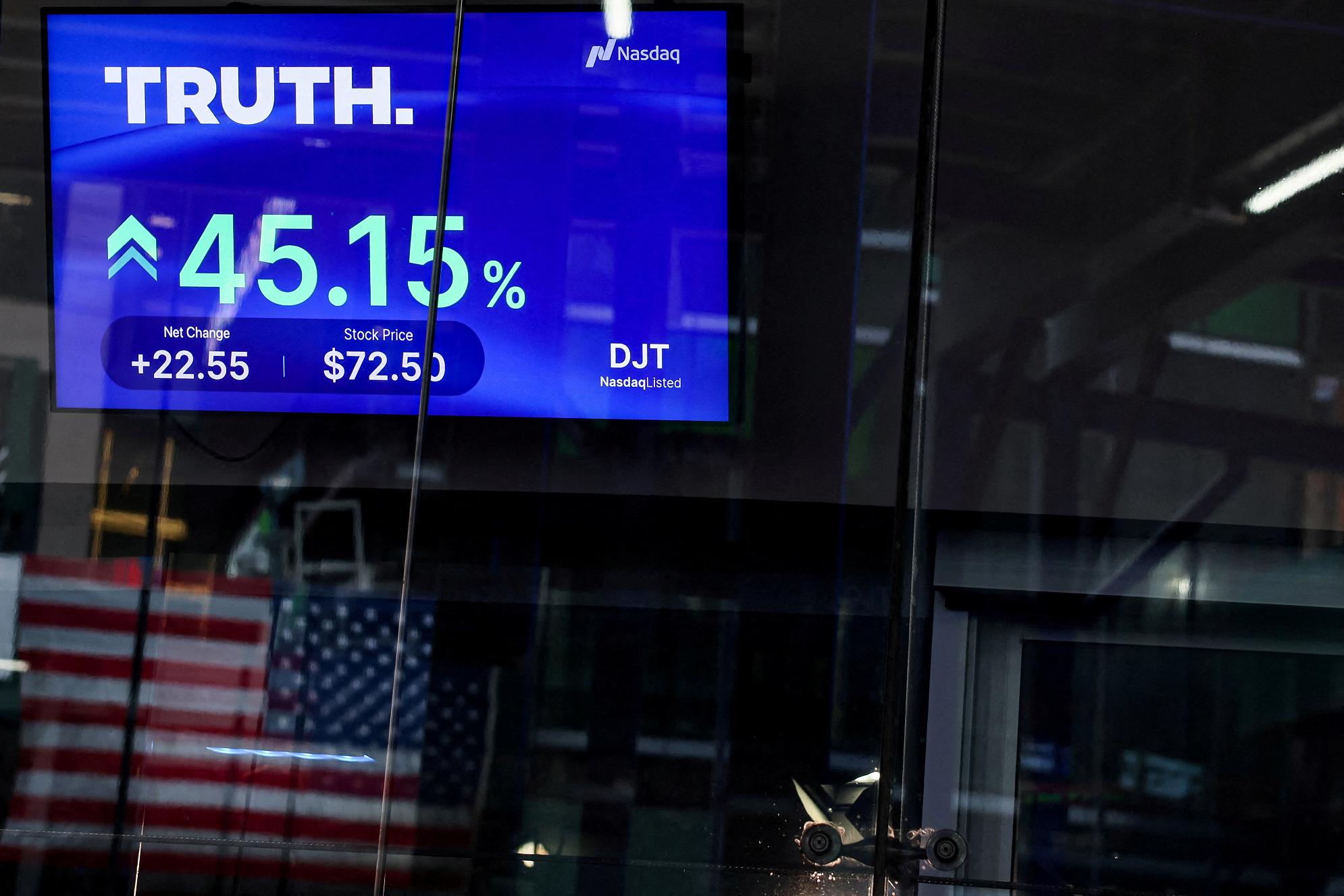
NEW YORK, March 27 (Reuters) - Possible confusion over the new stock symbol for former President Donald Trump's Truth Social saw some investor brokerage balances briefly jump by hundreds of thousands of dollars on Tuesday, the first day Trump's "DJT" ticker traded. Several people complained on social media about briefly seeing the value of their DJT stock holdings on Charles Schwab platforms inflated to figures more in line with what they would be worth if the shares traded at the level of the Dow Jones Transportation Average (.DJT) , opens new tab. Some users said they faced a similar issue in pre-market hours on Morgan Stanley's E*Trade trading platform. Shares of Trump Media & Technology Group opened Tuesday at $70.90, while the Dow Jones Transportation Average started the session at 15,937.73 points. For one trader, the Schwab brokerage balance jumped by more than $1 million due to the error, according to a screen grab shared on social media platform X. Reuters was unable to contact the trader or independently verify the brokerage balance. "It sure was nice seeing millions in the account, even if it wasn’t real," another person, going by the username @DanielBenjamin8, who faced the issue in his E*Trade account, posted on X. Two X users and one on Reddit surmised that the inflated balances were due to the ticker symbol for the company being nearly identical to the index. A spokeswoman for Charles Schwab said that certain users on some of Schwab's trading platforms saw their brokerage balances briefly inflated due to a technical issue. The issue has been resolved and investors are able to trade equities and options on Schwab platforms, she said. Schwab declined to describe the exact cause of the issue. E*Trade did not immediately respond to a request for comment outside of regular business hours. Trump Media & Technology Group and S&P Dow Jones Indices, which maintains the Dow Jones Transportation Average Index, did not immediately comment on the issue. While social media users said the issue appeared to have been resolved, many rued not being able to cash out their supposed gains from the error. "I better go tell my boss that I'm actually not retiring," the trader whose account balance had briefly jump by more than $1 million, wrote on X. The Reuters Daily Briefing newsletter provides all the news you need to start your day. Sign up here. https://www.reuters.com/business/trumps-media-company-ticker-leads-fleeting-windfall-some-investors-2024-03-27/
2024-03-27 08:24
SINGAPORE, March 27 (Reuters) - China's yuan is sliding and market participants suspect authorities are deliberately but slowly engineering a light depreciation of the currency, both to complement an easy monetary policy and to support exports. Several signals have stirred that speculation. While the yuan has declined roughly 2% this year against the dollar, it has become relatively less competitive as Japan's yen and currencies of other neighbours South Korea, Thailand and Taiwan drop more sharply. The People's Bank of China (PBOC) also appears to have loosened its grip on the yuan, allowing it to fall to the weak side of the 7.2-per-dollar level that state-owned banks had staunchly defended in the past, though it has continued to lend some support through stronger-than-expected settings of the daily mid-point for the currency. Last Friday, traders took the absence of state banks in the market to push the yuan to 7.23 to a dollar initially, and even though state banks eventually stepped in the yuan saw its biggest daily drop in nearly 3 months. Analysts at National Australia Bank (NAB) said it was "more than coincidental" that the PBOC’s defence of the yuan had relaxed in the same week the Bank of Japan abandoned its negative rates and yield-curve control policy. Though the BOJ's policy shift last week was momentous, Japanese yields are still barely positive and the yen has ironically weakened further. It is down 7% this year against the dollar this year alone, and at a 30-year low against the yuan . "Concerns at loss of export competitiveness vis-à-vis Japan too have motivated Friday's decision to lift the 7.20 cap," NAB analysts Ray Attrill and Rodrigo Catril wrote this week. The yuan's trade-weighted index (.CFSCNYI) , opens new tab is up 2% so far this year as currencies of China's trading partners have weakened, gnawing away at the country's export competitiveness and hobbling its uneven economy recovery. The index is at 99.30, far above the 92-98 band that analysts think the PBOC is comfortable with. The PBOC did not respond to a Reuters request for comments. FLOWS AND OTHER FORCES Even though China's exports seem to have rebounded early this year, the manufacturing sector is struggling, and weak export orders suggest the sector needs more support. A weak yuan would help lift export earnings. Analysts at Oxford Economics expect the monetary policy divergence between the U.S. Federal Reserve and PBOC to keep the yuan weak in the first half of 2024, but wrote that "any depreciation ahead is likely to be highly controlled", and projected the yuan will not fall beyond 7.34, a level last seen in September. UBS strategists Rohit Arora and Teck Quan Koh also reckon there could be a shift in Beijing's policy priorities, similar to the yuan's decline in the second half of 2022, when it gradually fell nearly 9% to as far as 7.328. "Put another way, we don’t expect authorities to allow yuan to be fully market-driven, but continue with a managed and orderly adjustment process," they said. Barring another big boost for the U.S. dollar, they expect the yuan will head slowly for 7.4. Indeed, the steady outflows from frail mainland stock markets and other speculative bets might require the PBOC to dampen volatility, as it does normally through state banks. One such pressure point is the yuan's increasing use in 'carry trades' in which investors borrow in a currency with low interest rates and invest the proceeds in a higher-yielding currency. Returns on yuan-funded carry trades are lower than that on yen-funded ones, where an easy 5% annualised gain can be made on 3-month swaps. But traders expect the yen to be more volatile under the BOJ's new policy regime, while the yuan has traditionally been sheltered. "From where I sit, the only thing preventing the yuan from meaningfully weakening is active policy guidance from PBOC," said Rong Ren Goh, a portfolio manager in the fixed income team at Eastspring Investments. Goh has been using the offshore yuan as a funding currency since the beginning of the year, shorting the currency and investing in high-yielding assets such as Indian rupee bonds. "If you’ve held a long dollar-CNH position since the beginning of the year, you would have already earned more than 400 pips of carry and capital gains," Goh said. Keep up with the latest medical breakthroughs and healthcare trends with the Reuters Health Rounds newsletter. Sign up here. https://www.reuters.com/markets/currencies/yuan-skids-markets-bet-more-depreciation-is-store-2024-03-27/