2024-03-26 20:26
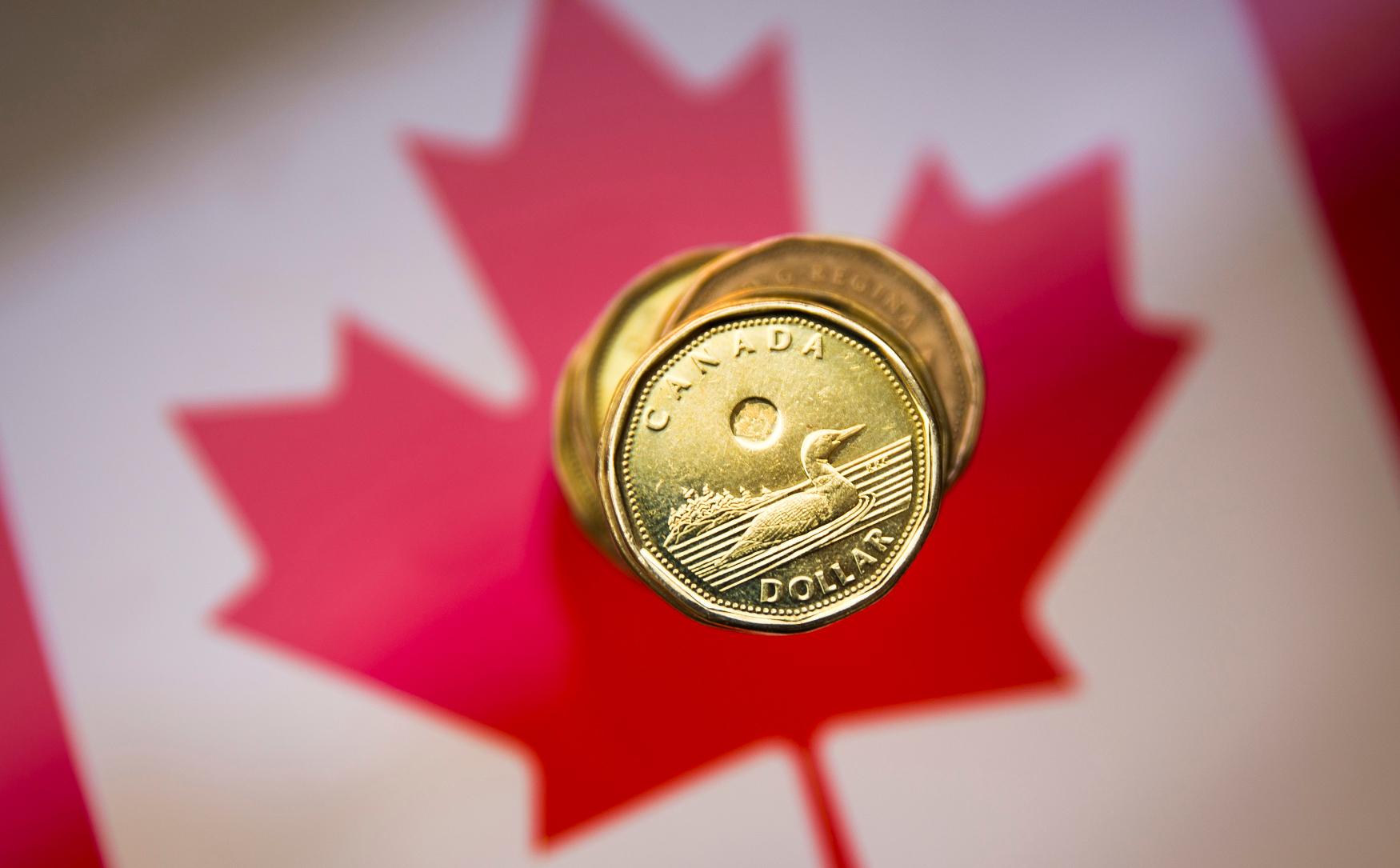
Loonie trades in a range of 1.3553 to 1.3590 Price of U.S. oil settles 0.4% lower Flash estimate shows wholesale trade up in February Canadian bond yields rise across the curve TORONTO, March 26 (Reuters) - The Canadian dollar was little changed against its U.S. counterpart on Tuesday, with the currency holding near a three-month low as the Bank of Canada highlighted Canada's recent history of weak productivity growth. The loonie was trading nearly unchanged at 1.3585 to the U.S. dollar, or 73.61 U.S. cents, after trading in a range of 1.3553 to 1.3590. On Friday, the currency touched a three-month low at 1.3614 Bank of Canada Senior Deputy Governor Carolyn Rogers said businesses urgently needed to boost investment to increase productivity, adding this would help insulate the economy against the threat of inflation. "It is rare for a central banker to use such strong words in describing her own economy," said Adam Button, chief currency analyst at ForexLive. "There isn't much holding the Canadian dollar up at the moment aside from oil and positive risk sentiment. The domestic economy is not a tailwind for the Canadian dollar and given those comments I struggle to see how it will be in the future." The Canadian central bank expects the domestic economy to barely grow this year despite historically high population growth that is being driven by immigration. Still, a preliminary estimate on Tuesday showed Canadian wholesale trade rising 0.8% in February from January. The price of oil, one of Canada's major exports, fell as investors took a more mixed view toward the loss of Russian refinery capacity after recent Ukrainian attacks. U.S. crude oil futures settled 0.4% lower at $81.62 a barrel. Canadian government bond yields moved higher across the curve, with the 10-year up 0.7 basis points at 3.498%. Keep up with the latest medical breakthroughs and healthcare trends with the Reuters Health Rounds newsletter. Sign up here. https://www.reuters.com/markets/currencies/c-steadies-boc-frets-about-productivity-shortfall-2024-03-26/
2024-03-26 20:23
TORONTO, March 26 (Reuters) - Canada's corporate ethics watchdog on Tuesday said it was likely that human rights abuses of using Uyghur forced labor had occurred at a mine in China operated by Vancouver-based firm Dynasty Gold (DYG.V) , opens new tab. In a report, the Canadian Ombudsperson for Responsible Enterprise (CORE) recommended the federal government refuse to provide any future financial support to Dynasty until it implemented recommendations to combat abuse. Dynasty Gold told Reuters that the report is full of errors and inaccuracies. The report by CORE is a result of an investigation over complaints filed by 28 Canadian organizations who alleged that Dynasty Gold used or benefited from Uyghur forced labor at the Hatu mining operations that took place in 2017, 2019 and 2020. In its final report the watchdog concluded that Dynasty contributed to the use of forced labor through its relationship with its joint venture partners Xinjiang Non-Ferrous Metal and Western Region Gold (601069.SS) , opens new tab. These two companies had relationship with another company called Terraxin in which CORE said Dynasty is a majority shareholder. Ivy Chong, CEO of Dynasty Gold to Reuters that CORE decided to publish the report without providing any evidence to support the claims, even though the company repeatedly explained the situation and the timeline of the events. However Chong said the joint venture company (Terraxin) in Xinjiang lost its exploration license in 2008 and business license shortly thereafter. And there has not been any relationship between Dynasty and the State-owned Xinjiang companies since 2008. A report by the U.N. human rights chief in 2022 said that China's treatment of Uyghurs, a mainly Muslim ethnic minority that numbers around 10 million in Xinjiang, in the country's far west, may constitute crimes against humanity. Beijing has denied these allegations. CORE said Dynasty Gold did nothing to identify, assess, and mitigate the risk of Uyghur forced labor at the mine, which led to the watchdog to reach its conclusion. The watchdog has asked Dynasty to make significant financial donations to organizations working to combat Uyghur forced labour, assess its leverage to prevent or mitigate use of forced labour at Hatu mine and determine whether it should exit responsibly from its business relationships in the Xinjiang region. Dynasty shares were up 3.7%. Get a look at the day ahead in U.S. and global markets with the Morning Bid U.S. newsletter. Sign up here. https://www.reuters.com/markets/commodities/canada-watchdog-says-abuse-likely-occurred-dynasty-gold-mine-china-2024-03-26/

2024-03-26 20:11
TORONTO, March 26 (Reuters) - The Canadian province of Ontario on Tuesday forecast its budget deficit would more than triple in the upcoming fiscal year as economic growth stalls and it spends more on housing and roads, as well as measures to ease the cost of living. Ontario, Canada's most populous province and home to Toronto, its largest city, said its deficit would widen to C$9.8 billion ($7.2 billion), or 0.9% of gross domestic product, in 2024-25, from an estimated C$3 billion in the current fiscal year, which ends on March 31. A deficit is also expected in 2025-26, of C$4.6 billion, before a shift into surplus in 2026-27, one year later than was projected in a fiscal update in November. The province forecast that economic growth would slow to 0.3% in 2024 from an estimated 1.2% in 2023, held back by higher borrowing costs since the Bank of Canada raised interest rates last year to a 22-year high of 5% to cool inflation. Some other Canadian provinces, such as Quebec and British Columbia, have also projected wider deficits. "In the face of global economic uncertainty and high interest rates that continue to put pressure on Ontario families, our government is taking a responsible approach by investing to rebuild Ontario's economy without raising taxes," Finance Minister Peter Bethlenfalvy said in a statement. The province is investing more than C$190 billion over the next 10 years to build and expand highways, transit, homes, high-speed internet and other critical infrastructure. Like the rest of Canada, Ontario's population is growing rapidly due to high immigration, raising the need for additional housing. The province has a goal of building 1.5 million new homes by 2031. To speed up that process, the province said it would invest C$1 billion in the new Municipal Housing Infrastructure Program and quadruple a fund to a total of C$825 million to help municipalities repair and expand infrastructure. It also proposed measures to reduce costs for families and businesses, including extending temporary gas tax and fuel tax rate cuts to keep rates at nine cents per liter until the end of 2024. Ontario, one of the world's largest sub-sovereign borrowers, forecast that its net debt-to-GDP ratio would rise to 39.2% in the coming fiscal year after falling to an estimated 38% in 2023-24, the lowest level since 2011-12. Still, the ratio would remain below a debt sustainability target of 40%, while the province expects its borrowing to fall to C$38.2 billion in 2024-25 from C$41.8 billion in the current fiscal year after it raised year-end cash levels. ($1 = 1.3575 Canadian dollars) The Reuters Daily Briefing newsletter provides all the news you need to start your day. Sign up here. https://www.reuters.com/world/americas/canadas-ontario-province-sees-budget-deficit-tripling-economy-slows-2024-03-26/

2024-03-26 20:04
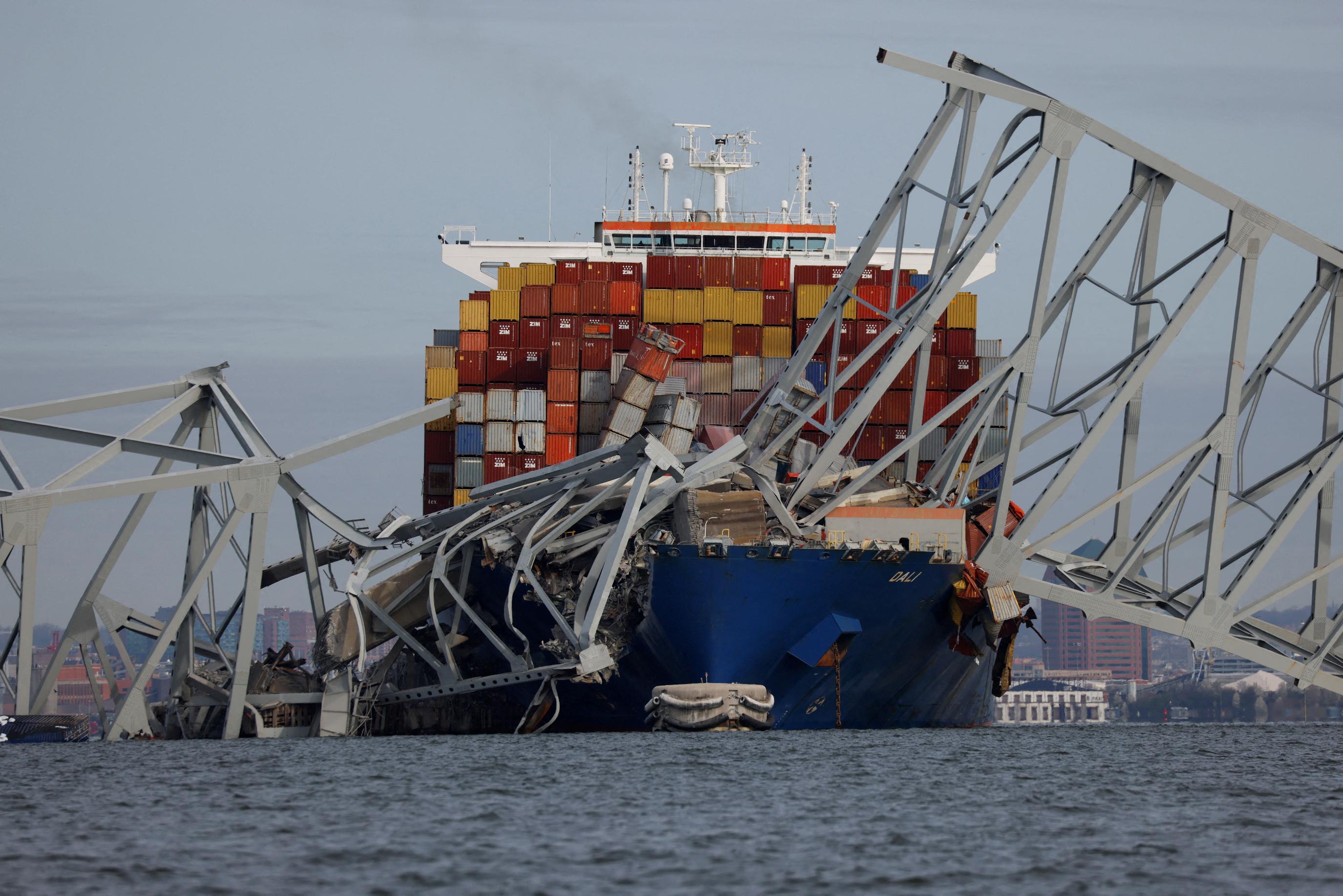
March 26 (Reuters) - Here is a timeline of the collapse on Tuesday of Baltimore's Francis Scott Key Bridge after it was hit by the Singapore-flagged container ship Dali. All times are EDT: 01:04 a.m (0504 GMT). – Loaded with shipping containers, Dali departs from Baltimore's port, headed to Colombo, Sri Lanka. 01:24 a.m. – Dali slowly approaches the Key Bridge, according to video captured by StreamTime Live. 1:24:33 a.m. – Dali appears to suffer a total power failure as all its lights go out. 1:25:31 a.m. – About a minute later, the ship's lights flicker back on. Black smoke starts rising from somewhere aboard the ship. 1:26:37 a.m. – The ship's lights go dark again. 1:27 a.m. – Dali appears to be colliding with one of the Key Bridge's piers. The U.S. Coast Guard receives first report of collision. 1:27:10 a.m. – The ship's lights come back on. 1:28:48 – The roadway of the Key Bridge begins collapsing. 1:29:00 – Most of the bridge's span has plunged beneath the water 1:40 a.m. – Baltimore City Fire Department has dispatched rescue teams for the Patapsco River, with reports of multiple people in the water. 1:50 a.m. – The first fire unit arrives on the scene. Get weekly news and analysis on the U.S. elections and how it matters to the world with the newsletter On the Campaign Trail. Sign up here. https://www.reuters.com/world/us/within-minutes-departure-faltering-container-ship-crashes-into-baltimore-bridge-2024-03-26/
2024-03-26 18:54
BRASILIA, March 26 (Reuters) - Brazil's central government reported a sharp deterioration of its budget in February, Treasury data showed on Tuesday, with increased revenues unable to offset the negative impacts of a significant growth in expenses. The central government's primary budget deficit reached 58.4 billion reais ($11.7 billion) in February, a 37.7% surge in real terms over the same month a year ago. Total spending expanded by 27.4% over February 2023, to 190.9 billion reais, mainly influenced by 30.1 billion reais in court-ordered debt payments, said the Treasury. Treasury Secretary Rogerio Ceron said that court-ordered debts are typically paid in May or June, and the decision to anticipate them distorted the comparison with total expenditures from February last year. Meanwhile, net revenue increased by 23.4% from the same month a year ago, to 132.5 billion reais. The government had already said that tax revenue for February had been a record for the month, helped by the taxation of closed-end funds and the reinstatement of federal taxes on fuels. The government relies on a revenue boost to erase the primary deficit this year, a goal that is still viewed skeptically by the market. Last week, the Planning and Finance ministries worsened their projection for public accounts, but still kept it in line with the target of a primary deficit equivalent to 0% of gross domestic product (GDP). The market in turn estimates that the deficit will reach 0.75% of GDP, according to a central bank weekly survey. Year-to-date, the central government recorded a primary surplus of 20.9 billion reais, smaller than the 38.3 billion surplus from a year ago, fundamentally affected by higher spending. By mid-April, the government is expected to submit to Congress the fiscal target for next year, after indicating it would pursue a primary surplus of 0.5% of GDP in 2025 and 1% of GDP in 2026. When asked about the feasibility of these targets, Ceron replied that achieving them is a "relative discussion if we are on the path to fiscal recovery." ($1 = 4.9840 reais) The Reuters Daily Briefing newsletter provides all the news you need to start your day. Sign up here. https://www.reuters.com/world/americas/brazil-central-govt-primary-deficit-jumps-377-february-2024-03-26/
2024-03-26 16:57
March 26 (Reuters) - Federal prosecutors in Manhattan on Tuesday charged KuCoin, one of the world's largest cryptocurrency exchanges, with violating U.S. anti-money laundering laws by failing to vet customers, allowing billions of dollars in illicit funds to be transferred since its founding in 2017. Prosecutors said the Seychelles-based exchange sought business from U.S. customers without registering with the Treasury Department and putting in place procedures to verify clients' identities as required by U.S. law. KuCoin posted on social media site X that customer assets are safe and its lawyers are looking into the allegations. "KuCoin respect the laws and regulations of various countries and strictly adheres to compliance standards," it said. Prosecutors also charged the exchange's founders, Chinese nationals Chun Gan, 34, and Ke Tang, 39, with conspiracy. They remain at large, according to prosecutors. The U.S. Commodity Futures Trading Commission separately filed a civil lawsuit against KuCoin alleging it failed to register its futures and swaps activities with the regulator. KuCoin in December agreed to block New York users from its platform and pay $22 million to settle the state's lawsuit accusing it of failing to register there. KuCoin trails Binance, Coinbase and Kraken among cryptocurrency spot exchanges on factors including traffic, liquidity and trading volumes, according to the data company CoinMarketCap. The Technology Roundup newsletter brings the latest news and trends straight to your inbox. Sign up here. https://www.reuters.com/technology/us-charges-kucoin-crypto-exchange-with-anti-money-laundering-failures-2024-03-26/