2024-03-26 16:36
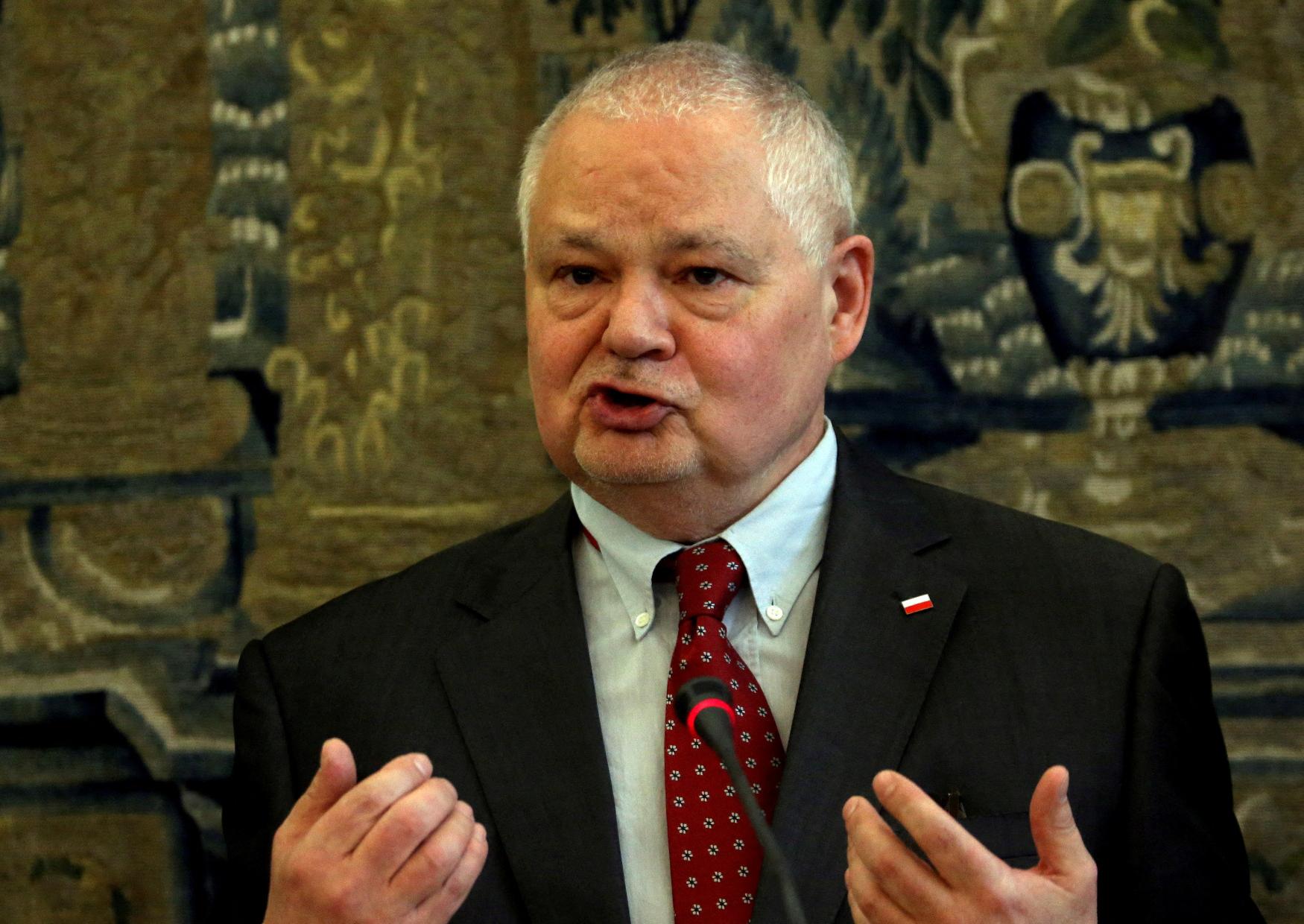
WARSAW, March 26 (Reuters) - Polish ruling party lawmakers are seeking to bring central bank governor Adam Glapinski before a state tribunal in a process that could remove him from his post. Below are the main accusations and procedural steps that need to be taken to hold him responsible for allegedly breaching the constitution. He denies any wrongdoing. BUDGET DEFICIT FINANCING Lawmakers accuse Glapinski of indirectly providing budget deficit financing in the amount of 144 billion zloty ($36 billion) under a quantitative easing program during the COVID-19 pandemic. This included buying government bonds or bonds issued by the state-owned Polish Development Fund (PFR) and state-owned development bank BGK, which benefited indirectly from National Bank of Poland (NBP) actions, while the actual beneficiary was Poland's Treasury, the motion says. The operations, carried out to finance government funding for businesses suffering from the pandemic slump, were carried off-budget, breaching the constitution, which bars the central bank from financing government borrowing. The financing of the borrowing continued until November 2021 while inflation surpassed the central bank's target range and fuelled more price pressure, the motion says. The actions may have been based on an informal agreement between the central bank and the government. The probe will also aim to determine if financing of government borrowing was deliberate or unintentional, stemming from the mistaken assumption that it was legal. CENTRAL BANK STANCE The central bank said the quantitative easing programme was in line with the law and that the accusations against Glapinski were an attack on the independence of the bank. Glapinski says he has always done his job independent of political influence. The governor has defended his record, pointing to a sharp fall in inflation over recent months and saying that quantitative easing was essential to rescue the largest economy in the east of the European Union during the pandemic. WEAKENING OF THE ZLOTY According to the motion, Glapinski stood behind currency interventions that lacked the proper authorization of the NBP board, while some aimed at weakening the zloty. The governor also mislead the finance ministry, the motion says, projecting the bank would earn a profit of 6 billion zloty in the summer of 2023, while knowing that the NBP forecast projected a loss of at least 17 billion zloty. The central bank governor acted against monetary policy guidelines by buying government-backed bonds in 2021 and in 2023 cut interest rates, which was aimed to support the ruling party and led to zloty depreciation and thus breached the constitution, according to the motion. Glapinski is also accused of impeding the jobs of some members of the rate-setting Monetary Policy Council (MPC) and the NBP board by barring their access to the NBP documents, including MPC minutes, and of orchestrating the misrepresentation of the voice of some members in meeting minutes. BONUSES, POLITICAL CAMPAIGNING The governor accepted a system of quarterly bonuses that were paid to him irrespectively of his performance, breaching central bank law, the motion says. Lawmakers say Glapinski, a long-time ally of the former ruling Law and Justice (PiS) party, publicly engaged in campaigning in favour of PiS, which breaches the constitution. WHAT LIES AHEAD? The proceedings to be held in the Constitutional Accountability Committee in parliament are likely to take months as lawmakers will examine official documents and take testimonies from an extensive list of witnesses. Aside from Glapinski, dozens of other officials and executives are expected to be called including Jaroslaw Kaczynski, the leader of PiS. The list also includes members of the NBP board, MPC members, former finance ministers, as well as former CEOs of PFR, BGK and Poland's top state-controlled banks PKO BP and Bank Pekao. After the proceedings, the Committee submits a request to the lower house of Parliament, or Sejm, to hold the central bank governor constitutionally accountable before the State Tribunal or to discontinue the proceedings. The decision on the matter is being made by the Sejm in a vote. If a request is adopted, the speaker of parliament sends an indictment to the head of the State Tribunal, otherwise the case is discontinued. The tribunal is both a court of first instance and a court of appeal. If it finds Glapinski responsible it rules the governor could lose his job. ($1 = 3.9745 zlotys) The Reuters Daily Briefing newsletter provides all the news you need to start your day. Sign up here. https://www.reuters.com/world/europe/charges-procedure-bring-polish-central-bank-governor-before-tribunal-2024-03-26/
2024-03-26 15:51
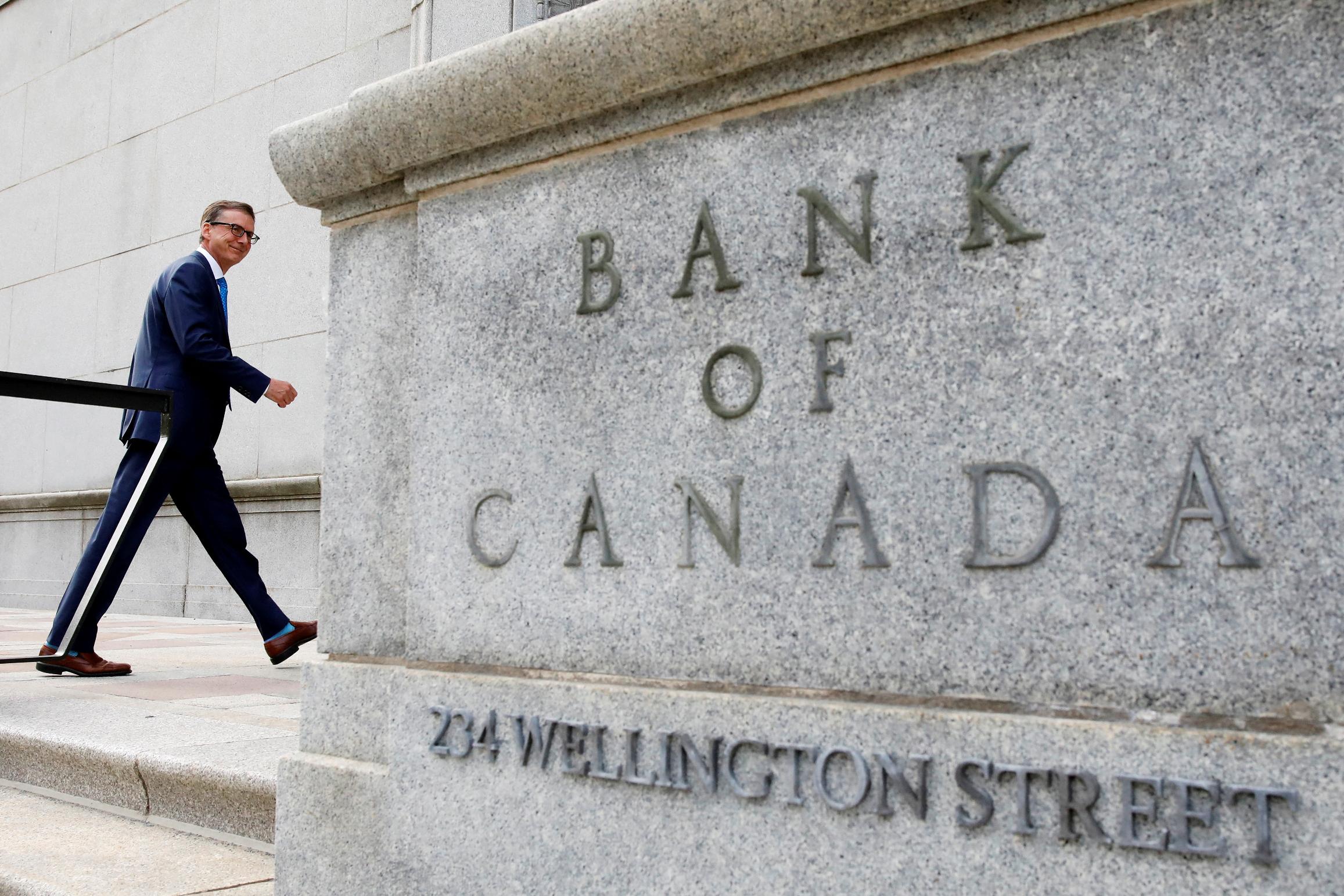
Weaker GDP growth than the US is seen as a factor Inflation has cooled much more than in the US Canada will need deeper cuts, economists say OTTAWA, March 26 (Reuters) - The Bank of Canada (BoC) is likely to move ahead of the U.S. Federal Reserve on its first rate cut, as tepid economic growth and cooling inflation are priming up conditions to ease borrowing rates sooner, economists and analysts said. The Canadian central bank may also need deeper cuts in the current cycle, since the economy is much more sensitive to interest rates due to its household debt, which as a percentage of net disposable income is the highest among G7 countries, they warn. Usually, a strong economy south of the border is good news for Canada, since about three quarters of Canada's international trade is knitted to the U.S. But with the Canadian economy clocking growth of 1% in the fourth quarter, compared with a 3.2% annualized increase in the U.S., the Bank of Canada may chart its own course. "The Canadian economy has buckled under the pressure of higher interest rates... therefore, they can't match the Fed," said Simon Harvey, head of forex analysis at Monex, who expects a 25 basis point cut in June. Money markets are pricing in a 70% chance of a quarter point cut at the BoC's June 5 meeting, and bets for a cut at its April 10 gathering have risen to 20% since data last week showed an unexpected slowdown in inflation. The Fed is widely expected to cut rates for the first time at its June 11-12 meeting. Aggressive rate cuts could help lower the burden for Canadian consumers who are facing elevated costs of living amid mortgage, auto loan and credit card payments. About a fifth of Canadian mortgage holders are expected to renew their contracts next year and rate cuts could give them some relief. At the same time, deeper and faster cuts could weaken the Canadian dollar, which risks reigniting inflationary pressures, forex analysts said. Last week, the Swiss National Bank in a surprise move became the first major central bank to cut interest rates, due to easing inflation, a move that wrong-footed markets. Others are expected to follow. In Canada, inflation fell to an eight-month low of 2.8% in February, while U.S. consumer prices posted a sharp jump, fueling expectations of a BoC lead over the Fed's move. "Headline and underlying inflation is a bit cooler in Canada, with the low-side surprise in February driving an even bigger wedge," Douglas Porter, chief economist at BMO Financial Group, wrote in a note last week. "We have long been of the view that the BoC will move ahead of the Fed," he said. Despite two back-to-back soft inflation prints, Bank of Canada Governor Tiff Macklem has said underlying price pressures in the economy still persisted and it was still too early to consider a cut. The bank's key interest rate has been at 5.0% since July. But whenever the Bank of Canada starts, economists and analysts said, the country would need deeper rate cuts than its neighbor. "Canada is seen cutting more aggressively over a longer time frame," said Karl Schamotta, chief market strategist at Corpay. Get a look at the day ahead in U.S. and global markets with the Morning Bid U.S. newsletter. Sign up here. https://www.reuters.com/business/finance/bank-canada-likely-lead-us-fed-rate-cuts-2024-03-26/
2024-03-26 15:50
BRASILIA, March 26 (Reuters) - Brazil's finance ministry unveiled on Tuesday its proposal to reduce the burden of states' debt to the federal government, conditioned upon allocating resources to technical high school education. The move comes after several governors have requested lower charges, arguing that the amount paid in interest is excessively high and hampers investment. Finance Minister Fernando Haddad, who previously served as education minister in a prior administration of leftist President Luiz Inacio Lula da Silva, met with governors on Tuesday morning to discuss the issue and predicted the draft of a bill on the subject to be ready in about two months. Speaking with reporters after the meeting, he said that new rounds of discussions will take place with states to reach the bill's final format. In a presentation released by the ministry's press office, the government said that states joining the program would be able to opt for interest rates of 2%, 2.5% or 3% per year, varying according to the adopted counterparties. The lowest rate will apply to those who allocate 100% of the savings in debt service resulting from the interest rate reduction to the creation and expansion of enrollments in technical high school education. According to the finance ministry, states currently owe 740 billion reais ($148.9 billion) to the federal government, with four states - Sao Paulo, Rio de Janeiro, Rio Grande do Sul, and Minas Gerais - accounting for 90% of the total debt. States that join the initiative will experience a temporary reduction, from 2025 to 2030, in the interest rates applied to debt refinancing contracts. The goal is to have over 3 million students enrolled in technical high schools by the end of this period, with states that meet their targets within six years enjoying a permanent reduction in interest rates, the ministry said. Regardless of participation in the program, states can achieve further interest rate reductions of 0.5 percentage point by making an extraordinary amortization of 10% of their debt, or 1 percentage point in case of a 20% payment. Amortization can be made in assets, including stakes in public companies and mixed economy societies, said the ministry. ($1 = 4.9712 reais) The Reuters Daily Briefing newsletter provides all the news you need to start your day. Sign up here. https://www.reuters.com/world/americas/brazil-unveils-proposal-reduce-debt-service-states-debt-2024-03-26/

2024-03-26 14:54
March 26 (Reuters) - Shares of social media platform Reddit (RDDT.N) , opens new tab jumped 11% on Tuesday, set to extend a strong run from a day earlier following the launch of options on the stock. At current price of $67.5, more than $1 billion was set to be added to the company's market value. The stock was also on track to nearly double its IPO price of $34. "More bullish investors have bought options in Reddit, which is part of its early stock market success in its first full week of trading," said Jeremy Goldman, senior director of client briefings at Emarketer, formerly Insider Intelligence. The launch of options trading drew bullish bets on the stock on Monday, closing up around 30% and making it the top percentage gainer on the New York Stock Exchange. "From my estimates, about 90,000 options have changed hands, possibly more," Goldman added. Current gains could also help surpass the $10 billion valuation Reddit received in a private fundraising round in 2021. The Technology Roundup newsletter brings the latest news and trends straight to your inbox. Sign up here. https://www.reuters.com/technology/reddit-shares-surge-day-after-options-launch-set-nearly-double-ipo-price-2024-03-26/

2024-03-26 13:25
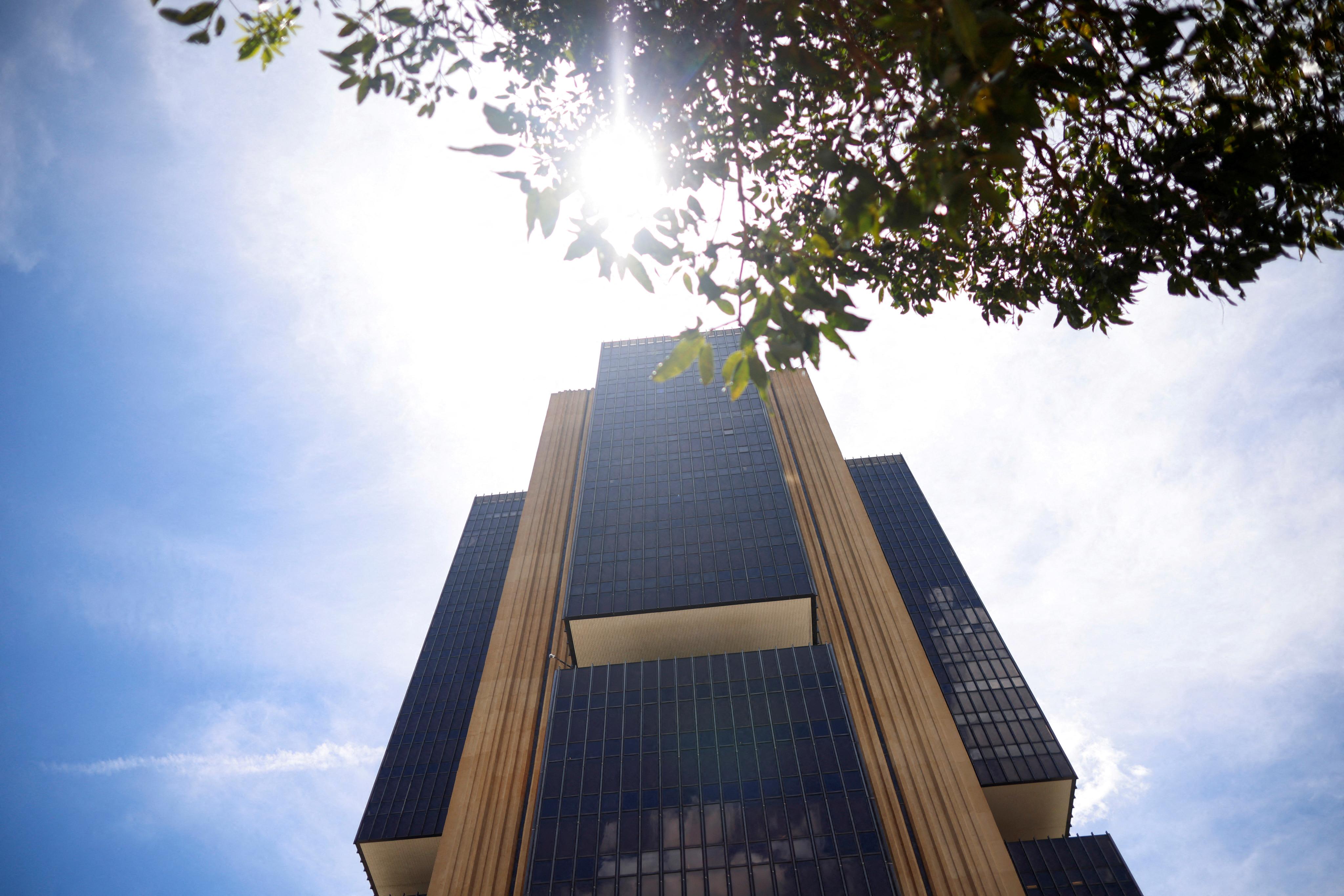
BRASILIA, March 26 (Reuters) - Discussions on more modest interest rate cuts in the future emerged within Brazil's central bank rate-setting committee, the bank said on Tuesday, citing the risk of heightened uncertainty domestically and internationally. In the minutes of the meeting on March 19-20, when the bank cut the benchmark interest rate by 50 basis points to 10.75%, the central bank said that "information provided by updating the analyzed data sets will be particularly important in defining the terminal interest rate and its respective path". "Some members also argued that if prospective uncertainty remains high in the future, a slower pace of monetary easing may prove appropriate, for whatever terminal rate is desired," it added. The minutes came on the same day as the most recent inflation reading, which reached 4.14% over the 12 months to mid-March, slightly above market estimates. Nicolas Borsoi, chief economist at Nova Futura Investimentos, stressed that the inflation breakdown also shows the acceleration of underlying services on a three-month annualized average. "Along with the message from the minutes ... it's not possible to rule out a 50 basis-point cut in June, but it's another argument in the direction that the central may have to reduce the pace of cuts," said Borsoi. In its decision statement last week, the central bank had already shortened its forward guidance, indicating the maintenance of the same pace of reductions for only one meeting ahead, should the expected scenario persist. This suggested that beyond the next meeting in May, the course of easing may be changed, contrasting with the signaling since the rate-cut cycle began in August, of same-size cuts for the upcoming "meetings", in the plural. Since reducing interest rates from a six-year high of 13.75% kept steady for almost a year to tame inflation, policymakers have reduced borrowing costs by 300 basis points, consistently with 50 basis-point cuts at each meeting. In the minutes, the central bank said it unanimously concluded that the heightened uncertainty diminished the benefits of future signaling and increased its costs. "It would be a mistake to interpret the change in future signaling as an indication of a change in the monetary policy cycle compatible with the baseline scenario," it added. Policymakers see uncertainties regarding the international disinflationary scenario due to the strength of activity in the United States and its impact on global financial conditions. They also emphasized that while there is benign price behavior in food and industrial goods in Brazil, doubts arise about the speed of disinflation in services due to resilient activity. "A slower disinflationary process, both domestically and globally, does not constitute the baseline scenario but has been incorporated as a source of uncertainty. This increased uncertainty recommends caution in the conduct of monetary policy." The Reuters Daily Briefing newsletter provides all the news you need to start your day. Sign up here. https://www.reuters.com/markets/rates-bonds/brazil-central-bank-discussed-smaller-rate-cuts-if-uncertainty-persists-2024-03-26/
2024-03-26 13:09
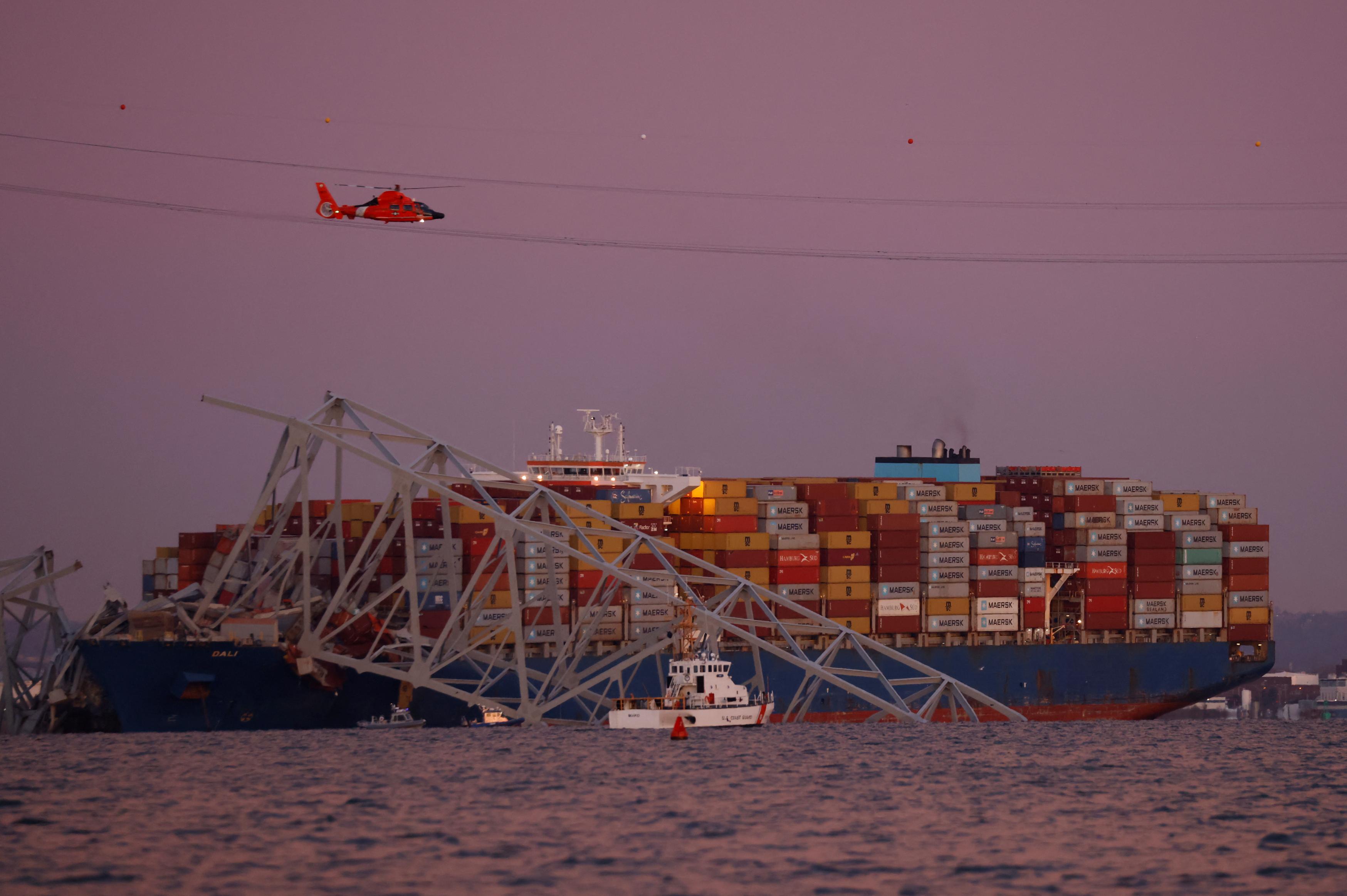
April 6 (Reuters) - Work is underway to begin clearing the wreckage of Baltimore's Francis Scott Key Bridge more than a week after a faltering cargo ship crashed into it, sending the span collapsing into the harbor and killing six construction workers who were thrown into the water. Replacing the bridge will likely take years, but authorities have opened two temporary channels to allow some shallow-draft vessels, such as barges and tugboats, to move around the stricken container vessel. President Joe Biden visited Baltimore on Friday, pledging federal help to rebuild the span, an idea some Republican lawmakers have resisted. WHAT IS THE DEATH TOLL IN THE BRIDGE COLLAPSE? The six victims of the bridge collapse were all immigrants from Mexico and Central America who were fixing potholes on the road surface of the bridge when it collapsed early on March 26. Dive teams have recovered three bodies so far: * Maynor Yasir Suazo-Sandoval, 38, of Honduras * Alejandro Hernandez Fuentes, 35, of Baltimore, originally from Mexico * Dorlian Castillo, 26, of nearby Dundalk, originally from Guatemala. Three other bodies remain trapped beneath the underwater debris in the 50-foot-deep (15 m) waters. They are Jose Lopez from Guatemala; Miguel Luna from El Salvador; and another whose name has not been released. Two other workers were rescued from the channel shortly after the collapse, one of whom was hospitalized. The ship's pilot and crew had reported a loss of power before impact and dropped anchor to slow the vessel, giving authorities barely enough time to halt traffic on the bridge, which likely prevented greater loss of life. WHEN DID THE BALTIMORE BRIDGE COLLAPSE? Shortly after 1 a.m. EDT (0500 GMT) on March 26, a container ship Dali was heading out of Baltimore Harbor along the Patapsco River on its way to Sri Lanka. At 1:24 a.m., the ship experienced a power failure and all its lights went out. Three minutes later, at 1:27 a.m., the vessel struck a pylon of the bridge, and nearly the entire structure of the span crumbled into the water within seconds. The disaster may be the worst U.S. bridge collapse since 2007, when a design error caused the I-35W bridge in Minneapolis to plunge into the Mississippi River, killing 13 people. WHAT FACTORS PLAYED A ROLE IN THE BRIDGE COLLAPSE? Bridges such as the one in Baltimore are classified as "fracture critical" by the federal government - meaning that if one component or "member" of its primary structural frame fails, all or most of the span will collapse. There are more than 16,800 such bridges in the U.S., according to the Federal Highway Administration. The head of the National Transportation Safety Board said "fracture critical" spans structural engineering redundancies that are common to newer bridges and thus make them less vulnerable to catastrophic collapse. The Key Bridge opened in 1977 - three years before a similar vessel collision of the Sunshine Skyway Bridge in Tampa Bay, Florida, killed 35 people, and prompted bridge designers to implement better protections for foundation piers. HOW MUCH WILL THE BALTIMORE BRIDGE COST TO REPLACE? Federal officials have told Maryland lawmakers the final cost of rebuilding the bridge could soar to at least $2 billion. To fully replace the bridge, Congress would need to approve funding and there are growing signs of friction about using federal dollars to fund the bridge's reconstruction. President Joe Biden has said he wants the federal government to pay to rebuild the bridge. The Transportation Department on March 28 awarded $60 million in "quick release" emergency funds to aid in clearing debris and begin the process of rebuilding. After the bridge collapse in 2007 in Minnesota, Congress allocated $250 million. Insurers could face billions of dollars in claims, analysts said, with one putting the cost as high as $4 billion, which would make the tragedy a record shipping insurance loss. HOW LONG WILL IT TAKE TO REBUILD THE BALTIMORE BRIDGE? Rebuilding could be a lengthy process and will depend on whether any of the remaining structure can be salvaged. It took five years to construct the original bridge from 1972-1977. WHEN WILL THE BALTIMORE PORT REOPEN? The U.S. Army Corps of Engineers said it expects to open a new channel for commercial shipping by the end of April and restore port access to full capacity by the end of May. Authorities opened two temporary channels to allow essential vessels to go around the stuck vessel. The channels are 11 feet (3.35 m) and 14 feet deep. Major cargo ships need a depth of at least 35 feet. Closing the Port of Baltimore for just one month would cost Maryland $28 million in lost business, according to IMPLAN. WHAT TO KNOW ABOUT THE CARGO SHIP DALI AND ITS STRANDED CREW The Dali was leaving Baltimore en route to Colombo, Sri Lanka, with a crew of 21 plus two pilots on board. All were safe and accounted for. The 21 crew members were still on the ship more than a week after the accident, provisioned with enough food and water for a 35-day voyage, the U.S. Coast Guard said. The ship measures 948 feet (289 m) - as long as three football fields. It was stacked high with containers but capable of carrying twice as much cargo. Safety investigators recovered the ship's "black box" recorder, which provides data for the vessel's position, speed, heading, radar, bridge audio, and radio communications as well as alarms. The same ship was involved in an incident in the port of Antwerp, Belgium, in 2016, when it hit a quay as it tried to exit the North Sea container terminal. An inspection in June 2023 carried out in San Antonio, Chile, found the vessel had "propulsion and auxiliary machinery" deficiencies, according to data on the public Equasis website, which provides information on ships. According to Singapore's Maritime and Port Authority, the vessel passed foreign-port inspections in June and September 2023. The registered owner of the Singapore-flagged ship is Grace Ocean Pte Ltd, LSEG data show. Synergy Marine Group managed the ship, and Maersk (MAERSKb.CO) , opens new tab chartered the vessel. WHAT DO WE KNOW ABOUT THE BRIDGE THAT COLLAPSED? The fallen bridge was one of three highway routes traversing Baltimore Harbor — the two others are tunnels beneath the harbor — and handled 31,000 cars per day, or 11.3 million vehicles a year. The steel structure was four lanes wide and rose 185 feet (56 m) above the river. It opened in 1977 and crosses the mouth of the Patapsco River. The bridge is named for U.S. national anthem author Francis Scott Key, who wrote the words to the "Star Spangled Banner" in 1814 after witnessing the British bombardment of the U.S. garrison at nearby Fort McHenry from Baltimore Harbor. HOW WILL THE BRIDGE COLLAPSE IMPACT THE BALTIMORE PORT? Shipping traffic was suspended at the port, the 17th largest in the country , opens new tab, idling some 15,000 workers whose jobs directly depend on port operations. The flow of container freight to Baltimore can likely be redistributed to bigger ports. However, there could be major disruptions in shipments of cars, coal and sugar. Baltimore is the busiest U.S. port for shipments of car and light trucks, handling at least 750,000 vehicles in 2023, according to data from the Maryland Port Administration. In 2023, the port was the second busiest for coal exports. It is also the largest U.S. port by volume for handling farm and construction machinery, as well as agricultural products such as sugar and salt. Get weekly news and analysis on the U.S. elections and how it matters to the world with the newsletter On the Campaign Trail. Sign up here. https://www.reuters.com/world/us/why-did-baltimore-bridge-collapse-what-do-we-know-about-ship-2024-03-26/