
2024-03-26 06:38
NEW YORK/LONDON, March 26 (Reuters) - Wall Street turned modestly lower in late trade on Tuesday, mostly in sync with subdued global share market movements, while the yen hovered near 2022 intervention levels after more official Japanese jawboning to deter shorting of the currency since last week's monetary policy tightening. Treasury yields barely moved, reflecting muted trading across asset classes ahead of Good Friday, when U.S. markets and many other financial centers will be closed. The S&P 500 (.SPX) , opens new tab closed down 14.61 points, or 0.28%, at 5,203.58. the Dow Jones Industrial Average (.DJI) , opens new tab fell 31.31 points, or 0.08%, to 39,282.33, and the Nasdaq Composite (.IXIC) , opens new tab fell 68.77 points, or 0.42%, to 16,315.70. MSCI's gauge of stocks across the globe (.MIWD00000PUS) , opens new tab fell 1.02 points, or 0.13%, to 778.43. "It's an interesting dynamic, and this holds every time we have a Fed meeting - the next week tends to have a quieter tone to it. Especially a holiday-shortened week like we have here, and the amount of data influence is going to be lighter," said Art Hogan, chief market strategist at B Riley Wealth in New York, referring to the Federal Reserve. "That's attracting the sideways movement we've seen." The pan-European STOXX 600 (.STOXX) , opens new tab index rose 0.24%, and MSCI's broadest index of Asia-Pacific shares outside Japan (.MIAPJ0000PUS) , opens new tab closed 0.25% higher 0.25%, at 535.59. In the spotlight was the yen , which has been trading close to its weakest against the dollar since 1990, even after the Bank of Japan raised interest rates last week for the first time in 17 years. The dollar ticked up 0.1% to 151.56 yen, facing the risk of Japan intervening to prevent further falls in the Japanese currency. Dollar/yen rose to 151.94 in October 2022, before intervention pushed it lower. Japanese Finance Minister Shunichi Suzuki said on Tuesday he would not rule out any measures to cope with the yen's weakening, echoing a warning from Tokyo's top currency diplomat the previous day. The dollar weakened 0.06% to 7.248 versus the offshore Chinese yuan, which was supported after a stronger-than-expected fixing of its trading band. Markets were unsettled by a sharp drop in the yuan on Friday, after months of tight trading, and some speculate China is loosening its grip on the currency to allow it to fall. "We've got changing sands in the FX market. You’ve got threat of intervention from Japan ... and from China. It’s good to see that they do actually care about the economy and they are willing to step in. It’s not quite the stimulus we want, but they are saying 'enough is enough now, we do need to worry about our deflation'," XTB research director Kathleen Brooks said. A 14% decline in the yen's value over the last 12 months fed a surge in Tokyo's Nikkei index (.N225) , opens new tab to record highs in recent days, even though it slipped 0.04% on Tuesday. MIXED OUTLOOKS Last Wednesday, the Federal Open Market Committee left U.S. interest rates where they were and the FOMC's median dot plot projections showed no change to the previous projection of three rate cuts this year, despite a strong economy and stubborn inflation. Confusing the picture somewhat since, while Chicago Fed President Austan Goolsbee on Monday said he had pencilled in three rate cuts this year, Fed Governor Lisa Cook urged caution and Atlanta Fed President Raphael Bostic reiterated Friday remarks trimming his expectations to one cut. U.S. interest rate futures price about three Fed rate cuts this year and about a three-in-four chance of the first cut in June. U.S. yields edged up after a report showing orders for long-lasting U.S. manufactured goods increased more than expected in February, while business spending on equipment showed tentative signs of recovery, boosting the economy's prospects in the first quarter. They retreated slightly after the Treasury auctioned $67 billion in five-year notes to solid demand. The yield on benchmark U.S. 10-year notes was off 2.5 basis point at 4.228%. The 2-year note yield, which typically moves in step with interest rate expectations, was flat at 4.5868%. The week's most important data, the February Personal Consumption Expenditure Price Index, comes at the end of the week, when hardly anyone is around to watch. The federal government is open on Good Friday, but bond and stock markets are closed, so any trade reaction will come on Monday. U.S. crude futures settled 0.4 % lower at $81.62 a barrel and Brent settled 0.58% lower at $86.25 per barrel. Spot gold added 0.24% to $2,176.69 an ounce. U.S. gold futures gained 0.09% to $2,176.80 an ounce. bitcoin fell 1.74% to $69,753.73. Ethereum declined 1.55% last fetching $3572.7. (This story has been corrected to say bonds sidle, not slide, in the headline) Get a look at the day ahead in U.S. and global markets with the Morning Bid U.S. newsletter. Sign up here. https://www.reuters.com/markets/global-markets-wrapup-1-2024-03-26/

2024-03-26 06:23
TAIPEI, March 26 (Reuters) - Taiwan's central bank said on Tuesday it would continue moderate tightening of monetary policy to curb rising inflation expectations after unexpectedly raising its benchmark rate last week. The central bank hiked the benchmark discount rate TWINTR=ECI to 2% from 1.875%, where it has stood since last March. It cited inflationary pressures and next month's rise in electricity prices, which will go up by an average of 11% but by more for large industrial users. "We will continue to review the impact of electricity price hikes on inflation," the central bank said in a written report before governor Yang Chin-long takes questions in parliament on Wednesday. Monetary policy will be adjusted in a timely way and be tightened moderately and gradually, it added. However, the central bank also noted that Taiwan's inflation was much milder than other major economies, and that its tightening was also much milder. The central bank said that it expects the consumer price index (CPI) to rise 2.16% and core CPI to rise 2.03% given the electricity price hikes, but that inflation will gradually ease this year. The Reuters Daily Briefing newsletter provides all the news you need to start your day. Sign up here. https://www.reuters.com/markets/rates-bonds/taiwan-central-bank-apply-moderate-tightening-against-inflation-2024-03-26/

2024-03-26 06:22
BOJ's new language makes no promise to keep rates low - sources Aligning with data-dependent Fed, BOJ now has a free hand Key hints will come at BOJ's fresh forecasts due in April Weak yen, broadening wage hikes may be triggers for next hike TOKYO, March 26 (Reuters) - The Bank of Japan has ditched its dovish forward guidance in favour of a more "data-dependent" approach to policy deliberations after ending negative rates, sources say, keeping the door open for another near-term hike in borrowing costs. The BOJ ended eight years of negative rates and unorthodox policy last week, making a historic shift away from decades of massive monetary stimulus. Despite the rate hike, the yen has tumbled more than 1% since the policy pivot, as markets' dovish reading of the BOJ's communication reinforced expectations that another rate hike would be some time off. In its decision last week, the BOJ said it "anticipates that accommodative financial conditions will be maintained for the time being". However, a close look at the BOJ statement shows the bank has made no promise to keep interest rates at current low levels but instead conditionally states that borrowing costs could stay low if economic and price conditions don't change. "The BOJ has made no commitment about the future rate hike pace," a source familiar with the bank's thinking said on the March statement, a view echoed by another source. "The timing of the next move is data-dependent, which means all options are on the table," the first source said. The BOJ's language last week compared with the more assertive tone of previous guidance that it "will continue" with ultra-loose policy to stably hit its price target, and "will not hesitate" to ramp up stimulus if needed. The new approach to communication aligns the BOJ with other major central banks, including the Federal Reserve, which ditched rigid forward guidance in favour of a more discretionary approach as they hiked rates aggressively to combat soaring inflation. While refraining from specifying a timing, BOJ Governor Kazuo Ueda said last week the bank could raise rates if trend inflation, which is still below 2%, heightens "a bit more." "If our price forecast clearly overshoots or, even if our median forecast is unchanged, we see a clear increase in upside risk to the price outlook, that will likely lead to a policy change," Ueda said. The remarks heighten the importance of the BOJ's fresh quarterly growth and inflation forecasts due at its next policy meeting on April 25-26, which for the first time will include projections for fiscal 2026. While the BOJ likely won't hike rates next month, the new forecasts will offer clues on how optimistic policymakers are about the chance of trend inflation heightening to 2%. A Reuters poll taken after the March policy shift showed more than a half of economists expect the BOJ to hike rates again this year, though most do not see rate hikes coming at least until the fourth quarter. Some analysts see the weak yen as a potential trigger for further rate hikes, as the currency's renewed declines could push up raw material import costs again. Ueda has said the BOJ "stood ready to respond" if yen moves had a huge impact on its economic and price projections. "The BOJ seems wary of the risk of one-sided yen declines," which could prompt further rate hikes without much pause, said Shunsuke Kobayashi, chief economist at Mizuho Securities. "There's a significant chance of the BOJ hiking rates again from October-December onward," he said. Others even see the chance of action at the BOJ's meeting on July 25-26, when more data becomes available on whether bumper wages hikes are spreading to smaller firms. "If there's a chance of an overshoot in inflation, the BOJ could act as soon as in July," said Mari Iwashita, a veteran BOJ watcher who is chief market economist at Daiwa Securities. Get a look at the day ahead in Asian and global markets with the Morning Bid Asia newsletter. Sign up here. https://www.reuters.com/markets/asia/bank-japan-may-be-less-dovish-than-markets-think-2024-03-26/

2024-03-26 06:10
MUMBAI, March 26 (Reuters) - The Indian rupee strengthened on Tuesday, rebounding from Friday's record low, aided by likely intervention from the central bank and an uptick in the offshore Chinese yuan. The rupee was at 83.3375 against the U.S. dollar as of 10:45 a.m. IST, up 0.1% compared with its close at 83.4250 in the previous session. The rupee had fallen to its record low of 83.43 in the closing minutes of Friday's session. Indian financial markets were shut on Monday. The Reserve Bank of India (RBI) likely sold U.S. dollars via state-run banks on Tuesday, to prevent a further depreciation in the rupee, five traders said. The rupee seems to have shifted into a weaker trading range, with 83.20 likely to be the immediate resistance, Dilip Parmar, a foreign exchange research analyst at HDFC Securities said. The dollar index was slightly lower at 104.2 after declining 0.2% on Monday while most Asian currencies rose slightly. The offshore Chinese yuan was higher at 7.24 after having risen 0.7% on Monday, aided by dollar sales from Chinese state-run banks. Though short-term factors do favour a slightly weaker yuan, depreciation is expected to be gradual and controlled, ING Bank said in a Monday note. Meanwhile, dollar-rupee forward premiums fell, with the 1-year implied yield down 4 basis points (bps) at 1.54%, its lowest level in nearly 4 months. Forward premiums were pressured by persistent receiving interest and an uptick in near-maturity U.S. bond yields. The 1-year U.S. Treasury yield rose to 5.01% in Asia trading hours, up 4 bps compared with its close on Friday. Investors now await the release of U.S. personal consumption expenditure (PCE) inflation data later this week. (This story has been refiled to fix the spelling of depreciation in paragraph 3) Keep up with the latest medical breakthroughs and healthcare trends with the Reuters Health Rounds newsletter. Sign up here. https://www.reuters.com/markets/currencies/rupee-recovers-record-low-likely-cenbank-intervention-yuan-gains-2024-03-26/
2024-03-26 06:09
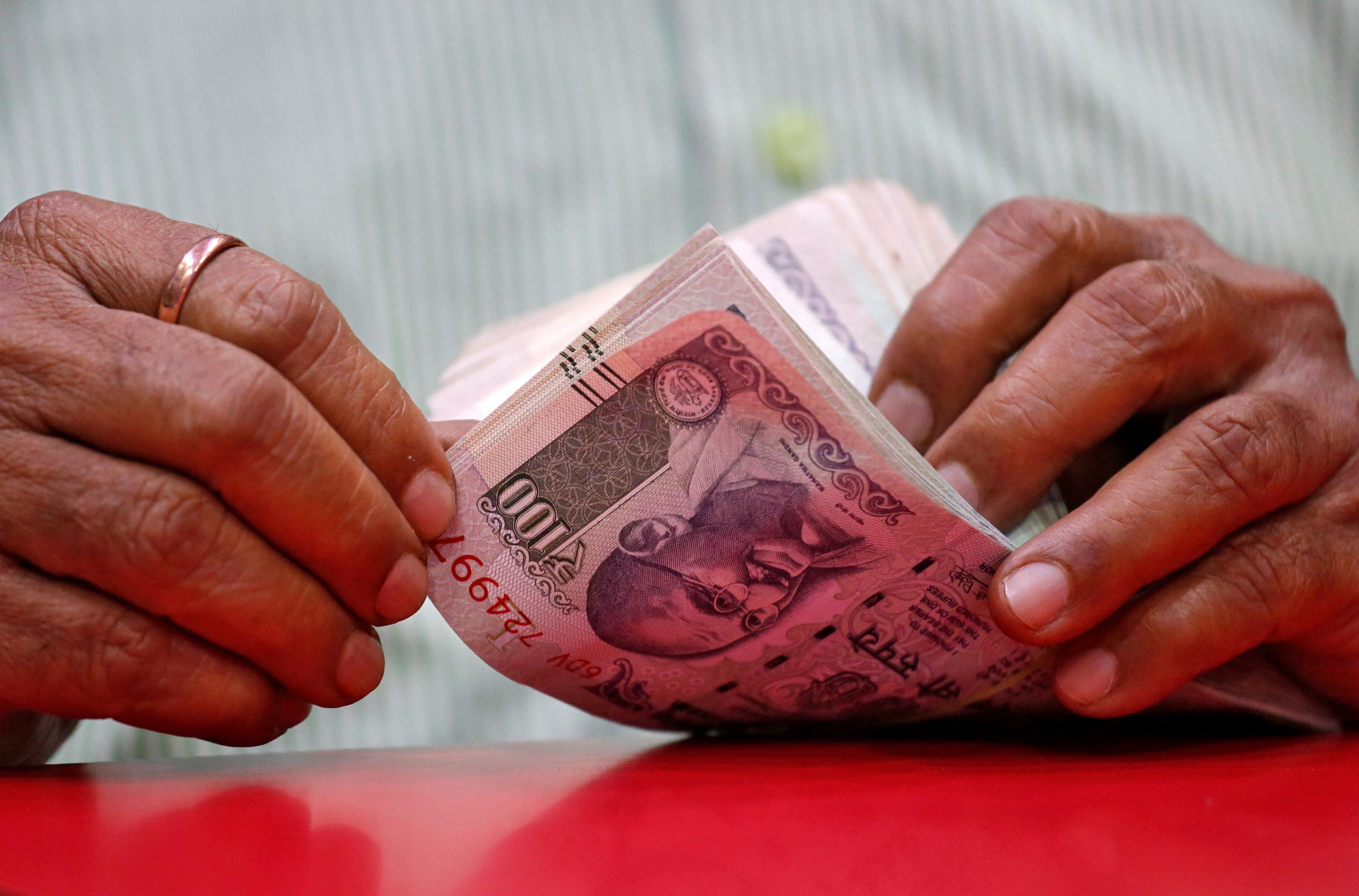
Dollar index down 0.1% against rivals U.S. PCE price index data due on Friday Gold may hit record high by end-2024 - WisdomTree LONDON, March 26 (Reuters) - Gold prices rose on Tuesday supported by a weaker dollar as investor focus turns to U.S. inflation data due later this week, which could shed more light on the timing of the Federal Reserve's first interest rate cut this year. Spot gold rose 1.1% to $2,196.21 per ounce by 1122 GMT. Gold hit a record high of $2,222.39 last week after Fed policymakers indicated they still expected to reduce interest rates by three-quarters of a percentage point by 2024-end despite recent high inflation readings. "Unless there is significant news that indicates a speeding up of rate cuts, gold is unlikely to hit a new record high before Easter," said Nitesh Shah, commodity strategist at WisdomTree. "However, we expect new records to be broken by the end of the year," he said. According to WisdomTree, gold prices may top $2,350 in the first quarter of 2025. Traders are pricing in a 70% probability that the Fed will begin cutting rates in June, according to the CME Group's FedWatch Tool. The dollar index , meanwhile, slipped 0.1% against its rivals, making gold less expensive for other currency holders. Focus is now on U.S. core personal consumption expenditure price index data due on Friday. Gold prices are also supported by elevated physical demand from Chinese households amid some scepticism about the prospects for the country's real estate and stock market. This helped offset softening demand from price-sensitive Indian buyers. Purchases by central banks, which are less price sensitive than retail consumers, also remain strong, providing further support to the metal. China's central bank has been the most active buyer since late 2022. "The motivating factor for their gold purchases is diversification away from the G7 currencies, after these currencies were weaponised in 2022 following the (Russia-)Ukraine war," Shah said. Spot silver rose 0.2% to $24.73, platinum fell 0.2% to $900.99, while palladium lost 0.4% to $1,000.75. Get a look at the day ahead in U.S. and global markets with the Morning Bid U.S. newsletter. Sign up here. https://www.reuters.com/markets/commodities/gold-holds-tight-range-focus-turns-us-inflation-data-2024-03-26/

2024-03-26 06:08
LITTLETON, Colorado, March 26 (Reuters) - A record 60% of Europe's electricity was powered by clean energy sources in the opening two months of 2024, driven by strong year-on-year growth in hydro, solar and wind generation and a rebound in nuclear power production. Total clean electricity generation was a record 516.5 terawatt hours in January and February, up 12% from the same period in 2023, data from energy think tank Ember shows. Fossil fuel-powered electricity production was 351 TWh, the lowest for that period since at least 2015 and down over 8% from the same months in 2023. Coal-fired output during January and February was down nearly 15% from the same period last year, while production from natural gas-fired plants was down 4%. CLEAN LEADERS Nuclear facilities remained the largest single source of clean power in Europe, producing 172.5 terawatt hours (TWh) of electricity. That total was 4.1% more than in the same months of 2023, but is the second lowest for the opening two months of the year since 2015, following the closure of Germany's nuclear power plants last year and enduring output issues in France. Hydro dams were the second largest source of Europe's clean power, generating 153 TWh of electricity, or a record 17.6% share of Europe's total electricity generation. Total hydro electricity output was up nearly 23% from the same period in 2023, thanks to strong output in Norway, France, Switzerland and Portugal so far this year. Wind farms generated a record 137.5 TWh of electricity during the first two months of 2024, up 14% from the same period in 2023. Solar-powered electricity generation also scaled a new high of 24.4 TWh, which was nearly 19% more than during the same months of 2023. GLIDE PATHS If Europe's electricity generation from solar and wind farms continues to expand at the pace seen in recent years, combined solar and wind output may soon overtake nuclear plants as the main source of clean power in the continent. Combined solar and wind generation has expanded by an annual average pace of 11% per year since 2019, while nuclear output has contracted by around 3% a year over the same period. So far in 2024, the nearly 162 TWh of electricity generated by wind and solar farms was close to 15% more than during January and February of 2023, and was just 7% less than total nuclear generation this year. That suggests that if combined solar and wind output expands by the same degree in early 2025, and nuclear generation also expands by the same amount as was seen this year, then total solar plus wind electricity output could surpass nuclear generation as soon as next year. Such a development would help drive total clean electricity generation to new highs, may help utilities make further cuts to fossil fuel-powered output, and accelerate regional energy transition and pollution reduction efforts. The Reuters Power Up newsletter provides everything you need to know about the global energy industry. Sign up here. https://www.reuters.com/business/energy/europes-clean-power-sources-record-roll-early-2024-maguire-2024-03-26/


