2024-03-25 02:17
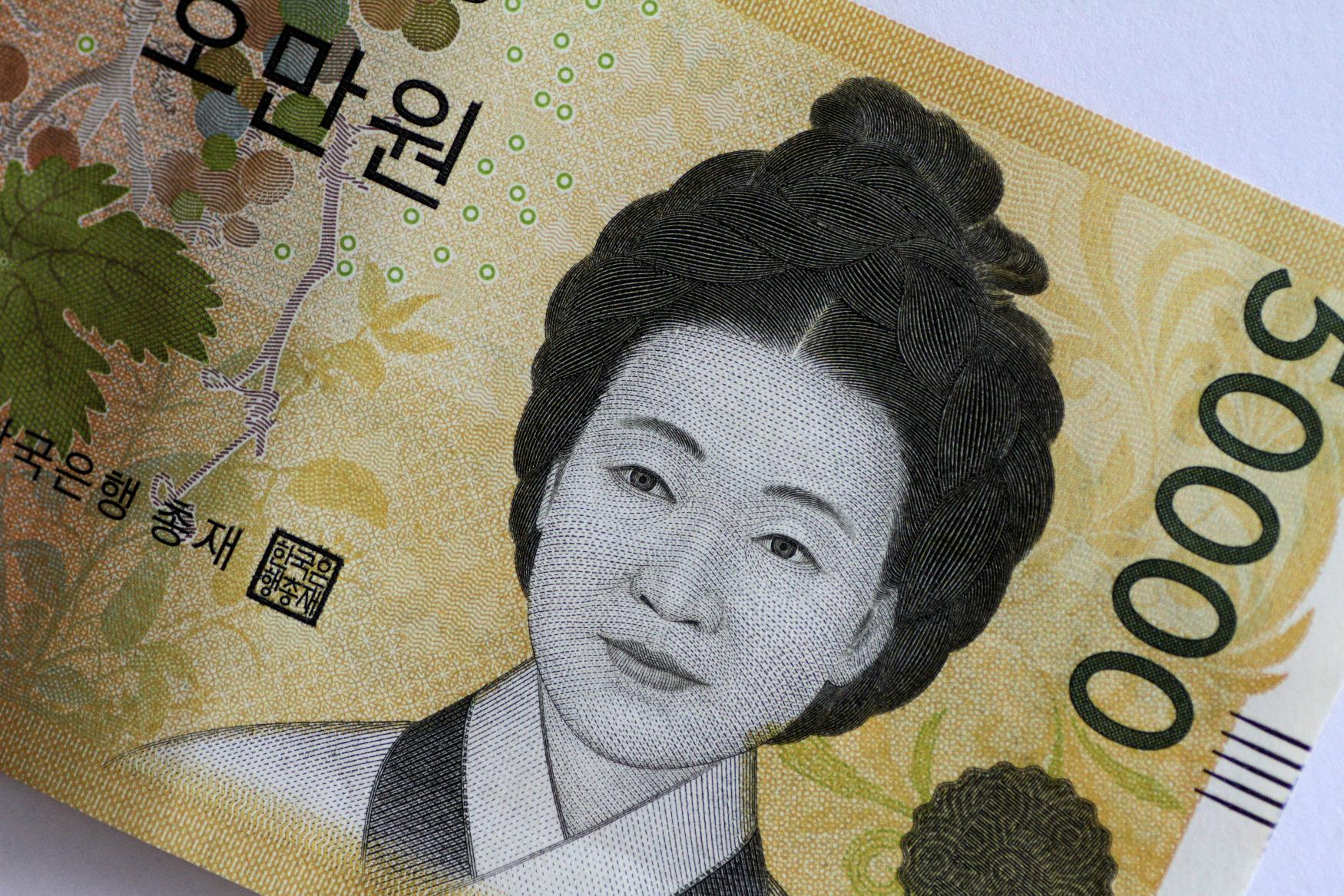
SEOUL, March 25 (Reuters) - South Korea is seeking to boost the global profile of its financial markets, which would also mean loosening some of the tight restrictions on the way its currency, the won, is traded. Here are details about the how the won currently trades and what regulators plan to do to ease some existing restrictions: HOW THE WON TRADES As recently as last year, the won could only be directly exchanged with the dollar in the local interbank market or the Chinese yuan - won-yuan transactions could only take place in Seoul or Shanghai. Only a total of 56 financial institutions based in the country could participate in dollar-won spot trading for just six-and-a-half hours a day, through the two government-registered brokers: Seoul Money Brokerage Services and Korea Money Brokerage Corp. Currently, outside the onshore trading hours of 0900 to 1550, foreign investors rely on derivatives contracts known as non-deliverable forwards to manage their won exposure, a more costly option. CHANGES IN THE WORKS From July this year, the close for onshore dollar-won trading hours and FX swap markets will be extended to 0200 to cover London business hours. For the first time, foreign banks are allowed to participate as long as they register themselves and follow regulatory obligations imposed on the Registered Financial Institutions (RFIs). RESTRICTIONS ON FOREIGN BANKS The registered foreign banks can participate in dollar-won spot, forward and swap trading but they must do this through a licensed Korean FX broker, meaning they are not allowed to directly trade the won between them in the offshore market. Any dollar-won trading must also be settled through the onshore account, a separate won account they need in the South Korea. REPORTING OBLIGATIONS Under South Korea's foreign exchange laws, RFIs are required to report their FX trading details to the Bank of Korea. Foreign banks that have branches in South Korea can do so through their Seoul operations but those not in the country need to outsource the task to a local bank. Detailed RFI , opens new tab reports need to show transaction amounts, FX rates, settlement dates, settlement types and brokers used. Due to those stringent reporting requirement, some may choose to continue trading through the non-deliverable forwards market. Keep up with the latest medical breakthroughs and healthcare trends with the Reuters Health Rounds newsletter. Sign up here. https://www.reuters.com/markets/currencies/south-koreas-efforts-cut-its-currency-red-tape-2024-03-25/
2024-03-25 02:14
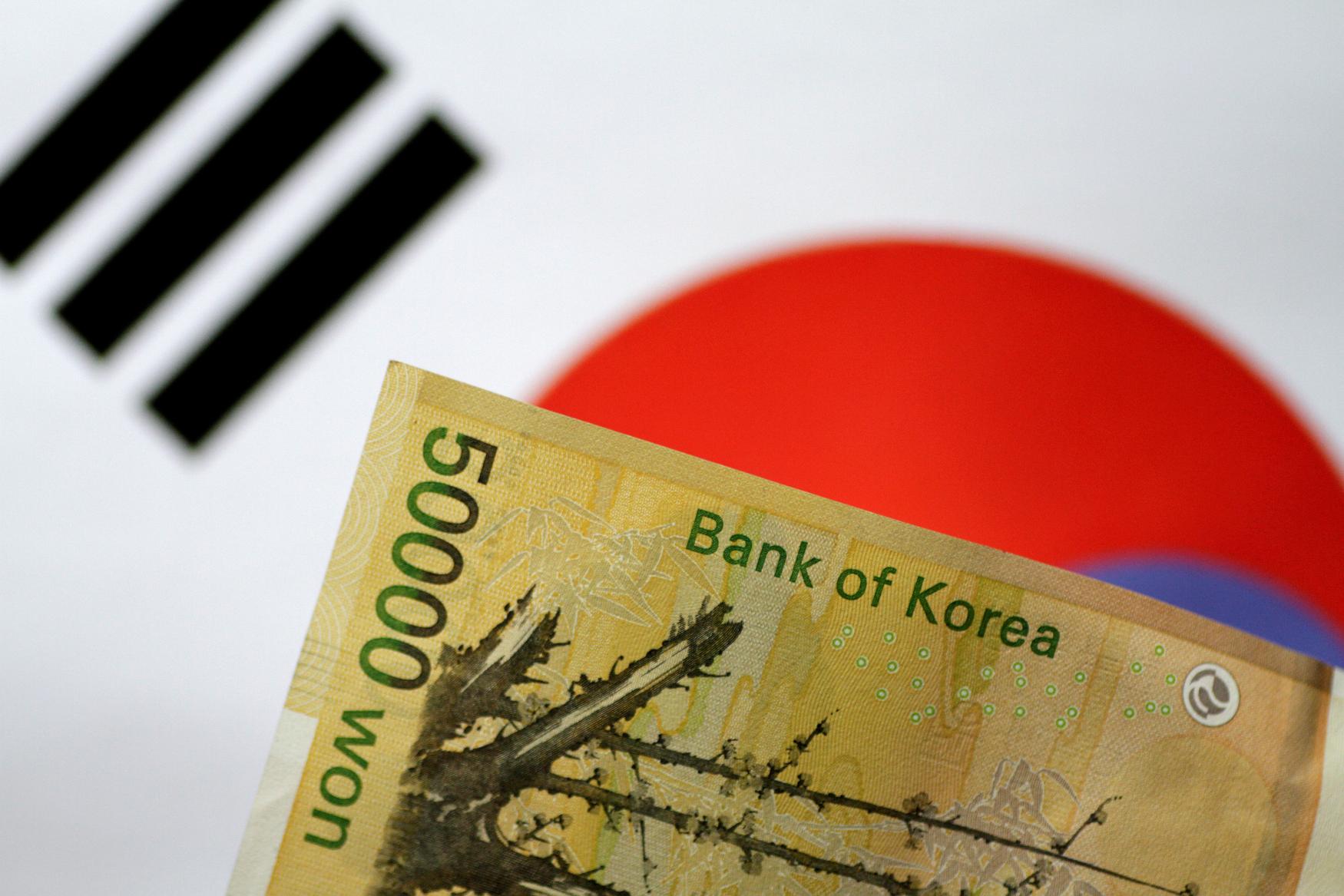
SEOUL, March 25 (Reuters) - As South Korea seeks to boost the global profile of its financial markets, the export powerhouse is struggling to loosen the tight currency restrictions that have for years been a major pain point for investors and traders in the country. Asia's fourth-largest economy is one of the world's most advanced by many metrics but has been unable to shake its classification as an emerging market due to a host of issues, including the way its currency is managed. While foreign exchange regulators are now considering modest steps to make the won more global, such as extending trading hours, memories of bruising foreign exchange crises cast a long shadow over reforms. For many firms and market participants, South Korea's arcane restrictions on cross-border transactions, daily reporting requirements and broker rules make doing business slow and costly. "Having FX markets open almost all day around the clock will certainly help us to better plan currency conversions, and get a better deal," said Bongju Kang, chief financial manager at a small plastic materials exporter. "Currently we negotiate the exchange rate with a local banker the moment we see a good quote, or sometimes hours in advance, especially when the size of the deal is big." The FX restrictions are among factors often blamed for the so-called Korea Discount, the term given to the global underperformance of local stocks. Other issues include poor decision making and weak governance by major conglomerates. Regulators say thorough FX market surveillance is still needed to prevent destabilising currency swings. "We need to monitor the market in times of volatility as liquidity isn't always that ample in the onshore market," a Bank of Korea official said. Shin Joong-beom, head of the finance ministry's International Finance Bureau, said regulators will maintain the current monitoring system and "stand ready to quickly capture and respond to any disturbing market behaviour". Up until last year, the won could only be directly exchanged with the dollar or the Chinese yuan among a total of 56 financial institutions based in the country for just six-and-a-half hours a day, through authorised brokers in Seoul. That meant higher costs for companies, as they must rely on derivatives contracts known as non-deliverable forwards to manage exposure to the won outside the 0900 to 1530 onshore trading window. From July, South Korea will extend trading to 0200 to cover London hours and the country expects wider foreign participation with about 20 foreign banks applying to join the interbank market, according to the finance ministry. Those changes come amid President Yoon Suk-yeol's broader reforms to eliminate the Korea Discount and lift investment by getting the country into top-shelf indexes such as the FTSE World Government Bond Index (WGBI) and MSCI's developed market benchmarks. WGBI inclusion could attract inflows of as much as $70 billion, by some estimates. However, growing political appetite for reform has yet to translate into change that will meaningfully boost won trade, analysts and market participants say. "With international banks permitted only partial access to Korea's interbank market and no plans for an offshore market on the horizon, we don't expect the accessibility of Korea's financial market to materially change from the wider trading hours," said Simon Harvey, head of FX analysis at Monex Europe. BIGGER THAN THE POUND? The $66 billion-a-day won trade makes up around 1% of global forex volume, below 3% for the Canadian dollar and 6% for British pound, according to Bank of International Settlements data from 2022. That keeps South Korea in the emerging market club, as won trading volumes relative to GDP remained around 8%, similar to Polish zloty and Chilean peso. "There is no reason why the won cannot overtake the British pound if the forex rules are relaxed enough to give the market a chance to catch up with global exporters we have today," said Kim Hee-jin, head of trading at Shinhan Bank. Unlike the Hong Kong dollar or pound, foreign banks must trade the won through the two Korean brokerages for spot trading and pay commission to a local bank to fulfil reporting obligations to authorities. Foreign banks are also not allowed to directly trade the won between themselves offshore. The heavy focus on market surveillance in part reflects a hyper-vigilant mindset forged after financial traumas such as the 1997 Asian Financial Crisis and the 2008 Global Financial Crisis. Currently, the BOK can look into every dollar-won transaction through brokers, a system set up decades ago to avoid a repeat of the capital flight seen in 1997, when the won lost half of its value. "Rules imposed on the won trading are really quite unheard of anywhere," said a dealer with decades of experience at global banks, who declined to be named. "Korea is opening the market, but it doesn't mean everyone can join and trade the won." Keep up with the latest medical breakthroughs and healthcare trends with the Reuters Health Rounds newsletter. Sign up here. https://www.reuters.com/markets/currencies/south-koreas-push-make-its-markets-global-dogged-by-fx-history-2024-03-25/
2024-03-25 01:50
Seeks to back women, minority-led start-ups Bank of America, Visa Foundation to invest Targets sectors including tech, health, media LONDON, March 25 (Reuters) - Diversity focused venture capital investor Impact X Capital Partners said on Monday it was looking to raise 100 million pounds ($126 million) for its second fund and already has backing from investors including Bank of America (BAC.N) , opens new tab. The firm, an early backer of fast-growing insurance technology company Marshmallow, said it would seek to invest in later-stage seed and Series A funding rounds across sectors including technology, media and healthcare. "Until underrepresented entrepreneurs reach economic parity in terms of the access to and allocation of capital, this work will continue to be very important," said Impact X Founding Partner and Chief Investment Officer Paula Groves. "The persistent statistics over the last 25 years have been that less than 4% of venture capital goes to women and less than 1% goes to Black entrepreneurs. With our other partners, Impact X plans to make a powerful increase in these stats." Other investors alongside Bank of America, which will invest in the IX Global I fund from its own balance sheet, include the Visa Foundation, Guy's and St Thomas' Foundation and technology venture capital investor Atomico, the firm said. As well as several individual investors from Impact X Capital's first fund, the initial investors in the new fund have contributed around 12 million pounds, Impact X Chief Executive and Founding Partner Eric Collins said. "This historic capital allocation not only validates our track record but also equips us with the resources to make a lasting impact on diverse-led businesses," he said. Bernard Mensah, President of International, Bank of America said the investment "underscores our ongoing commitment to advance economic opportunity for diverse people and communities". The first investment to be made from Impact X Global I is in British property technology company iKnowa. ($1 = 0.7941 pounds) Get a look at the day ahead in U.S. and global markets with the Morning Bid U.S. newsletter. Sign up here. https://www.reuters.com/business/finance/impact-x-eyes-100-mln-stg-second-fund-lands-boa-backing-2024-03-25/

2024-03-25 00:26
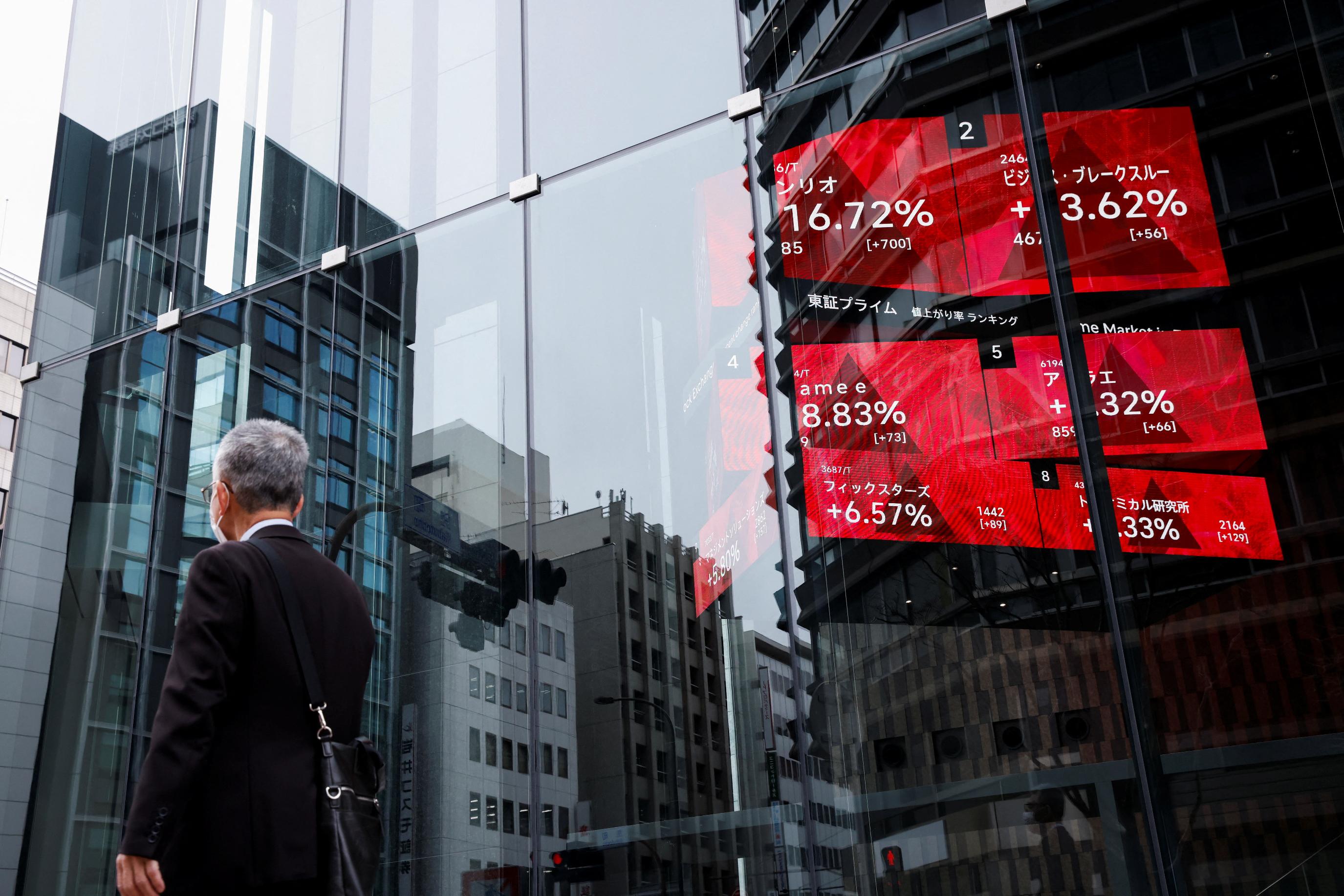
NEW YORK, March 25 (Reuters) - U.S. stocks lost ground at the start of a holiday-shortened week on Monday as investors positioned themselves ahead of inflation data. All three major U.S. stock indexes ended the session in the red, with the blue-chip Dow suffering the largest percentage loss. The dollar dipped as the risk of yen intervention loomed and it came under pressure from China's government-supported yuan rally. Wall Street focused on Boeing (BA.N) , opens new tab after the planemaker said its CEO Dave Calhoun will step down by year-end after a flurry of safety concerns. "On the heels of the best week of the year last week, stocks are taking a bit of a breather today, with the inflation data set to come out later this week," said Ryan Detrick, chief market strategist at Carson Group in Omaha. "The truth is many people are on spring break this week," Detrick added. "We have a holiday right around the corner, so a light-volume consolidation after the big run we've seen is perfectly normal." After the U.S. Federal Reserve's decision last Wednesday to leave its key policy rate unchanged, and its "dot plot" still reflecting expectations for three cuts to that rate this year, markets are looking ahead to Friday's Personal Consumption Expenditures (PCE) report due from the Commerce Department. The report will be released on the Good Friday holiday despite it being a market holiday. Analysts expect the PCE data to show inflation gathered heat in February, with prices rising by 0.4% after January's 0.3% gain. However, "core" price inflation, which strips away volatile food and energy prices, is seen cooling to 0.3% from 0.4%. Year-on-year, headline and core PCE price indexes are expected to land at 2.5% and 2.8%, respectively, hovering within one percentage point of the Fed's average annual 2% target. The Dow Jones Industrial Average (.DJI) , opens new tab fell 162.26 points, or 0.41%, to 39,313.64, the S&P 500 (.SPX) , opens new tab lost 15.99 points, or 0.31%, to 5,218.19 and the Nasdaq Composite (.IXIC) , opens new tab dropped 44.35 points, or 0.27%, to 16,384.47. European stocks reversed a modest sell-off to eke out nominal gains as market participants digested dovish sentiment from major central banks. The pan-European STOXX 600 index (.STOXX) , opens new tab rose 0.04% and MSCI's gauge of stocks across the globe (.MIWD00000PUS) , opens new tab shed 0.24%. Emerging market stocks lost 0.25%. MSCI's broadest index of Asia-Pacific shares outside Japan (.MIAPJ0000PUS) , opens new tab closed 0.07% lower, while Japan's Nikkei (.N225) , opens new tab lost 1.16%. The dollar dipped against a basket of world currencies and the yen was little changed after Japan's top currency diplomat warned against speculators trying to weaken the currency, while China’s yuan gained on suspected selling of dollars by state-owned banks. "China and Japan trying to shore up their currencies is a reflection of weakness in their economies, and they’re putting a band-aid on something that requires something more significant," said Oliver Pursche, senior vice president at Wealthspire Advisors, in New York. The dollar index (.DXY) , opens new tab rose 0.2%, with the euro up 0.3% to $1.0837. The Japanese yen strengthened 0.02% versus the U.S. dollar at 151.46 per dollar, while Sterling was last trading at $1.2635, up 0.27% on the day. Bitcoin surged above the $70,000 level, and was last up 11.7% at $70,958. "The incredible demand for bitcoin continues as the new ETFs continue to see very strong flows," Detrick said. Treasury yields edged higher after the $66 billion auction of two-year notes as markets got used to the idea of the Fed cutting interest rates three times this year. Benchmark 10-year notes last fell 8/32 in price to yield 4.2493%, from 4.218% late on Friday. The 30-year bond last fell 14/32 in price to yield 4.4183%, from 4.392% late on Friday. Oil prices advanced due to supply concerns arising from Russian output cuts and geopolitical conflicts. U.S. crude rose 1.64% to settle at $81.95 per barrel, while Brent closed at $86.75 per barrel, up 1.55% on the day. Gold firmed ahead of key U.S. economic data this week. Spot gold added 0.3% to $2,170.60 an ounce. Get a look at the day ahead in U.S. and global markets with the Morning Bid U.S. newsletter. Sign up here. https://www.reuters.com/markets/global-markets-wrapup-1-2024-03-25/
2024-03-25 00:00
LONDON, March 22 (Reuters) - The Lunar New Year holiday surge in Shanghai Futures Exchange (ShFE) metal inventories seems to have peaked with registered stocks of copper, aluminium and lead all falling over the last week. This is an annual phenomenon. While many metal fabricators take downtime over the holiday period, most smelters keep operating, leading to a jump in visible inventory. Copper has experienced the sharpest seasonal stocks build this year, leaving exchange inventory at the highest levels since 2020. The rise in ShFE zinc inventories has closely matched last year's pattern, while aluminium has seen a highly muted rebuild by historical standards. Nickel stocks were increasing before the holiday break and are now at four-year highs. Those of tin are the highest since ShFE launched its tin contract in 2015. COPPER SURGE ShFE copper stocks have mushroomed from just 30,905 metric tons at the end of December to 285,090 tons. The scale of this year's seasonal surge has been the strongest since 2020, when registered inventory peaked at 380,085 tons. The New Year holiday period that year coincided with the first wave of COVID-19 lockdowns and the resulting slump in Chinese manufacturing activity. This year the jump in exchange stocks likely reflects the combination of fast domestic production growth and higher imports. The country's output of refined copper rose by 9.0% year-on-year in January-February, equivalent to an extra 159,000 tons, according to local data provider Shanghai Metal Market. Imports rose by 2.6% over the same period. Stocks registered with Shanghai's International Energy Exchange have also jumped from 9,760 tons at the end of last year to a current 40,511 tons. However, this year's mid-March peak of 45,298 tons fell short of last year's peak of 82,575 tons. MUTED RISE IN ALUMINIUM STOCKS ShFE stocks of aluminium fell to 199,757 tons this week from last week's year-to-date high of 206,417 tons. If that turns out to be this year's seasonal peak, it means the rebuild has been extremely muted relative to the last four years. Stocks are up by just 100,728 tons on the start of January. By this time last year they had risen by 229,000 tons. The seasonal effect was even stronger over the 2020-2022 period. Visible inventory remains remarkably low after last year's high imports of over 1.5 million tons and the bullish optics reinforce the narrative of a tight domestic market. SEASONAL NORM FOR ZINC AND LEAD Exchange stocks of zinc in Shanghai crept a little higher this week to 121,873 tons and are now up by 100,658 tons on the start of January. This is very close to last year's seasonal build of 103,441 tons and to that seen in 2021. Shanghai lead stocks stand at 53,631 tons and are up by just 747 tons since the start of 2024, which is comparable to the 333-ton rise seen over the first three months of last year. Lead is less exposed to the new year holiday effect, having its own seasonality in the form of car battery kill rates over the northern hemisphere winter months. China is also exporting ever more refined lead. Shipments rose by 62% year-on-year to 188,000 tons in 2023, the highest annual volume since 2007. The steady outbound flow has served to keep Shanghai inventory below the 100,000-ton level for the last two years. NICKEL STOCKS AT FOUR-YEAR HIGH Shanghai nickel stocks dwindled to just 560 tons in May last year, reflecting a shift in domestic production from the refined nickel that trades on the ShFE to nickel sulphate used in electric vehicle batteries. The dynamic has changed dramatically over the last year. A new generation of Chinese nickel refineries has started up to capitalise on the burgeoning import flow of Indonesian raw materials. ShFE stocks have grown to 20,713 tons, the highest tally since December 2020. The build has been mirrored on the London market, where the London Metal Exchange (LME) has been fast-tracking Chinese companies wanting to list their brands. LME stocks have risen by 21% so far this year. TIN STOCKS HIT RECORD HIGH Global exchange stocks of tin, by contrast, are showing divergent trends. Those in London have fallen by a third this year to below 5,000 tons as supply is constrained by export delays in Indonesia. Shanghai tin stocks have been rising steadily since the start of December and now total 12,021 tons, which is the highest inventory in the contract's nine years of trading history. The country has been stocking up on refined tin in recent months, imports hitting a record high of 33,470 tons last year. The opinions expressed here are those of the author, a columnist for Reuters Get a look at the day ahead in U.S. and global markets with the Morning Bid U.S. newsletter. Sign up here. https://www.reuters.com/markets/commodities/copper-registers-strongest-seasonal-shanghai-stocks-build-2024-03-22/

2024-03-24 23:44
TOKYO, March 25 (Reuters) - Japan's top currency diplomat on Monday warned against speculators trying to sell off the yen, saying its weakness did not reflect fundamentals, in the latest warning about the currency's "big slide" against the dollar. Masato Kanda, the vice finance minister for international affairs, made the comment at an ad hoc news conference as the Japanese currency hovered close to a 32-year low near 152 to the dollar. "Looking at currencies, the dollar/yen pair has gone through big fluctuations of 4% over only the past two weeks," Kanda told reporters. "It has not reflected fundamentals and I feel something strange about it." Kanda described the recent yen moves as "speculative." He said he wouldn't rule out any measures but stands ready to respond appropriately to the currency's move. He added he has been closely watching currency moves with a sense of urgency, even when he was travelling overseas over the weekend. A weak yen can add to higher costs of living through more expensive imports. The fact the government has tolerated the yen's descent beyond 150 to the dollar - compared with 2022 when it stepped into the market when it broke past 145 yen - suggests officials may lack a sense of crisis about a weak currency, analysts say. "Kanda dialled up his warnings today against those who try to sell off the yen. However, intervention may not be conducted even if the dollar hit 155 yen," said Masafumi Yamamoto, chief FX strategist at Mizuho Securities. The weak yen has not become a political issue in Japan or with its trading partners, and has brought windfalls such as a boon to inbound tourism and record stock market prices boosted by the weak yen. Indeed, Kanda noted the yen weakness has its pluses and minuses, depending on economic players, adding he doesn't have a specific exchange level in mind when asked about defence lines. Japan last intervened in the currency market in October 2022 by heavily buying the yen and selling the dollar. The yen was trading around 151.27 to the dollar on Monday morning. Keep up with the latest medical breakthroughs and healthcare trends with the Reuters Health Rounds newsletter. Sign up here. https://www.reuters.com/markets/currencies/japan-top-currency-diplomat-kanda-says-yen-weakness-doesnt-reflect-fundamentals-2024-03-24/