2024-03-22 18:51
HOUSTON, March 22 (Reuters) - Australian oil and gas producer Woodside Energy (WDS.AX) , opens new tab would like to see improved fiscal terms from the Trinidad and Tobago government before committing to develop a deepwater natural gas project there, CEO Meg O'Neill told Reuters this week. The Caribbean nation suffers from a shortage of gas for its liquefied natural gas (LNG) and petrochemical businesses, and has been urging Woodside, BP (BP.L) , opens new tab and Shell (SHEL.L) , opens new tab to expand their activity. O'Neill said the Calypso production sharing contract was originally designed for a more lucrative oil discovery, not natural gas. "The fiscal terms are probably well suited for oil, but they have to be a little bit different for gas," O'Neill said on the sidelines of CERAWeek energy conference. Trinidad and Woodside's non-operating partner BP have been pushing to commence production of Calypso's estimated 3.5 trillion cubic feet (tcf) of recoverable reserves. "I certainly appreciate when a non-operated partner wants to encourage us to move forward, but as I said we have to make sure we get the commercial matters sorted," O'Neill said. Woodside is talking to Trinidad's National Gas Company (NGCTT.UL) and the partners of Trinidad's flagship LNG project, Atlantic LNG, to sell the gas into the domestic and export markets, she said. "It is important for us to progress the commercial and regulatory work in parallel with the technical work so we don't spend a lot of money before we have commercial line of sight," she said. Woodside has completed the concept select study and knows how it wants to develop the field, O'Neill added. The Reuters Power Up newsletter provides everything you need to know about the global energy industry. Sign up here. https://www.reuters.com/business/energy/ceraweek-woodside-seeks-better-terms-develop-trinidads-calypso-gas-project-2024-03-22/

2024-03-22 18:46
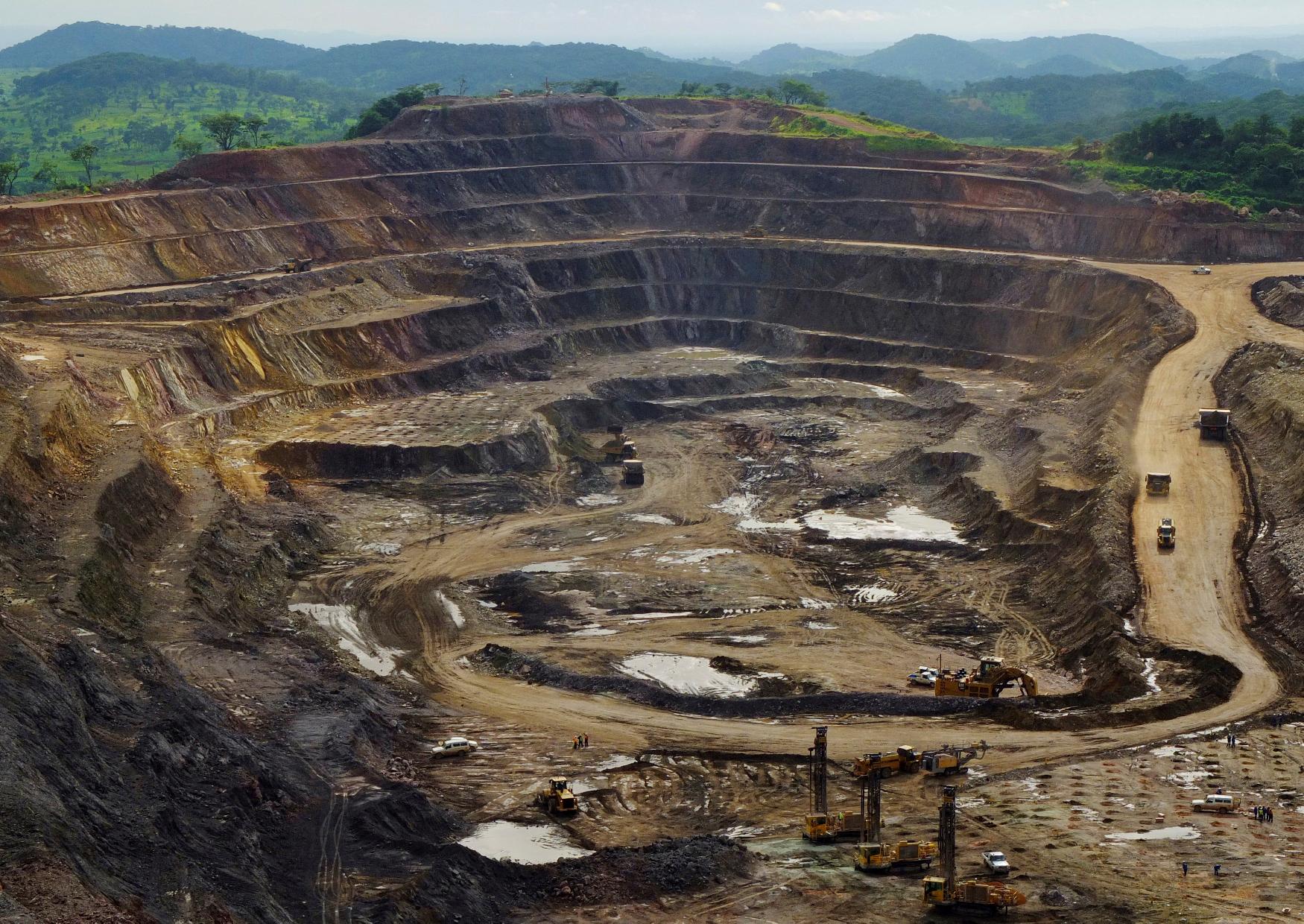
LIMA/JOHANNESBURG, March 22 (Reuters) - The Democratic Republic of the Congo overtook Peru as the world's second largest copper producer in 2023, though it still lags the South American country in exports, official data from both nations show. Congo produced about 2.84 million tons of copper last year, the country's central bank reported. Peru's output was 2.76 million tons, the Andean country's mining and energy ministry said. Congo has been reeling in Peru's No. 2 copper spot over recent years, with flagging mining investment in Peru linked to red tape and recent political turmoil and protests. Chile remains the distant top producer of the red metal. Peru, however, is hanging onto its lead over Congo on copper exports. Peru exported some 2.95 million tons of the metal last year, more than its annual production due to sales of stocks held over from previous years. Rómulo Mucho, Peru's minister of energy and mines, said in early March he expected copper production to increase to 3 million tons in 2024. The ministry did not immediately respond to a request for comment. Peru's Andes are home to major mining firms including Freeport-McMoRan (FCX.N) , opens new tab, MMG Ltd (1208.HK) , opens new tab, BHP (BHP.AX) , opens new tab, Glencore (GLEN.L) , opens new tab, Teck Resources (TECKb.TO) , opens new tab, Japan's Mitsubishi (8058.T) , opens new tab, and Southern Copper of Grupo México (GMEXICOB.MX) , opens new tab. Get a look at the day ahead in U.S. and global markets with the Morning Bid U.S. newsletter. Sign up here. https://www.reuters.com/markets/commodities/congo-overtakes-peru-copper-output-still-behind-exports-2024-03-22/
2024-03-22 18:42
March 22 (Reuters) - The Biden administration on Friday released new rules that will make it easier for offshore wind developers to claim a subsidy for facilities planned in areas that have historically relied on fossil fuel industries for employment. The revision follows nearly a year of warnings by offshore wind companies that their projects might not move forward without access to certain subsidies in President Joe Biden's landmark climate change law, the Inflation Reduction Act. Offshore wind is a critical part of Biden's plan to decarbonize the U.S. power grid and combat climate change, but projects have struggled due to soaring costs tied to inflation and higher interest rates and supply chain snags. In a statement, the Treasury Department said it would now allow an offshore wind project to claim a tax credit for siting in low-income communities if supervisory control and data acquisition (SCADA) equipment is located in such an area. SCADA systems are used to control critical infrastructure. The energy communities tax credit is worth 10% of a project's cost and can be claimed on top of the IRA's base 30% credit for renewable energy projects. The credit for siting projects in "energy communities," defined as areas which have significant employment or tax revenues from fossil fuel industries and high unemployment, had been dictated by where a project connects to an onshore substation. "This change reflects the fact that onshore SCADA equipment at ports is critical to offshore wind projects and that offshore wind projects make significant investments and create jobs at these ports over the duration of projects, which is the goal of the energy communities bonus," Treasury said in a statement. The rules also clarify that projects with multiple points of interconnection may include any land-based power conditioning equipment to determine their eligibility for the bonus. An industry group praised the change. "In a move to bolster the transition from fossil fuel to clean energy, the eligibility expansion for the 10% Energy Communities credit creates an easier path to market for many offshore wind projects," Liz Burdock, CEO of Oceantic Network, said in a statement. The Reuters Power Up newsletter provides everything you need to know about the global energy industry. Sign up here. https://www.reuters.com/business/energy/us-revises-tax-credit-rule-help-offshore-wind-projects-2024-03-22/

2024-03-22 18:39
HOUSTON, March 22 (Reuters) - Private equity firms are increasing their direct oversight of energy transition companies in their portfolios, taking on added duties to address runaway costs from supply chain issues and preserve valuations, executives said at the CERAWeek energy conference this week. Excitement around new energy technologies saw billions of dollars of investment poured in the last four years into those aiming to shape the energy transition with biofuels, hydrogen, solar, wind and carbon removal technologies. But the COVID-19 pandemic, subsequent supply-chain shortages of materials and equipment, slower-than-expected technological developments, and soaring demand for fossil fuels have left many new-energy firms in a precarious state. Professional investors have reacted by taking a much more hands-on approach, said private equity executives. Carlyle Group (CG.O) , opens new tab has negotiated for key components on behalf of its portfolio companies, Pooja Goyal, chief investment officer at Carlyle Global Infrastructure, said at the CERAWeek by S&P Global conference in Houston. It put agreements in place with Chinese suppliers for solar panels, electrical equipment and other components, often jumping the queue on order books backed up for two or three years. This ensured projects could remain on time. "No matter how much procurement you're doing (at the portfolio company level), you're going to be pretty much irrelevant to the suppliers," Goyal told the conference. It is not just procurement using economies of scale which buyout firms can offer. Traditional tenets which private equity firms push - such as leveraging their network of investments for collaboration, and drawing on senior people to offer management advice - are more important to startups hitting their first rough patch. "Beyond capital, companies and founders are looking for investors like TPG that can deliver the full private equity toolkit," Steven Mandel, business unit partner at TPG Rise Climate, said in an interview. While ensuring these startups can navigate market turbulence and pursue climate goals, the money managers are also making sure their investments achieve expected returns. Since the start of 2022, the S&P Global Clean Energy index (.SPGTCLEN) , opens new tab has lost more than a third of its value, versus a 10% gain for the wider S&P 500 (.SPX) , opens new tab. Valuations for private companies, while harder to track, are generally believed to have fallen by more than their publicly listed peers. The correction also offers opportunities for buyout firms to make new investments to ultimately benefit existing businesses. This includes picking up assets or key engineering teams from struggling energy transition firms, including those which went public via blank-check firms during the boom time, and which subsequently lost much of their value. They could also buy out other investors in the portfolio companies, thereby ensuring management teams have more time to get concepts to market and to achieve profitability. "In more complex operating environments, entrepreneurs and founders become much more selective about the types of firms they want to partner with," Gabriel Caillaux, head of climate at equity investor General Atlantic, told Reuters. "Managing geopolitical risk, navigating how to leverage AI, scaling technologies, and ensuring you have a fully-funded business plan" are all things which cleantech CEOs are seeking help with, he added. The Reuters Power Up newsletter provides everything you need to know about the global energy industry. Sign up here. https://www.reuters.com/business/energy/ceraweek-financiers-grab-reins-new-energy-startups-struggle-2024-03-22/

2024-03-22 18:37
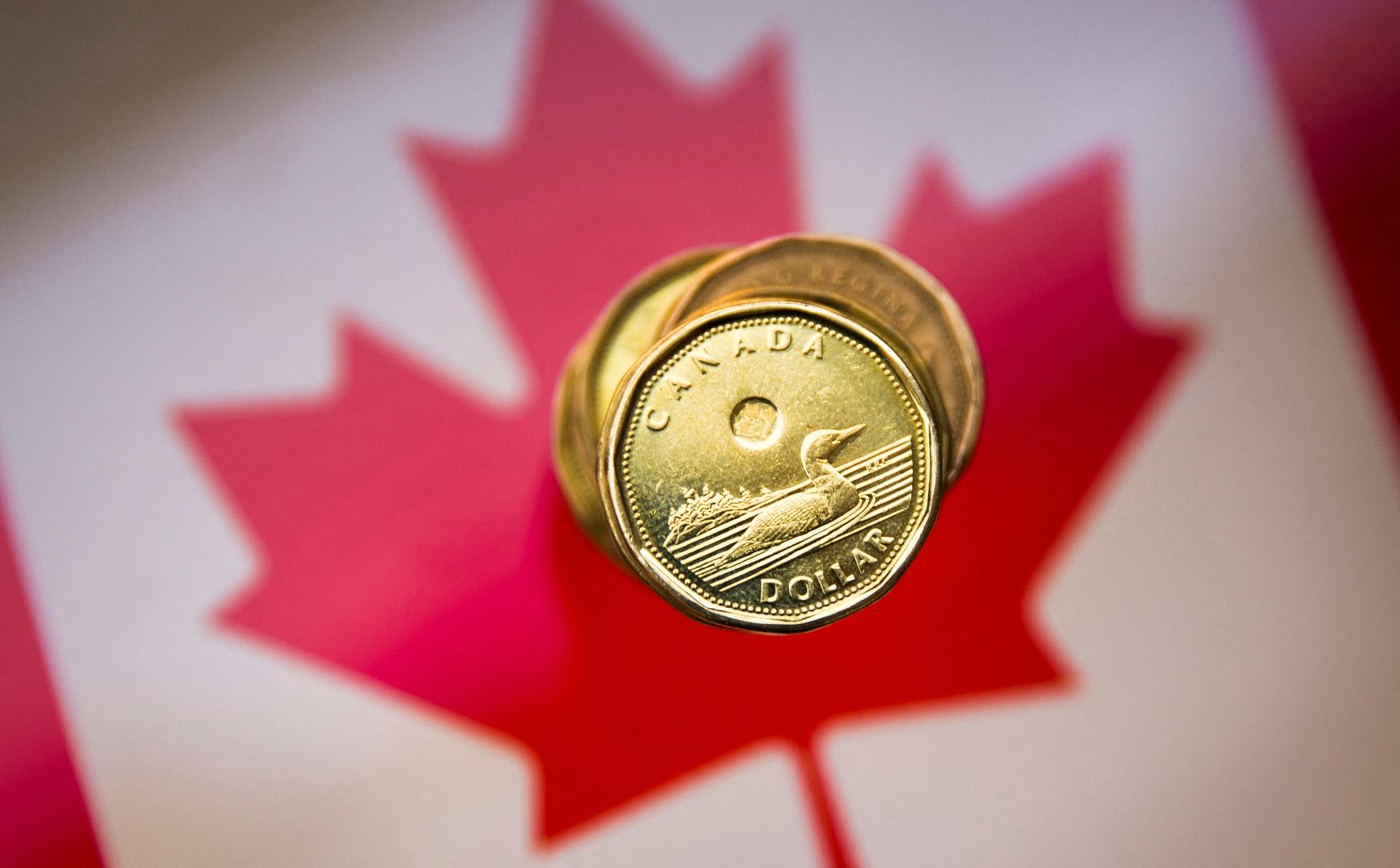
Canadian dollar weakens 0.6% against the greenback For the week, the loonie loses 0.5% Retail sales fall 0.3% in January 10-year yield eases 7 basis points to 3.447% TORONTO, March 22 (Reuters) - The Canadian dollar fell against its broadly stronger U.S. counterpart on Friday, registering a weekly decline, as domestic retail sales data added to evidence of an economic slowdown that could spur interest rate cuts. The loonie was trading 0.6% lower at 1.3605 to the U.S. dollar, or 73.50 U.S. cents, stopping just short of its weakest level in three months which it posted on Tuesday at 1.3613. For the week, the currency was down 0.5%. Canadian retail sales fell 0.3% in January from December. Sales volume rose 0.2%, while a preliminary estimate showed them up 0.1% in February. "This morning's retail sales number was better than expected, but remained consistent with the evaporation in domestic consumer demand that has been sapping the Canadian economy's momentum for months," said Karl Schamotta, chief market strategist at Corpay. "The Bank of Canada will remain alert to the risk of a repeat of last year's melt-up in housing markets, but otherwise seems destined to begin cutting rates at the June meeting." Money markets have raised bets on the BoC easing rates in June, seeing a roughly 70% chance, after data on Tuesday showed inflation cooling to an annual rate of 2.8%. The U.S. dollar (.DXY) , opens new tab headed for a second week of gains against a basket of major currencies after a surprise rate cut in Switzerland highlighted the gap in monetary policy between the Federal Reserve and major peers. "Decisions in the rest of the world this week saw central banks moving in a uniformly-dovish direction, and the Federal Reserve's 'dot plot' bore the imprint of a hawkish tilt in medium- and long-term rate expectations," Schamotta said. Canadian bond yields moved lower across the curve, tracking U.S. Treasuries. The 10-year was down 7 basis points at 3.447%. Keep up with the latest medical breakthroughs and healthcare trends with the Reuters Health Rounds newsletter. Sign up here. https://www.reuters.com/markets/currencies/canadian-dollar-posts-weekly-loss-data-shows-slowing-domestic-economy-2024-03-22/
2024-03-22 18:08
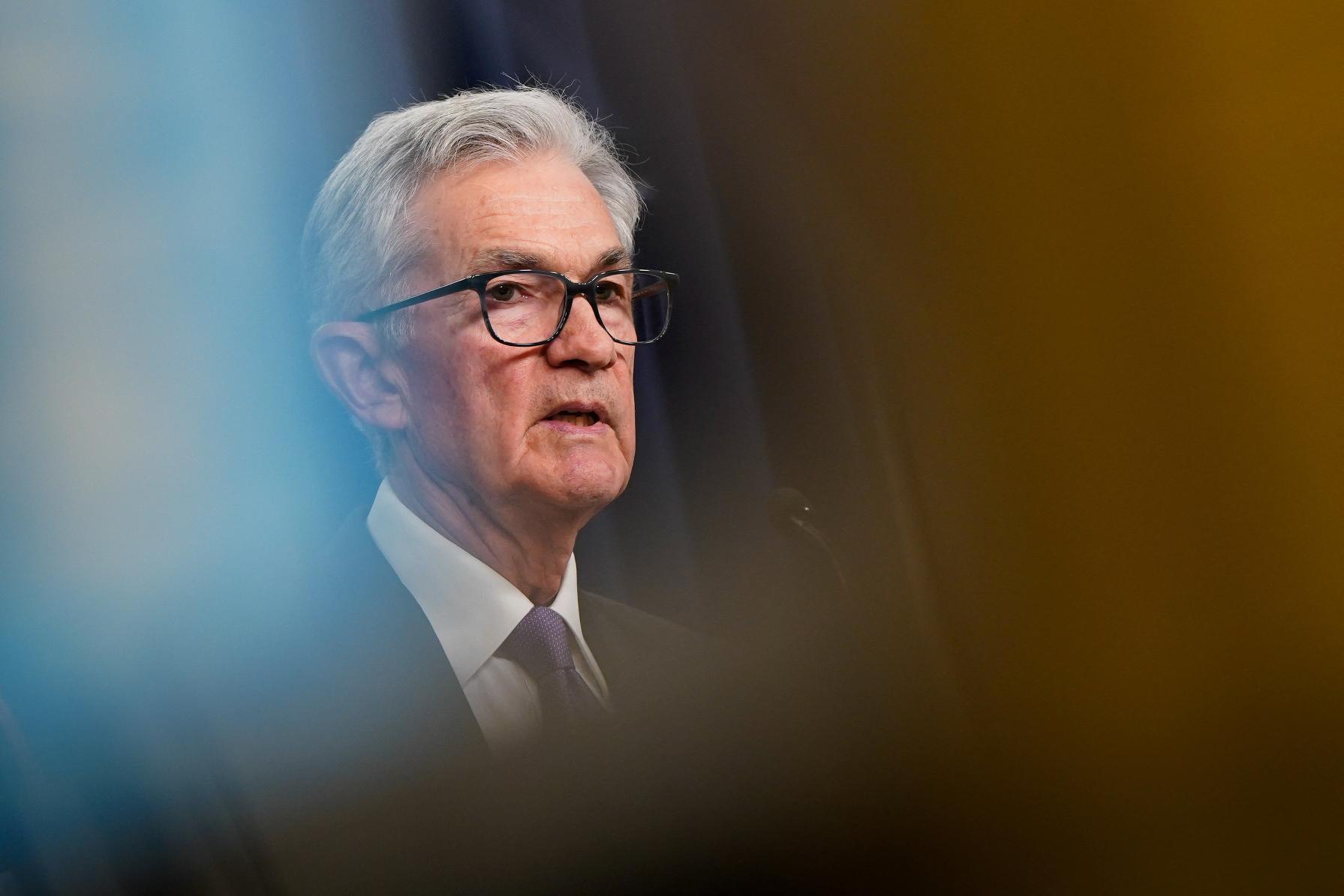
March 22 (Reuters) - Federal Reserve Chair Jerome Powell and fellow Fed governors on Friday heard firsthand from business and community leaders how the Fed's interest rate hikes, along with ongoing price and labor market pressures, are affecting Americans. Higher interest rates together with instability in commodity prices "has a stranglehold on the American agriculturalist right now, which leads to a stranglehold on all of rural America," said Whitney Ferris-Hansen, who owns and operates J/W Farms and Ranch in Burlington, Colorado. "An increase in rates is always expected and planned for, but the speed at which these increases happened could not be risk-managed; we could not forward contract grain fast enough to hedge these interest rates." Starting in March 2022 the Fed raised interest rates rapidly to fight decades-high inflation, bringing its short-term benchmark rate to the 5.25%-5.5% range where it has kept it since last July. The "Fed Listens" event where Ferris-Hansen and five others spoke and answered policymakers' questions was the latest in a series begun before the pandemic and designed to give U.S. central bankers a close look at the real-world effects of their rate-setting decisions. It took place at the same table where earlier this week policymakers decided to keep the benchmark short-term policy rate steady. After that meeting Powell said policymakers expect to cut interest rates later this year, but only once they have greater confidence that inflation is under control. Friday's panel made clear that for some Americans, that time cannot come soon enough. Rising borrowing costs coupled with higher energy and transportation prices as well as rising wages are squeezing profits for small and medium-sized manufacturers, said Cara Walton, director at Southfield, Michigan-based Harbour Results, a consulting firm for small manufacturers. Some have stopped investing in new equipment because they cannot afford the more expensive financing coupled with slowing demand, she said. "The total cost to invest is very high, and the return on that investment is very long and getting longer," she said. Small manufacturing companies with young leaders "have never run a business with interest rates like this... it's uncharted territory for us." Other panelists gave accounts of the impact of continuing pressures from higher prices, even as the rate of increase - inflation - has slowed under pressure of the Fed's interest-rate hikes. "We're basically in the midst of a perfect storm," said Derrick Chubbs, president and CEO of Second Harvest Food Bank of Central Florida in Orlando, Florida, noting increased costs of healthcare, childcare, transportation and insurance, along with groceries and housing. His network of nonprofits currently distributes 300,000 meals daily, as much as at the height of the pandemic recession. One reason for hope: Rents in Orlando are down for the first time since 2020, he said, attributing the decline to the Fed's rate hikes. Policymakers seemed particularly keen to hear from Svenja Gudell, chief economist at job website Indeed, who noted signs of a cooling labor market compared with the "frenzied" 2021-2022 period, especially in higher-paid sectors like technology where job postings have fallen the most. Food service and other lower-wage jobs offering benefits like health insurance and time off rose sharply in 2021 and early 2022, she said, but growth has since slowed. "Send us your slides," Powell said. Get a look at the day ahead in U.S. and global markets with the Morning Bid U.S. newsletter. Sign up here. https://www.reuters.com/markets/us/fed-chair-powell-says-pandemic-has-had-lasting-effects-economy-2024-03-22/