2024-03-22 06:47
NEW YORK/LONDON, March 22 (Reuters) - Profit-taking capped global stock markets on Friday after a week of record-setting advances fueled by a series of dovish central bank signals, while the dollar struggled to extend a gain as U.S. yields ticked lower. The S&P 500 (.SPX) , opens new tab, Nasdaq (.IXIC) , opens new tab and Dow (.DJI) , opens new tab sought direction from the open, with the benchmark S&P closing near flat even as it posted its biggest weekly gain of 2024. The MSCI World Equity Index (.MIWD00000PUS) , opens new tab fell 0.26%, but went up 1.8% since late last Friday, its biggest weekly gain this year. "It's been a busy week and it's one of those Fridays where it just feels like every participant is tired. There's no huge news to drive anything one way or the other, so you're seeing a market that's hovering around the unchanged line," said JJ Kinahan, CEO of IG North America and president of Tastytrade in Chicago. A surprise rate cut by Switzerland's central bank on Thursday helped push markets to new highs, as traders realized that major central banks around the world would not necessarily wait for U.S. Federal Reserve rate cuts before delivering their own. Traders also drew confidence from the Bank of England being more dovish than expected, saying the economy is "moving in the right direction" for it to start cutting rates. On Wednesday, the Federal Reserve left the fed funds rate alone at 5.25% to 5.50% but indicated it was still prepared to lower rates by 75 basis points this year, despite a worrying uptick in U.S. inflation and economic growth solid enough to maybe even dodge a soft landing. It said that recent high inflation readings had not changed the underlying story of slowly easing price pressures. The S&P 500 on Friday (.SPX) , opens new tab fell 0.14%, to 5,234.18, the Dow fell 0.77% and the Nasdaq Composite (.IXIC) , opens new tab gained 0.16%, to 16,428.82. For the week they rallied 2.3%, 2.0% and 2.9%, respectively. Europe's STOXX 600 (.STOXX) , opens new tab fell 0.03%, after touching a new all-time high, while London's FTSE 100 rose 0.6% (.FTSE) , opens new tab, helped by expectations that the Bank Of England would cut rates sooner than previously thought. BoE Governor Andrew Bailey told the Financial Times that the expectation of more interest rate cuts this year on a whole was not "unreasonable". "I think there might be some profit-taking at the end of the week, just because of the amount of data that we've seen and the fact that we have seen more positive surprises," said Baylee Wakefield, multi-asset fund manager at Aviva. Trading may also subside in the lead-up to Easter next weekend, Wakefield added. "The dollar's basically going to have its best week since January and that is because markets are now accepting that other major central banks will reduce their policy rate faster than the Fed, especially because we've had further evidence from the strong economic data we've had out of the U.S. this week," Wakefield said. The dollar index gained 0.4%, on track for its best week since the first week of the year, with the euro down 0.5% at $1.0807. The probability of a European Central Bank rate cut before summer is increasing, Bundesbank President Joachim Nagel said. Kinahan said the lack of a definitive date from the Fed for when they might ease was dollar supportive. "I think with that you may be able to see dollar hold on a little bit longer than people would expect, with expected rate cuts." The British pound weakened 0.5% to $1.26 , having earlier hit a one-month low. The yield on benchmark U.S. 10-year notes fell 6.7 basis points on Friday to 4.204%, while the 2-year note yield, which typically moves in step with interest rate expectations, fell 3.9 basis points to 4.5934%. Euro zone government bond yields were set for a weekly decline. The benchmark German 10-year yield was down by about 11 basis points at 2.327% . China's yuan dropped sharply during Asian trading, hitting a four-month low, in a move analysts attributed to rising expectations that there will be more monetary easing to prop up the country's economy. The offshore yuan was priced at 7.2759 per dollar in late U.S. trade. The sudden move knocked the Shanghai Composite index (.SSEC) , opens new tab down 0.95%. MSCI's broadest index of Asia-Pacific shares outside Japan (.MIAPJ0000PUS) , opens new tab fell 1.1%, while Japan's Nikkei (.N225) , opens new tab rose 0.18% to a record-high close. U.S. crude futures settled down 0.54% at $80.63 a barrel and Brent futures fell 0.41% to $85.43 per barrel. The possibility of a ceasefire in Gaza weighed on prices, along with the stronger dollar and lower U.S. gasoline demand. Spot gold fell 0.73% to $2,164.96 an ounce, but was near a record bid high set on Thursday. U.S. gold futures fell 0.83% to $2,164.20 an ounce. Investment flows into gold in the week to Wednesday reached their highest in almost a year, Bank of America Global Research said. In cryptocurrencies, bitcoin fell 2.82% to $63,620.00. Ethereum declined 4.74% to $3318.2. Get a look at the day ahead in U.S. and global markets with the Morning Bid U.S. newsletter. Sign up here. https://www.reuters.com/markets/global-markets-wrapup-1-2024-03-22/
2024-03-22 06:24
NEW DELHI, March 22 (Reuters) - India is looking to Africa for minerals such as copper, cobalt and other critical minerals, while also engaging with Australia for lithium blocks, said V.L. Kantha Rao, secretary of mines, on the sidelines of an industry event on Friday. "In Africa, we are exploring countries like Zambia, Namibia, Congo, and Ghana for critical minerals," he added. India is preparing rules for the auction of offshore mineral blocks with 10 blocks ready, Rao said, adding the country aims to begin auctions this year. India will also announce the results of the first tranche of critical mineral blocks in 10 days, he said. Get a look at the day ahead in U.S. and global markets with the Morning Bid U.S. newsletter. Sign up here. https://www.reuters.com/markets/commodities/india-announce-results-first-critical-minerals-auction-10-days-2024-03-22/

2024-03-22 06:18
NEW DELHI, March 22 (Reuters) - Indian iron ore miner NMDC Ltd (NMDC.NS) , opens new tab said on Friday it is looking at lithium assets in Africa and Australia, according to a statement. The company also said that it has so far not applied for lithium blocks on a nomination basis from the Indian government. In June last year, Reuters reported that NMDC's unit Legacy Iron Ore had signed a lithium exploration pact with Australia's Hancock Prospecting Pty Ltd. NMDC shares were down 1.7% on Friday. Get a look at the day ahead in U.S. and global markets with the Morning Bid U.S. newsletter. Sign up here. https://www.reuters.com/markets/commodities/indias-nmdc-exploring-lithium-assets-africa-australia-source-says-2024-03-22/
2024-03-22 06:09
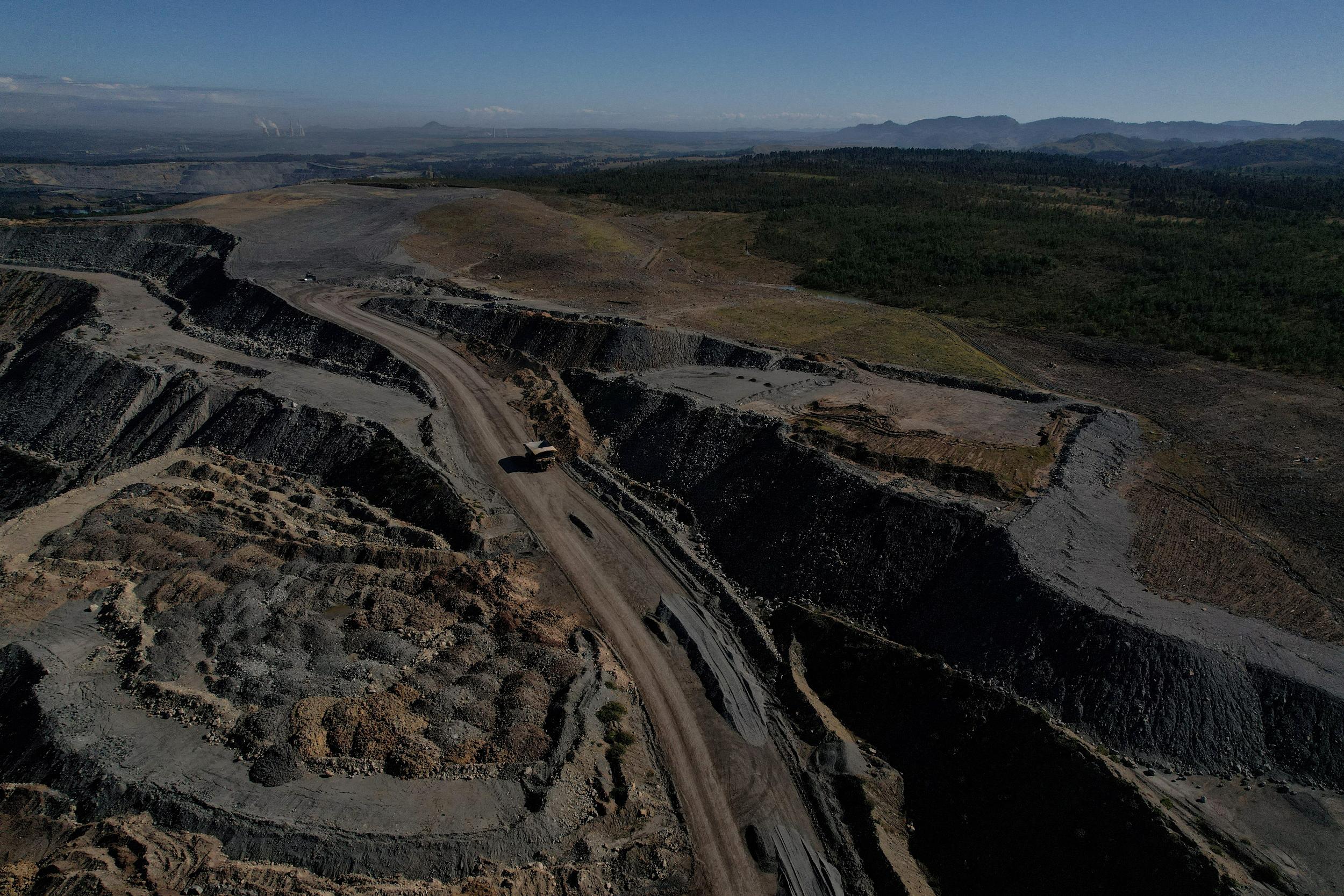
Three top-15 investors say would vote to keep unit Cite environmental, economic benefits of ownership Echo March 11 demands of activist Tribeca LONDON, March 22 (Reuters) - A growing group of Glencore (GLEN.L) , opens new tab investors are keen for it to keep mining coal instead of spinning out the soon-to-be enlarged unit, with one eye on its financial outlook and another on the environmental benefits of keeping the fuel in-house. Echoing a demand last week by activist Tribeca Investment Partners, investors said the polluting fossil fuel would be a lucrative option - for a decade or two at least - even as it is phased out in favour of renewable energy. The Swiss-based miner and trader is set to see its coal unit grow sharply after it completes a $6.9 billion deal to buy the majority of Canadian miner Teck's (TECKb.TO) , opens new tab one, but said it plans to list the combined assets separately in New York. Glencore is already a top producer of thermal coal with output of around 110 million tonnes a year, and also has coking coal assets. By buying Teck's business, in a deal set to close by the third quarter this year, it will add 20 million tons of annual steelmaking coal capacity and create a powerhouse that analysts say should generate $5-$6 billion a year in free cash flow. A greater focus on climate risk in recent years has seen a number of pension and investment funds, financiers and insurers cut support for coal companies, leading some including Rio Tinto (RIO.L) , opens new tab, (RIO.AX) , opens new tab and Anglo American (AAL.L) , opens new tab to sell or spin theirs out. While doing so can lead to a share price bump, critics say the assets are often shifted into the private markets and run for longer with no investor oversight, potentially leading to a worse climate outcome. For a long time, Glencore had adopted the same line, and said ditching coal would do little to cut its emissions, only to change its mind after the Teck deal was agreed, with Chief Executive Gary Nagle saying it would consult shareholders for their views on spinning off once the acquisition is concluded. Ahead of any vote on the plan, though, three top-15 investors spoken to by Reuters said they would oppose the attempt to spin off its coal assets. One top-10 shareholder said they 'strongly disagree' with the idea and had already told the company. The shareholder declined to be named as they are not authorised to speak publicly. Andrew Mason, head of active ownership at Abrdn, which holds shares in Glencore, said: "In most circumstances, we do not believe that simply divesting as quickly as possible will achieve the best outcome." "Companies need to have credible strategies that support real-world decarbonisation," he said, adding that a timed phase-out would facilitate a "just transition" to a greener future that minimised the impact on workers and communities. A responsible wind down of coal is better than a divestment, given the "rapidly diminishing" global carbon budget, the emissions allowed before the world breaches its goal of capping global warming at 1.5 degrees Celsius, said Naomi Hogan at non-profit climate group Australasian Centre for Corporate Responsibility (ACCR). "Fundamentally, good corporate governance requires Glencore to take responsibility for the emissions from its coal portfolio," Hogan added. Glencore's carbon emissions rose 8.8% in 2023 from the previous year partly due to higher coal production, but were still down 21.8% from a 2019 baseline, according to its annual report , opens new tab. "This is an extremely concerning step backwards for Glencore," Hogan said in a note. According to the Climate Action 100+ investor group, Glencore's efforts to-date are mixed , opens new tab, as it failed to meet or partially meet their climate expectations on issues including capital expenditure and decarbonisation strategy. Data from LSEG, however, places it among the best-performing of its peer group on a range of environmental, social and governance-related metrics, ranking it 4th out of 455 companies. As well as the environmental argument, Tribeca said the coal assets would continue to be profitable as long as they were active and could benefit the rest of the portfolio - something the top-10 investor echoed, citing a likely surge in demand for cheap electricity from data centres in the years ahead. Ian Woodley, portfolio manager at Old Mutual, agreed: "The likelihood is in 10 to 12 years, we'll have another big upcycle, maybe once, maybe twice. And you see just how much cash the assets generate." After hitting an all time high above $400 a ton in 2022 when countries sought alternatives to Russian gas after the start of the war in Ukraine, thermal coal prices now trade around $130, while coking coal rose to above $300 a ton last year. "In a private company, that would be paid out as dividends, but Glencore can take that cash and invest it in the rest of their portfolio," Woodley added. Get a look at the day ahead in U.S. and global markets with the Morning Bid U.S. newsletter. Sign up here. https://www.reuters.com/markets/commodities/more-investors-push-glencore-keep-coal-post-teck-deal-2024-03-22/
2024-03-22 05:38
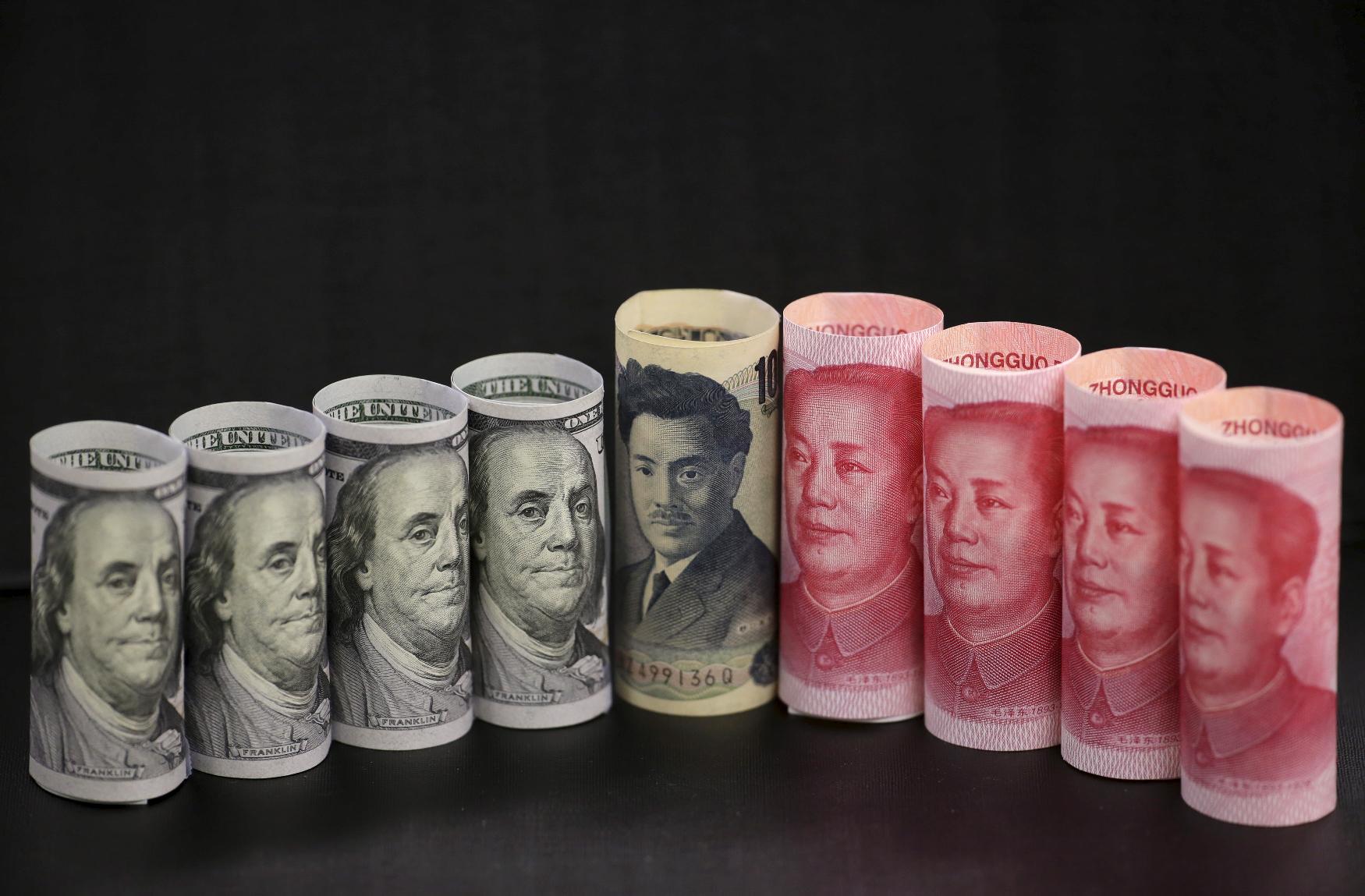
A look at the day ahead in European and global markets from Rae Wee Markets have been betting on a dollar downturn for months on the view that U.S. rates would eventually have to fall at some point this year. Until now, that has been wishful thinking. The yen and the yuan were the latest to fall prey to a resurgent dollar on Friday, with the Japanese currency slipping deeper into intervention territory and the Chinese yuan breaching a key level against the greenback. Respective authorities stepped in to defend the currencies, but their efforts were in vain. Since the Bank of Japan's landmark rate hike on Tuesday, the yen has fallen more than 1% against the dollar. That's left it just a whisker away from 2022's multi-decade low, as the highly-anticipated move had counter-intuitively sent it into free fall with traders scurrying back into popular 'carry trades'. Japanese government officials have kept up their verbal defence of the currency, keeping investors on their toes for any signs of intervention. The yen's weakness also spilled over to the yuan which weakened past the psychologically important 7.2 per dollar level on Friday and prompted state-owned banks to step in to buy the yuan for dollars. NO END IN SIGHT With the dollar having been in the driver's seat for the most part of the past two years since the Federal Reserve kicked off its flurry of rate hikes, analysts had, at the end of last year, expected its rally to stall come 2024. Yet, any fall in the greenback has so far been short lived. Its latest move lower came after the Fed this week maintained its projection for three rate cuts this year. In less than 24 hours, however, the dollar was back in favour after a surprise rate cut from the Swiss National Bank and a dovish tilt from the Bank of England (BoE) sparked selling in the Swiss franc and sterling for dollars. That ramped up expectations for a June rate cut by the European Central Bank and the BoE , but less so for the Fed. "It just doesn't seem that there's an automatic sense that when the Fed cuts rates, there's got to be some dollar easing if the ECB and other central banks in the G10 in particular, are doing the same or perhaps even more," said Rob Carnell, ING's regional head of research for Asia-Pacific. That's going to mean more pain for emerging Asia, in particular, given a rising dollar pressures their currencies and makes it harder for their central banks to ease monetary policy. Key developments that could influence markets on Friday: - UK retail sales (February) - Germany import prices (January) - Reopening of 1-month, 3-month and 6-month UK government debt auctions Get a look at the day ahead in European and global markets with the Morning Bid Europe newsletter. Sign up here. https://www.reuters.com/markets/europe/global-markets-view-europe-2024-03-22/
2024-03-22 05:37
Dovish tilt seen by central banks after Swiss rate cut Interest rate advantage gives dollar broad support Dollar/yen earlier in week tested intervention level of 2022 NEW YORK/LONDON, March 22 (Reuters) - The dollar headed toward a second week of gains on Friday, after a slight rate hike in Japan gave the yen a slight reprieve and a surprise cut in Switzerland highlighted the gap in interest rate policy between the Federal Reserve and other central banks. The week marked a shift in global monetary policy as the Swiss National Bank (SNB) and central banks in developing countries cut rates or indicated their intention to do so, with June the likely moment for the European Central Bank to move. The dollar rose against all G-10 currencies except the yen, as the relatively strong U.S. economy and high interest rates kept the carry trade alive. But the Swiss rate cut, the first by a major central bank in Europe, marked a definitive shift. "We had a somewhat surprising cut from the SNB this week," said Shaun Osborne, chief FX strategist at Scotiabank in Toronto. "People have been extrapolating, certainly from a signaling point of view, what that might mean for other central banks in Europe." The Fed left its overnight rate on hold between 5.25%-5.5% and stuck with projections for three cuts by year's end. But it also said it would not cut until it was confident that inflation was sustainably declining toward its 2% target. About 84 basis points of cuts are priced in for this year - much lower than the 160 or so at the start of the year - but higher than earlier in the week as rate cut bets gained steam. Sterling dropped 0.5%, hitting a one-month low at 1.258, after a 1% drop on Thursday when the Bank of England left rates unchanged. But the BoE revealed a more dovish tilt as two hawkish committee members dropped their prior call for a hike. "What happened out of the SNB and what happened with the BoE really opening the door to rate cuts earlier than expected, that's putting the dollar in a better light," said Marvin Loh, senior global macro strategist at State Street in Boston. "Things are calm, but the dollar is a little bit stronger." The Swiss franc , the best performing G10 currency of 2023, has lost about 1.7% in value against the dollar this week and about 6.8% so far this year. The dollar index , a measure of the U.S. currency against six major trading partners, rose 0.45% while the dollar weakened 0.12% against the Japanese yen at 151.44 per dollar. The dollar is up about 1.5% this week versus the yen after approaching levels that prompted Japanese intervention in 2022. Euro/yen hit its highest since 2008 this week at 165.37 and the Aussie broke above 100 yen for the first time since 2014. With the dollar in the ascendant, the euro hit a three-week low. It was last trading down 0.5% at $1.0806. The Bank of Japan announced an historic shift out of negative short-term rates and longer-run yield caps, but it was so well telegraphed that the yen fell on the news. Expectations for policy easing in China too have piled pressure on its currency, which dropped sharply in the onshore session, spooking equity investors and prompting state banks to step in. It was last at 7.229 per dollar , while in offshore trading the dollar headed for its largest one-day rise against the yuan in a year, up 0.77% to 7.2769. Bitcoin was set for its largest weekly drop since last August, with a roughly 6.7% fall, as crypto markets have taken a step back from a powerful rally this week - though it will trade through until Sunday. It was last down 2.74% at $63,674.36, having fallen by some 13% since a record high close to $74,000 last week. Keep up with the latest medical breakthroughs and healthcare trends with the Reuters Health Rounds newsletter. Sign up here. https://www.reuters.com/markets/currencies/dollar-steadfast-investors-seek-carry-2024-03-22/