2024-03-21 21:52
March 22 (Reuters) - A look at the day ahead in Asian markets. This week's busy global central bank agenda was manna for stock market bulls who especially welcomed the Federal Reserve decision to stand dovishly pat, for now, and a surprise Swiss National Bank rate cut deemed a foreshadowing of where its peers were heading easing-wise this year. The question for Asia after stocks in Tokyo and Taiwan hit record highs Thursday is whether a breather is in store or another round of yet higher highs across timezones. European stock indexes stretched deeper into uncharted territory on Thursday. Wall Street was eager to retake the baton and continued to rally to closing all-time highs. The S&P 500 (.SPX) , opens new tab, Dow (.DJI) , opens new tab and Nasdaq (.IXIC) , opens new tab took off Wednesday with renewed vigor after Fed policymakers left its fed funds target at 5.25% to 5.50%, as expected. The Fed also kept its dot plot outlook for 75 basis points in cuts this year, despite recent concerns that the median estimate would be changed to only 50 basis points of easing due to recent stubborn inflation. Thursday's drama was in Switzerland, where the Swiss National Bank cut its main interest rate by 25 basis points to 1.50%, a surprise that caused the currency to weaken and helped support the dollar. Market pricing currently reflects expectations that the Fed and the European Central Bank will start cutting rates at their June meetings. Before Japanese investors can take another run at record highs Friday, after hoisting the Nikkei 225(.N225) , opens new tab to one on Thursday, traders will get a read on the inflation picture from national Consumer Price Index data from February. The Bank of Japan on Tuesday abandoned eight years of negative interest rates, with inflation exceeding the BOJ's 2% target for well over a year and wage pressures rising. But rates are still near zero. BOJ Governor Kazuo Ueda on Thursday vowed to keep supporting the economy with ultra-loose monetary policy but signaled confidence inflation was gaining momentum, a desirable trend in Japan because of its struggles with deflation and economic stagnation. Perhaps counter-intuitively, the yen has been on the ropes since the BOJ backed off its easy policy. With no sudden rate jump appearing in the offing and volatility low, the yen carry trade still looks comfortable. The dollar spent the U.S. trading day tucked right up under the November highs against the well-shorted yen, and within easy trading distance of the October 2022 peaks near 152 that brought BOJ intervention. Put another way, the dollar/yen pairing is only about one-quarter yen from levels last seen in mid 1990. South Korea's KOSPI benchmark (.KS11) , opens new tab is at two-year highs, but likewise faces February producer inflation data on Friday. China shares (.SSEC) , opens new tab, (.CSI300) , opens new tab, reflecting worries over the country's property crisis, did not join the party Thursday. But Honk Kong shares (.HSCE) , opens new tab rose smartly. Here are key developments that could provide more direction to markets on Friday: - South Korea PPI (Feb) - Japan CPI (Feb) - India flash PMIs (March) Get a look at the day ahead in Asian and global markets with the Morning Bid Asia newsletter. Sign up here. https://www.reuters.com/markets/asia/global-markets-view-asia-graphic-pix-2024-03-21/

2024-03-21 21:35
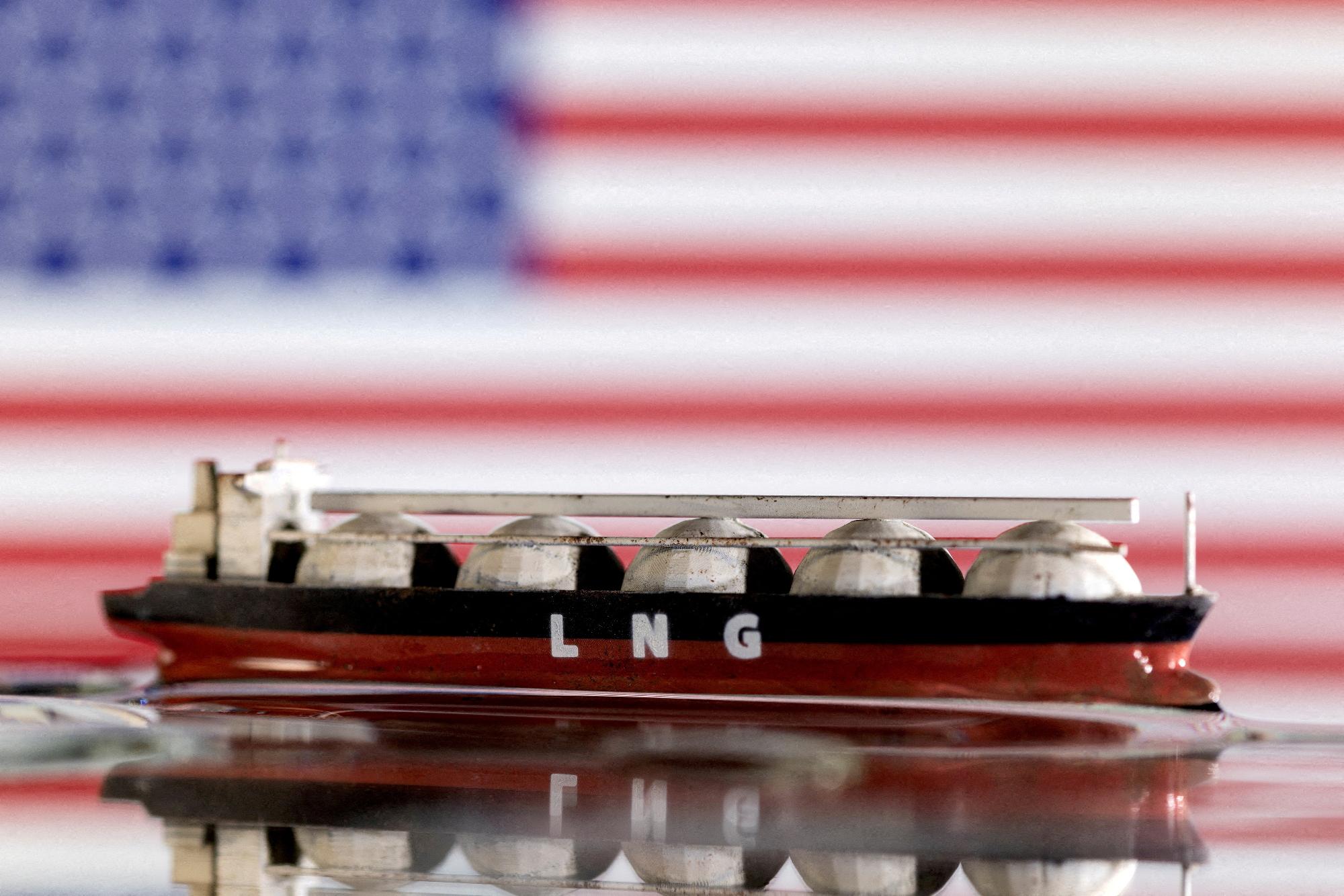
NEW YORK, March 21 (Reuters) - Sixteen Republican-led states on Thursday filed a lawsuit to challenge the federal government's ban on approving applications to export liquefied natural gas (LNG), saying the federal government lacks the authority to broadly deny those permits. The lawsuit was filed in federal court in Lake Charles, Louisiana, by the Republican attorneys general of a coalition of states including Texas, Louisiana and Florida that claim the U.S. Department of Energy's (DOE) pause on exports will harm the U.S. economy and undermine efforts to supply foreign allies in Europe with steady supplies of LNG as the region seeks to wean itself off piped gas from Russia. The Biden administration said in January the pause will allow officials to review its process , opens new tab for analyzing economic and environmental impacts of projects seeking approval to export LNG to Europe and Asia where the fuel is in high demand. The states said the pause on new approvals for LNG exports oversteps DOE’s authority under the Natural Gas Act, which they said requires the agency to affirmatively show projects are inconsistent with the public interest before denying applications. The states also argued the ban jeopardizes billions of dollars in investments planned to build export facilities. The DOE did not immediately respond to a request for comment. The initial review is expected to last months. The last U.S. review of LNG export projects was in 2018 when export capacity was 4 billion cubic feet per day (bcfd). Capacity has since tripled and is set to shoot higher by 2030 with projects under construction. Environmentalists and youth groups, an important part of Democratic President Joe Biden's base, had urged the administration over the last year to slow down or stop approvals for LNG export projects, which they claim can harm local communities with pollution and will lock in global reliance on climate change-causing fossil fuels for decades. Domestic industries including chemical, steel and agriculture businesses, have also opposed unrestricted exports, which they say can raise concerns about the reliability of U.S. domestic supply and fuel prices. Before the lawsuit was filed, efforts by Republicans in Congress to strip the DOE’s power to approve the exports and leave the Federal Energy Regulatory Commission with the sole responsibility for approving LNG projects had stalled. Jumpstart your morning with the latest legal news delivered straight to your inbox from The Daily Docket newsletter. Sign up here. https://www.reuters.com/legal/sixteen-us-states-sue-federal-government-over-ban-lng-permit-2024-03-21/
2024-03-21 21:32
BRUSSELS, March 21 (Reuters) - The European Commission has prepared a proposal to raise tariffs on Russian and Belarusian cereals, oilseeds and derived products and will announce the measures on Friday, the head of the Commission Ursula von der Leyen said on Thursday. "We have prepared a proposal to increase tariffs on Russian and Belarusian imports of cereals, oilseeds and derived products and there are several good reasons for making this proposal," von der Leyen told a news conference. "It will prevent the Russian grain from destabilising the EU market in these products, it will stop Russia from using the revenues from exports of these products to the European Union and it will ensure that illegal Russian exports of stolen Ukrainian grain do not enter the EU market," she said. Get a look at the day ahead in U.S. and global markets with the Morning Bid U.S. newsletter. Sign up here. https://www.reuters.com/markets/commodities/eu-raise-tariffs-russian-belarusian-grains-commission-2024-03-21/

2024-03-21 21:23
March 21 (Reuters) - A U.S. judicial panel on Thursday consolidated at least nine lawsuits challenging the U.S. Securities and Exchange Commission's new rules requiring public companies to report climate-related risks in a venue favored by Republican-led states and a business group. The St. Louis-based 8th U.S. Circuit Court of Appeals was chosen randomly via a lottery and will consider the legal challenges to the landmark rule, which aims to standardize public company disclosures about greenhouse gas emissions, weather-related risks and how they are preparing for the transition to a low-carbon economy. The court, which has 10 Republican-appointed active judges and one appointed by a Democratic president, was the venue where nine Republican-led states including Iowa, Montana and North Dakota and the business lobbying group American Free Enterprise Chamber of Commerce filed their challenge. Representatives for the Republican-led states and industry challengers did not immediately respond to requests for comment. The SEC declined to comment. First proposed in 2022, the rules are part of Democratic President Joe Biden’s efforts to leverage federal agency rulemaking to address climate change threats. They were approved by the SEC on March 6, and the first lawsuit seeking to block them was filed later that day. The consolidated lawsuits include challenges filed by at least 25 Republican-led states, energy industry companies and business groups, including the U.S. Chamber of Commerce, the nation's largest business lobby, seeking to overturn the rules. They have argued, among other things, that the disclosure requirements amount to back-door environmental regulations that go beyond the SEC’s legal authority. Challengers on the other side of the issue like the environmental organization the Sierra Club and Natural Resources Defense Council have meanwhile said the rules do not go far enough to protect investors, and arbitrarily stripped the final version of stronger reporting requirement rules. Representatives for the environmental groups said they look forward to arguing before the court. The conservative-dominated 5th Circuit, the court where Texas and energy companies filed their challenges, temporarily paused the rules from going into effect on Friday. The SEC is expected to ask the 8th Circuit to revisit that ruling. It had told the 5th Circuit a pause was unnecessary, since the rules have extended compliance deadlines that do not require disclosures before March 2026. The agency has also said the rules "fit comfortably within" its authority to require disclosure of information important to investors, and that they would provide "consistent, comparable and reliable information" about climate risks. The nine lawsuits were filed in six appeals courts. The 8th Circuit had previously set a deadline for the challengers who sued in that court to file their opening brief in May. Jumpstart your morning with the latest legal news delivered straight to your inbox from The Daily Docket newsletter. Sign up here. https://www.reuters.com/legal/challenges-secs-climate-rules-sent-conservative-leaning-us-appeals-court-2024-03-21/

2024-03-21 21:15
HOUSTON, March 21 (Reuters) - U.S. energy pipeline and storage operators have spent two years watching the consolidation of oil and gas producers, and now they are gearing up for the merger wave to hit their sector, executives, investors, and analysts said. The midstream sector has a lot of specialized midsize firms and only a handful of very large operators able to provide the services across a wide geographic footprint. Mergers will result in more suppliers able to provide processing, transport, storage and export services, according to executives and dealmakers. There were $12.5 billion of midstream deals announced through mid-March, compared with $21.9 billion for all 2023, according to researcher Enverus. If the current pace holds, this year will be the biggest for midstream mergers and acquisitions since 2019. Scale "is definitely important," Williams Companies (WMB.N) , opens new tab Chief Operating Officer Michael Dunn told Reuters on the sidelines of the CERAWeek by S&P Global conference. "Continuing to expand is certainly one of our goals." Due to the hurdles of getting new energy infrastructure approved and built, it can make more sense to buy a company than put steel in the ground yourself, Pierce Norton, CEO of Oneok (OKE.N) , opens new tab said in an interview at CERAWeek. Oneok bought Magellan Midstream last year, to expand its natural-gas business into refined products and crude transportation. HOW DEALS WILL UNROLL A consolidation wave in midstream would skip the initial phase of private-company deals that enveloped shale companies and jump straight to strategic combinations, said those working on such deals. "There are not too many private midstream businesses of scale left, as many were sold in recent years, so further public midstream consolidation is inevitable," said Pete Bowden, global head of industrial, energy and infrastructure at Jefferies Financial Group (JEF.N) , opens new tab. This year, Sunoco (SUN.N) , opens new tab agreed to acquire storage provider NuStar Energy (NS.N) , opens new tab for $3.9 billion, and EQT Corp (EQT.N) , opens new tab announced it would buy its former spinoff Equitrans Midstream (ETRN.N) , opens new tab for $5.5 billion. The EQT deal will "reduce our cost structure to a level where we can withstand the negative stress case of prices like the $2 (per million British thermal units) we see today," said EQT CEO Toby Rice. That price is less than a third of the average for 2022. Other deals are percolating: Occidental Petroleum (OXY.N) , opens new tab is weighing options for its controlling stake in Western Midstream Partners (WES.N) , opens new tab, Reuters reported last month. Summit Midstream Partners (SMLP.N) , opens new tab last week said it was in the advanced stages of a review of strategic alternatives. Like the shale producer combinations, the coming wave of midstream deals will not be salvage jobs of last decade. U.S. midstream companies are in a position of strength having cut debt and switched to fee-based business models less exposed to commodity price swings. Scott Wexler, head of North American midstream at Citigroup (C.N) , opens new tab, said companies are trading below 3.5-times debt-to-EBITDA, compared to more than 4-times prior to the COVID-19 pandemic. "It makes it easier to go out and do deals, in particular when the rest of the universe has fixed themselves and so those combinations don't put in peril your strategic objectives," he added. RESHAPING INDUSTRY A similarity to shale combinations is midstream's need for greater scale to cover more shale basins, to share the costs of methane reduction and to deliver immediate shareholder returns. "Some of the deals we've started to see are midsize public companies where the management teams are realizing they have carried the ball as far as they can on their own," said Michael Casey, head of midstream and downstream at Wells Fargo (WFC.N) , opens new tab. Greater scale will allow companies to earn more by delivering more services. "The more I can touch that molecule, the more margin I can realize. People are looking at ways to further their opportunities to do that," Casey explained. As their existing contracts expire in coming years, the newly enlarged oil and gas producers will look to pare suppliers to cut their cost of business. "As these (producers) have been getting bigger, one would expect this to be followed by a renewed focus on the part of the midstreamers to follow suit," said Jefferies' Bowden. The Reuters Power Up newsletter provides everything you need to know about the global energy industry. Sign up here. https://www.reuters.com/business/energy/ceraweek-us-pipeline-firms-poised-follow-biggest-customers-into-ma-2024-03-21/

2024-03-21 21:01
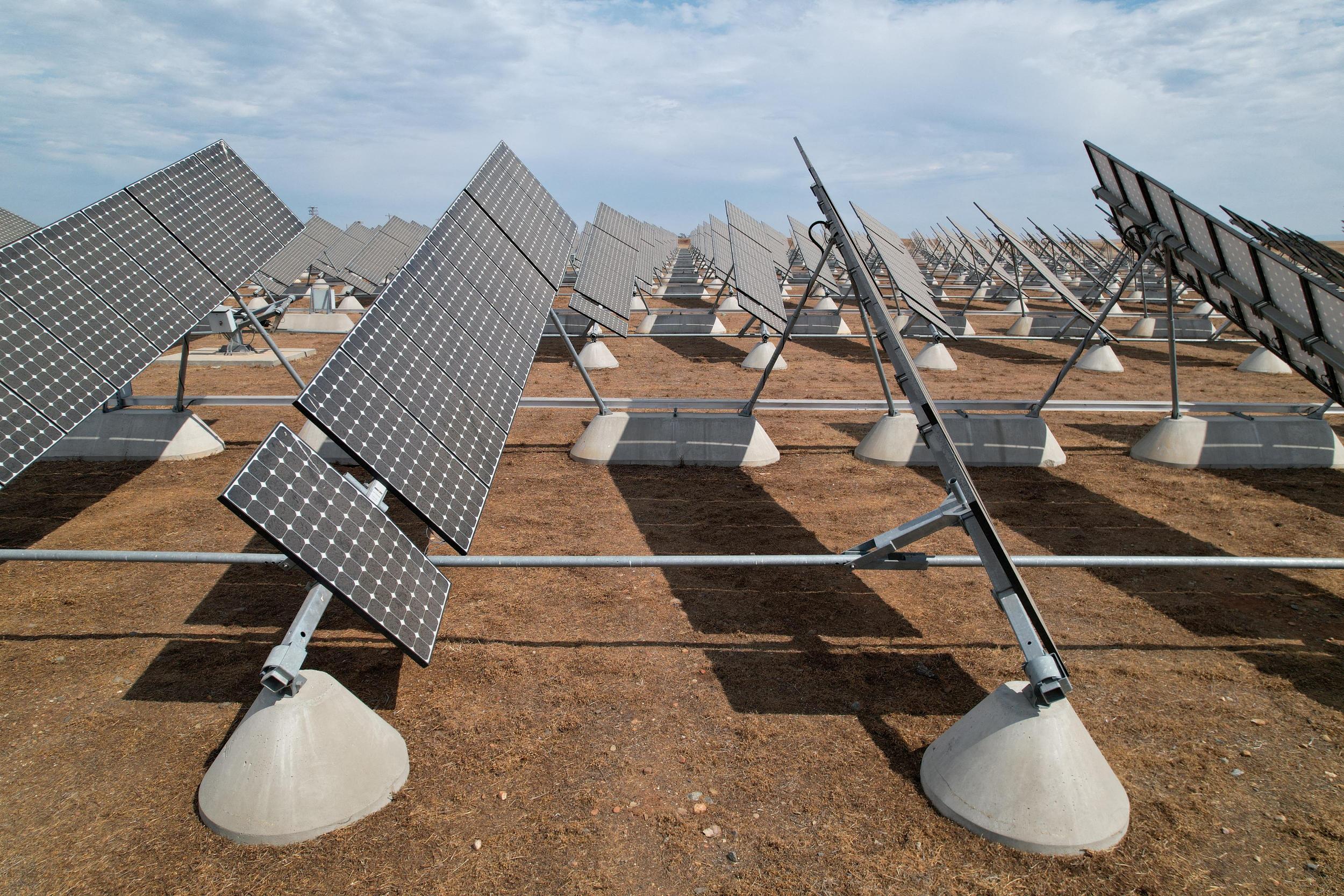
HOUSTON, March 21 (Reuters) - The U.S. government needs to streamline permitting for renewable energy projects, including development of power transmission infrastructure and grid connectivity, to support needed growth, executives said on Thursday at a conference in Houston. "It's a tremendous issue," said NRG (NRG.N) , opens new tab interim CEO Larry Coben, pointing to difficulties around interconnection, the rules that new electricity generators must follow to connect to the grid. It can take up to four years to move a project through the interconnection process, according to the American Clean Power Association. Coben lamented that it is much harder to move through permitting processes in places like California than in Texas. States with fewer regulatory restrictions are going to be the big winners in attracting renewable investment and growth, said Andrés Gluski, CEO of utility firm AES Corporation. Hurdles around permitting have been discussed frequently among executives attending the annual CERAWeek energy conference in Houston Texas. Earlier in the week, U.S. Senator Joe Manchin told participants that permitting reform "will get done." Former U.S. climate envoy John Kerry on Thursday agreed the need is critical for clean energy development. "We’ve got to break the gridlock of permitting. We cannot take five or 10 years to be able to deploy the things we need to do," to meet climate goals. The call for faster permitting comes as renewable deployment is forecast to grow by as much as 17% to 42 gigawatts this year, representing about a quarter of electricity generation, consultancy Deloitte said in a report, citing U.S. government figures. "We've got to get infrastructure built, transmission lines built. We’ve got to work through these kind of political forums that are being used to stonewall and stop progress,” said Chris Womack, chief executive at utility firm Southern Company. The Reuters Power Up newsletter provides everything you need to know about the global energy industry. Sign up here. https://www.reuters.com/business/energy/ceraweek-permitting-reform-needed-spur-faster-renewable-growth-nrg-ceo-2024-03-21/