2024-03-21 10:55
March 21 (Reuters) - Chinese energy firm CNOOC Ltd (0883.HK) , opens new tab, posted a fall of 12.6% in 2023 net income after a record high a year earlier, as hydrocarbon prices fell, although a focus on cost control and reserve expansion helped the result. The state-controlled offshore oil and gas specialist reported a net profit of 123.8 billion yuan ($17.20 billion) in a filing to the Hong Kong Stock Exchange on Thursday. Its oil and gas output rose 8.7% to 678 million barrels of oil equivalent (boe), topping its target of 650 million to 660 million boe. Historically one of the industry's lower-cost explorers and producers, the company's all-in production cost fell to $28.83 per barrel from $30.39. Capital expenditure rose by 37% to a record 137.35 billion yuan. Net proven reserves stood at about 6.78 billion boe at the end of 2023, up from 6.24 billion a year earlier, as it maintained a reserve life of more than 10 years for a seventh consecutive year. Its reserve replacement ratio stood at 180%. CNOOC is a top contributor to China's domestic oil production growth as state-owned oil companies tackle geologically more complex and more costly resources to counter a steep decline at mature basins. This month, CNOOC announced two large finds each with 100 million tons of oil equivalent proved in place - the deepwater Kaiping South Oilfield in the Pearl River Delta and Qinhuangdao 27-3 off Bohai Bay. At an earnings briefing, CNOOC's president Zhou Xinhuai told reporters that these discoveries resulted from accelerated high-efficiency explorations over the last few years and would help stabilise oil production in the key offshore acreage. The highlight of the company's global exploration effort was yet another oilfield discovery with proved in-place volume over 100 million tons in Guyana where the company partners with Exxon Mobil (XOM.N) , opens new tab as the operator, it said. In 2024, the company said it planned to focus on increasing reserves and production, putting greater emphasis on gas exploration, and forecast steady growth in both reserves and production. CNOOC's Hong Kong-listed shares closed up 0.77% before the earnings release, having gained 40.15% this year versus a fall of 1.08% in the benchmark Hang Seng Index (.HSI) , opens new tab. ($1=7.1994 Chinese yuan renminbi) The Reuters Power Up newsletter provides everything you need to know about the global energy industry. Sign up here. https://www.reuters.com/business/energy/china-cnoocs-2023-profit-falls-126-after-record-2022-2024-03-21/

2024-03-21 10:46
A look at the day ahead in U.S. and global markets from Mike Dolan With markets already cheering the Federal Reserve's restated consensus on three interest rate cuts later this year, the Swiss National Bank added spice on Thursday with a surprise rate cut that sets central bank easing speculation alight again. With bets on the first rate cuts from major central banks mostly settling on June or July, the SNB jumped the gun with its first rate reduction in nine years - cutting its main policy rate by a quarter point to 1.5% as it slashed inflation forecasts. The Swiss franc swooned more than 1% to a four-month low against the dollar, lifting Swiss stock benchmarks more than 1% to boot. And with UK inflation also undercutting forecasts this week, the Bank of England's decision later on Thursday will now be watched closely for more dovish signals from policymakers. Only Norway's central bank dampened the party somewhat by indicating it was in no mind to ease until the autumn. But led by the Fed's benign take late on Wednesday, the evolving central bank story lit a fire under stock and bond markets once more. MSCI's all-country stock index (.MIWD00000PUS) , opens new tab - up 7.5% for the year to date - raced to new record highs on Thursday after both the S&P500 (.SPX) , opens new tab and the Nasdaq (.IXIC) , opens new tab set new closing records late on Wednesday. Asian bourses surged through the night, with Japan's Nikkei (.N225) , opens new tab, South Korea's Kospi (.KS11) , opens new tab and Taiwan's benchmark (.TWII) , opens new tab all gaining more than 2%, and Europe's leading indexes jumped more than 1% on Thursday too. U.S. stock futures were higher again ahead of Thursday's bell. Bonds were buoyed too - with 2-year U.S. Treasury yields now down almost 20 basis points from Monday's peaks to 4.57%. Much of the rush of blood is based on relief that Fed policymakers, who set out their quarterly projections for rates and the economy again on Wednesday, had not dialed back December's forecasts for 75bps of rate cuts this year. The median of officials' "dots" on expected policy rates for this year came in unchanged at 4.6% - compared to the current setting of 5.25-5.50% - and they also have their favored PCE inflation gauge back to its 2% target next year. But in a slightly more cautious signal - perhaps reflecting greater confidence in the economy's growth potential - the median dot for next year climbed to 3.9% from 3.6% and for the first time since before the pandemic policymakers nudged up their long-run equilibrium rate to 2.6% from 2.5%. Speaking of stickier U.S. inflation reports this year that had unnerved markets somewhat, Fed chair Jerome Powell said they "haven't really changed the overall story, which is that of inflation moving down gradually on a sometimes bumpy road to 2%." All of which has futures markets upping the chances for a first Fed cut as soon as June to some 80% and they increased the amount of easing seen for the whole year by 10bps to 85bps. The shifting central bank sands made for a slightly confusing picture in currency markets. The dollar's index (.DXY) , opens new tab initially skidded lower on the Fed decision overnight but the Swiss move and the possibility of other central banks beating the Fed to the punch saw it rebound sharply on Thursday. Sterling held the line ahead of the BOE decision, but the euro fell back. Despite better than forecast March business readings from the euro zone, the overall picture there is still one of contracting activity this month. The PMI survey index came within a whisker of returning to growth in March, outperforming expectations. And the yen continued to stay weak above 151 per dollar after its early week drop on the contrary Bank of Japan decision to lift its policy rates out of negative territory for the first time in eight years. In company news, shares in memory chip maker Micron Technology (MU.O) , opens new tab shot up 16% overnight after it tapped a surge in artificial intelligence adoption to forecast third-quarter revenue above estimates and post a surprise quarterly profit. Elsewhere, there was one eye on the background budget standoff in Washington. A fractured U.S. Congress struggled behind the scenes on Wednesday to produce a massive spending bill to fund defense, homeland security and other programs that lawmakers must pass before the weekend to avert a partial government shutdown. Key diary items that may provide direction to U.S. markets later on Thursday: * Policy decisions from Bank of England, Norges Bank, Banco de Mexico and Central Bank of Turkey * Flash March business surveys from United States, Europe and around the world * US weekly jobless claims, Philadelphia Fed's March business survey * Federal Reserve Vice Chair for Supervision Michael Barr speaks * US Treasury auctions 10-year inflation-protected Treasuries, four-week bills * U.S. corporate earnings: Nike, FedEx, Lululemon, Accenture, Factset, Darden Restaurants (This story has been refiled to change the day to Thursday, not Wednesday, in key diary items in paragraph 25) Get a look at the day ahead in U.S. and global markets with the Morning Bid U.S. newsletter. Sign up here. https://www.reuters.com/markets/us/global-markets-view-usa-graphic-2024-03-21/
2024-03-21 10:13
MUMBAI, March 21 (Reuters) - The Indian rupee closed little changed on Thursday, sidestepping strength in its Asian peers as local dollar demand ate into the currency's early gains that came after the U.S. Federal Reserve kept its policy rates and dot plot for 2024 unchanged. The rupee closed at 83.1475 against the U.S. dollar, barely changed from its close of 83.1575 in the previous session. While the currency had risen to an intraday high of 83.0475 earlier in the session, it consequently shed those gains. Dollar demand from corporates and debt repayment outflows pressured the rupee on Thursday, a foreign exchange trader at a state-run bank said. Most Asian currencies rose, with the Korean won up 1.3% and leading gains, while the dollar index pared some of its losses from Wednesday and was last quoted 0.2% higher at 103.43. The Fed left rates unchanged on Wednesday and maintained its forecast for three interest rate cuts over 2024. The upside surprises on U.S. inflation data in January and February, "haven't really changed the overall story, which is that of inflation moving down gradually, on a somewhat bumpy road," Fed chair Jerome Powell said on Wednesday. Odds of a June rate cut have risen to about 74% after the Fed's policy decision, up from 59% a week earlier, according to CME's FedWatch tool. Meanwhile, dollar-rupee forward premiums rose, with the 1-year implied yield up 2 bps to 1.63%, aided by a fall in U.S. bond yields. The rupee appears to have "shifted to a slightly weaker range," but it's unlikely to fall below 83.30 in the near term, Dilip Parmar, a foreign exchange research analyst at HDFC Securities said. Investors now await the release of U.S. jobless claims data due later in the day. Keep up with the latest medical breakthroughs and healthcare trends with the Reuters Health Rounds newsletter. Sign up here. https://www.reuters.com/markets/currencies/rupee-ends-flat-wedged-between-higher-asia-fx-local-dollar-demand-2024-03-21/

2024-03-21 09:31
TOKYO, March 21 (Reuters) - Japan's Nikkei share average hit a record high on Thursday and the yen rebounded from a four-month low, after the U.S. Federal Reserve stuck to its easing path despite recent heated inflation readings. The Fed's policy direction contrasts sharply with the Bank of Japan, which on Tuesday ended eight years of extraordinary stimulus measures with its first rate hike since 2007. However, BOJ Governor Kazuo Ueda reiterated that policy would remain broadly accommodative for the time being, in comments to parliament on Thursday. Japanese government bond yields ticked higher amid expectations for tighter policy. The Nikkei (.N225) , opens new tab marked a record closing high of 40,815.66, up more than 2% on the day, after also setting a fresh all-time intraday peak of 40,823.32. For the year, it is up 22%, far outpacing an 8% advance for the MSCI world index (.MIWO00000PUS) , opens new tab. The dollar was last down 0.2% at 150.94 yen , after scaling 151.82 yen on Tuesday for the first time since mid-November. The BOJ and Fed policy announcements have given investors the green light to buy stocks again, said Yunosuke Ikeda, Nomura's chief equity strategist, based on the same three underlying catalysts that drove gains for the past year: better corporate governance, emergence from deflation, and concerns about China that have drawn money into Japan. "These factors are evolving somewhat, but basically continuing from last year." While the Fed's signal that it is still on track for three quarter-point rate cuts this year puts it on the opposite path from the BOJ, Japanese policymakers have stressed that any further tightening would be very gradual. The BOJ sees room for another hike this year, with market players viewing July or October as potential dates, the Nikkei newspaper reported. "It's too early to say there's a risk of a July hike", which would require sustained yen weakness despite Fed rate cuts and possible Japanese forex market intervention, forcing the BOJ to act, said Shusuke Yamada, chief Japan forex and rates strategist at Bank of America. In the medium term, dollar-yen could fall to 145 or lower if BOJ hikes coincided with Fed cuts, he said. However, demand for carry in the currency pair is likely to spur dip buying, which could see a rise to 152, which is the level when traders may become wary of intervention, he said. On Thursday, Japanese Finance Minister Shunichi Suzuki warned that the government was watching currency moves with "a high sense of urgency," but made no comment on currency intervention. In the JGB market, two-year yields rose 2.5 basis points (bps) to 0.185%, rebounding from Tuesday's two-week low, while five-year yields added 3 bps to 0.385%, climbing from a three-week trough. Japanese markets were closed for a national holiday on Wednesday. The 10-year JGB yield rose 1.5 bps to 0.74%. The 20-year yield ticked up 1 bp to 1.505% and the 30-year yield edged 0.5 bp higher to 1.805%. "Some people are trying to take account of the risk of early action by the BOJ, which will keep the short end under pressure," said Masayuki Kichikawa, chief Japan macro strategist at Sumitomo Mitsui DS Asset Management. But he warned against reading too much into market moves so soon after the BOJ meeting. "We're in some kind of transition period, and everyone needs to get used to the new environment." Get a look at the day ahead in Asian and global markets with the Morning Bid Asia newsletter. Sign up here. https://www.reuters.com/markets/asia/japan-shares-scale-record-high-yen-rebounds-fed-out-doves-boj-2024-03-21/
2024-03-21 09:21
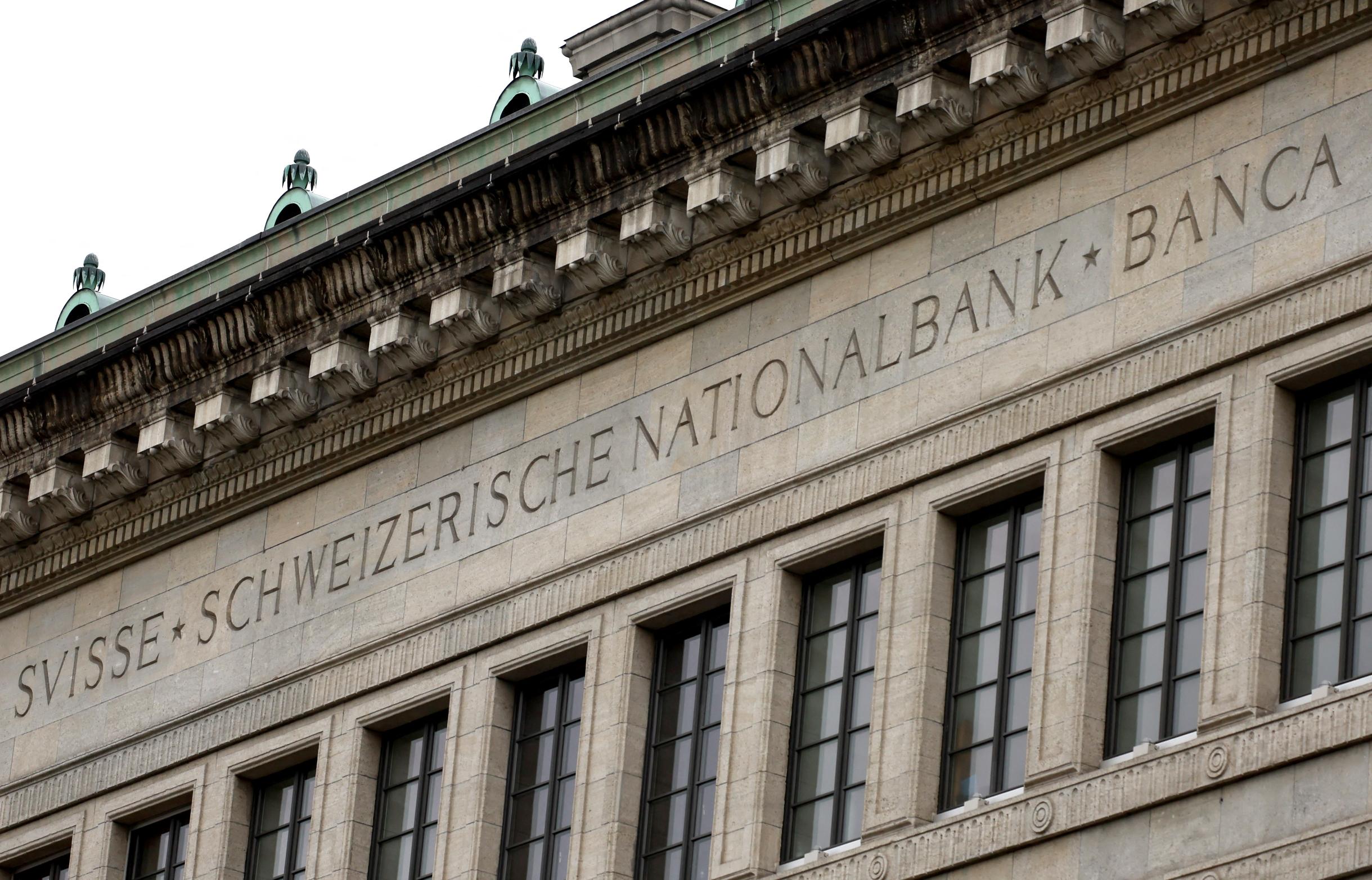
LONDON/ZURICH, March 21 (Reuters) - The Swiss National Bank cut its main interest rate by 25 basis points to 1.50% on Thursday, a surprise move that made it the first major central bank to dial back tighter monetary policy aimed at tackling inflation. The franc dropped after the decision, pushing the euro to its highest against the Swiss currency since mid-July last year, while Swiss government bond yields fell. MARKET REACTION: STOCKS: Zurich's SMI index (.SSMI) , opens new tab rose 0.9% on the day, outperforming Europe's STOXX 600 benchmark index (.STOXX) , opens new tab. FOREX: The Swiss franc weakened broadly, pushing up the euro by as much as 1% to 0.978 , its highest since last July, while the dollar gained as much as 1.2% to touch a session peak at 0.898. MONEY MARKETS: Swiss 10-year bond yields were last down 5 basis points on the day at 0.706%, having earlier fallen to as low as 0.665%, according to Tradeweb COMMENTS: KARSTEN JUNIUS, CHIEF ECONOMIST, J SAFRA SARASIN; ZURICH: "The SNB rightly focuses on the Swiss data that show low inflation rates, which will also remain around the middle of their target range in the coming years. The crucial difference to other countries is that wage pressure is much lower in Switzerland, such that there is only very little domestic price pressure." "The strong real appreciation of the Swiss franc and the difficult situation of the Swiss export sector was another argument for the rate cut and for a weaker Swiss franc going forward. Given the low inflation forecast of only 1.1.% for 2026 another rate cut in June is likely. We expect two more rate cuts this year." ALEXANDER KOCH, HEAD OF MACRO & FIXED INCOME RESEARCH, RAIFFEISEN, ZURICH: "In contrast to the USA and the eurozone, inflation has not recently been higher than expected again, but rather lower than expected. The SNB is therefore more confident than the other central banks that inflation will remain comfortably within the target range in the medium term. And by cutting interest rates early, it has utilised its room for manoeuvre to support economic development. However, the comparatively moderate interest rate level, together with the robust economy, means that no overly aggressive easing is expected in the further course of the year." ADRIAN PRETTEJOHN, EUROPEAN ECOMOMIST, CAPITAL ECONOMICS, LONDON: "While the consensus forecast had been for the SNB to keep rates on hold, I don’t think the decision will come as too much of a surprise to investors. Switzerland is one of the few countries to have successfully tamed inflation and with the strength of the franc curtailing exports, a rate cut was clearly on the table. However, we think the SNB will probably not cut rates in June as the inflation outlook will be relatively unchanged from currently. We think the next rate cut will be in September." PHILIPP BURCKHARDT, FIXED INCOME STRATEGIST, LOMBARD ODIER, GENEVA: "Although the Swiss franc depreciated slightly in the first quarter, it has been trending towards real and nominal appreciation for some time now. On the one hand, this leads to lower imported inflation, but at the same time also hinders growth. "In that sense, the interest rate cut was the logical consequence. We now expect further interest rate cuts this year. This is also an ideal farewell gift from Thomas Jordan, who can now clearly set the direction for his successor." CHARLOTTE DE MONTPELLIER, SENIOR ECONOMIST, ING RESEARCH, BRUSSELS: "This rate cut is clearly a surprise. The huge downward revision to its conditional inflation forecasts suggests a further rate cut is highly likely in June, and also in September." SAMY CHAAR, CHIEF ECONOMIST, LOMBARD ODIER, GENEVA: "We’ve watched with great interest Powell’s speech and the SNB today, and it broadly validates the narrative that, although we had a bit of heat in some inflation prints, and particularly services inflation, overall central banks are in a relatively comfortable spot." "The area where it was most comfortable is Switzerland because inflation is constrained. The second area most likely (for a rate cut) is the euro area – as it is becoming pretty clear that wages have peaked, and the only part of inflation that is sticky is services, and what’s keeping that up is idiosyncratic factors. "Let’s keep in mind they (the SNB) had to revise significantly down their inflation forecast. It does mean that inflation is coming in much, much lower than anticipated, and the prospects are that it will continue to be relatively low. "One thing that was highlighted in the SNB statement - it was phrased a little differently from Powell and is also a concern for Europe – is there a lot of concerns about weak global growth. If you’re a central bank and inflation is coming to target, there comes a point where you don’t want to risk it." JUSTIN ONUEKWUSI, CIO, ST JAMES'S PLACE, LONDON: "We're in a global loosening cycle and it is about the timing of moves." "It does surprise us a little that they (the SNB) have gone early. It was 50-50 for a move. "Central banks in general will err on the side of the caution." COLIN ASHER, SENIOR ECONOMIST, MIZUHO BANK, LONDON: "The scale of the inflation problem in Switzerland has never been particularly large, and the Swiss National Bank is not at risk of inflation expectations becoming unanchored. "Consequently, with the inflation outlook benign, the Swiss National Bank has felt free to ease policy. The SNB only meets every quarter, and in the wake of the dovish Fed meeting, it's certainly possible that other central banks would have leapfrogged by the time the next meeting comes around, and that has helped them get over the line this time." JAN VON GERICH, CHIEF ANALYST, NORDEA, HELSINKI: "It's the first central bank in the developed world to ease so that shows the direction where the others are going. "The SNB was always the first likely mover, so this shouldn't have an impact on what the others will do. "But from the markets' point of view, this does open the door to what could happen elsewhere. "Swiss inflation numbers have been softer than in the euro area, so it was a question of whether the SNB would move at this meeting or the next one." The Reuters Daily Briefing newsletter provides all the news you need to start your day. Sign up here. https://www.reuters.com/markets/rates-bonds/view-swiss-national-bank-hits-franc-with-surprise-rate-cut-2024-03-21/
2024-03-21 08:03
LONDON, March 21 (Reuters) - The pound fell, while UK government bond prices rallied on Thursday after the Bank of England kept interest rates unchanged but sigalled the economy was moving in the right direction for it to start cutting rates. The BoE kept its benchmark rate at 5.25% - its highest since 2008 - as had been widely expected, a day after data showed inflation fell to its lowest in almost two-and-a-half years but stayed too high for comfort. Sterling fell by as much as 0.48% to a session low of $1.2726 after the decision, from around $1.275 earlier on. It is still on course for a 1% rise against the dollar this month. Against the euro , the pound was down 0.3% at 85.63, from around 85.55 earlier. Two-year gilt yields , the most sensitive to shifts in rate expectations, dropped by as much as 12.8 basis points to the day's low at 4.103%, as prices rallied. The BoE's interest rate-setters voted 8-1 to keep borrowing costs at their 16-year high of 5.25% on Thursday as the two officials who had previously called for higher rates changed their stance. "That's what really caught my eye - the two hikes last meeting have turned more neutral and looking to keep rates on hold," Fiona Cincotta, a market strategist for City Index, said. "Overall that must make for a less hawkish position from the central bank. And you can see the ship is turning towards that rate cut and that is what the pound has grasped on to," she said. Britain's headline inflation rate, which topped 11% in October 2022, fell by a bit more than expected to 3.4% in February from 4.0% in January but was still the highest in the Group of Seven. Stubborn inflation in the UK has supported sterling this year. The pound is one of the best performers so far, driven by the expectation that other major central banks will start cutting rates before the BoE. After the BoE decision, money markets were pricing a 75% chance of a rate cut in June, up from closer to 65% earlier in the day. Also on Thursday, the Swiss National Bank delivered a surprise quarter-point cut, making it the first major central bank to dial back tighter monetary policy aimed at tackling inflation, while Norges Bank kept its rate unchanged. The Bank of Japan ditched on Tuesday negative interest rates and raised rates for the first time in 17 years, while on Wednesday the Federal Reserve indicated it remained on course to cut rates three times this year but stayed on alert about the path of price growth ahead. Separately, a survey on Thursdsay showed British businesses kept up their recovery from recession this month, while inflationary pressures showed no sign of rapidly abating, potentially complicating matters for the BoE. Keep up with the latest medical breakthroughs and healthcare trends with the Reuters Health Rounds newsletter. Sign up here. https://www.reuters.com/markets/currencies/sterling-steady-ahead-bank-england-decision-2024-03-21/