2024-03-21 07:45
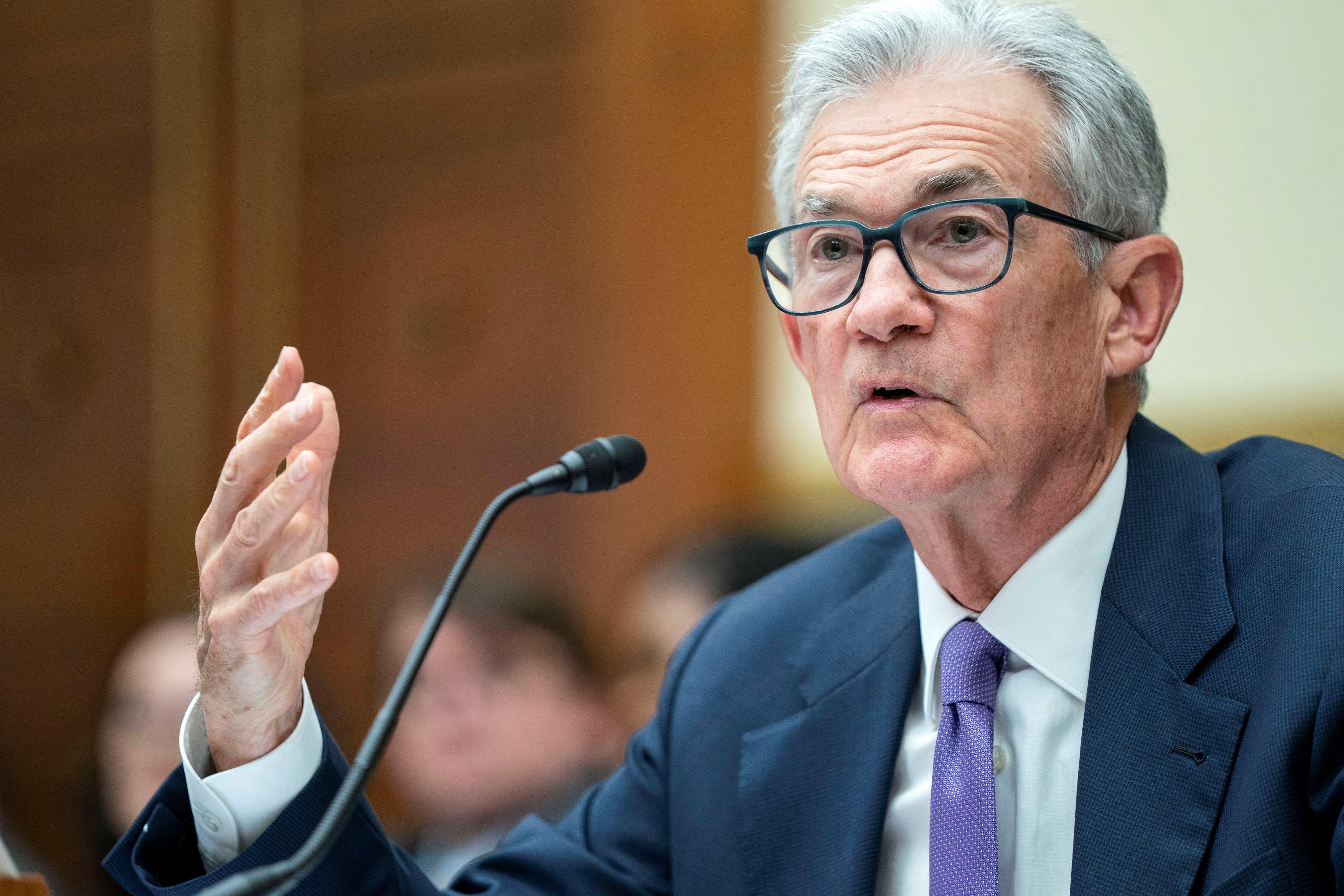
Policy rate stays in 5.25%-5.50% range U.S. central bank says inflation remains 'elevated' Fed upgrades economic outlook in slightly hawkish shift WASHINGTON, March 20 (Reuters) - Federal Reserve Chair Jerome Powell said on Wednesday recent high inflation readings had not changed the underlying "story" of slowly easing price pressures in the U.S. as the central bank stayed on track for three interest rate cuts this year and affirmed that solid economic growth will continue. The Fed also left interest rates unchanged and released new quarterly economic projections that showed officials now expect the economy to grow 2.1% this year, above what's considered the U.S. economy's long-run potential and a substantial upgrade from the 1.4% growth seen as of December. At the same time, the unemployment rate is only expected to hit 4% by the end of 2024, barely changed from the current 3.9% level, while a key measure of inflation is projected to keep falling, though at a somewhat slower pace, to end the year at 2.6%. In the context of declining interest rates, the projections showed the Fed still foresees a so-called "soft landing" from the post-pandemic spike of inflation to a 40-year high, though Powell said recent data had kept officials on a cautious footing to ensure price pressures do continue to ease. Speaking after a policy meeting at which officials left the benchmark overnight interest rate in the 5.25%-5.50% range and held onto their outlook for three cuts in borrowing costs this year, Powell said the timing of those reductions still depends on officials becoming more secure that inflation will continue to decline towards the Fed's 2% target even as the economy continues to outperform expectations. Inflation reports at the beginning of the year showed price pressures remained "elevated," in the Fed's view, but "haven't really changed the overall story, which is that of inflation moving down gradually on a sometimes bumpy road to 2%," Powell said in a press conference. But "I also don't think that those readings added to anyone's confidence" of a continued decline in inflation, Powell said, comments that put weight on upcoming inflation reports to confirm that price pressures continue to ease. If they don't, Powell said the Fed would maintain high interest rates as long as needed. Asked explicitly about recent comments to Congress that the Fed was "not far" from gaining the confidence it needs to cut rates, he sidestepped repeating those words and instead said his "main message" was that the U.S. central bank still needed more data to change policy. "It's appropriate for us to be careful," the Fed chief said, reiterating a go-slow approach to rate cuts that has been buttressed by the economy's ongoing strength, with officials saying they are in no rush to ease monetary policy while the economy and the job market continue to grow. BULLS AND DOVES The outcome of the Fed's two-day meeting will likely be welcomed by the Biden administration, with its outlook for continued growth and low unemployment alongside ongoing moderation in inflation and lower borrowing costs for consumers and businesses. While officials affirmed their view for three rate cuts this year even as they upgraded the economic outlook, they trimmed the number of cuts expected next year from four to three for a slightly shallower pace of easing - a stance one analyst characterized as "bullish-dovish." Others saw a subtle endorsement of broader strength in the economy, including an improved outlook for productivity and the labor market, developments that can allow an economy to grow faster without generating pressure for higher prices. The Fed "has stuck to its view that the underlying inflation picture is improving, notwithstanding the disappointing numbers in the past two months," said Ian Shepherdson, chief economist at Pantheon Macroeconomics. The detailed projections show that members of the central bank's policy-setting Federal Open Market Committee "have revised up their productivity growth or labor force forecasts ... or both." U.S. stocks extended their gains following the release of the policy statement and updated projections and closed sharply higher. The U.S. dollar (.DXY) , opens new tab slipped against a basket of currencies, while yields on U.S. Treasuries fell. Investors strengthened bets of a first rate cut in June. The updated economic projections showed the personal consumption expenditures price index excluding food and energy rising at a 2.6% rate by the end of the year, compared to 2.4% seen in the projections issued in December. Nevertheless, 10 of the Fed's 19 officials still see the policy rate falling by at least three-quarters of a percentage point by the end of this year, a median view first set in December and maintained despite recent stronger-than-expected inflation. That represents a slightly hawkish change from the December projections, when 11 officials had seen three quarter-percentage-point cuts on tap for the year. One key measure, the longer-run policy rate, was moved higher by a tenth of a percentage point, from 2.5% to 2.6%, reflecting the views of some Fed officials that the economy can support higher interest rates overall in the future. The latest projections show the median policymaker expectation is for the Fed's benchmark overnight interest rate to fall three-quarters of a percentage point in 2025, less than the 1 percentage point projected in December as part of a slightly slowed rate cut path, and by three-quarters of a point in 2026 as well, the same as anticipated previously. "Economic activity has been expanding at a solid pace. Job gains have remained strong and the unemployment rate has remained low," the Fed said in its unanimously approved statement. The Reuters Daily Briefing newsletter provides all the news you need to start your day. Sign up here. https://www.reuters.com/markets/rates-bonds/feds-rate-cut-confidence-likely-shaken-not-yet-broken-by-inflation-2024-03-20/
2024-03-21 07:36
Pirates had been dormant for nearly a decade 2008-2014 attacks cost the global economy billions of dollars Recent pirate raids are increasing costs for shippers Pirates take advantage of security vacuum left by Houthi strikes MOGADISHU, March 21 (Reuters) - As a speed boat carrying more than a dozen Somali pirates bore down on their position in the western Indian Ocean, the crew of a Bangladeshi-owned bulk carrier sent out a distress signal and called an emergency hotline. No one reached them in time. The pirates clambered aboard the Abdullah, firing warning shots and taking the captain and second officer hostage, Chief Officer Atiq Ullah Khan said in an audio message to the ship's owners. "By the grace of Allah no one has been harmed so far," Khan said in the message, recorded before the pirates took the crew's phones. The company shared the recording with Reuters. A week later, the Abdullah is anchored off the coast of Somalia, the latest victim of a resurgence of piracy that international navies thought they had brought under control. The raids are piling risks and costs onto shipping companies also contending with repeated drone and missile strikes by Yemen's Houthi militia in the Red Sea and other nearby waters. More than 20 attempted hijackings since November have driven up prices for armed security guards and insurance coverage and raised the spectre of possible ransom payments, according to five industry representatives. Two Somali gang members told Reuters they were taking advantage of the distraction provided by Houthi strikes several hundred nautical miles to the north to get back into piracy after lying dormant for nearly a decade. "They took this chance because the international naval forces that operate off the coast of Somalia reduced their operations," said a pirate financier who goes by the alias Ismail Isse and said he helped fund the hijacking of another bulk carrier in December. He spoke to Reuters by phone from Hul Anod, a coastal area in Somalia's semi-autonomous northeastern region of Puntland where the ship, the Ruen, was held for weeks. While the threat is not as serious as it was in 2008-2014, regional officials and industry sources are concerned the problem could escalate. "If we do not stop it while it's still in its infancy, it can become the same as it was," Somali President Hassan Sheikh Mohamud told Reuters last month at his highly-fortified art deco palace, Villa Somalia. Over the weekend, the Indian Navy intercepted and freed the Ruen, which was sailing under Malta's flag, after it ventured back out to sea. The European Union's anti-piracy mission, EUNAVFOR Atalanta, said the pirates may have used the ship as a launchpad to attack the Abdullah. The Indian Navy said all 35 pirates aboard surrendered, and the 17 hostages were rescued without injuries. Cyrus Mody, deputy director of the International Chamber of Commerce's anti-crime arm, said the intervention of the Indian Navy, which has deployed at least a dozen warships east of the Red Sea, could have an important deterrent effect. "This intervention does show that the risk/reward is very much against the pirates, and hopefully that will make them think a few times over," he said. A Bangladeshi foreign ministry official, however, told Reuters the government was "not in favour of any kind of military action" to free the Abdullah. The official, who asked not to be named to discuss a sensitive matter, cited the pirates' advantages when operating close to the Somali coast. RISING COSTS The waterways off Somalia include some of the world's busiest shipping lanes. Each year, an estimated 20,000 vessels, carrying everything from furniture and apparel to grains and fuel, pass through the Gulf of Aden on their way to and from the Red Sea and Suez Canal, the shortest maritime route between Europe and Asia. At their peak in 2011, Somali pirates launched 237 attacks and held hundreds of hostages, the International Maritime Bureau reported. That year, the Oceans Beyond Piracy monitoring group estimated their activities cost the global economy about $7 billion, including hundreds of millions of dollars in ransoms. The current rate of attacks is significantly less, with the pirates primarily targeting smaller vessels in less patrolled waters, maritime risk managers and insurers said. Since November, they have successfully seized at least two cargo ships and 12 fishing vessels, according to EUNAVFOR data. But the mission - which as of February had identified up to five so-called pirate action groups active in the eastern Gulf of Aden and Somali Basin - has warned that the end of the monsoon season this month could see them push further south and east. Their raids have extended the area in which insurers impose additional war risk premiums on ships. Those premiums are getting more expensive for voyages through the Gulf of Aden and Red Sea, adding hundreds of thousands of dollars to the price tag for a typical seven-day voyage, insurance industry officials said. Growing demand for private armed guards is also driving up prices. The cost to hire a team for three days jumped around 50% in February month-on-month, to between $4,000 and $15,000, maritime security sources said. While of limited use against Houthi missiles and armed drones, the guards have proven an effective deterrent against pirate hijackings. No ransom payments have been reported, but the pirate financier, Isse, and another source familiar with the matter said negotiations had taken place about a payoff in the millions of dollars to release the Ruen. A spokesperson for NAVIBULGAR, the Bulgarian company that manages the ship, said it could not comment on ransom negotiations but was grateful to the Indian Navy for freeing its seamen. A spokesperson for the Abdullah's owner, SR Shipping, said the pirates had made contact through a third party, but the company had not received a ransom request. FLAGGING RESOURCES Security experts say there is no evidence of direct ties between the Houthis and Somali pirates, though Isse said the pirates had been inspired by the militia's attacks. In response to the raids over a decade ago, shipping companies beefed up security measures on board, and international navies joined operations led by NATO, the European Union and the United States. As many as 20 warships from 14 different countries would patrol the Gulf of Aden and Indian Ocean shipping lanes - an expanse the size of the Mediterranean and Red Seas combined - at any given time. The measures practically eliminated pirate attacks. But as the threat receded, participating countries cut back the number of warships, said John Steed, former head of the counter-piracy unit at the U.N. Political Office for Somalia. "Countries' ships dip in and out of the various missions and back to national command," he said. EUNAVFOR, the U.S. State Department and the British navy said they were committed to helping Somalia tackle piracy. They did not respond to questions about whether patrols were stretched too thin or whether they would commit additional resources. Steed said another issue was the lapse in 2022 of a U.N. resolution that authorised foreign vessels to patrol in Somali waters. President Mohamud said the key to containing the threat was bolstering Somalia's law enforcement capacity at sea and on land, "not sending a lot of international ships". According to Somali government data, the coast guard has 720 trained members, but only one of its four boats is functional. The capital, Mogadishu, Puntland and the breakaway Somaliland region also have maritime police forces with limited resources. The Reuters Daily Briefing newsletter provides all the news you need to start your day. Sign up here. https://www.reuters.com/world/africa/somali-pirates-return-adds-crisis-global-shipping-companies-2024-03-21/

2024-03-21 06:54
S&P 500, Gold, Nikkei, STOXX 600 notch record highs Franc weakens, yen recoils from near multi-decade lows NEW YORK/LONDON/SINGAPORE, March 21 (Reuters) - Global share benchmarks rallied farther into uncharted territory on Thursday and yields on government debt mainly fell after the Swiss National Bank became the first major central bank to ease policy in this cycle, a day after the Federal Reserve maintained its outlook for 2024 rate cuts. The dollar rose as the Swiss franc eased and the yen stayed on the back foot, near its lowest level in about four months. Wall Street closed with all three major indexes extending their streak of record highs, on the heels of similar milestones earlier in Japan and Europe and in gold. A risk-on mood was fanned on Wednesday when the Federal Reserve ended its regular meeting with no change in U.S. rates, or its "dot plot" projections to cut rates by 75 basis points this year. Its announcement was interpreted dovishly by investors who had lately been wondering if the Fed would scale back its projections for cuts this year due to stubbornly high inflation. "Usually when you see the dollar rally, you'll see stocks fall off, but probably with that Swiss National Bank news it kind of changed things around," said Joe Saluzzi, co-manager of Themis Trading in Chatham, New Jersey. When Fed chair Jerome Powell on Wednesday "talked about the balance sheet and how they want the balance sheet to run off a little bit slower - I don't want to call it 'QE light,' but by them not shrinking it as fast, I think it's a bullish thing for the market," Saluzzi said. The Bank of England on Thursday wrapped up a busy week for global central banks by leaving rates unchanged but saying the British economy is "moving in the right direction" for it to start cutting interest rates. The decision helped Britain's resource-heavy FTSE 100 index to rise further, last up 1.9%, and weakened the pound by 1.04% to $1.2654. (.FTSE) , opens new tab, The bigger drama was in Switzerland, where the Swiss National Bank cut its main interest rate by 25 basis points to 1.50%, a surprise that caused the currency to weaken. The euro rose by as much as 1.2% to 0.978 francs, its highest since July 2023, and the dollar strengthened 1.27% to 0.898 franc, hitting a four-month high. Europe's STOXX 600 index (.STOXX) , opens new tab extended its record run to another high and was up 0.9%. Swiss bond yields fell. "We've watched with great interest Powell's speech and the SNB (Thursday), and it broadly validates the narrative that, although we had a bit of heat in some inflation prints and services inflation, overall, central banks are in a relatively comfortable spot," said Samy Chaar, chief economist at Lombard Odier. "The area where it was most comfortable is Switzerland because inflation is constrained, and let's keep in mind they (the SNB) had to revise their inflation forecast significantly down," Chaar added After the Fed left U.S. rates on hold between 5.25% and 5.5%, as expected, Powell said that recent high inflation readings had not changed the underlying story of slowly easing price pressures, and he affirmed that solid economic growth will continue. Market pricing currently reflects expectations that the Fed and the European Central Bank will start cutting rates at their June meetings. The Dow Jones Industrial Average (.DJI) , opens new tab was up 269.24 points, or 0.68%, the S&P 500 (.SPX) , opens new tab gained 16.9 points, or 0.32% and the Nasdaq Composite (.IXIC) , opens new tab gained 32.43 points, or 0.2%. Earlier, Japan's Nikkei (.N225) , opens new tab and Taiwan weighted index (.TWII) , opens new tab each climbed 2% to record levels. MSCI's gauge of stocks across the globe (.MIWD00000PUS) , opens new tab rose 5.28 points, or 0.68%. U.S. Treasury yields dipped in early trade then ticked higher, helped by a fall in weekly jobless claims and a solid manufacturing Purchasing Managers' Index report. The U.S. 10-year yield was down 0.2 basis points to 4.269%. The 2-year note yield, which typically moves in step with interest rate expectations, was up 3.9 basis points to yield 4.6427%. Germany's 10-year yield was down 3 basis points around 2.40%. The dollar index gained 0.765% to stand at 104.02, with the euro down 0.59% at $1.0858. The Japanese yen weakened 0.25% to 151.635 per dollar. Lower yields also helped non-yielding gold rise to a fresh record high of $2,222.39 an ounce, though bullion was last off 0.22% near $2,181 an ounce. U.S. crude lost 0.47% to $80.89 a barrel and Brent fell to $85.59 per barrel, down 0.41% to on the day. Get a look at the day ahead in U.S. and global markets with the Morning Bid U.S. newsletter. Sign up here. https://www.reuters.com/markets/global-markets-wrapup-1-2024-03-21/

2024-03-21 06:34
Iberdrola to deliver strategy update increasing focus on grids Iberdrola in 2022 became Europe's biggest electric utility Grid investment expected to yield more than expanding renewables MADRID/LONDON, March 21 (Reuters) - Spain's Iberdrola (IBE.MC) , opens new tab is set to tell investors on Thursday it will focus spending over the next three years on expanding and upgrading grids, as it builds on a strategy that made it Europe's top utility by market value. Iberdrola has weathered an energy crisis and rising costs of renewable projects better than many continental peers and has cash to spare from the relatively steady income grids can provide. Analysts say they expect it to maintain annual investments in the double-digit billion euros, concentrating on networks. The Spanish utility boosted its spending capacity when in January it scrapped the planned purchase of U.S. energy firm PNM Resources, for which it had allowed some $12 billion. It also has $6 billion from the sale of gas assets in Mexico. Earlier this month, it offered $2.5 billion to buy the remaining 18.4% in its U.S. subsidiary Avangrid that it does not yet hold, with a goal to "increase exposure to the networks business" in the country. The obvious question ahead of Thursday's strategy update meeting is what does it plan for the rest of its cash. Executive Chairman Ignacio Sanchez Galan has said U.S. power grids still promise the best returns, followed by Britain and Brazil. Iberdrola's Spanish home market offers less scope, in part because of legal limits on how much energy companies can invest in power networks. Brazil, Britain and the United States are less restrictive and the demand implications of Brazil's growing population have also tempted peers. "I would like to tell you something clearly," Sanchez Galan told analysts in February while presenting financial results. "In this moment, in networks we have huge opportunities." He did not give details, although a company source, speaking on condition of anonymity, gave a range of 6.5%-7.5% for the return of grid investment. For renewables, the source would not give specific figures, but said the company was taking a cautious approach and acceptable returns on renewable projects have to cover the cost of financing them plus 150-200 basis points. The sector has been hit by high interest rates, rising debt costs and doubts about projects' profitability tied to depressed wholesale electricity prices. They have fallen sharply after reaching records in 2022 as a result of the disruption caused by Russia's invasion of Ukraine. QUICK TO GRASP PREDICTABLE MONEY Before the current uncertainty, Iberdrola's grasp of the potential of the emerging clean energy sector helped to make it the biggest electric utility in Europe two years ago. Its market capitalisation is around 71 billion euros, according to LSEG data, placing it among the largest utilities globally. Since the start of this decade, it has invested around 41 billion euros, which helped it to amass approximately 42 gigawatts of solar, wind and hydro capacity and increase the value of its network assets to more than 42 billion euros. But Iberdrola acted to limit its exposure ahead of its peers, announcing in 2022 that it would shift its investment focus to power grids, which account for about half of its core earnings and have provided it with a relatively stable cash flow. Late last year, Italy's Enel said it too would become more cautious about renewable projects. "Iberdrola seems to have realised before Enel that you could make more predictable money in networks than in renewables," Gonzalo Sanchez-Bordona, analyst at UBS, said. "In renewables, you have to compete with someone for every single project. Grids are natural monopolies and, once you control these assets, you need to convince a regulator to invest more but then that's it: you don't have to compete with anyone." BILLIONS OF GRID INVESTMENT NEEDED While active in the U.S. offshore wind sector, the inflation and supply chain issues that increased project costs have affected Iberdrola less than its peers. It ended power purchase agreements for two of its U.S. offshore wind projects last year after rises in project capex made them uneconomic. The decision avoided big write-offs down the road, Sanchez Galan said. Iberdrola has sought to expand in the U.S. to take advantage of its green subsidies. Under its 2023-2025 plan, the country was expected to receive 47% of the company's global investments, mostly for grids but also for renewable energy production. This included the PNM deal, which was abandoned because of regulatory issues. Higher interest rates than when the deal was announced also raised questions about the price it was paying. Analysts do not expect acquisitions on the scale of PNM but some smaller deals are possible, they said. Late last year, Reuters reported Iberdrola was considering a bid for British power network operator Electricity North West. The company will focus on adapting decades-old grids from the traditional model of large, fossil fuel power plants to wind and solar power generation and building new ones where needed, they said. The European Commission estimates that Europe will need to invest 584 billion euros ($637 billion) to upgrade its power grids this decade and improve storage. Iberdrola is relatively well-placed in that it has abundant reserves of hydropower, which can equate to more effective storage than batteries. The biggest worry for investors could be who next as much as what next. "One thing that people are becoming increasingly worried about Iberdrola is the fact that this company has been run by the same management for the past 20 years, so there is a bit of a question mark as to what will happen when Mr. Sanchez Galan's gone," Sanchez-Bordona of UBS said. The Reuters Power Up newsletter provides everything you need to know about the global energy industry. Sign up here. https://www.reuters.com/business/energy/spains-iberdrola-set-build-grid-power-renewables-appeal-wanes-2024-03-21/

2024-03-21 06:29
BEIJING, March 21 (Reuters) - China has room to further cut banks' reserve requirement ratio (RRR), among other policy tools at its disposal, a deputy central bank head said on Thursday, underlining market expectations for more easing measures to bolster the economy. The world's second-biggest economy started the year on a solid footing, offering some relief to policymakers as they try to shore up confidence and growth amid persistent weakness in the property sector. "China's monetary policy has ample room and rich policy tool reserves, and there is still room for cutting the RRR," Xuan Changneng, a deputy governor of the People's Bank of China (PBOC), told a press conference in Beijing. Cutting the RRR - now at about 7% - would be an important way for the PBOC to inject liquidity into the economy, and it may expand the central bank's balance sheet, which stands at about 45 trillion yuan ($6.25 trillion), Xuan said. "If the reserve requirement ratio is lowered, the central bank's balance sheet will expand more," he said, in a rare comment on the bank's balance sheet. The PBOC announced a 50-basis points cut in the RRR in January, the biggest in two years, and analysts believe at least one more reduction may be on the cards this year as policymakers try to boost growth. The decline in deposit costs and the shift of monetary policies in other major economies will help with China's interest rate policy operations, Xuan said. On Wednesday, the PBOC left its benchmark lending rates unchanged amid some signs of improvement in the broad economy. China will promote effective investment and help resolve excess capacity, he said, expecting the country's nominal economic growth target to be around 8% in 2024. Premier Li Qiang unveiled China's 2024 economic growth target of "around 5%" at the annual parliamentary meeting earlier this month. Li also set a 2024 inflation target of around 3% but analysts point to persistent deflationary risks and have described the growth target as ambitious given the protracted crisis in the property sector. China's consumer prices rose for the first time in six months in February due to spending linked to the Lunar New Year, offering some reprieve for the economy grappling with weak consumer sentiment, while factory-gate prices fell again. AIMS TO REFLATE ECONOMY Xuan said the central bank will support the growth of household incomes and consumption and meet reasonable credit demand from consumers while curbing "blind expansion" in industries with overcapacity. "We will focus on expanding domestic demand, promoting a match between supply and demand, and promoting a virtuous economic cycle. All such measures will play an important role in supporting a modest rebound of price levels," he said. Some analysts believe the central bank faces a challenge as more credit is flowing to production than into consumption, exposing structural flaws in the economy and reducing the effectiveness of its monetary policy tools. At the same press conference on Thursday, vice finance minister Liao Min said fiscal policy will provide necessary support to achieve the 2024 growth target and the country's government debt is at "an appropriate level." Total funds raised from central and local government debt for investments will exceed 6 trillion yuan this year, Liu Sushe, vice head of the National Development and Reform Commission - the top state planner, told the news conference. Most of the 1 trillion yuan of sovereign bonds issued last year for disaster prevention infrastructure will be used this year, on top of 1 trillion yuan in ultra-long special treasury bonds, 700 billion yuan of central budget funds and 3.9 trillion yuan in local government special bonds, Liu said. ($1 = 7.1987 Chinese yuan renminbi) The Reuters Daily Briefing newsletter provides all the news you need to start your day. Sign up here. https://www.reuters.com/world/china/china-cbank-has-room-cut-bank-reserves-ratio-further-deputy-governor-says-2024-03-21/

2024-03-21 06:02
NEW YORK, March 21 (Reuters) - A U.S. stock market perched at record highs received an encouraging message from the Federal Reserve, after the central bank stuck with its rate cut projections for 2024 despite stronger-than-expected economic growth. For weeks, evidence of robust growth and stubborn inflation had whittled away at the market’s expectations for how deeply the U.S. central bank will cut rates this year, even as stocks continued climbing. On Wednesday, however, Fed Chairman Jerome Powell said the evidence of economic strength had not changed the Fed's expectations that price pressures will continue to ease. While the central bank substantially upgraded its economic growth forecasts, it left unchanged its projection for a total of 75 basis points in rate cuts for 2024, a reassuring signal for investors who have piled into stocks on expectations of an economic "soft landing," in which the Fed is able to tame inflation without hurting growth. “This is a Fed that wants to cut rates and believes inflation is coming down and will continue to come down," said Jason Draho, head of asset allocation Americas for UBS Global Wealth Management. While not all investors were confident the Fed will be able to deliver on its rate cut projections, Wednesday's market reaction was positive. The S&P 500 (.IXIC) , opens new tab ended up 0.9% and notched a new closing high, while the Nasdaq Composite (.IXIC) , opens new tab jumped 1.25%. The yield on the benchmark 10-year Treasury , which moves inversely to prices, was last lower at about 4.28%. The Fed late last year helped drive an equities rally when it signaled a coming pivot to rate cuts, following a hiking cycle aimed at bringing down inflation that had reached 40-year highs. The Fed last raised rates in July 2023. But investors this year have had to temper their expectations for easing, reducing estimates for cuts from 150 basis points priced into futures markets at the start of January to around 80 basis points. While the Fed left its rate cut projections unchanged on Wednesday, it did acknowledge the economy’s strength, raising its forecast to 2.1% expansion in 2024, from an earlier forecast of 1.4%. The projections align with those held by many investors: 62% of fund managers in a recent survey by BofA Global Research said they expected an economic soft landing. "I think markets love that notion that (the Fed) is willing to let inflation run a little bit hot, that they're willing to have growth re-accelerate,” said Matthew Miskin, co-chief investment strategist at John Hancock Investment Management. Miskin is overweight U.S. large cap stocks relative to his benchmark. Draho, of UBS, has a larger-than-usual position in small caps relative to large caps in his portfolios in part because he sees the U.S. economy closer to the start of a business cycle than toward the end, which should benefit companies with more domestic exposure. The small-cap-focused Russell 2000 index is up 2.4% year-to-date. Still, some investors were doubtful the Fed would be able to deliver 75 basis points of easing shown in its "dot plot," which shows the rates outlook of each of the Fed's 19 policymakers, given the underlying strength of the economy and the stickiness of inflation, which remains above the Fed’s 2% target. Indeed, investors last year had expected the Fed to begin cutting rates in March, but views have shifted, with futures markets now priced for a June cut. “I am skeptical,” said Eric Vanraes, head of fixed income at Eric Sturdza investments in Geneva, Switzerland. The Fed’s views of growth are “not really consistent with three rate cuts.” Expectations of a tougher slog were reflected in the Fed’s projections, which suggest policymakers may be more inclined to keep rates higher for longer to make sure inflation does not stall out above their goal, or flare up again. Nine of the Fed's 19 policymakers see three quarter-point rate cuts this year, and nine see two or less. Only one penciled in more cuts than the median, compared with five in December. Jon Mondillo, head of North American fixed income at abrdn, said he was looking to add duration, a measure of a bond portfolio's sensitivity to interest rates, but wanted to wait for more confirmation that the Fed is on the path to easing. “Let’s not forget that when we look at the dot plot it would have taken only one more member to shift to two 25-basis-point cuts,” he said. Get a look at the day ahead in U.S. and global markets with the Morning Bid U.S. newsletter. Sign up here. https://www.reuters.com/markets/us/steady-fed-outlook-boosts-stock-markets-hopes-coveted-soft-landing-2024-03-21/