2024-03-20 23:53
Leaders vow to move quickly with plan Scheme foresees 90% of proceeds going to arms fund Russia has condemned plan, Western banks concerned BRUSSELS, March 21 (Reuters) - The European Union could use proceeds from frozen Russian assets to help Ukraine within a few months under a plan that includes buying arms for Kyiv, EU leaders said on Thursday. Leaders of the bloc's 27 member countries agreed at a summit in Brussels to move ahead with work on the plan, presented this week by the EU's executive body, the European Commission. "I am confident that we can act very quickly," Charles Michel, president of the European Council of EU leaders, told reporters. The leaders' desire for urgency reflects increasing alarm about the war in Ukraine, with Kyiv's ammunition-starved forces struggling to hold back Russian troops and a $60 billion military aid package for Kyiv stuck in the U.S. Congress. European Commission President Ursula von der Leyen said the first 1 billion euros ($1.09 billion) from the scheme could be disbursed as soon as July 1. The Commission has proposed transferring 90% of profits from the frozen Russian assets to an EU-run fund used to finance arms for Kyiv. The other 10% would go to budget aid for Kyiv. The Commission estimated the profits on the assets - various Russian central bank securities and cash - could be between 2.5 billion euros ($2.73 billion) and 3 billion euros per year. The idea of using the proceeds of frozen Russian assets to benefit Ukraine - which Moscow says would be theft - has broad support among EU governments, Michel and von der Leyen said. EU heavyweights Germany and France voiced strong backing to the plan. "These (proceeds) should first of all be used to buy those weapons and ammunition that Ukraine needs to defend itself," German Chancellor Olaf Scholz said. But using the money to buy weapons is more problematic for some countries, including neutral militarily non-aligned countries such as Malta, Austria and Ireland. "For us neutrals it must be ensured that money, for which we give our approval, is not spent on weapons and ammunition," Austrian Chancellor Karl Nehammer said. Michel said the EU could find ways to take into account their concerns as part of the scheme. Ukrainian President Volodymyr Zelenskiy urged the EU to go even further and use the assets themselves as well - something the bloc is not considering. "Russia must feel the real cost of war and the need for a just peace," Zelenskiy told the EU leaders via video link. Zelenskiy said it was "humiliating for Europe" that Ukraine did not have enough artillery in its fight against Russia, which invaded its neighbour in February 2022. Russia said on Thursday its artillery shell production had soared over the past year. MORE DEFENCE FUNDING Meanwhile, some Western banks are lobbying against the EU proposal, fearing it could lead to costly litigation, industry sources said. The bloc's 27 national leaders also debated how Europe can do more to defend itself and boost its arms industry, reflecting fears that Russia will not stop at Ukraine and the United States may not be such a staunch protector of Europe in future. French President Emmanuel Macron and others have embraced a proposal by Estonian Prime Minister Kaja Kallas for European defence bonds. Other countries, including fiscally cautious Germany, Austria, the Netherlands and Sweden, are sceptical. In their summit declaration, the leaders instructed officials to "explore all options for mobilising funding and report back by June". They also called on the European Investment Bank, the bloc's lending arm, to "adapt its policy for lending to the defence industry" - a nudge to get the bank to embrace investing in military technology. ($1 = 0.9208 euros) The Reuters Daily Briefing newsletter provides all the news you need to start your day. Sign up here. https://www.reuters.com/world/europe/eu-leaders-discuss-using-profits-russian-assets-arm-ukraine-2024-03-20/

2024-03-20 23:42
HOUSTON, March 20 (Reuters) - Angola is producing about 1.1. million barrels per day of crude, similar to its level before it exited the Organization of the Petroleum Exporting Countries, and expects to maintain those volumes at least until 2027. Output at Africa's second-largest crude oil exporter has declined steadily since hitting a peak of 2 million barrels per day (bpd) in 2008. It aims to produce more natural gas to counter part of the oil decline. "Our aim is at least to keep this level of production until 2027-2030," said José Barroso, Angola's secretary of state for oil and gas. He said the rate of decline of Angola's fields was 15% per year and the country was trying to bring on some reserves while embarking on an aggressive campaign to attract investors. Major discoveries in areas like Guyana have meant more competition for mature provinces like Angola, said Barroso. "Newcomers are bringing more competition to the industry because investors now have the choice to invest in one place or another," he said. Angola left OPEC at the end of 2023, following a row with the producer group over the size of its output quota. "If you set a production level below our actual potential, it could jeopardize current investment and eventually future investment. That's why we decided to leave OPEC," Barroso said. However the country's secretary of state for oil and gas said there is still collaboration between OPEC and Angola and the door is not closed to an eventual return. "We never closed the door, we keep on talking as we may have common interests in some areas and we are still discussing, talking to the people," said Barroso. Angola is happy with an oil price that ranges between $85 and $90, saying it is good for producers and buyers. The country is also considering a floating liquefied natural gas (LNG) facility if its block 24 field has sufficient reserves, said Barroso. "It is too far to send the gas to the single train LNG plant and we are talking about floating LNG if there is enough gas," said Angola's secretary of state for oil and gas. He said the idea was to pipe as much natural gas as possible to develop steel and petrochemical manufacturing and not only export it as LNG. The Reuters Power Up newsletter provides everything you need to know about the global energy industry. Sign up here. https://www.reuters.com/business/energy/ceraweek-angola-maintain-oil-output-11-million-bpd-through-least-2027-2024-03-20/

2024-03-20 23:24
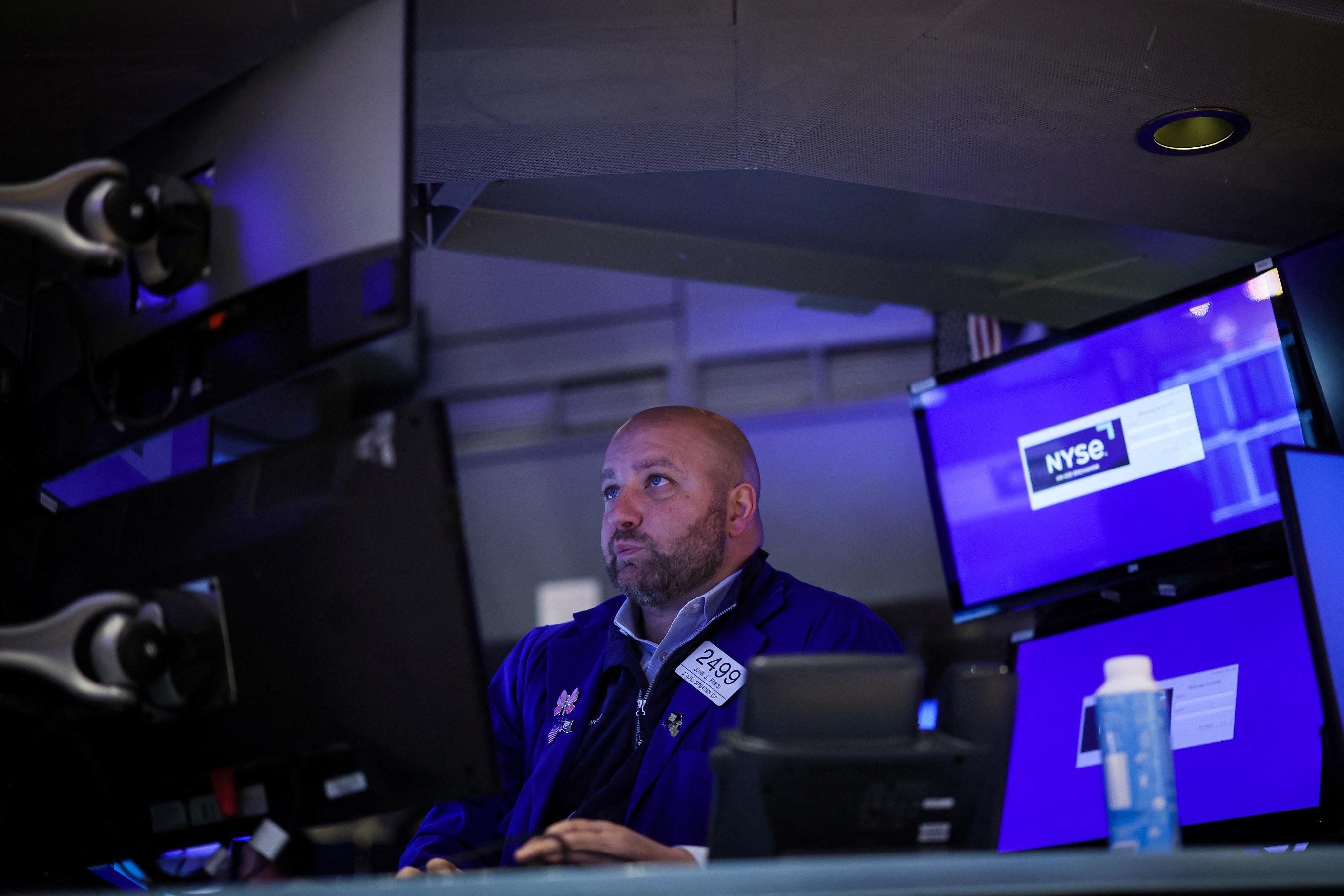
Fed holds rates steady as expected, keeps 3 rate cuts in sight Stocks gain steam after statement that raised growth outlook Powell presser adds to dovish interpretation Indexes up: Dow 1.03%, S&P 0.89%, Nasdaq 1.25% March 20 (Reuters) - Wall Street's main stock indexes closed higher on Wednesday after the Federal Reserve eased investor jitters by keeping borrowing costs unchanged and reinforcing expectations that rates could be cut as many as three times this year. The Fed's policy statement described inflation as remaining "elevated," and it raised economic projections for economic growth and lowered its projection for the unemployment rate from estimates it provided in December. Stocks added to gains after Fed Chair Jerome Powell said in a press conference that despite recent inflation data coming in hotter than expected, the numbers "haven't really changed the overall story, which is that of inflation moving down gradually, on a somewhat bumpy road." Strategists said Wall Street was reassured by Powell's comments on inflation and the labor market and his signal that the Fed will slow the pace of its drawdown of bond holdings. "He said he wasn't trying to dismiss any data but he kind of gave the market a reason they could use to dismiss the data," said Alex Coffey, senior trading strategist at TD Ameritrade. "We came in to this day feeling Jerome Powell might push back on market expectations or pivot away from dovish expectations since December because of the data we've had in the last two months," Coffey said. "While he didn't necessarily go full dove, it was dovish versus recent market worries." The Dow Jones Industrial Average (.DJI) , opens new tab rose 401.37 points, or 1.03%, to 39,512.13, the S&P 500 (.SPX) , opens new tab gained 46.11 points, or 0.89%, to 5,224.62 and the Nasdaq Composite (.IXIC) , opens new tab gained 202.62 points, or 1.25%, to 16,369.41. Nine of the S&P's 11 major sectors advanced, with five of them climbing more than 1%. Consumer discretionary (.SPLRCD) , opens new tab led the way with a 1.5% gain. The health sector (.SPXHC) , opens new tab was the weakest, falling 0.23%. In healthcare, U.S.-listed shares of BioNTech dropped 4.4% after it reported a 2023 revenue and earnings plunge as it shifted focus to cancer drug development. Shares of COVID-19 vaccine makers Moderna (MRNA.O) , opens new tab fell 1.9% while Novavax (NVAX.O) , opens new tab dropped 2.2%. The biggest boost to the consumer discretionary sector was Amazon.com (AMZN.O) , opens new tab, whose shares gained 1.3%. Adding to this was Tesla (TSLA.O) , opens new tab, which gained 2.5% after confirming to Reuters that it will raise the price of its China-produced Model Y vehicles by 5,000 yuan ($694.55) from April 1. Also in the consumer sector, Chipotle Mexican Grill (CMG.N) , opens new tab shares climbed 3.5% after the company said its board had approved a 50-for-1 split of common stock. Equinix (EQIX.O) , opens new tab shares eased 2.3% after Hindenburg Research said it has taken a short position in the data center operator. Advancing issues outnumbered decliners by a 3.76-to-1 ratio on the NYSE which showed 633 new highs and 71 new lows. The S&P 500 posted 81 new 52-week highs and one new low while the Nasdaq recorded 251 new highs and 101 new lows. On U.S. exchanges, 11.67 billion shares changed hands compared with the 12.2 billion average for the last 20 sessions. Get a look at the day ahead in U.S. and global markets with the Morning Bid U.S. newsletter. Sign up here. https://www.reuters.com/markets/us/futures-edge-lower-ahead-fed-decision-2024-03-20/
2024-03-20 23:04
TOKYO, March 21 (Reuters) - The majority of Japanese firms expect the central bank to lift interest rates further this year, with many looking to front-load capital spending before lending costs rise, a Reuters survey showed on Thursday. The poll, conducted before the Bank of Japan announced an end to its negative rate policy on Tuesday, showed that just over 60% of respondents expect rates, currently around zero, to rise to 0.25% by the end of the year. Two-fifths of companies polled said they are looking to boost capital spending in the financial year beginning in April from what they expect to have spent in current financial year. A similar number also said they aimed to undertake much of that spending ahead of rate hikes. Only 11% expect to reduce business investment from this financial year. "We're drawing down on retained earnings to engage in capital investment," an executive at a metal products manufacturer wrote in the comments section of the poll. A manager at a retail company said the company is front-loading bank loans, while a construction firm responded that it was cutting down on interest-bearing debt. The survey of 498 firms was conducted for Reuters by Nikkei Research from March 6-15, with companies responding on condition of anonymity. A total of 237 companies responded. The BOJ has been a holdout among central banks in maintaining a spigot of easy money to spur the economy and halt deflation. But corporate Japan is now seeing rising wages and inflation. Sentiment at the companies remains lacklustre with 63% saying business conditions were not good and another 8% saying they were bad. That was, however, a marginal improvement from February when 60% said business conditions were not good and 14% said they were bad. Asked about expectations for operating profit in the upcoming financial year compared to their estimates for the current business year, 39% said they expect roughly the same amount, while 23% saw increases of about 10% in income and 13% saw gains of more than a fifth. For those saying profits were likely to climb, 87% ascribed the gains to improved sales. On expectations for the yen, 61% predicted it to trade between 140 to 149 yen to the dollar, while 20% saw it still weaker at 150 to 159 yen. Eighteen percent saw it trading between 130 to 139 yen. (For a table of poll data, click here) Get a look at the day ahead in Asian and global markets with the Morning Bid Asia newsletter. Sign up here. https://www.reuters.com/markets/asia/most-japan-firms-expect-boj-increase-rates-towards-025-this-year-2024-03-20/
2024-03-20 23:00
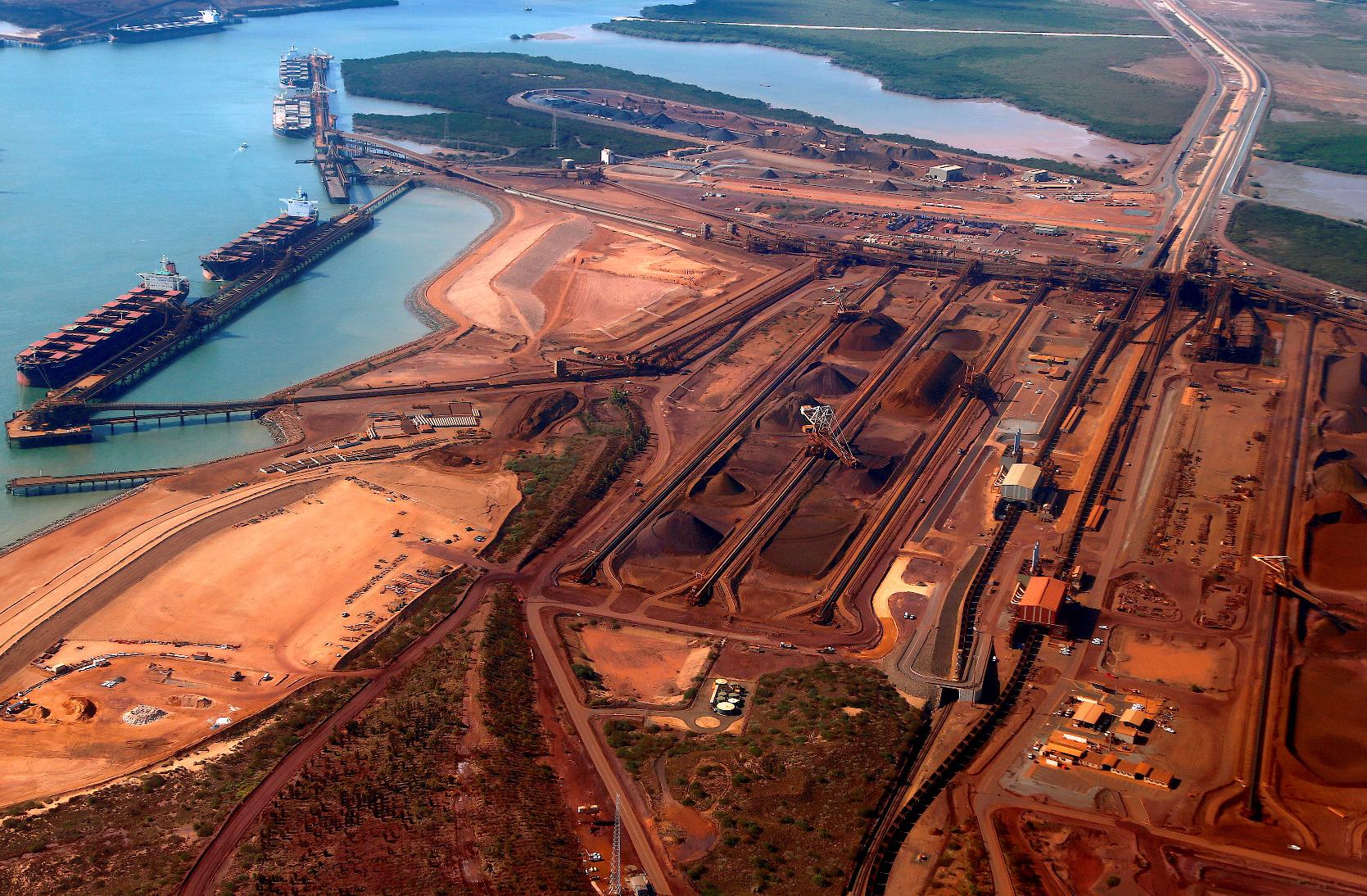
PERTH, March 20 (Reuters) - The opinions expressed here are those of the author, a columnist for Reuters. Australia's vast iron ore mining sector is facing stark choices as its biggest customer China has likely hit a peak in its steel production and global pressures mount to decarbonise one the world's most polluting industries. The scale of these challenges are massive, but they are far from insurmountable, and there are an array of options that Australia's iron ore miners can pursue. The trick is choosing a path that maximises profits, or at least minimises costs, while ensuring that the industry continues to prosper. Australia is the world's largest exporter of iron ore, the key raw material used to make steel, and it shipped out about 930 million metric tons last year, which at current prices would be worth about $93 billion. Australia is also the world's largest exporter of metallurgical coal, used to make steel, ranks second in thermal coal and in liquefied natural gas, while also being the biggest exporter of lithium and the largest net exporter of gold. But the exports of all these commodities together barely exceed the value of iron ore shipments, underscoring the outsized role of the ore, which is mainly produced in the state of Western Australia. Just over 80% of iron ore exports head to China, which buys about 70% of the total global seaborne volumes and produces about half of the world's total steel. Putting these numbers together gives a picture of a dominant producer and a dominant buyer in the iron ore market. The rise of China since the late nineties allowed Australia's iron ore miners to massively ramp up output, reap economies of scale and become hugely profitable. But the nature of both China's demand and the process of making steel are likely to change in the next few years, threatening the current model whereby Australia produces vast quantities of iron ore that is turned into steel in blast furnaces and basic oxygen furnaces, processes that require the use of coking coal. China's steel output has flatlined for the past five years around the 1 billion ton per annum level, and most analysts presenting at this week's Global Iron Ore and Steel Outlook Conference in Perth predicted that production will gradually decline in the next few years. This is partly because China's infrastructure and housing construction will ease, but also because China will increasingly use scrap steel in electric arc furnaces to produce new steel products. While Australia's iron ore miners may be able to offset the loss of some of China's demand by selling to newer steel producers in Southeast Asia, it's likely that the overall market for iron ore will soon decline. It's also likely to change in composition, with higher grades of iron ore preferred as these can be more easily used as a feedstock along with scrap in electric arc furnaces. Higher grades of iron ore can also more easily be upgraded into direct reduction iron (DRI), which in turn can be turned into steel without using coal as a fuel. Making steel using DRI produced with green hydrogen and renewable energy is one of the ways the industry is thinking of reducing carbon emissions. Even using natural gas to make DRI can reduce emissions by up to 75%. The problem is that DRI is tricky to export given it can be volatile, so it tends to be made at the same location as the steel furnaces. VALUE CHAINS So, if Australia's iron ore miners are thinking of moving up the steel value chain, they would have to find ways of producing DRI and turning it into steel in Australia, using renewable energy. Another path is upgrading the iron ore into hot briquetted iron (HBI), which is an upgraded form of DRI, whereby the DRI is converted into a compact form using heat. HBI can be shipped, and can be used in either an electric arc furnace or a basic oxygen unit. Should Australia's iron ore miners move to upgrade their product, they will need significant investment, and there is no certainty that the upgraded products will deliver sufficiently higher margins. For example, if an iron ore miner agreed with its customers in China, Japan and South Korea to supply HBI instead of iron ore fines, this would require significant investment in a clean energy system. The iron ore miners have been successful in running complex operations at low costs, but setting up a wind/solar power plants, a green hydrogen electrolyser and possibly battery storage as well would be a totally different challenge. There is also the possibility of exporting iron ore to a third country for processing into HBI, with Gulf countries such as Saudi Arabia a potential destination. These countries have large quantities of natural gas which could be used to turn iron ore into HBI in a process that would still be more environmentally friendly than using coking coal. The HBI could then be shipped from the Middle East to customers in Asia. However, there are several other factors that would come into play, such as steel nationalism. Many countries see steel as a key commodity and want to retain their own industries. It's unlikely Japan would want to buy green steel from Australia, but it might be prepared to buy HBI and keep the final process of making steel inside its borders. The problem for Australia's iron ore sector is that it has a plethora of options in adjusting to decarbonisation and peak steel in China. But all involve risks and costs, and this is trouble for an industry that has spent the last decade de-risking itself and concentrating on improving shareholder returns. The opinions expressed here are those of the author, a columnist for Reuters. Get a look at the day ahead in U.S. and global markets with the Morning Bid U.S. newsletter. Sign up here. https://www.reuters.com/markets/commodities/china-decarbonisation-present-australias-iron-ore-miners-with-costly-choices-2024-03-20/
2024-03-20 22:01
March 20 (Reuters) - Social media platform Reddit (RDDT.N) , opens new tab priced its initial public offering at the top of its targeted range of $31 to $34 per share on Wednesday, raising $748 million and giving the ailing technology IPO market a much-needed boost. Reddit and its existing shareholders sold 22 million shares at $34 a share, giving Reddit a valuation of about $6.4 billion. To tap retail investors, Reddit reserved 8% of the total shares on offer for eligible users and moderators on its platform, certain board members and friends and family members of its employees and directors. Excluding the shares sold by existing shareholders, Reddit raised gross proceeds of $519.4 million from its IPO. Reuters reported earlier on Thursday that Reddit and its bankers were guiding they could price the IPO at the top of the indicated range or above. The top-end pricing is a vindication of the company's decision to lower its valuation expectations, after it was valued at $10 billion in a private fundraising round in 2021. The successful offerings of Reddit and Astera Labs (ALAB.O) , opens new tab could boost the lackluster tech IPO market after two years of largely subdued activity. Earlier this year, the stock market launches of other big names including KKR-backed BrightSpring and sportswear brand Amer Sports received a lukewarm reception from investors. LOYAL USER BASE Despite the loyalty of many of its users, Reddit has lost money every year since its launch in 2005 and has lagged the commercial success of contemporaries such as Meta Platforms' (META.O) , opens new tab Facebook and Twitter, now known as X. The focus of many Reddit users on niche subjects and the platform's somewhat loose approach to content moderation has been a sticking point with some advertisers. As it looks for new revenue sources, Reddit in February unveiled a $66 million contract to provide artificial intelligence training data to Alphabet's Google (GOOGL.O) , opens new tab. Reddit, however, said , opens new tab last week the U.S. Federal Trade Commission was conducting an inquiry focused on the company's sale, licensing, and sharing of user-generated content with third parties to train AI models. Reddit relies on volunteers from its user base to moderate the content posted on its forums. Moderators can decide to withdraw from their duty at any time, as in 2023, when several quit in protest over Reddit's decision to charge third-party app developers for access to its data. Reddit's 100,000 online forums, dubbed "subreddits," allow conversations on topics ranging from "the sublime to the ridiculous, the trivial to the existential, the comic to the serious," according to co-founder and chief executive Steve Huffman. The company's influential communities are best known for the "meme-stock" saga of 2021 when several retail investors collaborated on Reddit's "wallstreetbets" forum to buy shares of highly shorted companies such as video game retailer GameStop (GME.N) , opens new tab. Reddit had an average of 73.1 million daily active "uniques" - users who use its platform at least once a day - in the three months ended Dec. 31, 2023, according to a regulatory filing. Reddit's shares are expected to start trading on the New York Stock Exchange on Thursday under the ticker 'RDDT'. Morgan Stanley, Goldman Sachs, JPMorgan Chase, and Bank of America are the lead underwriters for Reddit's offering. Morgan Stanley also won the lead role on Astera's IPO. Get U.S. personal finance tips and insight straight to your inbox with the Reuters On the Money newsletter. Sign up here. https://www.reuters.com/markets/deals/reddit-prices-ipo-top-indicated-range-sources-say-2024-03-20/