
2024-03-19 12:39
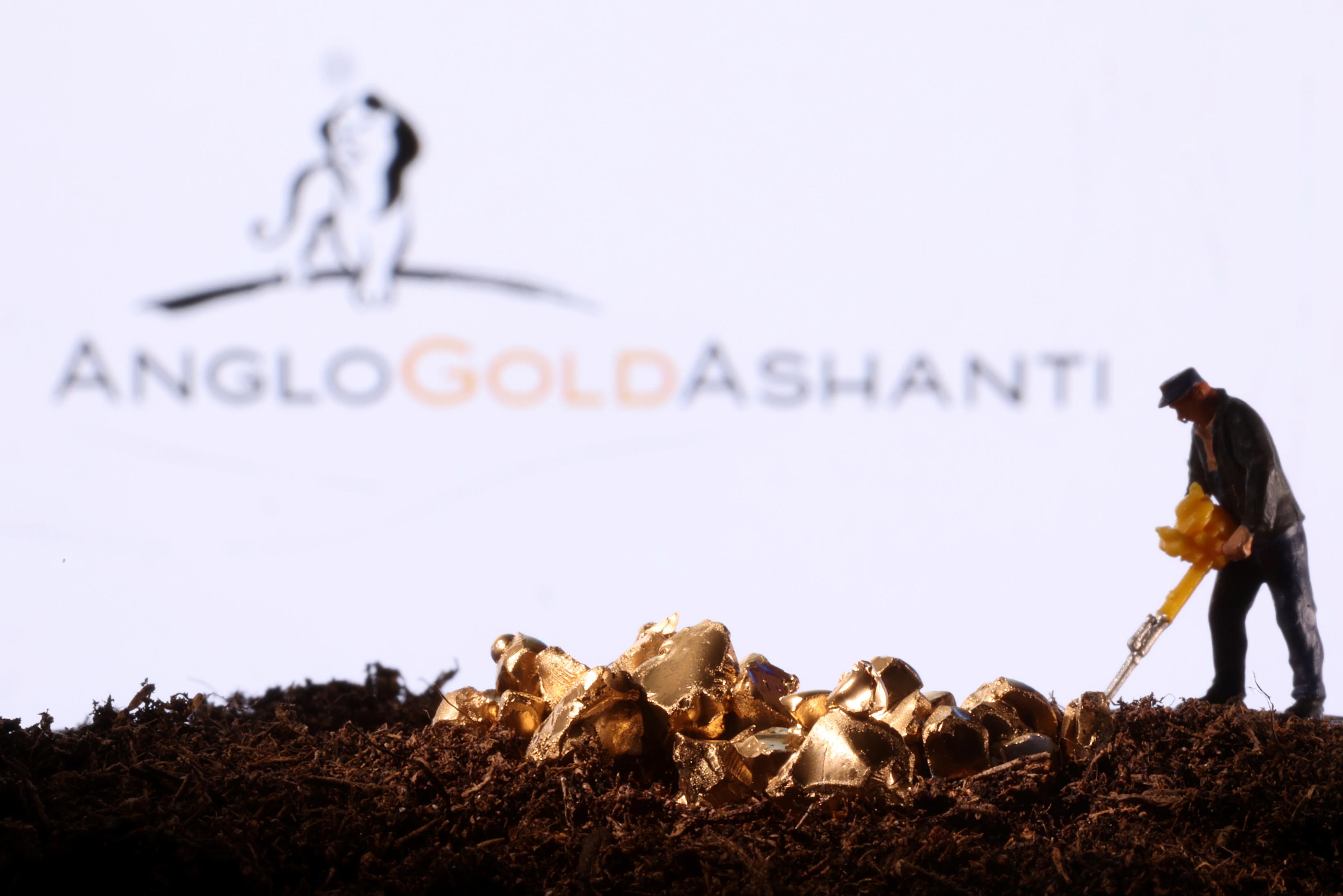
Tropicana mining ops halted after flooding Mine contributed 12% to AngloGold output in 2023 Output to be impacted in H1, but decline to be recovered in H2 AngloGold swung to $46 mln loss in 2023 on lower gold sales March 19 (Reuters) - AngloGold Ashanti (ANGJ.J) , opens new tab expects to meet its gold output target of up to 2.79 million ounces this year despite flooding at its Tropicana mine in Australia, the company said on Tuesday as it reported a headline net loss of $46 million for 2023. The loss was mainly due to lower gold sales, corporate restructuring costs, higher environmental provisions as well as costs of job cuts, care and maintenance at Córrego do Sítio in Brazil, which was idled last August. It compares with a restated headline profit of $489 million the year before. AngloGold Ashanti, which also has operations in Africa and the Americas, restated its financial statements for 2022, which the company said "contained an error related to the reported amount of the deferred tax asset with regard to the Obuasi mine" in Ghana. The miner said while it anticipated gold production at its Tropicana mine to be impacted during the first half of 2024, "any decrease is expected to be largely recovered in the second half". "Consequently, the company does not believe that this event will have an impact on its gold production and cost guidance provided in February 2024, which guidance is therefore maintained," AngloGold Ashanti said. Tropicana, which is 70% owned by AngloGold Ashanti and contributed 310,000 ounces or 12% of the group's total 2023 output, was impacted this month by heavy rains and flooding. Mining operations have been restricted due to the flooding, while the processing plant is treating stockpiled ore at a reduced throughput rate, AngloGold Ashanti said in a statement. Get a look at the day ahead in U.S. and global markets with the Morning Bid U.S. newsletter. Sign up here. https://www.reuters.com/markets/commodities/anglogold-ashanti-maintains-output-forecast-after-flooding-australia-mine-2024-03-19/
2024-03-19 12:32
March 19 (Reuters) - Viridi Energy said on Tuesday it has acquired a biosolids digester plant in Brunswick, Maine, as part of its plans to develop a facility to convert waste into renewable natural gas (RNG) in the state. The company will also be partnering with waste recycling firm Casella Waste Systems (CWST.O) , opens new tab to secure a supply of 85,000 tons of biosolids, the organic matter recovered from sewage treatment process, for the facility. As countries are pushing for a switch to clean energy, RNG derived from biological waste is prized for its potential to replace natural gas and reduce climate-warming emissions. The privately held company did not disclose any financial details of the deal and the facility is expected to be operational in 2026. Wilmington, Delaware-based Viridi builds and operates assets that turn organic feedstocks – landfill emissions, animal waste, municipal waste and food waste – into RNG. The Reuters Daily Briefing newsletter provides all the news you need to start your day. Sign up here. https://www.reuters.com/sustainability/climate-energy/viridi-energy-developing-renewable-natural-gas-facility-maine-2024-03-19/

2024-03-19 12:12
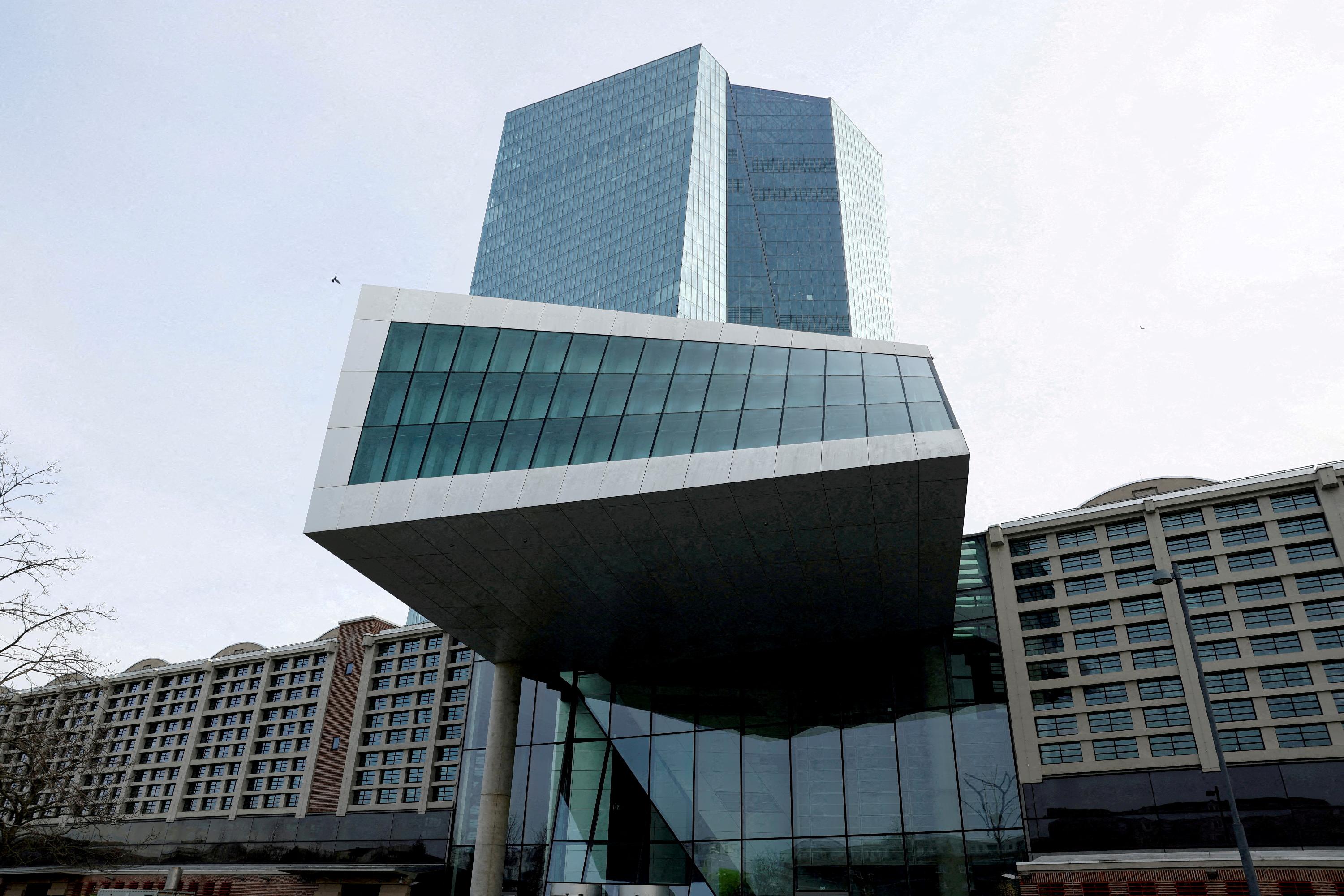
Hedge funds dominate eurozone government bond trading, data show Account for two thirds of trading in Italy's bonds - data Funds favour short-term strategies, debt auctions, sources say Hedge funds can pull out at any time posing a stability concern LONDON, March 19 (Reuters) - Hedge funds are piling into the euro zone's $10 trillion government bond market, scenting opportunities as funding needs surge and the European Central Bank retreats. The funds are buying a large share of government debt sales, providing a source of much-needed capital, traders and officials say. Yet the lightly-regulated investors often load their bets with bank debt, tying their fortunes to lenders, at a time when there is growing regulatory concern globally about their market impact. Interviews with more than a dozen sources, including senior traders and treasury officials, as well as market data compiled exclusively for Reuters by electronic platform Tradeweb, show that hedge funds have become increasingly entrenched in the bloc's debt market. Hedge funds accounted for a record 55% of European government bond trading volume on Tradeweb last year, up from 36% in 2020, displacing other financial firms to become the dominant players for the first time. And their reach was largest in some of Europe's most indebted nations: hedge funds comprised two-thirds of trading volumes of Italian debt on Tradeweb, the data compiled for Reuters showed. Tradeweb is one of the top three trading platforms for European government bonds, alongside Bloomberg and MTS, according to Coalition Greenwich, a financial services research company. The data includes euro zone countries and other European markets, including Britain. Analysts at Barclays estimated in January the euro zone debt market needs to absorb a record 675 billion euros ($735 billion) of additional bonds this year as the ECB winds down its bond holdings. That comes as the pandemic and war in Ukraine have propelled government borrowing. Meanwhile, banks find their balance sheets constrained by rules introduced after the financial crisis of 2008. Cue the hedge funds, lured by interest rates that have returned to positive territory after almost a decade. Rapid growth in electronic trading in Europe, particularly since the pandemic broke out in 2020, has also lowered the costs of buying and selling securities, adding to the market's allure. Electronic trading in the region has lagged the United States. "These markets are very exciting and constructive to trade in," Kenneth Tropin, founder of 30-year-old Graham Capital Management, which manages $18 billion in assets including government bonds, told Reuters. Graham is one of the longer-standing trend-following hedge funds. Millennium and Citadel - two so-called multi-strategy funds that trade many different assets across a variety of strategies - and Haidar Capital together manage more than $120 billion and are among the most active hedge funds in the euro zone bond market, four of the traders and treasury officials said. The three funds declined to comment for this story. While hedge funds contribute to market liquidity, their increased presence strengthens the case for tightening their regulatory oversight, said Andreas Dombret, a former German central bank board member. Banks typically have formal commitments as so-called 'primary dealers' to buy government bonds and to trade them actively in good times and bad, but hedge funds have no such obligations. "They're the first to leave the party if things get rough," said Dombret, who now works as an adviser to banks including at consultancy Oliver Wyman. Compared to the banking sector, the $3.5 trillion hedge fund industry is lightly regulated. It is comprised of private investment vehicles that do not report their profits publicly and do not disclose, sometimes even to their own investors, how they make money. They speculate on asset prices rising as well as falling to make money for their clients, which include pension funds, sovereign wealth funds and rich individuals. A spokesperson for ESMA, the European Union securities watchdog, declined to comment on growing hedge fund activity in the bloc. ESMA chair Verena Ross told Reuters on the sidelines of a conference that the regulator looks carefully at "particular funds" that build up leverage. A spokesperson for the ECB told Reuters the central bank supports global efforts to boost regulations addressing investment funds and hedge funds. RISING VOLATILITY Hedge funds' footprint is growing as price swings become the new norm, as their flexibility can permit them to take advantage of volatile markets. Volatility in benchmark German bonds surged to a record in 2022, when the bloc's inflation peaked at over 10%, and remains higher than before the inflation surge. German yields rose 44 basis points in the third quarter of 2023, then fell 80 bps the next, in one of the two biggest quarterly moves since 2011. The presence of hedge fund trading may also contribute to price swings, two of the traders said. "On both sides, there were some extreme moves, and that can happen if everyone is trying to chase the same trade and positioned the same way, and therefore have to step out," said Zoeb Sachee, head of euro linear rates trading at Citi, a primary dealer for the bloc's governments. At the height of the pandemic in March 2020, investors including hedge funds sold bonds while dealers took more on their books, according to research , opens new tab from the Financial Stability Board (FSB), which groups officials, regulators and central bankers from the G20 economies. The scale of the selloff threatened economic and financial stability, prompting the ECB to stabilise markets with massive stimulus. Now the central bank is stepping back, removing the stabilisers that help limit financial stress. Francesco Papadia, who led market operations at the ECB during the euro zone debt crisis of the early 2010s, said hedge funds are currently playing a constructive role given benign markets but this shouldn't be taken for granted. "Should prospects worsen, hedge funds could lead the move towards more difficult conditions for both issuers and investors," said Papadia, a senior fellow at Brussels-based think tank Bruegel, adding hedge funds could emerge as 'bond vigilantes'. That's a term attributed to investors who penalize governments they perceive as fiscally reckless, demanding higher returns for lending. FILLING A VOID Bond issuance is the main way governments finance themselves on financial markets. That happens mostly at auctions, where the banks designated as primary dealers buy the bonds, then sell them to other investors. Maric Post, Belgium's debt management chief, acknowledges the risk of higher volatility if hedge funds unwind big trades or step away from the market. But for now, he says, he's not worried, adding that hedge fund demand for Belgian bonds has worked "quite well" to smoothen out debt sales, he told Reuters in an interview this month. Three traders estimated that hedge funds have been buying between 20% to more than 50% of auctions in some instances. Another trader, who requested anonymity, said hedge funds buy around 35% at auctions on average, up from roughly 20% five years ago. How much hedge funds buy also depends on how much the primary dealer wants to pass onto them. The post-2008 regulations have constrained primary dealers' balance sheets, so they can no longer hold onto large amounts of bonds for long periods of time - for example, weeks after an auction. Bruno Benchimol, head of euro zone government bond trading at Credit Agricole, said hedge funds' involvement smoothens debt sales by extending the time horizon in which the new bonds must be bought by longer-term investors like pension funds and insurers. One common strategy used by funds playing price swings tries to take advantage of a regular pattern where bond prices tend to fall ahead of auctions as markets prepare to digest the supply, then typically recover once the sale is complete. Hedge funds playing that strategy tend to offload the government's bonds before the auction, betting on prices falling, including by going short, three of the traders said. Once the bonds cheapen, hedge funds buy the new debt at auction, then sell it on over the next few days or weeks, locking in profits. Hedge funds also set up relative value trades capturing how outstanding bonds - from different maturities or issuers - move against each other around debt sales, or use the auctions to buy bonds for broader relative value or macro strategies, traders said. The International Capital Markets Association (ICMA), an industry body representing financial firms, flagged relative value strategies as a significant source of trading , opens new tab in a report this month. The study also warns about the potential risks when hedge funds suddenly pull out of markets. "There isn't a one or two type strategy that's repeated over and over. There's a large, diverse set of activities that are being deployed," said Kal El-Wahab, head of EMEA linear rates trading at BofA, whose clients include hedge funds. The variety of their strategies makes hedge funds' impact on bond market pricing harder to assess, especially at a time when demand for the asset class is broadly strong. The closely-watched risk premium Italy typically pays over Germany , a bellwether of market stress, just hit its lowest in over two years. RECORD TRADING VOLUMES Helped by hedge fund interest, trading volumes in European government bonds have surged to a record, which is good news for investment banks making money from the boom. It also helps ease pressure from costly primary dealerships that have become less profitable over the years due to tighter regulations on banks' use of capital. Banks have been dropping out of dealerships. European governments now have 17 dealers working for them on average, down from 20 in 2015, trade body AFME said. But the expansion of hedge funds has also brought challenges. Since 2021, hedge funds have poached about one third of banks' euro rates traders, according to two recruiters, who asked not to be identified. Hedge funds are subject to fewer rules, including on compensation. What's more, hedge funds mostly borrow from Wall Street firms to fund their bets, meaning those banks' exposure is a potential financial stability risk, the Bank of International Settlements (BIS) warned earlier this month in a report , opens new tab. Goldman Sachs, Morgan Stanley, JPMorgan, UBS, Barclays and BNP Paribas are the biggest, according to the BIS. Ultimately, record bond sales mean governments have few alternatives. Longer-term investors like pension funds would demand higher returns to show up at regular auctions, a trader and a treasury official said, which would push borrowing costs higher. Those investors "tend to participate more when they have tangible needs at that particular point in time, whereas hedge funds will participate to the extent there's an opportunity," JPMorgan's co-head of euro linear rates trading Julian Baker said. The Reuters Daily Briefing newsletter provides all the news you need to start your day. Sign up here. https://www.reuters.com/markets/rates-bonds/hedge-funds-shake-up-euro-zones-10-trillion-government-bond-market-2024-03-19/
2024-03-19 12:11
MOSCOW, March 19 (Reuters) - A Russian energy ministry official told a parliament meeting on Tuesday there were plans to defend oil and gas facilities with missile systems. "We are jointly working, including with colleagues from the Russian National Guard, to cover objects, on installing, accordingly, protection systems such as Pantsir," said Artyom Verkhov, director of energy ministry's department for gas industry development. Ukraine has stepped up attacks on Russian oil infrastructure since the start of the year, hitting numerous large oil refineries in an attempt to cripple Russia's military and curb its army's advances. Russian oil refining capacity shut down in the wake of Ukrainian drone attacks in the first quarter amounts to about 4.6 million tons (370,500 barrels per day), or some 7% of the total, Reuters calculations show. The Reuters Daily Briefing newsletter provides all the news you need to start your day. Sign up here. https://www.reuters.com/world/europe/russia-plans-defend-oil-gas-facilities-with-missile-systems-2024-03-19/

2024-03-19 12:06
March 19 (Reuters) - Super Micro Computer (SMCI.O) , opens new tab disclosed on Tuesday it will sell 2 million shares that could fetch about $2 billion, sending the artificial intelligence (AI) server maker's shares 9% lower in trading before the bell. The San Jose-based company's shares have more than tripled since January, which makes raising funds through sale of equity a lucrative option. The gains have outperformed those in Nvidia, which has been behind the relentless AI-led rally in Wall Street this year, thanks to soaring demand for its servers used in artificial intelligence data centers. The shares have, however, lost 16% in value after declining for three straight trading sessions, and based on their closing price of $1,000.68, the company could raise about $2 billion. The issue price for the secondary offering was not revealed. Proceeds from the stock sale will be used to purchase inventory, expand manufacturing capacity, increase research and development investments and other working capital purposes, the company said in a regulatory filing with the U.S. Securities and Exchange Commission. The company's outstanding shares will increase to 58.6 million after the offering, it said, adding that the underwriter, Goldman Sachs, has the option to buy up to 300,000 additional shares within 30 days. Get U.S. personal finance tips and insight straight to your inbox with the Reuters On the Money newsletter. Sign up here. https://www.reuters.com/markets/deals/super-micro-shares-dip-ai-server-maker-looks-raise-2-bln-through-equity-sale-2024-03-19/

2024-03-19 11:55
March 19 (Reuters) - International Flavors & Fragrances (IFF.N) , opens new tab said on Tuesday it would sell its pharma solutions business to French plant-based ingredients maker Roquette in a deal valued at $2.85 billion, as it looks to focus on higher-margin businesses. The move comes at a time when IFF is seeing demand slow for its food ingredients and solutions business, especially from end-users such as consumer goods companies, amid higher interest rates and inflationary pressures. New York-based IFF has been on a spree of divesting some of its "non-core" business units over the past year in an attempt to improve its organizational structure as well as reduce its outstanding debt. IFF's shares were up about 1% in premarket trading. Family-owned Roquette, which has annual sales of about 5 billion euros ($5.42 billion), bought Japanese drug capsule maker Qualicaps from Japan's Mitsubishi Chemical (4188.T) , opens new tab last year as it aims to expand its global footprint in the pharmaceutical business. The two companies said they expected to close the deal in the first half of 2025. In late 2022, IFF had agreed to sell its savoury solutions business to private equity firm PAI Partners in a $900 million deal. In 2021, the company also sold its microbial control business to German specialty chemicals company LANXESS (LXSG.DE) , opens new tab in a $1.3 billion deal. IFF's pharma unit accounted for about 8% of total group sales in 2022. Excluding the pharma solutions arm, the company has three other reporting segments — namely food & beverage, health & biosciences and scent — each of which have several sub-units within them. ($1 = 0.9223 euros) Get U.S. personal finance tips and insight straight to your inbox with the Reuters On the Money newsletter. Sign up here. https://www.reuters.com/markets/deals/international-flavors-fragrances-sell-pharma-unit-285-bln-deal-2024-03-19/


