2024-03-19 06:29
March 19 (Reuters) - The artificial intelligence boom has hit the crypto market with a bang. Coins linked to AI-focused crypto projects have jumped alongside tech stocks like Nvidia (NVDA.O) , opens new tab, driven by insatiable investor appetite for applications like machine-learning. The rise of many AI crypto tokens has outpaced even that of bitcoin over the past year as the world's biggest cryptocurrency has surged to record levels. Their combined market value has ballooned to $26.4 billion, from just $2.7 billion last April, according to CoinGecko data. Tokens linked to these projects are up between 145% and 297% in the past 30 days. If the more optimistic industry predictions come to pass, there could be more room to run, as some market watchers say crypto and blockchain technology could help solve some of the AI industry's teething problems such as privacy and a need for computing power. "As both AI systems and blockchain networks continue to grow, we will see more and more use cases fusing together the two industries," said Markus Levin, co-founder of blockchain data storage firm XYO Network. The CoinDesk Indices Computing Index, which includes AI-linked tokens, has leapt over 165% over the past 12 months, outpacing even bitcoin's 151% rise to record levels. Trading volumes in AI tokens have also risen sharply this year, Kaiko Research data showed, hitting an all-time high of $3.8 billion in late February. "There is a significant chance that ... AI applications will be crypto's raison d'être," fund manager VanEck's Matthew Sigel and Patrick Bush said in a note. Some of the top blockchain projects at the moment include the Render Network, a blockchain platform for peer-to-peer sharing of AI-generated graphics, Fetch.AI, a platform to build AI apps and SingularityNET, an AI services marketplace. "Investors are starting to realize that if you want real value, you need products that are uncorrelated to the crypto market," said Ahmad Shadid, founder of AI-focused blockchain startup io.net. WINNERS AND LOSERS AI-linked blockchain products include a wide variety of services including payments, trading models, machine-generated non-fungible tokens and blockchain-based marketplaces for AI applications where users pay developers in cryptocurrency. Investment manager VanEck has predicted that revenue from AI crypto projects could reach $10.2 billion by 2030 in their base case, and over $51 billion in their bullish scenario. VanEck pointed to the use of crypto tokens as rewards, developing physical computation infrastructure, data verification, and transparency in proving digital ownership as primary areas where blockchain technology lends real-world value to AI development. Offering crypto tokens as incentives allows quick scalability, said io's Shadid. His company plans to launch a token later this year. "The reason we can scale fast is because of the token we have coming out," he added. "The token incentivizes owners of physical infrastructure to bring their computers on to our network," Shadid added. Yet, just as with the AI boom itself, picking winners and losers could be fraught with peril. "We're still in the very early stages of AI networks integrating with blockchain-based networks, and the utility of a lot of tokens is still very much uncertain," cautioned Levin. The Technology Roundup newsletter brings the latest news and trends straight to your inbox. Sign up here. https://www.reuters.com/technology/cryptoverse-ai-tokens-outpace-record-breaking-bitcoin-2024-03-19/

2024-03-19 06:11
TOKYO, March 19 (Reuters) - The yen weakened and Japanese government bond yields fell after the Bank of Japan on Tuesday announced an exit from years of ultra-easy monetary policies, marking an historic shift from a decades-long fight against deflation. The Nikkei share average rose, reversing morning losses, following volatile trading immediately after the central bank said it was ending its negative interest rates policy and yield curve control (YCC), as well as dropping purchases of risky assets, including exchange-traded funds (ETFs). The decision was widely expected after local and international media, including Reuters, had reported over the past week of a likely end to most or all of the BOJ's stimulus programmes at this policy meeting. That resulted in 'sell-the-fact' trade in Japanese markets, analysts said. The yen, in particular, appeared to have fallen victim to that, with domestic rates still also extremely low compared with the United States. The dollar jumped 0.84% to 150.385 yen as of 0604 GMT. The Nikkei (.N225) , opens new tab finished the day up 0.66% at 40,003.60, recovering the psychological 40,000 mark for the first time since hitting an all-time high at 40,472.11 on March 7. The 10-year JGB yield lost 3 basis points to 0.725%. Some dovish undertones in the BOJ's policy decision will keep bond yields under pressure, said Shoki Omori, chief Japan desk strategist at Mizuho Securities. "Bond purchase amounts basically stay the same, which means the BOJ isn't taking a hawkish stance," cheering investors such as life insurers who need to buy bonds into Japan's fiscal year-end this month, he said. Omori also expects the yen to continue to fall. "The yen remains a funding currency and is likely to keep being utilized for carry trades," he said. Tuesday's policy shift ushered in the first rate hike in Japan since 2007, but it still keeps rates stuck around zero. BOJ Governor Haruhiko Ueda will explain the policy decision in a press conference scheduled for 0630 GMT. In its policy statement, the bank said it will continue its JGB purchases at broadly the same amount as before, although it will scale back the maximum limit of its purchases. The BOJ's move to end its radical stimulus policies was in part helped by the biggest wage hikes in 33 years at annual negotiations with unions. Finance Minister Shunichi Suzuki said on Friday that Japan had emerged from decades of deflation. A positive spiral of price hikes and wage increases as well as solid earnings drove a 19% surge in the Nikkei this year, far outpacing a 6.6% rise for the MSCI World Index (.MIWO00000PUS) , opens new tab. "For the time being, I expect equity prices to increase, with the uncertainty gone surrounding the meeting," said Norihiro Yamaguchi, senior economist at Oxford Economics in Tokyo. Get a look at the day ahead in Asian and global markets with the Morning Bid Asia newsletter. Sign up here. https://www.reuters.com/markets/asia/yen-weakens-japan-stocks-see-saw-after-boj-stimulus-exit-2024-03-19/
2024-03-19 05:41
March 19 (Reuters) - The European Union is preparing to levy tariffs on grain imports from Russia and Belarus to placate farmers and some member states, the Financial Times reported on Tuesday citing people familiar with the plans. The European Commission is in coming days expected to impose a duty of 95 euros ($103.26) per tonne on cereals from Russia and Belarus, FT said, adding that tariffs of 50% would also be placed on oil seeds and derived products. The reported move comes as farmers across the European Union call for changes to restrictions placed on them by the bloc's Green Deal plan to tackle climate change, and for the re-imposition of customs duties on imports of agricultural products from Ukraine that were waived after Russia's invasion in 2022. Farmers from neighboring Poland, Hungary and Slovakia, all of which are members of the EU, say the move undercut their prices. Ukraine is not part of the 27-member EU. Like much of Europe, Poland has also been gripped by protests in recent weeks as farmers demonstrate against EU environmental regulations. Polish Prime Minister Donald Tusk has also called for an EU ban on imports of Russian and Belarusian agricultural products. ($1 = 0.9200 euros) Get a look at the day ahead in U.S. and global markets with the Morning Bid U.S. newsletter. Sign up here. https://www.reuters.com/markets/commodities/eu-impose-tariffs-russian-grain-imports-ft-reports-2024-03-19/

2024-03-19 05:38
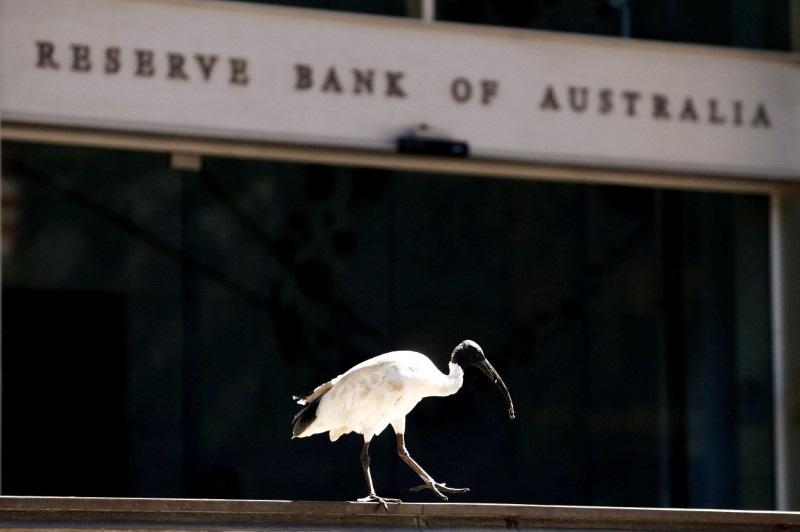
RBA leaves benchmark rate at 12-yr high of 4.35% RBA says not ruling anything in or out of policy Aussie dollar dips, markets price in a bit more easing SYDNEY, March 19 (Reuters) - Australia's central bank held interest rates steady on Tuesday and watered down its tightening bias, signalling greater confidence that inflation is moving back to its target as the economy slows. Wrapping up its two-day March policy meeting, the Reserve Bank of Australia (RBA) kept rates at a 12-year high of 4.35% for a third straight meeting, and said it was not ruling anything in or out on policy. Markets had wagered heavily on a steady outcome given inflation has held at two-year lows and economic growth slowed to a crawl. "The path of interest rates that will best ensure that inflation returns to target in a reasonable timeframe remains uncertain and the Board is not ruling anything in or out," said the RBA Board in a statement. That compared with the previous phrasing that "a further increase in interest rates cannot be ruled out". Governor Michelle Bullock declined to say whether policy has shifted to neutral at her post meeting briefing, saying risks are "finely balanced", and pushed back immediate rate cuts. "All we can do is tread carefully and be prepared to act if we see the risk moving in one direction or the other," said Bullock. "We have to be prepared to watch data.... what it's telling us where things are heading and if that's changing our assessment and that's going to drive potential changes." AUSSIE DOLLAR DIPS The Australian dollar eased 0.6% to $0.6518. Three-year bond yields fell 7 basis points to 3.687% and markets are now pricing in a total easing of 43 basis points this year, up from 37 bps before the RBA statement. "We expect the RBA to remove the last remnants of its tightening bias at the June board meeting, before cutting rates by 25bp in August before a second cut in November, which will see the cash rate end the year at 3.85%," said Tony Sycamore, an analyst at IG. Commonwealth Bank of Australia and Goldman Sachs said the RBA removed its tightening bias and shifted to a neutral stance, while ANZ said it was more a weakening in bias, and National Australia Bank said the changes in tone were "stylistic tweaks". Data over the past six weeks suggests the previous policy tightening - with the benchmark rate up 425 basis points since May 2022 - is working well to constrain demand. Inflation held at a two-year low of 3.4% in January, the economy grew by a tepid 0.2% last quarter as household consumption flatlined and the jobless rate crept up to 4.1%, faster than the central bank had forecast. The RBA targets an inflation rate of between 2 and 3%. Even though domestic data have largely been on the soft side, markets have scaled back bets for the RBA easing this year, thanks to a shift in expectations for U.S. rates due to sticky inflation there. The timing for the first Federal Reserve rate cut has now been pushed out to June, and maybe even July. Also on Tuesday, the Bank of Japan ended eight years of negative interest rates and other remnants of its unorthodox monetary policy, a historic shift away from decades of massive monetary stimulus. Get a look at the day ahead in U.S. and global markets with the Morning Bid U.S. newsletter. Sign up here. https://www.reuters.com/business/finance/australias-central-bank-holds-rates-expected-waters-down-tightening-bias-2024-03-19/
2024-03-19 05:35
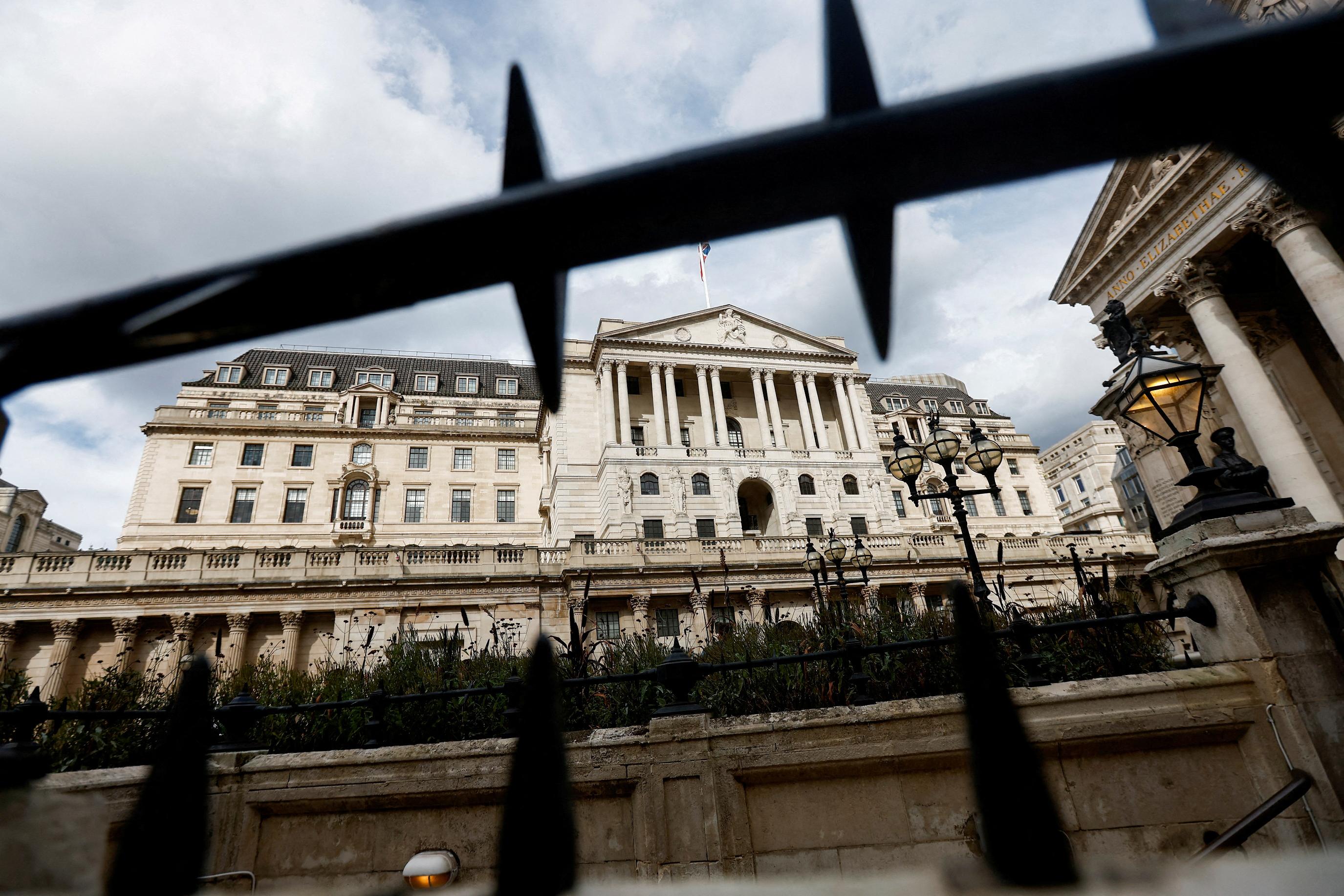
LONDON, March 19 (Reuters) - Money market pricing and short-term trading signals make the idea of the first Bank of England rate cut coming in late summer look like a clear bet. Economists and strategists are predicting a starkly different outcome for interest rates and the pound. Speculators have topped up their sterling holdings, with so-called net long positions having risen to the most on record, according to the latest CFTC data. Swaps markets price the first 25 basis point (bp) cut no sooner than August. Sterling is the best performing G10 currency against the dollar so far this year. The BoE is expected to hold rates at a 16-year high of 5.25% this week, but economists anticipate the first cut far sooner than traders expect. Bruna Skarica, chief UK economist at Morgan Stanley, sees softer-than-expected pay data published last week as justifying a rate cut in May. Barclays and Capital Economics are placing their bets on a cut in June. Traders are focused on the BoE's hawkish rhetoric, according to Rabobank strategists. Economists are querying whether the central bank's inflation forecasting is once again wrong and how quickly policymakers might turn dovish if the central bank's expectations prove incorrect. The BoE expects price growth to drop to its 2% target in the second quarter but to rebound to almost 3% later in the year. Paul Dales, chief UK economist at Capital Economics, sees headline UK inflation dropping to 1.6% in April and drifting to less than 1% by the end of the year. "The Bank might switch quite quickly to worrying about inflation being too low," he said. Dales sees the pound drifting down to $1.20 later this year, from close to $1.27 now. The turning point for sterling could come as soon as Wednesday, when UK inflation data is released. Economists polled by Reuters expect inflation to have dropped to 3.6% in February (GBHICY=ECI) , opens new tab. "A print closer to 3.2% could lead the (BoE) to soften its guidance language a bit more," Barclays strategists said in a note to clients, which could liven up market bets for a May cut. Kit Juckes, FX strategist at Societe Generale, is also unsure if sterling can maintain its strength against the dollar after the latest U.S. inflation data was hotter than expected. "The Fed could go down to 2 cuts (from three currently priced in) and the BoE could go up to 5," in 2024, he said. "I'm getting my holiday money now." Get a look at the day ahead in European and global markets with the Morning Bid Europe newsletter. Sign up here. https://www.reuters.com/markets/europe/sterling-next-bank-england-move-is-anyones-guess-2024-03-19/
2024-03-19 05:32
A look at the day ahead in European and global markets from Ankur Banerjee In a well-telegraphed move, the Bank of Japan delivered what investors had been waiting for - ending its negative interest rate policy after eight years. The pivot marks the country's first rate hike since 2007. Not just that, the central bank abandoned yield curve control, a policy in place since 2016 that capped long-term interest rates around zero, and also said it would no long purchase risky assets such as exchange-traded funds (ETF) and Japanese real estate investment trusts. And just like that, the era of cheap money has come to an end and its impact across the globe, especially in the murkier world of FX carry trades remains to be seen. Several media reports over the past few weeks had indicated the likelihood of these sweeping moves and that perhaps explains the initial market reaction. Japanese shares were volatile and then rose, while the yen slid to 150 per dollar. BOJ Governor Kazuo Ueda is due to speak at 0630 GMT to further explain the move and the market will focus on the tone to gauge whether the last dove in the developed market is ready to tighten more. The BOJ though has pledged to maintain accommodative policy and traders expect rates to remain at zero for some time. The Reserve Bank of Australia was the other central bank in focus, after it decided to leave interest rates unchanged on Tuesday. The decision was expected though the RBA further watered down its tightening bias, leading the Australian dollar lower. That left the Aussie/yen cross, often a good measure of investor desire for carry trades and global risk appetite in general, little changed in Asian hours. European bourses are due to open lower, futures indicate, as traders await the U.S. Federal Reserve's policy decision on Wednesday. The central bank is widely expected to stand pat but the focus will be on its economic projections and how many rate cuts it estimates for the year. Key developments that could influence markets on Tuesday: Economic events: Wages in euro zone for Q4, euro zone labour costs for Q4; Germany ZEW economic sentiment for March Get a look at the day ahead in European and global markets with the Morning Bid Europe newsletter. Sign up here. https://www.reuters.com/markets/europe/global-markets-view-europe-2024-03-19/