2024-03-19 00:14
HOUSTON, March 18 (Reuters) - The U.S. must improve its mine permitting process if it hopes to boost domestic supplies of critical minerals to power the clean energy transition, the CEO of copper giant Freeport-McMoRan (FCX.N) , opens new tab said on Monday. "The U.S. government needs to stop giving lip service to permitting," Richard Adkerson told Reuters on the sidelines of the CERAWeek energy conference in Houston. "The question is, given our political system that we have today and the dysfunctionality of it, how do you go from getting a project verbally accepted to getting actions done?" Earlier, U.S. Energy Secretary Jennifer Granholm told the conference that she supported efforts in the U.S. Congress to reform the country's mining laws, some of which were first approved in the 19th Century. Adkerson sat next to Granholm at the conference's Monday lunch and said he had a productive conversation with the secretary about permitting reform. Adkerson, who plans to step down as CEO this year after more than 20 years in his role, said he was asking Washington for more clarity on how permits are approved or rejected, not an easing in environmental regulations. "We're not talking about dropping standards," he said. "We're talking about processes here." Kathleen Quirk, Adkerson's longtime lieutenant who will succeed him as CEO, said Freeport was focused on earning the support of people who live near its mine sites as part of its push to boost the copper industry's social license to operate. "We talk a lot about finding common ground. You got to find it. It's going to take out of your economics, but otherwise you don't have a viable business plan if you don't come up with a sustainable solution," said Quirk, currently the company's president. Elsewhere in the U.S., Freeport would be open to potentially expanding its Miami, Arizona, copper smelter, both Adkerson and Quirk said. But for the near term the company is focused on expanding its use of copper leaching, both added. Of two U.S. copper smelters, Freeport operates one and Rio Tinto (RIO.AX) , opens new tab the other. Freeport has struggled to attract workers inside the U.S., and Adkerson said filling staffing needs was still a "work in progress". "We're trying to advance technology to reduce worker requirements wherever we can, but it's a U.S. problem for us," he said. "In Peru and Indonesia," where the company also mines copper, "we have flood of applicants for all of our jobs." Adkerson, who will remain Freeport's chairman, said he does not expect Quirk's transition to CEO to bring major changes to the Phoenix-based company. "This is a seamless management change," Adkerson said. Get a look at the day ahead in U.S. and global markets with the Morning Bid U.S. newsletter. Sign up here. https://www.reuters.com/markets/commodities/ceraweek-us-must-improve-copper-mine-permitting-process-freeport-ceo-says-2024-03-19/

2024-03-19 00:08
March 19 (Reuters) - An avalanche in Russia's Kamchatka Peninsula killed a 19-year-old man and a 44-year-old woman who were part of a larger ski tourist group, Russia's Ministry of Emergency Situations said on Tuesday. "The day before, a registered tour group of 11 people went on a ski tour in the area of the Krasnoarmeysky mountain pass," the ministry said on the Telegram messaging app. "The tourists were covered by an avalanche; two were unable to escape." The body of the young man was recovered in early Tuesday hours while the body of the female tourist was recovered earlier by members of the tour group, the ministry said. "Search work was complicated by strong winds and blowing snow," it added. The tour group consisted of Russian students from a tourism club in Kamchatka's city of Petropavlovsk-Kamchatsky who were training to be hiking instructors, RIA state news agency reported. The Reuters Daily Briefing newsletter provides all the news you need to start your day. Sign up here. https://www.reuters.com/world/europe/avalanche-russias-kamchatka-kills-two-authorities-say-2024-03-19/

2024-03-18 23:51
WASHINGTON, March 18 (Reuters) - The U.S. Energy Department (DOE) on Tuesday will unveil final rules that will significantly soften its proposal that would have slashed electric vehicles' (EV) mileage ratings to meet government fuel economy requirements in 2027, sources said. The decision first reported by Reuters is a win for the Detroit Three automakers and the United Auto Workers union that raised alarm that the proposal could have resulted in U.S. automakers facing $10.5 billion in fines through 2032 for not meeting fuel economy requirements. In April 2023, DOE proposed rules revising its "Petroleum-Equivalent Fuel Economy" rating that would have lowered the compliance value of electric vehicles by 72% in 2027. The final rule will gradually reduce the petroleum equivalent EV fuel economy rating through 2030 and by 65% in total, giving automakers more time to adjust, the sources said. Automakers cited administration estimates that under the 2023 proposals, General Motors (GM.N) , opens new tab would face $6.5 billion in fines, followed by Chrysler parent Stellantis (STLAM.MI) , opens new tab with $3 billion, and Ford (F.N) , opens new tab with $1 billion through that year. The National Highway Traffic Safety Administration is set to proposal final revised CAFE rules this spring. Sources said the Biden administration had considered concerns from automakers and the UAW in crafting the final rule. Two environmental groups had urged the revision to the EV mileage ratings, arguing "excessively high imputed fuel economy values for EVs means that a relatively small number of EVs will mathematically guarantee compliance without meaningful improvements in the real-world average fuel economy of automakers' overall fleets." The Miles Per Gallon equivalent (MPGe) ratings have not been updated in more than two decades and are determined using values for national electricity, petroleum generation and distribution efficiency and driving patterns. Separately, the Environmental Protection Agency (EPA) is set on Wednesday to unveil revised vehicle greenhouse gas emissions requirements that will ease proposed yearly requirements through 2030 as part its sweeping plan to aggressively cut tailpipe emissions and ramp up electric vehicle sales, sources said. Under the initial EPA proposal covering 2027-2032, automakers were expected to aim for EVs to constitute 60% of their new vehicle production by 2030 and 67% by 2032 to meet stricter emissions requirements. Automakers are expected to be able by producing significantly fewer EVs in 2030 under the final rules. The Alliance for Automotive Innovation representing nearly all major automakers except Tesla had urged EPA to finalize rules resulting in closer to a 50% EV sales target by 2030. The final rule softens the pace of improvements and then sharply ramps up stringency requirements through 2032, the sources added. The final greenhouse gas vehicle rules are also expected to be a boost for plug-in hybrid vehicles. An automaker could have more than a third of vehicles it produces in 2032 be plug-in hybrids under one potential compliance path, one of the sources said. The EPA is also expected to scale back its proposal to reduce particulate matter from gas-powered vehicles, which the industry has argued would effectively require particulate filters on all gas-powered vehicles. Automakers objected to the EPA plan to largely eliminate the use of "enrichment" - a strategy to boost performance and prevent engine damage from hot exhaust gases - which they say would bar them from using some engines. The EPA is expected to sharply curtail or drop its plan to prohibit enrichment, sources said. Stay up to date with the latest news, trends and innovations that are driving the global automotive industry with the Reuters Auto File newsletter. Sign up here. https://www.reuters.com/business/autos-transportation/us-finalize-revised-ev-mileage-rating-rule-win-automakers-sources-say-2024-03-18/

2024-03-18 21:52
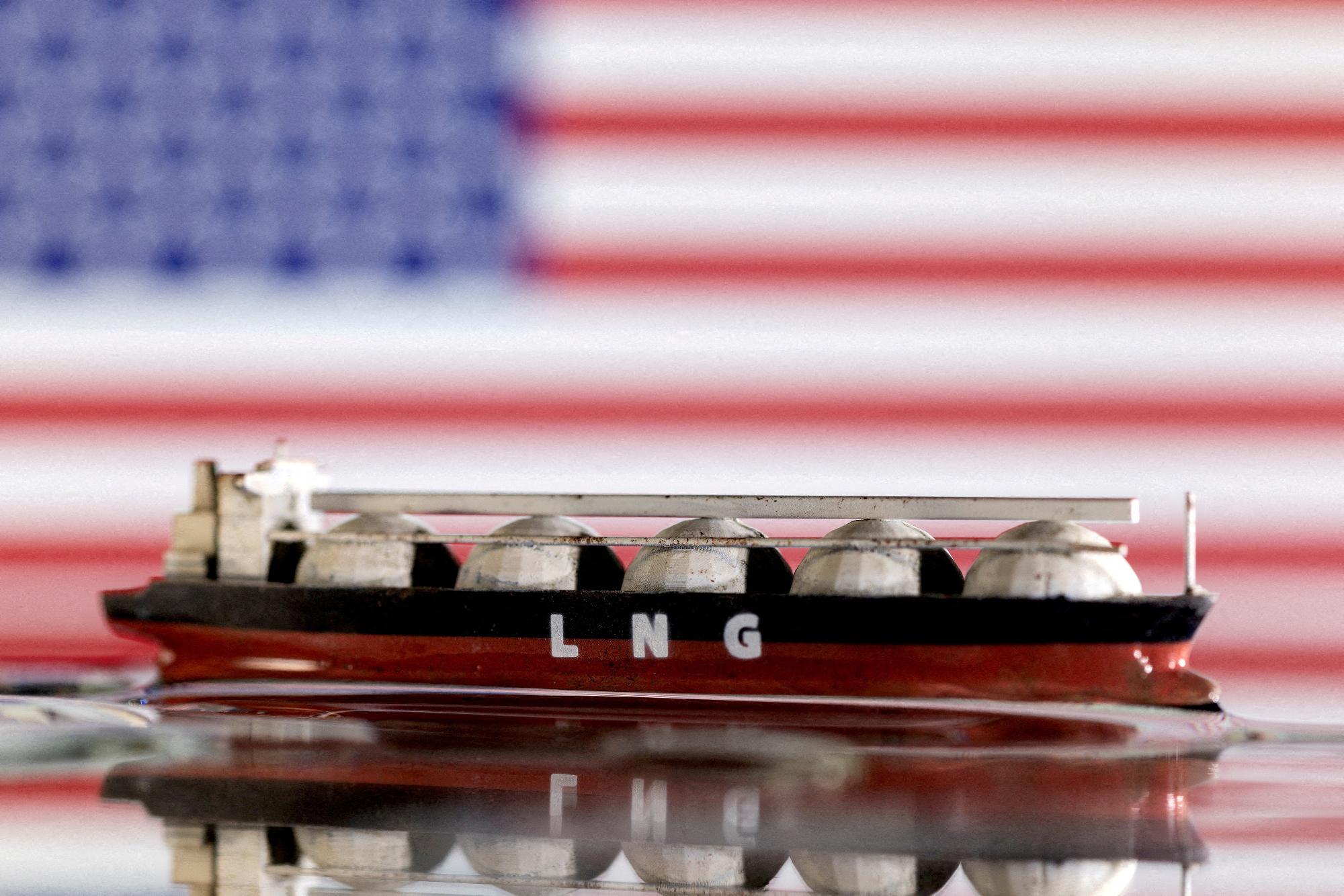
HOUSTON, March 18 (Reuters) - Liquefied natural gas (LNG) prices have fallen about a third over the past nine months, propping up demand, which should tighten the LNG market in the near-term, executives said on Monday at the CERAWeek energy conference. LNG prices have tumbled as supplies have swelled. LNG for April delivery into northeast Asia was at $8.60 per million British thermal units (mmBtu) last week, its lowest since April 2021. Executives from companies including Chevron and trading firm Trafigura estimated that the decline in prices will likely spur greater demand, while Wael Sawan, the CEO of Shell, said demand is already increasing as a result of reduced prices. "It's a pretty trite thing to say, but low prices fix low prices," said Richard Holtum, global head of gas, power and renewables for trading firm Trafigura. "Gas prices are so low here, it's a competitive advantage" he said. Surging U.S. gas supplies and low prices have led companies to propose several new LNG export plants. The flurry of new proposals in turn prompted U.S. President Joe Biden's administration to pause its reviews of permits for the export plants, concerned so many new projects would undermine his pledge to cut U.S. greenhouse gas emissions. The permit review pause will undermine U.S. dominance in LNG exports, said Mike Sommers, president of industry trade group American Petroleum Institute, said on Monday. “We're losing market share to other countries as a consequence of the LNG export pause," Sommers said. Amos Hochstein, a White House energy advisor, defended the pause given the huge increase in U.S. gas exports since they began in 2016. The U.S. exported a record 8.6 million metric tons (MT) of the superchilled gas in December and 8.3 MT in January. “We’re just going to take a look at what is the speed, while not affecting the existing projects,” Hochstein said. The second half of the decade will lead to a 40 percent increase in global LNG output, said Trafigura's Holtum. Gunvor Chairman Torbjörn Törnqvist, meanwhile, estimated LNG supply will jump by a third over the next five years. He said there is not currently any tightness in the market and that gas prices are likely to remain low given the abundance of supply. Patrick Pouyanne, CEO of TotalEnergies, a leading exporter of US LNG, echoed expectations for a increase in supply in the later half of the decade. "It will be very good for the buyers, good for the customers and we will have the next generation of demand," he said. The Reuters Power Up newsletter provides everything you need to know about the global energy industry. Sign up here. https://www.reuters.com/business/energy/ceraweek-lower-lng-prices-should-boost-gas-demand-executives-say-2024-03-18/
2024-03-18 21:49
March 19 (Reuters) - A look at the day ahead in Asian markets. The waiting is almost over. The Bank of Japan delivers its potentially historic policy decision on Tuesday against a backdrop of positive investor sentiment after a wave of bullish tech sentiment offset higher U.S. bond yields, and lifted stocks around the world on Monday. Tech and megacaps drove Wall Street higher, led by Alphabet's 4.6% rise - its biggest in four months - on a media report that Apple is in talks to build Google's Gemini AI engine into the iPhone, while Nvidia rose too ahead of its annual developer conference. With Japan's Nikkei already kicking off the week with a 2.7% gain of its own and China delivering a broadly positive batch of economic data on Monday, markets around the world are on a solid footing ahead of the BOJ bonanza. Apart from the decision and Governor Kazuo Ueda's press conference on Tuesday, the Asia and Pacific calendar also includes the Reserve Bank of Australia's latest policy decision, so the Aussie dollar could be one of the most heavily traded currencies along with the yen. Indeed, the Aussie/yen cross, often a good measure of investors' thirst for carry trades and global risk appetite in general, could be the currency pair to watch on Tuesday. Not only is the BOJ expected to raise rates for the first time in 17 years, ending eight years of negative interest rate policy, it may also call time on its yield curve control and purchase of risk assets, Nikkei newspaper reported on Monday. If the BOJ does make a triple-pronged moves on rates, YCC and purchases of risky assets, Japanese markets could be in for a wild rise on Tuesday. As far as the yen is concerned, much will depend on the spread between Japanese and U.S. yields. Hedge funds and speculators have trimmed their short yen position, but it remains substantial by historical standards. There's a lot of scope for short-covering, but there may be little appetite for that against a backdrop of dollar-supportive spreads. Especially with the Federal Reserve announcing its latest policy decision and economic projections on Wednesday. Australia's central bank, meanwhile, is widely expected to hold its cash rate at 4.35% for a third straight meeting on Tuesday and at least until end-September, according to a Reuters poll of economists who see at least two rate cuts in the final quarter of 2024. While financial markets have priced in rate cuts for some major central banks such as the Fed and European Central Bank starting around June, the RBA is a notable outlier with no such mid-year pricing. Here are key developments that could provide more direction to markets on Monday: - Japan monetary policy decision - Australia monetary policy decision - Japan industrial production (February, final) Get a look at the day ahead in Asian and global markets with the Morning Bid Asia newsletter. Sign up here. https://www.reuters.com/markets/asia/global-markets-view-asia-graphic-pix-2024-03-18/

2024-03-18 21:15
MEXICO CITY, March 18 (Reuters) - Mexican presidential candidate Claudia Sheinbaum on Monday vowed to keep boosting the activity of the country's state-owned energy companies, while also accelerating the transition to renewable energies. If Sheinbaum wins the June election, as polls predict, she will inherit state oil company Pemex and state electricity utility CFE, both of which have been grappling with large debts and ailing infrastructure. The former Mexico City mayor, who has promised to be a guardian of the legacy of energy nationalist President Andres Manuel Lopez Obrador, said renewables would be a "trademark" of her government. Crude oil production should be at 1.8 million barrels per day (bpd) and refineries should work more efficiently to help wean the country off expensive gasoline and diesel imports, Sheinbaum said at an event without providing a timeframe. Pemex currently produces 1.5 million bpd. Sheinbaum also said she wanted both companies to have a "reasonable" level of debt and that while they should be strengthened, they should eventually be operating for the benefit of consumers. Sheinbaum said her government would not increase the price of gasoline, diesel or electricity. A growing demand for energy, she said, would have to be met through renewables. In her speech, Sheinbaum also said Pemex could participate in the exploration of lithium, and some renewables production. The Reuters Daily Briefing newsletter provides all the news you need to start your day. Sign up here. https://www.reuters.com/world/americas/mexico-presidential-candidate-sheinbaum-vows-boost-state-energy-sector-2024-03-18/