2024-03-16 17:28
PARIS, March 16 (Reuters) - France has eased bird flu restrictions to 'moderate' from 'high' after two months without an outbreak on any farm in the country, its agriculture ministry said on Saturday. "The lowering of the risk level allows, on one hand, the ducks to go out again and, on the other hand, the possibility for other poultry to be outside without any restriction," the ministry added. The Reuters Daily Briefing newsletter provides all the news you need to start your day. Sign up here. https://www.reuters.com/world/europe/france-eases-bird-flu-restrictions-moderate-high-2024-03-16/

2024-03-16 11:29
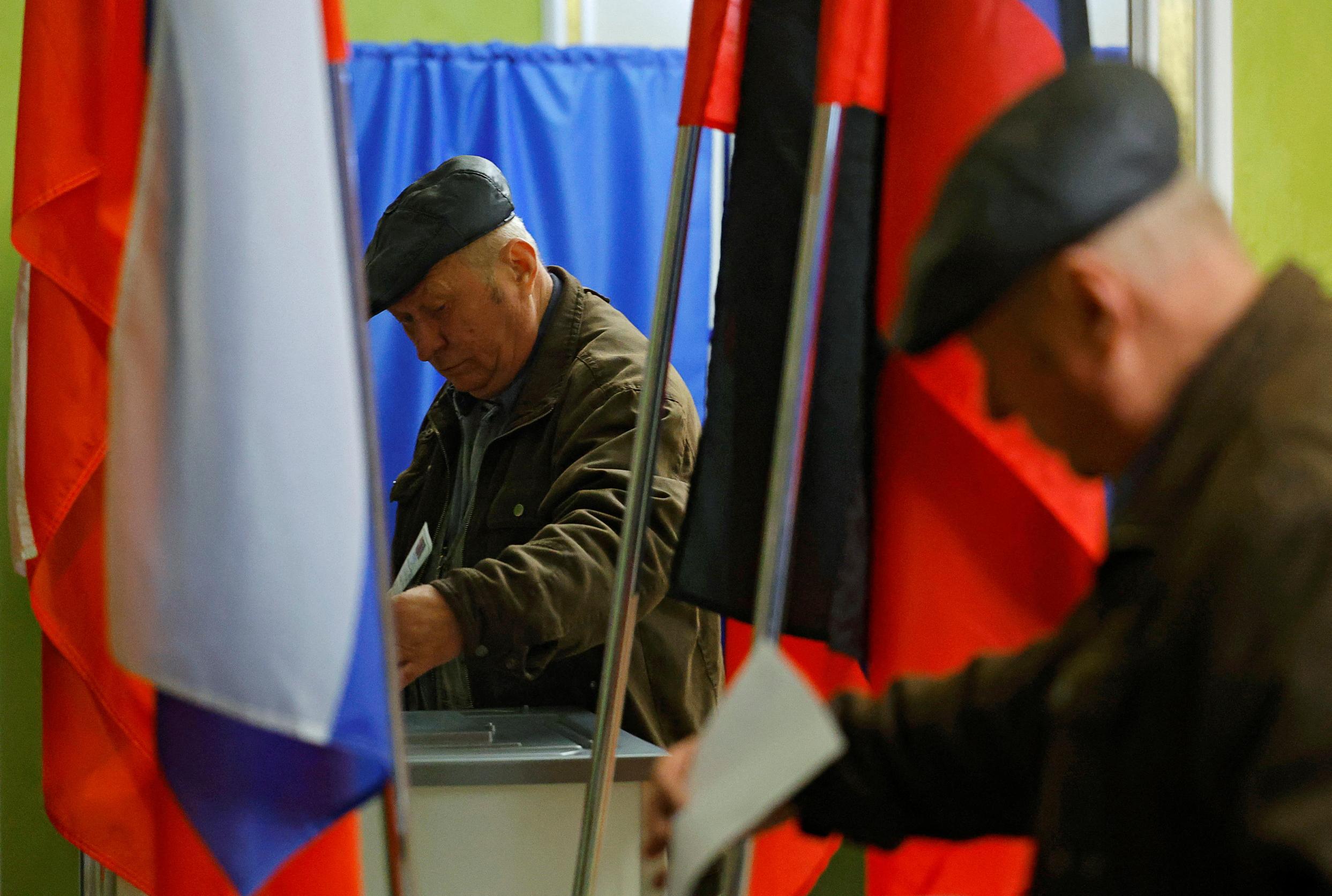
Two killed in missile strike in Russian border region Foreign ministry accuses Kyiv of sabotage Election chief reports 29 protest incidents Refinery on fire in region southeast of Moscow MOSCOW, March 16 (Reuters) - Russia accused Ukraine on Saturday of using "terrorist activities" to try to disrupt its presidential election and former President Dmitry Medvedev decried as "traitors" the scattered protesters who have tried to set fire to voting booths and pour dye into ballot boxes. The Ukraine war has cast a shadow over voting in the election, which is all but certain to hand President Vladimir Putin six more years in the Kremlin but has been marked by sporadic acts of protest. On the second of three days of voting, the Russian foreign ministry said Kyiv had "intensified its terrorist activities" in connection with the election "to demonstrate its activity to its Western handlers and to beg for even more financial assistance and lethal weapons". It said that in one such incident, a Ukrainian drone had dropped a shell on a voting station in a Russian-controlled part of Ukraine's Zaporizhzhia region. The state-run TASS news agency quoted a local election official as reporting no damage nor injuries when the explosive device landed five or six metres (yards) from a building housing a polling station before it had opened in a village about 20 km (12 miles) east of the city of Enerhodar. Reuters could not independently verify the incident. There was no immediate comment from officials in Ukraine, which regards the election taking place in parts of its territory controlled by Russia as illegal and void. Meanwhile the head of the electoral commission, Ella Pamfilova, said that in the first two days of voting there had been 20 incidents of people trying to destroy voting sheets by pouring various liquids into ballot boxes, as well as eight cases of attempted arson and a smoke bomb. Commenting on the incidents, Medvedev said those responsible could face treason sentences of 20 years. "This is direct assistance to those degenerates who are shelling our cities today," he posted on social media, referring to Ukrainian attacks. On Sunday's final day of voting, supporters of late opposition leader Alexei Navalny have called on people to turn out en masse at noon in a rolling protest against Putin in each of the country's 11 time zones. UKRAINIAN ATTACKS Russian media quoted Kremlin spokesman Dmitry Peskov as saying Putin had been receiving military reports in recent days of attempted attacks by saboteurs in the border regions of Belgorod and Kursk, including several incursion attempts overnight, all of which he was quoted as saying were thwarted. A senior Ukrainian intelligence official said on Thursday that armed groups he described as Russians opposed to the Kremlin had turned the regions into "active combat zones". On Saturday, Kyrylo Budanov, head of Ukraine's military intelligence directorate, said the groups, the Freedom of Russia Legion, the Siberian Battalion and the Russian Volunteer Corps, were "becoming a force" with unified principles. The groups were fighting "quite well" and were not going to stop any time soon, he said in a Ukrainian television interview, adding, "We will try to help them to the best of our ability." In the Belgorod region where cross-border attacks from Ukraine have become part of daily life, Governor Vyacheslav Gladkov reported the deaths of a man and a woman in a missile attack, and later in the day, one injury, after he said Russian defences shot down 15 rockets approaching the regional capital. Video obtained by Reuters showed fires ablaze and air raid sirens sounding on the empty streets of Belgorod city. Dmitry Azarov, governor of the Samara region 850 km (530 miles) southeast of Moscow, said the Syzran refinery was on fire following a drone attack but an attack on a second refinery had been thwarted. The fire was later brought under control, officials said, but the incidents highlighted Ukraine's ability to strike hundreds of miles (km) inside Russia to target its energy industry. Two other big refineries were set on fire this week. In his nightly video address, Ukrainian President Volodymyr Zelenskiy said it had become clear in recent weeks that Ukraine could use its weapons to exploit what he called vulnerabilities in the "Russian war machine." Russia mounted its deadliest attack in weeks on Friday when its missiles hit a residential area in Ukraine's Black Sea port city of Odesa, killing at least 21 people and wounding more than 70. PUTIN'S DOMINANCE Putin's hold on power is not under threat in the election. Aged 71 and in office as president or prime minister since the last day of 1999, he dominates Russia's political landscape. None of the other three candidates on the ballot paper - veteran Communist Nikolai Kharitonov, nationalist Leonid Slutsky or Vladislav Davankov, deputy chairman of the lower house of parliament - has mounted any credible challenge. Overall turnout - an important indicator for Putin as he attempts to demonstrate the whole country is behind him - rose above 58% on the second day of voting. The rate in Belgorod region was over 76%. Turnout was also high in Russian-controlled regions of Ukraine. Russia's governing party, United Russia, said it was facing a widespread denial of service attack - a form of cyberattack aimed at paralysing web traffic - and had suspended non-essential services to repel it. State news agency RIA quoted a senior telecoms official as blaming the cyberattacks on Ukraine and Western countries. The Reuters Daily Briefing newsletter provides all the news you need to start your day. Sign up here. https://www.reuters.com/world/europe/ukraine-strikes-russian-city-refinery-day-two-presidential-vote-2024-03-16/
2024-03-16 07:59
Regulators grapple with banks' vulnerabilities Liquidity rules under scrutiny Switzerland working on new measures LONDON/ZURICH, March 15 (Reuters) - A year after the banking crisis that felled Credit Suisse, authorities are still considering how to fix lenders' vulnerabilities - including in Switzerland, where the bank's takeover by rival UBS created a behemoth. The Swiss government-sponsored rescue of Credit Suisse and U.S. bank salvages in March 2023 doused the immediate fires kindled by a run at little-known U.S. regional lender Silicon Valley Bank. But regulators and lawmakers are only starting to address how banks could better withstand deposit runs, and whether they need easier access to emergency cash. A top global financial watchdog recently warned , opens new tab Switzerland must strengthen its banking controls, highlighting the risk that a failure of UBS (UBSG.S) , opens new tab - now one of the world's biggest banks - would pose to the financial system. "The banking system is no safer," said Anat Admati, professor at the Stanford Graduate School of Business and co-author of the book "The Bankers' New Clothes: What's wrong with banking and what to do about it." "Global banks can cause a lot of harm," she added. Rules introduced after the 2008 financial crisis did little to avert last year's crash, as clients pulled cash from banks at unprecedented speed. One of the key weaknesses that emerged last year was that banks’ liquidity requirements proved insufficient. Credit Suisse saw billions of deposits exiting in a matter of days, burning through what had appeared to be comfortable buffers of cash. Introduced after the 2008 financial crisis, the so-called liquidity coverage ratio (LCR) has become a key indicator of banks’ ability to meet cash demands. LCRs require banks to hold sufficient assets that can be exchanged for cash to survive significant liquidity stress over 30 days. European regulators are debating whether to shorten the period of acute stress to measure buffers banks need over shorter timeframes, of say one or two weeks, according to one person with knowledge of the discussions. The move would echo calls by the acting Comptroller of the Currency in the United States, Michael Hsu, who also made the case for a new ratio to cover stress over five days , opens new tab. If such measures are put in place, “banks would need to hold higher levels of liquid assets and park more assets at the central banks,” said Andrés Portilla, managing director of regulatory affairs at the Institute of International Finance, a Washington-based bank lobby group. “Ultimately funding could become costlier.” Industry-wide changes are only likely to take place next year in Europe as banks are still working through the final implementation of post-financial crisis rules, so-called Basel III, which will require banks to set aside more capital, the person told Reuters. Amid worries that a repeat of a rapid run could threaten another bank, the European Central Bank is intensifying scrutiny of liquidity buffers of individual banks, another person familiar with the discussions told Reuters. The ECB declined to comment for this article. It has identified , opens new tab liquidity supervision as a priority after the Credit Suisse rescue. BANKING BEHEMOTH In Switzerland, the regulatory debate has homed in on how to make emergency loans more widely available. When borrowing from central banks, lenders need to provide certain assets in exchange, also known as collateral, which must be easy to price and sell in financial markets. That protects taxpayers in case the lender cannot repay. As Credit Suisse suffered unprecedented outflows, the lender ran out of securities to pledge to the Swiss National Bank (SNB), forcing the central bank to offer cash to the struggling lender without security. A group of experts has called on the SNB , opens new tab to accept a wider pool of assets, including corporate loans and loans backed by securities. The SNB said the universe of eligible collateral is reviewed on an ongoing basis and developed in dialogue with the banks. A spokesperson for UBS declined to comment. UBS’s imposing balance sheet of more than $1.6 trillion, nearly twice the size of the Swiss economy, is prompting the country to also review its too-big-to-fail rules, a package of regulation that disciplines systemically important banks. "All domestic and globally systemic important banks have become public-private partnerships. No government can risk their instability," said Peter Hahn, emeritus professor of banking and finance at The London Institute of Banking & Finance. The Swiss government is expected to publish a report next month. It might announce stricter capital requirements for UBS, some analysts have warned. UBS Chief Executive Sergio Ermotti said this week that he can't rule out that could happen. "We fixed the problem only in the short term. What we did sets the stage for a much bigger problem later," said Cédric Tille, professor of economics at the Geneva Graduate Institute of International and Development Studies, who sat on the Swiss National Bank’s supervisory council until last year. "UBS has become too big to save." Amid concerns about a repeat of 2023, the ECB has asked some lenders to monitor social networks to detect early bank runs. Global financial regulators are due later this year to unveil a "deep dive" into how social media can speed up deposit outflows. "A run on deposits doesn’t happen in a month, it happens in a few hours," said Xavier Vives, professor of economics and finance at IESE Business School in Barcelona. "Regulation must be amended." Get a look at the day ahead in European and global markets with the Morning Bid Europe newsletter. Sign up here. https://www.reuters.com/markets/europe/year-credit-suisses-rescue-banks-remain-vulnerable-2024-03-15/

2024-03-16 06:30
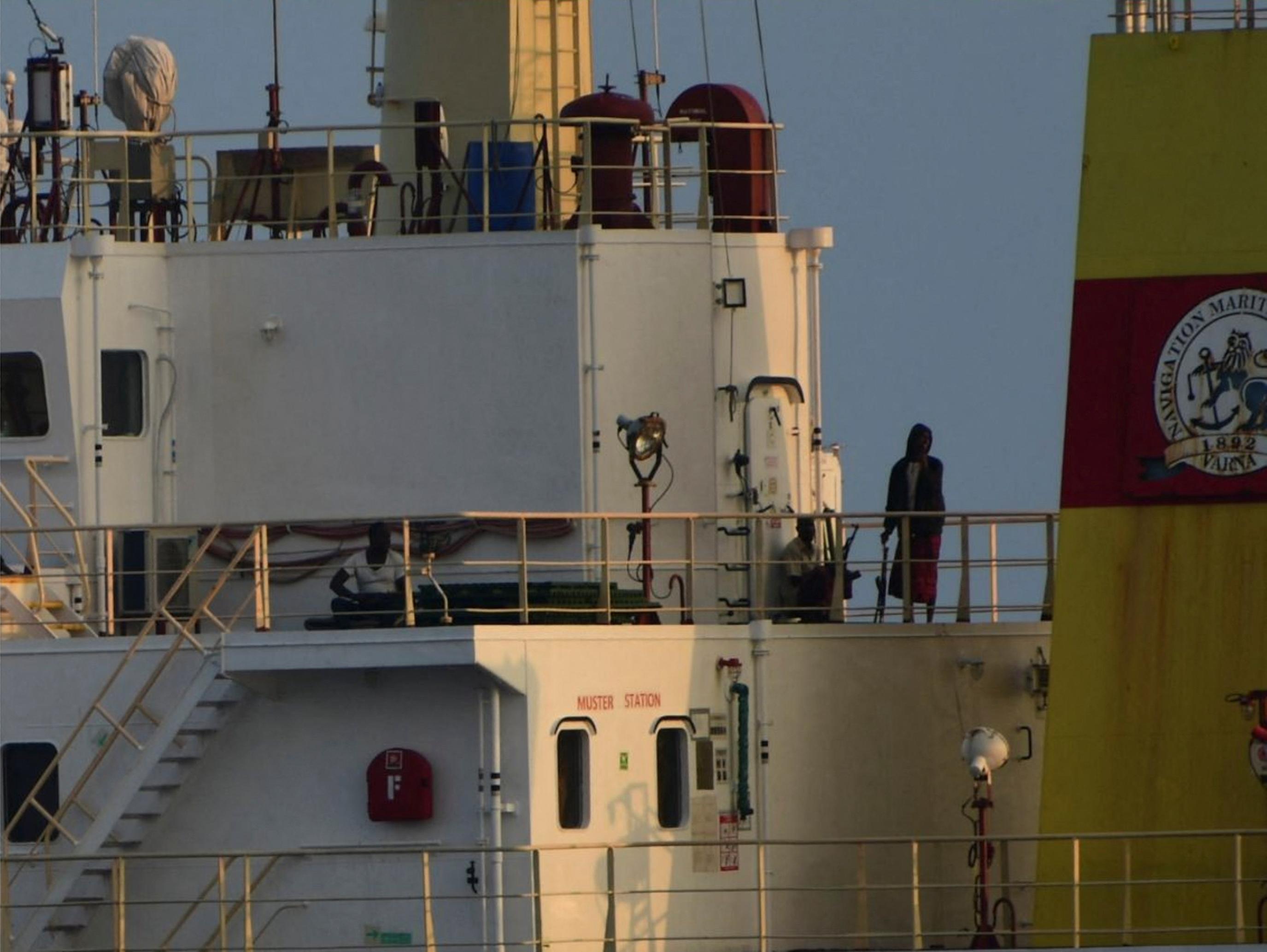
March 16 (Reuters) - Indian naval forces including special commandos seized a cargo vessel that had been hijacked by Somali pirates, rescuing 17 crew members, a spokesperson for the navy said on Saturday. The navy said in a post on social media platform X that all 35 pirates aboard the ship, the Maltese-flagged bulk cargo vessel Ruen, had surrendered, and the ship had been checked for the presence of illegal arms, ammunition and contraband. The Ruen had been hijacked last year and the navy said it had intercepted the vessel on Friday. The vessel may have been used as the base for the takeover of a Bangladesh-flagged cargo ship off the coast of Somalia earlier this week, the European Union naval force said. The hijacking of the Ruen was the first successful takeover of a vessel involving Somali pirates since 2017 when a crackdown by international navies stopped a rash of seizures in the Gulf of Aden and the Indian Ocean. Somali pirates had caused chaos in important global waterways for a decade but had been dormant until a resurgence of attacks starting late last year. India deploys at least a dozen warships east of the Red Sea to provide security against pirates as Western powers focus on attacks by Yemen's Iran-backed Houthis. At least 17 incidents of hijacking, attempted hijacking and suspicious approaches had been recorded by the Indian Navy since Dec. 1, Indian officials previously said. The Reuters Daily Briefing newsletter provides all the news you need to start your day. Sign up here. https://www.reuters.com/world/indian-navy-thwarts-somali-pirates-using-cargo-ship-ruen-ani-reports-2024-03-16/
2024-03-16 06:26
MOSCOW, March 16 (Reuters) - A Ukrainian drone attack caused a fire at a Russian oil refinery that burned for hours on Saturday before it was brought under control in the latest of several damaging strikes this week on Russia's crude oil processing plants. Ukrainian President Volodymyr Zelenskiy did not address the reported attack but thanked his armed forces, security service and main intelligence directorate "for the new Ukrainian long-range capabilities." In his nightly video address, he said it had become clear in recent weeks that Ukraine could use its weapons to exploit what he called vulnerabilities in the "Russian war machine," adding, "What our own drones can do is truly a long-range Ukrainian capability." Interfax news agency quoted the emergencies ministry as saying that "open burning" at the Syzran refinery had been halted, but measures were still under way to extinguish it completely. It was not clear how the fire would affect production at the plant, which has the capacity to process 8.5 million metric tons of crude oil a year, or 170,000 barrels per day. An attack on another refinery, Novokuibyshevsky, on Saturday was thwarted, the local governor said. Both plants are owned by Rosneft and located in the Samara region southeast of Moscow, some 800 km (500 miles) from the nearest Ukrainian-controlled territory. A Ukrainian source told Reuters that Kyiv's SBU intelligence agency had struck three Samara region Rosneft refineries: Syzran, Novokuibyshevsky, and Kuibyshevsky. Russian media have not reported a strike on the Kuibyshevsky refinery, which is located in the city of Samara. "The SBU continues to implement its strategy to undermine the economic potential of the Russian Federation, which allows it to wage war in Ukraine," the source said. Ukraine has repeatedly demonstrated its ability to strike deep inside Russia, focusing particularly on energy infrastructure. In the past few days, such attacks have also caused fires at Lukoil's NORSI refinery in Nizhny Novgorod, east of Moscow, and Rosneft's plant in Ryazan, southeast of the capital. NORSI's main crude distillation unit was damaged, which meant at least half of the refinery's production was stopped, industry sources told Reuters. The Ryazan plant halted units that account for about 70% of its output, sources said. Disruption to refinery operations has the potential to hit production and force up prices. Even before the latest attacks, Russia had ordered a six-month ban on gasoline exports from March 1 to help keep prices stable, amid rising demand from motorists and farmers, and to allow for maintenance. In other incidents this week, a drone was destroyed on the outskirts of the Kirishi refinery near St Petersburg on Tuesday while on Wednesday the Novoshakhtinsk refinery in the southern region of Rostov suspended operations briefly after downed drones fell on it. Russia is voting through Sunday in a three-day presidential election that is virtually certain to give Vladimir Putin six more years in the Kremlin. The Reuters Daily Briefing newsletter provides all the news you need to start your day. Sign up here. https://www.reuters.com/world/europe/ukrainian-drones-hit-russias-syzran-oil-refinery-regional-governor-says-2024-03-16/
2024-03-15 23:17
BANGKOK, March 16 (Reuters) - Thodsapol Hongtong is enjoying a smoke with his friends at the "Green Party", a venue where recreational cannabis enthusiasts meet in the Thai capital Bangkok to chat and have a good time. But it's a pastime that may be coming to an end. The 31-year-old influencer who runs his own cannabis shop regularly touts recreational marijuana as good for the country's economy on his online platform "Channel Weed Thailand". The booming cannabis sector could be worth $1.2 billion by next year, according to the estimate by the University of the Thai Chamber of Commerce. "Where (else) in the world can we lie around on the beach and enjoy a joint," Thodsapol told Reuters, taking a puff from his bong. But the Thai government is looking to stamp out cannabis culture with a ban on its recreational use to be rolled out by the end of the year. Medical use will still be permitted. Thai Health Minister Cholnan Srikaew, in an interview with Reuters last month, described recreational marijuana as a "misuse" of cannabis that has a negative impact on Thai children and could lead to other drug abuses. Recreational cannabis flourished in Thailand after the country became the first in Asia to fully decriminalise the substance in 2022, enabling a new public wave of weed appreciation culture. Neon signs of cannabis leaf in multiple languages are highly visible on many street corners in Thai towns and cities, marking the tens of thousands of shops, spas, bars and gaming lounges where a variety of cannabis strains are readily available. Many streetside shops in tourist areas sell smoking paraphernalia, while cannabis-related festivals became more common, like last year's joint-rolling competition in the resort island of Phuket that drew in weed aficionados from around the world. The Thai government's draft law banning recreational use of cannabis will be up for cabinet approval later this month. The Reuters Daily Briefing newsletter provides all the news you need to start your day. Sign up here. https://www.reuters.com/world/asia-pacific/thailands-flourishing-cannabis-culture-end-government-seeks-ban-2024-03-15/