2024-03-15 14:24
WASHINGTON, March 14 (Reuters) - U.S. consumer sentiment and inflation expectations were little changed in March, a survey showed on Friday. The University of Michigan's preliminary reading on the overall index of consumer sentiment came in at 76.5 this month, compared to a final reading of 76.9 in February. Economists polled by Reuters had forecast a preliminary reading of 76.9. "Consumers perceived few signals that the economy is currently improving or deteriorating," said Surveys of Consumers Director Joanne Hsu in a statement. "Indeed, many are withholding judgment about the trajectory of the economy, particularly in the long term, pending the results of this November's election." The survey's reading of one-year inflation expectations were unchanged at 3.0% in March. The survey's five-year inflation outlook held steady at 2.9% for the fourth straight month. Get a look at the day ahead in U.S. and global markets with the Morning Bid U.S. newsletter. Sign up here. https://www.reuters.com/markets/us/us-consumer-sentiment-inflation-expectations-stable-march-2024-03-15/

2024-03-15 14:22
PARIS, March 15 (Reuters) - French shipping tycoon Rodolphe Saade has agreed to buy France's leading rolling news channel BFM TV off Patrick Drahi's debt-laden Altice group, their respective companies said on Friday, as billionaires vie to control the French media landscape. Saade's Marseille-based shipping company CMA CGM will acquire the French media unit of telecoms group Altice, which includes BFM TV as well as radio RMC, for an enterprise value of 1.55 billion euros ($1.69 billion). The move will allow Saade, who is CMA CGM's chief executive, to consolidate a growing media business in France, while the deal will also help ease finances at Altice, which has been trying to sell assets to cut down debt since a rapid rise in interest rates. BFM TV rose to prominence in France in the 2010s, becoming a ubiquitous sight in bars and cafes across the country and often setting the media narrative, with its ticker closely watched by political advisers and business leaders. Its change of ownership to a more deep-pocketed tycoon will be scrutinised by the French political class, at a time when hard-right news channel CNews, owned by billionaire Vincent Bollore, poses a growing challenge to BFM. This is not the first foray into the media world by the secretive Saade family. Last year, it launched a Sunday newspaper that competes directly with the Journal du Dimanche, a formerly respected weekly newspaper taken over by Bollore and turned into what critics say is a far-right mouthpiece. A source close to CMA CGM told Reuters at the time that Lebanon-born Saade was keen for its media to offer a "nuanced" view of the world and not "fuel the flames of extremism." "With this planned acquisition, we have the ambition to continue our long-term development in the media industry," Saade said in a statement on Friday. Media analysts said the high price tag agreed by CMA CGM - a multiple of 14 times Altice Media's core profit - probably reflected the extra level of power and influence owning the well-known media brands would give Saade. "He doesn't want to wait five years before becoming an ambitious media group," Philippe Bailly, a media consultant at Paris-based NPA Conseil, said. "It's a rather generous ratio. There's probably a little premium due to the influence this deal gives you." A post-COVID shipping boom fanned profits for shipping firms, swelling the privately-owned group's coffers and prompting CMA CGM to go on a flurry of acquisitions in port terminals, logistics firms and French media. Saade has been a regular participant in French President Emmanuel Macron's overseas trips as CEO of a flagship national business. Altice's founder and owner Drahi, who recently vowed to cut his company's massive debt through asset disposals, said the deal would allow BFM and the RMC radio station to continue to grow under Saade's ownership. BFM says it has 12 million daily viewers. CMA CGM said it has asked Altice Media's management team to remain in place. Cash-rich CMA CGM already owns French regional newspapers La Tribune, La Provence and Corse Matin and holds a more than 10% stake in M6 (MMTP.PA) , opens new tab, France's second-biggest private TV network. The transaction will be submitted for regulatory approval in France and is expected to close during the summer, Altice said. CMA CGM is being advised by Morgan Stanley and Messier & Associés and Altice is being advised by Lazard. Drahi is struggling to boost creditors' confidence in the financial reliability of his media-to-cable conglomerate at a time when revenue and profit at Altice France, the country's second largest telecom group, have declined. The deal "goes some way to satisfying (Altice) shareholders but probably not enough," said Paolo Pescatore, founder and TMT analyst at PP Foresight. "All telecoms companies are struggling which requires a very well thought out turnaround plan. Convincing them will be no easy feat." ($1 = 0.9185 euros) (This story has been refiled to fix the spelling of CGM CMA in paragraphs 3, 8, and 10) Get U.S. personal finance tips and insight straight to your inbox with the Reuters On the Money newsletter. Sign up here. https://www.reuters.com/markets/deals/french-shipping-company-cma-cgm-commits-buy-altice-media-2024-03-15/

2024-03-15 14:06
LONDON, March 15 (Reuters) - The euro could be driven back down to parity against the dollar if Donald Trump wins U.S. Presidential elections in November and imposes hefty 20% tariffs on Europe's carmakers, Barclays' global chairman of research predicted on Friday. Barclays sees the euro dropping to $1.05 from around $1.08 now in its "base case" scenario of a 10% increase on broader tariffs on Europe, but "if we get 20% tariffs on autos I think it is probably going to get much closer to parity," Barclays' Ajay Rajadhyaksha told reporters on a conference call. Get a look at the day ahead in European and global markets with the Morning Bid Europe newsletter. Sign up here. https://www.reuters.com/markets/europe/trump-auto-tariffs-could-drive-euro-parity-barclays-says-2024-03-15/
2024-03-15 14:01
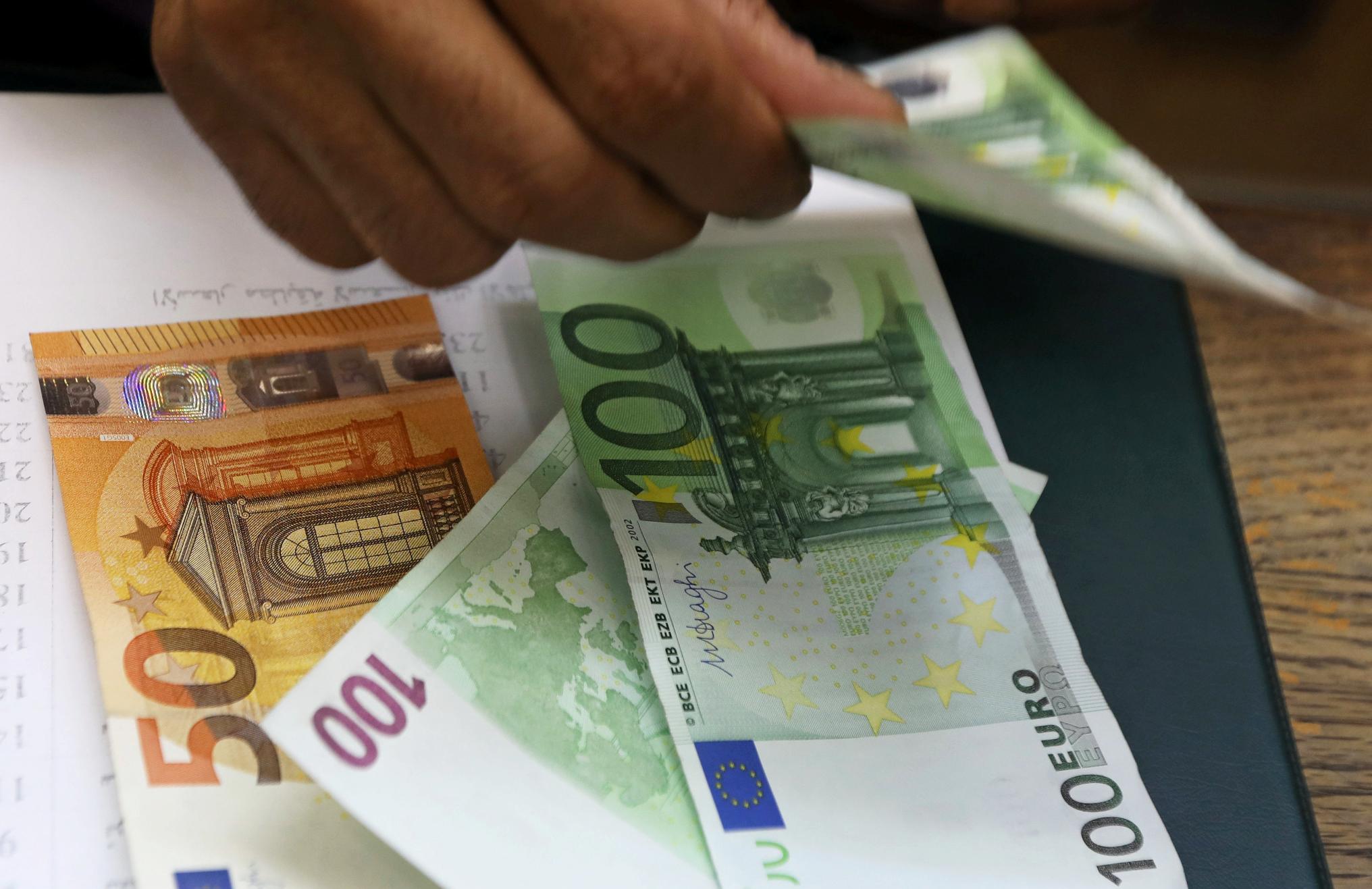
LONDON, March 15 (Reuters) - Egypt's blockbuster cash infusions, currency devaluation and interest rate hike are not quite enough for Fitch to adjust the country's credit rating, the agency's head of Middle East and Africa sovereigns told Reuters. The North African nation, which has been struggling with a prolonged economic crisis , opens new tab linked to chronic foreign currency shortages, stunned markets in February with a $35 billion land development deal with Emirati sovereign wealth fund ADQ. It then allowed the Egyptian pound to drop beyond 50 versus the dollar and hiked interest rates by 600 basis points, securing it an expanded $8 billion deal with the International Monetary Fund. But Toby Iles, head of Middle East and Africa sovereigns for Fitch Ratings, said such developments were "already sort of baked into the rating and its stable outlook". The agency downgraded Egypt to B- in November, with a stable outlook. "To think about positive rating action, a reduction in external vulnerabilities was one thing we identified. And I think we certainly have that in the near term. It's the question of whether vulnerabilities re-emerge," Iles said. Fitch will review Egypt's rating in May, which Iles said was likely too soon to get a sense of the trajectory of public finances. Credit ratings are a major factor in determining countries' borrowing costs. A change to a positive outlook would indicate that the rating agency could lift Egypt's credit rating over the near- to medium-term. Iles said devaluing the pound "will have quite a powerful impact on remittances" - the most important source of Egypt's foreign exchange, which averaged $30 billion a year between 2020 and 2022. This could help offset income losses stemming from a potentially prolonged conflict between Israel and Gaza, he said. But Iles added that if the exchange rate was not allowed to fluctuate, and if inflation remained elevated, recent gains could quickly erode in the same way they did following a 2016 devalaution. "Some sign that it's actually floating, that would clearly be positive, because it means they have this way of absorbing shocks which they have not had before," Iles said. He also noted that Egypt's debt trajectory was becoming "quite severe" with the closely watched interest cost to government revenue approaching 50% and debt to GDP nearing 100%. Calming inflation, which surpassed 35% in February, could enable a reduction in interest rates that would lower those debt costs, Iles said. Get a look at the day ahead in U.S. and global markets with the Morning Bid U.S. newsletter. Sign up here. https://www.reuters.com/markets/fitch-says-egypt-must-prove-reforms-are-lasting-before-credit-rating-action-2024-03-15/

2024-03-15 13:46
Rate decision due March 20 at 2:30 p.m. (1330 GMT) Governor to comment on decision at 3:45 p.m. Analysts expect a second straight 50-bp cut Crown weakness, service price rises keep bank cautious Median forecast sees main rate at 3.50% at end-2024 PRAGUE, March 15 (Reuters) - The Czech National Bank is likely to deliver another 50-basis-point interest rate cut next week, with a weaker crown and remaining price pressures tempering thoughts of quicker monetary easing, a Reuters poll showed on Friday. Policymakers delivered rate cuts of 25 and 50 basis points, in December and February respectively, in an easing cycle that reduced borrowing costs from more than two-decade highs. While inflation has come down quickly - and hit the central bank's 2% target last month for the first time since 2018 - prices are still rising fast in services and the crown is weaker than policymakers had assumed. Citing some of these reasons, central bankers in the past week have said the easing cycle would be gradual and cautious, prompting markets to scale back bets on a bigger interest rate cut. "Elevated and stronger non-tradable core CPI growth in February, in our view, moved this balance of risks in favour of a 50-bp cut instead of 75 bps," Citi economist Jaromir Sindel said. All 14 analysts in a Reuters poll forecast the central bank's seven-member board would agree on a 50-basis-point reduction at its March 20 meeting, taking the two-week repo rate (CZCBIR=ECI) , opens new tab to 5.75%. The median forecast in the poll expects the key rate to stand at 3.50% by the end of 2024, versus a previous expectation of 4.00%. The Czech crown fell to two-year lows beyond 25.50 to the euro in February after an acceleration in the rate-cutting pace, but it has since rebounded to 25.20-25.30, helped by central bankers' message of gradual easing. Policymaker Jan Kubicek told Reuters this week the weakened crown - which is below central bank assumptions of an exchange rate of 24.70 in the first quarter - has delivered some monetary easing and that the bank could continue with a 50-bp reduction. Get a look at the day ahead in European and global markets with the Morning Bid Europe newsletter. Sign up here. https://www.reuters.com/markets/europe/czech-central-bank-expected-keep-50-bp-rate-cut-pace-2024-03-15/

2024-03-15 12:33
LONDON, March 15 (Reuters) - High prices and inflation have emerged as a political issue ahead of presidential and congressional elections in the United States and are severely complicating the Federal Reserve’s effort to engineer a soft landing. Inflation’s salience with voters ranks well behind immigration and the general state of the economy but ahead of foreign policy, climate, taxes, healthcare and crime, according to the latest poll for the Wall Street Journal. Most voters disapprove strongly (50%) or somewhat (10%) of President Joe Biden’s handling of inflation, based on a nationwide survey , opens new tab of more than 1,700 registered voters conducted in late February. The poll is picking up consumer frustration with the very large and unexpected rise in prices during the pandemic and its aftermath, even if the rate of further increases has now slowed. Similar political tensions are evident in most of the other advanced economies as consumers struggle with the legacy of sharply increased prices during and after the pandemic. In Europe, the problem has been compounded by the sharp rise in retail gas and electricity prices after Russia’s invasion of Ukraine and the sanctions imposed in response. Chartbook: U.S. price level and inflation , opens new tab Persistent inflation, especially in services, has made the Federal Reserve cautious about cutting interest rates to help the U.S. economy accelerate after the business cycle slowdown in 2022/23. Prices rose by 2.4% over the 12 months ending in January 2024, according to the U.S. price index for personal consumption expenditures (PCE), the inflation measure favoured by the central bank. PCE inflation had slowed from a post-pandemic high of 7.1% in June 2022 and was not far above the central bank’s long-term flexible average inflation target of 2.0%. But price increases for merchandise have slowed much more sharply than for services, creating a dilemma for the Fed, which must set interest rates for the whole economy. Prices for goods fell 0.5% over the 12 months ending in January 2024, after increasing 10.6% in the 12 months to June 2022, the fastest rise for more than 40 years. By contrast, services prices continued to increase by 3.9% in the year to January 2024, though the rate of increase had slowed somewhat from a peak of 6.0% in the year to February 2023. DIVERGING INFLATION Energy and raw materials make up a much larger share of costs for manufacturing businesses, which also rely more heavily on international supply chains and are more exposed to foreign competition. The pandemic and its aftermath had its biggest and most immediate impact on manufacturers owing to the sudden rotation of spending to merchandise from services and the simultaneous disruption of global supply chains. But as prices of energy and other raw materials have stabilised, supply chains normalised and spending rotated back to services, merchandise prices steadied and have remained basically flat since the middle of 2022. By contrast, service sector firms use much less energy and are less exposed to international supply chains and competition from abroad, but are much more labour-intensive. The rotation back towards services, coupled with rising wages and lack of foreign competition has fuelled faster increases in services prices. Persistent inflation in the much-larger and more labour-intensive services sector is too important for the central bank to ignore. Services account for almost two-thirds of household spending (roughly one-third on housing, one-third on other services) with merchandise responsible for the rest. Service sector firms employ far more people (110 million) than manufacturers (13 million) and construction businesses (8 million). Service sector production ($16 trillion) is almost double that for goods ($9 trillion) and far above construction ($2 trillion). DIVERGING PRICE LEVELS While the rate of increase in prices has slowed, the upsurge during and after the pandemic has left the overall level of prices much higher than anticipated at the start of 2020. Based on the PCE price index, overall prices were about 10% higher in January 2024 than they would have been if they continued increasing on the same trajectory that prevailed for the 10 years before January 2020. The sudden escalation in the price level compared with what most households expected as “normal” before the pandemic explains why so many consumers express sticker shock and vent their unhappiness in opinion polls. For many households, wages and other income have also risen since January 2020, in some cases sharply, but the increase has been uneven, which helps explain why the rise in the price level has become politically sensitive. Explaining that prices are no longer rising fast is not much comfort to those voters whose incomes have already fallen behind the increase in the price level since the pandemic began. Moreover, while goods prices have stabilised since the middle of 2022, they have done so much further above trend than for services. Goods prices are about 14% above the pre-pandemic trend, with durable goods prices as much as 18% above trend, despite some recent discounting. By contrast, services prices are only about 8% above trend and prices excluding housing and energy are only 7% above trend. PLAYING CATCH UP Some of the continued increase in service prices during 2023 and 2024 likely represents an attempt to catch up with the higher price level in manufacturing after big increases between mid-2020 and mid-2022. For policymakers, the nightmare scenario is if services firms try to restore their prices relative to manufacturers, and workers whose incomes have fallen relative to inflation try to restore them to pre-pandemic levels. Efforts to restore real prices and wages to the prior trend were one of the key drivers of persistent inflation in the 1970s and early 1980s. The institutional context is very different in the 2020s, with weaker labour unions and less collective bargaining over wage rates. But central banks in all the major economies are on high alert for any signs of catching-up price and wage rises that could fuel a second round of inflation. Prolonged weakness in production and the stabilisation of prices in the manufacturing sector arguably create a case for lower interest rates to stimulate more purchases of expensive durable items. But service sector resilience and continued price rises by services firms make aggressive interest rate reductions risky in case they cause service sector inflation to accelerate again. Related columns: - Persistent U.S. services inflation threatens soft landing (February 14, 2024) - Persistent U.S. services inflation dampens oil outlook (October 13, 2023) John Kemp is a Reuters market analyst. The views expressed are his own. Follow his commentary on X https://twitter.com/JKempEnergy , opens new tab Get a look at the day ahead in U.S. and global markets with the Morning Bid U.S. newsletter. Sign up here. https://www.reuters.com/markets/commodities/us-consumers-still-reeling-earlier-price-rises-even-inflation-slows-2024-03-15/