2024-03-15 09:45
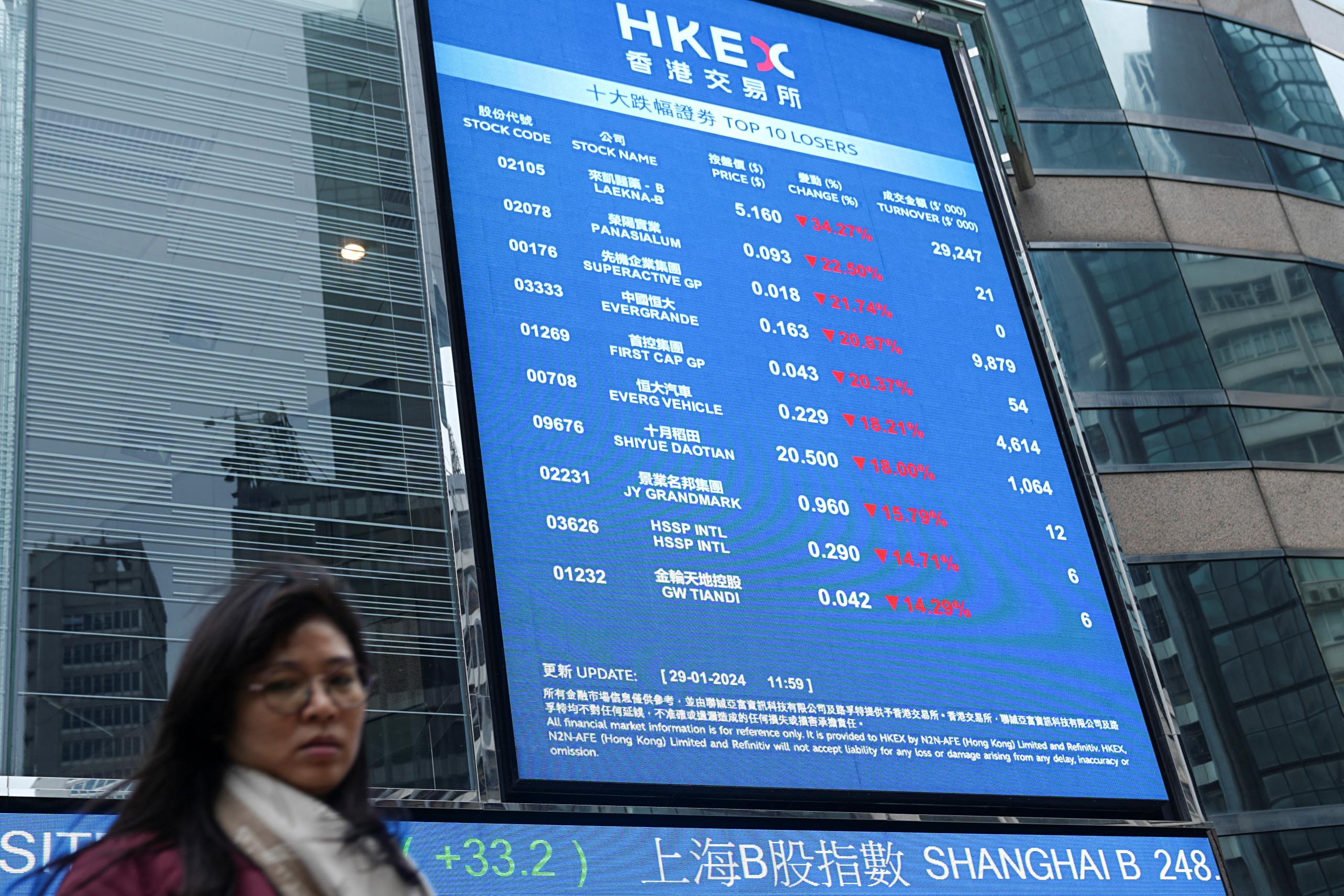
March 14 (Reuters) - The week ahead is rammed with rate setting meetings by heavyweight central banks from the U.S. Fed to the Bank of England, from Switzerland and Norway to Mexico. But one question is dominating markets - will the Bank of Japan finally gear up to exit negative rates? Here is your week-ahead look at global markets from Rae Wee in Singapore, Lewis Krauskopf in New York and Dhara Ranasinghe, Bill Schomberg and Karin Strohecker in London. 1/WILL THEY, WON'T THEY? The two-day monetary policy meeting of Japan's central bank beginning Monday could - at long last - very well be 'live', after months of false alarms and eager anticipation. The stars are finally aligning for a move away from negative interest rates and an overhaul of its massive stimulus programme, following Japan Inc's hefty pay bumps at this year's annual wage negotiations. Recent comments from BOJ officials, including Governor Kazuo Ueda, also seem to signal an imminent end to years of ultra-loose monetary policy, even if it doesn't happen in March. Markets are priced for an exit by June. Investors have positioned to benefit from selling of short-dated paper since a rise in central bank deposit rates would quickly draw banks' capital out of bonds and into cash. But it's a guessing game, and only time will tell. 2/TIMING THE REBOUND Wednesday's Fed meeting is all about gauging policymakers' views on the timing of rate cuts, the resilience of the U.S. economy and the possibility of an inflationary rebound. Robust jobs and inflation data has prompted a rethink of how much policymakers will lower rates this year. Fed funds futures price in around 80 basis points of cuts from more than 150 priced in in January. That hasn’t stopped a rally that’s taken the S&P 500 to fresh records this year. A hawkish Powell tilt, however, could give investors pause. Also on the radar is chipmaker Nvidia’s GTC developer conference from March 18-21, featuring a keynote speech from Chief Executive Jensen Huang. The AI-fuelled frenzy has boosted Nvidia’s stock nearly 80% year-to-date. 3/PLAYING FOR TIME The Bank of England will likely play for time in Thursday's rate announcement as it awaits greater clarity on wage growth, which remains stronger than in the U.S. or the euro zone. The BoE is expected to start cutting borrowing costs from 5.25% - the highest since 2008 - in August, a Reuters poll showed, potentially bringing up the rear, behind both the Fed and the European Central Bank. Markets will watch for any change in language about putting the BoE's Bank Rate "under review" and any shift in the balance of votes after February's three-ways split. And Wednesday's inflation reading could cause a last-minute rethink. Meanwhile in Switzerland, inflation easing to a nearly 2-1/2 year low has fuelled expectations that the Swiss National Bank could cut interest rates on Thursday. 4/GREEN SHOOTS In contrast to U.S. exceptionalism, economic growth is sluggish in many other major economies. Some economists say there's too much pessimism around Europe, which was harder hit than some peers by the energy shock - and so slower to rebound. That means European shares, even if they are near record highs, are too heavily discounted. The flash PMI or business activity numbers, released by economies across the globe in coming days, could confirm the view that the global economy outside the U.S. is not as bad as it might first seem. While the February euro zone composite PMI remained below the 50 mark that separates expansions from contraction, the index came in above market consensus. Britain's manufacturing PMI, stuck below the 50 threshold for growth since August 2022, is now edging higher. 5/ GOING EASY Mexico's central bank has been a rare - and sizeable - holdout among Latin America's central banks, which have been at the forefront of the emerging market rate-cutting frenzy. But that might well change on Thursday. Easing inflation and a strong economy thanks to higher-than-expected domestic spending in an election year have given Banxico some room for manoeuvre to pull away from record high 11.25% rates. In Turkey, a fresh inflation spurt has dashed policymakers' hopes that the recent severe tightening cycle aimed at shoring up the ever-sliding lira and combating sticky price pressures had come to an end. Expectations are high that the central bank needs to deliver another rate hike, maybe as much as 500 basis points. That would come at a sensitive time, with the country gearing up for local elections on March 31. Make sense of the latest trends in financial markets with the Global Investor newsletter. Sign up here. https://www.reuters.com/business/take-five/global-markets-themes-2024-03-15/
2024-03-15 07:18
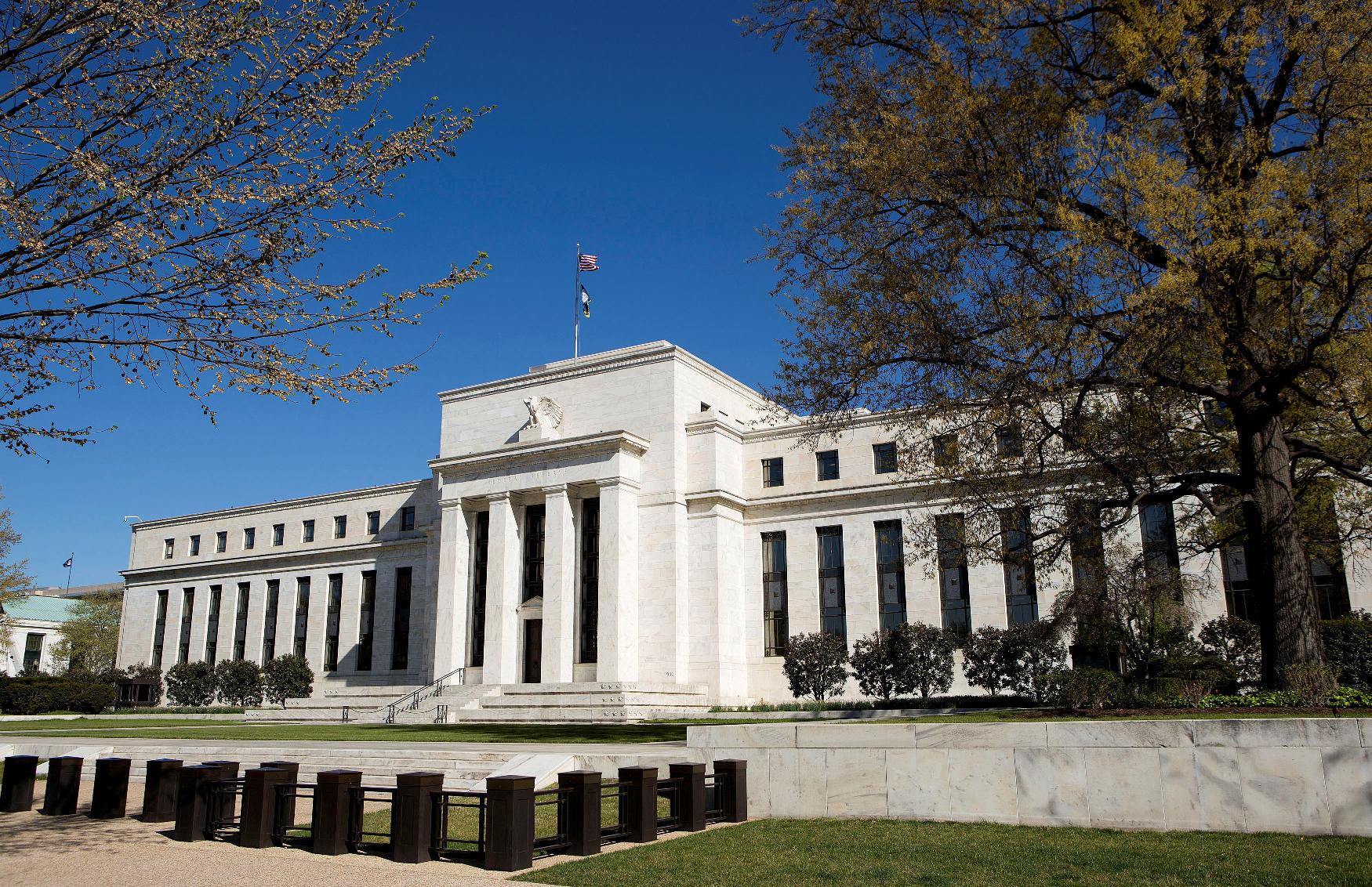
BERLIN, March 15 (Reuters) - Germany's Federal Environment Agency (UBA) confirmed preliminary projections that Europe's biggest economy's greenhouse emissions fell by around 10% year-on-year in 2023, putting the country on track to meet its 2030 climate targets. Carbon dioxide emissions fell to 673 million tons, the biggest drop since Germany's reunification, the agency announced on Friday, confirming preliminary figures published by the Berlin-based Agora Energiewende think-tank in January. Germany aims to cut its greenhouse emissions by 65% by 2030 compared with 1990, a step to becoming carbon neutral by 2045. It is currently at around 46%. "Germany is on track - for the first time. If we stay on track, we will achieve our 2030 climate goals," Climate Action and Economy Minister Robert Habeck said in a statement. A drop in energy-intensive industries' output, along with a rise in renewable power production contributed to the emissions decline, the agency said. But the transport and building sectors failed to meet their emissions targets last year, risking the 2030 goals if further measures to decarbonise the sectors were not taken, the ministry said. Make sense of the latest ESG trends affecting companies and governments with the Reuters Sustainable Switch newsletter. Sign up here. https://www.reuters.com/business/environment/germany-track-reach-2030-targets-environment-agency-says-2024-03-15/
2024-03-15 07:02
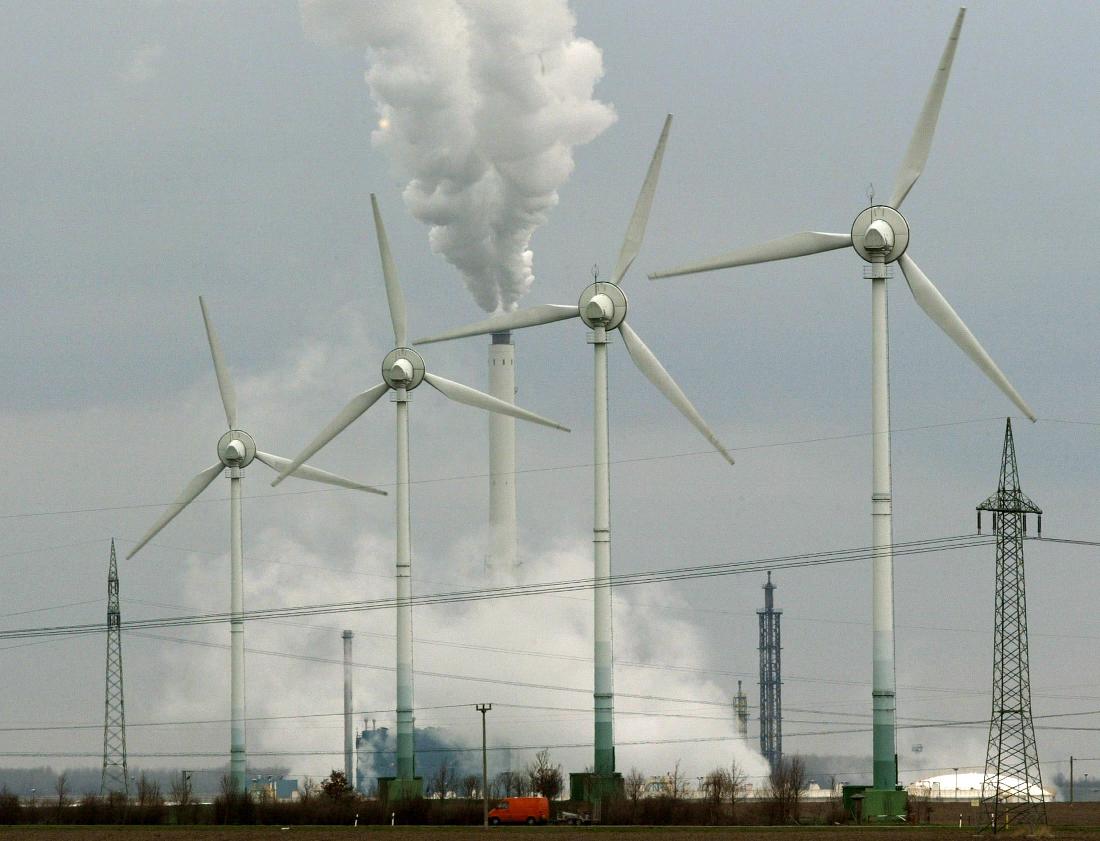
LONDON, March 15 (Reuters) - Next week's Federal Reserve meeting has lost the heat it once had as a likely moment for the central bank's first interest rate cut - but it could shine a big light on where the Fed thinks the economy is at over the long run. Conditioned by verbal pushback from Fed officials all year and still-sticky inflation and punchy growth readings, futures markets currently price a near zero chance of a first cut at the March 20 gathering and now favour June or July instead. And yet the readout from the meeting will be packed with information about what happens next, not least an updated quarterly "dot plot" on policymaker projections and the likely start of discussions on slowing the Fed's balance sheet runoff. With many investors reassessing the long-term trajectory of the U.S. economy and whether it's on a sustainably faster growth path, considerable focus will be on what those Fed dots say about the assumed "neutral" policy rate that neither stimulates nor reins in the economy long term. Based on their median forecasts, Fed policymakers have left their long-run policy rate assumption basically unchanged since before the pandemic at 2.5%, barring a brief shaving to 2.4% in early 2022 that was quickly reversed. And as Fed officials assume they will get inflation back to the 2% target one way or another over time, it implies they see a "real" neutral rate of just 0.5% - compared to the current real policy rate of about 2.5%. A hike in that assumption may not make a difference to whether or even when the Fed starts to cut, as it could cut 200 basis points (bps) off rates over the coming two years and still claim to be in a "restrictive" mode bearing down on economic activity and inflation. But it has potential significance of how much scope the Fed reckons it has over any easing cycle - where it sees a likely "terminal rate" in central bank parlance. And this is why it may be keenly watched by many investors. The discussion is clearly well underway. Unobservable in real time, the theoretical neutral rate is an ephemeral beast almost impossible to pinpoint until you've hit it and - even then - shifting sands of the economy may still shroud it in mystery. Most Fed officials, including Chair Jerome Powell, claim not to know where it lies exactly. And yet their best guesses on it should reveal some of what they think is happening under the bonnet of the economy, how restrictive they think the current 5.25-5.50% policy rate is right now and where rates may settle once they start an easing campaign. FED MURMURS Although not a voting member on the Fed's Open Market Committee (FOMC) council this year, Minneapolis Federal Reserve President Neel Kashkari restarted the debate early last month. "It is possible, at least during the post-pandemic recovery period, that the policy stance that represents neutral has increased," he said. San Francisco Fed boss Mary Daly, who is an FOMC voter this year, then said the neutral rate estimate was between 0.5% and 1.0% - implying a long-run policy rate of 2.5-3.0%. Another 2024 voter, Richmond Fed chief Thomas Barkin, said it was certainly possible the neutral rate had risen. Cleveland Fed President Loretta Mester also said this month that it was an open question. Speaking in London last week, the New York Fed's John Williams seemed keener to dampen thoughts of a major change in thinking and said the neutral rate hadn't risen much since the pandemic. Such public uncertainty perhaps raises the bar for shift in the median "dot" on the long-run rate. Yet any rise at all could affect markets' thinking on anything from the dollar to Treasury debt - and on the stock market by extension. Already, futures markets see Fed policy rates settling somewhere in the region of 3.0-3.5% over the next two years - almost 200 bps lower from here but still well above Fed's standing 2.5% long run policy rate dot. A rise in that "dot" of up to 50 bps back to 3% - where it was as recently as 2018 - could potentially pull markets' assumed "terminal rate" of easing higher too. What it does show is the Fed is at least mulling the implications of such impressive U.S. disinflation over the past year even as steep rate rises have left labour markets virtually unscathed and so far failed to seed any recession. And to that effect, many economists are going back to the drawing board too. One significant smoking gun this year has been revisions to U.S. immigration statistics for last year that change assumptions about the long-run trajectory of the labour force - possibly upping the level of job creation that can happen going forward without lifting wage growth and inflation further. Other analysis homes in on how rising public debt levels may be playing a role in higher neutral rates. A working paper published , opens new tab last week by the Bank for International Settlements tries to quantify the effect on the "natural rate" from big fiscal expansions. The study, by economists Rodolfo Campos, Jesus Fernandez-Villaverde, Galo Nuno and Peter Paz, estimates the natural interest rate increases by 20-50 bps in response to a 10 percentage point increase in the ratio of public debt to GDP. Given that U.S. debt/GDP has risen by about 20 points since before the pandemic to near 100% now - and is projected by the Congressional Budget Office to rise further to 116% over the next decade - those assumptions are certainly food for Fed thought. The opinions expressed here are those of the author, a columnist for Reuters. Get a look at the day ahead in U.S. and global markets with the Morning Bid U.S. newsletter. Sign up here. https://www.reuters.com/markets/feds-new-neutral-may-be-one-fomc-takeaway-mike-dolan-2024-03-15/

2024-03-15 06:59
U.S. manufacturing output rebounds in February U.S. consumer sentiment little changed, inflation outlook steady Dollar on track for largest weekly gain vs yen since mid-January Focus on Fed, BOJ meetings next week NEW YORK, March 15 (Reuters) - The dollar rose to a more than one-week high on Friday after a mixed batch of data showed the U.S. economy remained stable with small pockets of weakness, suggesting the Federal Reserve could keep interest rates higher for longer or reduce the planned number of rate cuts this year. The dollar index, which tracks the U.S. currency against six major peers, was on pace to post a weekly gain of 0.7%, the largest since mid-January. The index was last flat at 103.43 . Data on Friday showed a solid U.S. manufacturing sector, with output rebounding by 0.8% last month after a downwardly revised 1.1% decline in the prior month. Analysts at Citi, however, said in a research note that the rebound in February partly reflects the revisions lower to January output and the reversal of a "weather-related drag in January in non-durable goods manufacturing sectors." U.S. consumer sentiment and inflation expectations were little changed in March, a survey showed on Friday. The University of Michigan's preliminary reading on the overall index of consumer sentiment came in at 76.5 this month, compared to a final reading of 76.9 in February. The survey's reading of one-year inflation expectations, a measure tracked by the Fed, was unchanged at 3.0% in March. The survey's five-year inflation outlook held steady as well at 2.9% for the fourth straight month. The Fed is scheduled to meet next week and while it is not expected to make any interest rate moves, hotter-than-expected U.S. producer and consumer price data this week has led traders to rein in bets on future cuts. "Ahead of the meeting, there's nothing to indicate that the Fed can afford to be dovish at this point," said Eugene Epstein, head of structuring for North America at Moneycorp in New Jersey. "That's why we have Treasury yields going up and that's why we have the dollar stronger. Gold fell as well. It's all the standard correlations. So the Fed maybe gets higher for longer: they're not being given any room to cut sooner than later." The rate futures market on Friday has priced in a 57% chance of the Fed cutting rates in June, compared to 71% on Monday, according to LSEG's rate probability app. The market has also reduced the number of rate cuts it expects this year to less than three, from between three and four earlier this year. Investors are also looking to a highly-anticipated meeting at the Bank of Japan next week. The BOJ is close to ending eight years of negative interest rate policy, with internal preparations for an exit in the works since Kazuo Ueda took office as BOJ governor. At the same time, Japan's biggest companies agreed with labor unions to raise wages by the highest level in 33 years on Friday, reinforcing views the country's central bank is poised to make a landmark shift away from negative interest rates. The dollar continued to rise against the yen, up 0.5% at 149.02 . On the week, the greenback rose 1.3%, on track for its biggest gain since mid-January. The focus is also on other central bank decisions for signs of how quickly they will cut interest rates after a period of rapid rises to curb rampant inflation. The Bank of England and Swiss National Bank are due to meet next week. The euro was slightly up at $1.0889. The European Central Bank council last week began a discussion on when to reduce its own rates, council member Olli Rehn said on Friday. Sterling slipped 0.1% to $1.2737. In cryptocurrencies, bitcoin prices fell as much as 7% in volatile trade from a record high touched on Thursday as risk sentiment took a hit. It was last down 0.3% at $70,483. Keep up with the latest medical breakthroughs and healthcare trends with the Reuters Health Rounds newsletter. Sign up here. https://www.reuters.com/markets/currencies/dollar-advances-us-inflation-data-weighs-rates-outlook-2024-03-15/
2024-03-15 06:53
JAKARTA, March 15 (Reuters) - Indonesia's dry season will be less severe this year compared to 2023, improving its chances of managing forest fires and crops, the country's weather agency said on Friday. Last year's dry season was the most severe since 2019 due to an El Nino weather phenomenon that lasted longer than usual, bringing a drought that hurt crops and exacerbated forest fires. More than 1.16 million hectares (2.86 million acres) of forests burned last year, the most since 2019 and more than five times the 204,894 hectares that burned in 2022, according to data on the environment ministry's website. "The dry season this year is not as dry as last year. Also, forest fires will not be as severe as last year. But we still need to anticipate the risk of forest fires especially in provinces that have peatlands," Ardhasena Sopaheluwakan, deputy of climatology at weather agency BMKG, told reporters. Riau, South Sumatra, Lampung, Jambi, South and Central Kalimantan provinces are prone to forest fires, he said. Those provinces are also home to large palm oil plantations. The dry season will start later than usual in May and June for the island of Java and parts of Borneo and Sulawesi, and it will peak in July-August, BMKG's head, Dwikorita Karnawati, said. From September, the weather will start to be affected by a weak La Nina weather pattern, BMKG said. A La Nina pattern typically brings more rainfall to the archipelago. Last year's El Nino pattern had an impact that stretched into 2024, with planting delays causing early-year rice harvests to slump, although agriculture authorities have said food production is expected to recover later this year. Some areas in Indonesia's Sumatra and Java are currently being hit by floods amid heavy rains. At least 30 people were killed and 70,000 displaced due to floods and landslides in West Sumatra last week. Make sense of the latest ESG trends affecting companies and governments with the Reuters Sustainable Switch newsletter. Sign up here. https://www.reuters.com/business/environment/indonesia-dry-season-be-less-severe-this-year-weather-agency-says-2024-03-15/

2024-03-15 06:04
NEW YORK, March 15 (Reuters) - A gauge of global stocks fell on Friday and was set for a weekly decline that would snap seven straight weekly gains, while the dollar rose and was on track for its strongest week since mid-January, as U.S. inflation data has led to new hopes for interest rate cuts. Data on Friday showed U.S. import prices increased marginally in February as a surge in the cost of petroleum products was partially offset by modest gains elsewhere, suggesting an improving inflation picture. Equities struggled this week after readings on U.S. consumer prices and producer prices indicated inflation remains sticky, dampening expectations the U.S. Federal Reserve will cut rates by its June meeting. Markets are pricing in a 59.2% chance for a rate cut of at least 25 basis points (bps) by the Fed in June, down from 59.5% in the prior session and 73.3% a week ago, according to CME's FedWatch Tool , opens new tab. The central bank is widely expected to hold rates steady at its policy meeting next week but investors will be watching the central bank's economic projections, including its interest rate forecast. "We seem in a period here where everyone knows rates eventually will be lowered. The expectation of when it happens keeps getting slightly pushed back, but investors still believe it will happen," said Rick Meckler, partner at Cherry Lane Investments in New Vernon, New Jersey. "It's been a back-and-forth market as people reposition and consider whether some of the real winners have just gone a little bit too far, so you're seeing them trade off." On Wall Street, the Dow Jones Industrial Average (.DJI) , opens new tab fell 190.89 points, or 0.49%, to 38,714.77, the S&P 500 (.SPX) , opens new tab lost 33.53 points, or 0.65%, to 5,116.95 and the Nasdaq Composite (.IXIC) , opens new tab lost 155.35 points, or 0.96%, to 15,973.17. For the week, the S&P 500 lost 0.13%, the Dow shed 0.02% and the Nasdaq declined 0.73%. In addition, a survey from the University of Michigan showed its preliminary reading on consumer sentiment and inflation expectations were little changed in March while a separate report said production at U.S. factories increased more than expected in February. The dollar index gained 0.05% at 103.43, recouping some of the prior week's decline with a gain of 0.71%, with the euro up 0.06% at $1.0889 on the session. Sterling weakened 0.13% at $1.273. Against the Japanese yen , the dollar strengthened 0.49% to 149.05, despite expectations the Bank of Japan is expected to end its negative interest rate policy at its meeting next week. MSCI's gauge of stocks across the globe (.MIWD00000PUS) , opens new tab fell 5.07 points, or 0.66%, to 767.58, poised for its third straight daily decline, the longest streak since the start of the year, and down 0.48% on the week. The STOXX 600 (.STOXX) , opens new tab index closed down 0.32%, while Europe's broad FTSEurofirst 300 index (.FTEU3) , opens new tab fell 7.42 points, or 0.37%. The yield on benchmark U.S. 10-year notes was up 1 basis point at 4.308% after reaching 4.322%, its highest since Feb. 23. The 10-year yield has jumped 22 bps this week, the most since mid-October. The 2-year note yield, which typically moves in step with interest rate expectations, rose 3.9 basis points to 4.7297% and has risen 24.6 bps for the week, its largest jump in two months. Oil prices dipped, a day after topping $85 a barrel for the first time since November. The oil benchmarks were on track to close out the week with a gain of more than 3%. U.S. crude settled down 0.27% lower on the day at $81.04 a barrel and Brent settled off 0.09% to $85.34 per barrel. Get a look at the day ahead in U.S. and global markets with the Morning Bid U.S. newsletter. Sign up here. https://www.reuters.com/markets/global-markets-wrapup-1-2024-03-15/