2024-03-15 03:55
SINGAPORE, March 15 (Reuters) - Fortescue (FMG.AX) , opens new tab has conducted the world's first ammonia marine bunker operation in the port of Singapore, the city-state's Maritime and Port Authority (MPA) and the Australian mining company said on Friday. The Singapore-flagged Fortescue Green Pioneer was loaded with liquid ammonia from an existing facility at Jurong Island's Vopak Banyan Terminal for the trial, Fortescue and MPA said in a joint statement. The vessel is dual-fuelled and can adopt ammonia for bunkering in combination with diesel. Ammonia is among several alternative fuels that shippers are exploring to reduce emissions. The trial was conducted over seven weeks and included the testing of ammonia storage systems, associated piping, a gas fuel delivery system, retrofitted engines and seaworthiness, according to the statement. After the trial, the ship received flag approval from the Singapore Registry of Ships and classification society DNV to use ammonia with diesel as a marine fuel. Singapore's port authority has also shortlisted companies for an ammonia power generation and bunkering project on Jurong Island, and will eventually select a lead developer for the project. The Reuters Daily Briefing newsletter provides all the news you need to start your day. Sign up here. https://www.reuters.com/sustainability/fortescue-conducts-worlds-first-ammonia-bunker-trial-singapore-2024-03-15/

2024-03-15 00:41
Traders torn between bullish demand, macro economic fears IEA report points to possible future gains in crude prices Prices topped $85/bbl on Thursday for first time since Nov HOUSTON, March 15 (Reuters) - Oil prices dipped on Friday, a day after topping $85 a barrel for the first time since November, but prices were expected to finish more than 3% higher for the week on rising demand from U.S. refiners completing planned overhauls. Brent crude oil futures slid 9 cents or 0.11% to $85.33 a barrel at 12:16 p.m. CDT (1716 GMT). U.S. West Texas Intermediate (WTI) crude was down 17 cents or 0.21% to $81.09. "Supplies are tightening" for motor fuels, said Phil Flynn, analyst at Price Futures Group. "Prices are at risk to go higher." But "there are worries the U.S. Federal Reserve won't be able to cut interest rates" because inflation remains above the central bank's target of 2%, Flynn added. Cuts in interest rates are seen as opportunity for demand growth in the United States. Prices had been range-bound for much of the last month roughly between $80 to $84 a barrel. Then the International Energy Agency on Thursday raised its view on 2024 oil demand for a fourth time since November as Houthi attacks have disrupted Red Sea shipping. World oil demand will rise by 1.3 million bpd in 2024, the IEA said in its latest report, up 110,000 bpd from last month. It forecast a slight supply deficit this year should OPEC+ members sustain their output cuts having previously forecast a surplus. U.S. energy firms this week added the biggest number of oil and natural gas rigs in a week since September, with the oil rig count also rising to its highest in six months, energy services firm Baker Hughes (BKR.O) , opens new tab said in its closely followed report on Friday. The oil and gas rig count, an early indicator of future output, rose by seven to 629 in the week to March 15. Baker Hughes said oil rigs rose six to 510 this week, their highest since September, while gas rigs rose one to 116. The gains this week have come despite the U.S. dollar strengthening at its fastest pace in eight weeks. A stronger dollar makes crude more expensive for users of other currencies. Also supporting prices were Ukrainian strikes on Russian oil refineries, which caused a fire at Rosneft's biggest refinery in one of the most serious attacks against Russia's energy sector in recent months. "We're continuing to tread water," said John Kilduff, partner with Again Capital LLC said of Friday's activity. U.S. crude oil stockpiles also fell unexpectedly last week as refineries ramped up processing while gasoline inventories slumped as demand rose, the Energy Information Administration said on Wednesday. Lower interest rates cut consumer borrowing costs, which can boost economic growth and demand for oil. In the U.S., some signs of slowing economic activity were seen as unlikely to spur the Federal Reserve to start cutting interest rates before June as other data on Thursday showed a larger-than-expected increase in producer prices last month. The Reuters Power Up newsletter provides everything you need to know about the global energy industry. Sign up here. https://www.reuters.com/business/energy/oil-dips-profit-taking-after-price-crosses-85-2024-03-15/
2024-03-15 00:26
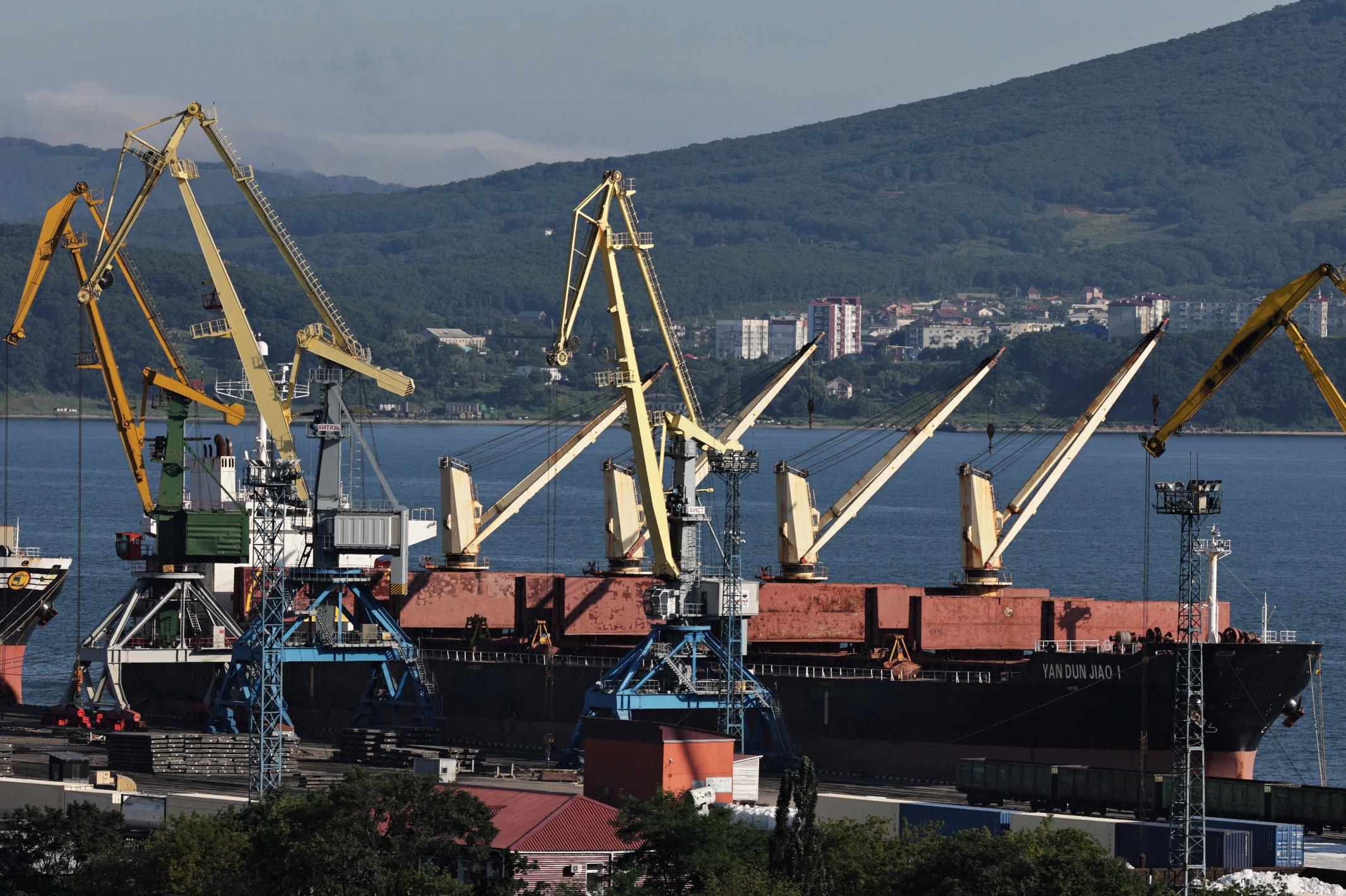
CAIRO, March 15 (Reuters) - A Marshall Islands-flagged liquefied petroleum gas (LPG) tanker reported two explosions near the ship as it travelled off the coast of Yemen's port city of Hodeidah, the third merchant vessel attack of the past 48 hours, British security firm Ambrey said on Friday. The crew from the ship involved in the latest Red Sea incident was U.S.-owned until recently, Ambrey said. The Master of a merchant vessel located in a similar area reported an explosion a distance off the vessel's starboard beam, according to United Kingdom Maritime Trade Operations(UKTMO). Reuters was not immediately able to verify if the same ship was the subject of the two reports. Iran-aligned Houthi militants in Yemen have repeatedly launched drones and missiles against international commercial shipping in the Red Sea and Gulf of Aden since mid-November in professed solidarity with Palestinians against Israel's war in Gaza. Their attacks have disrupted global shipping, forcing firms to take longer and more expensive journeys around the southern end of Africa. There was no damage or crew injuries reported to ships involved in the earlier attacks. The United States and Britain have carried out strikes against Houthi targets in response to the attacks on shipping. Late on Thursday, the U.S. military said Houthis fired two anti-ship ballistic missiles from Yemen toward the Gulf of Aden, and to the north, two missiles toward the Red Sea, but there were no injuries or damage reported to U.S. or coalition ships. The U.S. military's Central Command said early on Friday it destroyed nine anti-ship missiles and two drones in Houthi-controlled areas of Yemen. The Reuters Daily Briefing newsletter provides all the news you need to start your day. Sign up here. https://www.reuters.com/world/middle-east/marine-organisation-reports-missiles-flying-over-ship-near-yemens-al-hudaydah-2024-03-15/
2024-03-15 00:10
BENGALURU, March 15 (Reuters) - Australia's central bank will hold its key interest rate at 4.35% for a third straight meeting on Tuesday and at least until end-September, according to a Reuters poll of economists who see at least two rate cuts in the final quarter of 2024. While financial markets have priced in rate cuts for most other major central banks starting around June, the Reserve Bank of Australia is a notable outlier with no such mid-year pricing. Despite the RBA's recent hawkish stance and still-elevated inflation, no economist expected the next move to be up, with a variety of forecasts for a cut in the second half of this year given that economic growth has been lacklustre. "We are seeing below-trend growth and so we think unless we get a large upside surprise, it's more a matter of how long they have to wait and stay in restrictive territory rather than being pushed higher. We certainly don't think the RBA is going to be in a position to cut rates for some time yet," said Taylor Nugent, senior economist at NAB. All 40 economists polled by Reuters March 11-14 predicted the RBA would keep its official cash rate (AUCBIR=ECI) , opens new tab unchanged at 4.35% on March 19. "For the March meeting, we don't expect the RBA to change their communication too much. Data has come broadly in line with what they expect and we think they'll need to see more evidence on the domestic inflation picture before really updating their view," Nugent added. All major local banks - CBA, Westpac, ANZ and NAB - forecast no change in rates until at least end-August. CBA and Westpac saw the first rate cut in September, while ANZ and NAB forecast it in November, the same as last month's poll. The timing of rate cuts from the RBA also may be guided by when the U.S. Federal Reserve starts easing, which is widely expected to happen in June. Historically, the RBA has eased well after the Fed and cut at a much slower pace. Although median poll forecasts since late last year have showed the first RBA cut will come in the final quarter of 2024, views around exactly when are still divided, with no majority for any meeting, but with the strongest minority for November. Interest rate futures are pricing in a 25-basis-point cut by end-September. Of the 32 economists polled who specified a meeting for the first cut, 13 said November. Another two said June, eight said August, four said September, and five said February 2025. The median forecast showed rates at 4.35% through end-September, with two rate cuts to 3.85% by end-2024. A slight 55% majority, 22 of 40, said rates will fall by at least 50 basis points by end-year. Another 12 said just one 25-basis-point cut and the remaining six said rates would stay on hold at 4.35% for the rest of this year. "They (RBA) will be well aware of market pricing and I would expect we'll get some hawkish warnings from the RBA trying to tell markets not to get ahead of themselves," said Ben Picton, senior strategist at Rabobank, who expects just one cut this year. "The economy is still growing, albeit at a subdued pace. The labour market is still quite strong..., and when we have asset prices at very elevated levels, that's sending us the signal financial conditions aren't actually super tight. So, maybe the RBA has to be a little bit careful about cutting too soon." The Reuters Daily Briefing newsletter provides all the news you need to start your day. Sign up here. https://www.reuters.com/markets/rates-bonds/australias-rba-hold-rates-march-19-cut-later-year-2024-03-15/
2024-03-15 00:07
TOKYO, March 15 (Reuters) - Japan's economy is no longer in deflation, and a strong trend of wage hikes is taking place, Finance Minister Shunichi Suzuki said on Friday. Policymakers, including Prime Minister Fumio Kishida and Suzuki, have repeatedly said in recent days that the country was not yet in a position to be able to declare a solid exit from deflation. The government will mobilise all available policy steps to continue the positive momentum on wages, Suzuki said, declining to comment on Bank of Japan policy steps at its meeting taking place next week. Get a look at the day ahead in Asian and global markets with the Morning Bid Asia newsletter. Sign up here. https://www.reuters.com/markets/asia/japan-no-longer-deflation-wage-hike-trend-strong-says-finance-minister-2024-03-15/
2024-03-15 00:01
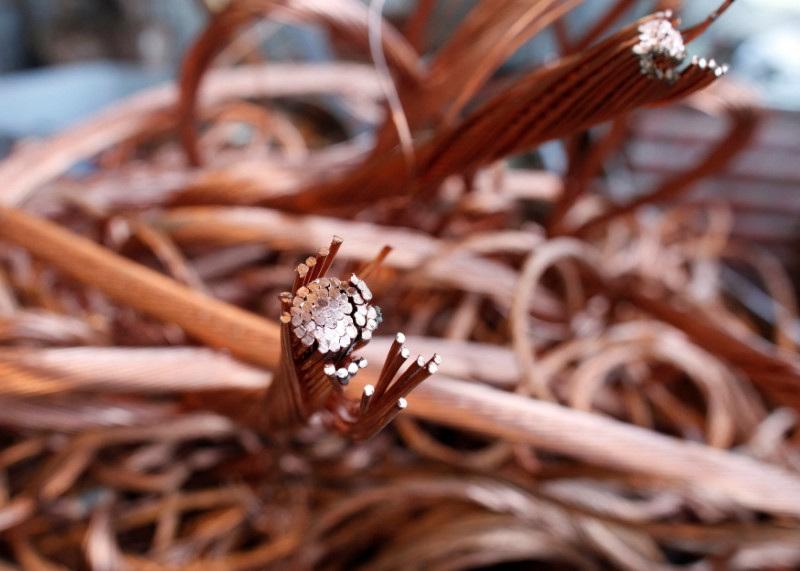
LONDON, March 15 (Reuters) - The copper market has awoken from its year-long slumber. London Metal Exchange (LME) copper surged by 3.1% on Wednesday, breaking out of its long-standing range. The move extended on Thursday morning to an eleven-month high of $8,976.50 per metric ton. The trigger for the price break-out is news that China's copper smelters have agreed to curb output in response to a much tighter-than-expected raw materials market. Spot treatment charges, which are the fees smelters earn for converting mined concentrates into metal, have collapsed in recent weeks as too many buyers chase too little material. As the world's largest buyer of concentrates, China is particularly exposed to the resulting squeeze on smelter margins. China's collective reaction has turned the market's attention from weak global demand to copper's stressed supply dynamics. But to what extent it translates into less refined metal supply remains to be seen. CONCENTRATES SQUEEZE Smelter treatment charges say a lot about what's happening in the upstream segment of copper's supply chain and right now they're flashing red warning lights. Spot charges in China tumbled to $11.20 per ton last week, a near 76% drop in just two months and the lowest level since 2013, according to price reporting agency Fastmarkets. The implosion in processing fees speaks to an acute shortfall of concentrates in the spot market. The unexpected closure of First Quantum's (FM.TO) , opens new tab Cobre Panama mine at the end of last year has blown a 350,000-ton hole in China's copper supply chain. Some Chinese producers are insulated by annual supply deals, which were priced at a benchmark treatment charge of $80 per ton for this year's shipments. Others, particularly newer operators, are more dependent on spot supply and have evidently been scrambling to buy replacement tonnage, chasing treatment charges down to unprofitable levels. In January China's Nonferrous Metals Industry Association (CNIA) advised , opens new tab the country's copper smelters they needed "to bring maintenance ahead of schedule or extend the maintenance time, to cut production and to postpone the commencement of new projects." Which is what they agreed to do this week at a well-flagged meeting to discuss the unfolding crisis. The collective commitment to curb output is intended to safeguard the "healthy development of (the) global copper smelting industry", according to state research company Antaike. TOO MANY SMELTERS There are no quotas for production cuts among the 19 Chinese operators at this week's rare meeting. Rather, each producer will make their own assessment of what needs to be done. In some cases the action has already likely been taken with maintenance downtime brought forward and unprofitable lines shuttered. An average 11.5% of global smelting capacity was off-line in the first two months of this year, according to Earth-i, which uses satellite imagery to monitor plant activity rates. This is up from 8.6% last year and 8.0% in January-February 2022. Tellingly, inactive capacity in top producer China averaged 8.3% this year, up from 4.8% last year, a much sharper jump than in the rest of the world. Some Chinese producers, it seems, either voluntarily heeded the CNIA's January call for sector restraint or were forced to by market reality. Moreover, any promised curbs to output must be seen in the context of China's rapid build-out of copper smelting capacity. Treatment charges reflect not just the state of mine supply but also the volume of smelter demand. China started up 780,000 tons of annual smelter capacity last year with another net 150,000 tons due this year, according to analysts at Macquarie Bank. ("Commodities Comment," Jan. 16, 2024) Macquarie estimates another two million tonnes of new or expanded capacity is also due to ramp up outside of China this year, increasing the pressure on concentrates availability. Freeport McMoRan's (FCX.N) , opens new tab new Indonesian smelter, for example, will at full capacity soak up 1.7 million tons of concentrates, material that until now has been available for export. The dramatic collapse in processing fees is as much a function of this new call on raw materials as it is of mine supply problems. SENTIMENT SHIFTS China's production restraint may slow but is unlikely to reverse the country's recent rapid output growth. The country's production of refined copper jumped by an eye-watering 13.5% year-on-year to 12.99 million tons in 2023, according to the National Bureau of Statistics. And while analysts have adjusted their market balance estimates to factor in recent mine losses, most still think the refined market will be in supply surplus this year, albeit to a smaller extent than previously thought. But market sentiment has palpably shifted. The weak state of global manufacturing activity, not least in China, has kept copper locked in a sideways trading range for much of the last year. Macro drivers, particularly interest rate expectations, have dominated the choppy price action. The concentrates squeeze has refocused attention on copper's micro dynamics of stretched supply and chronic under-investment in new mines. Copper's bull narrative has just been reactivated, even if China's collective commitment to curb output may promise more than it delivers. The opinions expressed here are those of the author, a columnist for Reuters. Get a look at the day ahead in U.S. and global markets with the Morning Bid U.S. newsletter. Sign up here. https://www.reuters.com/markets/commodities/raw-materials-squeeze-jolts-copper-out-its-torpor-2024-03-14/