2024-03-14 11:00
May 22 (Reuters) - The world's biggest oil and gas companies have set varying targets to reduce greenhouse gas emissions from their operations and the combustion of the products they sell. Scientists say the world needs to cut greenhouse gas emissions by around 43% by 2030 from 2019 levels to stand any chance of meeting the 2015 Paris Agreement goal of keeping warming well below 2 degrees Celsius (3.6 Fahrenheit) above pre-industrial levels. Direct comparisons of the oil companies' climate plans are difficult as they emphasise different approaches with regards to intensity-based targets and how to include greenhouse gases from the combustion of their fuels - known as Scope 3 emissions. Intensity-based targets measure the amount of greenhouse gas (GHG) emissions, such as methane and carbon dioxide, per unit of energy or barrel of oil and gas produced. That means absolute emissions can rise even if the headline intensity metric falls - for example with the addition of renewables or biofuels to the product mix. Reducing emissions will require a well-functioning market for carbon, the scaling up of carbon capture and storage technology, and the development of competitive uses of hydrogen, many of the companies have said. The table below shows details by company (in alphabetical order). Notes: 1) Scope 1 refers to emissions from a company's direct operations, such as a diesel generator on an offshore platform. 2) Scope 2 emissions include planet-warming gases from the power a company uses for its operations, such as gas-powered electricity, and from its fleet of vehicles. 3) Scope 3 includes emissions from the combustion of the products a company sells, such as gasoline or jet fuel. Typically these accounts for over 90% of emissions at an integrated oil and gas firm. (boed=barrels of oil equivalent per day) The Reuters Daily Briefing newsletter provides all the news you need to start your day. Sign up here. https://www.reuters.com/sustainability/big-oils-climate-targets-2023-05-22/

2024-03-14 10:53
March 14 (Reuters) - The U.S. Department of Energy plans to lend Lithium Americas (LAC.TO) , opens new tab up to $2.26 billion to build Nevada's Thacker Pass lithium project, one of Washington's largest investments to date in the mining industry as part of a push to boost domestic production of critical minerals for the energy transition. The loan, announced by the company on Thursday, is a key part of U.S. President Joe Biden's efforts to reduce dependence on lithium supplies from China, the world's largest processor of the key battery metal. The mine is slated to open later this decade and be a key supplier to General Motors (GM.N) , opens new tab. U.S.-listed shares of Lithium Americas rose 4.5% to close Thursday at $5.99. Shares had jumped more than 20% during intraday trading. Initial construction at the site, just south of Nevada's border with Oregon, started in March 2023 after the company won a long-running and complex court case against conservationists, ranchers and Indigenous communities. Once the loan closes, expected later this year after final environmental reviews, Vancouver-based Lithium Americas said it plans to start major construction, a process that will take three years. The mine's first phase is expected to produce 40,000 metric tons of battery-quality lithium carbonate per year, enough for up to 800,000 EVs. The mine's cost has increased from a previous estimate of $2.27 billion to nearly $2.93 billion due to higher engineering costs, an agreement to use union labor, as well as the company's decision to build a housing facility for workers and their families in the remote region. Under U.S. laws, the funds can be used for processing facilities, not the actual digging of the open-pit mine. The loan, along with GM's $650 million investment last year that made it the largest Lithium Americas shareholder, should provide most of the money needed for the mine's first phase, the company said. "We have an incredible opportunity to lead the next chapter of global electrification," said Jon Evans, the Lithium Americas CEO. The project is expected to run at full capacity in 2028, aiming to eventually produce 80,000 metric tons per year. Lithium Americas aims to extract lithium at Thacker Pass from a large clay deposit, something that has never been done before at commercial scale. To extract the lithium from that clay, the company will need to import sulfur to make sulfuric acid. As part of the mine construction, Lithium Americas plans to build a rail terminal roughly 60 miles (97 km) from the mine site to import sulfur and other materials. The DOE loan, sanctioned under the Advanced Technology Vehicles Manufacturing loan program, includes an estimated $290 million of interest expected to accrue over a three-year period. The project has received the support of some - but not all - Indigenous peoples in the region, including the Fort McDermitt Paiute Shoshone Tribe. "Thacker Pass will provide important economic and employment opportunities for members of our tribe," said Larina Bell, the tribe's acting chairwoman. Thacker Pass is strongly opposed by ranchers and conservationists, who fear it will hurt local water supplies and small plants and animals. "This loan is nothing more than a handout to the mining industry," said John Hadder of Great Basin Resource Watch, a conservation group that lost its efforts to block the project in court. Last year, the DOE made its first loan to a U.S. lithium company when it said it would lend Ioneer (INR.AX) , opens new tab up to $700 million to build its Rhyolite Ridge lithium project roughly 200 miles (322 km) north of Las Vegas. Get a look at the day ahead in U.S. and global markets with the Morning Bid U.S. newsletter. Sign up here. https://www.reuters.com/markets/commodities/lithium-americas-get-226-bln-us-doe-loan-nevada-mine-2024-03-14/

2024-03-14 10:42
LONDON, March 13 (Reuters) - Giant sequoias, the largest trees on Earth, are thriving in Britain, growing at a rate nearly equivalent to those found in their native range in the U.S. state of California, researchers said on Wednesday. Introduced to British country estates as a 19th century status symbol, there are now an estimated half a million sequoias, also known as the giant redwoods, in the country, compared with 80,000 in California's Sierra Nevada mountains. California's specimens are under threat from more frequent and intense wildfires and climate-change fuelled droughts. But a report by Britain's academy of sciences, the Royal Society, showed that giant sequoias in Britain were generally doing well. "In the UK our climate is more temperate, wetter, and so it is actually likely better suited to these trees in the long run," said Dr Mathias Disney from University College London, one of the authors of the study. The giant sequoias can live for more than 3,000 years and were originally introduced to Britain around the 1800s, where they were planted in the grounds of grand estates, becoming a Victorian-era symbol of wealth due to their rarity. Disney said giant sequoias grow fast, provide shade and benefits such as absorbing carbon, but it was not yet known how good they were for the native biodiversity. "There are a surprising amount of these trees in the UK, and they are doing very well in terms of their growth," Disney told Reuters. "We shouldn't take them for granted even if they are relatively recent introduced species." Make sense of the latest ESG trends affecting companies and governments with the Reuters Sustainable Switch newsletter. Sign up here. https://www.reuters.com/business/environment/giant-sequoias-worlds-largest-trees-thriving-uk-report-shows-2024-03-13/

2024-03-14 10:01
A look at the day ahead in U.S. and global markets from Mike Dolan Creeping oil prices are complicating the inflation picture again, with producer inputs and retail sales updates next on the U.S. economy's dashboard on Thursday - while Tesla drifts further from the megacap stock vanguard. As thoughts of U.S. recession recede further, oil prices climbed again on Thursday after data showed U.S. gasoline stocks fell for the sixth straight week to three-month lows and crude stockpiles dropped unexpectedly. With global supply concerns also jarred this week by Ukrainian attacks on Russian refineries, U.S. crude rose back above $80 per barrel, close to the year's high and pushing year-on-year to 12% - the fastest pace since September. Rising fuel prices were partly responsible for stickier consumer price readings for February earlier this week and the producer price report for last month is due out later - important for many economists as it contains key components in the Federal Reserve's favored PCE inflation gauge. Annual headline PPI inflation is expected to tick back up to still-subdued 1.1% during the month, although "core" rates are forecast to fall back below 2.0%. A retail sales readout for February and weekly jobless numbers are also on the diary. With next week's Fed meeting now on the radar, futures pricing for a June interest rate cut edged lower. And despite a decent 30-year Treasury bond auction on Wednesday, Treasury yields nudged higher. Curiously, Treasury market volatility swooned however and the MOVE (.MOVE) , opens new tab index fell to its lowest since September. Wall St stocks (.SPX) , opens new tab stalled again on Wednesday after the prior session's surge, although stock futures were firmer into the latest screed of economic updates. Tesla's ongoing drift lower did grab more attention, however, as the electric vehicle giant's stock separated further from the fortunes of the so-called Magnificent Seven of megacaps it's supposed to be part of. Down yet again ahead of Thursday's bell and off 2% on Wednesday, it's now lost more than 30% for the year so far and hit a 10-month low. Battling a global slowdown in EV demand following last year's price war that hurt margins, it has lost nearly $200 billion in market value this year. Wells Fargo on Wednesday raised concerns over the waning impact of Tesla price cuts on demand for its EVs and downgraded the stock to "underweight". Elsewhere, investors were parsing the impact of Wednesday's vote in U.S. House of Representatives that overwhelmingly passed a bill giving TikTok's Chinese owner ByteDance about six months to divest the U.S. assets of the short-video app, or face a ban. The bill passed 352-65 in a bipartisan vote, but it faces a more uncertain path in the Senate where some favor a different approach to regulating foreign-owned apps posing security concerns. It is unclear whether China would approve any sale or if TikTok's U.S. assets could be divested in six months. If ByteDance failed to do so, app stores operated by Apple (AAPL.O) , opens new tab, Alphabet's (GOOGL.O) , opens new tab Google and others could not legally offer TikTok or provide web hosting services to ByteDance-controlled applications. A ban may also have implications for President Joe Biden's re-election campaign. China stocks ended lower on Thursday, led by declines in gaming and semiconductor stocks while Hong Kong shares fell, dragged by Wuxi Apptec, as concerns over geopolitical risks persisted. In Europe, German container shipper Hapag-Lloyd (HLAG.DE) , opens new tab fell 1% after it posted an 83% decline in net profit for 2023, and cut its dividend by 85% in what it called a challenging market environment. Global vessel oversupply and a crisis in the Red Sea forced it to cut expenses in 2024 and could reduce sailings. In currency markets, the dollar was steady - largely trapped ahead of next week's big central bank meetings. Key diary items that may provide direction to U.S. markets later on Thursday: * U.S. Feb producer price index, Feb retail sales, weekly jobless claims, Jan retail/business inventories; Canada Jan manufacturing sales * European Central Bank Vice Luis de Guindos and board members Isabel Schnabel and Frank Elderson all speak. * U.S. Treasury auctions 4-week bills * U.S. corp earnings: Adobe, Dollar General, Ulta Beauty Get a look at the day ahead in U.S. and global markets with the Morning Bid U.S. newsletter. Sign up here. https://www.reuters.com/markets/us/global-markets-view-usa-2024-03-14/

2024-03-14 09:13
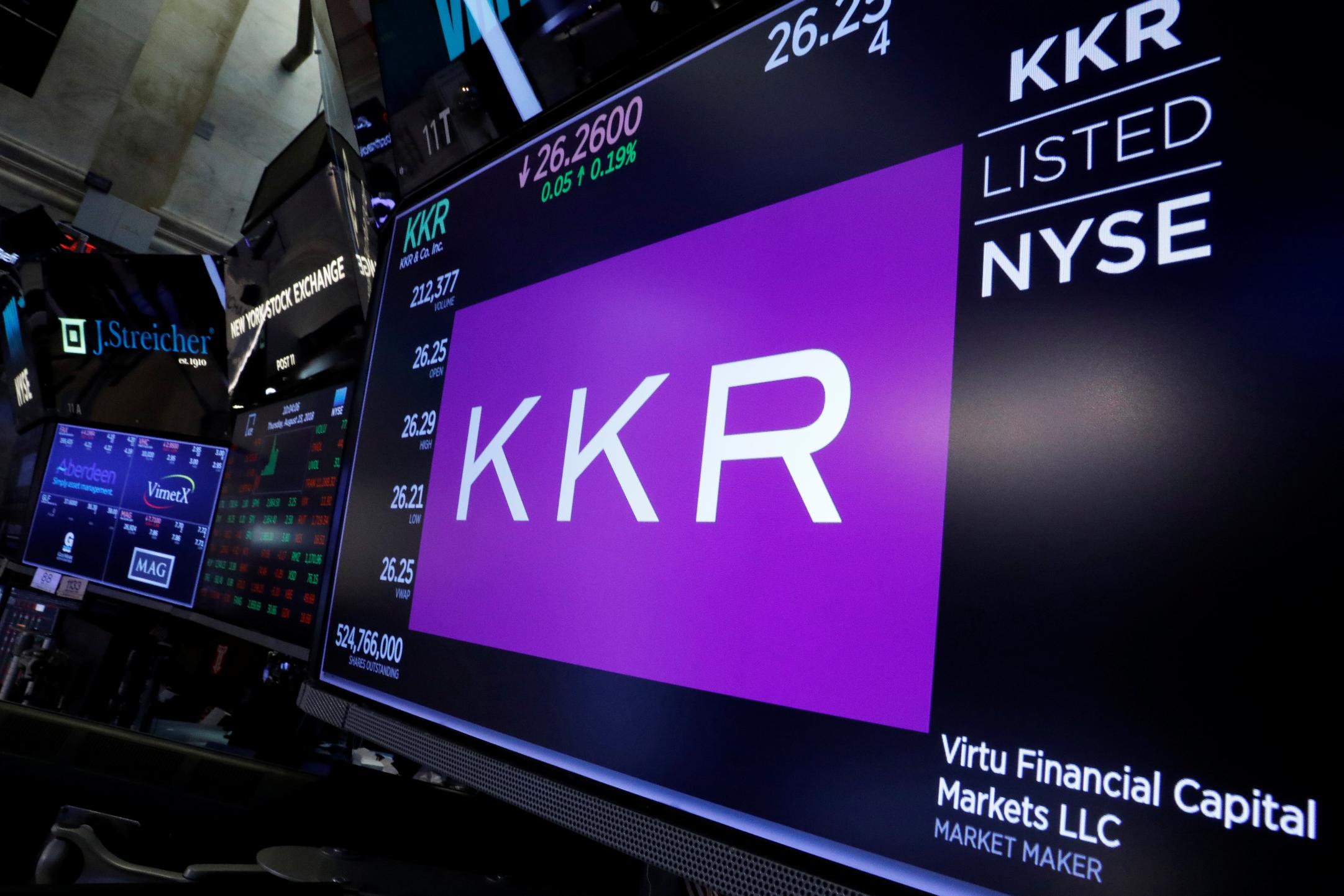
FRANKFURT March 14 (Reuters) - Private equity firm KKR (KKR.N) , opens new tab has launched a 2.8 billion-euro ($3.06 billion) takeover offer for German electricity and energy producer Encavis (ECVG.DE) , opens new tab, the company said on Thursday. Elbe Bidco, an investment vehicle owned by KKR is to offer a cash consideration of 17.50 euros ($19.13) per Encavis share. Encavis shares were up 27% in early Frankfurt trading. The management board and supervisory board of Encavis have expressed their support for the offer. Encavis had confirmed talks with KKR last week. German family business Viessmann will invest as a shareholder in the KKR-led consortium, after which it will hold a significant minority stake, it said in a statement. This is Viessmann's first major commitment since selling its core heating systems business to Carrier Global Corp (CARR.N) , opens new tab in a 12 billion-euro ($13.13 billion) deal last year. KKR and the management board intend to delist Encavis as soon as possible after closing. The management plans to remain on board under the new ownership. KKR has already secured 31% of shares in the Hamburg wind and solar park operator from a group of major shareholders, as both sides announced on Thursday. The financial investor's offer is 30% above the closing price of Encavis shares listed in the MDAX small cap index on Thursday. Encavis shares fell to their lowest level in almost four years in February. Three years ago the valuation was almost twice as high. Through the takeover, Encavis will "increase its contribution to the green energy transition in Europe," KKR said. "The consortium plans to strengthen the company's project pipeline, expand capacity and expand its presence in core markets." Encavis operates 40 onshore wind farms and 190 solar farms across Europe. The company also builds and maintains wind and solar parks through an Italian subsidiary. ($1 = 0.9147 euros) Get U.S. personal finance tips and insight straight to your inbox with the Reuters On the Money newsletter. Sign up here. https://www.reuters.com/markets/deals/kkr-launches-3-bln-public-takeover-offer-encavis-2024-03-14/
2024-03-14 09:02
Credit Suisse takeover poses new risks for Swiss economy - OECD Swiss economy should be able to absorb resulting job losses OECD raises competition concerns in Swiss banking Swiss economic growth seen at 0.9% in 2024, 1.4% in 2025 ZURICH, March 14 (Reuters) - UBS's (UBSG.S) , opens new tab rescue takeover of Credit Suisse a year ago has created "new risks and challenges" for the Swiss economy, the Organisation for Economic Cooperation and Development said on Thursday, the latest international forum to raise concerns about the deal. The acquisition may have safeguarded financial stability, but also raises questions about UBS's domestic dominance , opens new tab and the need for stronger financial regulation in future, the OECD said in its economic review of Switzerland. The biggest bank merger since the global financial crisis, orchestrated by the Swiss state to avert Credit Suisse's collapse, created a group whose assets dwarf the economic output of the country. "The state-facilitated acquisition of Credit Suisse by UBS ... effectively stabilised the growing crisis within Credit Suisse and tamed risks of spill-overs, thus safeguarding financial stability, but it raises new risks and challenges," the OECD said. "UBS – already a global systemically important bank before the merger – has thus become even larger and according to the 'too big to fail' (TBTF) regulations, it must meet even stricter regulatory requirements," it added. The Financial Stability Board, a grouping of central bankers, treasury officials and regulators from the group of 20 top global economies, last month highlighted the risk a failure of UBS would pose to Switzerland and urged Bern to strengthen its controls on banks. The Swiss government is due to make proposals in the next few months on how to toughen up regulations covering big banks, including increasing the powers of the primary supervisor, FINMA, which has demanded better tools. The OECD raised questions around competition, with the new combined bank having a roughly 25% share of domestic deposits and loans, according to data from the Swiss National Bank. Switzerland's competition commission favours a deeper investigation into UBS's dominance of certain parts of the market, Reuters reported last month. UBS CEO Sergio Ermotti has dismissed critics' warning about the lender's size, saying it was low risk, as well as stronger and more diversified after the acquisition of Credit Suisse. In its report, the OECD also highlighted how efforts by investors seeking compensation for 16 billion francs of Credit Suisse's Additional Tier 1 (AT1) bonds that were written off could lead to "costly litigation and uncertain outcomes." The Swiss government said it noted the OECD's analysis and the recommendations made in the report. In its economic forecasts for Switzerland, the OECD predicted the economy would grow 0.9% in 2024 and 1.4% in 2025, below the country's long term average growth rate of 1.8%, and the government's December forecasts of 1.1% and 1.7%, respectively. "Weak foreign demand, tighter financing conditions and heightened uncertainty weigh on the economy," the OECD report said. Still, the buoyant Swiss labour market should be able to absorb the "sizeable" jobs losses the bank merger will bring, the Paris-based organisation said. The ultra expensive Swiss housing market had shown signs of cooling down, it also said, but vulnerabilities remained - with properties estimated to be overvalued by up to 40%. The price for an average apartment in Switzerland has risen to just over 1 million Swiss francs ($1.13 million), according to the Swiss Real Estate Database. In Zurich, the average price for an apartment is now 1.8 million francs, up from 1.2 million francs in 2013. ($1 = 0.8829 Swiss francs) Get U.S. personal finance tips and insight straight to your inbox with the Reuters On the Money newsletter. Sign up here. https://www.reuters.com/markets/deals/ubss-rescue-credit-suisse-has-created-new-risks-switzerland-oecd-says-2024-03-14/