2024-03-14 05:34
A look at the day ahead in European and global markets from Rae Wee Closely watched U.S. inflation data this week aroused little excitement in the market, but investors will have another chance to be inspired if Thursday's producer prices and retail sales numbers offer fresh hints on the direction of Fed rate policy. Expectations are for U.S. retail sales to have bounced back in February after a surprise drop at the start of the year, while the producer price index (PPI) for final demand is also forecast to show a steady increase for the month. Both are critical data points, given that the PPI numbers feed into the Fed's preferred inflation gauge and that retail sales account for nearly half of household consumption. Consumer spending is by far the biggest driver of the U.S. economy, which seems still to be in solid shape - thus reducing the need for the world's largest central bank to rush into cutting rates. Futures pricing now shows a less than 10% chance of an easing cycle beginning in May, according to the CME FedWatch tool, although that could change very quickly as Fed expectations tend to swing from one data point to the next. The bond market seemed to reflect bets for a higher-for-longer U.S. rates scenario, with the two-year Treasury yield notching a two-week high on Thursday. The dollar, however, was still largely on the back foot. In Japan, bets that the central bank would soon exit its prolonged ultra-easy rate policy kept the Nikkei (.N225) , opens new tab under pressure and on track for its worst weekly performance in three months. Elsewhere, a Washington-based global trade association representing biotechnology companies is taking steps to "separate" from Chinese member Wuxi AppTec, its new CEO said in a letter, a sign of the fraught ties between the world's two largest economies. Shares of Wuxi AppTec in Hong Kong tumbled more than 9% , while its Shanghai shares (603259.SS) , opens new tab fell 4.7%. Key developments that could influence markets on Thursday: - U.S. PPI (February) - U.S. retail sales (February) - ECB's Isabel Schnabel, Pablo Hernandez de Cos speak Get a look at the day ahead in European and global markets with the Morning Bid Europe newsletter. Sign up here. https://www.reuters.com/markets/europe/global-markets-view-europe-2024-03-14/
2024-03-14 04:08
LONDON, March 14 (Reuters) - A total of 134 countries representing 98% of the global economy are now exploring digital versions of their currencies, with over half in advanced development, pilot or launch stages, a closely-followed study on Thursday showed. The research , opens new tab by the U.S.-based Atlantic Council think tank highlighted that all G20 countries with the exception of Argentina are now in one of those far-along phases although, notably, the United States is falling increasingly behind. While still inching forward on a banks only "wholesale" digital dollar, one for the wider U.S. population now looked "stalled" the report said, with Federal Reserve chief Jerome Powell saying this month, "nothing like that is remotely close to happening". U.S. President Joe Biden ordered officials to look into a digital dollar in 2022 but it has become a divisive political issue with Biden's Republican rival in this year's U.S. election race, Donald Trump, vowing not to allow it. "The biggest headline here is that the divergence between the world's largest central banks over CBDCs (Central Bank Digital Currency) is growing," the Atlantic Council's Josh Lipsky said pointing to how much further ahead China, Europe and Japan were. Supporters say digital currencies will allow new functionality and provide an alternative to physical cash, which seems in terminal decline. But they have also fuelled protests in a number of countries over the potential for government snooping. The risk of the U.S. lagging behind was "a more fractured international payments system" Lipsky added, saying Washington could also lose some of its global finance clout if other countries press on and set the new standards around CBDCs. Some 36 pilot projects are now underway including China's e-CNY which is being trialled with 260 million people across 25 cities, and in Europe where the European Central Bank (ECB) is six months into digital euro "preparation" work. The Bahamas, Jamaica and Nigeria already have theirs fully up and running although the Eastern Caribbean Currency Union (ECCU) - consisting of 8 countries - recently become the first to switch one off , opens new tab after problems left users unable to access digital wallets. DIVIDED WORLD The report also showed how work on wholesale CBDCs had doubled since Russia’s 2022 invasion of Ukraine and subsequent G7 sanctions response. Thirteen cross-border wholesale projects are currently underway, including one named "mBridge" which connects China, Thailand, the UAE, and Hong Kong, and will expand to 11 more currently undisclosed countries this year. All BRICS member states - Brazil, Russia, India, China and South Africa - are at advanced stages and Lipsky predicted there would be a further push by the bloc this year at a summit in Russia for alternative payment systems to the dollar. They could all be part of an avalanche of major launches by 2027 as could the ECB, whose current pilot scheme is viewed as a potential blueprint for other leading major economies. China's digital yuan is still the largest and most advanced pilot though having been trialled in various scenarios from public transport tickets and COVID checks to buying oil and precious metals. When will China fully launch the e-CNY? "That is the question," Lipsky said. "Not this year, but 2025 or 2026? It's hard to say." Keep up with the latest medical breakthroughs and healthcare trends with the Reuters Health Rounds newsletter. Sign up here. https://www.reuters.com/markets/currencies/countries-closing-digital-currencies-us-lagging-study-shows-2024-03-14/
2024-03-13 23:06
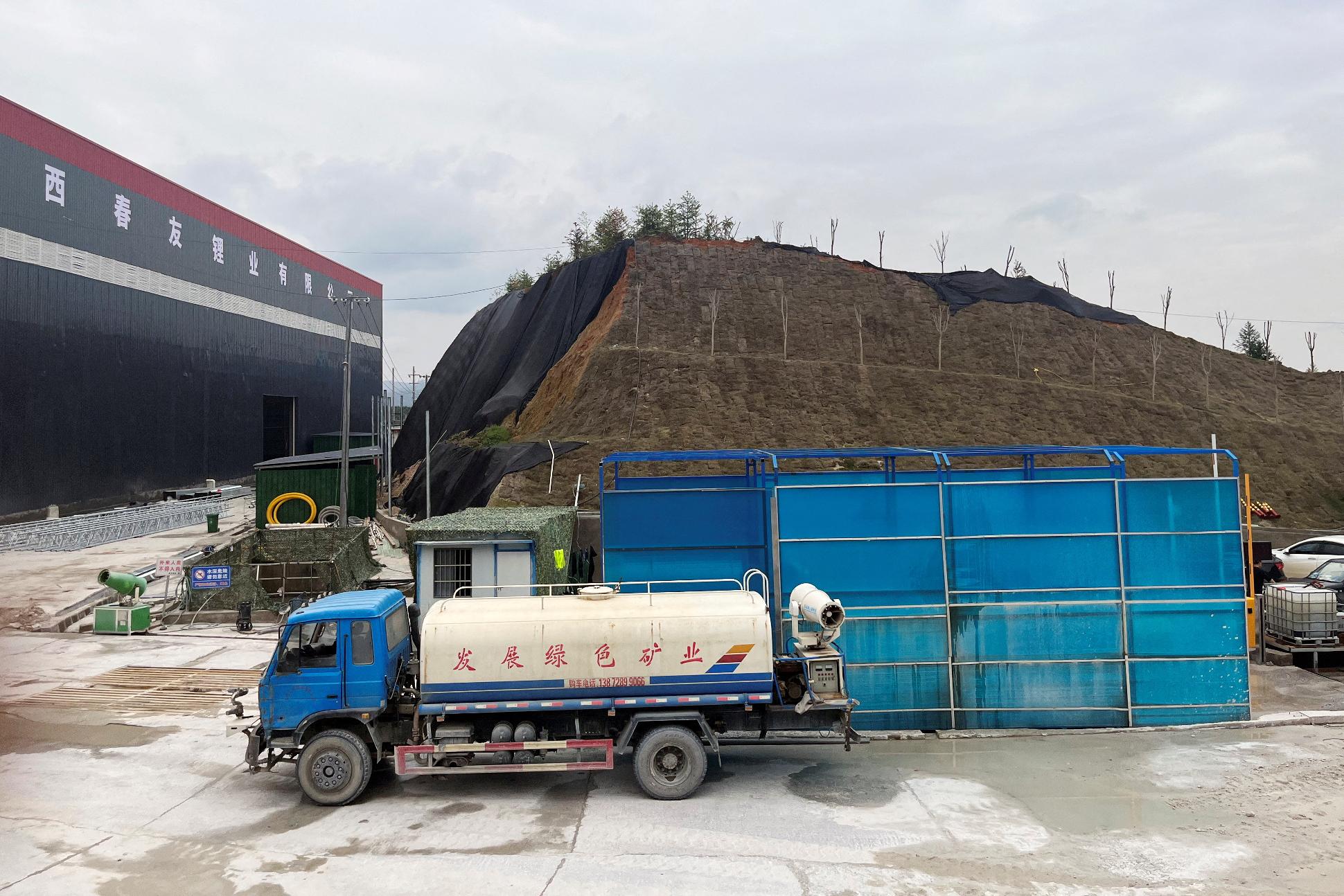
Global lithium prices down over 80% in past 12 months Rystad slashes China's mined lithium output growth forecast Analysts expect mining of lepidolite in China to be hit Almost half of China's lithium output in 2023 came from lepidolite, Fastmarkets says BEIJING, March 14 (Reuters) - A slump in the price of lithium, a key raw material in electric car batteries, is dragging on China's mining of the ultralight metal which together with a costly extraction process is prompting a reassessment of output growth and new project plans. Softening EV demand has knocked down global lithium prices, with a basket tracked by Benchmark Mineral Intelligence plunging more than 80% in the past 12 months. That has already forced many producers worldwide to shutter production and cut jobs. In China, which accounted for about a quarter of the world's mined lithium output in 2023, analysts expect the mining of lepidolite - a hard rock ore that is relatively expensive for producing lithium - to take a hit as a prolonged price slump makes costly production unsustainable. "Lepidolite mining and new projects in China and worldwide are taking a big hit from prices, while other types of lithium mines that provide some relative cost advantages, especially brines in South America, will keep on a fast-growing pace," said Susan Zou, a vice president at Rystad Energy. The consultancy has slashed its forecast for China's mined lithium output growth in 2024 to about 12% from 54% previously, mainly due to the lepidolite slowdown. Globally, it now expects 27% growth in mined lithium output, down from 42% previously. Almost half of China's lithium output in 2023 came from lepidolite, pricing agency Fastmarkets said, adding volumes of the ore more than doubled over the past two years to 114,500 metric tons of lithium carbonate equivalent (LCE). It costs about 80,000 yuan ($11,120) to 120,000 yuan to process a ton of LCE from lepidolite in China, while it costs around 40,000 yuan and 60,000 yuan to get the same volume from brine deposits and spodumene, respectively, analysts say. That undermines the economics of lepidolite mining in China, where softer EV demand and a supply glut have pushed down spot lithium carbonate prices to around 100,000 yuan from peaks near 600,000 yuan in November 2022. Five China-based analysts forecast spot prices will stay in the 100,000 yuan to 120,000 yuan range in 2024 or rise slightly higher, despite a futures rally boosted by restocking demand after the Lunar New Year holiday. 'MARKET IS REALLY BAD' China ranks fourth in lithium reserves. Beijing has been pushing for more investment to ramp up mining to meet demand from the battery sector and to cut its reliance on imports. Much of that investment has been in the southern province of Jiangxi, home to some of the newest lepidolite projects that are rich in kaolinite, a clay mineral with lower lithium content that costs around 120,000 yuan per ton of LCE to produce, according to research firm CRU. Such projects include EV battery giant CATL's (300750.SZ) , opens new tab vast new Jianxiawo mine and Yongxing Special Materials Technology's (002756.SZ) , opens new tab Huashan mine. CATL won exploration rights for Jianxiawo in April 2022 with a bid of 865 million yuan, according to the government of Yichun, the provincial mining hub. "Projects including the Jianxiawo mine are facing negative margins and very high risk of production curtailment," said Yin Yiwei, a senior CRU analyst. CATL and Yongxing did not immediately respond to emails seeking comment. Market speculation that CATL had suspended production at Jianxiawo sparked a rally in shares of Australian miners last month, but CATL said at the time that operations were normal. "The market is really bad. Producers in Yichun are trying to survive with higher costs and poor prices," said a mining expert working for a major company in Yichun. A survey of 11 Jiangxi lithium carbonate producers published by Mysteel on Feb. 28 found widespread production suspensions in February. Yan Yun, secretary of the Yichun committee of China's ruling Communist Party, acknowledged the city's lithium battery sector had been hit by falling prices and a supply-demand mismatch. "But we still believe the industry has great prospects," he told the official Jiangxi Daily, as the global auto industry moves towards an electric future. Li Liangbin, chairman of Ganfeng Lithium (002460.SZ) , opens new tab, a major Chinese miner that produces mostly from spodumene, sees a role for lepidolite. "Lepidolite, due to its relatively high costs and large volumes, is a flexible variable and can help keep supply, demand and lithium prices balanced," he said. ($1 = 7.1941 Chinese yuan) Get a look at the day ahead in U.S. and global markets with the Morning Bid U.S. newsletter. Sign up here. https://www.reuters.com/markets/commodities/china-lithium-boom-slows-sagging-prices-batter-high-cost-miners-2024-03-13/
2024-03-13 23:01
NAPERVILLE, Illinois, March 13 (Reuters) - Benchmark industry estimates of top exporter Brazil’s soybean crop have deviated even further from each other this month following a season blemished by questionable weather. That same controversy may be brewing for the country’s corn crop, especially with unfavorable conditions potentially on tap for Brazil’s top production state. Less attention has been paid to the corn estimates versus those for soybeans in recent weeks because Brazil’s heavily exported second corn crop planting efforts are just now concluding, though more than half of the soybeans have been harvested. SOYBEAN VARIATION The U.S. Department of Agriculture last week trimmed Brazil’s 2023-24 soybean harvest to 155 million metric tons from 156 million estimated in February, a much smaller cut than expected. Brazil’s statistics body, Conab, on Tuesday reduced its peg to 146.9 million tons from 149.4 million in February. USDA’s and Conab’s soy crop disparity widened in February with USDA 6.6 million tons (4.4%) higher than Conab. That margin increased to 8.1 million tons (5.5%) this month, equivalent to 300 million bushels. The agencies differed by less than 2 million tons in January. In the previous eight seasons, the largest March differential between these forecasts was five years ago, when USDA was 2.7% higher than Conab. The year-on-year implications are more consistent, suggesting some overlapping assumptions. USDA sees Brazil’s 2023-24 bean harvest down 4.3% on the year while Conab’s figures suggest a 5% decline. However, the latest estimate discrepancy, roughly equal to the projected 2023-24 U.S. soy carryout, must be solved somewhere on the balance sheet, especially since Brazil carries relatively low year-end bean stocks. USDA and Conab hold similar views of Brazil’s 2023-24 soy carryout, both between 2 million and 3 million tons on a local marketing-year basis (February-January). USDA gets to that number with an export estimate some 6.7 million tons above Conab’s. Perhaps Brazil will export these extra beans to top buyer China, as USDA’s 2023-24 Chinese imports stand at 105 million tons versus 102 million estimated last month and 104.5 million last year. USDA this month hiked the current and prior Chinese demand estimates after an in-depth data review. But China on Friday kept its 2023-24 soy import forecast unchanged on the month at 97.25 million tons, down fractionally on the year. Additionally, total Chinese soy imports through February, the fifth month of 2023-24, are down 1% from last year to a five-year low for the period. CORN CONCERNS? USDA predicts the full 2023-24 Brazilian corn harvest at 124 million tons, well above Conab’s view of 112.75 million. This 10% margin is the largest for March in at least eight years, though USDA was 8% higher than Conab in March 2018, and Conab was ultimately closer to the final. USDA’s harvested corn area sits 7.5% (3.8 million acres) above Conab’s planted area, implying an even larger difference in the planting estimates. Conab has trimmed its area 4% since its initial forecast as grain prices have slid in recent months. However, USDA has made relatively substantial reductions to its Brazil corn estimate, which has fallen 4% since the initial peg last May. That is the largest percentage decline within that time frame in 14 years and the largest by volume in 15 years. It is still early for either agency to capture any big downward moves, if relevant, in Brazil’s corn crop. Both the 2015-16 and 2020-21 harvests landed about 20% lower than USDA or Conab had predicted in March as poor weather emerged in the following months. The 2015-16 corn harvest was notoriously terrible for top grower Mato Grosso amid insufficient rains. The state had moisture deficit issues with soybeans this year, and the same could happen with corn. Midday weather models on Wednesday turned drier for Mato Grosso following the driest January-February in nine years. Observed March rainfall plus the two-week forecast suggests chances for the driest March in multiple decades. Karen Braun is a market analyst for Reuters. Views expressed above are her own. Get a look at the day ahead in U.S. and global markets with the Morning Bid U.S. newsletter. Sign up here. https://www.reuters.com/markets/commodities/brazil-soy-corn-crop-estimates-widen-further-after-weather-woes-braun-2024-03-13/

2024-03-13 22:30
Dollar Tree to close nearly 1,000 stores, shares drop Intel down on report Pentagon scraps $2.5 bln chip grant plan Indexes: Dow up 0.1%, S&P 500 down 0.2%, Nasdaq down 0.5% NEW YORK, March 13 (Reuters) - The S&P 500 and Nasdaq edged lower on Wednesday as investors took profits in chipmaker stocks, while they braced for producer price data and further clues on the inflation trend ahead of next week's Federal Reserve meeting. An index of semiconductors (.SOX) , opens new tab eased 2.5% after recent strong gains, but was up 17% for the year to date. Shares of Nvidia (NVDA.O) , opens new tab, which have led the recent rally fueled by optimism about artificial intelligence, fell 1.1%. Investors are looking ahead to Nvidia's global GTC developer conference on AI from March 18-21 and any AI-related announcements. Intel (INTC.O) , opens new tab shares fell 4.4%. Bloomberg reported that the Pentagon had pulled out of a plan to spend as much as $2.5 billion on a chip grant to the company. February U.S. producer price data due on Thursday could offer further insight into the inflation picture. "The last reading actually helped to underscore the hotter inflation trend. So this is going to be important," said Quincy Krosby, chief global strategist at LPL Financial in Charlotte, North Carolina. While the U.S. central bank is widely expected to leave interest rates unchanged when it meets next week, traders see a 65% chance of the first rate cut coming in June, the CME FedWatch Tool showed. The Dow Jones Industrial Average (.DJI) , opens new tab rose 37.83 points, or 0.1%, to 39,043.32. The S&P 500 (.SPX) , opens new tab lost 9.96 points, or 0.19%, at 5,165.31 and the Nasdaq Composite (.IXIC) , opens new tab dropped 87.87 points, or 0.54%, to 16,177.77. Tuesday's slightly hotter-than-expected consumer price data failed to dampen hopes of rate cuts in the coming months. Monthly U.S. retail sales data also is due on Thursday. Among other declining shares, Dollar Tree (DLTR.O) , opens new tab slumped 14.2% after the discount store chain said it would close nearly 1,000 stores and posted a net loss in the previous quarter, hurt by an over-$1 billion goodwill impairment charge. McDonald's (MCD.N) , opens new tab shares fell 3.9% after its chief financial officer said international sales could fall sequentially in the current quarter. Volume on U.S. exchanges was 11.12 billion shares, compared with the 12 billion average for the full session over the last 20 trading days. Advancing issues outnumbered decliners on the NYSE by a 1.53-to-1 ratio; on Nasdaq, a 1.07-to-1 ratio favored decliners. The S&P 500 posted 59 new 52-week highs and no new lows; the Nasdaq Composite recorded 89 new highs and 110 new lows. Get a look at the day ahead in U.S. and global markets with the Morning Bid U.S. newsletter. Sign up here. https://www.reuters.com/markets/us/futures-steady-investors-brace-more-economic-data-2024-03-13/

2024-03-13 22:26
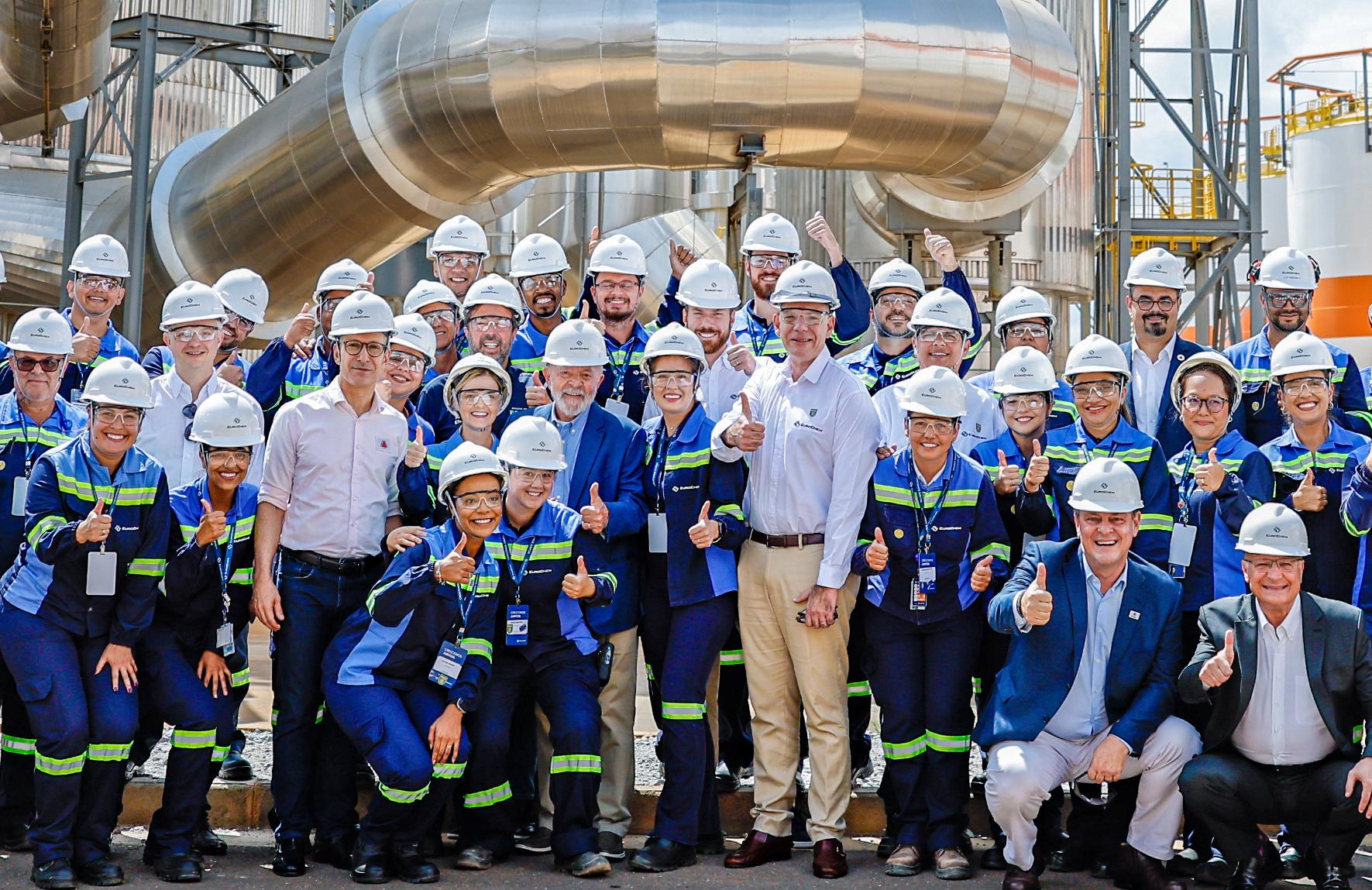
SAO PAULO, March 13 (Reuters) - EuroChem inaugurated a $1 billion plant in Brazil that will produce 15% of the country's phosphate fertilizer output, bolstering a government plan to cut the global farm powerhouse's heavy dependence on imports. Based in Brazil's southeastern Minas Gerais state, the plant is Swiss-headquartered EuroChem's first vertical project integrating mining, processing, production and fertilizer distribution outside Europe, it said in a statement. Its inauguration ceremony was attended by Brazilian officials, including President Luiz Inacio Lula da Silva and senior members of his cabinet. The investment is a boon to Lula's administration, whose goal is cutting Brazil's reliance on fertilizer imports, an initiative launched by his predecessor in 2022 amid a supply crisis sparked by the Russia-Ukraine war. In a speech during the ceremony, Lula said the conflict increased Brazil's awareness that more fertilizers should be produced domestically. "Last year we paid $25 billion to import fertilizers into Brazil," Lula said, noting that it could have been spent to create local jobs and boost the economy. "We want to stop being an importer." Brazil currently imports about 85% of its overall crop nutrient needs. Russia, China and Canada are its three top suppliers but the list also includes Nigeria, Morocco and Qatar, among others. Jeferson Souza, an analyst at Agrinvest, notes Brazil is “unlikely” to achieve self-sufficiency in fertilizer production. He cited structural problems such as the price of natural gas, which is used to make nitrogen fertilizers, including urea. High raw-material costs and a heavy tax burden make the national product uncompetitive against imports, Souza noted. According to data from fertilizer lobby Anda, national fertilizer production fell by almost 9%, reaching 6.8 million tons last year. The biggest output drop was for urea, or 41%, according to Anda data for 2023 compiled by Agrinvest. EuroChem's new unit consists of an open-pit phosphate mine with more than 350 million metric tons of mineral reserves and an approximately 25 year lifespan. The plant will manufacture nutrients for soybean, corn and sugarcane. “Even China, which is the planet's largest consumer and producer of fertilizers, imports potassium,” Souza said. “Brazil does not need to be independent, it needs to be less dependent.” The Reuters Daily Briefing newsletter provides all the news you need to start your day. Sign up here. https://www.reuters.com/world/americas/eurochems-brazil-plant-boosts-hopes-smaller-import-dependence-2024-03-13/