2024-03-13 13:58
CANNES, France, March 13 (Reuters) - The troubled U.S. office market is the world's most oversupplied and property investors have taken on too much debt, a Brookfield Asset Management (BAM.TO) , opens new tab executive said on Wednesday. "Per capita, it's the most oversupplied office market in the world," Bradley Weismiller, Brookfield's managing partner for real estate capital markets, told the MIPIM property conference. "That's really the story. Unfortunately we (the U.S.) build too much of it in certain places ... and it doesn't need to be used as office anymore," Weismiller said at the event in Cannes. "The sector as a whole borrowed too much money," he added. A punishing rise in borrowing costs since 2022 and a jump in people working from home has emptied many offices in the United States, pummelling the value of many property assets. Office vacancy rates - at around 20% in cities - are much higher in the U.S. than in Europe. Concerns about lenders has hammered some regional bank shares this year. Blackstone's global head of real estate debt capital markets, Michael Lascher, said that there was a polarisation in values between high-quality sustainable offices and the rest. "The difference is really stark. It's very much a story of haves and have nots," Lascher said during a discussion on U.S. real estate at MIPIM . Clients are more interested in investing in logistics and data centres than offices today, panelists said. Blackstone (BX.N) , opens new tab is the world's largest commercial real estate (CRE) owner, and Lascher said non-bank lenders were increasingly important for financing property as banks retreat due to higher regulatory constraints. Regulators were putting a "clear focus" on CRE exposures at banks, said David Bouton, co-head of North America commercial mortgage-backed securities and real estate finance at Citi. But he said that lenders were more accommodating to investors than during the 2007-09 global financial crisis because they had higher capital buffers. Molly Goldfarb, principal at investor TPG, said the company was looking to convert more offices into housing but that it could be "incredibly challenging" to find suitable assets. Get a look at the day ahead in U.S. and global markets with the Morning Bid U.S. newsletter. Sign up here. https://www.reuters.com/markets/us/us-office-market-is-worlds-most-oversupplied-brookfield-tells-mipim-2024-03-13/

2024-03-13 13:02
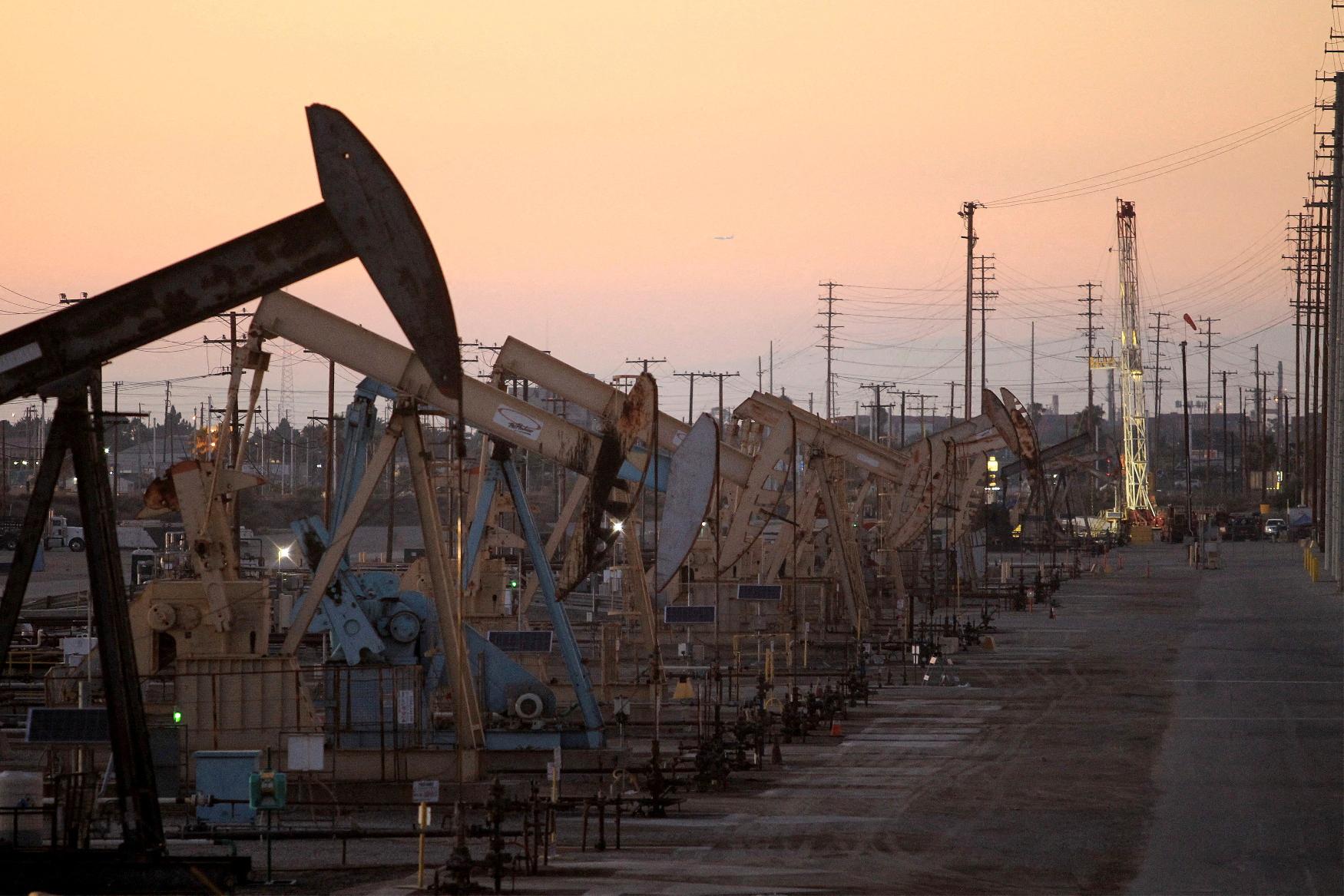
DUBAI, March 13 (Reuters) - Oil producer group OPEC said on Wednesday it was encouraged by a commentary from the International Energy Agency (IEA) which underscored the importance of oil security, while the two remained far apart on the demand outlook. The commentary by the IEA, which advises industrialised countries, follows clashes between it and OPEC in recent years over issues such as long-term demand and the need for investment in new supplies. "At OPEC, we are encouraged by this message and the reference to the continuing importance of oil to the world," the Organization of the Petroleum Exporting Countries said in a statement. The two sides have diverging views on oil demand for this year and beyond. The IEA expects demand to peak by 2030 while OPEC sees no peak in its forecasts, which stretch to 2045. The IEA said global dependence on oil was decreasing but remained deep-rooted and supply disruptions could still lead to "significant economic harm and have a substantial negative impact on people's lives." "There is a high degree of uncertainty around how quickly demand will fall, leaving oil companies facing difficult and commercially risky decisions around upstream investment," the IEA said in a commentary by energy security analyst Ronan Graham and researcher Ilias Atigui on Monday. OPEC agreed but said the IEA's calls for no new investments in oil and natural gas have "contributed significantly to this uncertainty, which has the potential to lead to major energy chaos, not the desired energy security." The IEA and OPEC's views on demand are further apart than they have been for at least 16 years, Reuters reported this week. OPEC+, which groups OPEC and allies including Russia, decided in 2022 it would stop using data from the IEA when assessing the state of the oil market. Almost 200 countries at December's COP28 climate summit in Dubai agreed the world needs to transition away from fossil fuels. The IEA in 2021 said investors should not fund new oil, gas and coal supply projects if the world wants to reach net zero emissions by mid-century, a turnaround from earlier calls to invest more. "OPEC has consistently reaffirmed its commitment to oil market stability and security of supply, including through its Members holding spare capacity at their own cost in case of any unforeseen global oil supply disruptions," OPEC said. Saudi Arabia, OPEC's de facto leader, was for decades the world's only source of significant spare oil capacity, which acts as a safety cushion for global supplies in case of major disruptions. In recent years, fellow OPEC member the United Arab Emirates has also built up spare capacity. The IEA argues that increasing clean energy is the most effective way for governments to boost energy security. The Reuters Power Up newsletter provides everything you need to know about the global energy industry. Sign up here. https://www.reuters.com/business/energy/opec-says-iea-commentary-oil-security-encouraging-2024-03-13/
2024-03-13 12:57
LONDON, March 13 (Reuters) - With only a few more weeks left in the heating season, Europe is on course to end the winter with a record amount of gas in storage, sending prices sliding and dispelling fears about energy security. But before policymakers congratulate themselves on successfully managing the crisis caused by Russia’s invasion of Ukraine, they should recognise they have been exceptionally lucky with the weather. Back-to-back mild winters in 2022/23 and again in 2023/24 have reduced heating demand for both gas and electricity and allowed the region to amass record gas inventories. The most recent winter has been predominantly mild, wet and windy across Northwest Europe, slashing heating demand while causing a surge in wind farm generation, a double saving on gas. Chartbook: Europe's weather and gas stocks , opens new tab There have been relatively few episodes of “dunkelflaute”, the German word describing cloudy, windless and very cold weather, which zero-out solar and wind generation, forcing the grid to rely on gas to keep meet demand. There is no guarantee the region’s luck will last; next winter could be significantly colder with less wind generation, resulting in a double jump in gas consumption. The broader issue is that increasing reliance on variable wind and solar, driven by short and medium term weather patterns, is inducing increased variability in winter demand for gas and gas-fired generation. During the winter of 2023/24, wind significantly reduced stress on the electricity and gas supplies – but it could just easily add to the stress on both systems in future. NAO FORECASTING The North Atlantic Oscillation (NAO) is the “single most important factor for year to year fluctuations in the seasonal climate around the Atlantic Basin”, according to researchers at the Hadley Centre in Britain.¹ “Variability in the NAO describes the state of the Atlantic jet stream and is directly related to near-surface winds and hence winter temperatures ... across North America, Europe, and other regions around the Atlantic Basin.” At its most basic, the NAO describes the state of the atmospheric pressure differential between Greenland-Iceland (normally an area of relatively low pressure) and the Azores-Bermuda (normally an area of high pressure). When the pressure difference is greater than average, the NAO is said to be positive, and strong westerly winds are directed across Northwest Europe, bringing lots of warm, moist air from across the ocean. When the pressure difference is below average, the NAO is said to be negative, and westerly winds are directed across Southern Europe, while Northwest Europe experiences less windy and drier conditions.² The NAO is much more unstable and variable in the short and medium term than the more familiar El Niño -La Niña cycle in the Pacific. In recent years, however, researchers have made progress in successfully forecasting the NAO for several months ahead, which is the basis for seasonal winter weather forecasts. The NAO can be forecast based on the state of El Niño -La Niña, the extent of ice cover in the Kara Sea area of the Arctic Ocean and a number of other variables. It is now possible to forecast the course of NAO and average winter weather with some success as early as November, according to the U.K. Meteorological Office. MILD AND WINDY The NAO was exceptionally positive in December 2023, and to lesser extent in February 2024, directing lots of warm wet westerly winds across Northwest Europe in both months. In Frankfurt in Germany, temperatures were well above the long-term seasonal average in December (+2.8°C) and again in February (+5.8°C), which sharply reduced heating demand. In London, temperatures were also well above average in December (+2.3°C) and February (+3.3°C), cutting the need for both gas-fired central heating and gas-fired electric heating. At the same time, wind speeds across Northwest Europe were faster than normal, boosting generation from onshore and offshore wind farms. Increases in wind farm capacity and higher average wind speeds combined to create a surge in wind generation. Germany’s wind generation soared to 19.5 terawatt-hours (TWh) in December 2023 from 12.2 TWh in December 2022. Britain’s wind generation climbed to 9.7 TWh in December 2023 from 7.4 TWh in the same month a year earlier. In Germany, the increase in wind output (+7.3 TWh) mostly reduced generation from coal (-5.1 TWh) and gas (-1.0 billion TWh). In the United Kingdom, increased wind output (+2.3 TWh) mostly reduced generation from gas (-3.0 TWh). CONSERVING GAS The result has been a much smaller depletion of gas inventories than usual since the start of winter 2023/24, with the impact concentrated in December and February when the NAO was strongly positive. Inventories across the European Union and the United Kingdom depleted by an average of just 3.2 TWh per day in December compared with an average of 4.1 TWh per day over the previous ten years. The depletion was the smallest since December 2019 and before that December 2015, both of which were characterised by a strongly positive NAO. Inventories depleted by an average of 3.0 TWh per day in February 2024, compared with a prior ten-year seasonal average of 4.8 TWh, and the slowest since February 2014. As a result, stocks were 279 TWh (+67% or +2.16 standard deviations) above the prior ten-year seasonal average on March 10. The surplus had swelled from 167 TWh (+18% or +1.70 standard deviations) at the start of the winter heating season on October 1. Most of the increases occurred in December (+29 TWh) and February (+57 TWh), with a smaller rise in November (+19 TWh), and the surplus actually tightened slightly in January (-8 TWh). POLICY LESSONS Luck with the winter in 2022/23 and again in 2023/24 has played the biggest role improving gas supply security in Europe, and was probably more important than policy measures to promote gas conservation. Two mild winters have boosted stocks to a record seasonal high and pushed prices back to levels prevailing before 2021 once inflation is taken into account. But Europe’s leaders would be unwise to rely on being lucky a third time. Policymakers and energy industry must consider how they would cope if next winter was characterised by a predominantly negative NAO, higher heating demand and less wind generation. References: ¹ The North Atlantic Oscillation , opens new tab (U.K. Meteorological Office) ² Skillful Long-Range Prediction of European and North America Winters , opens new tab (Scaife et al, 2014) Related columns: - Europe's mild winter leaves gas stocks at record high (March 7, 2024) - Europe’s swollen gas stocks drive prices lower (February 13, 2024) John Kemp is a Reuters market analyst. The views expressed are his own. Follow his commentary on X https://twitter.com/JKempEnergy , opens new tab Get a look at the day ahead in U.S. and global markets with the Morning Bid U.S. newsletter. Sign up here. https://www.reuters.com/markets/commodities/europe-gets-lucky-with-mild-windy-winter-kemp-2024-03-13/

2024-03-13 12:51
March 13 (Reuters) - Wells Fargo on Wednesday joined major banks such as Morgan Stanley, Goldman Sachs and UBS Wealth Management in forecasting the first rate cut from the U.S. Federal Reserve in June. Wells Fargo, which had previously expected the cut in May, said the Federal Open Market Committee (FOMC) continues to seek "greater confidence" that inflation is heading back to the Fed's 2% target before announcing a rate cut. Last week, Fed Chair Jerome Powell had said the U.S. central bank was "not far" from gaining the confidence it needs to dial back the level of policy restriction, but has been reluctant to declare an end to the inflation battle. But a report from the U.S. labour department on Tuesday showed a solid increase in February consumer prices amid higher costs for gasoline and shelter, suggesting some stickiness in inflation. Despite the second straight month of firmer inflation readings, the composition of the report remained consistent with a disinflationary trend. "We see building evidence that the labor market is cooling and inflation is still slowing on trend", economists at Wells Fargo said in a note. The brokerage expects a 100 basis points (bps) cut this year and another 100 bps through 2025, which would bring the federal funds target range to 3.25%-3.50% by the end of 2025. A Reuters poll of economists also showed on Monday that the Fed would cut its key interest rate in June. Get a look at the day ahead in U.S. and global markets with the Morning Bid U.S. newsletter. Sign up here. https://www.reuters.com/markets/us/wells-fargo-pushes-back-its-expectation-first-fed-rate-cut-june-2024-03-13/

2024-03-13 12:51
LONDON, March 13 (Reuters) - As bitcoin's price reaches new heights, attention is turning to its upcoming "halving" and whether it is playing a role in its ascent. Depending on where you sit, the halving is a vital event that will burnish bitcoin's value as an increasingly scarce commodity, or nothing more than a technical change talked up by speculators to inflate its price. But what exactly is it, and does it really matter? WHAT IS IT? The halving is a change in bitcoin's underlying blockchain technology, designed to reduce the rate at which new bitcoins are created. Bitcoin was designed from its inception by its pseudonymous creator Satoshi Nakamoto to have a capped supply of 21 million tokens. Nakamoto wrote the halving into bitcoin's code and it works by reducing the rate at which new bitcoin are released into circulation. So far, about 19 million tokens have been released. HOW DOES IT HAPPEN? Blockchain technology involves creating records of information - called 'blocks' - which are added to the chain in a process called 'mining'. Miners use computing power to solve complex mathematical puzzles to build the blockchain and earn rewards in the form of new bitcoin. At the halving, the amount of bitcoin available as rewards for miners is cut in half. This makes mining less profitable and slows the production of new bitcoins. (For a visual explanation of how blockchain works, click here.) WHEN WILL IT HAPPEN? There is no set date, but it is expected to take place in late April. The blockchain is designed so that a halving occurs every time 210,000 blocks are added to the chain. This means it happens roughly every four years. WHAT'S IT GOT TO DO WITH BITCOIN'S PRICE? Some bitcoin enthusiasts say that bitcoin's scarcity gives it value. The lower the supply of a commodity, then all other things being equal the price should rise when people try and buy more. So reducing supply of bitcoin should lift the price, some analysts and traders say. Others dispute the logic, noting that any impact would have already been factored in to the current price. The supply of bitcoin to the market is also largely down to crypto miners but the sector is opaque, with data on inventories and supplies scarce. If miners sell their reserves, that could put downward pressure on prices. Knowing what is behind a crypto rally is hard, not least as there is far less transparency about who is buying and why relative to other markets. The most common reason given for this year's surge is the U.S. Securities and Exchange Commission's January approval of bitcoin ETFs, as well as expectations that central banks will cut interest rates. But in the speculative world of crypto trading, explanations given by analysts for changes in bitcoin's price can snowball into market narratives that can become self-fulfilling. WHAT ABOUT PREVIOUS HALVINGS? There's no evidence to suggest that previous halvings have caused bitcoin's price to rise. Still, traders and miners have studied past halvings to try and gain an edge. When the last halving happened on May 11, 2020, the price rose around 12% in the following week. Later in the year, bitcoin began a sharp rally, but there were lots of explanations - including loose monetary policy and stay-at-home retail investors spending spare cash on cryptocurrencies - for this and no real evidence the halving was behind it. An earlier halving occurred in July 2016. Bitcoin rose around 1.3% in the following week, before plunging a few weeks later. In short: it's hard to isolate the impact, if any, halvings may have had in the past or predict what could happen this time around. Regulators have repeatedly warned that bitcoin is a speculative market, driven by hype and "FOMO" (Fear Of Missing Out), and poses real harm to investors, even as they simultaneously approve bitcoin trading products. The Technology Roundup newsletter brings the latest news and trends straight to your inbox. Sign up here. https://www.reuters.com/technology/what-is-bitcoins-halving-does-it-matter-2024-03-13/

2024-03-13 12:48
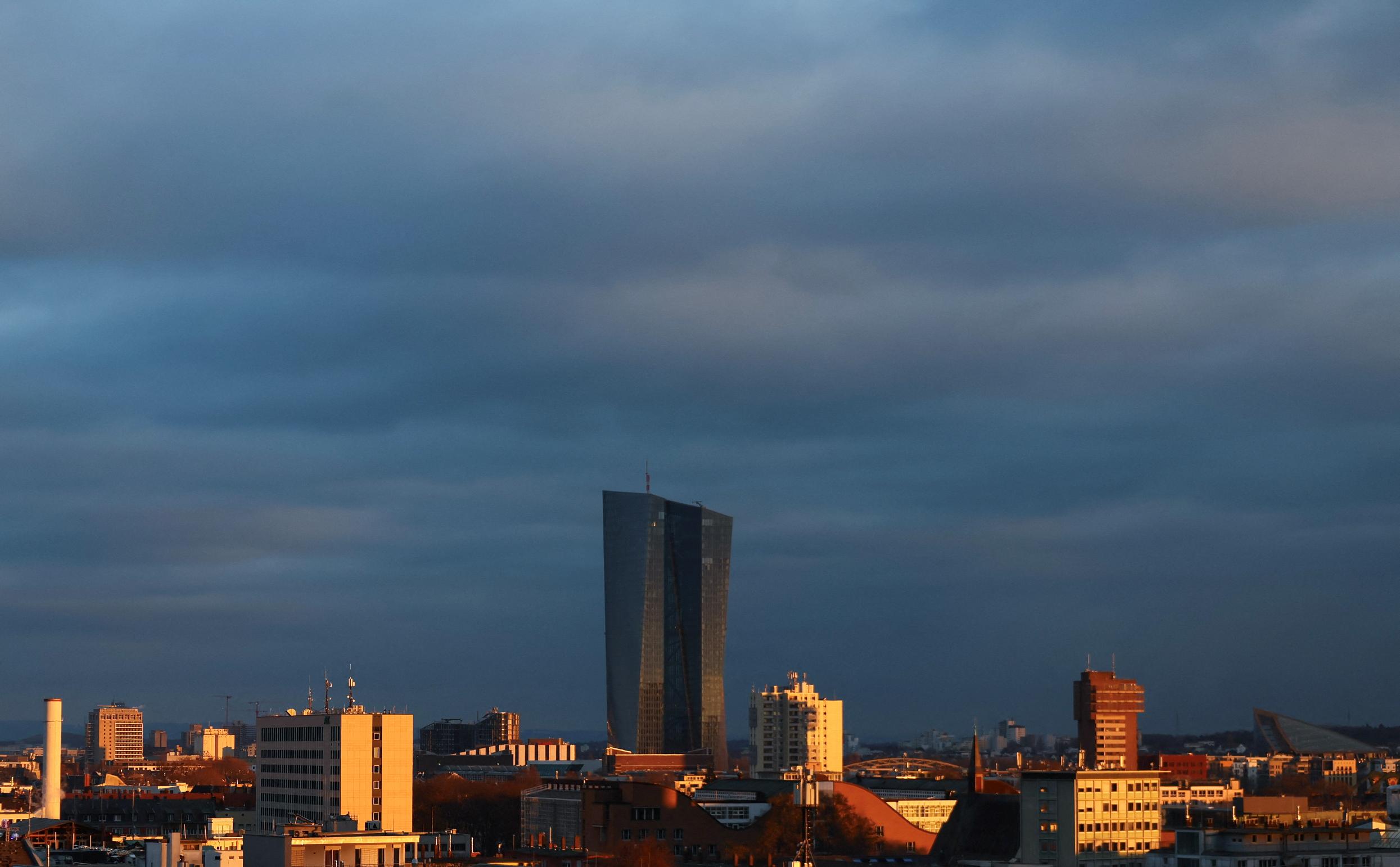
ECB to incentivise banks to lend to each other Safety nets in place to prevent stress FRANKFURT, March 13 (Reuters) - The European Central Bank wants to wean banks off free cash but it will try to do so gently enough not to upset the financial system or lending, the result of its long-awaited Operational Framework Review showed on Wednesday. During nearly a decade of too-low inflation, the central bank for the 20 countries that share the euro currency inundated banks with cash via massive bond purchases, with the aim of spurring them to lend and stimulate price growth. That largely removed the need for banks to borrow from each other, and effectively pinned the overnight interest rate on the money market to the one the ECB pays on deposits. But this exceptionally generous system is now proving costly for the ECB and national central banks, and needs adapting for a new era in which inflation and interest rates are higher and the liquidity pumped into the system is being drained. Under the new framework unveiled on Wednesday, the ECB will give banks more incentive to lend to each other, while providing safety nets to limit the risk that lenders could run out of cash. "The framework will ensure that our policy implementation remains effective, robust, flexible and efficient in the future as our balance sheet normalises," ECB President Christine Lagarde said in a statement. The ECB said the new framework should make its balance sheet "financially sound" after it and the central banks of some euro zone countries suffered large losses as a result of its past largesse. "A financially sound balance sheet supports central bank independence and allows the smooth conduct of monetary policy," it said in a statement. The main features of the framework were exclusively reported by Reuters last month. IN THE VICINITY OF 4% The ECB said it will aim to keep the interbank rate "in the vicinity" of its deposit rate, currently 4%. But rather than single-handedly pumping free cash into the system, it will rely more on banks lending to each other as the bonds it bought mature and excess liquidity leaves the system. The banking sector as a whole will have more reserves than it needs until 2029, the ECB estimates, but analysts expect liquidity to become a constraint for some banks as soon as 2026. Lenders will still be able to tap the ECB for as much cash as they like, secured with collateral, at its weekly Main Refinancing Operations and 90-day auctions. In a bid to ease the financial penalty and the stigma for borrowers turning to the central bank, the rate on these auctions, currently 4.50%, will be lowered to reduce the spread between it and the ECB's deposit rate to 15 basis points. The change will take effect on Sept. 18, when the ECB may have already lowered interest rates several times as inflation steadily declines. The ECB also plans to launch longer-term loans and bond-buying operations - which will incorporate climate considerations - once it sees its balance sheet has started growing again as a result of banks' own borrowing. "These operations will make a substantial contribution to covering the banking sector's structural liquidity needs arising from autonomous factors and minimum reserve requirements," the ECB said. A likely implication is that future bond purchases will be focused on shorter-maturity bonds, rather than nearly all bonds on the market, like the ECB's stimulus programmes launched over a decade of crises. Minimum reserve requirements were left at 1%, which is likely to be a relief for banks, which would have seen their profits and cash buffers shrink if the requirements had been raised as some policymakers wanted. "Fundamentally the ECB is sticking to the system of high excess liquidity and will hold many bonds in the long term," Commerzbank's chief economist Joerg Kraemer said. "The ECB could have dared to bring in more normality 15 years after the end of the financial crisis." The ECB plans to review the new system in two years or even earlier if needed, it said. Get a look at the day ahead in European and global markets with the Morning Bid Europe newsletter. Sign up here. https://www.reuters.com/markets/europe/ecb-wean-banks-off-free-cash-gentlest-pace-after-review-2024-03-13/