2024-03-12 11:15
MUMBAI, March 12 (Reuters) - India's stable exchange rate has been a key factor boosting foreign flows into its government bond market, and such investments are expected to persist as the South Asian country's debt gets added to global indexes. Foreign portfolio investors have raised their holdings of Indian government bonds by nearly 50% since Sept. 21, when JPMorgan said it will add India to its emerging market index. Overseas investors have bought around 815 billion rupees (about $9.9 billion) of Indian government bonds since the announcement, and sentiment was also aided when Bloomberg Index Services said last week it will include the bonds from 2025. The Indian rupee has largely been rangebound, with its volatility falling to the lowest in nearly two decades in 2023. So far this year, the rupee is the best performing Asian currency. "The major reason other fixed income emerging markets cannot do that well is because currency volatility is too high," Kenneth Akintewe, head of Asian sovereign debt at Singapore-based abrdn, said. "You can get a 12%-14% yield but then it gets wiped out by 20% depreciation of currency. When you look at the returns the market is generating and you adjust for risk, India is way ahead," he said. The fund house has an exposure of around $500 million to Indian government bonds. Foreign banks and investment managers have led Indian bond purchases in the last five months, adding 216 billion rupees and 149 billion rupees, respectively, data from National Securities Depository showed. Meanwhile, bond holdings of global central banks have risen by 78 billion rupees, while that of sovereign wealth funds are up 61 billion rupees, data showed. "They are looking at the returns post hedging. The stability of currency gives you the potential to generate higher returns," Neeraj Seth, chief investment officer and head of APAC fundamental fixed income at BlackRock, said. A stable currency allows investors to use different hedging tools instead of just non-deliverable forwards, Seth said. Wontae Kim, a research analyst at Western Asset Management, said apart from the rupee's stability, macro fundamentals and lack of political risks ensure that "stars are kind of aligning for India". "We feel that it is a great time to go into government bonds and we have been overweight duration for quite a bit," Kim said. Exposure to Indian debt across Western Asset's funds stands at around $330 million. ($1 = 82.7470 Indian rupees) https://www.reuters.com/markets/rates-bonds/stable-rupee-boosts-foreign-fund-managers-appetite-indian-government-debt-2024-03-12/
2024-03-12 10:36
March 11 (Reuters) - The Federal Aviation Administration's (FAA) audit of Boeing's (BA.N) , opens new tab 737 MAX production process after a panel blew off on an Alaska Airlines (ALK.N) , opens new tab jet in January failed 33 of 89 tests, the New York Times reported , opens new tab on Monday. In the wide-ranging investigation, Boeing failed a check which dealt with the component that blew off the jet , opens new tab, known as a door plug, the report said, citing an FAA presentation viewed by NYT. Boeing's shares were down 1.4% in premarket trading on Tuesday. Supplier Spirit AeroSystems (SPR.N) , opens new tab, which makes the fuselage for the MAX, passed six of 13 audits and failed the rest, the report added. Additionally, an audit at Spirit focusing on the door plug component found five problems and it failed the one which dealt with the installation of the component, the report said. The audit raised concerns about the technicians who carried out the work and found that the company "failed to determine the knowledge necessary for the operation of its processes," according to the report. Other audits that Spirit failed included one that involved a cargo door and another that dealt with the installation of cockpit windows, it said. Based on the FAA audit, Boeing is continuing to implement immediate changes, and is developing a plan to strengthen safety and quality, the plane maker told Reuters in an emailed statement. The FAA and Spirit AeroSystems did not immediately reply to Reuters' requests for comment. Earlier in the day, U.S. Transportation Secretary Pete Buttigieg said he expects Boeing to cooperate in investigations by the Justice Department and National Transportation Safety Board into the 737 MAX 9 mid-air emergency on Jan. 5. Meanwhile, the FAA's Michael Whitaker said the agency and Boeing hope to define the milestones the manufacturer must meet in order to increase the MAX production rate in the next 30 days. Last week, the agency said it found "non-compliance issues in Boeing's manufacturing process control, parts handling and storage, and product control." https://www.reuters.com/business/aerospace-defense/faa-audit-boeings-737-max-production-found-dozens-issues-nyt-reports-2024-03-12/

2024-03-12 10:14
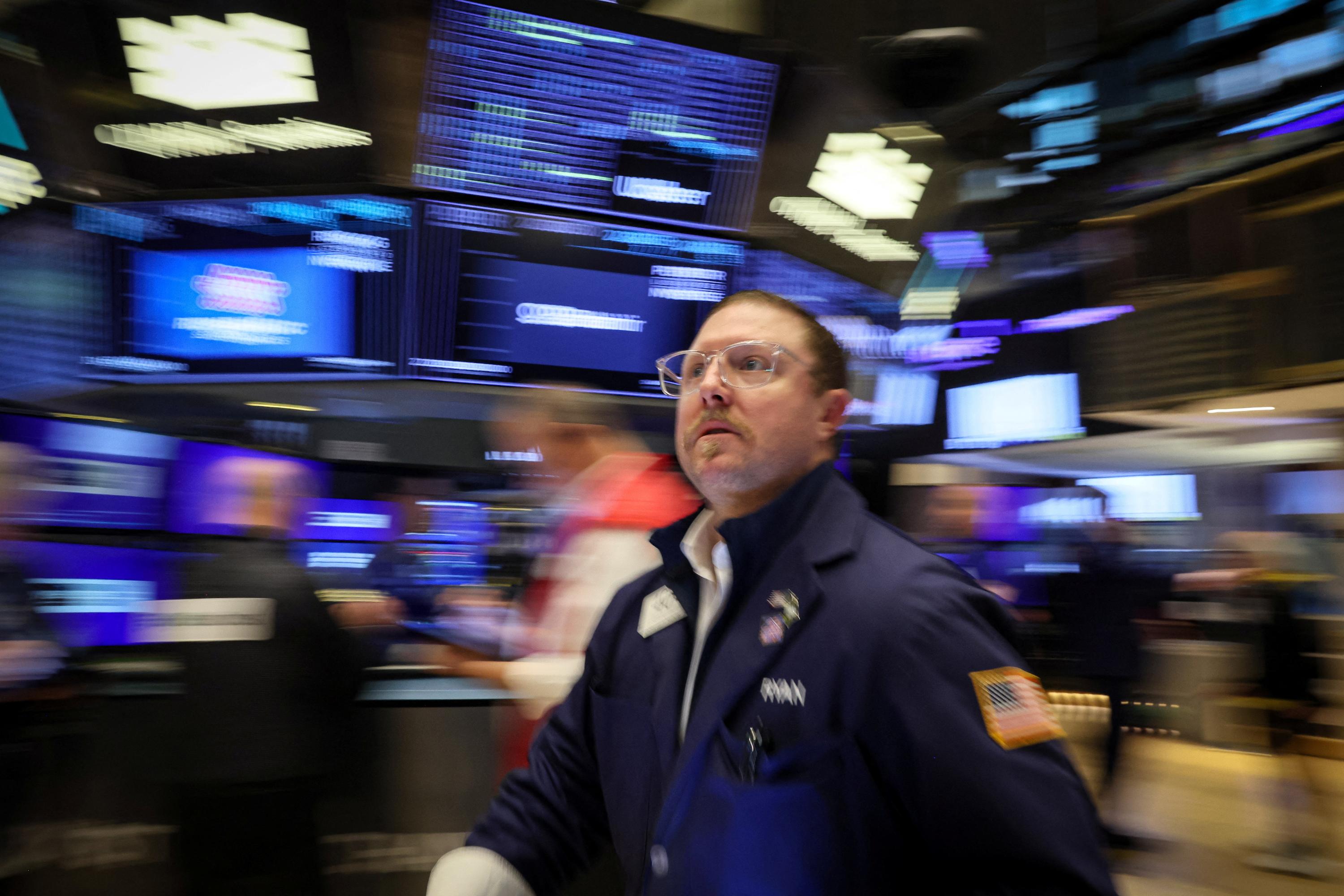
NEW YORK, March 12 (Reuters) - Hedge funds' use of leverage in equities trading is near record levels after debt-fueled strategies ballooned in recent years and an upturn in financial markets prompted riskier bets, according to two banking sources and recent client notes from major banks. Fresh data compiled by Goldman Sachs, JPMorgan and Morgan Stanley, the three largest global prime brokerages, seen by Reuters in notes distributed to a restricted group of clients, show that leverage used to juice up returns is at or close to historical highs, depending on the bank. The use of leverage by hedge funds in recent years has drawn more attention from regulators on the impact it could have on portfolios, markets and banks. The U.S. Federal Reserve's scenarios for its annual bank health check will start testing banks against a scenario in which big hedge funds fail, while the U.S. Securities and Exchange Commission is asking hedge funds for more detailed and regular data on exposures. "Leverage is definitely at a high in the macro (hedge fund) world," said John Delano, a managing director at Commonfund, which invests in hedge funds, who said this was fueled by progress in bringing down inflation and investor confidence in artificial intelligence. Goldman Sachs' note showed that hedge funds' leverage in equity positions was at almost three times their books compared with 2.35 times a year ago, and a record level over the past five years, the period the bank uses for comparison. The data means that for every $100 of their own capital, the hedge funds had $300 in long and short positions. JPMorgan showed current use of leverage - at roughly 2.7 times - is close to a peak reached since 2017 and higher than 98% of the time it has been tracked since then. Morgan Stanley also said leverage in the U.S. was higher only 2% of the time when tracked in the last fourteen years. BULLISH POSITIONING The rise in leverage comes as hedge funds become more bullish following a stock rally which took off at the end of October, when investors started betting the Federal Reserve would soon move to cut interest rates. The S&P 500 (.SPX) , opens new tab has risen roughly 24% since then. Barclays said in its note that hedge funds across different strategies are bullish. Global macro hedge funds are now long equities after unwinding short positions they had last year while systematic hedge funds are long different equity indexes. Equity long positions in so-called commodity trading advisors (CTAs), funds which use computers to follow price trends, "remain stretched," Barclays added. "The market is taking the view that everything is fine," said Mario Unali, senior portfolio manager at Kairos Partners, who said he has observed the highest level of leverage for the last three years among systematic strategies, those that use computer models based on data to trade. While traditional hedge funds that go long or short on stocks based on data analysis by people leveraged roughly two times their books, equity quantitative and multi-strategy hedge funds were at 4.5 and 3.1 times, according to a JPMorgan estimate. Since 2014, leveraged strategies have become more popular among investors, outpacing the asset growth seen across the industry. Multi-strategy and quantitative comprise roughly 32% of the hedge fund space now versus 24% in 2014, according to hedge fund research firm PivotalPath. Still, these strategies are overall seen as less risky because they tend to match long and short positions and are less exposed to the ups and downs of stock markets. The use of higher leverage to bet on a continuing rally seems to be paying off so far. Equity hedge funds using systematic strategies posted 6.42% in gains in the first two months of this year, according to Goldman Sachs, outpacing the world stock index MSCI (.MIWD00000PUS) , opens new tab. Edoardo Rulli, chief investment officer of UBS Hedge Fund Solutions, a fund of hedge funds, said current leverage levels are still maneuverable and are not one of his biggest concerns, as volatility is lower. Still, he is keeping an eye on it. "Leverage is always a concern, so monitoring leverage is key. It can be deadly if combined with liquidity risk," he said. Get a look at the day ahead in U.S. and global markets with the Morning Bid U.S. newsletter. Sign up here. https://www.reuters.com/markets/us/hedge-flow-hedge-funds-ramp-up-leverage-near-record-highs-juice-returns-2024-03-12/
2024-03-12 10:12
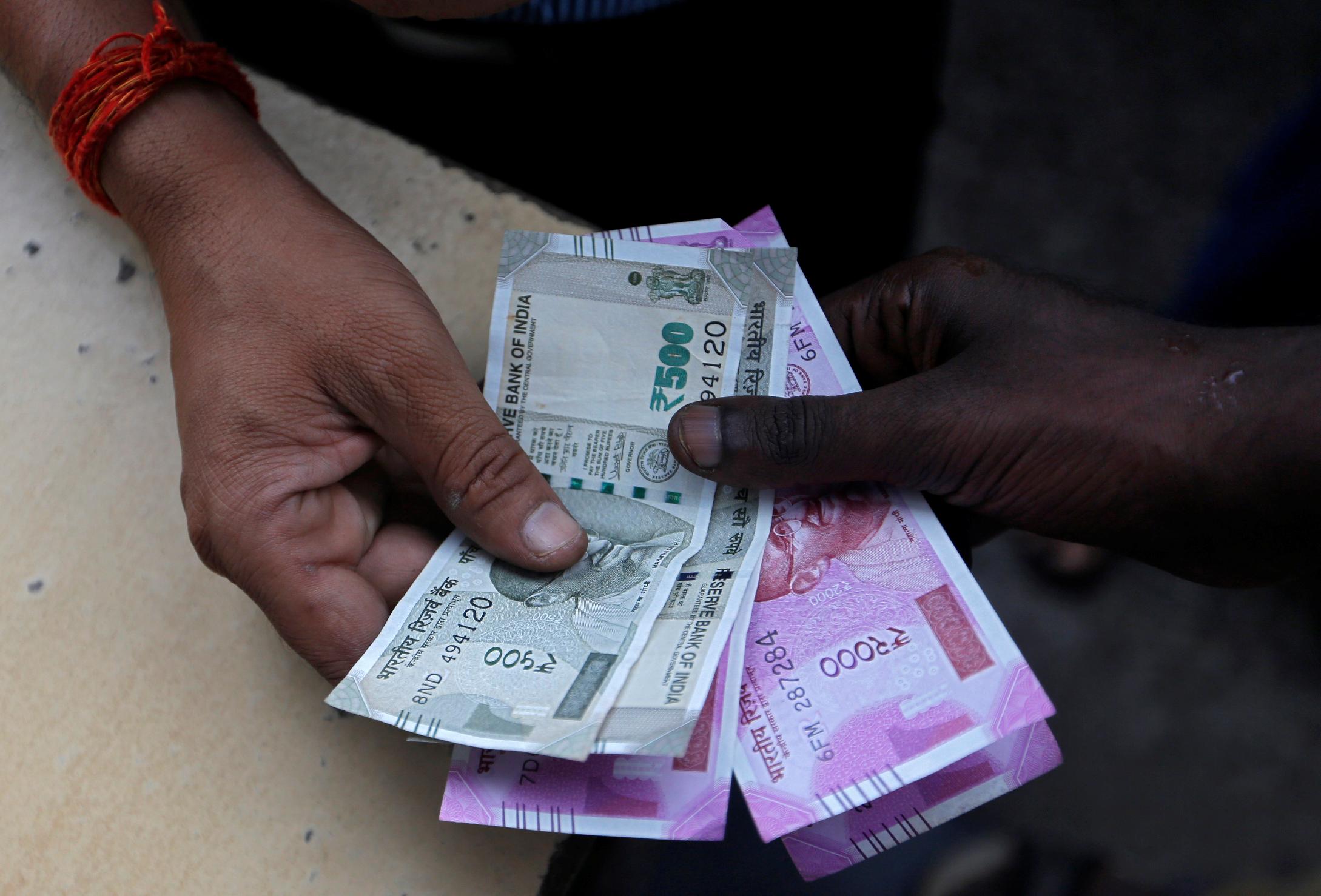
MUMBAI, March 12 (Reuters) - The Indian rupee ended little changed after a rangebound Tuesday, ahead of crucial U.S. consumer inflation data that will help investors gauge the timing of interest rate cuts by the Federal Reserve. The rupee closed at 82.7675 against 82.7575 in the previous session. It traded in a narrow 82.7250 to 82.7725 band for the session. The Indian currency has been a beneficiary of persistent foreign inflows in the country's debt and equity markets but dollar purchases from importers and possible intervention by the central bank have limited gains, traders said. "Technically, the rupee is expected to consolidate between 82.52 to 83.05 with a positive bias," Dilip Parmar, a foreign exchange research analyst at HDFC Securities, said. While foreign inflows are expected to remain favourable for rupee bulls, any risk-averse sentiment and likely dollar purchases by the central bank will limit the rupee's rise, he said. Data due on Tuesday is expected to show U.S. headline inflation rose by 0.4% on-month while core increased by 0.3% in February. The data will help assess whether January's higher reading was just a blip or that price gains are proving more persistent. If core inflation is on expected lines, there may not be a big market impact but "it could definitely set the tone for a more defensive stance on FX – i.e., a gradual rotation back to the dollar – ahead of next week's Fed meeting," ING Bank said in a note. Ahead of the data, investors are pricing in total Fed rate cuts of 90 basis points in 2024. Asian currencies were mostly lower ahead of the data while dollar-rupee forward premiums fell. Meanwhile, India's retail inflation, also due on Tuesday, is forecast to have inched down to a four-month low of 5.02% in February, according to a Reuters poll. https://www.reuters.com/markets/currencies/rupee-closes-flat-ahead-crucial-us-inflation-print-2024-03-12/
2024-03-12 10:11
NEW YORK, March 12 (Reuters) - U.S. small business sentiment fell in February to the lowest level since May due to continued concerns around inflation, according to a report published on Tuesday. The monthly National Federation of Independent Business sentiment index fell to 89.4 in February from 89.9 in January. The reading marks the 26th-straight-month where the index remained below its 50-year average of 98. The share of owners citing inflation as their most pressing problem rose 3 points to 23%, the top concern for businesses according to the report. During the Federal Reserve's rate-hike campaign, launched in 2022 and now nearing the end of its cycle, small business owners also have felt the pinch of higher costs and tighter credit conditions. “While inflation pressures have eased since peaking in 2021, small business owners are still managing the elevated costs of higher prices and interest rates,” said Bill Dunkelberg, NFIB's chief economist. “The labor market has also eased slightly as small business owners are having an easier time attracting and retaining employees.” Those surveyed who reported labor difficulties as a top concern fell to 16% from 21% in January, the lowest reading since April 2020. The share of owners expecting better business conditions on a six-month basis fell 1 point to a net-negative 39%. The portion of owners who expect higher real sales in the next three months rose 6 points to a net-negative 10%. Get a look at the day ahead in U.S. and global markets with the Morning Bid U.S. newsletter. Sign up here. https://www.reuters.com/markets/us/us-small-business-optimism-falls-lowest-9-months-nfib-says-2024-03-12/

2024-03-12 10:07
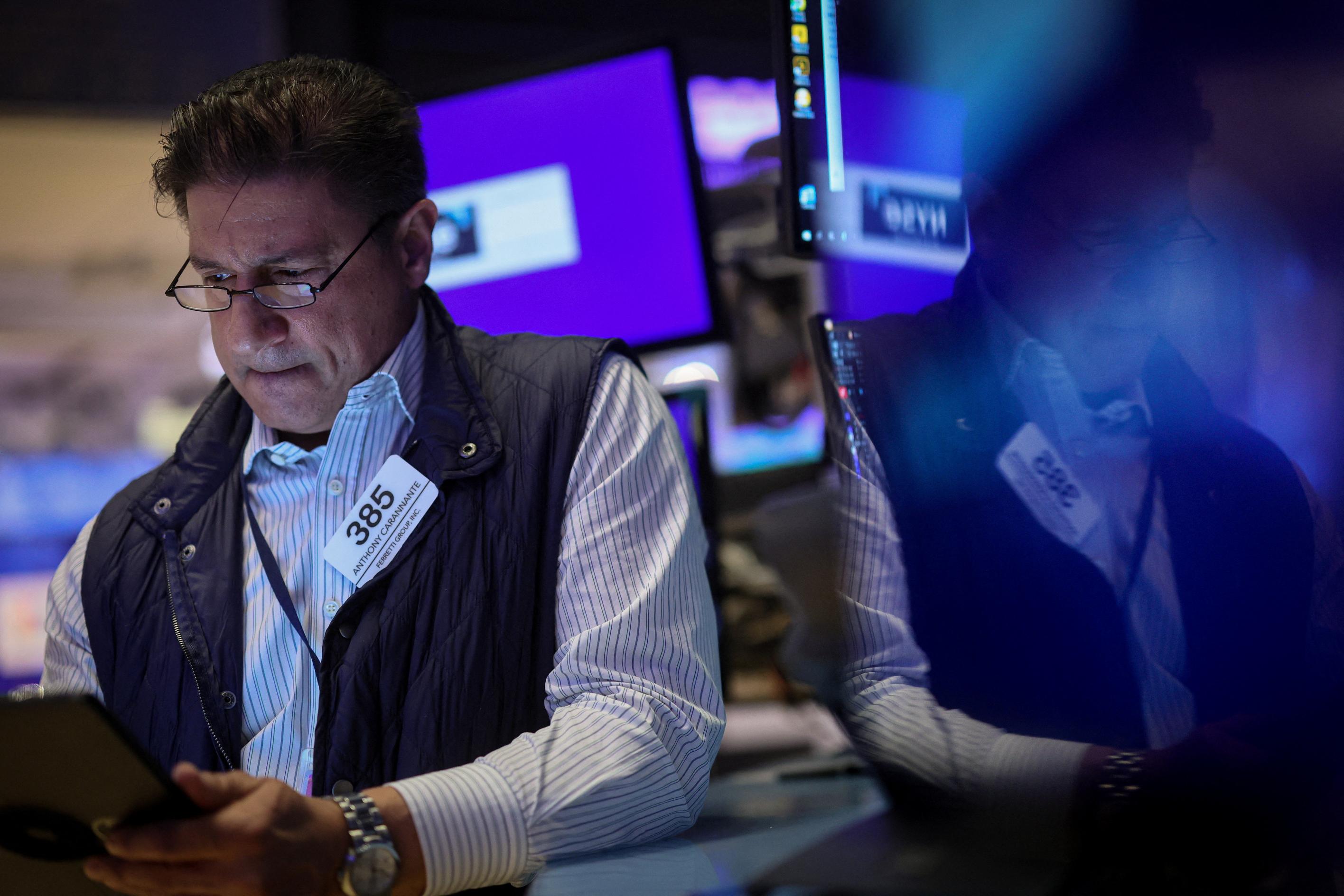
A look at the day ahead in U.S. and global markets from Mike Dolan Wall Street seems to have lost direction in another shaky start to the week for some of its megacap stocks and now needs some clearance from Tuesday's U.S. inflation update to steady the ship. In an illustration of just how quickly this year's slightly hotter inflation readings so far can feed consumer expectations, the New York Federal Reserve's latest household survey might be another red flag at the central bank. Longer-run household inflation expectations deteriorated in February, the Fed survey showed. Although the outlook one year out was steady at 3%, respondents' view of inflation three years from now climbed to 2.7% from 2.4% - the first rise since September. Even though the Fed is no longer expected to execute its first interest rate cut later this month - futures have shifted to an 80% chance of a June move instead - a lot rides on today's consumer price inflation readout for February. Headline annual CPI inflation is expected to be steady at 3.1% - with the "core" rate ebbing to 3.7% from 3.9% the prior month. Led by another 2% drop in artificial intelligence bellwether Nvidia (NVDA.O) , opens new tab - which has now recoiled more than 7% since Thursday - the S&P500 (.SPX) , opens new tab and Nasdaq (.IXIC) , opens new tab fell back again on Monday ahead of the inflation report. S&P500 futures firmed up slightly overnight, as has Nvidia itself. Three of the so-called Magnificent Seven megacaps - Apple, Alphabet and Tesla - are still in negative territory for the year to date. Dragging on sentiment yesterday were disappointing earnings updates from the likes of Broadcom (AVGO.O) , opens new tab and Marvell Technology (MRVL.O) , opens new tab, but shares in database giant Oracle (ORCL.N) , opens new tab surged more than 13% overnight after it beat estimates on demand for cloud-computing services due to the AI boom. Boeing (BA.N) , opens new tab, however, has been a saga of its own. Its underperforming stock was hit by another 3% drop on Monday after at least 50 people were hurt when a Boeing 787 operated by LATAM Airlines dropped abruptly mid-flight from Sydney to Auckland. And its shares fell another 1% overnight on a New York Times report that the Federal Aviation Administration's audit of its 737 MAX production process - conducted after a panel blew off on an Alaska Airlines jet in January - failed 33 of 89 tests. But perhaps the biggest impact of today's inflation news will be on Tuesday's latest $39 billion auction of 10-year Treasury notes. Ten-year yields backed up to about 4.10% on Monday and held there overnight. Fiscal policy twists were also in the background for Treasuries. U.S. President Joe Biden sketched his policy vision for a potential second four-year term on Monday, unveiling a $7.3 trillion election-year budget aimed at convincing sceptical Americans that he can run the economy better than Donald Trump. Biden's budget for the 2025 fiscal year, which starts this October, includes raising the corporate income tax rate to 28% from 21% and forcing those with wealth of $100 million to pay at least 25% of their income in taxes. A proposal to bring down deficit spending by $3 trillion over 10 years would slow but not halt the growth of the $34.5 trillion national debt. Deficits would total $1.8 trillion in the 2025 fiscal year, 6.1% of GDP, before falling to under 4% over a decade, the White House forecast. Overseas, Japan's yen fell back and the Nikkei stocks benchmark (.N225) , opens new tab steadied after Bank of Japan Governor Kazuo Ueda said the economy was recovering but also showed signs of weakness - offering a slightly bleaker assessment than in January in a nod to a recent batch of soft data on consumption. That raised some doubts again about whether the BOJ would indeed pull the trigger on tightening monetary policy as soon as this month. The dollar (.DXY) , opens new tab was firmer across the board ahead of the CPI report. In China, mainland shares (.CSI300) , opens new tab were firmer and Hong Kong's Hang Seng (.HSI) , opens new tab jumped more than 3% - led by its tech sector. Shares of China Vanke (000002.SZ) , opens new tab reversed early losses, climbing 0.6% as the country's No. 2 property developer said its "current operation and refinancing are normal and financing channels are stable" after Moody's on Monday withdrew Vanke's 'Baa3' rating. Key diary items that may provide direction to U.S. markets later on Tuesday: * U.S. Feb consumer price index, Cleveland Fed Feb median CPI * U.S. Treasury auctions $39 billion of 10-year notes * U.S. corp earnings: Archer-Daniels-Midland * European Union finance ministers meet in Brussels * Bank of England policymaker Catherine Mann speaks https://www.reuters.com/markets/us/global-markets-view-usa-2024-03-12/