
2024-03-12 06:10
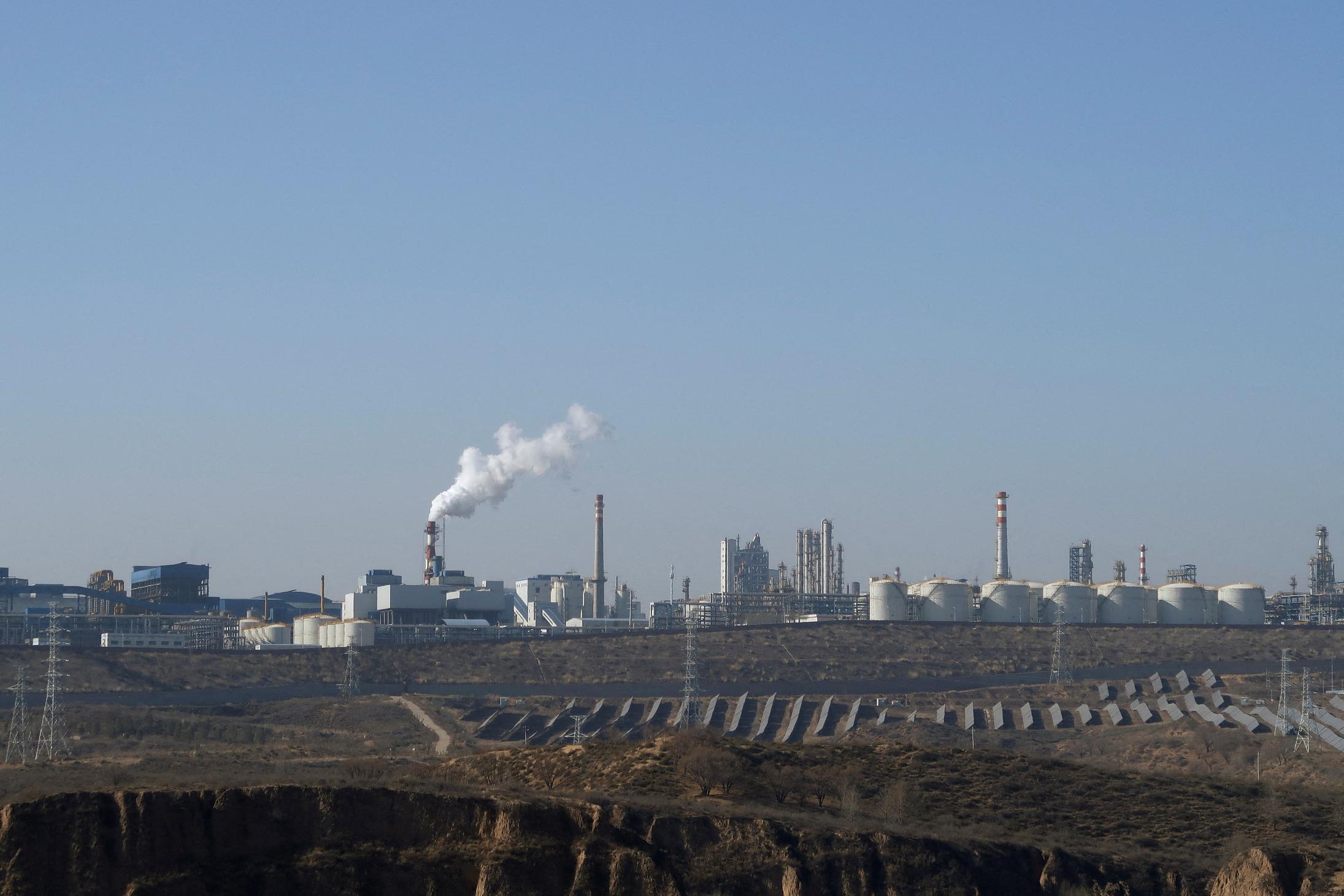
SINGAPORE, March 12 (Reuters) - China is falling short on key targets for tackling climate-warming emissions, and analysts said Beijing's credibility in global climate talks could be at risk unless it redoubles its efforts to get back on track. The Chinese government has rarely missed targets in the past. But now, driven primarily by energy security concerns, it has shown little political will to address the emissions gap, analysts said. China's National Development and Reform Commission (NDRC), a planning agency, promised last week to "redouble efforts in energy conservation and carbon reduction" this year after it "fell short of expectations" in 2023. Analysts say it is well behind on its goal to slash energy intensity by 13.5% and carbon intensity by 18% between 2021 and 2025. The intensity rates – measuring how much energy is consumed and how much carbon dioxide emitted per unit of economic growth – are a key part of the country's pledge to bring emissions to a peak before 2030 and to net zero by 2060. Keeping its targets within reach would require "concerted efforts across all sectors to bridge the gap", said Jom Madan, senior research analyst with the consultancy Wood Mackenzie. But the planning commission set targets for 2024 that fall far short of what is needed. For energy intensity, the commission mandated only a 2.5% reduction. It set no new target for carbon intensity, and made no new moves to curb the use of coal – the most polluting fossil fuel. Madan predicted that China might "come close … but not quite achieve its targets" on energy efficiency. If the country misses its 2025 targets, it could raise doubts worldwide about its ability to rein in emissions. The country also risks a "serious loss of diplomatic credibility," said lead analyst Lauri Myllyvirta of the Centre for Research on Energy and Clean Air. "China has long emphasised its ability to implement the country's commitments, while criticising others for setting lofty targets," he said. The NDRC did not respond to a request for comment. As the world's biggest carbon polluter and second-largest economy, China has faced growing international pressure to show more climate ambition. It has resisted, arguing that it is already doing more than most fast-developing countries. China's rising emissions account for 35% of the world’s annual total. On a per capita basis, the emissions level is 15% higher per capita than the OECD average, the International Energy Agency said last week. To meet its goals, Beijing should focus on efficiency improvements in industry and construction, and offer more financial support for companies to replace or retrofit outdated facilities, Madan said. Expanding the carbon market would also help, he added. NEW REALITY Officially, China's energy intensity fell 0.5% in 2023, the country's statistics bureau said last month, missing a 2% target. The gap would have been worse, but China last month removed non-fossil fuels such as nuclear and renewable energy from the equation to focus on tackling fossil fuels. China is applying this definition retroactively, Myllyvirta said. Without the change, the energy intensity calculation would have shown an increase of 0.5%. Myllyvirta estimated that China would need to cut energy intensity by 6% in 2024 and 2025 to meet the 2021-2025 target – far higher than the 2.5% goal set this week. Energy intensity might matter less in the future, however, said Ma Jun, director of the Beijing-based Institute of Public and Environmental Affairs. The change in how it is calculated "reflects a new reality" for China, in which economic growth is increasingly driven by the renewables sector, and fossil-fuel dependent industries will come under more pressure to boost efficiency, Ma said. "That means carbon intensity is going to matter more," he said. Although China set no new targets for carbon intensity, the country's economic growth implies the measure will fall about 3% this year, analysts said. However, after dropping 4.6% from 2020 to 2023, carbon intensity would need to drop about 7% this year and next to reach the 2025 goal, Myllyvirta said. Missing climate targets is unusual for China, which has made job promotions contingent on environmental progress to encourage workers and agencies to meet goals. In 2022, China's corruption watchdog warned that some regions were providing fraudulent energy and carbon intensity figures that were overly positive. Pressure to comply with intensity targets also caused economic disruptions in 2010, with provinces cutting power supplies to energy-intensive industries and forcing homes to ration electricity. Without a major boost to its climate efforts now, "meeting the five-year intensity targets by 2025 will be very challenging," said Li Shuo, director of the China Climate Hub at the Asia Society Policy Institute in Washington. "This year's government work report certainly did not signal that level of decisiveness," Shou said. https://www.reuters.com/sustainability/climate-energy/chinas-emissions-efficiency-targets-under-threat-after-falling-short-2023-2024-03-12/
2024-03-12 05:39
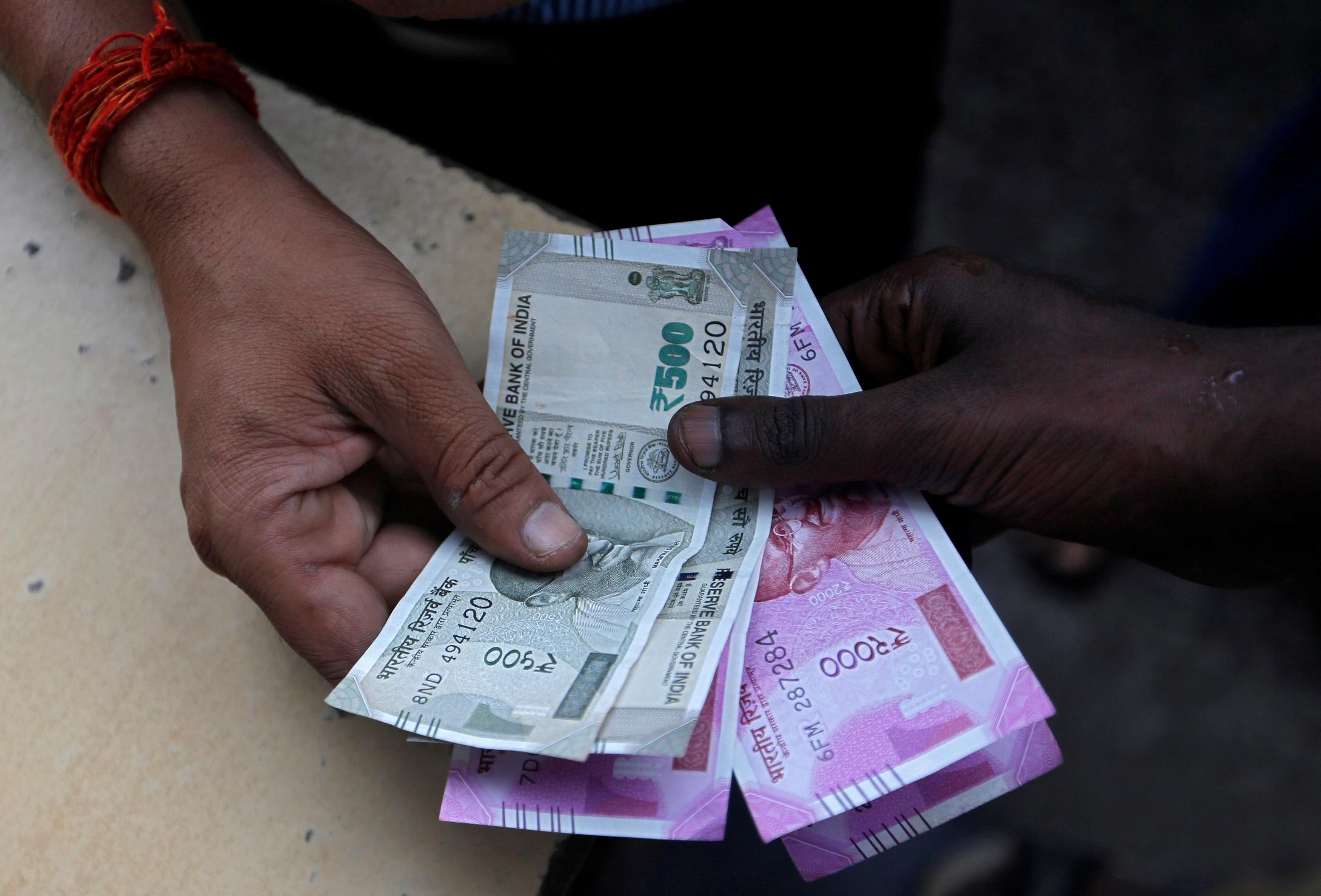
MUMBAI, March 12 (Reuters) - The Indian rupee was slightly higher on Tuesday on the back of inflows, holding its positive bias heading into the crucial U.S. consumer inflation data. The rupee was at 82.7425 to the U.S. dollar at 10:55 a.m. IST, up from 82.7575 in the previous session. The rupee has been in a narrow 3 paisa range, having reached a more than six-month high on Monday. "At least from our side, we have seen good bit importer hedging the last few days," a foreign exchange salesperson at a private bank said. "That I think we can extrapolate to other banks. The thinking that rupee is a range-bound currency means decent dips and rallies will always see a pickup in hedging." Amit Pabari, managing director at fx advisory firm CR Forex, said the rupee was "poised for strength" on the back of inflows and robust India economic fundamentals. "The rupee is expected to trend towards the 82.50 level," he said. Other Asian currencies were mostly lower on the day ahead of the U.S. inflation data. The February inflation data will hold cues on whether January's higher reading was just a blip or that prices are proving more persistent. "Our main interest in the data is to observe the degree of inflation persistence, or stickiness," ANZ Bank said in a note. Super-core inflation rose 0.85% in January, the highest month-on-month reading in 22 months, the note added. Economists polled by Reuters expect U.S. headline inflation to rise by 0.4% and core by 0.3%. https://www.reuters.com/markets/currencies/rupee-inches-up-importers-take-advantage-unexpected-up-move-2024-03-12/
2024-03-12 05:36
A look at the day ahead in European and global markets from Ankur Banerjee Asian stocks resumed their recent upward drift on Tuesday, reaching seven month highs even as many traders awaited U.S. inflation due later in the day. But in European hours it will be UK wage data at centre stage, keeping investors in Britain's pound on guard. The pound was hovering not far from the seven month high it touched on Friday, with investors beefing up their bullish positions in the currency. Sterling is up 0.7% for the year. For the past few months investors have been drawn to the pound's higher yield, boosted by expectations that persistent inflation will compel the Bank of England to keep interest rates higher for longer despite a sluggish economy. Data shows that speculators boosted their bullish sterling position to $4.635 billion in the week to March 5, just shy of last July's nine-year high. Markets are pricing in August as the starting point for rate cuts from the BOE, while the European Central Bank and the U.S. Federal Reserve are expected to move in June. Data on Tuesday is expected to show that British pay excluding bonuses grew 6.2% in the three months to January, unchanged from December. Any surprise might lead markets to rethink their BoE bets. European bourses are due for a strong open, futures indicated, with the pan-European STOXX 600 (.STOXX) , opens new tab just shy of the record peak it touched last week. Among macroeconomic indicators, the spotlight will be firmly on the U.S. inflation report due later in the day, with expectations for a monthly increase of 0.4%, and 3.1% on an annual basis. Core inflation is seen rising 0.3%, which would push the annual pace down to 3.7%. The currency market was largely muted in Asian hours except for the yen , which has perked up in the past week over mounting speculation that the Bank of Japan may just about be ready to exit its negative interest rate policy. The yen on Tuesday was on the back foot, though, after BOJ Governor Kazuo Ueda said the economy was recovering but also showing some signs of weakness. Germany's inflation data for February is the only other major economic event. Also in focus will be quarterly earnings from Manchester United (MANU.N) , opens new tab, where the spotlight will be on what comes next after British billionaire Jim Ratcliffe struck a deal to buy a 25% stake in the club to try to revive its fortunes. Key developments that could influence markets on Tuesday: Economic events: German Feb CPI, UK average weekly earnings for Jan https://www.reuters.com/markets/europe/global-markets-view-europe-2024-03-12/

2024-03-12 05:14
LAUNCESTON, Australia, March 12 (Reuters) - Russia's exports of seaborne coal to Asia have been weakening in recent months, with lower shipments of both thermal grades and metallurgical coal used to make steel. Exports of all grades of coal were assessed by commodity analysts Kpler at 8.48 million metric tons in February, slightly higher than January's 8.37 million. However, that small increase came after six straight months of declines, and the February exports were also some 21.6% below the 10.81 million tons for February 2023. Coal miners in Russia switched from selling mainly to Europe to markets in Asia in the wake of Moscow's February 2022 invasion of Ukraine, which saw Western countries adopt sanctions against Russian energy exports. Russia's seaborne coal exports to Asia peaked at 14.69 million tons in April last year, almost double the levels in months preceding the attack on Ukraine. Much of the increase came as Russia boosted shipments to India, the world's second-largest coal importer behind China. It was able to grab market share in India by offering steep discounts, particularly on thermal coal, which is mainly used to generate electricity. But Russian thermal coal is finding it harder to compete on price against rival grades from Asia's heavyweight exporters Indonesia and Australia, as well as South Africa, which is known as a swing supplier of coal to both Europe and Asia. Russia's exports of thermal coal to India dropped to 557,935 tons in February, down from 1.06 million in January and the weakest month since November 2022, according to Kpler data. Russian delegates at the Coaltrans India conference, held at the end of February in the western state of Goa, said it was becoming harder for them to make any money shipping thermal coal to India. One representative of a Russian producer, speaking on condition of anonymity, said the rising freight costs had effectively cut profits to zero, and some cargoes heading to India were loss-making. It's not only higher freight costs hurting Russian thermal coal exports to India, with the prices of competing fuel from other suppliers also moderating in recent months. Indonesian coal with an energy content of 4,200 kilocalories per kilogram (kcal/kg) , as assessed by commodity price reporting agency Argus, ended last week at $58.17 a ton. This grade has been trading in a relatively narrow range anchored around $58 a ton since November, but it's still well below the 2023 peak of $87.55 in January. SOFTER PRICES Australian thermal coal with an energy content of 5,500 kcal/kg , a grade favoured by Indian buyers, ended last week at $95.77 a ton, down slightly from $96.66 the previous week. It has also been trading in a fairly narrow range around $93 to $96 a ton since November, and is down 29% from its 2023 high of $135.29 reached in mid-January. The softer prices for Indonesian and Australian coal means that Russian suppliers have had to follow suit. The coal trade between Russia's European ports and India may also be further threatened by the attacks on shipping in the Red Sea by Yemen's Iran-aligned Houthi group. While Russian shipments haven't been targeted, shipping companies and insurers have become concerned about transiting the Suez Canal and the Red Sea, with vessels being diverted to the longer and costlier route around the Cape of Good Hope. Russia's exports of metallurgical coal to Asia have also been struggling, with shipments of 1.73 million tons in February the lowest since August 2021 and down from 2.32 million in January. Russian seaborne exports to Asia of the higher-energy coal used to make steel peaked at 4.47 million tons in March 2023, and with the exception of June that year they held above 3 million tons a month until November. However, since then Russia's exports to top buyers India and China have tailed off, with shipments to India falling to a 17-month low of 489,207 tons in February, down from 1.09 million in January and a peak of 1.51 million in March last year. Russia's seaborne metallurgical coal exports to China were 587,751 tons in February, up slightly from January's 576,435, but these past two months were the weakest since December 2021, and well below the peak of 2.13 million from March 2023. The overall story for Russian coal exports to Asia is that Western sanctions reduced the number of buyers willing to take cargoes, and now the decline in prices for competing grades is making it harder for Russia's miners to profitably ship cargoes to Asia. The opinions expressed here are those of the author, a columnist for Reuters. https://www.reuters.com/markets/commodities/russian-coal-exports-asia-struggle-amid-lower-prices-russell-2024-03-12/

2024-03-12 04:57
Japan's economy recovering but showing weak signs, Ueda says Consumption on weak note but improving moderately, Ueda says BOJ chief offers few clues on timing of stimulus exit BOJ to offer guidance on bond-buying pace upon exit - sources TOKYO, March 12 (Reuters) - Bank of Japan Governor Kazuo Ueda said on Tuesday the economy was recovering but also showing some signs of weakness, offering a slightly bleaker assessment than in January in a nod to a recent batch of soft data on consumption. The remarks come ahead of the central bank's policy meeting next week, where the board will debate whether the outlook is bright enough to phase out its massive monetary stimulus. Speaking in parliament on Tuesday, Ueda said consumption was weakening for food and daily necessities amid higher prices. But he said household spending was improving moderately on hopes for higher wages ahead. "Japan's economy is recovering moderately, although weakness has been seen in some data," Ueda said, when asked by a lawmaker about recent soft signs in consumption and capital expenditure. The assessment was slightly less optimistic than the one shown in the BOJ's latest quarterly report issued in January, which described the economy as "recovering moderately". Ueda offered few clues on how soon the BOJ would end negative rates, a policy that has been in place since 2016. But he said there were various ways to push up short-term borrowing costs if conditions fall into place to end negative interest rates. Under its negative rate policy, the BOJ currently charges a 0.1% interest to excess reserves financial institutions park with the central bank to encourage them to lend out the money. One idea would be to pay a positive interest to the reserves, which would help push up the overnight call rate, Ueda said. If inflation accelerates and warrants tightening monetary policy further, the BOJ can do so by raising short-term rates instead of unloading its huge bond holdings, he added. "We are focusing on whether a positive wage-inflation cycle is kicking off, in judging whether sustainable, stable achievement of our price target is coming into sight," he said. "Various data have come out since January and we'll likely have additional data come out this week. We will look comprehensively at such data, and make an appropriate monetary policy decision," he said. BOND GUIDANCE EYED Upon ending negative rates, the BOJ is also likely to ditch its yield curve control (YCC) - a policy that guides the 10-year bond yield around 0% with a loose cap of 1%. The BOJ will likely offer numerical guidance on how much government bonds it will buy upon ending YCC to avoid causing market disruption, said sources familiar with its thinking. Japan's economy expanded at an annualised clip of 0.4% in the October-December period, narrowly averting a technical recession but weighed by sluggish consumption. Despite such signs of economic weakness, many market players expect the BOJ to end its negative interest rate policy by April as inflation remains above its 2% target and intensifying labour shortages prod more firms to signal bumper pay hikes. Sources have told Reuters a growing number of BOJ policymakers are even warming to the idea of ending negative rates at the March 18-19 meeting on expectations of hefty pay hikes in this year's annual wage negotiations. Economists see current wage talks, which wrap up on March 13, resulting in an average hike of around 3.9% in annual pay for union workers at major firms - the biggest rise in 31 years. https://www.reuters.com/markets/asia/japans-economy-recovering-showing-signs-weakness-says-boj-chief-ueda-2024-03-12/

2024-03-12 04:50
CPI rose 0.4% in February Gold snaps nine-session winning streak Palladium to stay oversupplied over coming years - UBS March 12 (Reuters) - Gold prices remained under pressure on Tuesday, dropping more than 1%, after a hot U.S. inflation report dimmed prospects of the Federal Reserve cutting interest rates soon. Spot gold fell 1.4% to $2,153.05 per ounce as of 3:08 p.m. ET (1908 GMT), retreating from a record high of $2,194.99 reached on Friday. U.S. gold futures settled 1% lower at $2,166.1. U.S. consumer prices increased solidly in February, suggesting some stickiness in inflation. Data showed the Consumer Price Index (CPI) rose 0.4% on a monthly basis in February. Annually, it increased 3.2%, above the 3.1% forecast. "CPI comes in a bit sweaty but the market was expecting a high print so the initial reaction was a bit muted but prices have been volatile since," said Tai Wong, a New York-based independent metals trader. He said gold bulls would still look for reasons to drive it higher. "Now focus will shift to next week's Fed meeting where there will be an updated dot plot," Wong said, referring to central bankers' interest rate forecasts. The market is still pricing an around 70% chance of a U.S. rate cut by June, according to the CME FedWatch tool. The next U.S. central bank policy meeting is due on March 20. Low interest rates help gold prices as they reduce the opportunity cost of holding the precious metal that earns no interest. In the short run, prices will see some consolidation and probably stabilise around $2,100 level and will break above $2,200 by the end of the second quarter this year, said Aakash Doshi, head of commodities, North America at Citi Research. Spot platinum fell 1.5% to $919.20 per ounce, palladium was steady at $1,031.04. UBS said in a note it expects palladium to stay oversupplied over the coming years, as demand for autocatalysts keeps declining. Silver shed 1.5% to $24.08. Get a look at the day ahead in U.S. and global markets with the Morning Bid U.S. newsletter. Sign up here. https://www.reuters.com/markets/commodities/golds-record-run-stalls-ahead-us-inflation-print-2024-03-12/


