2024-03-11 18:32
Canadian dollar weakens 0.1% against the greenback Trades in a range of 1.3470 to 1.3509 Price of U.S. oil falls 0.2% 10-year yield rises 1.9 basis points to 3.357% TORONTO, March 11 (Reuters) - The Canadian dollar edged lower against its U.S. counterpart on Monday as the recent rally in equity markets lost momentum ahead of a key U.S. inflation report this week. The loonie fell 0.1% lower to 1.3485 per U.S. dollar, or 74.16 U.S. cents, after trading in a range of 1.3470 to 1.3509. On Friday, the currency touched its strongest intraday level in four weeks at 1.3417. "Canadian economic data will be light this week so the focus will be on the U.S. inflation report," said Tony Valente, senior FX dealer at AscendantFX. "I suspect a firm number will lend support to the USD this week and should stop the one-sided trade. ... The USD has been sold (recently) on the back of a risk-on trade in equity markets." Wall Street's main stock indexes slipped as investors turned attention to the release on Tuesday of the U.S. consumer price index report for February. The data could provide clues on whether inflation has eased enough for the Federal Reserve to begin cutting interest rates. The Bank of Canada said on Wednesday it was too early to consider easing rates as it kept its benchmark rate on hold at a 22-year high of 5%. On Friday, data showed Canada's economy adding more jobs than expected in February. Still, speculators have raised their bearish bets on the Canadian dollar , U.S. Commodity Futures Trading Commission data released on Friday showed. As of March 5, net short positions had increased to 19,837 contracts from 1,378 in the prior week. The price of oil , one of Canada's major exports, was down 0.2% at $77.85 a barrel as concern faded about fighting in the Middle East disrupting supply, while the Canadian 10-year yield rose 1.9 basis points to 3.357%. https://www.reuters.com/markets/currencies/canadian-dollar-slips-ahead-us-inflation-data-2024-03-11/

2024-03-11 17:18
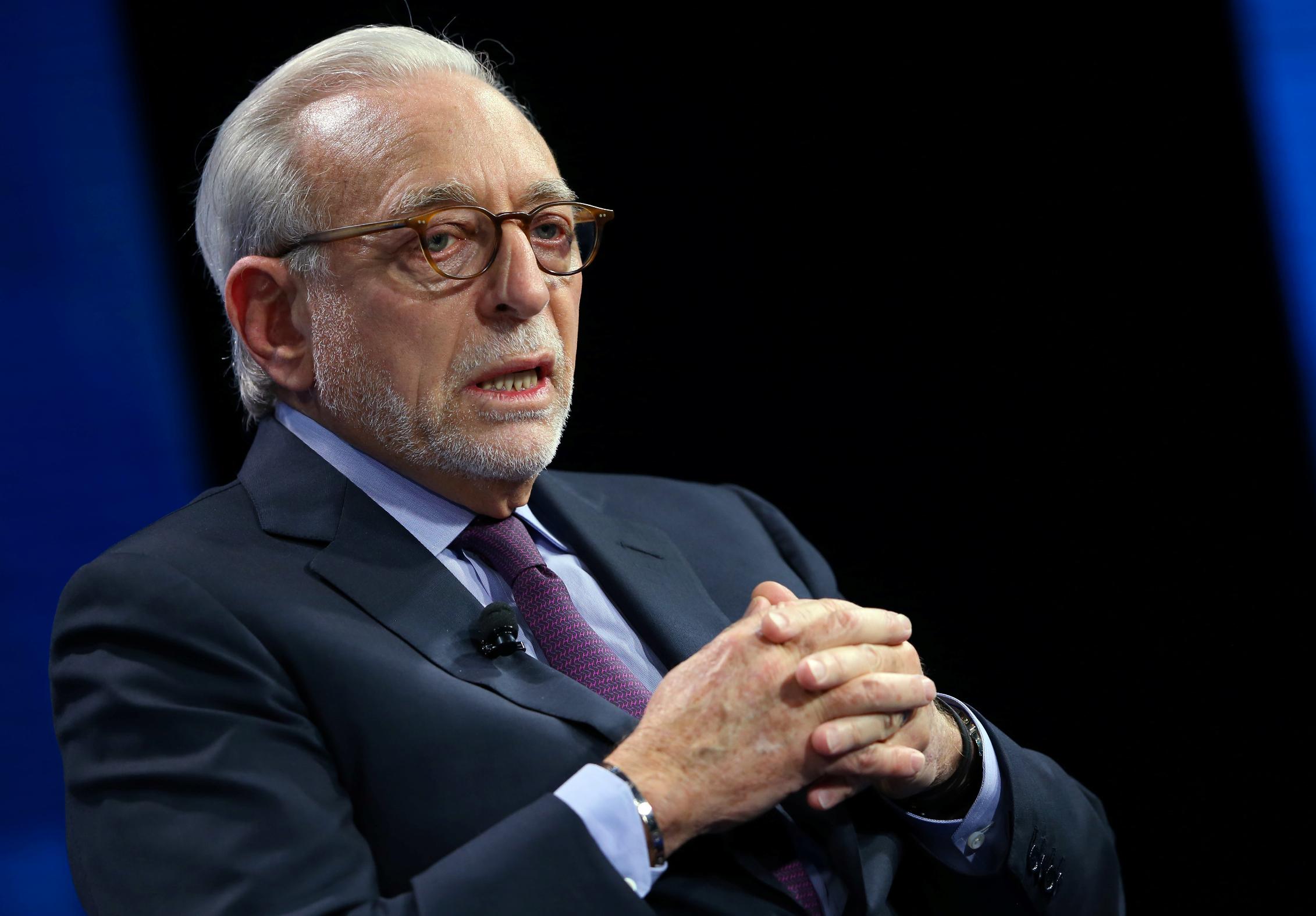
March 11 (Reuters) - Walt Disney (DIS.N) , opens new tab responded on Monday to billionaire Nelson Peltz and his Trian Fund's campaign to win two board seats with an attack on the activist shareholder's motivations and qualifications in an increasingly bare-knuckled proxy battle. In a 66-page regulatory filing late Monday, Disney said Peltz and Trian's other designated board candidate, former Disney CFO Jay Rasulo, "are not what Disney needs right now." Disney argues Peltz lacks an understanding of the challenges the company is facing, and that his suggestions for improvement "are nothing new." Neither Peltz nor Rasulo have the skills to help Disney, the company argues. The criticisms elicited a swift response from Trian. “Disney’s investor presentation is long on aesthetics and excuses, full of barbs unbecoming of a company like Disney and devoid of even a claim that the incumbent board has generated strong returns for shareholders,” Trian said through a spokesperson. Trian's campaign, ahead of an annual meeting with board elections next month, describes Disney as an iconic company with irreplaceable entertainment properties that has underperformed in terms of operating margins, return on invested capital and its money-losing streaming video operation. It argues the current board fails to provide effective oversight and made its own case in a 133-page-long presentation last week. In a video released online Monday, Disney said Peltz has a long history of "attacking companies to the ultimate detriment" of shareholders. His quest to win a Disney board seat, it argues, "seems more about vanity than a belief in Disney." Disney's updated proxy filing goes further, noting that Trian was terminated as an investment manager within the company's pension plan in 2021 after underperforming the S&P 500 by more than 500 basis points, on an annualized basis, over eight years. It says Peltz "offered excuses for the underperformance," and, in July 2022, mounted the first of two campaigns to win a board seat. Trian's other board candidate, Jay Rasulo, was passed over for promotion nearly a decade ago, and "hasn't been employed since leaving Disney," the company notes in its video. "Nelson Peltz and Jay Rasulo threaten to jeopardize the incredible progress the company has made since Bob (Iger) returned as CEO," Disney argues via video. "At this critical moment, we simply cannot let that happen." In the video and regulatory filing, Disney underscores Peltz's connection to former Marvel Entertainment Chairman Ike Perlmutter, whom it describes as a "disgruntled former employee" with a personal grudge against Iger. The company's updated proxy describes Rasulo as "Perlmutter's guy" at Disney. When Iger informed Perlmutter in 2015 that Rasulo would not become the company's next chief operating officer, Perlmutter responded, "You broke my heart." Peltz, the founder of Trian Fund Management, argued in his own presentation that Disney was slow to adapt to industry changes, including in streaming, made errors in its acquisition strategy and bungled succession planning. The fund argues that Peltz and Rasulo will bring an "ownership mentality" to the boardroom. https://www.reuters.com/business/media-telecom/disney-attacks-investor-nelson-peltzs-motivations-qualifications-2024-03-11/
2024-03-11 16:57
March 11 (Reuters) - Top U.S. natural gas producer EQT Corp (EQT.N) , opens new tab on Monday said it agreed to buy Equitrans Midstream (ETRN.N) , opens new tab in an all-stock deal that values its former pipeline unit at about $14 billion including debt, as companies look to navigate decade-low prices for the commodity. Merger activity in U.S. shale oil and gas has soared in pursuit of greater scale and cost efficiencies amid volatile prices, with $250 billion in deals in the oil and gas industry in 2023. The combination will allow EQT to lower costs to produce and transport its natural gas to market by adding more than 2,000 miles of pipelines, the companies said on Monday. "The only way to truly thrive in this world is to be at the low end of the cost curve," EQT finance chief Jeremy Knop said on a conference call with analysts. But investors were unimpressed by the combined company's $13.4 billion in debt and $250 million a year in potential synergies. EQT shares fell 8% to $34.53 while Equitran rose 2.7% to $11.55 in midday trading. At the current price of EQT, the offer would be valued at $12.10 per share. "While operationally we like the combination, the deal adds an equity overhang as midstream holders may have different priorities, and the incremental debt likely directs EQT's free cash flow to leverage reduction over all other options for the near-term, which we expect to result in the shares trading down," said Bertrand Donnes, analyst at Truist Securities. A global gas glut has pummelled prices, forcing producers to curb output and spending on drilling activity. EQT, which has been an aggressive consolidator, is curtailing nearly 1 billion cubic feet per day (bcfpd) of natural gas production this month. The deal is expected to help help lift margins by gaining better control of pipeline costs and processing as EQT pushes to get global prices via greater exposure to liquefied natural gas export markets. "This vertical integration positions EQT as the lowest cost natural gas producer in the United States," said CEO Toby Rice. "We believe this business model will be increasingly coveted by investors." EQT has preliminary deals with LNG developers Commonwealth LNG, Glenfarne Energy Transition and Energy Transfer (ET.N) , opens new tab that will let it sell LNG to international markets when their export plants are completed. Each outstanding share of Equitrans common stock will be exchanged for 0.3504 shares of EQT, giving the deal an equity value of about $5.5 billion. The deal, which is expected to close in the fourth quarter, will bring back a business that EQT spun off in 2018. EQT shareholders will own about 74% of the combined company and Equitrans shareholders will own the rest. Equitran is the lead partner and operator of the Mountain Valley natural gas pipeline, the only big gas pipeline under construction in the U.S. Northeast. It has encountered numerous regulatory and court fights that have stopped work several times since construction began in 2018. https://www.reuters.com/markets/deals/eqt-equitrans-midstream-combine-55-bln-deal-wsj-reports-2024-03-11/

2024-03-11 16:37
NEW YORK, March 11 (Reuters) - The public’s expectations around the longer-run trajectory of inflation deteriorated in February, a report from the Federal Reserve Bank of New York said Monday. While inflation a year from now was seen holding steady at 3%, respondents to the bank’s latest Survey of Consumer Expectations said that they see inflation three years from now moving to 2.7% from January’s 2.4%, with inflation in five years at 2.9%, from the prior month’s 2.5%. The rise in the three-year expected rate of inflation was the first month-over-month gain since last September, while the month-over-month rise in the five year was the first since last August. The deterioration in longer-run inflation expectations is likely to unsettle Federal Reserve officials, who are now in the preparation phase for their March 19-20 Federal Open Market Committee meeting. While Fed officials are almost certain to hold rates steady at the gathering, many policy makers have said they expect to cut rates at some point later this year as inflation pressures have been moderating back toward the 2% target. Fed officials believe that where the public expects inflation to go strongly influences where it stands today. They’ve repeatedly flagged the relative stability of longer-term expectations as a reason they are confident inflation will return to the target. Officials have also warned the road to lower inflation will likely be uneven and bumpy. Some recent inflation data has proven stronger-than-expected, which may have influenced the recent round of expectations data. Despite the shift in longer-run expectations some of the details of what the public projects for price pressures was more benign. Survey respondents said they see price rises for medical care and college ebbing, while future food price gains were seen holding steady. Respondents saw last month a decline in year-ahead rent price gains to 6.1% from January’s 6.4%, the lowest reading since December 2020. Home price increases were seen flat at 3% and gasoline prices were seen rising only modestly compared to January at 4.3%. The report also found that those who most strongly projected rises in longer run inflation expectations had at best high school degrees, while noting a declining overall disagreement about the future path of inflation. Survey respondents in February held steady on their expectations for future income and earnings growth, while boosting their spending expectations. Respondents were a little more downbeat on job market prospects and said last month that their views on credit access had also sagged. https://www.reuters.com/markets/us/ny-fed-consumer-outlook-longer-term-inflation-hit-snag-february-2024-03-11/

2024-03-11 16:15
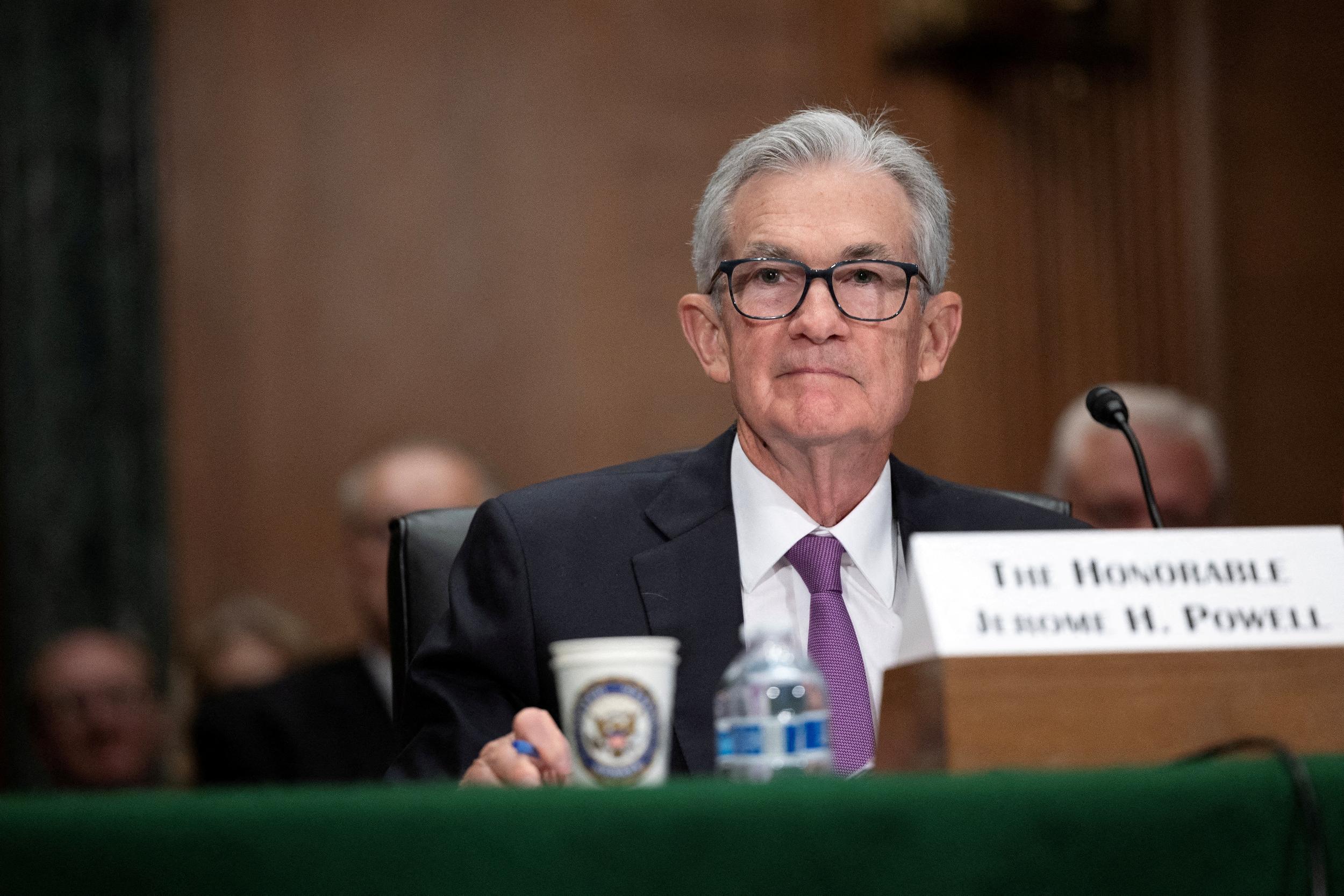
March 11 (Reuters) - A Federal Reserve facility launched in haste a year ago amid the heavy stress triggered by Silicon Valley Bank's collapse closes for new business on Monday, amid evidence it helped turn the tide of trouble that risked derailing the economy and upending the central bank’s efforts to lower inflation. A year after the Bank Term Funding Program was unveiled on a Sunday afternoon -- when regulators feared a systemwide bank run might unfold the next day -- deposits have stabilized, bank loan books overall are growing, no bank of meaningful size has failed in 10 months, and the Fed was not forced to change its monetary policy footing. The program “certainly worked” given the rebound of the banking sector, said Steven Kelly, associate director of research at the Yale School of Management's Program on Financial Stability. But the sunset of new lending at the BTFP is raising questions about how the central bank will respond to the inevitable return one day of banking trouble. Kelly and others think the Fed would not want to go down this route again if it could avoid it. That’s bringing fresh attention to the Fed's discount window, its long-running and often shunned bank lending facility, seen as the lender of last resort. The BTFP tackled a liquidity crunch after the world's first social media-induced bank run put SVB out of business in a matter of days, with a clutch of other banks failing in its wake. To ensure deposit-taking banks could get the money they needed, the BTFP offered loans on eligible collateral without the penalties usually imposed by Fed emergency lending, doing so on relatively cheap terms. That configuration generated large amounts of borrowing even when the most acute phase of the crisis was in the rear view mirror. Jumps in borrowing at the discount window last spring quickly abated to normal levels while BTFP borrowing ground ever higher as banks appeared to be exploiting its low rate relative to other sources of short-term funding. In late January the Fed shut down that arbitrage play, and new loans have all but dried up since, with the facility's credit outstanding holding at around the $160 billion mark. 'THE STIGMA PROBLEM' For all its apparent success, the fact that the BTFP existed at all is an “admission of failure” on the Fed’s part, said Peter Conti-Brown, a professor at the Wharton School of the University of Pennsylvania. The Fed’s “failure of Discount Window management might have made the Bank Term Funding Program necessary,” Conti-Brown said. At some level, Fed officials may agree, and are acting to address the situation. Fed Chair Jerome Powell told senators Thursday "we need to do more to eliminate the stigma problem, and we need to make sure that banks are actually able to use [the Discount Window] when they need to use it.” Eliminating discount window stigma has been a desire of the Fed for many years. Even as Fed officials encourage its use, large firms remain hesitant, fearing it will signal they are in trouble. They also worry the borrowing would invite regulators to have a closer look at them. Some experts reckon stigma fears can be reduced by the Fed tolerating notable levels of borrowing in otherwise placid times. Some also believe that as the Fed moves toward pushing bank preparedness to use the discount window, stigma could be further reduced by allowing this type of liquidity to factor into bank stress-testing scenarios. "The Fed recognizes that it needs to fix the profound stigma associated with using the window that's largely the fault of the Fed itself," said Bill Nelson, a former top Fed staffer who now serves as chief economist at the Bank Policy Institute, a lobbying group. The Fed seems committed to fixing the situation and it appears the Fed is conveying discount window usage is "just a business decision on the part of the banks" and "a willingness to use it is a good thing for the financial system, not a bad thing," Nelson said. Amid that reform process, banks may lean into funding from the Federal Home Loan Banks, Bank of America analysts said in a research note Friday. Loans from the BTFP could be taken in terms of up to a year and it's unclear how quickly some of that borrowing will roll off and if affected banks will need to replace it, possibly via the FHLB banks, the researchers said. ‘ROOM TO MANEUVER’ One other benefit of the BTFP relates to the Fed’s work to lower inflation. The Fed started raising rates in March 2022 and it was even able to push through an increase last March, just 10 days after launching the BTFP, with no guarantee then it would help avert a wider crisis. In the view of New York Fed President John Williams, that’s because the Fed's efforts last spring allowed them a luxury not often available in the past: To conduct financial stability and monetary policy work separately, rather than forcing a trade off between the two. The Fed was “able to do exactly what you want to do in the textbook: You apply liquidity policies, you apply resolution solutions...We did that with discount window kind of programs” and other regulatory actions, which left “monetary policy the room to maneuver,” Williams said Friday in an appearance in London. https://www.reuters.com/markets/us/emergency-fed-bank-effort-ends-lending-eyes-turn-discount-window-2024-03-11/
2024-03-11 16:00
March 10 (Reuters) - Nvidia (NVDA.O) , opens new tab, whose chips power artificial intelligence, has been sued by three authors who said it used their copyrighted books without permission to train its NeMo , opens new tab AI platform. Brian Keene, Abdi Nazemian and Stewart O'Nan said their works were part of a dataset of about 196,640 books that helped train NeMo to simulate ordinary written language, before being taken down in October "due to reported copyright infringement." In a proposed class action filed on Friday night in San Francisco federal court, the authors said the takedown reflects Nvidia's having "admitted" it trained NeMo on the dataset, and thereby infringed their copyrights. They are seeking unspecified damages for people in the United States whose copyrighted works helped train NeMo's so-called large language models in the last three years. Among the works covered by the lawsuit are Keene's 2008 novel "Ghost Walk," Nazemian's 2019 novel "Like a Love Story," and O'Nan's 2007 novella "Last Night at the Lobster." Nvidia declined to comment on Sunday. Lawyers for the authors did not immediately respond to requests on Sunday for additional comment. The lawsuit drags Nvidia into a growing body of litigation by writers, as well as the New York Times, over generative AI, which creates new content based on inputs such as text, images and sounds. Nvidia touts NeMo as a fast and affordable way to adopt generative AI , opens new tab. Other companies sued over the technology have included OpenAI, which created the AI platform ChatGPT, and its partner Microsoft (MSFT.O) , opens new tab. AI's rise has made Nvidia a favorite of investors. The Santa Clara, California-based chipmaker's stock price has risen almost 600% since the end of 2022, giving Nvidia a market value of nearly $2.2 trillion. The case is Nazemian et al v Nvidia Corp, U.S. District Court, Northern District of California, No. 24-01454. https://www.reuters.com/technology/nvidia-is-sued-by-authors-over-ai-use-copyrighted-works-2024-03-10/