2024-03-11 15:45
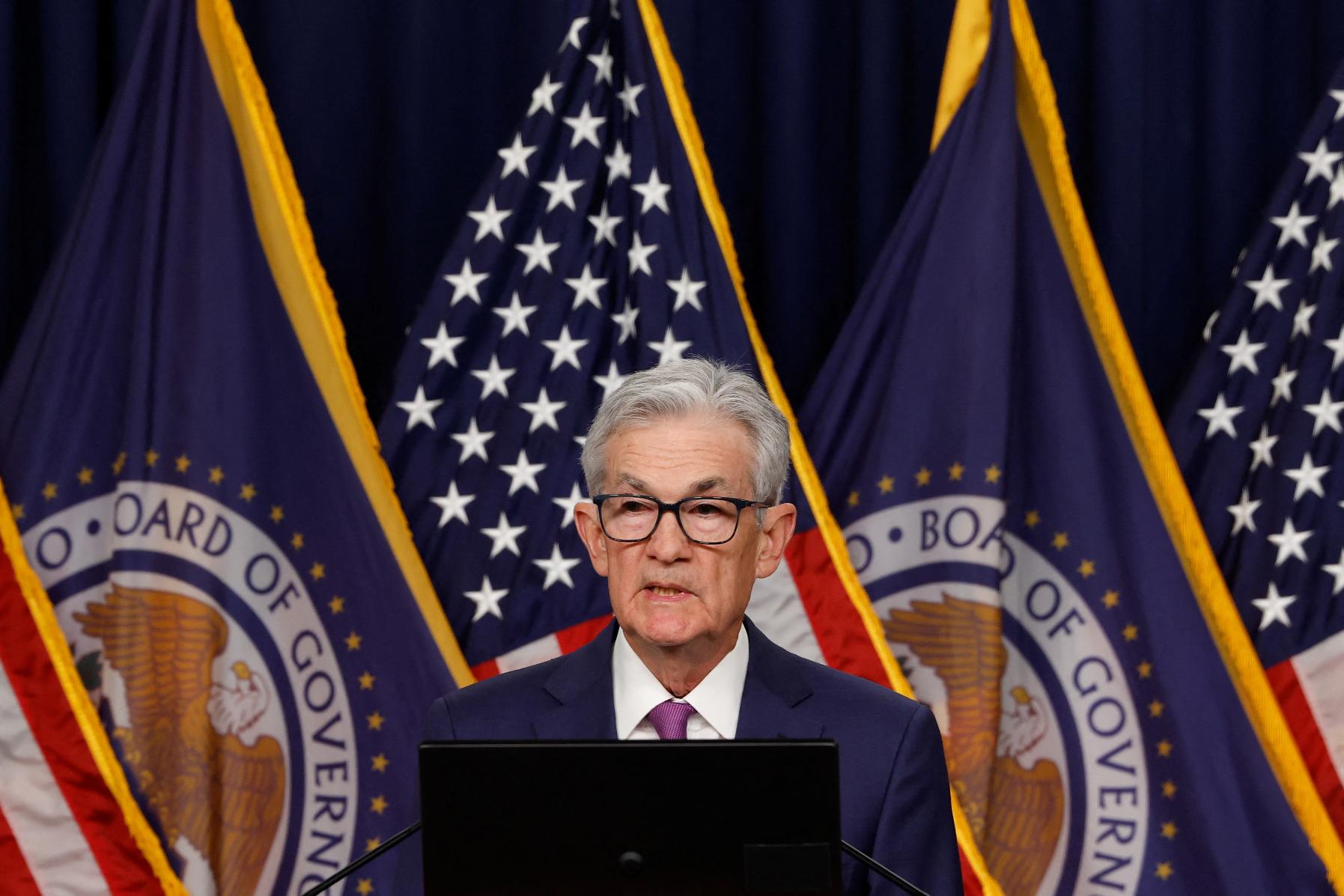
BENGALURU, March 11 (Reuters) - The U.S. Federal Reserve will cut its key interest rate in June, according to a stronger majority of economists in the latest Reuters poll, as the central bank waits for more data to confirm whether inflation is headed convincingly toward its 2% target. The survey also showed respondents saw it more likely that if Fed policymakers change their rate projections at the March 19-20 meeting the median view would signal fewer cuts this year, not more. In his latest testimony to the Congress, Fed Chair Jerome Powell reiterated policy easing would likely be "appropriate" at some point this year. But still-sticky inflation and a very resilient labor market could prevent an early rate cut. After a brief period of betting the first cut would come in March, and then shifting bets to May, financial market traders are more in line with comments from Fed officials, with rate futures also now priced for a first rate reduction in June. Unlike pricing in markets, most economists in Reuters surveys since September have been consistently forecasting a cut around the middle of 2024 and have grown even more convinced in the latest survey. While all 108 economists in the latest Reuters March 5-11 poll predicted the fed funds rate to stay in a 5.25%-5.50% range next week, a two-thirds majority, 72, said the first rate cut would come in June, compared to just over half in February. Seventeen said May and 19 said July or later. Around 85% of respondents to an additional question, 45 of 54, said the bigger risk was the first rate cut comes later than they expect rather than earlier. "The Fed is seeking 'greater confidence' on inflation before it starts normalizing its policy stance. We expect progress on inflation in coming months will give the Fed enough confidence to begin a gradual cutting cycle in June," said Michael Gapen, chief U.S. economist at Bank of America. "A more forward-looking Fed might put more weight on low inflation expectations and cut sooner, but this Fed is data dependent and wants to avoid backtracking after it starts." Despite personal consumption expenditure (PCE) inflation falling to 2.4% in January from its peak of around 7.0% in June 2022, policymakers have said they are waiting for more confidence inflation is moving sustainably to the Fed's 2% target. In testimony last week, Powell said "we're not far from it." PCE inflation, the Fed's preferred gauge, was forecast to average 2.2% this year and 2.0% in 2025 and 2026, according to the poll. But other inflation measures - the consumer price index (CPI), core CPI, and core PCE - were still seen above target at least until 2026. The world's largest economy was predicted to expand at an average 2.1% this year, above what Fed officials regard as the non-inflationary growth rate of around 1.8%, suggesting the Fed would not be in a rush to cut rates fast. While there was no clear consensus on the magnitude of rate cuts this year, nearly 50% of respondents, 52 of 108, saw three-quarter percentage points of easing or less, including 43 who matched December's median dot plot projection of 75 basis points of cuts. Asked what was the bigger risk if the Federal Open Market Committee's dot plot projection changes next week, an overwhelming majority, 38 of 44, said it would predict fewer cuts this year. Only six said more. "It only takes two dots moving higher to shift the median from 75 bps of cuts to 50 bps of cuts. A stronger-than-expected inflation report would increase the risk of an upward revision to the 2024 median dot," said Andrew Hollenhorst, chief U.S. economist at Citi. "But given more hawkish Fed officials are already above the median and Powell's desire to preserve consensus, we think the most likely case is the 2024 median stays put signaling 75 bps of cuts this year." (For other stories from the Reuters global economic poll:) https://www.reuters.com/markets/us/fed-start-rate-cuts-june-risk-fewer-delivered-this-year-2024-03-11/
2024-03-11 14:50
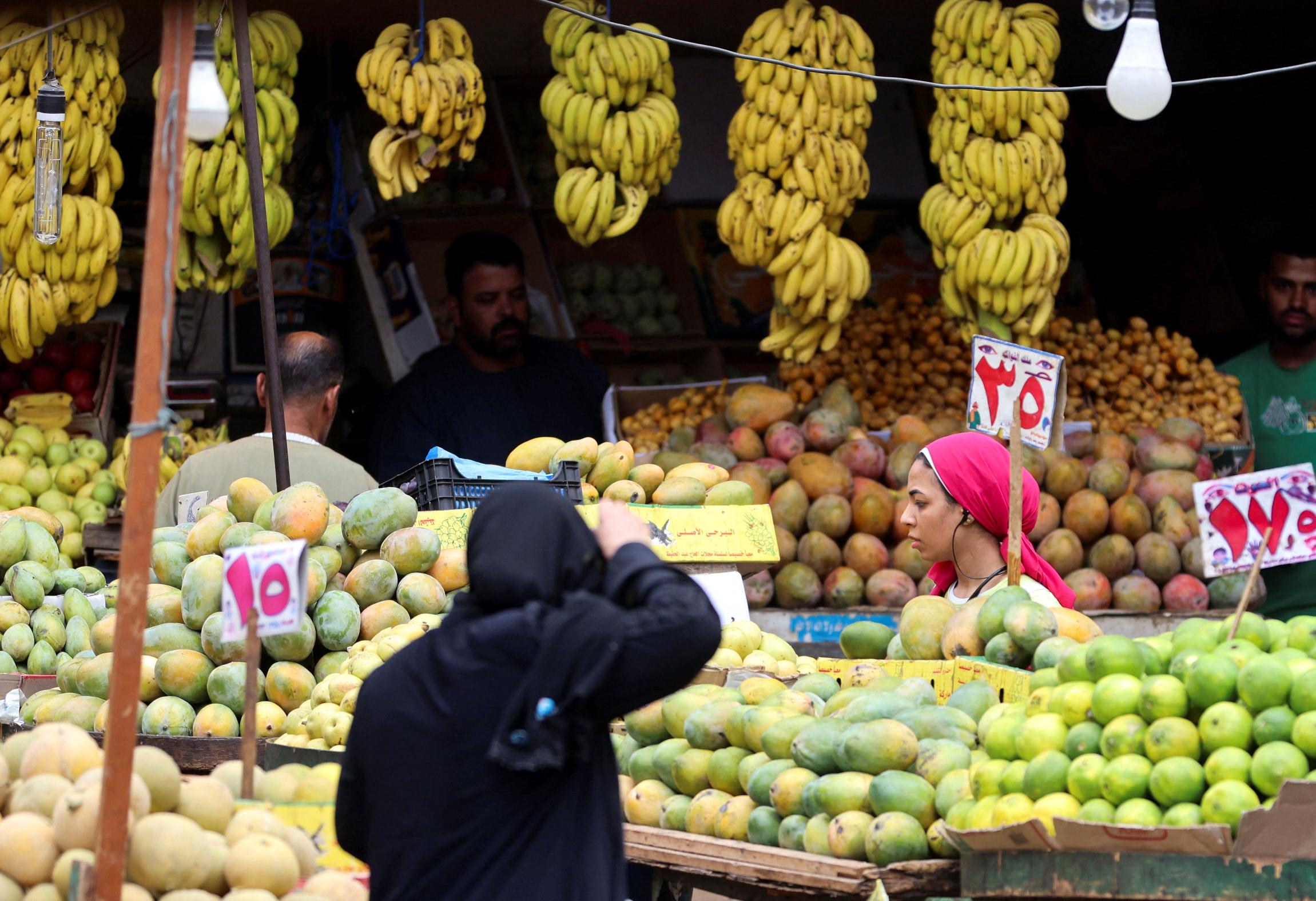
LONDON, March 11 (Reuters) - JPMorgan forecast on Monday that Egypt's central bank could hike its key interest rate by another 200 basis points later this month amid signs that inflation was going "to the moon" following a bumper currency devaluation. Egypt’s February consumer price inflation print saw the biggest sequential pace on record; jumping by 11.4% month-on-month from 1.6% in January, far outstripping economists' expectations. "We now expect an additional 200 basis point hike to the deposit rate at the next meeting, which could yet be later this month as per the original (central bank) schedule," JPMorgan's analysts said in a research note. They added that they no longer saw "any scope" for rate cuts until February 2025. https://www.reuters.com/markets/rates-bonds/jpmorgan-sees-new-200-bps-egypt-rate-hike-inflation-goes-moon-2024-03-11/
2024-03-11 13:05
OTTAWA, March 11 (Reuters) - Alberta's ban on some renewable projects could hurt C$11.1 billion ($8.24 billion) in investments and stall up to 6.3 gigawatts (GW) of solar and wind power capacity, a study said on Monday. The new rules potentially affect 42 projects and several thousand jobs, the Pembina Institute, an Alberta-based clean energy think tank, said in the study. Last month, Canada's main oil-producing province implemented a ban on renewable power projects proposed for prime agricultural land and also ordered the creation of buffer zones so that wind turbines do not spoil scenic views. The provincial government has, however, said exceptions would be made if developers can show crops or livestock can exist alongside the project. Canada is the world's fourth-largest oil producer. The province is also a leader in renewables development. The ban has attracted criticism from some companies who have said the new rules would create uncertainty and jeopardize investments. It has put Premier Danielle Smith's provincial government at odds with Prime Minister Justin Trudeau whose Liberal government is drafting federal regulations to make provinces eliminate greenhouse gas emissions from their grids on a net basis by 2035. An email sent to the premier's office requesting comments on the study was not immediately answered. Out of 111 solar and 34 wind projects proposed in Alberta, 36 solar projects and six wind projects, which are either proposed or awaiting approval, could be affected, the study said. These projects can potentially double Alberta's current renewable capacity, it said. Separately, Alberta's government said it would make two temporary changes to reduce electricity costs. New regulations will limit the offer price of natural-gas generating units owned by large generators and require natural gas generating assets to be available during extreme weather and peak demand. In January, frigid weather strained Alberta's grid, causing the electric system operator to warn it may impose rolling outages. Consumers cut their electricity use and the grid avoided outages. ($1 = 1.3478 Canadian dollars) https://www.reuters.com/sustainability/albertas-ban-renewables-could-hurt-c11-bln-investments-says-study-2024-03-11/

2024-03-11 12:27
BERLIN, March 11 (Reuters) - Germany's national rail operator, Deutsche Bahn, on Monday lost a lawsuit against train drivers' union GDL that aimed to stop another round of planned strikes in cargo and passenger transport from going ahead. The GDL announced on Sunday its sixth round of strikes in a long-running dispute over working hours and pay. A 24-hour walkout at Deutsche Bahn's cargo division started on Monday at 1700 GMT, with another 24-hour strike by passenger train drivers set to follow from 0100 GMT on Tuesday. "We consider these wave strikes to be disproportionate," Deutsche Bahn human resources director Martin Seile said. "They jeopardise supply in the country. We are doing everything in the interests of our customers to prevent this strike." Deutsche Bahn said the 22-hour notice given in the case of the cargo rail strike was particularly short. It was appealing the labour court's decision, it said. GDL head Claus Weselsky said earlier on Monday that the union would push ahead with its so-called wave strikes - a series of actions called at short notice - to put pressure on Deutsche Bahn. "We will not say how much we will strike and until when," Weselsky said, refusing to be drawn on whether the strike would impact the busy Easter holidays. https://www.reuters.com/world/europe/deutsche-bahn-sues-union-bid-halt-german-rail-strike-2024-03-11/

2024-03-11 12:09
LONDON, March 11 (Reuters) - Britain's energy regulator Ofgem on Monday launched a call for input to help protect consumers amid high energy costs and find ways to address a record 3.1 billion pound ($3.98 billion) pile of unpaid bills. Although energy prices have fallen in recent months, affordability for many households remains a concern, while Ofgem last month said customer debts, or unpaid bills, have risen. "Many people have been struggling to pay their energy bills amid unprecedented levels of debt, and the legacy of this risks becoming an enduring problem," said Tim Jarvis, Ofgem's Director General for Markets. Ofgem already has a price cap in place, but this soared to 3,549 pounds a year for an average household in October 2022 after Russia’s invasion of Ukraine led to record wholesale energy prices, and peaked at over 4,000 pounds in January 2023. To prevent crippling costs for households, the government subsidised energy bills to limit them at 2,500 pounds a year for average use until end June 2023 when the Ofgem cap fell back below this level. Ofgem has previously said Britain should consider launching a social tariff for household energy which would see those most vulnerable and least able to pay charged a lower price for their power, but said this would be a decision for the government. The regulator is seeking input by a deadline of May 13 from consumers, energy suppliers, consumer groups, charities, and debt management companies in particular. ($1 = 0.7788 pounds) https://www.reuters.com/world/uk/uks-record-unpaid-energy-bills-prompt-regulator-ask-ideas-2024-03-11/
2024-03-11 12:08
March 11 (Reuters) - Brazil's monthly inflation rate likely accelerated to a one-year high in February, a Reuters poll found, from where it should begin to fall back again in coming months due to abundant supplies of farm products and softer economic conditions. Except for some seasonal effects, consumer prices in Brazil have remained tame since the start of 2023, thanks to a tight policy stance by the central bank that is causing the economy to cool, despite a raft of modest rate cuts. Official inflation data on Tuesday are forecast to show a faster monthly clip for February, rising to 0.78% - likely the highest since February 2023 - from 0.42% in January, according to the median estimate of 25 economists polled between March 6-11. "We expect a rise of 0.78% on the back of a seasonal hike of tuition fees, while fuel prices were impacted by the increase of the ICMS (state tax)," said Mauricio Nakahodo, senior economist at MUFG. Brazil's bi-weekly inflation gauge picked up in mid-February driven by higher education prices. The sector led an overall rise with a 5.07% jump mainly due to seasonal hikes in school fees. On a yearly basis, consumer prices are predicted to have increased 4.44% last month, slowing down from 4.51% in January and returning to the official target for 2024 of 3% plus/minus 1.5 percentage points. One of the reasons behind this is the country's consolidation as one of the world's top food producers. In the most recent sign of progress, Brazilian sugar exports jumped 162% and coffee shipments rose 77% last month. At the same time, pressure on domestic consumer prices continues to decrease as Latin America's No.1 economy slows down. The Brazilian central bank's modest campaign of rate cuts has restrained bank lending. The monetary authority's benchmark for the cost of borrowing is 11.25%. Very high real rates are restraining economic growth and reducing companies' pricing power. In the medium-term, inflation is now seen ending 2024 at 3.76%, according to a weekly central bank poll among private sector economists. The latest consensus estimate was lower than 3.80% in the previous week. "Broadly, we think that inflation will moderate from current levels in 2024 ... as the demand-supply gap narrows, the labour market cools slightly, and global price pressures subside," Societe Generale analysts wrote in a report. https://www.reuters.com/world/americas/brazil-feb-monthly-inflation-forecast-one-year-high-2024-03-11/