2024-03-11 10:23
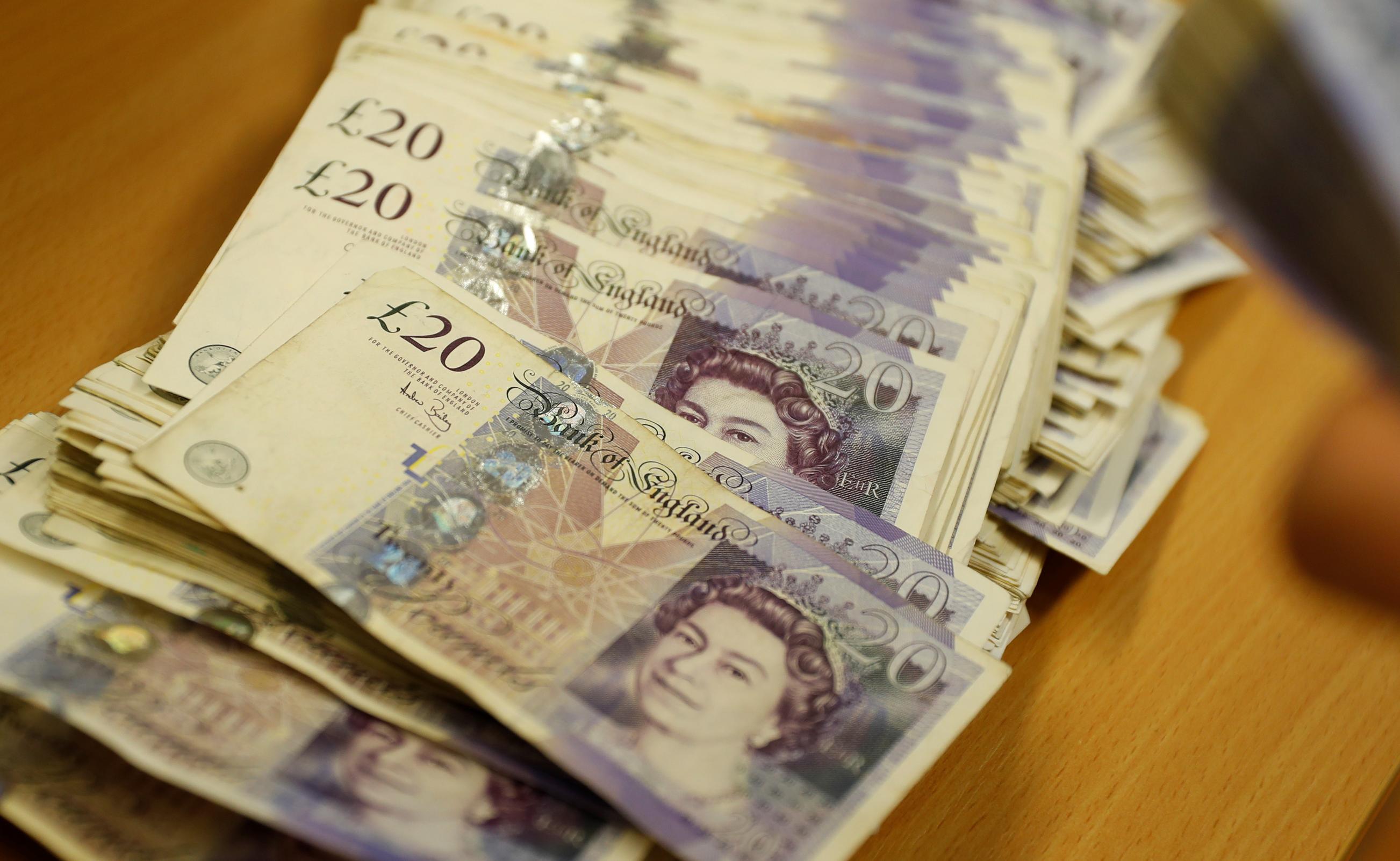
LONDON, March 11 (Reuters) - The British pound traded just below a seven-month high touched last week on Monday as investors digested recruitment data and looked ahead to Tuesday's wage and employment figures. Sterling was last down 0.1% at $1.2841 after jumping 1.6% last week as investors bet that the Bank of England will be slower than the European Central Bank and U.S. Federal Reserve in cutting interest rates. The euro was up 0.1% at 85.15 pence, reversing some of last week's 0.6% drop. The minor dip in the pound came after data showed Britain's labour market slowed sharply in February as recruitment firms reported the biggest drop in demand for staff from employers since the coronavirus lockdown of early 2021. Investors now turn their attention to Tuesday's figures, where the focus will be on the pace of average earnings growth. It is expected to have remained high at 6.2%, excluding bonuses, in the three months to the end of January, unchanged from December. "The pound continued to hold on to recent gains, having been buoyed by diverging interest rate cut expectations," said Nikesh Sawjani, UK economist at Lloyds, in a research note. "A key focus will be the weekly earnings growth data which remain above levels consistent with the Bank of England’s 2% inflation target. Headline pay growth has moderated in recent months... but policymakers will be looking for more progress." Investors will also pay close attention to the U.S. consumer price index inflation data, due in the UK afternoon on Tuesday. The dollar index was flat on Monday at 102.68 after dropping 1.1% last week on the back of weaker-than-expected labour market data, which boosted the pound and other currencies. Money market pricing on Monday showed that traders think the first BoE rate cut will most likely come in August, whereas they think the ECB and Fed will probably cut in June. https://www.reuters.com/markets/currencies/sterling-dips-seven-month-high-with-jobs-data-focus-2024-03-11/
2024-03-11 10:14
A look at the day ahead in U.S. and global markets from Mike Dolan Wall Street's most bizarre reaction to the relatively benign U.S. employment report on Friday was a late selloff in stellar Nvidia - the artificial intelligence poster child that's almost doubled in price again this year. Although many dismissed Nvidia's late 5% recoil (.NVDA) , opens new tab as merely overdue profit taking on its latest near-90% surge so far this year, the stock fell another 1.5% overnight before recovering that ahead of Monday's bell. And the move stopped Nvidia overtaking Apple as the second most valuable company. And there's an inevitable search for some smoking gun. Chipmakers Broadcom (AVGO.O) , opens new tab and Marvell Technology (MRVL.O) , opens new tab also fell on Friday after their quarterly reports failed to impress investors. Hardly a game changer in itself, but Nvidia has been sued by three authors who said it used their copyrighted books without permission to train its NeMo AI platform. And in another tech sideswipe on Monday, the European Union's privacy watchdog said the European Commission's use of Microsoft (MSFT.O) , opens new tab software breached EU privacy rules and the bloc's executive also failed to implement adequate safeguards for personal data transferred to non-EU countries. Either way, the pullback does come after a wobbly week for the leading "Magnificent Seven" of megacaps - perhaps indicating some feeling that they'd all come a little too far too fast. After hitting record highs earlier in the session, the S&P500 (.SPX) , opens new tab ended down 0.6% on Friday and futures were in the red again early Monday. The hiccup was hardly a reflection of the February employment report - which was another statement on the rude health of the U.S. economy. New payrolls beat forecasts last month, but the overall labor market cooled with a rise in the jobless rate and ebbing of wage growth. That nailed in June for a first interest rate cut from the Federal Reserve and saw full-year easing expectations climb to 95 basis points and two-year Treasury yields drop to the lowest in a month. And that all sets up Tuesday's consumer price report for February as the next key moment in the Fed's assessment of the disinflation path. Headline annual CPI inflation is expected to remain steady at 3.1% - with the "core" rate ebbing to 3.7% from 3.9% the prior month. By contrast overseas, China's jarring bout of deflation appears to have eased somewhat as weekend data showed annual CPI inflation there for the first time in six months - exceeding forecasts with a 0.7% advance. And yet downward price pressures persisted with a deeper 2.7% annual slump in producer prices. How much the Lunar New Year holiday affected the readouts remains to be seen, but China's stock benchmarks (.CSI300) , opens new tab advanced 1.2% on Monday nonetheless amid some relief. China has also asked banks to enhance financing support for state-backed China Vanke and called on creditors to consider private debt maturity extension, in a rare intervention from central government to help an embattled property firm. In Japan, speculation about a Bank of Japan policy tightening as soon as this month has intensified over the past week and fourth-quarter GDP revisions on Monday saw initial indications of late 2023 recession magiced away. Although below the latest forecasts, Japan's revised gross domestic product expanded at an annualised clip of 0.4% in the October-December period, better than the initial estimate for a 0.4% contraction. But with the yen pushing one-month highs again on Monday amid the BOJ concerns, Japan's Nikkei (.N225) , opens new tab skidded 2% lower - with chip-equipment maker Tokyo Electron (8035.T) , opens new tab losing 3% and chip-testing equipment maker Advantest (6857.T) , opens new tab off almost 5%. Elsewhere, the dollar (.DXY) , opens new tab was a touch lower. But bitcoin hit another record high above $71,000, as the surge in the token showed no signs of slowing down. Britain's financial watchdog on Monday became the latest regulator to pave the way for digital asset trading products after saying on Monday it will now permit recognised investment exchanges to launch crypto-backed exchange-traded notes. Key diary items that may provide direction to U.S. markets later on Monday: * New York Fed inflation expectations survey, US Feb employment trends * Eurogroup finance ministers meet in Brussels * U.S. Treasury auctions $56 billion of 3-year notes, and sells 3- and 6-month bills * U.S. corp earnings: Oracle https://www.reuters.com/markets/us/global-markets-view-usa-2024-03-11/

2024-03-11 10:02
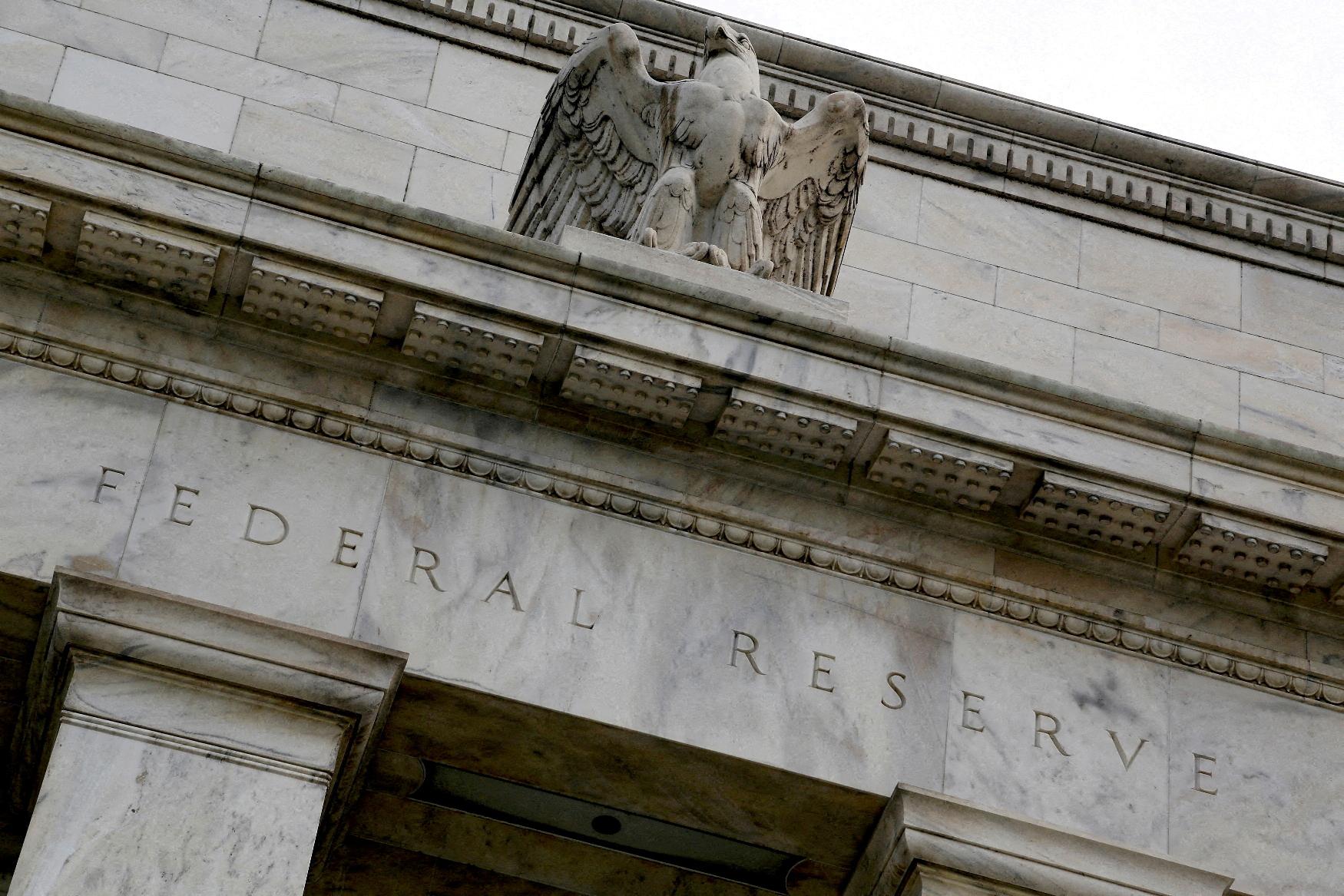
WASHINGTON, March 11 (Reuters) - No one expects the Federal Reserve to change interest rates at next week's policy meeting, but whether officials hold to their previous rate-cutting outlook is a more open question as the economy keeps outperforming expectations. Data since the Fed last met has confirmed policymakers' broadly shared baseline that their overnight interest rate will fall this year, with Fed Chair Jerome Powell telling U.S. lawmakers last week the central bank was "not far" from gaining enough confidence in declining inflation to reduce rates. But policymakers' new projections will show whether they now anticipate fewer than the three quarter-percentage-point reductions this year estimated in December, or if they still think the economy can continue expanding while inflation continues to fall, allowing rates to fall as well. It will be a vote, in effect, on whether improvements in the economy's supply dynamics and an unexpected jump in productivity can continue delivering a relatively pain-free easing of price pressures or if policymakers see slowing growth and tighter-for-longer policy as the cost of finishing their inflation fight. "There's always been doubt about the durability of the recovery, but the economy keeps wanting to chug along," Bank of America Chief U.S. Economist Michael Gapen said last week, outlining what he called "a no-landing scenario" in which supply side improvements let the Fed begin reducing interest rates in June while inflation falls and the economy continues to grow at 2% or more for the year, above many estimates of its underlying potential. Investors, who've blown hot and cold over whether a "soft landing" of low inflation and a low unemployment rate could be realized, also see a June start to rate cuts and will be looking for a signal about that when the Fed meets on March 19-20. The policy rate has been held steady in a 5.25%-5.5% range since July, a holding period between a final rate hike and rate cuts in line with previous monetary policy cycles. MIXED SIGNALS In December's projections, 11 of 19 policymakers saw at least three quarter-point cuts this year. As few as two officials taking a more hawkish view could shift the median forecast to suggest fewer cuts A key piece of data, the Consumer Price Index for February, will be issued on Tuesday. Economists expect core CPI, which excludes food and energy prices, to slow from the 3.9% rate posted in January. Even as investors have settled on a June rate cut, with a full percentage point in reductions expected this year, data - whether hard or anecdotal - since December's projections has been full of mixed signals. The jobs report for February, for example, showed the unemployment rate rose to 3.9% from 3.7% and month-to-month wage growth slowed, evidence the super-tight job market that developed during the pandemic may be edging back to normal. But headline job growth continues to run above average, hiring has become broader across industries, and wage growth measured year-over-year remains higher than the Fed feels is sustainable. Notably, the details of the jobs report show the rise in the unemployment rate reflected people joining the labor force, typically a sign of economic strength and confidence. The rise in the unemployment rate was "driven by movements on the periphery," rather than a jump in job losses, said Nick Bunker, research director for North America at the Indeed Hiring Lab. The data showed a possible slowdown in the job-finding rate, he said, but still strong participation among workers in the key 25-to-54 year-old demographic. The overall labor force rose for the first time in three months, by 150,000, helping keep the labor-force participation rate steady as around 1.9 million started a job search but had not yet landed employment - the biggest surge into the job market in more than two years. 'NOT SLOWING DOWN' The Fed's most recent collection of field reports about the economy, known as the Beige Book, indicated either steady or growing activity in 11 of 12 Fed regional districts. Based on contacts with businesses in the Southeast, Atlanta Fed President Raphael Bostic noted a sense of "pent-up exuberance" he said could stoke demand and price pressures if it all uncorked at once - just one of the "upside" inflation risks Fed policymakers have noted. Inflation data itself has shown both overly strong consumer price reports, with a continued escalation of housing costs, and moderating wholesale price data that helped keep the Fed's targeted measure of inflation moving lower. The Personal Consumption Expenditures price index used by the Fed to set its 2% target rose 2.4% in January. Even that close-to-target figure has left Fed officials reluctant to declare inflation dead or pin down the likely start of rate cuts. Beyond Powell affirming reductions are likely this year, colleagues like Governor Christopher Waller insist the strength of the data leaves them in "no rush" to decide, while Governor Michelle Bowman and others have noted that rising asset prices and looser financial conditions could feed inflation and possibly signal Fed policy is not as strict as thought. To some, that has left the outcome of the Fed's debate still up in the air. "The Fed will not cut rates this year and rates are going to stay higher for longer," Torsten Slok, chief economist for Apollo Global Management wrote in early March. "The reality is that the U.S. economy is simply not slowing down." https://www.reuters.com/markets/us/fed-projections-show-if-rate-cut-outlook-stays-intact-through-strong-data-2024-03-11/
2024-03-11 08:58
NAPERVILLE, Illinois, March 10 (Reuters) - Speculators have been selling Chicago-traded soybeans since mid-November, and that finally culminated in a record position last week as global stockpiles swell. In the week ended March 5, money managers lifted their net short position in CBOT soybean futures and options to a record 171,999 contracts from 160,653 a week earlier. That replaced the prior all-time net short of 168,835 contracts from May 2019. The move came despite a fractional gain in most-active soybean futures during the week, which included fresh 3-plus-year lows. That marked funds' 16th consecutive week as net sellers of CBOT soybeans, well past the prior record streak of 10 weeks. The last time money managers staged such a significant soybean sell-off was in May and June 2018 when the U.S.-China trade war started, though the 2018 sell-off happened much faster. The week ended March 5 was funds’ 14th of the last 15 weeks as net sellers in CBOT soybean meal, as their net short expanded by nearly 2,000 contracts to 49,526 futures and options contracts. That is money managers’ most bearish meal view since June 2020 and most bearish ever for early March. Their net short in CBOT soybean oil is also record for the date, and it expanded by more than 10,000 contracts in the week ended March 5 to 62,473 futures and options contracts. That is their most bearish oil stance since May 2019. Most-active meal futures had climbed 1.5% in the week ended March 5 while soybean oil shed just over 1%. Funds’ soy complex pessimism is near all-time highs, and the only other time it was anywhere close in intensity was April and May 2019. The combined managed money net short across soybeans and products totaled about 284,000 futures and options contracts as of March 5, just short of the May 2019 peak of 289,000. Expanding global soybean stocks and questionable Chinese demand have weighed on soy prices for months. Top exporter Brazil’s soy crop should be sufficiently large despite significant weather challenges earlier in the season, and the harvest last week reached the halfway mark, meaning those supplies are now hitting the market. Brazil’s second corn crop is just now being planted, though U.S. corn supplies later this year are set for a massive expansion versus the prior year. Ukraine’s corn shipments are surpassing expectations, as the U.S. Department of Agriculture on Friday raised Ukraine’s export outlook for a second straight month. Most-active CBOT corn futures drifted fractionally higher in the week ended March 5, though money managers were slight net sellers of the yellow grain, bumping their net short to 296,795 futures and options contracts from 295,258 a week earlier. CBOT wheat was by far the biggest loser in the week ended March 5, as most-active futures tumbled nearly 6%. Money managers were net sellers of more than 9,200 contracts, expanding their net short to 65,539 futures and options contracts. Funds’ CBOT wheat views have not drastically shifted for three months. CBOT corn, soybeans and soybean products may have found a temporary bottom last month. In the last three sessions, meal gained 3.5%, corn added 3.2%, soybeans were up 3% and soyoil added 2.5%. Corn on Friday hit one-month highs, soyoil three-plus-week highs, and beans and meal touched the highest levels in over two weeks. But wheat continued its poor showing, dropping 2.4% between Wednesday and Friday. CBOT wheat did notch decent gains on Friday, though not before printing the lowest price since August 2020. Friday’s price action was against the backdrop of a monthly USDA report, which came in mostly as expected, though many analysts were disappointed with the relatively small cut to Brazil’s soy crop. Karen Braun is a market analyst for Reuters. Views expressed above are her own. https://www.reuters.com/markets/us/funds-ink-all-time-bearish-soybean-bets-off-unprecedented-selling-streak-2024-03-11/

2024-03-11 07:41
FCA says exchanges can launch crypto-backed ETNs New ETNs can only be sold to professional investors Regulator says crypto poses harm for retail Follows SEC approval of ETFs in the U.S. LONDON, March 11 (Reuters) - Britain's financial watchdog on Monday approved the launch of crypto-backed exchange-traded notes for professional investors, becoming the latest regulator to allow digital asset products while trying to shield retail investors. Such products - bonds issued by financial institutions that track the performance of underlying assets - will only be available to investment firms and credit institutions approved to operate in financial markets, the Financial Conduct Authority (FCA) said in a statement. The FCA's ban on crypto exchange-traded notes (ETNs) and derivatives for retail investors would stay, it said, calling them "ill-suited" because of "the harm they pose". The London Stock Exchange said in a separate statement on Monday that it would accept applications for the admission of bitcoin and ether ETNs from the second quarter of this year. The crypto market has surged in recent months after the U.S. Securities and Exchange Commission (SEC) approved spot bitcoin exchange-traded funds while calling , opens new tab the token a "speculative, volatile asset that's also used for illicit activity" and urging investor caution. Bitcoin hit a record above $70,600 on Monday, boosted by the flood of cash into bitcoin ETFs and expectations the U.S. Federal Reserve will soon cut interest rates. The FCA said that with "greater insight and data from a longer period of trading history," professional investors can better establish whether crypto ETNs meet their risk appetite. Exchanges must ensure orderly trading and protection for investors, it said. Repeating warnings from recent years, however, the FCA said crypto was "high risk and largely unregulated," and that investors could "lose all their money". Jake Green, global head of financial regulatory at law firm Ashurst, said the FCA's position on crypto and retail investors was in a "state of flux". The watchdog "clearly does not want to go near" the notion that "retail investors may purchase crypto in the form of a financial instrument which FCA regulates," he said. https://www.reuters.com/technology/uk-financial-watchdog-will-not-block-requests-crypto-exchange-traded-notes-2024-03-11/

2024-03-11 07:25
WASHINGTON/LONDON, March 11 (Reuters) - Bitcoin hit a record high on Monday above $72,000, as the biggest cryptocurrency's surge showed no signs of slowing down. Bitcoin was last up 4.4% at $72,649 after reaching as high as $72,739. The world's most valuable cryptocurrency has been boosted by a flood of cash into new spot bitcoin exchange-traded funds and hopes that the Federal Reserve will soon cut interest rates. "The recent surge in Bitcoin's value ... underscores the remarkable strength and resilience of the leading cryptocurrency. This achievement not only marks a significant milestone but also reflects the continued confidence and demand in the market," Bitfinex analysts said in a research note. Flows of capital into the 10 largest U.S. spot bitcoin exchange-traded funds slowed to a two-week low in the week to March 8, but still reached almost $2 billion, LSEG data showed. "Bitcoin has started the week with a surge, dragging the rest of the cryptocurrency space higher with it," DailyFX strategist Nick Cawley said. Supply of bitcoin, which is limited to 21 million tokens, is set to get tighter in April, when the so-called "halving" event takes place. Every four years, the rate at which new supply is released into circulation, as well as the reward for crypto miners, is halved, which tends to support the price. Since bitcoin has less than two decades as a financial asset, predicting its price trajectory remains extremely challenging. Just months after retail exuberance helped drive bitcoin to its previous record in November 2021 the cryptocurrency crashed, taking half the crypto industry with it. Britain's financial watchdog on Monday became the latest regulator to pave the way for digital asset trading products after saying on Monday it will now permit recognized investment exchanges to launch crypto-backed exchange-traded notes. The UK regulator said these products would be only available for professional investors such as investment firms and credit institutions authorised to operate in financial markets, the Financial Conduct Authority (FCA) said in a statement. The FCA warned that crypto exchange traded notes (ETNs) - bonds issued by financial institutions that track the performance of underlying assets - could harm retail investors. Nonetheless, demand is picking up across the investment community. Asset managers now hold the biggest bullish position in bitcoin futures on record, weekly data from the U.S. Commodity Futures Trading Commission showed. In the week to March 5, the net long position held by asset managers - usually interpreted as covering holdings of institutional investors such as mutual funds and pension funds - rose to 15,531 lots, worth $5.5 billion based on the current bitcoin price. Ether rose 3.97% to $4,062.07, around its highest for two years. Speculation that U.S. regulators may approve the listing of spot ether ETFs this year has driven the price up 75% this year. In crypto stocks, shares of Coinbase (COIN.O) , opens new tab rose 2.8%, while crypto miners Riot Platforms (RIOT.O) , opens new tab and Marathon Digital (MARA.O) , opens new tab fell 2.2% and 6.1%, respectively. https://www.reuters.com/technology/bitcoin-hits-new-record-high-above-70400-2024-03-11/