2024-03-11 07:21
Boeing among dozen US firms to attend Vietnam defence talks on March 18 US advocacy group has drafted deal on aviation, crime prevention SpaceX not joining business mission as Starlink talks on hold, group says HANOI, March 11 (Reuters) - A dozen U.S. firms will hold meetings with Vietnam's public security and defence ministries next week, when a U.S. business group aims to sign a deal to facilitate the supply of gear to the country's police, the organiser told Reuters. The meetings, slated for March 18, are part of the dialogue that led to an upgrade of ties in September during a visit to Hanoi by President Joe Biden, as Washington seeks to gain influence in the strategic Southeast Asian nation, which also has ties to China. The non-binding agreement could be signed on the sidelines of the meetings and would make future deals easier, said Vu Tu Thanh, a representative of the US-ASEAN Business Council (US ABC), the advocacy group that organises the event. He noted that the group has in past years signed similar pacts with other Vietnamese ministries. US ABC has discussed for months the memorandum of understanding with Vietnam's Public Security Ministry, Thanh said, noting that the deal would be between the ministry and US ABC, with no direct involvement of the companies. Thanh said aerospace and defence giant Boeing (BA.N) , opens new tab would join the meetings, but did not disclose the full list of participants and declined to say whether U.S. companies involved in past defence talks would attend. "Boeing will highlight the company's growing partnership with Vietnam and opportunities to strengthen the country's aerospace capabilities," Boeing told Reuters in an emailed statement. ATMO, a U.S.-based provider of AI-powdered meteorological services to governments and militaries, will also join the meetings, Thanh and the company said. US ABC, whose members include several large U.S. corporations, has sent a draft of the agreement to the public security ministry, covering sectors where "our companies can help", including for the provision of crime detection and prevention technology, big data analysis, helicopters, aviation services, and cybersecurity, Thanh said. The details of the talks with the security forces of the Communist-ruled country have not been previously revealed. It is not clear whether the ministry would sign the agreement, Thanh said. The ministry did not reply to a request for comment. Vietnam's parliament approved in June 2022 the establishment of a mobile police unit to tackle crime, terrorism and riots, and the unit needs additional equipment, including helicopters, according to the government and the text of the 2022 legislation. U.S. officials have publicly said Washington would be willing to boost Vietnam's defence, especially in the South China Sea, where it is often at odds with China over disputed boundaries. Support for the police could be more controversial. The latest U.S. State Department's report on human rights in Vietnam, released last year, warned of significant violations and cited "credible reports that members of the security forces committed numerous abuses". Vietnam's foreign ministry has said the report was biased and was based on inaccurate information. SpaceX, which joined a large U.S. business delegation to Vietnam last year, will not participate in next week's meetings, after the company failed to get a licence for its satellite communication and defence service Starlink in Vietnam, Thanh said. Reuters exclusively reported in February that SpaceX's talks with Vietnam over Starlink had been put on hold. SpaceX did not reply to a request for comment outside U.S. business hours. The security workshops will open a week of meetings between Vietnamese government officials and representatives from about 50 U.S. companies, part of a U.S. business mission to the country, Thanh said. https://www.reuters.com/world/us-business-group-seeks-security-equipment-deal-with-vietnams-police-2024-03-11/

2024-03-11 07:10
ABUJA, March 11 Reuters) - Blessing Joseph has been weaving bags, sandals and jewellery earning enough money to feed her son and send him to school. But since November, she has fallen on hard times as customers have stopped coming and she and her son routinely go to bed hungry. She is among millions in Africa's largest economy, grappling with the worst cost of living crisis in decades, that has deepened since President Bola Tinubu introduced bold but unpopular economic reforms after he assumed office last May. Last year, Joseph could easily make 30,000 naira ($18.83) a week but now she will be lucky to get 5,000 naira, she said. "People used to place orders. I'll design for them, sometimes even (for) weddings I'll make souvenirs for them, but now those orders are not coming," said the 29-year-old Abuja resident. "It has been very, very difficult, especially that I have a son and he needs to go to school, he needs to eat." Tinubu inherited an economy that was already struggling with record debt, high unemployment, low oil output, subsidies that drained government finances and power shortages that have crimped growth. Nigeria imports food and fuel and was buffeted by high global prices due to the Russia-Ukraine war, just as it had exited a COVID-19 induced recession in 2020. Tinubu, who campaigned on a "Renewed Hope" slogan, removed a costly petrol subsidy and foreign currency controls, in an effort to improve government finances, restore credibility with investors and kick-start the economy. But inflation has soared to its highest in three decades and the naira currency is slumping to record lows, pressured by acute dollar shortages. Prices of food, cooking gas, medicines, fuel, and public transport have shot up, squeezing household budgets. "With about 8 percent of Nigerians deemed food insecure, addressing rising food insecurity is the immediate policy priority," the International Monetary Fund said on March 4. after a staff visit. Nigeria's problems have also rippled through company boardrooms. Foreign companies like Procter & Gamble will stop manufacturing in Nigeria, while drug makers GSK Plc and Bayer AG will contract third parties to distribute their products, in part due to tough operating conditions and the naira slump. Africa's biggest telecoms operator MTN Group (MTNJ.J) , opens new tab posted a big fall in full-year profit citing naira devaluation, which also prompted soap maker PZ Cussons Plc (PZC.L) , opens new tab to issue a profit warning. FOOD PRICE SURGE At Agodo market in Lagos, tomato seller Farouk Dalhatu has just served his first customer in eight hours. The market is unusually quiet for the time of day when there is often a cacophonous din of traders and customers haggling over prices. A basket of tomatoes now costs 55,000 naira - about double the national minimum wage - up from 12,000 naira in December. That has forced many of Dalhatu's friends to quit the business. "They are just trying to find what they can eat now and not do the tomatoes business," he said, pointing to several empty stalls. Escalating food prices are the major driver of inflation. Widespread insecurity in food growing areas - including abduction for ransom by armed gangs, a long-running Islamist insurgency and farmer-herder clashes - is adding to the woes by keeping many farmers away from their fields. "We have an emergency on our hands in terms of the social consequences of this reform, in terms of this food insecurity," said Muda Yusuf, CEO at business advocacy firm Promotion of Private Enterprise, referring to the currency and fuel subsidy reforms. Labour unions led some protests last month and have threatened to shut down the country to demand a tenfold rise in the minimum wage. In response, the government on Thursday started national consultations on a new monthly minimum wage, which has been pegged at 30,000 naira since 2019. A presidency spokesman declined to comment, but Tinubu's administration has announced handouts of cash, grains, fertiliser and seed to vulnerable groups. Unions say this is not enough and that focus should be on "substantive issues" that have been under discussion with the government since June 2023. "These include critical matters such as wage increases, social welfare programs, infrastructure development, and the revitalisation of key sectors such as education and healthcare," the Nigeria Labour Congress said in a statement. For Joseph in Abuja, a thriving business and providing for her son is all she wants. "I am just thinking about what he will eat if he comes back (from school)," she said while shuffling through empty pots. ($1 = 1,593.3400 naira) https://www.reuters.com/world/africa/hard-times-nigeria-reforms-deepen-cost-living-crisis-2024-03-11/

2024-03-11 06:57
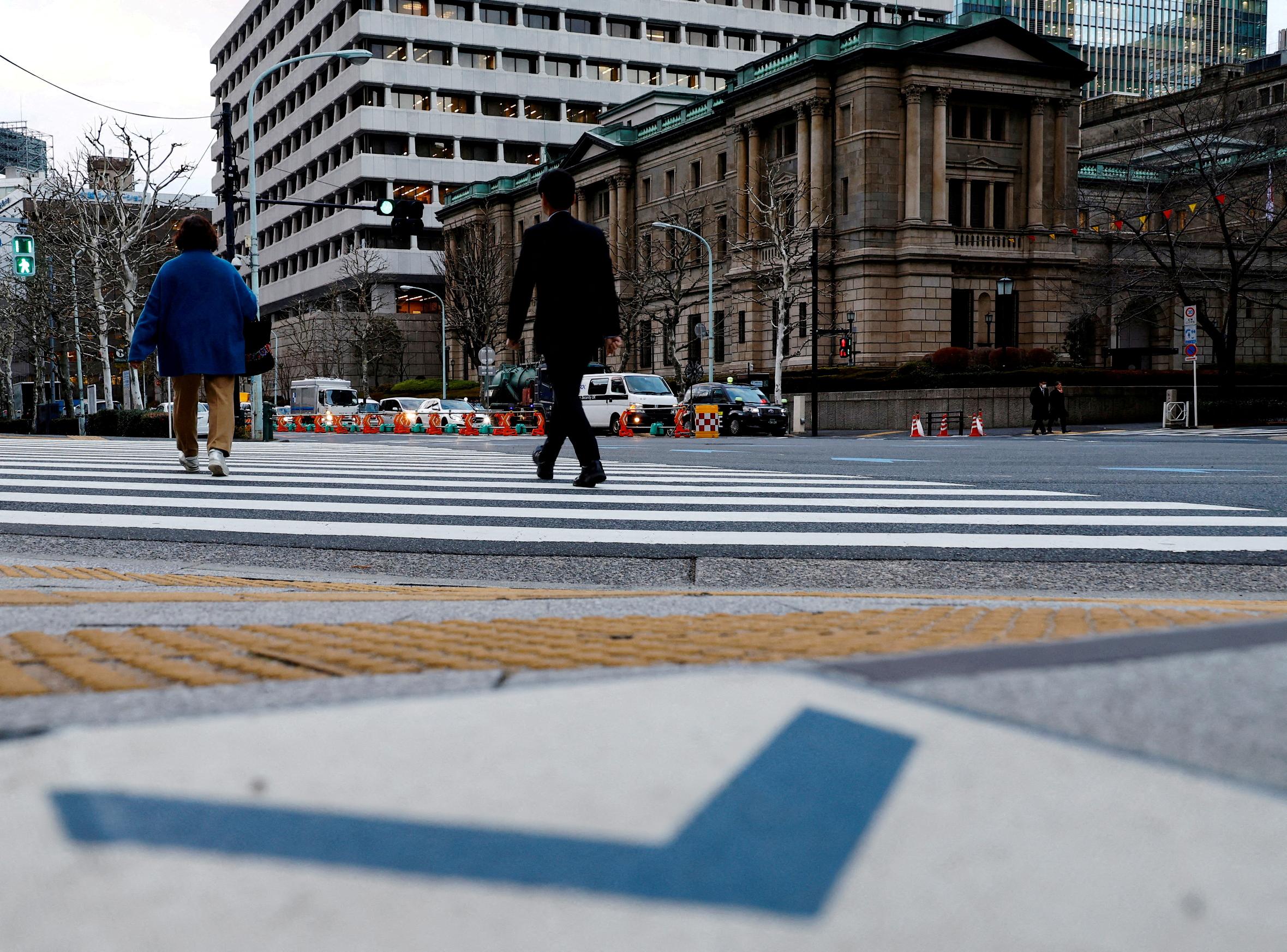
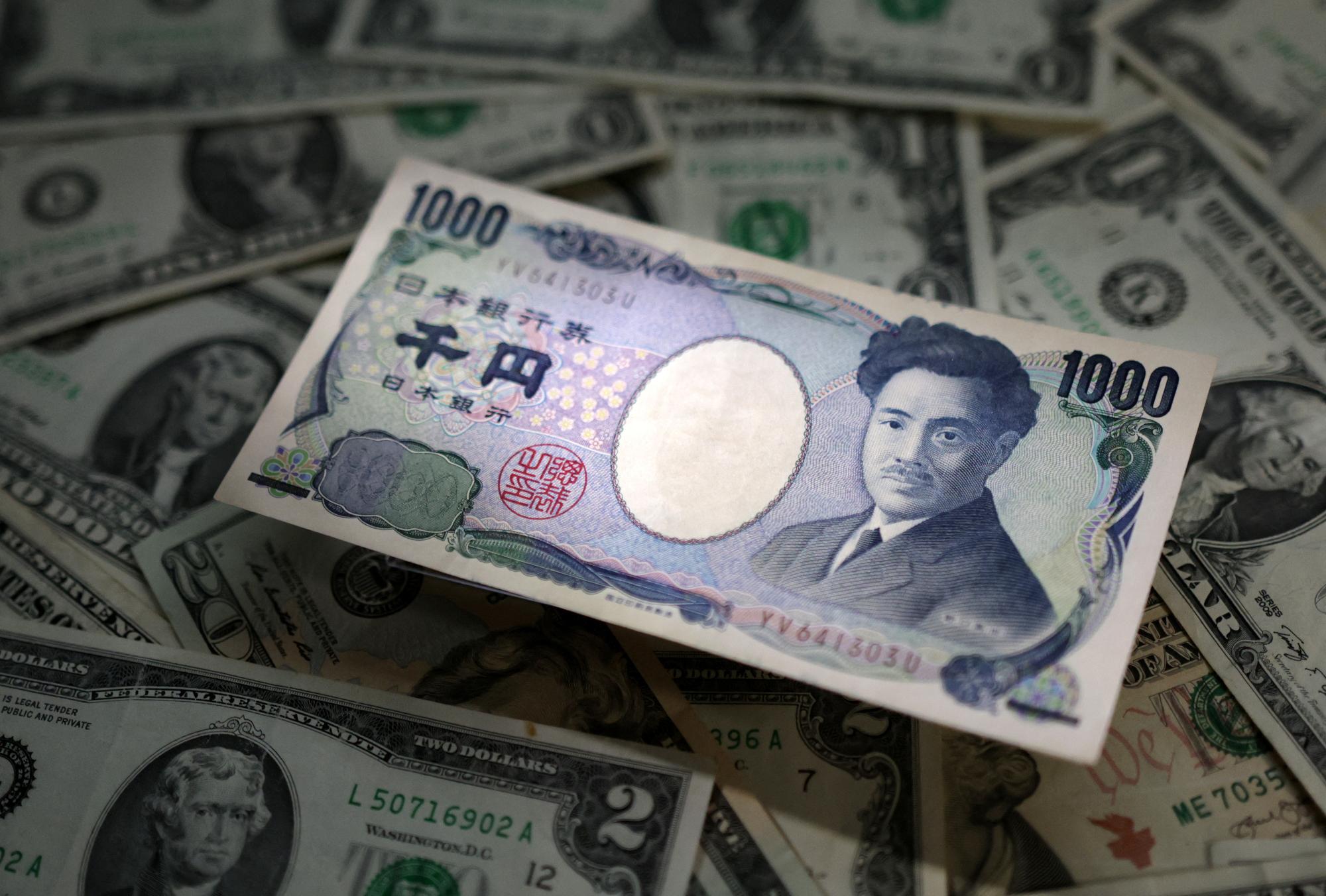
Japan avoids technical recession in Q4 -data Investors eye BOJ exit from negative rates next week Focus on U.S. CPI on Tuesday NEW YORK, March 11 (Reuters) - The yen drifted higher against the U.S. dollar for a fourth straight session on Monday, bolstered by an upward revision to Japan's growth figures and expectations the Bank of Japan could exit negative rates at its policy meeting next week. In cryptocurrencies, bitcoin soared to a fresh record high above $72,000 underpinned by a surge in inflows into new spot exchange-traded funds for the digital asset. Hopes that the Federal Reserve will soon cut interest rates have also lifted bitcoin, which was last up 5.3% at $72,033 . The market though remains focused on the yen and BOJ. In afternoon trading, the dollar was at 146.94 yen , down 0.1% on the day. A growing number of BOJ policymakers are warming to the idea of ending negative rates at their March 18-19 meeting, sources told Reuters, amid expectations for hefty pay rises from Japan's biggest firms. Results of this year's annual "shunto" wage negotiations are due on Wednesday. At the same time, an upward revision to Japan's economic growth last quarter meant the country avoided a technical recession, adding to the argument the economy could weather tighter policy. "We have gone from focusing on the April meeting for the BOJ to make a rate move to March. But I prefer a policy move in April right now," said Amo Sahota, executive director at FX consulting firm Klarity FX in San Francisco. "They have been slow to act all this time, so what's the hurry now all of a sudden. We had the GDP revision but there's nothing there that says Japan is about to go explosive in growth and prices that they need to come in really hard right now. I think they have little more capacity to wait." The dollar index rose 0.2% to 102.85, not far from the nearly two-month low of 102.33 reached on Friday when monthly payrolls figures signalled a cooling U.S. labor market, keeping the Fed on track to ease policy this year. The data did show downward revisions to January's blowout number. "(Fed Chair Jerome) Powell has said time and time again that the Fed has been looking for softening in the labor market, and it appears Friday's release - though on the surface quite hot - might have shown the cracks necessary to move the needle earlier," said Helen Given, FX trader, at Monex USA in Washington. Traders currently see June as most likely for the first cut, bets that could be moved by important consumer price index inflation data on Tuesday. The euro slipped 0.1% to $1.0924 after jumping as high as $1.0980 on Friday for the first time since Jan. 12. The European Central Bank left rates at record highs last Thursday while cautiously laying the ground to lower them later this year. Sterling dropped 1.1% against the dollar to $1.2807, after pushing to the highest since late July at $1.2890 on Friday amid bets the Bank of England will be slower to cut rates than the Fed or ECB. The British currency faces a test on Tuesday with the release of jobs and wage data. Investors will be focused on Tuesday's consumer prices index (CPI) report, with the market forecasting headline CPI for February to rise 0.4%, from 0.3% in January, according to a Reuters poll. Core CPI, on the other hand, is seen at 0.3%, down from 0.4% in January. The year-on-year core CPI, however, is expected to have slipped to 3.7% in February, from 3.9% in the previous month. "When you look at CPI, you're really thinking about (Fed Chair Jerome) Powell's comments that they just need a little more evidence," said Klarity FX's Sahota. "And even if that evidence is showing that inflation is the same as it has been, then that's good enough for them to feel better conviction that they want to take rates lower." The Australian dollar was down 0.2% at US$0.6610 after jumping last week as the U.S. dollar fell on the back of the slowdown in the labor market. https://www.reuters.com/markets/currencies/yen-gains-bets-firm-imminent-rate-hike-sterling-slides-2024-03-11/
2024-03-11 06:15
U.S. CPI data due on Tuesday Bullion hit record high just shy of $2,195 on Friday Speculators raised net long positions in gold last week - CFTC March 11 (Reuters) - Gold edged up on Monday, trading near its highest ever level after a record rally last week, as traders hunkered down for U.S. inflation data that could provide more clarity on the Federal Reserve's interest rate trajectory. Spot gold was up 0.2% at $2,181.47 per ounce at 3:38 p.m. ET (1937 GMT), after hitting a record high on Friday at $2,194.99 following U.S. labour market data that boosted rate cut bets. U.S. gold futures settled 0.1% higher at $2,188.6. The U.S. consumer price inflation (CPI) data for February is due on Tuesday. If the data "comes in hot, above last month's report, then that's going to probably be a little troublesome to the gold market (and) might cause some near-term selling pressure", said Jim Wyckoff, senior analyst at Kitco Metals, adding it is very likely gold will see new highs in the near term. Traders are pricing in an around 70% chance of an interest rate cut by June, according to the CME FedWatch tool. Low interest rates help gold prices as they reduce the opportunity cost of holding zero-yield bullion. Central bank buying has also been supportive for gold. Reflecting bullish sentiment, COMEX gold speculators raised their net long positions by 63,018 contracts to 131,060 in the week ended March 5, data on Friday showed. "With large speculators having increased net-long exposure at their fastest weekly pace in 3.5 years last Tuesday, gold is clearly in demand and not a market to short for any length of time whilst traders expect Fed cuts," City Index senior analyst Matt Simpson said. Spot silver rose 0.6% to $24.45, while platinum gained 2.5% to $935.02 per ounce and palladium added 0.8% to $1,027.55. https://www.reuters.com/markets/commodities/gold-rally-hits-pause-ahead-us-inflation-data-2024-03-11/

2024-03-11 06:11
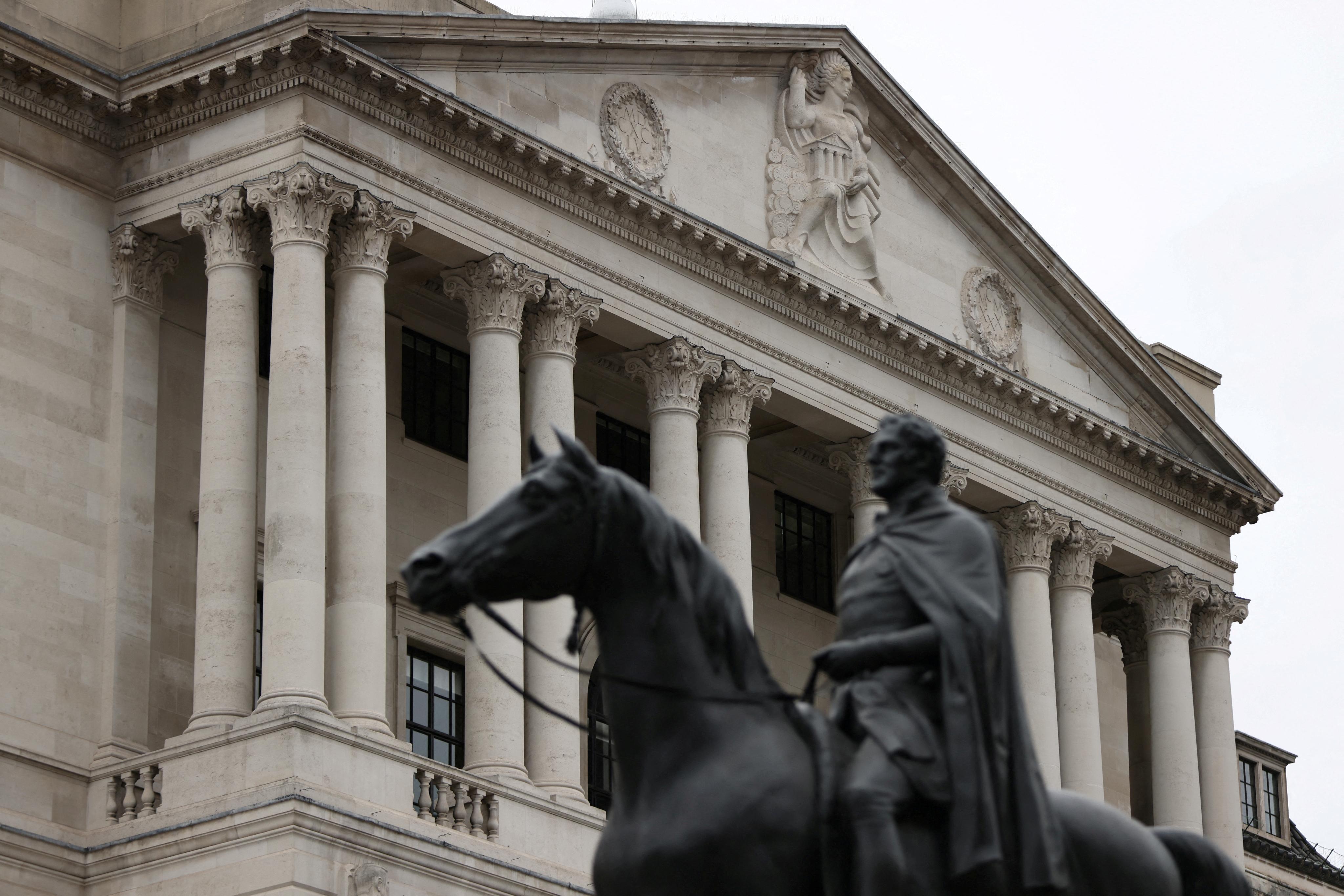
LONDON, March 11 (Reuters) - When the Bank of England's chief economist was asked to explain why its forecasting models had failed to anticipate runaway inflation, he sought to manage expectations. "All economic models are wrong, but some are useful," Huw Pill concluded in a letter to lawmakers last June that laid out the limitations of prediction methods. Britain's central bank was nonetheless unable to escape the censure of economic experts in parliament who judged its "inadequate" projection models and a narrow outlook had frustrated its efforts to rein in rampant inflation in the wake of the COVID pandemic and Russian invasion of Ukraine. The report in November turned a public microscope onto the arcane world of economic forecasting, a combination of science, art and guesswork that aims to divine the future state of the economy and guide central bankers in adjusting interest rates. "We should really be thinking of economic forecasts in terms of probability distributions," said Stephen Millard, deputy director of Britain's National Institute of Economic and Social Research, who spent more than 26 years at the BoE. "They are like weather forecasts - along the lines of 'there is a 20% chance of rain'." The BoE has called upon a Nobel Prize winner, former Federal Reserve Chair Ben Bernanke, to review its methods. His report is expected in April and heralds what Pill said this month was a "once in a lifetime" chance to shake-up the central bank's forecasting and communication methods. While Bernanke himself declined to be drawn about his review, Reuters interviewed eight leading economists, including current and former members of the BoE's interest rate-setting Monetary Policy Committee, who identified some of the main weaknesses of the Bank's approach and changes they envisioned. Michael Saunders, who stepped down from the MPC in 2022, described a sometimes dysfunctional internal process where rate-setters disagreed with their central bank's own projections for key indicators like inflation and growth. "The problem that needs solving is that the Bank publishes a forecast which many MPC members - often the bulk of MPC members - don't think is a realistic description of what the economy's likely to do," he said. One radical option to resolve this would be a shift from the BoE producing single forecasts to a system where each of the nine MPC members anonymously gives their own projections, which are then collated into charts called "dot plots". Bernanke introduced this system at the Fed over a decade ago. A more broadly supported reform among the economists interviewed was a move to publish a series of alternative scenarios alongside the main forecast. Saunders said that if he were still on the MPC, he would want to consider scenarios around global shipping costs staying high for six months versus two years, and also for wage growth failing to slow as forecast. There is also a communications element. Current MPC member Jonathan Haskel backed a wider use of alternative scenarios, telling Reuters they could help people outside the bank understand how the BoE's modelling worked and the "reasonable parameters" for uncertainty. Many of the economists stressed that the BoE's forecasting was on a par with other major central banks, including the Fed and European Central Bank. The banks have all faced similar criticism for failing to anticipate that the end of COVID lockdowns followed by the Ukraine war would presage runaway inflation, and that they were too slow to raise rates. HIT BY HISTORIC INFLATION The BoE and its peers were not expected to predict the pandemic or war. They nonetheless faced criticism from politicians and investors that they failed to foresee the scale of the surge in inflation in 2022, or how slowly it would fall. British inflation peaked at a 41-year high of 11.1% in October 2022, after Russia's invasion of Ukraine in February that year caused European natural gas prices to leap. Yet inflation was already 6.2% in February 2022, triple the BoE's forecast just a year earlier, as central banks underestimated the scale of supply-chain difficulties and labour shortages after the pandemic. Inflation was also slower to fall in Britain than in other countries, hovering around 10% in the second quarter of 2023 compared with a BoE forecast in May 2022 it would fall below 7%. One major challenge that has faced the BoE and other central banks is that it has been decades since inflation last leapt as high as it did in 2022, and most economic models are not based on historic data going that far back. While models can be recalculated to include this data, many aspects of Britain's economy have changed since the 1980s - such as union membership, energy sources and trading partners - making it hard to draw valid comparisons. Furthermore, while the BoE's models did face a tough test during the financial crisis, for much of the past 30 years they have been forecasting in relatively calm conditions, only to come up against Brexit, COVID and Ukraine in quick succession. Philip Shaw, chief UK economist at Investec and a long-time BoE watcher, said he had "absolutely no relative criticism at all" of its forecasting performance compared with other central banks and forecasters. "The bank comes under fire because inflation was higher than the UK's peers, but the UK has been more dependent on European gas markets," he added. "I wouldn't blame that on the Bank of England." The ECB has blamed most of its forecasting errors since the pandemic on rocketing energy and food prices, with President Christine Lagarde saying in September the bank needed to do a better job of conveying the uncertainties around projections. Fed Chair Jerome Powell said last month the delay in raising U.S. rates was largely because policymakers thought inflation was caused by post-pandemic bottlenecks that would resolve themselves. CONNECTING THE DOTS In essence, forecasting models either extrapolate recent trends into the near future, or flesh out relationships in economic theory - between unemployment and wage growth, for example - based on historic data. Projections are underpinned by a series of "conditioning assumptions", such as global energy prices and currency exchange rates, which if altered can throw out different results. Important assumptions used by the BoE that some experts believe may be up for review include assumptions that interest rates will move as forecast by financial markets - which may be different to what MPC members expect - and that there will be no change to government policy on taxation and spending. In its November report, the economic committee of Britain's upper house of parliament criticised BoE culture for a lack of diverse views to challenge prevailing orthodoxy. Many of the bank's models, it added, led to mistaken assumptions about the "transitory" nature of high inflation in 2020 and 2021. In response, BoE Governor Andrew Bailey said MPC discussions were "open, frank and forensic" and that Bernanke's review would recommend improvements. At present, the MPC issues a collective forecast of inflation and other indicators, though this can mask internal differences of opinion. One possibility the Bernanke review is likely to consider, according to the economists interviewed, is that the BoE adopts something similar to the Fed's dot plots. Since 2012, as part of a drive by then-Fed chief Bernanke for more transparency, rate-setters at the U.S. central bank have each given forecasts for rates, growth and inflation, based on their own preferred assumptions. These forecasts for the next one to three years are anonymous and plotted as a group on a chart, with each forecast represented by a dot. This allows markets to see the consensus and range of preferences among Fed policymakers for interest rates, growth and inflation. "I have to say I think it's worked quite well," said Saunders, the former MPC member. "The advantage of the dot plots is it gives the individual members a chance to express a view on where they're thinking interest rates will go over time." Megan Greene, a serving MPC member, said she "quite liked" dot plots for the same reason, but worried markets misread them as a commitment on rates. Other experts are opposed to such a change. A previous review of BoE forecasting during the 2008-09 financial crisis, published in 2012, recommended individual MPC forecasts, only for the idea to be shot down by the bank which said it did not want to be "highlighting the relatively small differences between individual members". James Smith, research director at the Resolution Foundation think-tank and formerly a long-time BoE staffer, said the MPC's collective projections forced policymakers to engage with each others' views more than at other central banks. "You would potentially lose something quite important," said Smith about a shift to individual forecasts, which he believed would not have helped during the recent inflation shock. MODELLING MANY FUTURES The approach of including several alternative scenarios also draws criticism. The BoE's projections already have one alternate scenario built in, with forecasts for growth, inflation and unemployment if the central bank were to keep rates unchanged, rather than to adjust them in line with market expectations. Deputy Governor Sarah Breeden said in a speech last month that she found it very helpful to consider two alternate economic scenarios - one of unexpectedly weak demand, another of unusually persistent inflation - when considering policy. However alternate scenarios are time-consuming to produce, and Investec's Shaw said multiple possibilities could muddy the BoE's message: "There's a clear trade-off between a simple message and discussing the various risks." Who within the central bank produces the official forecasts can also play an important role. The Fed and the ECB's forecasts are produced by the general staff at those institutions, rather than by the rate-setters themselves, so play a less critical role in its communication. As the British bank's forecasts are produced by the MPC, investors can view them as a policy signal. If the committee predicts inflation in two to three years' time will be far from its 2% target, this implies it does not believe the current market rate expectations are appropriate. The BoE is attempting a juggling act, said Millard of the National Institute of Economic and Social Research, who would like Bernanke to recommend taking the task of producing forecasts out of the hands of rate-setters altogether. "The forecast is trying to do three things at the same time. It's producing a forecast, it's helping the MPC to set policy, and it's helping the MPC to communicate to the market," he said. https://www.reuters.com/markets/europe/bank-england-forecasts-dock-bernanke-verdict-looms-2024-03-11/
2024-03-11 05:32
March 11 (Reuters) - A look at the day ahead in European and global markets from Wayne Cole. So Japan isn't in recession after all. Revisions now put economic growth at +0.1% q/q in the fourth quarter, instead of -0.1%, so nullifying all the media lamentation about Japan's contraction. When it comes to about $4 trillion of annual GDP such a small revision is just statistical noise, but it fit the narrative of stabilisation that is encouraging the Bank of Japan to contemplate the end of negative interest rates. Four sources tell Reuters a growing number of policymakers are warming to the idea of normalising rates this month on expectations of hefty pay hikes in this year's annual wage negotiations. Futures now imply a 53% chance the BOJ will shift rates to zero at its meeting on March 18/19, though some still think it might wait to its April 26 meeting. Talk is it will also refine yield curve control to target the volume of bonds it buys rather than the yield, which will presumably allow it to gradually guide yields higher and avoid a convulsive move. Two-year JGB yields have already crept up to 13-year highs of 0.2%, while 10-year yields added 3 bps to 0.765% - a big move for this market. There have long been fears that rising JGB yields would make Japanese investors keep more of their mountain of money at home, a potential negative for offshore markets given Japan is the world's largest creditor nation. It could also make the yen carry trade - borrowing yen for free to invest in higher yielding currencies - less attractive and stoke a long-awaited rally in the Japanese currency. Yet, the BOJ has made it clear that official rates will only be going to zero and there will not be a series of hikes, so the death of the carry trade is likely overstated. High yields will be a headache for the government, which faces a steep rise in borrowing costs, while the BOJ faces huge paper losses on the JGBs it holds. For the Federal Reserve, all eyes will be on Tuesday's U.S. consumer price index (CPI) report for February which is forecast to rise 0.4% for the month and keep the annual pace steady at 3.1%. Core inflation is seen rising 0.3%, which will nudge the annual pace down to the lowest since early 2021 at 3.7%. Used car prices and rents are seen pulling the CPI down, while insurance and air fares could go the other way. The slower core would complement the softer conditions seen in the February payrolls report, where unemployment hit a two-year high of 3.9%, and would keep the Fed on track to cut rates in the next few months. Key developments that could influence markets on Monday: - Participation by ECB board member Piero Cipollone in Eurogroup meeting in Brussels - France on-year producer prices for February (prior -5.1%) https://www.reuters.com/markets/europe/global-markets-view-europe-2024-03-11/