2024-03-08 11:18
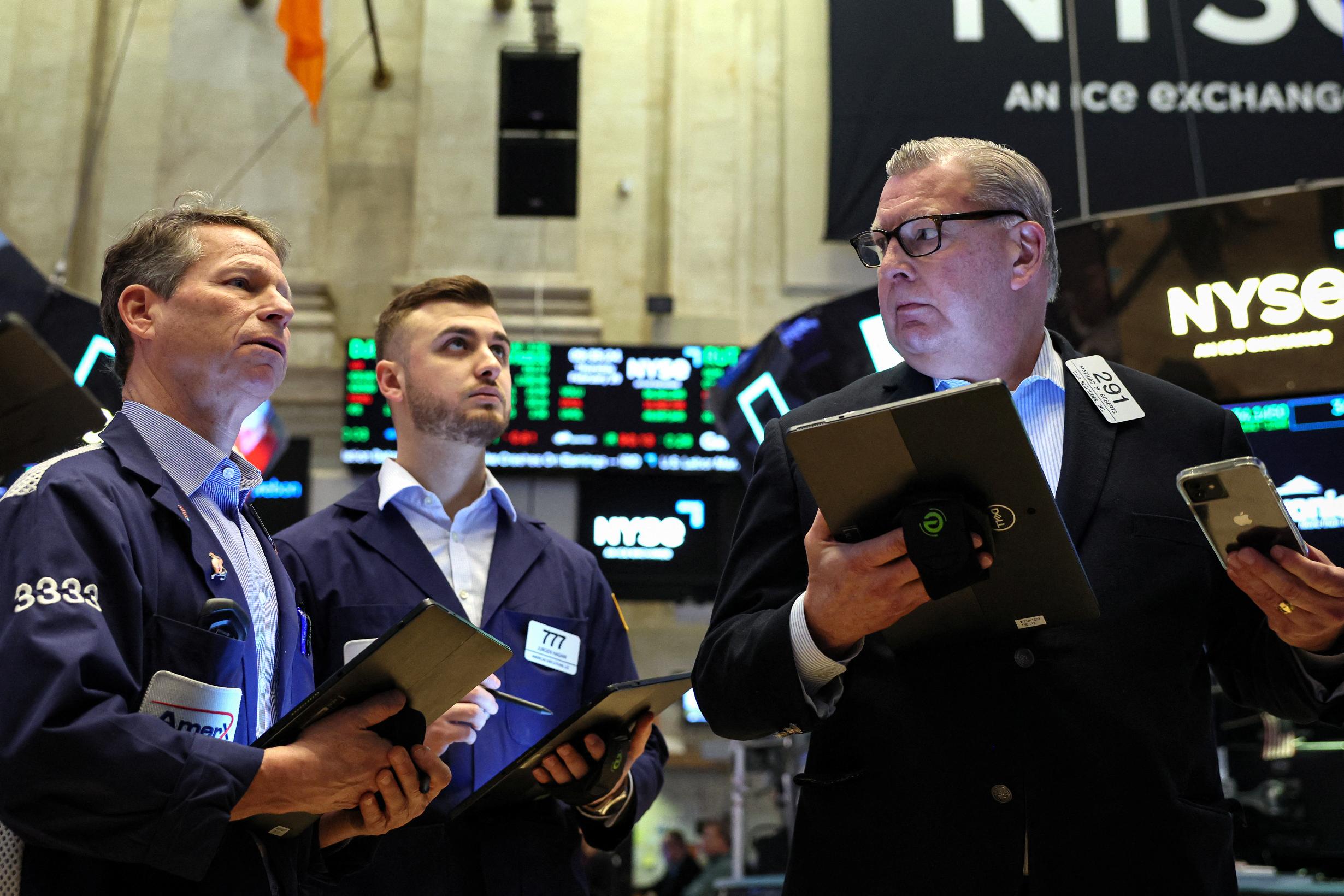
LONDON, March 8 (Reuters) - Investors dumped technology stocks at the fastest rate on record and continued to pour money into investment grade bonds and cash equivalents in the week to Wednesday, Bank of America said on Friday, citing data from EPFR. Tech stocks saw $4.4 billion of outflows in the latest week, their "largest outflow ever" and the first outflow in nine weeks, BofA said in its weekly roundup of fund flows in and out of world markets, without specifying how far back its figures went. The data covers the week to Wednesday, March 6, when U.S. tech stocks fell sharply. That included Apple (AAPL.O) , opens new tab, whose shares finished 2.8% lower after a research report showed iPhone sales in China fell 24% year-on-year in the first six weeks of 2024. Tech shares have since rebounded somewhat and the S&P 500 hit another closing high on Thursday. Its large gains in recent months have been mainly led by large technology companies. (.SPX) , opens new tab There were $32 billion of flows into cash and $13.3 billion into investment grade bonds, the largest inflow since September 2020, BofA said. Cash equivalent money market funds have seen significant inflows over the past year because of high yields on the very short-term government debt they hold. "$6 trillion to $7 trillion in money market funds and all of it getting 5% in interest ... maybe that's what's giving everyone the confidence to go speculate," BofA said. Tech aside, equities saw the seventh straight week of inflows, with investors adding $6.9 billion. Real estate stocks stood out with inflows of $1.2 billion, the most in two years. Crypto funds registered inflows of $1.9 billion in the week. Bitcoin, the world's largest crypto currency by market value, hit a record high of $69,202 on Tuesday, before retreating. https://www.reuters.com/markets/us/global-markets-flows-bofa-urgent-2024-03-08/

2024-03-08 11:07
HOUSTON, March 8 (Reuters) - Chevron (CVX.N) , opens new tab CEO Michael Wirth is facing a head-to-head match with Exxon Mobil (XOM.N) , opens new tab with his $53 billion bid for Hess (HES.N) , opens new tab and its stake in oil hotspot Guyana, and could wind up trapped in a dispute between two of South America’s biggest energy rivals. On Wednesday, Exxon filed an arbitration claim that could block Hess' proposed merger with Chevron. The sale includes Hess' 30% stake in a consortium that has discovered more than 11 billion barrels of oil in Guyana's Stabroek offshore block, which analysts say has potential recoverable oil at upwards of 20 billion barrels. Exxon, which holds a 45% share of the consortium, with Hess and CNOOC (0883.HK) , opens new tab owning minority stakes, claims the operating agreement governing the group gives it a right of first refusal to any sale of Hess's Guyana oil assets. The contest for a share of the largest oil discovery in almost two decades could soon test Wirth’s famously calm demeanor. But a deal would be a legacy-maker for Wirth, who is known at the second-largest U.S. oil firm as an affable but firm boss. Wirth won accolades on Wall Street for his refusal to get involved in a bidding war for Anadarko Petroleum in 2019, and then moved to boost Chevron’s reserves through a series of small deals. His ability to play a long-game served him well in Venezuela, where he held onto the company's properties there amid years of hyperinflation and punishing U.S. sanctions. The 63-year-old executive declined to be interviewed. A spokesperson, however, stressed the company remains "fully committed to the transaction, and is confident in our position. We look forward to closing the transaction." TWO BROKEN DEALS? If Exxon's challenge blocks Chevron's purchase, it would be the second time a deal slipped through Wirth's fingers. His $33 billion offer for Anadarko, just a year after he took over as Chevron CEO, was snatched away with a higher bid by Occidental Petroleum (OXY.N) , opens new tab. “The truth is that Wirth has been slow to come to the party and a step behind on almost everything,” said Bill Smead, founder and chairman of Smead Capital Management, who said Wirth also missed an opportunity in 2022 to buy Occidental with Anadarko's assets for $32 billion, less than the 2019 offer. “Because of making decisions like that, he is in a food fight over assets in Guyana,” said Smead. Wirth won a $1 billion breakup fee in the Anadarko loss, but Exxon said this week it would consider exercising its preemption right if Chevron pursues its bid. If Chevron drops the deal, Hess could be potentially off the hook for a $1.7 billion break up fee. Exxon left open the prospect of a negotiated settlement. Its arbitration claim before an international tribunal could take about six months or more to resolved, said Exxon Senior Vice President Neil Chapman, pushing back Chevron's goal of closing the deal by mid-year. Hess on Thursday said it was reviewing the timeline for closing the deal. Analysts said the dispute could go either way. "It is still very possible" that Exxon sees the need to bid for Hess before a Chevron-Hess shareholder vote, which could happen in the next couple of months, said Mark Kelly, CEO of financial advisory firm MKP Advisors. "Exxon has seemingly implied it really wants to own Hess’ stake in Guyana, so it potentially needs to put something competing on the table prior to a Chevron-Hess vote," he said. Paul Sankey, an analyst with Sankey Research, said the other possibility is that Chevron is forced to pay Exxon to allow the deal to proceed. "There's the possibility that (Chevron) cuts them a check and just says, "can you go away please? And there's the possibility that they (Exxon) goes to arbitration and delays the deal," he said. BORDER TENSIONS Wirth’s misfortunes have piled up around the globe. Last autumn, he delayed for a second time a major expansion project in a Kazakhstan oilfield where it is the operator and Exxon is a partner. Later, Venezuelan President Nicolas Maduro reactivated a century-old border dispute with Guyana and threatened to take over Guyana's oilfields by force. “He (Wirth) has to stay super neutral and lay low,” while the two countries settle the dispute, said Francisco Monaldi, an expert on Latin American energy at Rice University’s Baker Institute for Public Policy. "It would make sense for Chevron to treat Guyana an investment in which they are not making any decisions," he said. "It would make it easier for the Venezuelan government not to have to acknowledge that Chevron would be on both sides" of the dispute border. As the only U.S. oil major that remained in Venezuela despite U.S. sanctions on the OPEC nation since 2019, Wirth faces a new challenge to its Venezuela operations. Chevron last month produced about 180,000 barrels per day from its joint ventures in Venezuela - output that could again be barred from delivery to its U.S. customers if the sanctions are allowed to snap back. "Everyone says he (Wirth) is a nice guy, he is in the right business, he will figure it out," Smead said. "If not this deal, he will get the next one." https://www.reuters.com/business/energy/chevrons-ceo-faces-challenges-lifetime-with-hess-bid-2024-03-08/
2024-03-08 11:06
NEW YORK, March 8 (Reuters) - Small business owners in the U.S. are struggling to get financing from traditional lenders as the impact of higher rates and bank failures of a year ago linger, holding back business growth for some. The difficulty in getting more traditional forms of credit shows how sharp interest rate hikes by the U.S. Federal Reserve, exacerbated by the failures of Silicon Valley Bank and Signature Bank last March are reverberating in the economy, say analysts and other industry insiders. Small businesses are key to the country’s economic health, with one study showing they account for 44% of US economic activity , opens new tab. Over half a dozen small business owners contacted by Reuters in the last few weeks said they had found it harder to get traditional forms of credit such as loans from big, mid-size and small regional banks. Some were wary of turning to non-traditional lenders like fintech firms or companies that provide financing based on prospective revenues, even though these were readily available. Small businesses typically go to mid- and small lenders for loans, said industry analysts. These small businesses were spread across the country and included restaurants, non-profit entities, retail boutiques, online education firms and mom-and-pop stores. "I have been turned down by several small to mid-sized banks," said Gerald Williams, a Sacramento, California-based entrepreneur who owns Beale Hot Sauce, who has been looking for a $50,000 loan since last March to grow his business. Williams said the lack of funding has cost him several opportunities to grow his business, including buying a commercial kitchen. About 77% of small business owners are concerned about their ability to access capital and 28% of loan applicants said they had taken out a loan or line of credit with payment terms they felt were predatory, according to a survey by Goldman Sachs (GS.N) , opens new tab released in January which included nearly 1,500 small borrowers across the country. "When banks tighten their underwriting criteria, it usually impacts low to moderate income communities more and they have been seeing a significant uptick in outreach from predatory lenders," said Carolina Martinez, CEO of CAMEO, California’s statewide micro-business network. The Goldman survey also said Black-owned businesses were struggling even more for access to capital. It said 32% of Black-owned businesses that applied for loans secured one, compared to about 47% of white small business owners. In addition, 86% of Black-owned businesses were concerned about having access to capital. BANK LENDING CONSTRAINED In the past year banks have pulled back on lending to both consumers and businesses. The Fed's quarterly Senior Loan Officer Opinion Survey , opens new tab released in January showed more banks tightening lending standards for small firms than loosening them, though not to the degree seen over the previous several quarters. Still, the net share of banks offering more stringent loan terms for smaller businesses was more than twice the historic average since 1990. U.S. small business sentiment in January fell to its lowest since May 2023, as labor costs and slowing sales squeeze bottom lines, according to a report published by the National Federation of Independent Business last month. Small businesses have also been finding it difficult to access credit at a time when inflation has remained high. Smaller and regional banks have continued to struggle with deposit growth in the past year, which in turn has prompted them to be cautious about lending, analysts say. "A lot of (banks) are saying if you want to take a loan with us, you would also need to bank with us and that has been a challenge for the customers," said Timothy Coffey, an analyst at Janney Montgomery Scott, who said higher rates and recent bank failures affected loan originations. "All of these factors have slowed down the loan origination process," Coffey said. The Consumer Bankers Association, which represents several lenders, declined comment. The American Bankers Association, which also represents several banks, said multiple factors could be at play in the situation facing small businesses. "Banks of all sizes are still the biggest lenders to small businesses, and the banking industry will continue to work to meet the credit needs of this critical sector of the U.S. economy," an ABA spokesperson said. Small businesses have been forced to explore other options, said Rick Kuci, COO of FundKite, a small business funding platform which provides revenue-based financing. "Our business has grown 20% in 2023 and this has come up in a lot of conversations with businesses who approach us that they are finding it difficult to get a loan from their primary bank that they have been banking with because their credit profile doesn't fit or for other reasons," said Kuci. HAMPERING GROWTH Tighter credit has curtailed growth at some small businesses. Shantell Chambliss, a business owner based in Richmond, Virginia, said she has been hunting for a $25,000 loan since May and has been turned down by several lenders, forcing her to scale back her ambitions. "What I had planned to achieve six months ago, I haven't even started with that due to funding constraints," she said. She was able to borrow about $6,000 from a non-bank lenders that provide funding based on prospective revenues but does not want any more from them because of unsuitable terms, she said. "The process of looking for a loan has been so frustrating that I have just given up on it," said Chambliss. https://www.reuters.com/markets/us/us-small-businesses-struggle-credit-one-year-after-regional-turmoil-2024-03-08/
2024-03-08 11:05
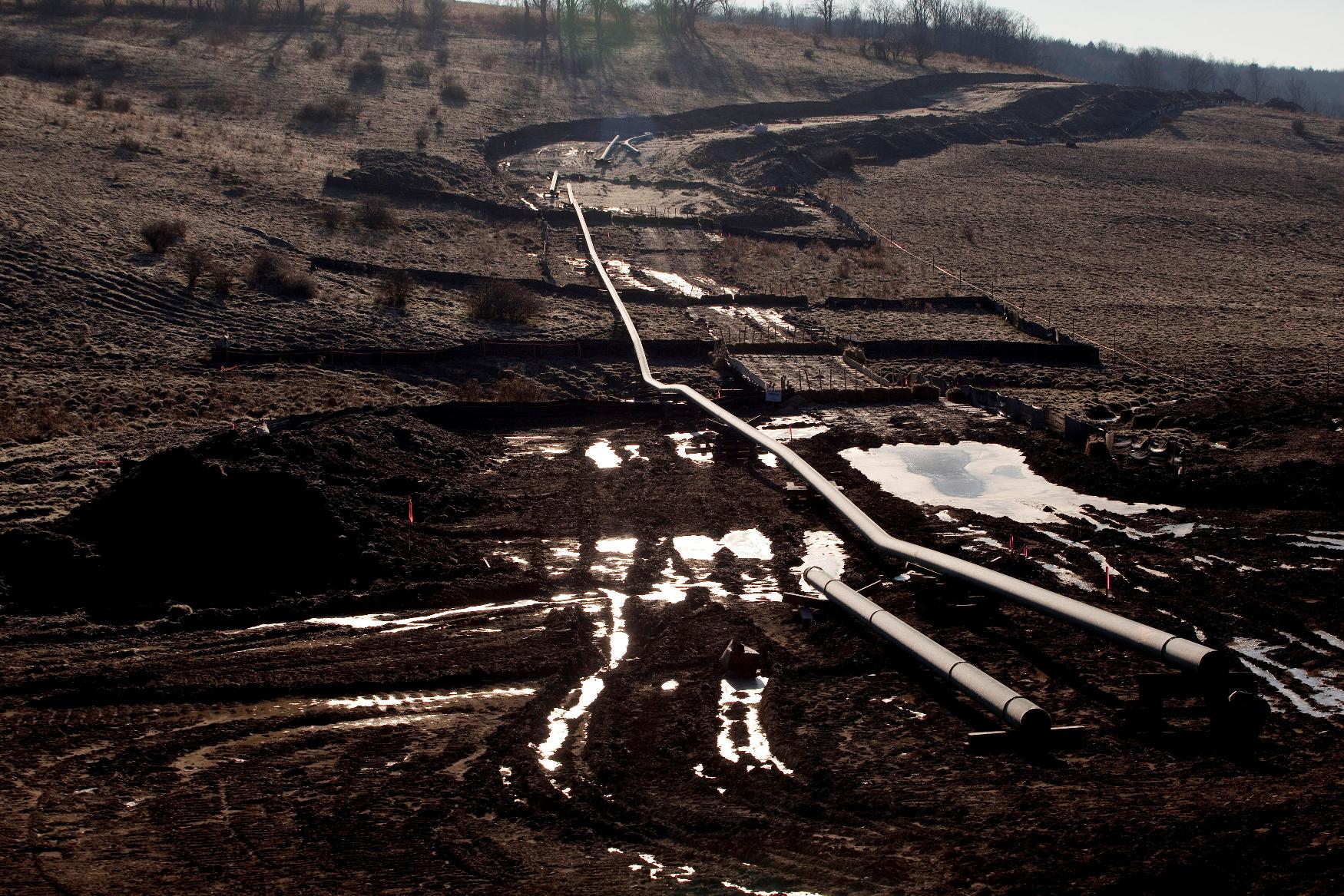
March 8 (Reuters) - Last October, an Idaho farmer using a backhoe punched a hole into a 22-inch (56-cm) pipeline buried under a field, sending more than 51 million cubic feet of natural gas hissing into the air. While the incident on Williams Companies' (WMB.N) , opens new tab Northwest Pipeline was big, it was no anomaly along the roughly 3 million miles (4.8 million km) of natural gas pipelines crisscrossing the U.S. Accidental pipeline leaks – caused by things like punctures, corrosion, severe weather and faulty equipment - happen routinely and are a climate menace that is not currently counted in the official U.S. tally of greenhouse gas emissions, according to a Reuters examination of public data and regulatory documents. Pipeline mishaps unintentionally released nearly 9.7 billion cubic feet of gas into the atmosphere between 2019 and late 2023, according to a Reuters examination of incident report data maintained by the U.S. Pipeline and Hazardous Materials Safety Administration (PHMSA). That is the climate equivalent of running four average-sized coal-fired power plants for a year, according to an Environmental Defense Fund (EDF) online calculator. Those emissions are currently not included in the nation’s official greenhouse gas count because federal rules exempt large, unexpected leaks, and mainly only capture emissions from regular operations, according to the U.S. Environmental Protection Agency (EPA). The Biden administration aims to change that as early as next year under a set of rules proposed by the EPA to crack down on methane emissions from the oil and gas sector, and which would punish emitters with fees of $900 to $1,500 per metric ton when they exceed a certain threshold. Reuters relied on PHMSA data and interviews with researchers, company officials and regulators to provide new detail on the scale of greenhouse gas emissions from accidental pipeline leaks that could soon be added to the official greenhouse gas tally, as well as the potential cost to companies under the looming fees. "I don't think the public or regulators have realized just how much methane has been lost from pipeline infrastructure," said Kenneth Clarkson, a spokesperson for the Pipeline Safety Trust, a non-profit watchdog. "Newer studies have come closer to capturing the true amount of emissions and this has started catching the attention of policymakers." Accidental leaks reported from PHMSA by the five biggest U.S. pipelines between 2018 and 2022 showed that those incidents could have significantly increased the facilities' overall reported emissions, potentially resulting in fees of up to $40 million under the proposal. The operators of the five biggest pipelines include Berkshire Hathaway (BRKa.N) , opens new tab, TC Energy (TRP.TO) , opens new tab and Kinder Morgan (KMI.N) , opens new tab. Berkshire Hathaway's 14,000-mile Northern Natural Gas pipeline, for instance, reported unintended releases of natural gas to PHMSA during the five year period that were the equivalent of about 30% of the methane the facility reported to EPA during the period. Williams, the owner of the pipeline that leaked in Idaho in October, reported unintended gas releases that amounted to about 15% of the methane it reported to EPA. Berkshire Hathaway and Williams did not respond to requests for comment on Reuters' analysis or the EPA proposal. TC Energy said reducing its methane emissions was a critical part of its business, but did not comment directly on the EPA proposal or Reuters' analysis. Kinder Morgan said it does not exclude unintended emissions from its reports to EPA, even though it is not required to include them. BIG DISCREPANCY The Biden administration unveiled its batch of final rules aimed at cracking down on U.S. oil and gas industry releases of methane at the United Nations COP28 climate change conference in Dubai in December, part of international efforts to curb releases of the gas. Piped natural gas is typically around 90% methane, a greenhouse gas which is several times more potent in warming the planet than carbon dioxide during the relatively short time it remains in the atmosphere. The new policies would ban routine flaring of natural gas produced by newly drilled oil wells, require oil companies to monitor for leaks from well sites and compressor stations and establishes a program to use third party remote sensing to detect large methane releases. The new reporting requirements for large leaks, meanwhile, are likely to be finalized later this year and take effect in 2025, the EPA told Reuters. Under the proposal, companies will be required to report abnormal leaks of about 500,000 cubic feet of pipeline gas or more starting next year, a threshold significantly lower than what PHMSA requires. The new reporting rules would also apply to big, unplanned emissions from other parts of the oil and gas industry, such as drilling operations, EPA said. The fact that some large methane leaks have never been accounted for in U.S. greenhouse gas inventories underscore concerns among environmental groups and scientific researchers that emissions from the fossil fuel sector have been vastly understated. An Environmental Defense Fund analysis last year, for instance, estimated U.S. pipelines leak between 1.2 million and 2.6 million tons of methane per year, or 3.75 to 8 times more than EPA estimates. The EDF figure includes not just large mishaps but also pervasive smaller leaks on tiny distribution lines. "The failure of EPA to account for these large events is a big driver of that discrepancy," Edwin LaMair, an EDF attorney who focuses on oil and gas regulations, said in an interview. The Interstate Natural Gas Association of America, a pipeline industry trade group, said most incidents reported to PHMSA relate to safety systems operating as intended. The group also pointed to an EPA analysis showing that most transmission and storage facilities may not meet the 25,000 metric tons of carbon dioxide equivalent per year emissions threshold required to pay the methane fee. The EPA analysis said, however, that it was not yet possible to accurately estimate "the magnitude of emissions that will be reported and which facilities will report those emissions." The pipeline industry has also said in public comments to the EPA about the new reporting rules that they could lead to double-counting of some emissions. https://www.reuters.com/sustainability/us-natural-gas-pipeline-accidents-pose-big-unreported-climate-threat-2024-03-08/
2024-03-08 11:03
A look at the day ahead in U.S. and global markets from Mike Dolan This week's stream of major macro moments around the world has seen signs of a slight softening of U.S. labor markets go under the radar a bit - but it will top the agenda on Friday. To the extent that a cooling jobs market warns the Federal Reserve not to delay too long in cutting interest rates, then rising layoffs, jobless claims and falling job openings may be partly responsible for the fresh effervescence in stocks. February payrolls are expected to have increased by 200,000 jobs after adding 353,000 positions in January and the jobless rate likely stayed at just 3.7%. Surf's well and truly up again on Wall St after a wobbly start to the week and futures were higher again ahead of the report Both the S&P500 (.SPX) , opens new tab and Nasdaq (.IXIC) , opens new tab surged more than 1% each to new records on Thursday as Fed chair Jerome Powell reprised his congressional testimony in the Senate and nodded clearly to rate cuts ahead as the central bank becomes more confident it has inflation back in its box. "When we do get that confidence -- and we're not far from it -- it'll be appropriate to begin to dial back the level of restriction so that we don't drive the economy into recession." The message was enough to remove all remaining doubts in futures markets that the Fed will now cut as soon as June and deliver up to 95 basis points of easing this year. Treasuries were buoyed, even ahead of another heavy week of debt sales, and 10-year yields hit one-month lows. And after its latest policy update on Thursday, the European Central Bank is also now nailed on to cut rates in June - as hawks concede easing is now necessary and even as some of its more dovish members push for the move as soon as next month. Banque de France head Francois Villeroy de Galhau said a rate cut should happen in the spring, which he added was "from April until June 21". "The probability is increasing that we could possibly see a rate cut before the summer break," the normally hardline Bundesbank boss Joachim Nagel said on Friday. The prospect of the ECB jumping the gun on the Fed reined in the euro somewhat on Friday, but the dollar has generally been a casualty of the stepped-up easing expectations and its index (.DXY) , opens new tab hit the lowest since mid January. That's mainly because the Bank of Japan is heading in the opposite direction - likely tightening its super-loose monetary policy as soon as this month and sending the yen to its best levels in five weeks. Amid a series of press rumblings and official statements this week, Reuters sources on Friday said growing number of BOJ policymakers had warmed to the idea of ending negative interest rates in March as the annual wage round looks set to be robust. But they added that some still urge a delay until April to wait for next month's "tankan" business sentiment survey and the bank's regional branch managers' report on the wage outlook. After Thursday's setback, however, Japan's Nikkei stock benchmark (.N225) , opens new tab brushed off the speculation and rose 0.2%. Stocks gained in China too (.CSI300) , opens new tab, encouraged by this week's upbeat trade numbers and as the country's securities regulator vowed to protect small investors by cracking down on market misbehaviour and improving the quality of listed companies. And on Friday Bloomberg reported that China is in the process of raising more than $27 billion for its largest chip fund to date to accelerate the development of cutting-edge technologies to counter a U.S. campaign to thwart its rise. Elsewhere in politics, President Joe Biden late Thursday laid out his case for re-election in a fiery State of the Union speech that accused Donald Trump of threatening democracy, kowtowing to Russia and torpedoing a bill to tackle U.S. immigration woes. In company news, the soundings were more mixed overnight. Broadcom (AVGO.O) , opens new tab said it expects $10 billion in revenue from chips related to artificial intelligence this year, but its stock dipped after the tech company's full-year forecast failed to impress investors. Smaller rival Marvell Technology (MRVL.O) , opens new tab forecast revenue below market expectations, sending its stock down over 6% in extended trading. There was better news for the ailing New York Community Bank (NYCB.N) , opens new tab, whose shares perked up after it said it's seeing interest from non-bank bidders for some of its loans and will outline a new business plan next month. And in Europe, Novo Nordisk (NOVOb.CO) , opens new tab on Thursday surpassed Tesla (TSLA.O) , opens new tab in market valuation after the maker of the popular weight-loss drug Wegovy announced positive early trial data for a highly anticipated new obesity drug. Key diary items that may provide direction to U.S. markets later on Friday: * US Feb employment report, Canada Feb employment report * New York Federal Reserve President John Williams https://www.reuters.com/markets/us/global-markets-view-usa-2024-03-08/
2024-03-08 10:05
FRANKFURT, March 8 (Reuters) - European Central Bank policymakers on Friday lined up in support of an interest rate cut in the coming months as inflation in the euro zone falls faster than they had anticipated. Central bank governors from Germany, France, Finland and Lithuania all talked up the chances of the ECB lowering borrowing costs from record highs, firming up a hint dropped by ECB President Christine Lagarde on Thursday. They only slightly differed about the timing of a first move. "The probability is increasing that we could possibly see a rate cut before the summer break," Bundesbank President Joachim Nagel told German podcast Table Today. His words carry particular weight because Nagel - as is historically the case for a Bundesbank president - has been among policy hawks urging against a hasty rate reduction. The ECB has three meetings before its summer recess, on April 11, June 6 and July 18. Banque de France head Francois Villeroy de Galhau, a centrist, said a rate cut should happen in the spring, which he added was "from April until June 21". Finland's Olli Rehn also said the discussion about lowering rates would resume "in the upcoming April and June meetings". Their Lithuanian colleague was more explicit, saying that a rate reduction in June was "very likely" and could be the first of a series of cuts worth 25 basis points each. "In my evaluation, June is the month when really a rate decrease is very likely," Gediminas Simkus told reporters in Vilnius. The probability of a move in April was "low", he added. After this raft of comments, euro zone financial markets fully priced in a rate cut in June, followed by three more by December, which would take the 4% rate that the ECB pays on bank deposits to 3.0% . The ECB cut its projections for growth and inflation on Thursday and Lagarde said the central bank would have "a lot" of the information it needs to decide on a rate cut in June. Investors have been doubtful that the ECB would move before the U.S. Federal Reserve, citing historical precedents. The Fed is expected to cut its own key rate on June 12 . But Finnish governor Olli Rehn dismissed any such consideration. "The ECB is not the Fed's '13th Federal District', i.e., one regional central bank," he said in a blog post. https://www.reuters.com/markets/europe/ecb-policymakers-line-up-behind-upcoming-rate-cut-2024-03-08/