2024-03-08 07:06
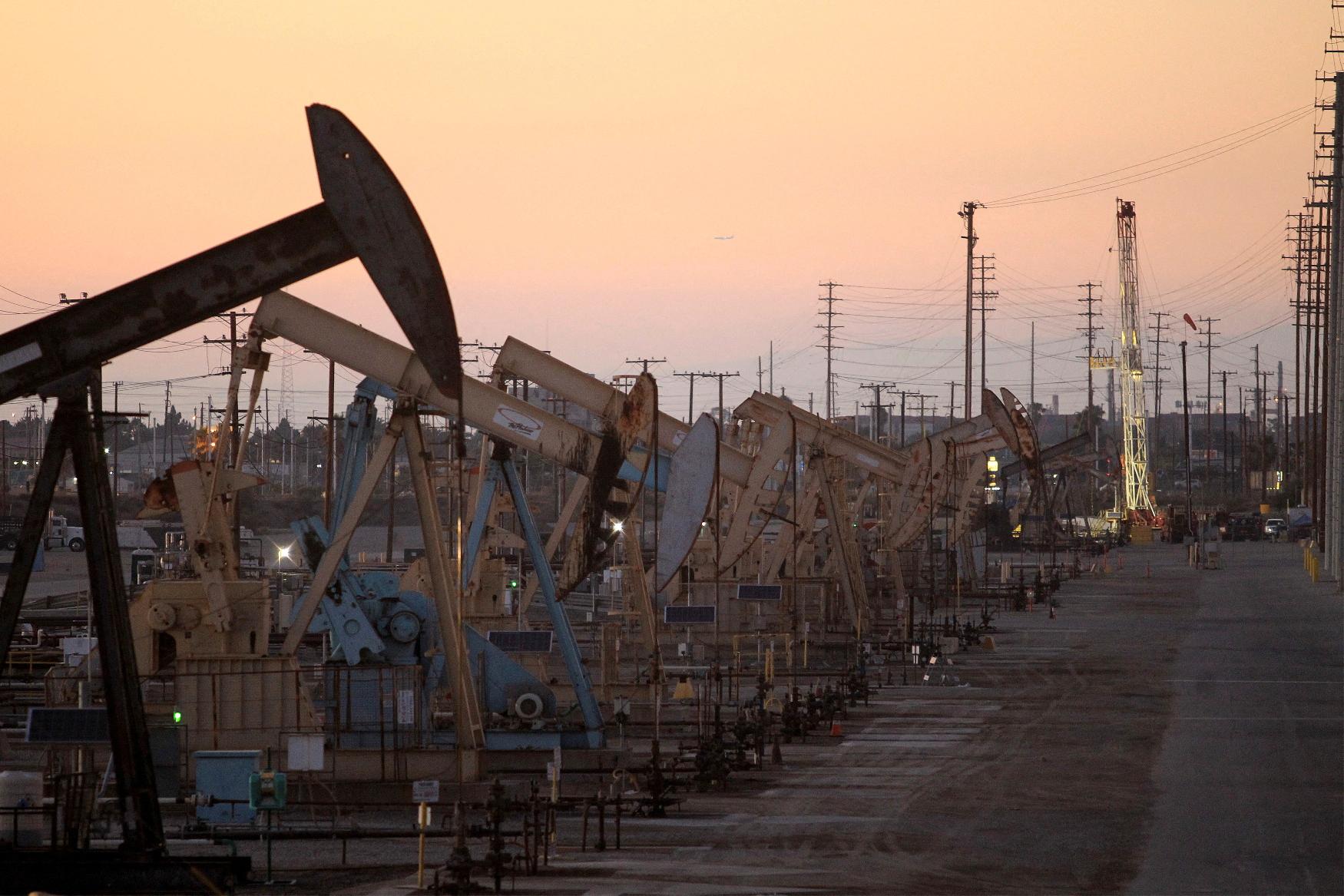
HOUSTON, March 8 (Reuters) - Oil prices closed 1% lower on Friday and fell even more for the week as markets remained wary of soft Chinese demand even as producer group OPEC+ extended supply cuts. Brent crude futures settled down 88 cents, or 1.1%, at $82.08 a barrel. U.S. West Texas Intermediate crude futures (WTI) fell 92 cents, or 1.2%, at $78.01. Both benchmarks fell in the week, with Brent down 1.8% and WTI 2.5%. "While supplies have remained on the tighter side given OPEC's production cuts and Russian sanctions slowing exports, demand from China looks to be lagging and U.S. driving season demand has yet to kick in," said Dennis Kissler, senior vice president of trading at BOK Financial. China earlier this week set an economic growth target for 2024 of around 5%, which many analysts say is ambitious without much more stimulus. China's imports of crude oil rose in the first two months of the year compared with the same period in 2023, but they were also weaker than the preceding months, data showed on Thursday, continuing a trend of softening purchases by the world's biggest buyer. On the supply side, OPEC+ members led by Saudi Arabia and Russia agreed on Sunday to extend voluntary oil output cuts of 2.2 million barrels per day into the second quarter, giving extra support to the market amid concerns over global growth and rising output outside the group. However, crude production in OPEC+ countries increased by 212,000 barrels per day (bpd) in February over January output, according to Rystad Energy data and research. Meanwhile in the U.S., energy firms this week cut the number of oil rigs - an indicator of future production - by two to 504 this week, their lowest since Feb. 23, energy services firm Baker Hughes (BKR.O) , opens new tab said. Oil markets have homed in on signals on the timing of possible rate cuts in the U.S. and European Union in the previous two sessions. Lower interest rates could increase oil demand by boosting economic growth. U.S. job growth rose by 275,000 new nonfarm payrolls in February, according to the Bureau of Labor Statistics, beating expectations of a 200,000 rise according to a Reuters survey. But the unemployment rate also rose and wage growth decelerated, indicating that the U.S. economy could be slowing which kept on the table an anticipated interest rate cut in June from the Federal Reserve. The data suggests "a less tight job market, supporting the soft landing narrative and increasing the odds of a June rate cut," UBS analyst Giovanni Staunovo said. U.S. Federal Reserve Chair Jerome Powell said on Thursday that the central bank was "not far" from gaining enough confidence that inflation is falling sufficiently to begin cutting interest rates. The European Central Bank (ECB) will likely start lowering interest rates some time between April and June, French central bank head and ECB policymaker Francois Villeroy de Galhau said. Money managers raised their net long U.S. crude futures and options positions in the week to March 5, the U.S. Commodity Futures Trading Commission (CFTC) said on Friday. https://www.reuters.com/business/energy/oil-prices-up-worlds-top-consumers-boost-demand-2024-03-08/
2024-03-08 07:06
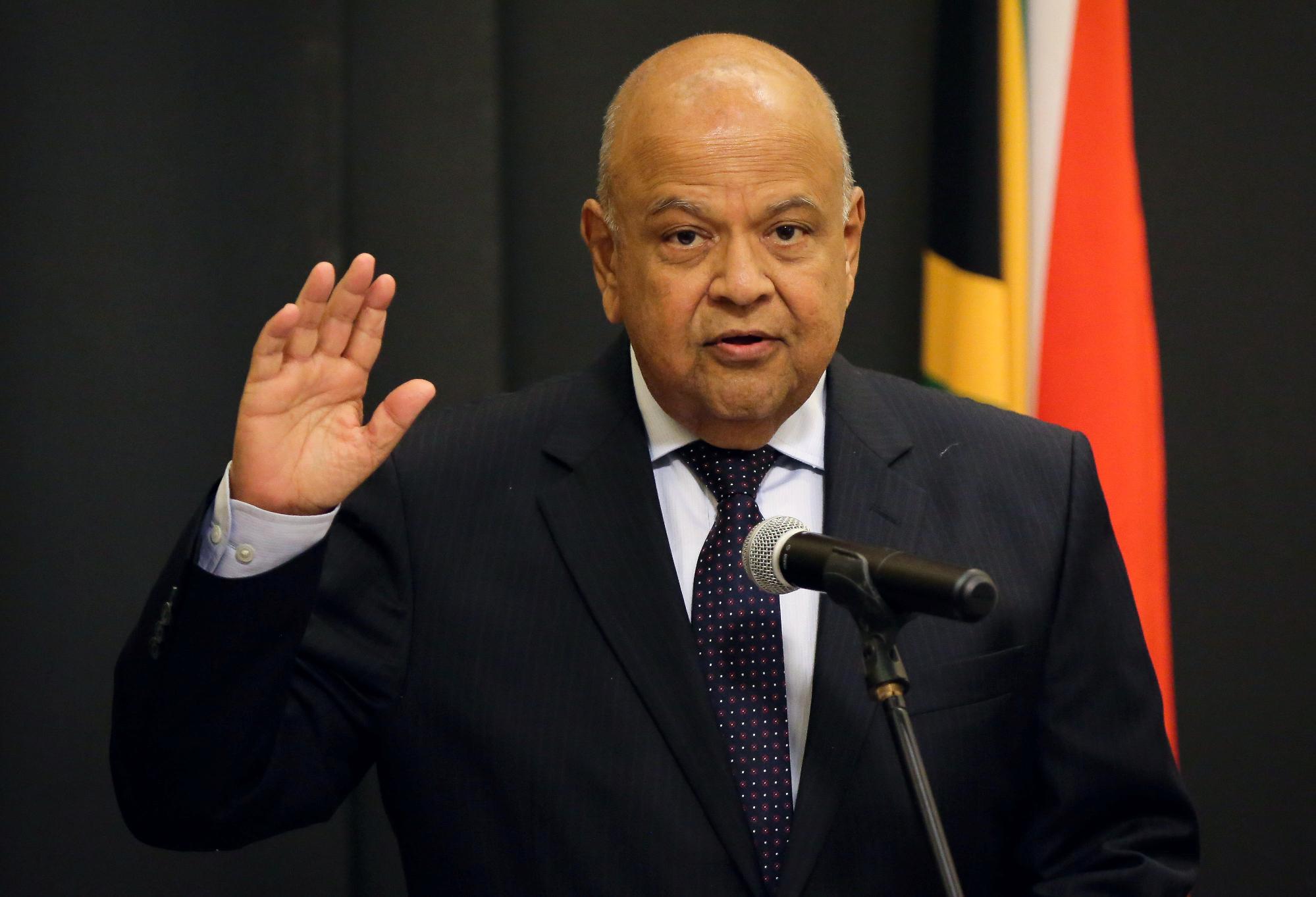
CAPE TOWN, March 8 (Reuters) - South Africa's Minister of Public Enterprises, Pravin Gordhan, will retire after this year's general elections on May 29, he told Reuters on Friday. Gordhan oversees state entities including struggling power utility Eskom and logistics firm Transnet, whose poor performances have dragged down economic growth in Africa's most industrialised economy. An anti-apartheid veteran, he has been in politics since the beginning of South Africa's democracy and previously served as finance minister. https://www.reuters.com/world/africa/safrican-public-enterprises-minister-gordhan-retire-after-elections-2024-03-08/
2024-03-08 06:52
SYDNEY, March 8 (Reuters) - Volkswagen and Toyota have taken opposing sides on Australia's proposed new rules to cut vehicle emissions, while electric vehicle makers Tesla and Polestar quit the country's auto lobby in protest over the group's campaign against tougher standards. The German automaker said it supported the government's plans and wanted stronger incentives for clean car importers, in stark contrast to the main lobby group, which is pushing to water down the rules. “Our company’s position is its own - not that of any lobby group or membership organisation," a spokesperson said in an email on Friday. Volkswagen remains a member of the group. But Toyota (7203.T) , opens new tab Australia, which tops auto sales with its range of pick-up trucks and SUVs, said hours later it supported the lobby group's position and called on the government to revisit the stringency of the plan and its phase-in penalties. To get more electric vehicles on the road and cut emissions, Australia has proposed vehicle efficiency standards that will penalise car makers who import emissions intensive models and reward those who bring in cleaner vehicles. The Federal Chamber of Automotive Industries has said the government's preferred option would raise prices and limit options, especially for pick-up trucks popular in the country. Polestar Australia, part-owned by China's Geely Automobile (0175.HK) , opens new tab, quit the group on Friday, a day after Tesla did the same, and said the lobby group's commentary against the proposed regulations had "irrevocably damaged" public trust in the policy. In a letter to the FCAI, Polestar said delaying or making the standards less stringent would keep Australia a dumping ground for old technology vehicles and force the emissions burden elsewhere in the economy. "The brand cannot in good faith continue to allow its membership fees to fund a campaign designed to deliberately slow the car industry's contribution to Australia's emissions reduction potential," the head of Polestar Australia, Samantha Johnson, said in the letter. Tesla (TSLA.O) , opens new tab quit the FCAI on Thursday and resigned from its board, accusing it of making false claims about the proposed standards and their effect on car prices. VW said it was concerned about the exit of both companies and was discussing the situation, the spokesperson said, without giving specifics. In response to questions about the exits, the FCAI said on Friday it could not support a standard that met the needs of the owners of premium vehicles while leaving others with fewer choices and higher prices. The FCAI said its members represent more than 50 brands. Its chair and two deputy chairs are from Mazda (7261.T) , opens new tab, Toyota and Mitsubishi Motors (7211.T) , opens new tab, respectively. Australia's centre-left Labor government opened consultation on the standards in February, and also released a "preferred model" for the new standards. It aims to introduce the new standard in 2025, which will become more stringent each year, with the aim to hit an average vehicle emissions intensity similar to the U.S. by around 2028. Russia and Australia are among the only developed countries without fuel efficiency standards. https://www.reuters.com/business/autos-transportation/after-tesla-polestar-quits-australia-auto-lobby-emissions-fight-escalates-2024-03-08/

2024-03-08 06:51
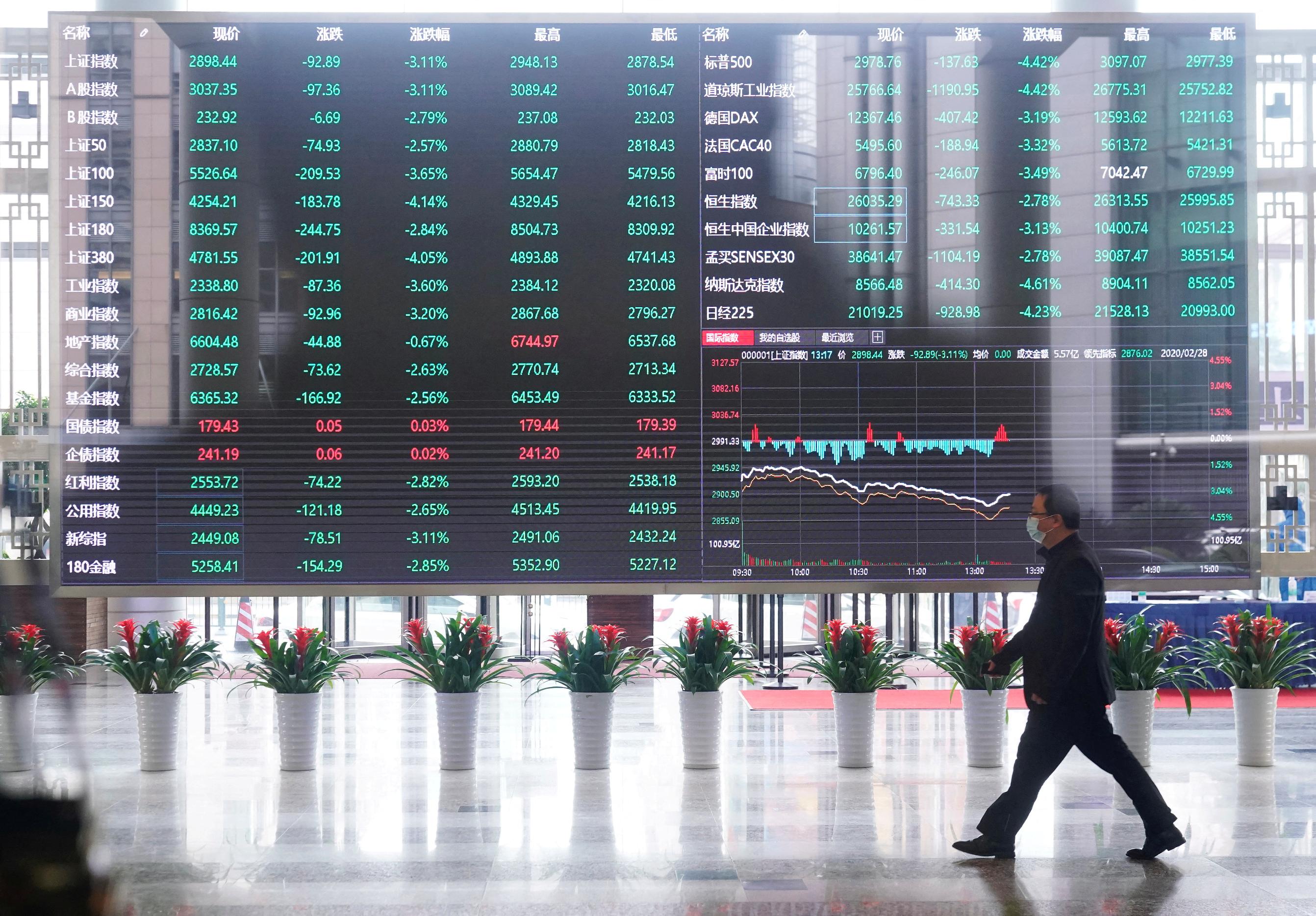
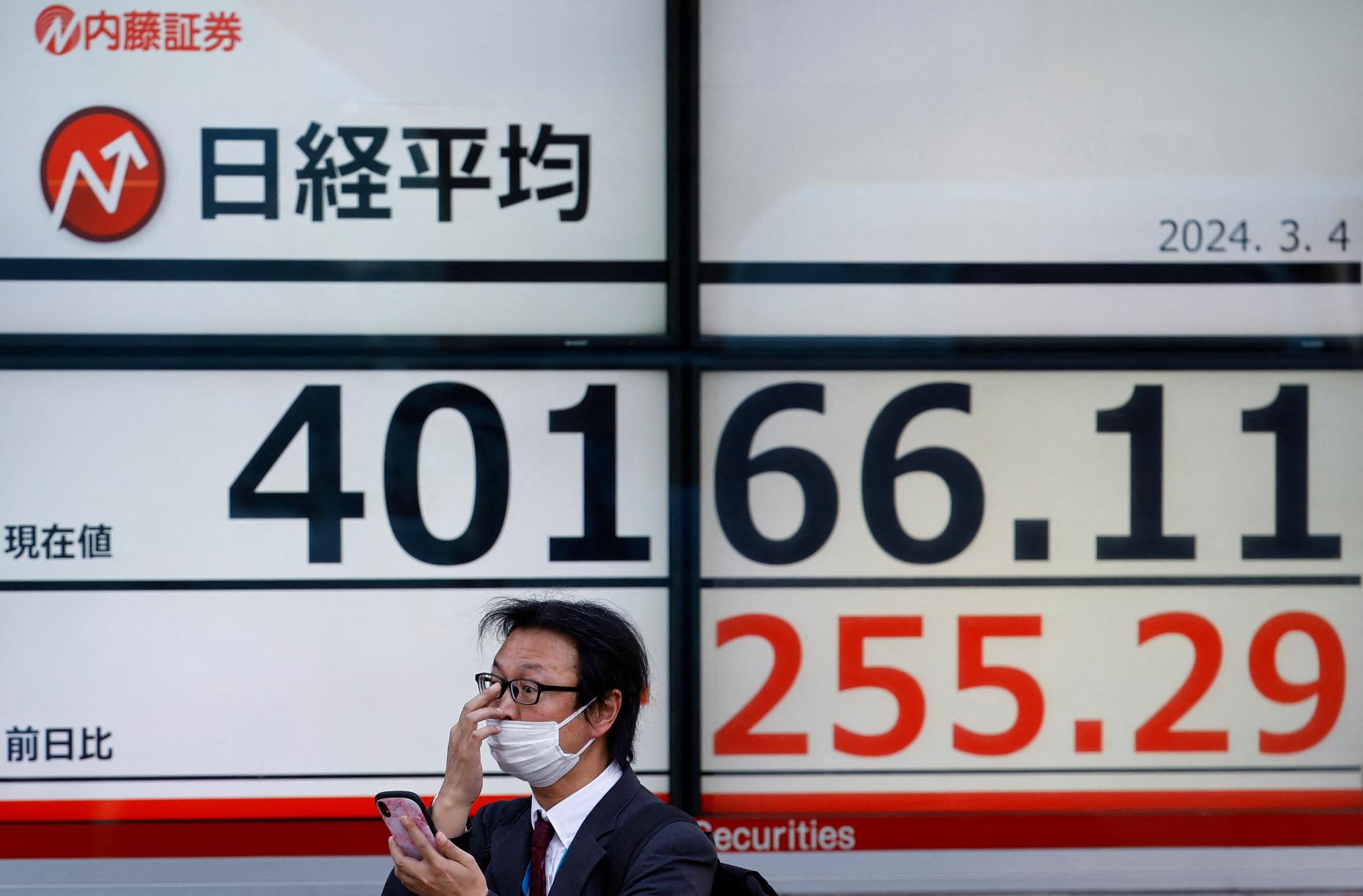
NEW YORK/LONDON, March 8 (Reuters) - Investors stretched record-breaking stock rallies on Friday, before Wall Street took profits, while U.S. Treasury yields dipped after not-too-hot, not-too-cold U.S. jobs data reinforced the conviction that the Federal Reserve will begin easing by mid-year. Two U.S. stock indexes advanced into uncharted territory after the Labor Department said U.S. job growth accelerated in February, even as the unemployment rate jumped and wage gains moderated. The mixed report kept on the table an anticipated interest rate cut in June by the Fed. But the S&P 500 and the Nasdaq reversed course while the Dow Jones Industrial Average (.DJI) , opens new tab did not reach a record high. The Dow (.DJI) , opens new tab fell 68.66 points, or 0.18%, to close at 38,722.69, the S&P 500 (.SPX) , opens new tab lost 33.67 points, or 0.65%, to close at 5,123.69 and the Nasdaq Composite (.IXIC) , opens new tab lost 188.26 points, or 1.16%, to close at 16,085.11. "I don't think this is anything other than taking a little money off the table. I don't think it does anything for the momentum," said Scott Wren, Senior Global Market strategist, Wells Fargo Investment Institute in St. Louis. "Now, do I think there's a probability we see a decent pull back, five or 10%, over the course of next month or two? I do." With the widely anticipated payrolls number out of the way, attention immediately turned to next Tuesday's U.S. Consumer Price Index inflation report. This week, central bankers from the United States and Europe raised expectations that cuts in borrowing costs will begin in the summer on both sides of the Atlantic, pushing stock indices to new highs again on Friday. A day after the European Central Bank held rates steady, ECB policymaker Francois Villeroy de Galhau said there would be a rate cut in the spring, which he defined as from April until June 21, the date of the central bank's meeting that month. Markets have priced in a Fed rate cut in June as well. Some traders even bet on a May rate cut by the Fed after U.S. employers added a surprisingly robust 275,000 jobs last month, even while figures for prior months were revised down to show fewer job gains. "The immediate takeaway is the focus on the unemployment rate going from 3.7% to 3.9%," said Robert Pavlik, senior portfolio manager at Dakota Wealth. "More unemployment rate implies that the economy is slowing, which would, in the markets' view hopefully, necessitate a rate cut sooner rather than later." MSCI's gauge of stocks across the globe (.MIWD00000PUS) , opens new tab rose to its highest level ever then closed off 0.27%. In Europe, the STOXX (.STOXX) , opens new tab index of 600 companies hit a new lifetime high, ending just 0.02% higher, while Europe's broad FTSEuroFirst 300 index (.FTEU3) , opens new tab slipped 0.03%. While central banks on both sides of the Atlantic manage expectations of exactly when they will start lowering borrowing costs, investors pushed up the yen after reports that Japan's central bank may begin hauling up rates from negative territory as soon as this month. MSCI's broadest index of Asia-Pacific shares outside Japan (.MIAPJ0000PUS) , opens new tab went up 1.01%, while Japan's Nikkei (.N225) , opens new tab rose 90.23 points, or 0.23%. The dollar headed for its sharpest weekly drop of the year on the growing likelihood of lower borrowing costs. Against the Japanese yen , the dollar weakened 0.66% to 147.05. The dollar index , a basket comprised of six currencies from major U.S. trade partners, fell 0.03%. Its largest component, the euro , fell 0.06% to $1.0939. Hopes of rate cuts put downward pressure on U.S. government bond yields. The yield on benchmark U.S. 10-year notes fell to its lowest since Feb. 2 but in late trade was only down 0.3 basis points from Thursday at 4.089%. The 2-year note yield, which typically moves in step with rate expectations, fell to its lowest since Feb. 7, and was last 2.4 basis points lower at 4.4902%. German bund yields were on track to record their biggest weekly fall since mid-December on raised bets of an ECB cut in rates. Spot gold logged another record and added 0.87% to $2,177.99 an ounce. U.S. gold futures gained 0.92% to $2,177.80 an ounce. U.S. crude settled down 1.17% at $78.01 a barrel and Brent fell to $82.02 per barrel, down 1.12% to on the day. In cryptocurrencies, bitcoin popped to a record high, after a three-day breather since setting its last one. It briefly topped $70,000 for the first time and was up 2.90% at $69,298.00 in late trade. Ethereum rose 2% at $3952.4. https://www.reuters.com/markets/global-markets-wrapup-1-2024-03-08/
2024-03-08 06:43
Gold up for eighth straight session Traders boost bets on earlier start to Fed rate cuts March 8 (Reuters) - Gold prices surged to another record high on Friday as data showing a rise in the U.S. unemployment rate boosted expectations that the U.S. Federal Reserve could begin cutting interest rates soon. Spot gold rose 0.5% to $2,170.55 per ounce by 2:07 p.m. ET (1907 GMT). U.S. gold futures settled 0.9% higher to $2,185.50. Bullion was set to post its biggest weekly percentage increase since mid-October. Gold reached an all-time high of $2,185.19 after a report showed a rise in the U.S. unemployment rate and a moderation in wage gains despite job growth acceleration in February. "We still believe the same underlying premise remains, which is the combination of the expectation that the Fed is still going to cut rates later this year and dollar weakness," said David Meger, director of metals trading at High Ridge Futures. The dollar index (.DXY) , opens new tab was 0.1% lower, making gold cheaper for overseas buyers, while the yield on the 10-year U.S. Treasury fell to a more than one-month low. Traders boosted bets the Fed could start cutting interest rates in May to around 30% after the jobs report, although June remained the mostly likely scenario at 73%. Gold began its record run on Tuesday when it surpassed its December peak, primarily aided by growing indications of cooling price pressures and its traditional safe-haven appeal. Low interest rates are supportive for gold prices as they reduce the opportunity cost of holding bullion. "This (jobs) report will be seen as one that keeps the Fed on course for June. Gold prices will continue to trend higher overall, though a short consolidation may be necessary," said Tai Wong, a New York-based independent metals trader. Meanwhile, London's gold price benchmark hit another record high of $2171.30 per troy ounce at an afternoon auction on Friday, the London Bullion Market Association (LBMA) said. Spot silver eased 0.3% to $24.25, while platinum was down 0.9% to $910.10 per ounce, and palladium lost 1.8% to $1,015.50. All the three metals were set for weekly gains. https://www.reuters.com/markets/commodities/gold-eyes-best-week-five-months-ahead-us-jobs-data-2024-03-08/

2024-03-08 06:40
March 8 (Reuters) - Foreign investors poured substantial money into Asian equities in February amid a rebound in Chinese stocks following Beijing's rollout of reform measures and a surge in technology shares, driven by the artificial intelligence (AI) boom. Data from stock exchanges in South Korea, Taiwan, Indonesia, India, the Philippines, Thailand and Vietnam showed foreigners purchased a net $10.82 billion worth of regional equities last month, after selling shares worth nearly $779 million in January. The MSCI Asia-Pacific index rebounded last month with a 4% increase, offsetting January's decline, as traders shifted focus to upbeat Asian corporate earnings from concerns over delayed rate cuts by the U.S. Federal Reserve. The bulk of the inflows was directed towards South Korea and Taiwan, recognized as the region's tech hubs, which received $6.1 billion and $3.7 billion, respectively. "The artificial Intelligence (AI) hype saw little signs of abating in the month of February, with investors still preferring to lean into semiconductor stocks and being the region's semiconductor hub, that may account for the strong inflows into South Korea and Taiwan equities," said Yeap Jun Rong, market strategist at IG. Indonesian, Indian, the Philippine, and Thai equities attracted inflows of $647 million, $186 million, $129 million, and $93 million, respectively. Vietnam's equities, however, experienced a marginal $59 million outflow, contrasting with the $48 million of net purchases in the previous month. Jason Lui, head of equity and derivative strategy for Asia Pacific at BNP Paribas, highlighted the potential impact of major elections in the region and the U.S. on investment decisions. "The combination of rising trade tensions (Donald Trump is considering new rounds of tariff) and the FED potentially staying on hold for longer may result in more conservative allocation into the EM Asia equities," he said. "In the case of India, foreign investors will be focusing on the election results as Indian voters are expected to vote between April and May." https://www.reuters.com/markets/asia/asian-stocks-draw-massive-foreign-funds-chinas-reforms-ai-surge-2024-03-08/