2024-03-07 17:22
BENGALURU, March 7 (Reuters) - Bengaluru's acute water shortage is slowing production at its garment factories, doubling restaurant water bills and forcing managers at some global firms in "India's Silicon Valley" to accommodate unusual employee demands. The southern Indian city is home to about 14 million people, thousands of startups and international firms from Walmart (WMT.N) , opens new tab to Alphabet's (GOOGL.O) , opens new tab Google. "My team is skipping meetings to chase water tankers," a senior employee at Dell (DELL.N) , opens new tab said on condition of anonymity, lamenting the hit to productivity. The shortage, caused by weak southwest monsoon rains that failed to replenish depleted groundwater and the Cauvery River basin reservoirs, has already forced residents to ration water use and pay almost double the usual price to meet their daily needs. "This is just the beginning of summer, we don't know how it is going to turn out," said Chethan Hegde, head of the Bengaluru arm of the National Restaurants Association of India. Some restaurants are considering using disposable plates to save on washing-up, while others are putting up advisories in restrooms and training staff on how to operate with less water. Larger companies are changing tack too. Microsoft (MSFT.O) , opens new tab is using tap aerators to control water flow and recycling water in the washrooms at its office in Bagmane Constellation Business Park, an employee said, citing a memo sent to workers. Walmart, which implemented similar water conservation measures well before the crisis, said it was also encouraging landlords to use recycled water for landscaping and gardening. Some employees who live in water-scarce areas prefer to work in the office, a senior Accenture (ACN.F) , opens new tab employee said. Microsoft, Dell and Accenture did not respond to requests seeking comment. The crisis has reached Bengaluru's factories too. "Manufacturers cannot afford to stall production, they are trying their best to go on, but work has slowed down," South India Garment Association President Anurag Singhla said. TENSIONS RISE The situation worsened this week when some providers of water tanks - which the city relies on when river and groundwater levels are too low - went on strike after the state government moved to regulate them. Dealers hiked prices for a 12,000-litre tanker of water to as much as 2,000 rupees ($24.19) in February, from 1,200 rupees ($14.51) in January, Reuters found last month. The city has capped the price of such tankers commissioned by the government at 1,200 rupees per unit, according to a March 6 order seen by Reuters. The government has also allocated 5.56 billion rupees ($67.24 million) to deal with the water shortage but some industry captains are not very hopeful. "(The water board) had promised us treated water, but we don't expect to get that until next year," Peenya Industries Association President H.M. Arif said. "Already, micro industries are on oxygen and higher costs will lead to losses and they will have to be closed if the situation continues." ($1 = 82.6830 Indian rupees) https://www.reuters.com/business/environment/worsening-water-shortage-indias-bengaluru-hurts-businesses-2024-03-07/

2024-03-07 17:21
LONDON, March 7 (Reuters) - China's credit rating could be cut if its economic recovery remains weak or is driven largely by extensive stimulus, S&P Global warned on Thursday. S&P last downgraded China in 2017 but rival agency Moody's put Beijing on a downgrade warning in December, citing concerns Beijing would have to bail out more local governments due to the country's property market crash. S&P analyst Kim Eng Tan said pessimism about China needs to lift so that the economy rebounds and fiscal pressures ease - an improvement currently factored into S&P's A+ stable credit score. If this improvement is "postponed quite a bit further into the future than we currently think - which is within the next year or two," S&P may have to reflect this view in the rating, Tan said during a webinar. That "means there could be a rating action in the negative direction," he added. Tan stressed that for now the signals were "mixed" and cited a still "decent chance" that the economy rebounds "quite a bit" this year. If that bounce needs a lot more stimulus than planned, "the arguments for a negative rating action will strengthen" as China's debt would increase faster, he added. Credit Default Swap markets, which are used to by investors to hedge the risk of holding a country's bonds, have priced in a series of Chinese rating downgrades since 2022. https://www.reuters.com/world/china/weak-recovery-could-trigger-china-rating-cut-sp-global-says-2024-03-07/

2024-03-07 16:38
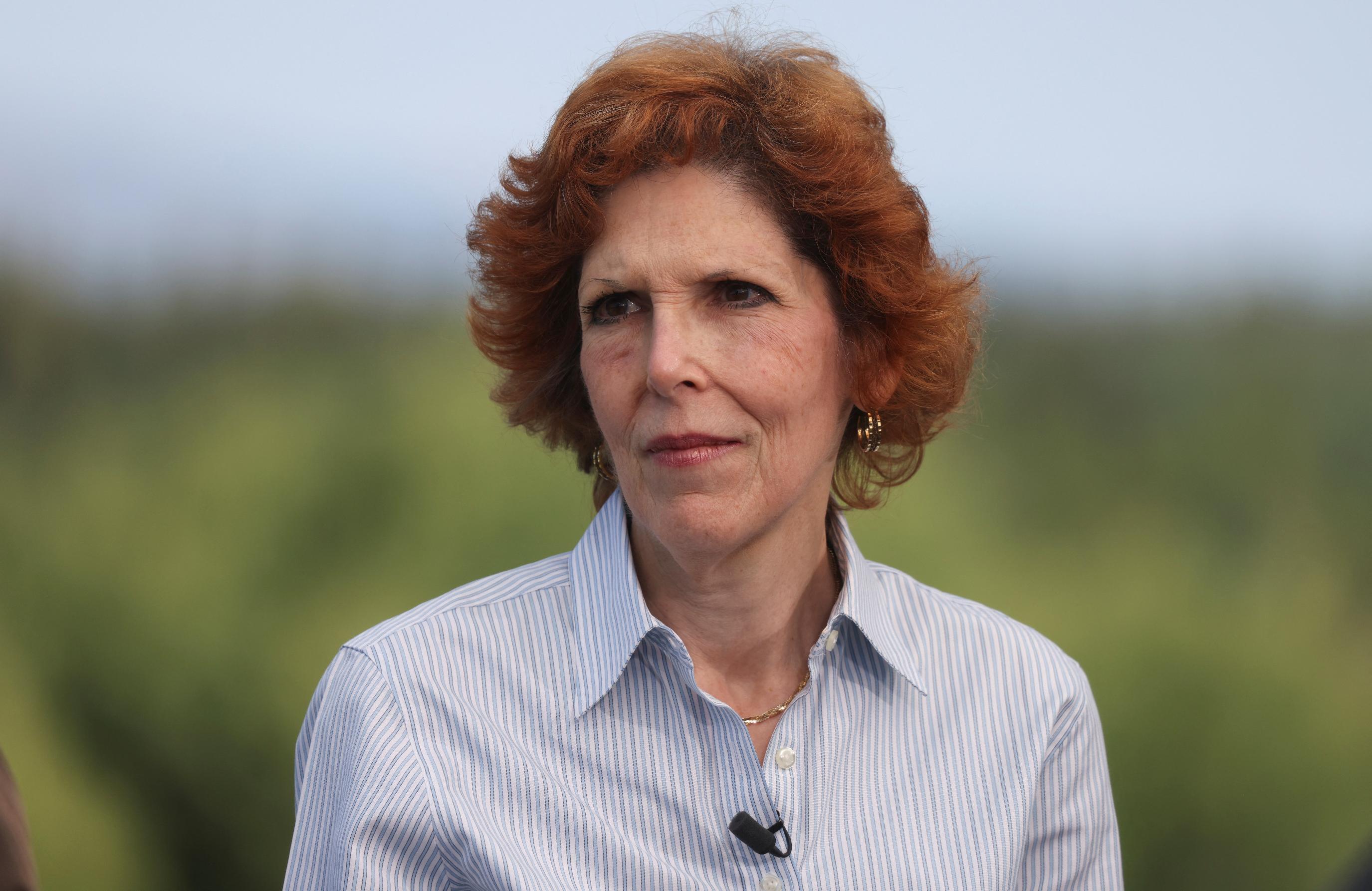
March 7 (Reuters) - Federal Reserve Bank of Cleveland President Loretta Mester reiterated on Thursday that she believes the central bank will be able to lower interest rates this year, but she noted there is no urgency to act right yet. Fed interest rate policy is in a “good place” to take stock of the economy’s performance and the central bank has the “luxury” of waiting before acting on rates, Mester said in the text of a speech to be given before an event in London. While Mester reiterated her expectation that inflation will continue to move back toward 2%, perhaps more slowly this year than it did last year, she also reiterated that she needs to gain confidence price pressures are in fact waning. She noted “at this point, I think the bigger mistake would be to move rates down too soon or too quickly without sufficient evidence that inflation is on a sustainable and timely path back to 2%.” But given the outlook, Mester, who has a vote on the rate-setting Federal Open Market Committee in 2024 but will retire later this year, still expects the central bank will lower its interest rate target range this year. That range is currently set at between 5.25% and 5.5%. If the economy does what it is projected to do, when it comes to lowering rates, “I expect we will find ourselves in that position sometime later this year,” she said. “My base case is that when we do begin to move rates down, we will do so at a gradual pace so that we can continue to manage the risks to both sides of our mandate.” Mester made her remarks as Fed Chair Jerome Powell spoke before a Senate committee in a second day of testimony on the monetary policy and economic outlook. Powell repeated his expectation that the Fed will be able to lower rates later this year if price pressures continue to ebb. Mester also said in her remarks the Fed will slow before stopping its ongoing balance sheet winddown. https://www.reuters.com/markets/us/feds-mester-still-sees-rate-cuts-later-this-year-2024-03-07/
2024-03-07 16:07
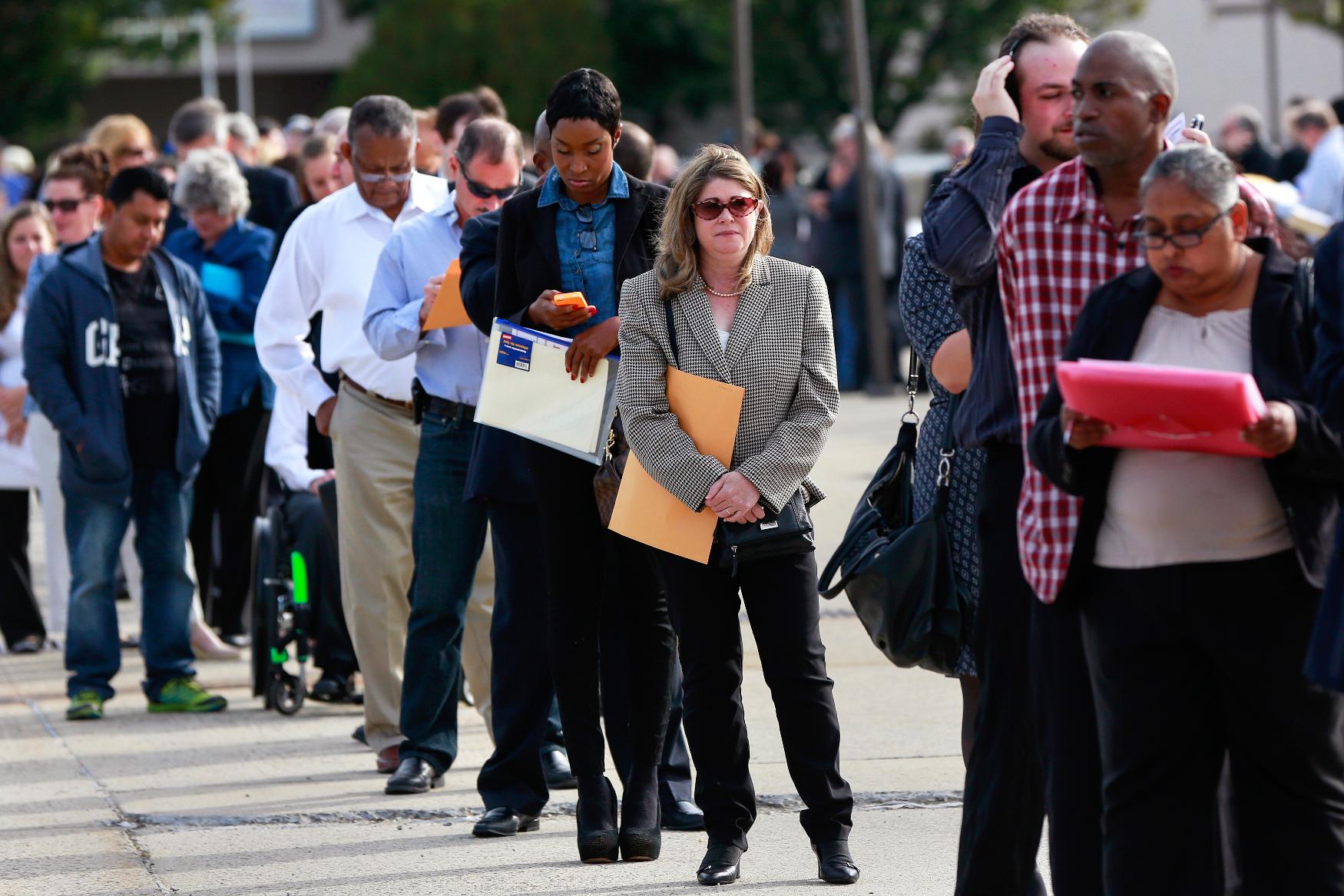
Weekly jobless claims unchanged at 217,000 Continuing claims increase 8,000 to 1.906 million Fourth-quarter productivity growth unrevised Trade deficit widens 5.1% to $67.4 billion in January WASHINGTON, March 7 (Reuters) - The number of Americans filing new claims for unemployment benefits was unchanged last week as the labor market continued to gradually ease, which could give the Federal Reserve room to wait before cutting interest rates this year. Despite other data on Thursday showing a sharp widening in the trade deficit in January as businesses boosted imports of computers, semiconductors, motor vehicles and parts, economic growth in the first quarter is expected to slow only marginally as the resilient labor market underpins consumer spending. "New layoffs are relatively modest and signal that no immediate deterioration of labor market conditions is headed our way," said Christopher Rupkey, chief economist at FWDBONDS in New York. "The trade winds are not blowing as favorably in the economy’s direction at the start of the year, but the consumer is in good shape and their spending is expected to add more to growth later in the first quarter." Initial claims for state unemployment benefits held at a seasonally adjusted 217,000 for the week ended March 2, the Labor Department said. Economists polled by Reuters had forecast claims unchanged at 215,000 in the latest week. Claims in New York surged by 14,275 and filings in California increased 6,150. There were also large increases in claims in Texas, but applications dropped by 3,933 in Massachusetts. There were also significant decreases in Georgia, Oregon and Rhode Island. The labor market is steadily loosening up, which could ease some pressure on inflation. Fed Chair Jerome Powell told lawmakers on Wednesday that the U.S central bank expected "inflation to come down, the economy to keep growing," but shied away from committing to any timetable for interest rate cuts. There were 1.45 job openings per every unemployed person in January, government data showed on Wednesday. This ratio has dropped from 1.82 a year ago, but remains well above the average of 1.2 during the year before the COVID-19 pandemic. The Fed's Beige Book report on Wednesday said "labor market tightness eased further," in February but noted "difficulties persisted attracting workers for highly skilled positions." Since March 2022, the Fed has raised its policy rate by 525 basis points to the current 5.25%-5.50% range. A separate report from global outplacement firm Challenger, Gray & Christmas on Thursday showed layoffs announced by U.S.-based companies rose only 3% to 84,638 in February. Planned job cuts so far this year are down 7.6% compared to the same period in 2023. The number of people receiving benefits after an initial week of aid, a proxy for hiring, increased 8,000 to 1.906 million during the week ending Feb. 24, the highest level since last November, the claims report showed. Stocks on Wall Street were trading higher. The dollar fell against a basket of currencies. U.S. Treasury prices were mixed. UPCOMING REVISIONS The Labor Department will next week publish the seasonal factors for 2024 and revised seasonal factors for 2019 through 2023 for both initial and continued claims. It will also revise the data for both series for 2019-2023. Some economists expect these revisions to undo some of the surge in continuing claims seen beginning last September. The claims data have no bearing on February's employment report due on Friday as they fall outside the survey periods. According to a Reuters survey of economists, nonfarm payrolls likely increased by 200,000 jobs last month after adding 353,000 positions in January. The unemployment rate is forecast unchanged at 3.7% and annual wage growth slowing to 4.4% from 4.5% in January. Some economists have attributed labor market strength to rising worker productivity, which is helping to curb costs for businesses. Nonfarm productivity, which measures hourly output per worker, increased at an unrevised 3.2% annualized rate in the fourth quarter, the Labor Department's Bureau of Labor Statistics said in a separate report on Thursday. Unit labor costs - the price of labor per single unit of output - rebounded at a 0.4% rate in the fourth quarter. A third report from the Commerce Department's Bureau of Economic Analysis showed the trade deficit increased 5.1% to $67.4 billion in January. Imports increased 1.1% to $324.6 billion. Goods imports shot up 1.2% to $263.4 billion, with imports of capital goods and motor vehicle parts and engines the highest on record. While imports subtract from growth, the increase in these two categories bodes well for business investment on equipment. Exports edged up 0.1% to $257.2 billion. Goods exports nudged up 0.1% to $171.8 billion as the highest capital goods exports on record were partially offset by a decline in crude oil exports. The data suggested that trade could be a drag on GDP in the first quarter after adding 0.32 percentage point to the 3.2% growth rate last quarter. Growth estimates for January-March quarter are converging around a 2.0% pace. "How businesses manage their inventories in the months ahead, particularly for durable goods, will remain a wild card for import growth in the year," said Matthew Martin, a U.S. economist at Oxford Economics in New York. "With our expectations for import growth to remain ahead of export growth during the year, net trade is likely to move from a slightly positive to a modest drag on GDP growth." https://www.reuters.com/markets/us/us-weekly-jobless-claims-unchanged-2024-03-07/
2024-03-07 15:37
WASHINGTON, March 7 (Reuters) - The U.S. banking sector saw its profits drop by nearly half in the last quarter of 2024, as large firms began paying hefty fees to help recoup costs incurred by several bank failures last spring, the Federal Deposit Insurance Corporation reported Thursday. Roughly 70% of the 43.9% decline in quarterly bank profits was due to specific, non-recurring expenses at large banks, primarily a special assessment fee larger banks were ordered to pay to the FDIC to replenish its deposit insurance fund. In all of 2023, bank profits were down 2.3% to $257 billion, but remain above pre-pandemic levels, the FDIC said. The FDIC directed banks to pay the fee to recoup billions of dollars in losses its insurance fund suffered following the failures of Silicon Valley Bank and two other larger firms. Overall, the latest quarterly numbers from the FDIC painted a mixed picture for the banking industry. On the positive end, the FDIC said bank deposits were up 1.1% in the fourth quarter, the first increase in nearly two years. Also, unrealized losses on securities, which had weighed heavily on some bank balance sheets, declined 30.2% to its lowest level since the second quarter of 2022. Net operating revenue for the banking sector exceeded $1 trillion for the first time since the FDIC began tracking the data, the agency said. However, the agency also found that non-current loans had risen 0.86% and the net charge-off rate, which is debt a bank anticipates it will never collect, climbed to 0.65%. Credit card and commercial real estate debate were the main contributors, with sectors seeing charge-off rates not seen since 2012. The FDIC also added eight banks to its "problem bank" list, bringing the total to 52. However, those firms represented just 1.1% of total institutions and had assets totaling just $66.3 billion. "The banking industry still faces significant downside risks from the continued effects of inflation, volatility in market interest rates, and geopolitical uncertainty," said FDIC Chairman Martin Gruenberg in a statement. "In addition, deterioration in certain loan portfolios, particularly office space and other types of [commercial real estate] loans, warrants monitoring." https://www.reuters.com/markets/us/us-bank-profits-drop-44-q4-big-firms-cover-failed-bank-costs-2024-03-07/

2024-03-07 12:53
VIENNA, March 7 (Reuters) - The United States on Thursday threatened future action against Iran at the U.N. nuclear watchdog if Tehran keeps "stonewalling" the watchdog by denying it the cooperation and answers it seeks on issues including long-unexplained uranium traces. At a quarterly meeting of the International Atomic Energy Agency's 35-nation Board of Governors, Washington again told Iran to cooperate with IAEA inspectors who for years have been seeking explanations from Tehran on the origin of uranium particles at undeclared sites. The United States has stopped short, for now, of seeking a resolution against Iran, however. Diplomats have cited the U.S. presidential election in November as a reason Washington has been reluctant to do that. Tehran bristles at such resolutions and often responds by stepping up its activities. "We believe we have come to the point that we and the broader international community must consider anew how to respond to Iran's continued stonewalling," the United States said in a statement to the Board meeting. "We cannot allow Iran's current pattern of behavior to continue." It is now more than a year since the last Board resolution against Iran, which ordered it to cooperate urgently with the investigation into the particles. Tehran dismissed the resolution as "political" and "anti-Iranian" even though only China and Russia opposed it. The United States and its three top European allies - Britain, France and Germany - again opted against seeking a resolution against Iran at this week's meeting but the United States said that if Iran did not provide the necessary cooperation soon, it would act. "It is our strongly held view that Iran's continuing lack of credible cooperation provides grounds for pursuing further Board of Governors action, including the possibility of additional resolutions and consideration of whether Iran is once again in noncompliance with its safeguards obligations," it said. In 2018 then-President Donald Trump pulled the United States out of a 2015 deal under which major powers lifted sanctions against Iran in exchange for restrictions on its nuclear activities. After sanctions were re-imposed, Iran expanded those activities far beyond the deal's limits. It is now enriching uranium to up to 60% purity, close to the roughly 90% of weapons grade and far above the deal's cap of 3.67%. Western powers say there is no credible civil explanation for enriching to that level and the IAEA says no country has done so without producing a nuclear bomb. Iran says its aims are entirely peaceful and it has the right to enrich to high levels for civil purposes. The United States said Iran should provide the IAEA with cooperation including access "for the purposes of collecting environmental samples ... and it must begin to do so now". If it did not, it would ask IAEA chief Rafael Grossi to provide a "comprehensive report" on Iran's nuclear activities more wide-ranging than his regular quarterly ones, it said. "Then, based on the content of that report, we will take appropriate action in support of the IAEA and the global nuclear nonproliferation regime," it added. https://www.reuters.com/world/us-threatens-action-against-iran-iaea-over-continued-stonewalling-2024-03-07/