2024-03-06 21:15
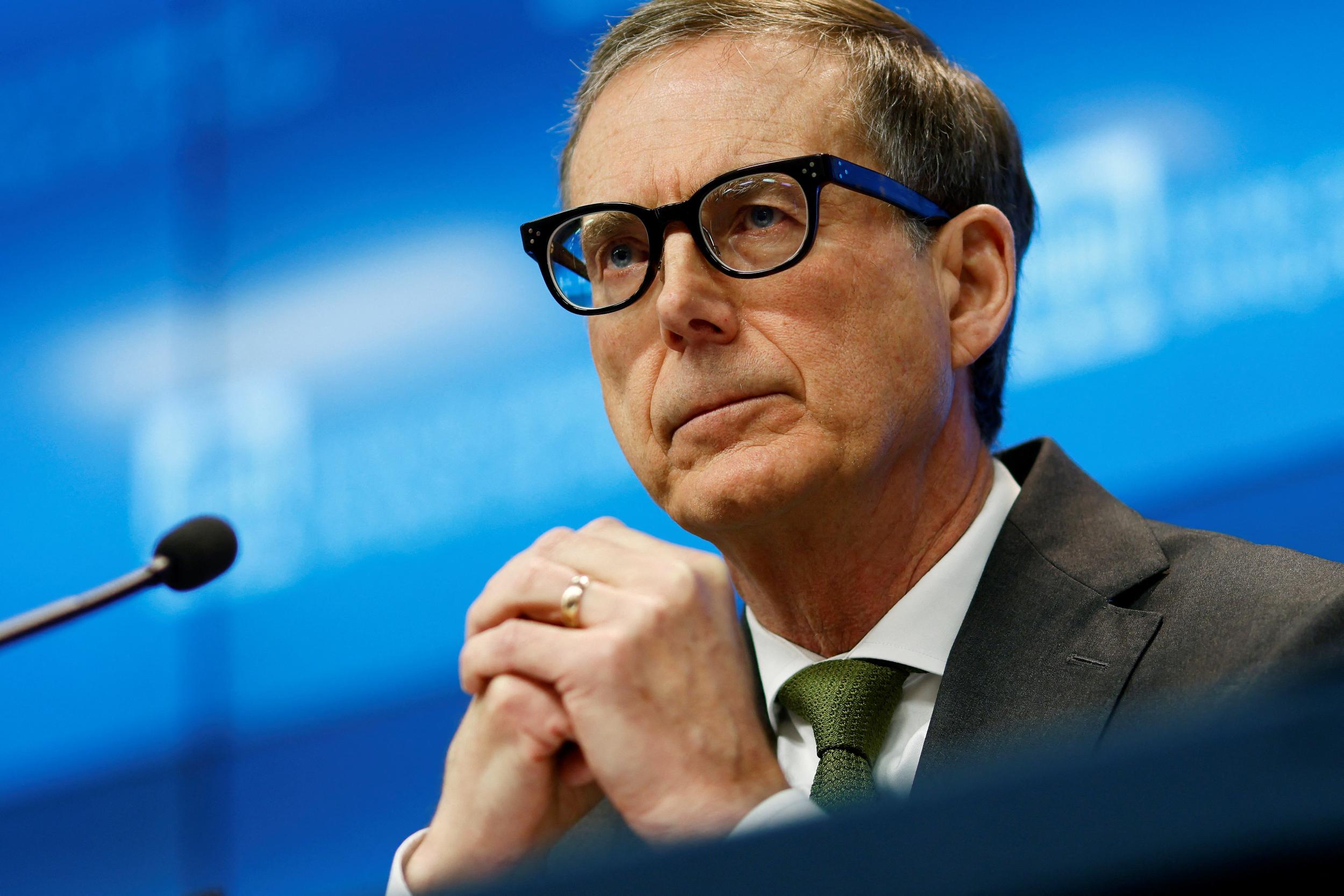
OTTAWA, March 6 (Reuters) - Bank of Canada Governor Tiff Macklem, speaking a month before the federal budget is delivered, on Wednesday warned against policies that might spur demand amid a housing crunch, saying it can only be resolved by increasing supply. In an interview after keeping its key overnight rate on hold at 5% earlier in the day, Macklem said that borrowing costs cannot solve the country's housing problem. "Our message really is that high rates, low rates - if we don't grow supply, we're not going to solve the housing problem," Macklem said. "Policies that mostly add to demand are not helpful at this time. Demand is not the problem. Policies that are more skewed to increasing supply would be helpful." Shelter costs continue to be the primary driver of inflation, which in January was 2.9%, still above the central bank's target of 2%. His comments on housing come as Prime Minister Justin Trudeau's government puts together its next budget, which Finance Minister Chrystia Freeland said will be focused on building homes. "Our economic plan is about building more homes, faster, making life more affordable, and creating more good jobs," Freeland said when she announced the budget would be delivered on April 16. When asked about a Canadian Home Builders Association suggestion to allow for 30-year insured mortgages for first-time homebuyers who purchase a newly built house, Macklem said he would not comment on specific policies. "We're not the experts in increasing supply in housing," Macklem said, adding however that with strong underlying demand, "we don't need policies that stimulate demand." When the Bank of Canada paused its interest rate hikes last year, housing prices spiked, only to come down again when it raised them by a half-a-percentage point in the summer. A rush back to the market when rates start to come down would mean "the scope to cut interest rates is less," Macklem said. There have been signs of a recovery in the housing market even though rates remain at a 22-year high, including a surge in sales in the Toronto area in January. "We really need policies that are focused more on the supply side and I will say I think governments are acutely aware of this," Macklem said. https://www.reuters.com/world/americas/bank-canadas-macklem-ahead-budget-warns-against-spurring-housing-demand-2024-03-06/
2024-03-06 21:10
March 6 (Reuters) - Ten Republican-led states have sued to challenge new federal rules that require U.S.-listed companies to report climate-related risks, a spokesperson for the West Virginia Attorney General's Office said on Wednesday, hours after the U.S. Securities and Exchange Commission approved the rules. The states, which also include Georgia, Alabama and Alaska, filed the petition at the Atlanta-based 11th U.S. Circuit Court of Appeals, according to the spokesperson. The rules aim to standardize climate-related company disclosures about greenhouse gas emissions, weather-related risks and how they are preparing for the transition to a low-carbon economy. The Sierra Club environmental group, meanwhile, said it was considering suing the SEC because it believed the new rules did not go far enough. The SEC, Wall Street’s top regulator, said the information would give investors reliable information about financial risks companies face related to climate change. An SEC spokesperson said in a statement that the agency crafts rules that are consistent with its legal authority, and that it will "vigorously defend" the climate disclosure rules in court. First proposed in 2022, the rules are part of Democratic President Joe Biden’s efforts to leverage federal agency rulemaking to address climate change threats. Similar disclosure requirements have been adopted in Europe and in California. West Virginia Attorney General Patrick Morrisey on Wednesday said during a press conference that the Biden administration is trying to act as a "puppeteer" using public companies to drive forward its climate agenda. Republican-led states had been signaling their intent to challenge the rules for years, arguing in public comments in 2022 that they amount to back-door environmental regulations that go beyond the SEC’s legal authority. They claimed then the rules would require companies to create, gather and disclose a “crushing” amount of material that goes well beyond the finance-based disclosures that investors need. Anticipating legal challenges, the Biden administration had dropped more ambitious elements of the rules requiring companies to disclose “Scope 3” emissions, indirect emissions by suppliers or customers. For many businesses, Scope 3 emissions account for 70% of their carbon footprint, according to the consulting firm Deloitte. The final SEC rules also allow larger companies to determine whether emissions from their own operations and the power they purchase constitute information investors need to make decisions. Morrisey said that despite changes to the proposed rule, the finalized rule was still defective and unconstitutional. The Sierra Club, one of the largest environmental advocacy groups in the U.S., said in a statement it was considering filing a lawsuit to challenge the SEC's decision to remove the more robust reporting requirements. The group said it would also defend the SEC's legal authority to issue and implement the rules. In California state court, litigation has been already been filed by business groups including the U.S. Chamber of Commerce challenging that state’s climate disclosure laws, which include Scope 3 emissions disclosure requirements. That lawsuit filed in January said the state’s laws will impose “massive” costs on businesses and violate free speech protections in the U.S. Constitution by compelling the disclosures. https://www.reuters.com/sustainability/climate-energy/republican-led-states-say-they-will-sue-us-securities-regulator-over-climate-2024-03-06/

2024-03-06 20:50
March 6 (Reuters) - There was an uptick in U.S. economic activity from early January through late February while inflation and the jobs market presented conflicting signals on how quickly they will cool further, a U.S. Federal Reserve survey showed on Wednesday, underscoring the complicated picture for central bankers as they seek to fully tame pricing pressures. The U.S. central bank released its latest temperature check on the health of the economy after Fed Chair Jerome Powell said earlier on Wednesday that it remains unclear when the Fed may cut interest rates and underpin the current expansion given further progress on inflation was not assured. Powell and his colleagues are attempting to engineer a so-called "soft landing" for the economy in which economic growth gradually slows and the unemployment rate remains low even as inflation, which spiked to a 40-year high two years ago, returns to the Fed's 2% target rate. "Economic activity increased slightly, on balance," the Fed said in its survey released on Wednesday, known as the "Beige Book," which polled business contacts across the central bank's 12 districts through Feb. 26. "The outlook for future economic growth remained generally positive, with contacts noting expectations for stronger demand and less restrictive financial conditions over the next 6 to 12 months." Eleven of the 12 Fed regions reported steady or increased economic activity with the other district noting a slight softening. Since March 2022, the central bank has raised its policy rate by 525 basis points to the current 5.25%-5.50% range, where it has been held since July. While rates are set to remain unchanged at the next interest-rate setting meeting on March 19-20, Fed officials in December provisionally penciled in three rate cuts this year. PERSISTING INFLATION Recent stronger-than expected data on employment and inflation though has raised fears that the economy is still too robust for pricing pressures to fully return to the Fed's target rate. By the Fed's preferred measure, inflation in January was running at a 2.4% annual rate, down from the 7.1% peak reached in June 2022. The Fed's survey did little to provide clarity. While contacts said the labor market had eased further in recent weeks, wages also grew although several Fed districts indicated a slower pace of gains. For example, the Kansas City Fed described pay for new hires as "elevated," but said many contacts were focusing wage increases "primarily on workers who expanded their capabilities, responsibilities, and productivity." On inflation, Fed contacts reported businesses finding it harder to pass through higher costs to their customers. There were, however, also renewed upward pressures with contacts citing increases in freight costs and several insurance categories, including employer-sponsored health insurance. Elsewhere, the report highlighted the ongoing drag from inflation, even as several districts reported price pressures moderating. "I wish my twenty-dollar [sandwich] lunch went back to [costing] ten," a Minnesota worker told the Minneapolis Fed. "It instead keeps going up." https://www.reuters.com/markets/us/us-economic-activity-increased-slightly-recent-weeks-fed-survey-shows-2024-03-06/
2024-03-06 20:49
March 6 (Reuters) - Canadian oil and gas pipeline firm TC Energy (TRP.TO) , opens new tab said on Wednesday it has laid off some of its workers as part of a previously announced plan to integrate its natural gas pipeline units. The workforce reductions would primarily impact people working in Calgary and Houston, the company said in a statement to Reuters. The Calgary, Alberta-based company did not specify the number of employees it would let go. According to a regulatory filing, its principal operating unit TCPL had 2,635 employees in Calgary and 837 in Houston as of Dec. 31. TC Energy is undergoing an overhaul and had said last year it would spin off its liquids business to focus on transporting natural gas. Its long-term debt had reached C$49.98 billion ($36.97 billion) as of Dec. 31 as it grapples with high costs at its Coastal GasLink pipeline in British Columbia. In January, rival Enbridge (ENB.TO) , opens new tab had said it would lay off 650 individuals. The company said it had completed 500 job cuts so far on Wednesday. ($1 = 1.3518 Canadian dollars) https://www.reuters.com/business/energy/tc-energy-announces-layoffs-primarily-calgary-houston-2024-03-06/
2024-03-06 20:36
Exxon pursues arbitration over deal with international tribunal Filing could be tactic to win Chevron concessions, says analyst HOUSTON, March 6 (Reuters) - Exxon Mobil Corp (XOM.N) , opens new tab on Wednesday said it filed a contract arbitration claim related to Hess Corp's (HES.N) , opens new tab proposed sale of its Guyana oil properties, and suggested it may counter Chevron Corp's pending deal for the assets. The arbitration case seeks to preserve Exxon's right to evaluate making a bid for Hess's 30% stake in the giant Stabroek offshore oil block if Chevron (CVX.N) , opens new tab proceeds with its proposed $53 billion Hess purchase, Senior Vice President Neil Chapman said in a conference on Wednesday. Stabroek, which is consider the largest oil discovery in decades, is the prize in Chevron's bid for Hess. Exxon made clear for the first time it could bid for the Hess's Guyana properties. "I don't know if the Chevron transaction is going to proceed or not, that is in their hands," Chapman said at a Morgan Stanley event in New York. "If there is a transaction, we plan to exert our preemption rights," he said. Those rights, part of the consortium's operating agreement, he said, "give us the opportunity to look at the value, which we can then match should we choose to do so." Exxon declined to comment whether it would bid for Hess assets if Chevron's deal does not proceed for any reason. Chevron and Hess have said they believe the rights do not apply as the transaction would involve a merger with the parent company that would keep Hess's Guyana subsidiary intact. “We remain fully committed to the transaction, and are confident in our position. We look forward to closing the transaction on the terms we’ve agreed,” Chevron spokesperson Braden Reddall said in a statement. Chevron's bid for Hess is "an attempt to circumvent" the joint operating agreement that governs the partners' roles in the Stabroek block, Chapman said. Exxon's challenge could prove fruitful even if it does not end up enlarging the oil company's holdings, analysts have said. Its arbitration filing "could be a negotiating stance," said Mark Kelly, CEO of financial firm MKP Advisors. Wednesday's drop in Hess stock "suggests that the market is somewhat happy to take them at their word," Kelly said, and that Exxon could have a right to own Hess Guyana assets if Chevron wants to buy it. Hess shares dropped more than 2% on Wednesday, Chevron shares fell less than 1% and Exxon shares rose 1%. Exxon now holds a 45% stake in the consortium and operates all of its production. If it bought Hess's share, it would hold 75% of the block. A contract arbitration case typically takes six months or more, Chapman said. The company has been negotiating with Chevron and Hess over its right of first refusal to any sale of Hess's Stabroek stake. It formally filed for arbitration on Wednesday with the International Chamber of Commerce, he said. "We, as participant (in the block), have the rights to match a reasonable allocation of the value of the Hess transaction," Chapman said. Asked if talks with Chevron would continue and if there were chances of a negotiated agreement before the arbitration process ends, Chapman said that "disputes take place all the time, and they get resolved." "The only real difference is this is in the public domain," he said. The largest U.S. oil company is awaiting regulatory approval for its $60 billion proposed purchase of Pioneer Natural Resources. That deal would make Exxon the largest oil producer in the top U.S. oil field. https://www.reuters.com/business/energy/exxon-signals-potential-counter-offer-hesss-guyana-assets-2024-03-06/

2024-03-06 20:25
Ship carrying 21,000-tonnes of fertiliser sunk at weekend Quantity and location increase risk to coral, marine life Conflict complicates any potential cleanup operation LONDON, March 6 (Reuters) - When the Rubymar sank in the Red Sea after a Houthi attack, the ship went down carrying 21,000-tonnes of fertiliser which could trigger massive algal blooms that could create "dead zones" for marine life and starve coral reefs of light. Alongside a slick of leaking fuel, the ammonium phosphate sulphate fertilisers could deliver an extreme pulse of nutrients into waters harbouring rare corals, marine mammals and reef fish, creating a spread of foamy scum on the water. According to a maritime warning circulated to ships in the area, the UK-owned Rubymar, the first vessel lost since Houthi militants began targeting commercial ships in November, sank at the weekend in a narrow area between Yemen and Eritrea at around 100 metres (330 feet) of depth, along the continental slope. The relatively shallow waters near the coasts are teeming with coral. "It is such a huge amount of fertilizer and it is a terrible location," said Ali Al-Sawalmih, director of the Marine Science Station at the University of Jordan. Adapted to warm water conditions, scientists have hoped the Red Sea might serve as a refuge for corals as climate change further warms the world's oceans - making any potential impact even more significant. The conflict in the area further complicates any cleanup and would dissuade salvage ships from entering the high risk waters, shipping industry sources said. So far, it is not clear who has insured the Belize-registered Rubymar and would therefore pay for any remediation. It is not known how the fertiliser was stored and how secure it would be from reaching the water. And so far, any damage has yet to be reported. But the sinking has the potential to be the worst environmental catastrophe the region has experienced in more than a decade, Sawalmih said. An overload of fertilisers can stimulate excessive growth of algae, using up so much oxygen that regular marine life cannot survive. This creates dead zones where nothing lives. Fertilizers often also contain traces of harmful chemicals which are toxic to marine life. "Fishing communities along Yemen's Red Sea coast in Hodeidah and Taiz will be impacted by the contamination," said Mohammed al-Basha with U.S. analytics company Navanti Group. This could lead to lower catches and damage to livelihoods. Yemen's Iran-aligned Houthis have vowed to continue sinking ships in the Red Sea and the narrow Bab el Mandab chokepoint further south through which millions of barrels of oil and hundreds of thousands of tonnes of industrial commodities pass each day. The Houthis, who control the north of Yemen and other large centres, say their campaign is a show of solidarity with Palestinians in Gaza. CORAL ECOSYSTEM The sinking of the Rubymar represents one of the few times in recent years a vessel has sunk with vast quantities of fertiliser on board, and perhaps the only sinking in a sensitive coral ecosystem. Earlier this year, a German-flagged vessel carrying 1,000 tonnes of nitrogen fertiliser struck a bridge and sank along the Danube River border between Serbia and Croatia. Serbian authorities said the fertiliser was carried downstream and follow up analysis showed no increased pollution. The Red Sea is usually a nutrient poor water body, receiving few artificial inputs from urban wastewater discharge and aquaculture operations. "If you suddenly have a huge amount of fertiliser dumped into the ocean, you're probably going to have some pretty drastic algal blooms," said Derek Manzello, who coordinates the U.S. National Oceanic and Atmospheric Administration's Coral Reef Watch. Studies suggest that because corals there are already specially adapted to warm water conditions, they may be more resilient to rising ocean temperatures, requiring greater temperature anomalies to bleach - the process by which corals expel the colourful algae living in their tissues when under heat stress. Scientists however have observed that Red Sea reefs rapidly lost coral cover between 2019 and 2023 following high ocean temperatures. Corals exposed to a lot of nutrients have also been found to be more susceptible to heat stress and bleaching. Blooms of tiny algae in the water column may also form a murky soup that blocks sunlight from reaching reefs. With the sinking of the Rubymar and possible fertiliser release, "this is like adding insult to injury", Manzello said. https://www.reuters.com/business/environment/coral-reefs-risk-algal-bloom-after-rubymar-sunk-red-sea-2024-03-06/