2024-03-06 17:19
Government bonds steady, pound holds near 1-month peak Hunt cuts national insurance, firming consumer stocks Market focus turns to BoE rate cuts LONDON, March 6 (Reuters) - Investors in UK assets reaffirmed a view that the economy was heading for interest rate cuts in the coming months as finance minister Jeremy Hunt resisted budget giveaways on Wednesday that could have sparked fears of inflationary over-spending. Hunt trimmed national insurance contributions by 2 pence in the pound but stuck to a fiscally cautious mandate that eased anxiety about Britain's $3 trillion debt burden, boosted consumer stocks and helped the pound stay robust against major peers. Since September 2022, UK budgets have unsettled investors scarred by the mayhem unleashed by former prime minister Liz Truss' underfunded tax and spending plans. "It is seemingly still taking some time to rebuild that trust," added Dean Turner, an economist at UBS. "But I think this government and this chancellor have definitely learned that going down the Liz Truss route is not for them." Hunt was under pressure to cut taxes more deeply ahead of a national election and with his Conservative Party trailing the opposition Labour Party by a wide margin, investors had feared a budget that undermined the BoE's battle against inflation. "There was a temptation to deliver 3 or even 4 pence cuts on NI and ... the risk to inflation would have been higher," said Schroders senior European economist Azad Zangana, noting that both overseas and UK investors had been nervous ahead of the budget. Sterling held near Tuesday's one-month highs against the dollar and London's FTSE stock index slightly outpaced its European peers (.FTSE) , opens new tab, (.STOXX) , opens new tab. In Britain's government bond market, which affects the cost of borrowing for corporates and mortgages and was at the centre of the 2022's post-mini budget rout, 10-year gilt yields touched their lowest in almost three weeks. That move also came as Federal Reserve chief Jerome Powell testified to Congress. GILT MARKETS With the UK's high debt burden and future borrowing needs already priced in, there was now scope for the gilt market to rebound, investors said. "The feelings towards the UK were quite negative, so there was some meaningful underweight and that has been basically flattened out," said Ales Koutny, head of international rates at Vanguard, which manages $8.6 trillion in funds. "We take the view that we do see rate cuts coming through which should feed into a better performance for gilts," said Janus Henderson fund manager Stephen Payne. The 10-year gilt yield, which moves in the opposite direction to the price of the debt instrument, has underperformed global peers. It was last trading at 4.0% . It is up 50 basis points so far this year, versus a 25 bps and 30 bps increase in U.S. and German peers respectively. Payne said Hunt was sticking with the need for financial stability and so staying within fiscal rules. "This just reinforces the view that budget risk has faded,” for UK markets," he added. Moody's ratings agency said Wednesday's budget would "perpetuate the UK's fiscal challenges" - but it added that the government's commitment to meeting its fiscal rules would help to underpin Britain's stable Aa3 rating. The BoE has lifted borrowing costs to a 16-year high of 5.25% but traders are betting on roughly 65 basis points worth of future rate cuts, with the first fully priced in for August -- likely after the euro zone and U.S. central banks have moved. Schroders' Zangana said the BoE could potentially cut as early as May. Hunt forecast Britain's economy would grow by 0.8% this year, coming out of a technical recession. This was a touch stronger than a forecast for an expansion of 0.7% in the previous outlook for 2024. Sterling has been one of the best-performing major currencies against the dollar in the last year, with a 7% gain, partly because BoE rate cuts are expected to lag other central banks. It was trading at around $1.27 on Wednesday - not far off one-month highs hit a day earlier Consumer-focused UK stocks also performed well on Wednesday, with pub group Mitchells & Butler (MAB.L) , opens new tab and fast food chain Greggs (GRG.L) , opens new tab gaining more than 3%. UK financial services businesses including fund manager Jupiter (JUP.L) , opens new tab and stockbroker AJ Bell (AJBA.L) , opens new tab were also boosted by Hunt's pledge to drive more investment into the nation's moribund equity markets. The domestically focused FTSE 250 rose 1.4% (.FTMC) , opens new tab, outperforming other major stock markets. "People are putting two and two together and coming up with the idea that a tax (NI) cut equals more consumer spending," UBS' Turner said. https://www.reuters.com/world/uk/trouble-free-uk-budget-reaffirms-market-bets-rate-cuts-2024-03-06/

2024-03-06 16:35
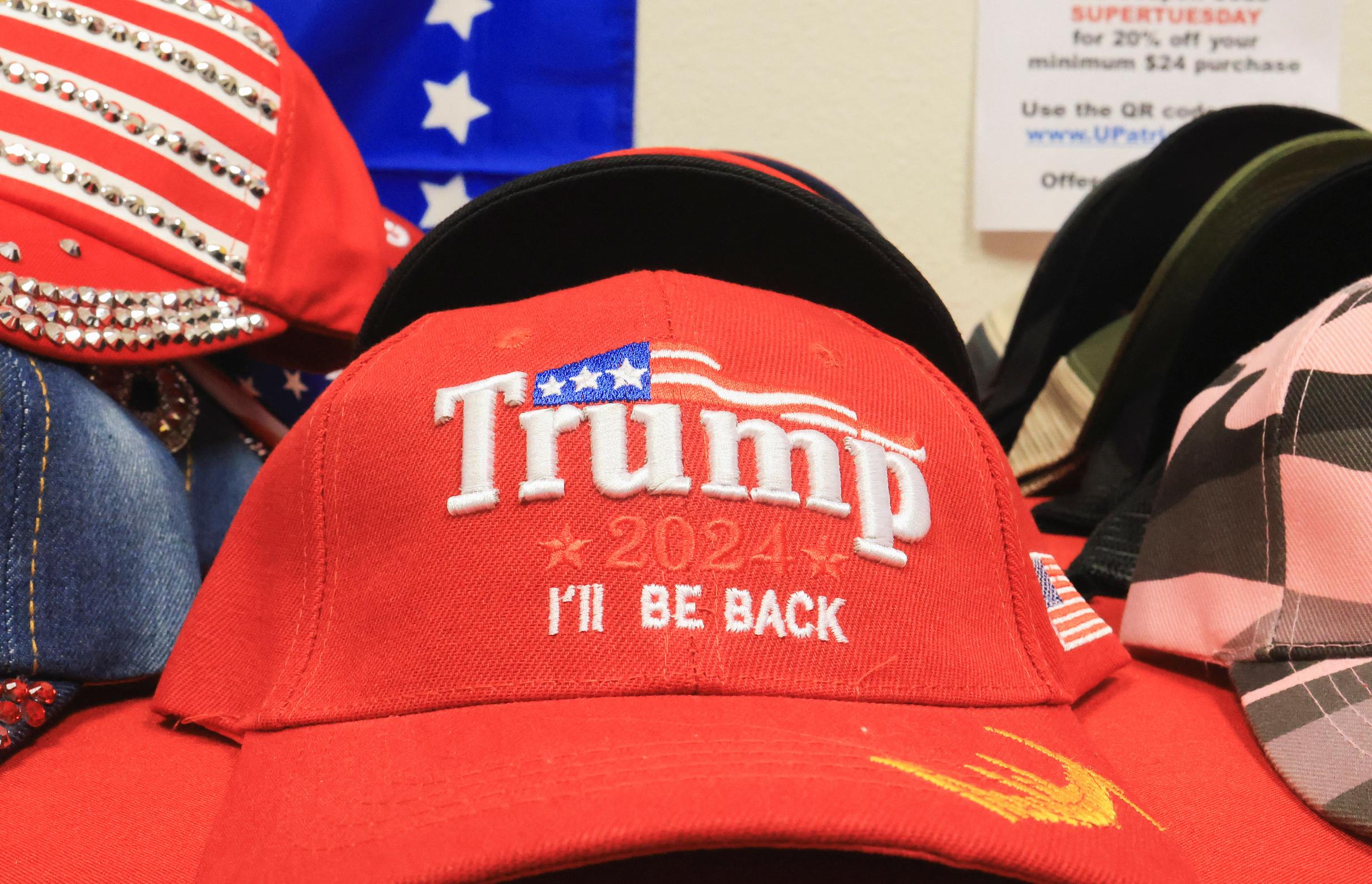
LONDON, March 6 (Reuters) - Investors are bracing for the possibility of Donald Trump returning to the White House after Super Tuesday confirmed that the November U.S.-election is set to pitch him against incumbent Joe Biden. Below are five flash points in focus for world markets. 1/ TRADE TANTRUM Any ratcheting up in trade tensions between the U.S. and other big economies could shake up world equity markets, now trading near record highs. EU policymakers are concerned Trump could re-impose tariffs on imports of European steel and aluminum suspended by Biden or turn his attention to cars or EU curbs on U.S. big tech. Trump says he would consider 60% tariffs on Chinese goods, a move Capital Economics estimates - together with stricter tariff enforcement - could lop as much as 0.7% off China's GDP. During his last presidency, Trump imposed tariffs on $200 billion of Chinese goods. They remained in place under Biden. Bilateral trade initially declined, but picked up during the COVID-19 pandemic surge in U.S. demand for electronics, hitting a record high in 2022 of $690.6 billion. It has since slowed due to the impact of tariffs and tensions ratcheted up by the Ukraine war. "There is a lot of bad news discounted in China but nothing like that," said State Street's head of macro strategy Michael Metcalfe, referring to 60% tariffs on China. China's yuan and equities, hurt by its stuttering economy, could suffer. 2/ HISTORY LESSON History predicts U.S. stocks will most likely end the year positive, whoever wins. That's not to say U.S. markets won't have a bumpy ride. After all, a divided Congress could blunt both candidates' policy plans. Biden is expected to continue focusing on renewable energy, Trump is more likely to scrap subsidies for electric vehicles and focus on extending tax cuts. "If Trump embarks on a revenge tour, that could weaken the dollar, increase inflation, and result in higher bond yields and lower investment," said Joseph Kalish, chief macro strategist at Ned Davis Research. Currency markets appear to already expect higher volatility, with euro/dollar options volume expiring on the day after an election at almost four times higher than usual, says Societe Generale. 3/ BETTING ON DEFENSE A potential Trump return may add to urgency in Europe to build stronger military capabilities, adding fuel to a rally that has seen defense stocks double in value over the past three years. Russia's invasion of Ukraine in February 2022 has transformed defense from a no-go-zone over ESG concerns into a popular trade. For the first time since the end of the Cold War, Germany has met the NATO target of defense spending at 2% of GDP. Others are also set to meet the goal. Yet that might not be enough. Trump has suggested he won't defend allies who fail to spend enough on defense - and would even encourage Russia to attack them. "To a great extent, the damage has been done, and the assumption of U.S. assistance is no longer safe," said Nick Cunningham, analyst at equity research firm Agency Partners. Aerospace and defense is the most popular European sector for global funds, Morgan Stanley says, with allocations at four times the benchmark weight, lifting the sector to record highs. Talk of joint bond issuance to fund defense spending is also growing. 4/ UKRAINE'S DEBT Ukraine's precarious financial future is at the sharp end of the U.S. election. Aid from Washington hangs in the balance after a bill that could deliver billions of dollars became mired in divisive politics. Trump has called for de-escalation in the Russia-Ukraine war and complained about the billions spent so far. This comes as Ukraine has to hammer out a debt arrangement with holders of international bonds who agreed to a payment moratorium that runs out in August. Ukraine's international debt has underperformed its peers over the past two years, and analysts said U.S. election uncertainty is adding extra pressure. 5/ PESO BAROMETER Mexico's peso has long been a weathervane for the impact of U.S. politics on emerging economies. Trump's 2016 victory saw the peso drop 8% in a week, his defeat in 2020 fueled a 4% rally . However, so far investors have not yet made their bets on how the currency will fare following a likely November rematch. To add a layer of complexity, Mexico has its own election on June 2. The ruling leftist MORENA party is leading in the polls, pointing to continuity. For U.S. voters, immigration and border control are pressing issues, some polls show. Analysts note that Trump has so far not made the trade relationship with its southern neighbor a key campaign issue. "As we approach elections on both sides of the border, expectations of policy continuity in Mexico and low uncertainty regarding U.S.-Mexico trade relations may mitigate foreign exchange volatility," said Pedro Quintanilla-Dieck, senior emerging markets strategist, UBS Global Wealth Management. https://www.reuters.com/markets/us/global-markets-trump-graphic-2024-03-06/
2024-03-06 16:33
MADRID, March 6 (Reuters) - Spain has banned Worldcoin for up to three months, drawing a sharp rebuke from Sam Altman's company, amid perceived privacy risks from the venture which scans irises in exchange for a digital ID and free cryptocurrency. Spanish data protection regulator AEPD said on Wednesday it demanded Worldcoin immediately cease the collection of personal information and stop using data it has already gathered. Worldcoin said in response to the ban that the AEPD was "circumventing EU law" and "spreading inaccurate and misleading claims about our technology". The AEPD said its action came after several complaints regarding insufficient information, the collection of data from minors or not allowing for the withdrawal of consent. More than 4 million people in 120 countries have signed up to have their irises scanned by Worldcoin's "orb" devices, according to its website. But the project has drawn criticism from privacy campaigners from Argentina to Germany over the collection, storage and use of personal data. Worldcoin's Data Protection Officer Jannick Preiwisch said in a statement that efforts to engage with AEPD had gone unanswered for months, "We are grateful to now have the opportunity to help them better understand the important facts regarding this essential and lawful technology," Preiwisch said. The Spanish regulator said the processing of biometric data, which has special protection under the European Union's General Data Protection Regulation (GDPR), "entails high risks for people's rights, taking into account their sensitive nature". It said that urgent measures temporarily prohibiting Worldcoin's activities were justified "in order to avoid potentially irreparable damage", adding that not acting would deprive people of the protection to which they are entitled. Preiwisch said Worldcoin has been in communication for months with the state data agency in Bavaria, where its owner Tools for Humanity has a German subsidiary. As the lead authority in the EU investigating Worldcoin, Bavaria was analysing documents and carrying out onsite checks for an investigation begun in November 2022. Its president Michael Will told Reuters that this "should allow us to present the procedure to our European colleagues very soon with a final evaluation". Portugal's data authority said it was liaising with its counterpart in Bavaria while it analysed whether Worldcoin's data processing complied with GDPR and said it was speaking with companies involved in the project. A spokesperson for the UK Information Commissioner’s Office said organisations must conduct a so-called Data Protection Impact Assessment (DPIA) before starting to process data. They "need to have a clear lawful basis to process personal data. Where they are relying on consent, this needs to be freely given and capable of being withdrawn without detriment," the spokesperson said, adding that the ICO's inquiries were ongoing. Altman says Worldcoin's ID will allow users to, among other things, prove online that they are human, notably in a future world dominated by artificial intelligence. Worldcoin is backed by some of the most prominent venture capital names, including a16z crypto and Bain Capital Crypto. https://www.reuters.com/markets/currencies/spain-blocks-sam-altmans-eyeball-scanning-venture-worldcoin-ft-reports-2024-03-06/

2024-03-06 16:20
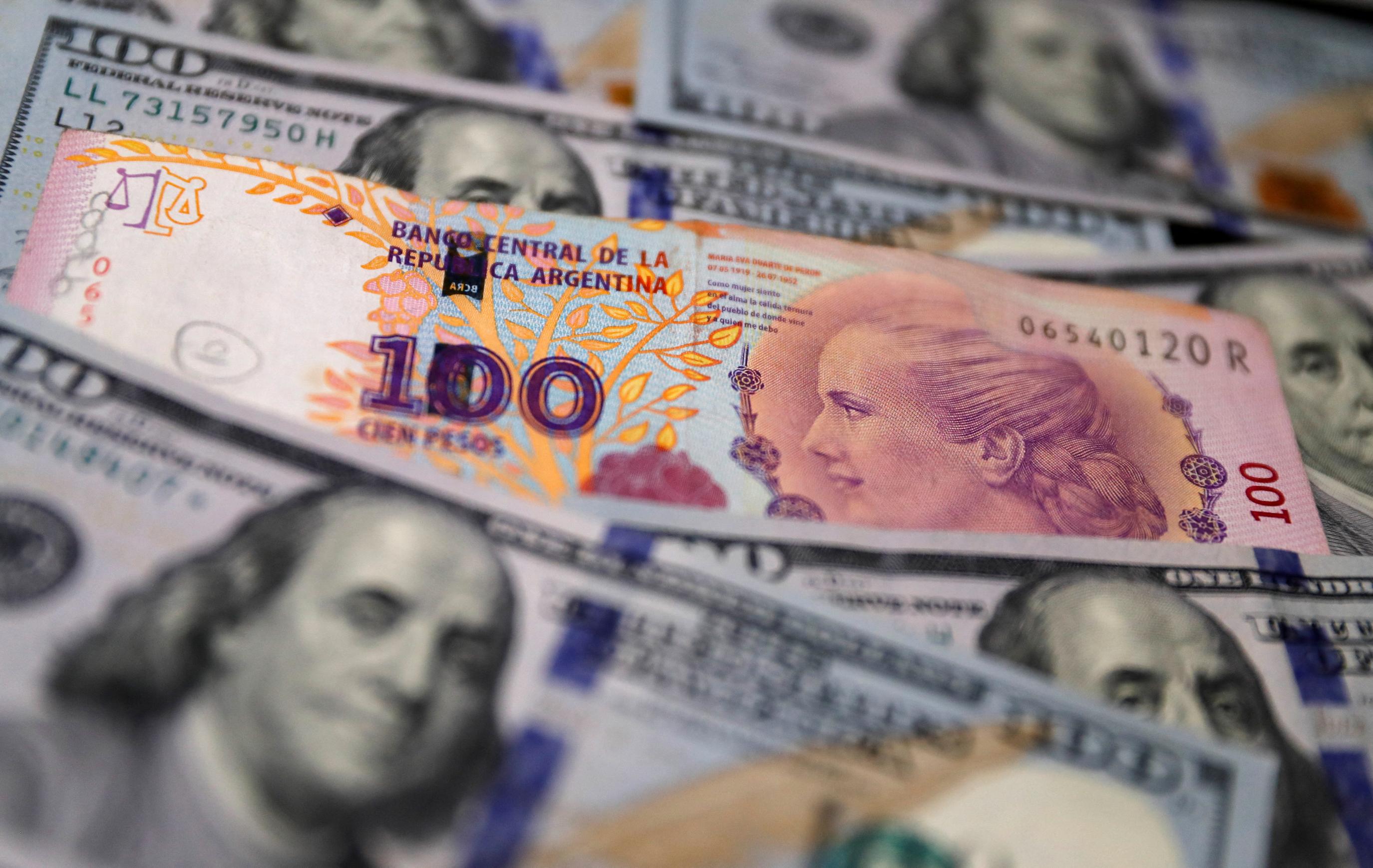
BUENOS AIRES, March 6 (Reuters) - Argentina's peso on the parallel informal market strengthened more than 1.5% against the U.S. dollar on Wednesday, breaking back below the 1,000 per dollar mark and reaching its strongest level since the end of December. The surge comes after President Javier Milei announced on Friday he would not back down from pushing his libertarian pro-market agenda and called on lawmakers and governors to get behind his austerity drive to overturn a deep fiscal deficit. The embattled South American country, grappling with inflation over 250%, has had strict capital controls in place since 2019 which have created a wide gap between the official exchange rate and popular parallel markets. The gap between the official exchange rate of 845 per dollar and the black market rate, which has been as wide as 200% over the last year, has however narrowed significantly since the start of the year to under 18% now. https://www.reuters.com/world/americas/argentina-black-market-peso-back-under-1000-milei-measures-spur-markets-2024-03-06/
2024-03-06 16:10
LONDON, March 6 (Reuters) - Britain set out plans on Wednesday for trading private company shares, tax-free retail investing, and tougher requirements for pension funds in a bid to funnel more cash into UK companies and bolster the City's global appeal for listings. Finance minister Jeremy Hunt had already unveiled his "Edinburgh Reforms" in 2022 and the "Mansion House Compact" last year as a post-Brexit London faces added competition from EU centres like Amsterdam. Hunt set out in his Budget speech on Wednesday further reforms in an effort to dissuade UK companies from following in the footsteps of chip designer Arm with New York listings. "I want our brilliant technology entrepreneurs not just to start here but to stay here, including when the time comes for a stock market listing," Hunt told parliament. A new "UK ISA" , opens new tab or Individual Savings Account, would allow individuals to invest 25,000 pounds ($31,785) tax-free in UK equities annually - an addition of 5,000 pounds to the amount allowed under existing ISAs, he said. "This will be on top of the existing ISA allowances and ensure that British savers can benefit from the growth of the most promising UK businesses as well as supporting them with the capital to help them expand," Hunt said. Hargreaves Lansdown, a share dealing platform, said a British ISA runs the risk of unnecessarily concentrating portfolios and adding further complexity. "This could be a potential fault line between the FCA and the government, given the FCA’s duty to protect retail investors and to promote an environment where they can achieve good outcomes," added pensions consultants Hymans Robertson. Tom Minnikin, partner at tax firm Forbes Dawson said Hunt had missed an opportunity to reform the ISA system more broadly. "Evidence shows that the take-up of stocks and shares ISAs is a lot lower than cash ISAs. Having a single combined ISA system might create a more balanced split and lead to greater overall investment in the UK," he said. To create opportunities for a "new generation of retail investors", Hunt said he would proceed with a retail sale of the part of the government's remaining minority stake in NatWest bank this summer, at the earliest. The finance ministry launched a public consultation on rules for a new type of trading platform that would allow private, unlisted companies to access a wider range of investors to help them grow. "This Budget will provide a much-needed shot in the arm for UK capital markets," said Chris Hayward, policy chairman at the City of London, which administers the financial district. Hunt said The Pensions Regulator and Financial Conduct Authority would get new powers to ensure better value for savers with a defined contribution (DC) pension scheme, with performance judged by overall returns, rather than just fees charged. DC and local government pension schemes would have to comply with new requirements to disclose publicly their level of international and UK equity investments, piling pressure to invest more in British firms. Hunt said he would "consider what further action" should be taken if UK schemes don't copy international best practice, as done in Australia, where schemes invest in high growth domestic companies. ($1 = 0.7865 pounds) https://www.reuters.com/world/uk/britain-turns-retail-investors-boost-funds-uk-plc-2024-03-06/

2024-03-06 16:06
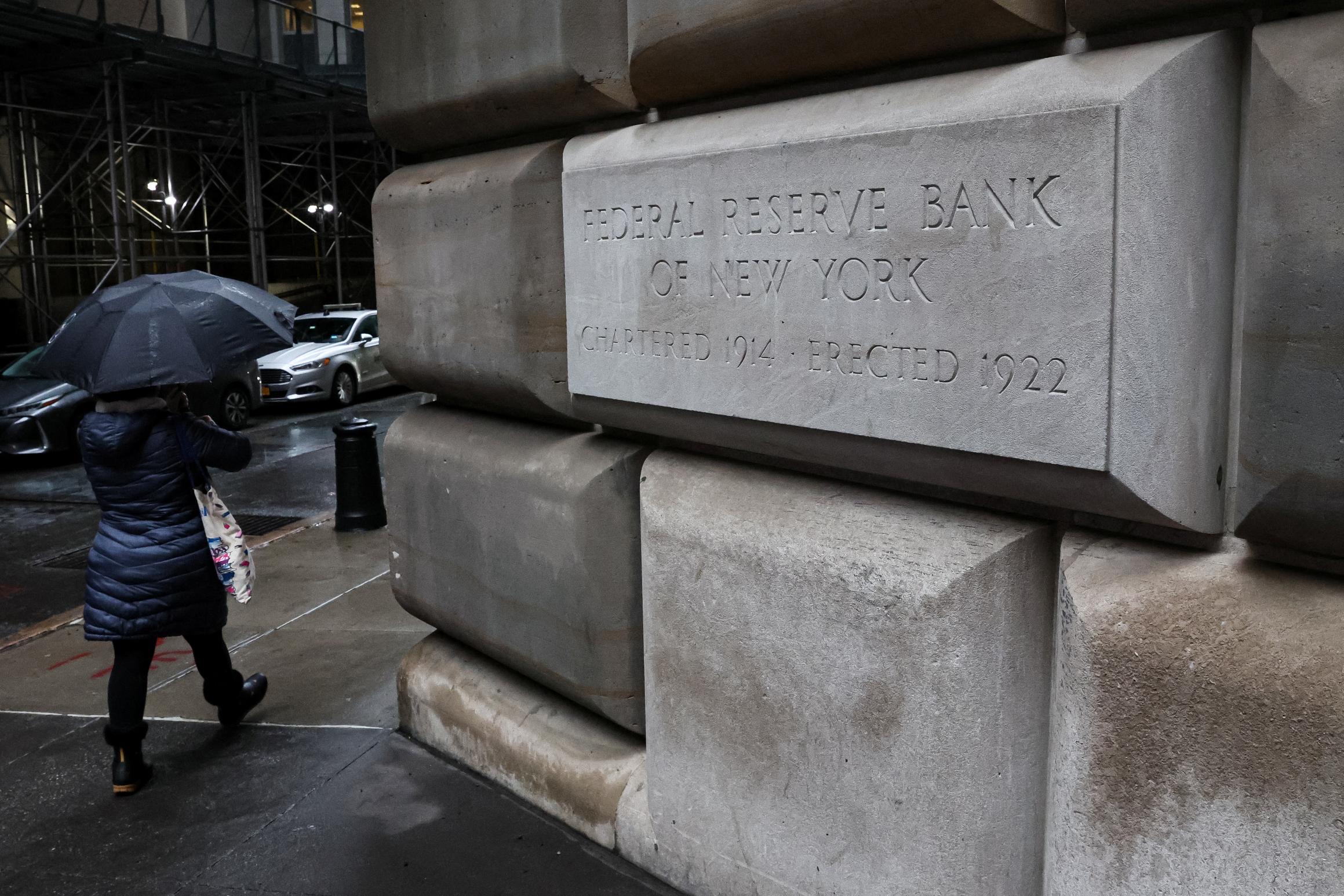
NEW YORK, March 6 (Reuters) - Supply chain pressures turned positive last month for the first time in just over a year but remained near normal and were well under the levels of high stress seen during the most acute phase of the coronavirus pandemic, a Federal Reserve Bank of New York report released Wednesday said. The bank said its February Global Supply Chain Pressures Index rose to a reading of 0.1 for last month, from a revised -0.23 reading in January. It was the first positive reading since January 2023. The bank provide no information on the factors that drove the index's level. Falling supply chain pressures--the New York Fed index peaked on December, 2021 when it hit 4.35--have been a key force helping lower inflation pressures. Rapidly cooling price pressures back toward the Fed's 2% inflation target have opened the door toward what are likely to be central bank rate cuts this year, although some unevenness in that retreat have complicated the question of when the easing might start. The relative calm of the supply chain index is likely to bolster Fed confidence that price pressures are indeed falling. The Fed has been warning for some time that geopolitical risks are a notable uncertainty in the outlook. There have been fears shipping disruptions tied to conflict in the Middle East could add upward pressure to inflation, but thus far that pressure has yet to materialize in a notable way. Atlanta Fed leader Raphael Bostic noted on Monday that among his risks to the outlook, "severe drought at the Panama Canal and terrorist actions in the Red Sea threaten to complicate global shipping and exert upward pressure on prices." Some in the Fed expect the drop in supply chain pressures to be an ongoing factor that might help inflation pressures continue to cool. In a CNBC interview on Friday, Chicago Fed leader Austan Goolsbee said the index is back to pre-pandemic levels "but that the impact of that is not instantaneous, I still think there is a quite a possibility that that could flow through” and continue to help pressure pressures cool. https://www.reuters.com/markets/us/ny-fed-says-supply-chain-pressures-ticked-up-small-amount-february-2024-03-06/