2024-03-06 07:43
LONDON/SINGAPORE, March 6 (Reuters) - Bitcoin rallied again on Wednesday in volatile trade, while ether jumped almost 10% as crypto mania continued to sweep through the investment community. Bitcoin rose by as much as 6.8% to a session high of $67,645, after having dropped 6% on Tuesday from an earlier record high above $69,000. It was last up 5.7% at $66,896. Ether , meanwhile, surged by 9.8% to its highest since January 2022. It was last up 8.6% at $3,827. Bitcoin has already surged 55% this year so far, fuelled by investors pouring money into U.S. spot exchange-traded crypto products and the prospect that global interest rates may fall. Billions of dollars have flowed into ETFs in the past few weeks and the market is getting extra support from an outlook that includes an ethereum upgrade and bitcoin "halving," which slows the flow of bitcoin minting, said Lennix Lai, global chief commercial officer at crypto exchange OKX. "The trend also indicates an elevated level of mainstream acceptance of bitcoin, perhaps more than ever before." The approval of 11 spot bitcoin ETFs by the U.S. Securities and Exchange Commission in late January had marked a watershed moment for the industry, following an 18-month long crypto winter plagued by a string of high-profile corporate bankruptcies and scandals. Even institutional investors who once shunned crypto due to its sharp and wild moves, have begun committing long-term money too, which experts say could help sustain the latest leg of this rally. The recent optimism over bitcoin has also spilled over to other digital tokens, particularly ether, which ranks second behind bitcoin in terms of total market value, up more than 60% since the start of the year. Still, some say it's hard to shake off the speculative nature of these assets. After hitting the record high on Tuesday, bitcoin sharply reversed course and fell more than 10% back below the $60,000 level. "That looks like classic bitcoin behaviour - it chews you up then spits you back out," said Matt Simpson, senior market analyst at City Index. "A pump and dump to previous record highs wiped out some weaker hands, and I suspect we're now in the volatile and erratic phase we usually see when it reaches a record high." Deutsche Bank strategist Jim Reid noted that bitcoin is some way off an all-time high in real, or inflation adjusted, terms. "Consumer prices are up by over 10% since the previous November 2021 peak, so in real terms, that would be above $75,000 in today’s prices," he said. https://www.reuters.com/markets/currencies/bitcoin-back-rise-after-vaulting-new-record-2024-03-06/
2024-03-06 07:43
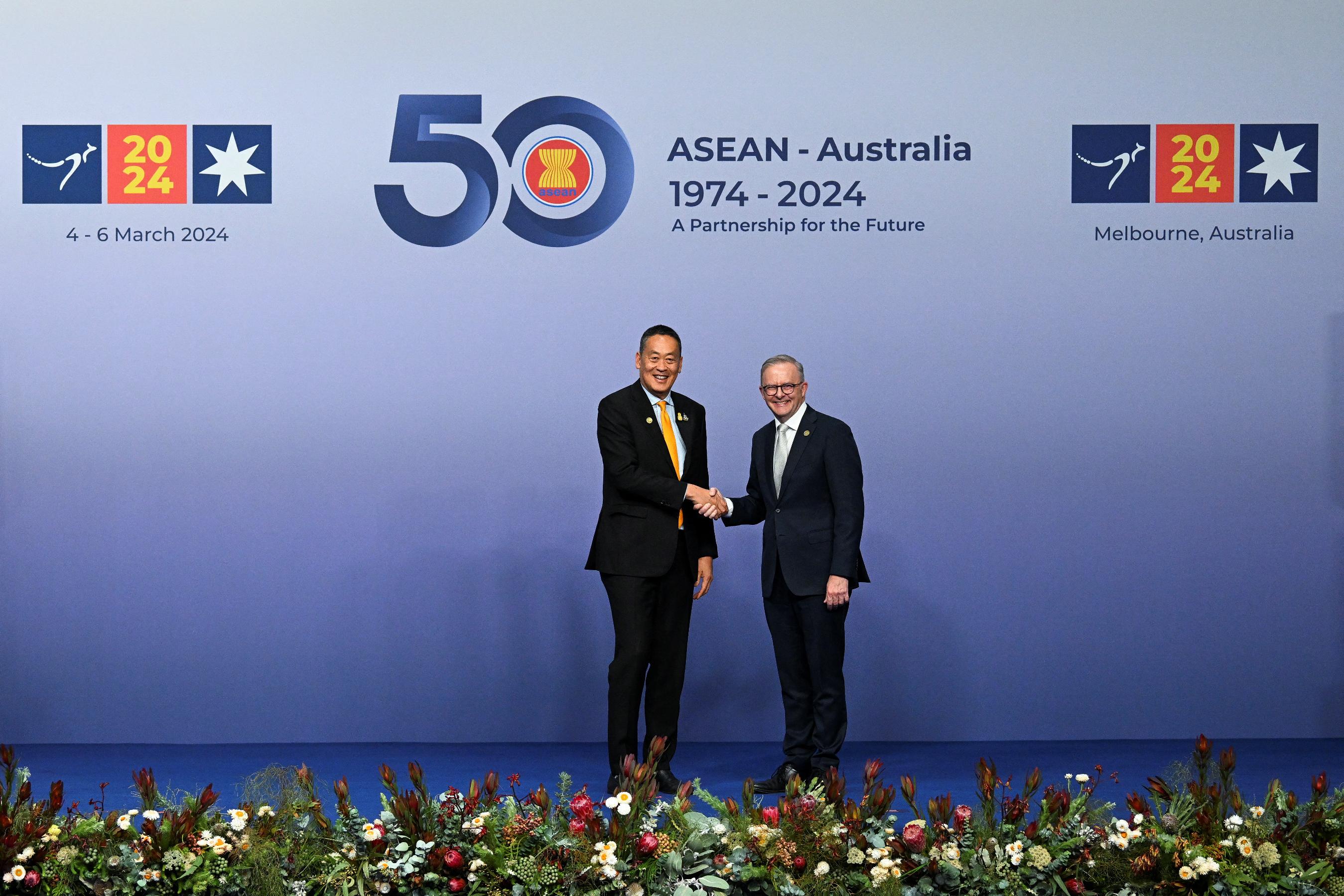
SYDNEY, March 6 (Reuters) - Thailand has called on Australia to slow down a plan to introduce emissions standards that would penalise imports of emissions intensive cars over fears it could hurt the southeast Asian country's automotive export industry. Thai Prime Minister Srettha Thavisin made the request during a meeting with Australian counterpart Anthony Albanese at an ASEAN summit on Tuesday, according to a meeting readout published by the Thai government. Australia is currently the only country in the OECD group of nations bar Russia without such standards. Thailand exports over 200,000 vehicles annually to Australia, predominantly the emissions-heavy pick-up trucks at risk under new rules, the readout said. Thailand is Southeast Asia's largest car maker and plans to convert 30% of its 2.5 million unit annual production to electric vehicles by 2030. On Wednesday, Albanese said the issue was not raised with Srettha and defended the new standards, which would start in 2025 under the government's preferred plan. "Only two countries, two industrialised countries that don't have emissions standards," he said. "One of them is Australia and the other is Vladimir Putin's Russia. I don't want to be on the same page as Russia on this or any other issue." The opposition Liberal Party has campaigned against the rules and said they will raise prices and lead to fewer options for the pick-up trucks popular in Australia. The Federal Chamber of Automotive Industries, the main car industry lobby group, said on Wednesday it supported fuel standards but they needed to be balanced and realistic to avoid unaffordable price increases and accommodate consumer choice. https://www.reuters.com/business/autos-transportation/thailand-asks-australia-slow-down-implementation-car-emissions-standards-2024-03-06/
2024-03-06 07:11
LONDON, March 6 (Reuters) - The Federal Reserve may finally have interest rate markets back in the palm of its hand - but it's surely casting a wary eye on effervescent stocks that seem oblivious to its caution. Fed chair Jerome Powell heads into two days of congressional testimonies this week confident the Fed's December message on modest interest rate cuts later this year has at last been heeded by chastened rate futures and Treasuries. But even half a glance at the AI-seeded surge in Wall St stock indexes to new records, and a near-frenzy in chipmakers and pretty much any stock linked with the artificial intelligence boom, will have him casting his mind back to the musings of predecessor Alan Greenspan , opens new tab. Greenspan sparked brief market consternation in December 1996 when, in an otherwise long-winded speech on Fed history and its mandates, he opined on "irrational exuberance" in stock markets and what the central bank should do about it. His relatively uncontroversial answer was that bubble-like stock prices were not the Fed's concern - unless their mispricing infected the wider economy or the threat of them bursting risked destabilising financial stability at large. But the now famous phrase hit home, upending what then seemed like frothy global stock prices for several days - on a basic assumption the Fed, which had held policy steady all that year, might be minded to prick the equity bubble with a hike. "We as central bankers need not be concerned if a collapsing financial asset bubble does not threaten to impair the real economy, its production, jobs and price stability," Greenspan said at the time, pointing to the lack of wider impact from the 1987 market crash. "But we should not underestimate or become complacent about the complexity of the interactions of asset markets and the economy," he added. "Thus, evaluating shifts in balance sheets generally, and in asset prices particularly, must be an integral part of the development of monetary policy." If only he'd stayed true to that final line, many argue, we may well have avoided the even greater banking and mortgage-backed debt bubble he presided over during the following decade - a bubble which burst with devastating global consequences shortly after the Fed chief left office. Perhaps the lesson for Powell is that Greenspan acknowledged the potential risks and did little to offset them - executing a modest rate rise in March 1997, but leaving policy on hold again for another 18 months and then cutting yet again in 1998. In fact, even though the speech was considered a shot across the bows at the time, stocks only lost about 4% in the 10 days that followed and climbed back to record highs within six weeks. And, as ING's Chris Turner pointed out this week, the S&P500 doubled over the following three years after that speech - only peaking at the height of the dotcom bubble in 2000. The eventual bust brought a three year bear market and the index took some seven years to reclaim new highs. EXUBERANCE REPRISED Yet Greenspan's take on market "exuberance" has been reprised by many financial analysts again in recent weeks to describe a similar set of circumstances facing Powell and team. Just like during the 1991-1996 period, the S&P500 has doubled in about five years - and almost trebled in 10 years. Although not referring explicitly to stocks, Atlanta Fed boss Raphael Bostic spoke last month of "pent-up exuberance" in the wider economy that could drive inflation back higher and how that underlined his caution about cutting rates. While post-pandemic Fed rate rises and higher long-term borrowing costs have reined in the economy to some degree - and the bond market has tightened up a bit again since the start of this year - financial conditions more generally are loosening once again thanks to the resurgent stock market boom. Goldman Sachs' index on U.S. financial conditions has eased back to its lowest since August 2022 this month, for example, with some 94 basis points of the 151 bps of the loosening since November accounted for by surging equities. With U.S. households now holding the highest share of equity in their savings portfolios since the 1980s, the wealth effect for well off households may well be considerable. Bank of England policymaker Catherine Mann, for example, pointed out last week that central bankers are struggling to get services inflation under control in part because wealthier households were relatively immune to higher interest rates and still splurging on travel, restaurants and entertainment. And so, bubble risk aside, there may be a cogent policy reason to worry about the effects of spiralling stocks. But it depends on the way you look at it. Many argue central banks should cheer the AI investment boom as it spurs the sort of productivity leap that would allow economies to expand faster without overheating and obviate the need for higher rates to slow it down. And Kristina Hooper, Chief Global Market Strategist at Invesco, reckons what looks like bubbly valuations for the stock market overall was simply down to the narrow lead of the 'Magnificent Seven' megacaps - which have expected earnings growth over the year ahead almost five times that of the 493 remaining S&P500 firms. Unlike the late-1990s internet stocks that rose on hope, she said, these are real fundamental underpinnings. "This isn't 'irrational exuberance' — it's more like 'rational exuberance'", Hooper wrote. While it's unlikely Powell would want to explicitly echo his now-tarnished Fed forefather, he may well be minded to calm things down a bit - in his own inimitable way. The opinions expressed here are those of the author, a columnist for Reuters. https://www.reuters.com/markets/us/channelling-greenspan-powells-exuberance-moment-mike-dolan-2024-03-06/

2024-03-06 07:10
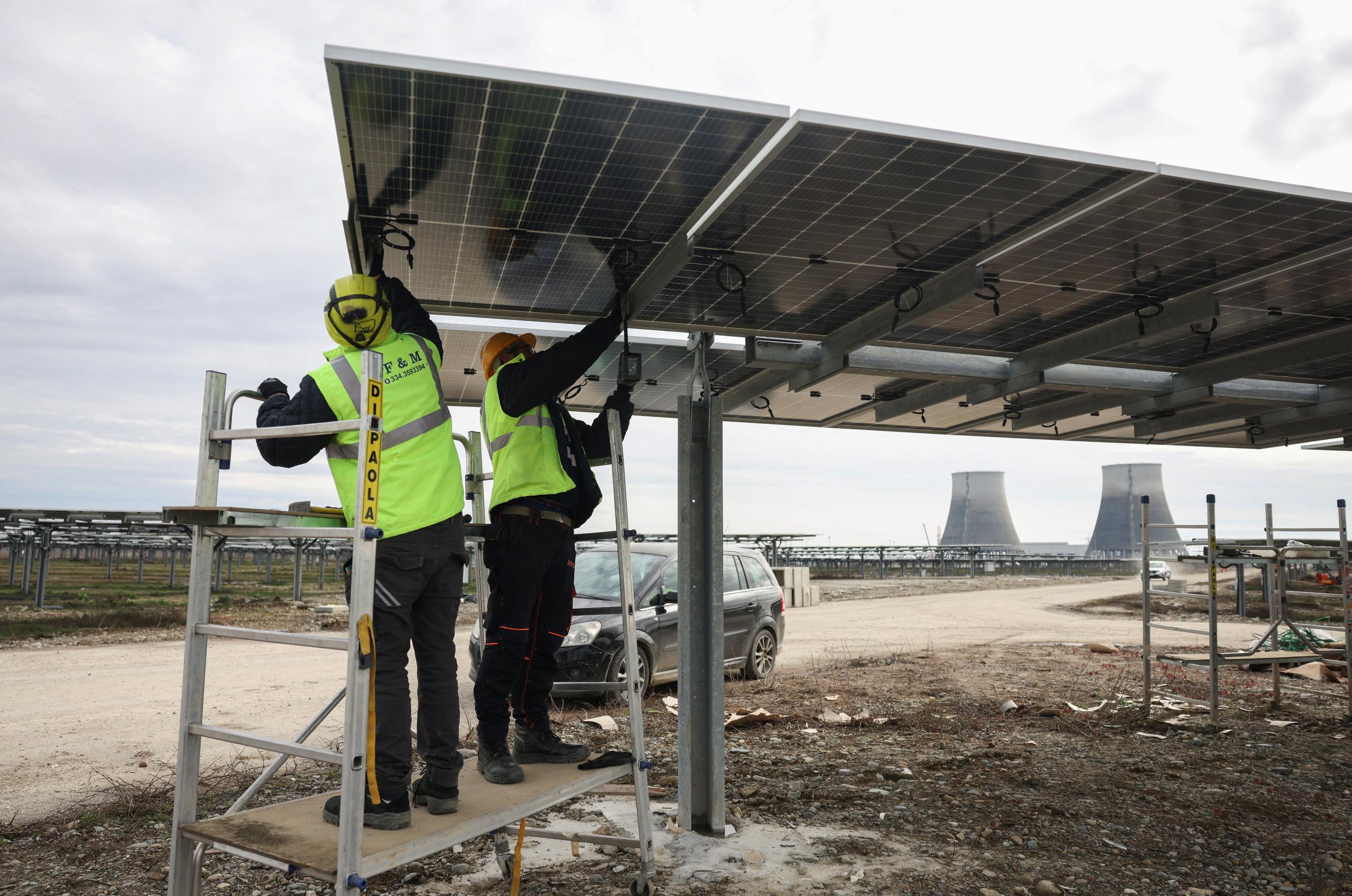
Italy not on track to hit EU decarbonisation goal on time More large solar farms needed to boost capacity, experts say Red tape, calls to protect landscape slow installations Government rules out specific incentives to big plants MILAN/ROME, March 6 (Reuters) - Italy's energy transition is building on a myriad of solar panels mounted on roofs, but the country has installed far fewer large plants than its neighbours, data seen by Reuters show, signalling hurdles on Rome's path to decarbonisation. Italy has added big solar farms worth 6 gigawatts (GW) since 2016, significantly less than Germany and Spain, where more than 20 GW of new capacity has been installed by building plants with a size of at least 1 MW, data from sector association SolarPower Europe show. Brussels has set a carbon emission reduction target for Rome of 43.7% by 2030, but the right-wing government of Giorgia Meloni has already admitted that Italy is not on track to reach that goal. To do so, experts estimate the country needs around 12 GW of new green capacity every year by 2030. With solar the country's largest source of renewable energy, that is hard to achieve without boosting the number of big photovoltaic plants. "There is no way we can install 12 GW per year only through small plants," said Agostino Re Rebaudengo, head of Italy's sector lobby Elettricita Futura, adding a large solar park produces three times the energy of a rooftop plant with the same investment. Italy has deployed around 22 GW in small plants, including a multitude of rooftop panels, since 2016 - more than France, Spain and the Netherlands - thanks in part to incentives for home improvements that are now being phased out. Energy Minister Gilberto Pichetto Fratin says it is hard for Italy to build a lot of large plants because of the nature of Italian territory, which is more heavily built-up, with fewer open spaces, than neighbours like Spain. The government is also sensitive to calls to protect nature and cultural assets, he said. "There is heritage to be preserved, which is huge," he told Reuters. Strict rules to protect that and resistance by local administrations have made the life of large plant developers difficult. The industry complains that large green projects are held back by a slow permitting process, while rooftop plants benefit from simplified procedures. "The European Union has asked for authorisation procedures to be streamlined. This has not happened yet and needs to be resolved," Aldo Beolchini, Chief Investment Officer of solar investment group NextEnergy Capital, told Reuters. An industry source, who asked not to be named, said the authorisation process for a large solar park can last more than four years in Italy, while in Spain they aim to realise the plant within two years of its inception. "We need to make a leap and accelerate the development of large plants if we want to hit 2030 targets," said Nicola Monti, CEO of energy company Edison (EDNn.MI) , opens new tab. FUNDS EARMARKED Italy plans to spend a significant part of the 194.4 billion euros ($210.83 billion) in post-COVID funds it will receive from the EU through 2026 on grids and infrastructure to help the green transition. Some 55.5 billion euros will be devoted to projects including the upgrade of the power network. Italy has earmarked around 2.2 billion euros to finance solar plants to serve the needs of small communities - mainly small installations, below the size of utility-scale plants - and 1.1 billion to build agrivoltaic parks. "We have to develop both small and utility-scale plants, respecting the landscape," said Michele Governatori from climate think-tank ECCO. To address local concerns over the impact on the landscape, developers have in some cases turned to old industrial areas for large projects. Enel has picked the site of a mothballed power plant in the town of Trino Vercellese, Piedmont, to build an 87 MW solar park due to become one of the biggest solar plants in northern Italy. Pichetto Fratin said he was confident Italy could speed up installations this year and gradually reach the government's goal to add 10 GW in green capacity each year to 2030 - a target which falls short of the experts' recommendation to add 12 GW. In a sign that boosting development of big farms is possible, Spanish utility Iberdrola (IBE.MC) , opens new tab last week said it would soon start to build a 245 MW solar park in Sicily, the largest project in the country. But Pichetto Fratin ruled out offering any specific incentives to large plant developers, because he said these could violate European rules on state aid. "There is no specific measure that distinguishes between the large and the small," he said. "It won't be legally viable." ($1 = 0.9221 euros) https://www.reuters.com/business/energy/italys-green-transition-efforts-held-back-by-lack-big-solar-projects-2024-03-06/
2024-03-06 06:42
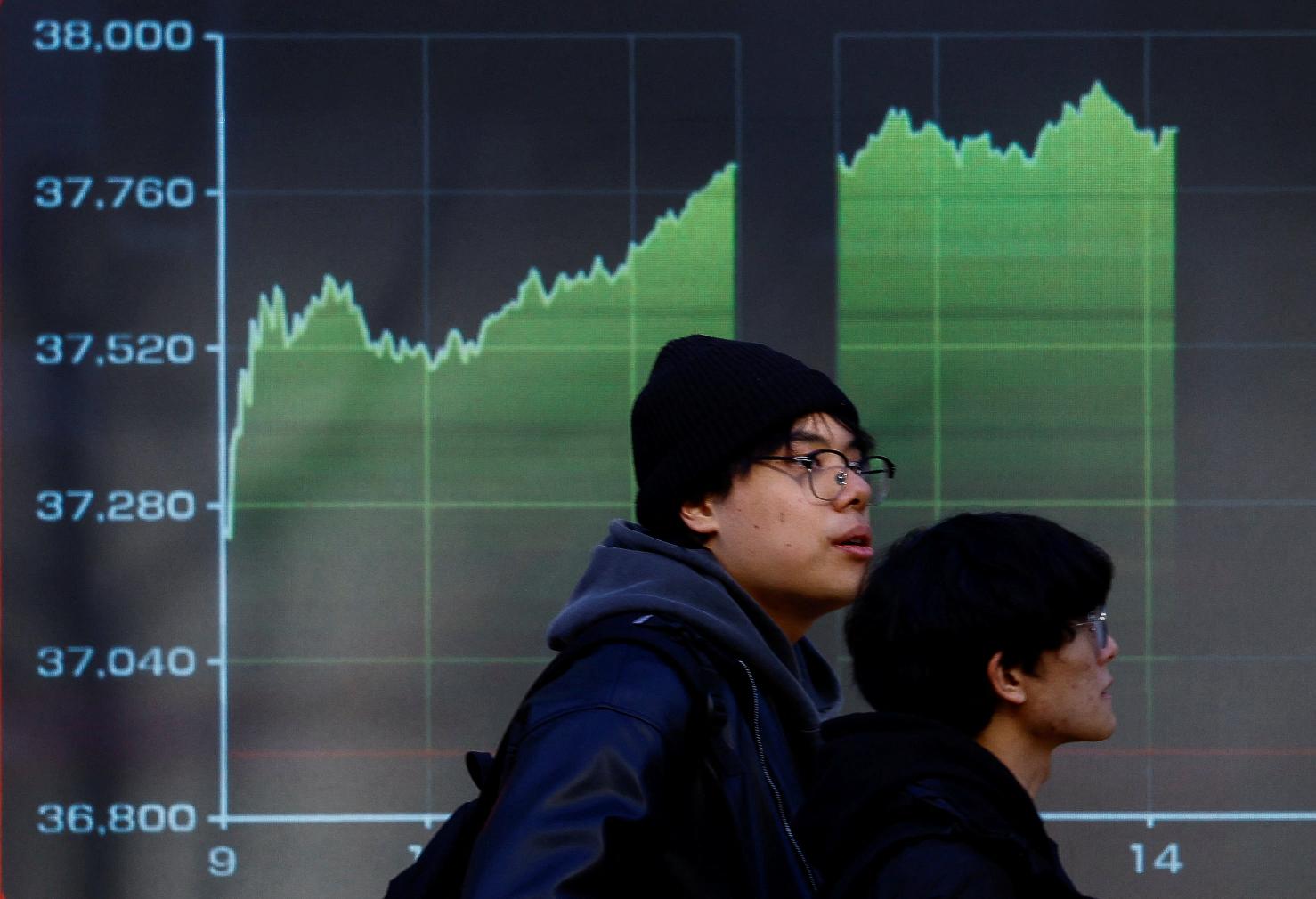
U.S. labor market data weaker than expected Fed Chair Powell says timing of rate cuts unclear Bitcoin resumes climb Gold extends gains NEW YORK, March 6 (Reuters) - Wall Street followed world shares to a higher close on Wednesday and the benchmark U.S. Treasury yield dipped to a one-month low after Federal Reserve Chair Jerome Powell reassured investors that while inflation is not quite tamed rate cuts can be expected this year. All three major U.S. stock indexes closed well below session highs, marking a partial rebound from Tuesday's steep sell-off. The tech-heavy Nasdaq enjoyed the most robust gain. Powell told the House of Representatives Financial Services Committee that "if the economy evolves broadly as expected," the central bank can be expected to cut its policy rate this year. He added that continued progress against inflation "was not assured." He also said the Fed was on a "good path" toward achieving a soft landing by bringing inflation under control while avoiding economic contraction. There is no reason to believe the U.S. economy is at short-term risk of recession, he said. Powell is set to wrap up his two-day testimony when he appears before the Senate Banking Committee on Thursday. "Powell didn’t rock the boat," said Ryan Detrick, chief market strategist at Carson Group in Omaha. "He made it clear cuts likely will come later this year and at the same time the economy remains on firm footing." "There was relief that he come off more hawkish," Detrick added. European stocks hit a record high as investors weighed Powell's commentary the day before the European Central Bank is expected to issue its policy decision. Labor market data released ahead of Friday's February employment report showed job openings dipped in the first weeks of 2024 and private employers added fewer workers than expected to their payrolls in February. Powell has said a softening U.S. labor market is a precondition for bringing inflation down to the Fed's 2% annual target. The Dow Jones Industrial Average (.DJI) , opens new tab rose 75.86 points, or 0.2%, to 38,661.05, the S&P 500 (.SPX) , opens new tab gained 26.11 points, or 0.51%, to 5,104.76 and the Nasdaq Composite (.IXIC) , opens new tab added 91.96 points, or 0.58%, to 16,031.54. The pan-European STOXX 600 index (.STOXX) , opens new tab rose 0.39% and MSCI's gauge of stocks across the globe (.MIWD00000PUS) , opens new tab gained 0.59%. Emerging market stocks rose 0.67%. MSCI's broadest index of Asia-Pacific shares outside Japan (.MIAPJ0000PUS) , opens new tab closed 0.78% higher, while Japan's Nikkei (.N225) , opens new tab lost 0.02%. Bitcoin , which touched and then backed away from an all-time high on Tuesday, resumed its climb. The cryptocurrency was last up 5.6% at $66,884. "Cryptocurrencies in general are up significantly again today so Powell did little to change the risk appetite we’ve seen from investors so far in 2024," Detrick said. The dollar softened against a basket of world currencies. The dollar index (.DXY) , opens new tab fell 0.4%, with the euro up 0.38% to $1.0896. The Japanese yen strengthened 0.45% versus the greenback at 149.39 per dollar, while Sterling was last trading at $1.2735, up 0.25% on the day. Yields of 10-year U.S. Treasuries hit a one-month low. Benchmark 10-year notes last rose 8/32 in price to yield 4.1078%, from 4.137% late on Tuesday. The 30-year bond last rose 18/32 in price to yield 4.2406%, from 4.274% late on Tuesday. Oil prices rebounded in the wake of a smaller-than-expected build in U.S. crude stocks and Powell's rate cut assurances. U.S. crude jumped 1.25% to settle at $79.13 per barrel, while Brent settled at $82.96, up 1.12% on the day. Gold continued to drift higher to a new record high for the second straight day, driven by bets on U.S. monetary easing. Spot gold added 0.9% to $2,146.29 an ounce. https://www.reuters.com/markets/global-markets-wrapup-1-2024-03-06/
2024-03-06 06:10
This content was partly produced in Russia where the law restricts coverage of Russian military operations in Ukraine. LONDON/WASHINGTON, March 6 (Reuters) - Dozens of oil tankers used by Russia have stopped sailing under the Liberian and Marshall Islands flags in recent weeks after the United States ramped up sanctions enforcement on ships linked to those registries, according to shipping data and interviews with industry and government officials. The shift reflects the close relationship between the U.S. and the flag administration companies of Liberia and the Marshall Islands, which are headquartered not in their home countries, but in Virginia, just miles from Washington D.C. and within the jurisdiction of U.S. sanctions enforcement. The heavy past use of those flags also represents a potentially lasting vulnerability for Russia’s oil fleet, whose tankers will remain liable for sanctions violations even after they have switched to a new flag outside of U.S. reach, according to energy and sanctions specialists. "They've created an enduring liability and enduring risk," said Craig Kennedy, a center associate at Harvard University's Davis Center for Russian and Eurasian Studies. Commercial ships must be registered, or flagged, with a particular country to ensure they are complying with internationally recognized safety and environmental rules. Reuters analyzed LSEG and Lloyd's List Intelligence shipping data, and interviewed government officials, flag registry representatives and shipping analysts to provide previously unpublished details on the role of flag registries in the recent wave of U.S. sanctions announcements targeting Russia's oil fleet, and the vulnerabilities they pose to Russian oil shipping. The G7, the EU and Australia imposed a $60 a barrel price cap on Russian oil exports in December 2022 as part of wider economic sanctions aimed at cutting Moscow’s revenues without disrupting global energy supplies, following Russia’s invasion of Ukraine. The cap bans the use of Western maritime services when tankers carry Russian oil priced at or above the cap. A U.S. official, who requested anonymity when speaking about the sanctions, confirmed that the Liberian and Marshall Islands flag registries qualify as Western services. Since October, the U.S. Treasury Department has imposed sanctions on some 41 oil tankers for Russian price cap violations, 24 of which were flying the Liberian flag and one of which was using the Marshall Islands flag. Almost all of the other tankers were flagged in Gabon, including 12 of the 14 targeted by the Treasury Department in its most recent bundle of sanctions on Feb. 23. Of those Gabon-flagged tankers, in which Russia's top shipping company Sovcomflot (SCF) has an interest, at least three had recently flown the Liberian flag, according to Reuters' analysis of shipping data. Those tankers were among a slew of ships in the SCF fleet moving to Gabon, according to the data: as of early February, SCF had 42 tankers in its 147 tanker fleet that had recently shifted to the Gabon flag, mainly from Liberia and Panama. SCF declined to comment and Russia's transport ministry did not respond to a request for comment. The Liberian flag registry told Reuters that all the Liberian-flagged vessels which were sanctioned were in the process of having their Liberian flags removed. "We are all living in a different world right now and the registries need to adapt to what the global situation is at this point," the Liberian registry said. The registry declined to comment on its previous business with SCF. A U.S. official told Reuters that Liberia had been actively engaged with the Treasury Department, and that sanctioned tankers have about a three-month wind down period to switch to another flag. Marshall Islands registry officials are also in contact with U.S. agencies on the issue, a Marshall Islands registry spokesperson said. Gabon Transport Minister Loic Moudouma confirmed to Reuters that many tankers had left the Liberia registry for Gabon recently, and said Gabon would de-list them if they are found to be engaged in illegal activity. “We are not a flag registry for the world’s rogue navigators or transporters,” he said. “If any ally, any partner in the world, realizes that there is a Gabonese ship flying the Gabonese flag and carrying out illegal activities, all they have to do is send us the file in full and we will take steps to remove the flag from this ship ourselves. Whether Russian or any other nationality." Panama officials did not respond to a request for comment. INVITING TROUBLE The sanctions imposed so far have sent a chill through the industry involved in Russian trade. Many of the still to be de-listed Liberian-flagged vessels, for example, are stuck, sitting at anchor outside of ports across the world including in the Black Sea, according to shipping data, marking a costly liability for their owners and those financially linked to their cargoes. U.S. Treasury Department sanctions can have a "contagion" effect on tankers by dissuading market players from dealing with them, according to Harvard's Kennedy. "In the dollar denominated world of oil trading, why put a deal worth tens of millions of dollars at risk by using a blocked tanker? You're just inviting trouble for everyone involved," he said. Switching to the Gabon flag could also invite additional risk at ports for tankers carrying Russian oil. A U.S. official said tankers that carried Russian oil above $60 that switch to the Gabon flag could also have a more difficult time with port authorities concerned about the safety of ageing tankers. The United States, European Union and UK issued a letter late last year pressuring Liberia, the Marshall Islands and Panama to increase oversight of ships carrying their flags to ensure they do not transport Russian oil sold above the price cap, a source told Reuters at the time. While the U.S. has been the primary enforcer of the price cap, other countries in the mechanism are working with Washington to tighten the screws. "We're making it harder for Russia to use its shadow fleet, which in turn would force more volume back into the G7 fleet, where service providers are compliant with the cap," Olga Dimitrescu, an official at the UK Treasury’s sanctions enforcement arm OFSI told a Feb. 1 podcast with ship insurer NorthStandard. U.S. officials say shipping practices related to the export of Russian oil above the West's price cap are in their crosshairs. "We are very concerned about evasion, I think that's clear from the actions we've taken," Claire McCleskey, an official with the U.S. Treasury's sanctions enforcement arm OFAC, told a New York shipping conference last month. "You can anticipate our continuing to take action." https://www.reuters.com/business/energy/russia-oil-fleet-shifts-away-liberia-marshall-island-flags-amid-us-sanctions-2024-03-06/