2024-03-04 21:48
March 5 (Reuters) - A look at the day ahead in Asian markets. There is no shortage of potential market-moving events in Asia on Tuesday, from key economic indicators to the start of China's eagerly-awaited National People's Congress (NPC), but current momentum is likely to limit any potential downside. The rally in world stocks and risky assets more broadly - bitcoin is leaping toward new all-time highs - paused for breath on Monday, but not before the leading U.S., Japanese and European benchmark indexes all hit fresh peaks. Rising U.S. bonds yields? Strong economic data? Weak economic data? Hawkish shifts in Fed expectations? It doesn't seem to matter. Equities and risk assets either power on, or pause only briefly before going up through the gears again. The Nikkei on Monday burst above 40,000 points for the first time ever, taking its gains this year to a remarkable 20%. Chinese stocks tacked on 0.4% ahead of the NPC, and have now fallen only twice in the last 14 sessions. Although U.S. bond yields on Monday reversed some of Friday's steep decline, the S&P 500 climbed to a record high, as did European stocks. Equity pullbacks are shallow, and the bigger picture continues to be dominated by optimism surrounding tech and AI. Analysts at Deutsche Bank note that the S&P 500 is up more than 20% since October, and is in one of its best winning streaks on record. The Asian economic and political calendar on Tuesday is packed with potential market-moving risk - inflation from the Philippines, Thailand and Tokyo, services PMIs from several countries including China, GDP from South Korea, and the annual session of China's NPC. Much of the focus on Tuesday will be on Beijing, and how China plans to tackle a property crisis, deepening deflation, fragile stock markets, and mounting local government debt woes. All that, while achieving annual economic growth of around 5%, which is what economists expect Premier Li Qiang to announce. It is a huge challenge, but in managing expectations, perhaps Beijing will opt not to go firing policy bazookas. Core inflation in Japan's capital, meanwhile, is expected to have re-accelerated in February to 2.5% from a near-two year low of 1.6% in January, above the Bank of Japan's 2% target. The BOJ is in the process of winding down years of ultra-loose policy, and some economists think it could exit negative interest rates later this month. The Tokyo inflation data will be closely-watched, not least by yen traders. The yen is back below 150.00 per dollar, fueling speculation that Japanese authorities might soon intervene to support the currency. Tokyo doesn't target any particular exchange rate level, but it will be well aware of the latest U.S. futures data that shows hedge funds and speculators are holding their largest net short yen position in over six years. Here are key developments that could provide more direction to markets on Tuesday: - China National People's Congress - China Caixin Services PMI (February) - Japan Tokyo inflation (February) https://www.reuters.com/markets/asia/global-markets-view-asia-graphic-pix-2024-03-04/

2024-03-04 21:43
March 4 (Reuters) - Defaults among U.S. corporate junk debt issuers reached a post-pandemic high in February, JPMorgan said in a new research report. Nine junk-rated borrowers either filed for Chapter 11 bankruptcy or missed their interest payments on a total of $5.97 billion in loans and bonds last month, JPMorgan noted. Three other companies opted for a distressed exchange on a total $3.96 billion in loans and bonds, the report added. February was only the second time in 11 months that the volume of defaults outweighed distressed exchanges. Since the Federal Reserve began hiking interest rates in 2022, companies facing default have increasingly turned to out-of-court distressed exchanges, credit rating agency Moody's said in a recent report. Last month's $9.9 billion in combined defaults and distressed exchanges surpassed 2023's monthly average of $7.2 billion, JPMorgan said. It was the highest combined volume of the two since $16.9 billion posted in April 2023. Moody's and other ratings agencies anticipate the default rate among junk-rated issuers will rise this quarter before leveling out by the end of 2024. https://www.reuters.com/markets/rates-bonds/corporate-junk-debt-defaults-hit-post-pandemic-high-february-2024-03-04/

2024-03-04 21:30
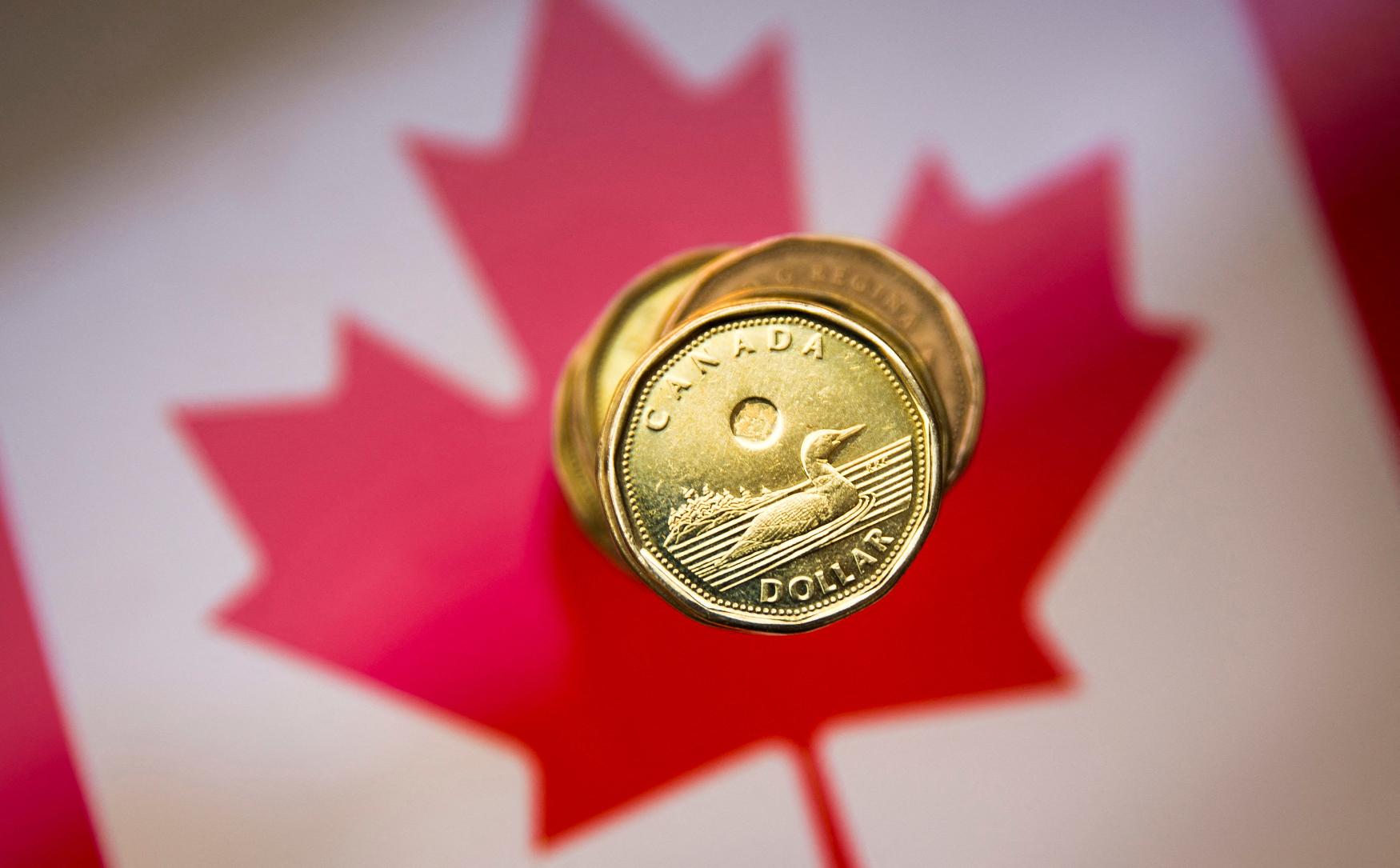
Canadian dollar weakens 0.1% against the greenback Trades in a range of 1.3546 to 1.3583 Price of U.S. oil settles 1.5% lower Canadian bond yields rise across the curve TORONTO, March 4 (Reuters) - The Canadian dollar weakened against its U.S. counterpart on Monday as oil prices fell and investors awaited an interest rate decision this week by the Bank of Canada. The loonie was trading 0.1% lower at 1.3575 to the U.S. dollar, or 73.66 U.S. cents, after trading in a range of 1.3546 to 1.3583. Last Wednesday, it touched a 2-1/2-month low at 1.3605. Investors are looking "for more details on the interest rate path of the BoC," Darren Richardson, chief operating officer at Richardson International Currency Exchange Inc, said in a note. A dovish statement from the central bank could weigh on the Canadian dollar, Richardson added. Money markets expect the Canadian central bank to leave its benchmark rate on hold at a 22-year high of 5% on Wednesday but to then begin an easing cycle in April or June as the domestic economy slows and inflation cools. Data due on Friday is expected to show the economy adding 20,000 jobs in February, which would be a slower pace than in January. The price of oil, one of Canada's major exports, fell as demand headwinds counterbalanced a widely expected extension of voluntary output cuts through the middle of the year by the OPEC+ producer group. U.S. crude oil futures settled 1.5% lower at $78.74 a barrel. Canadian government bond yields moved higher across the curve, tracking moves in U.S. Treasuries. The 10-year was up 2.7 basis points at 3.455% after touching on Friday its lowest intraday level in three weeks at 3.423%. https://www.reuters.com/markets/currencies/c-weakens-investors-eye-risk-dovish-bank-canada-2024-03-04/
2024-03-04 20:28
DUBAI, March 4 (Reuters) - A fire caused by nearby explosions broke out onboard a vessel southeast of the Yemeni port city of Aden on Monday, before being contained, the U.K. Maritime Trade Operations (UKMTO) agency and British security firm Ambrey reported. "The Master reports the fire onboard has been extinguished and that the crew are all safe. Coalition Forces are responding," UKMTO said in a recent update on the incident. It later added that the vessel was clear of the area and was proceeding to its next port of call. A first explosion was reported at a distance off the vessel's port quarter and a second explosion caused damage to the vessel, leading to a fire which the crew are dealing with, the British maritime agencies said. No casualties were reported. "Coalition Forces operating in the area are investigating," UKMTO said. The U.S. has formed an international coalition aimed at safeguarding commercial traffic in the Red Sea region from attacks by the Iran-backed Houthi militants. The Houthis say they are carrying out the attacks in solidarity with Palestinians in the Israel-Hamas war in Gaza. Ambrey had reported that a container ship was struck and had issued a distress signal, saying the ship was Liberia-flagged and Israel-affiliated, and en route from Singapore to Djibouti. Neither agency disclosed the vessel's name. "The vessel was listed as operated by the Israeli company ZIM Integrated Shipping Services. This may have been an out-of-date affiliation, as the vessel was not listed on other public sources," Ambrey added. Israeli shipper ZIM told Reuters it had no connection with the ship. The container ship continued to transmit an AIS signal after the incident, Ambrey said. The Rubymar cargo ship sank on Friday, becoming the first vessel lost since the Houthis began their attacks in November. https://www.reuters.com/world/middle-east/vessel-reports-incident-southeast-yemens-aden-ukmto-says-2024-03-04/

2024-03-04 20:14
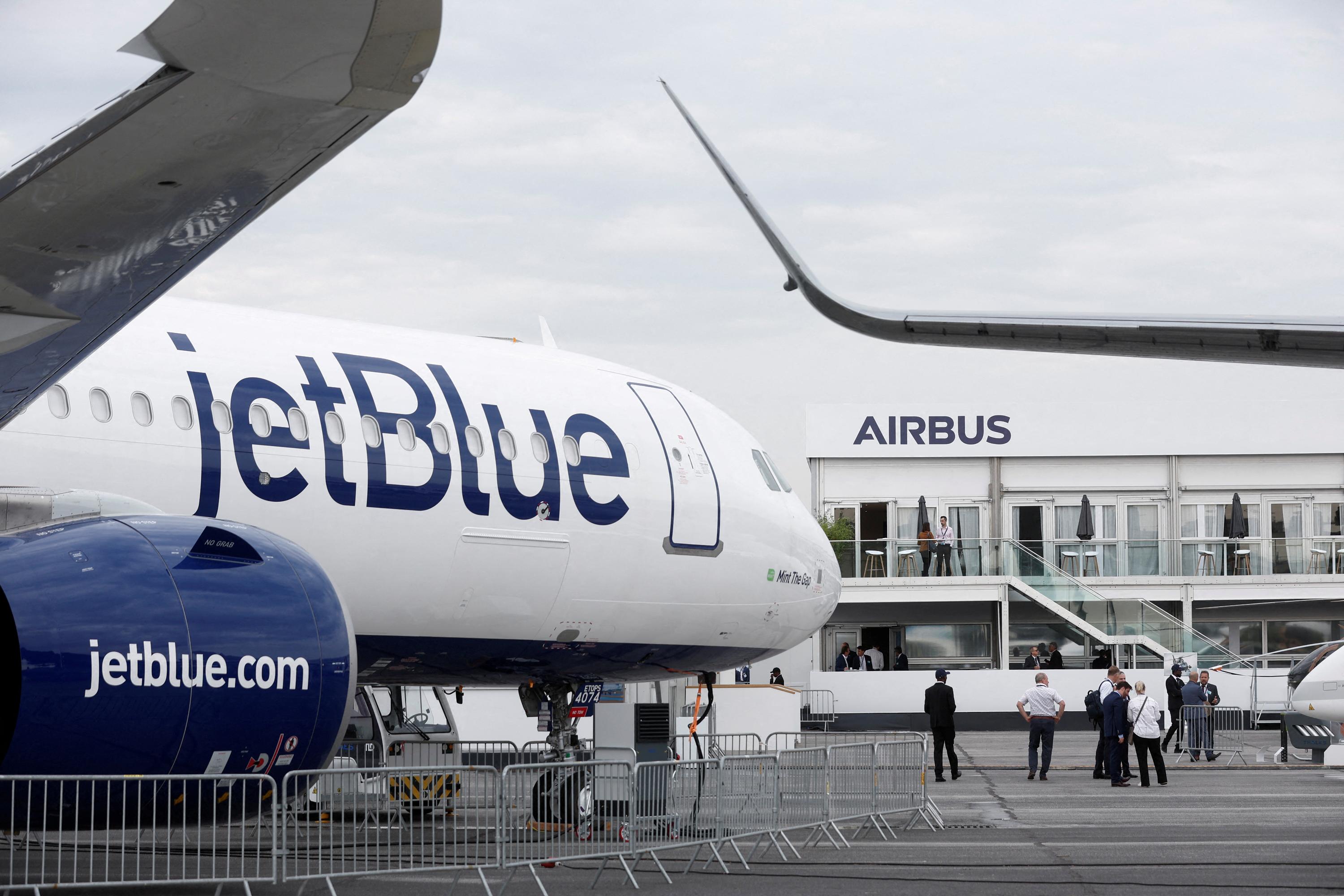
WASHINGTON, March 4 (Reuters) - JetBlue Airways (JBLU.O) , opens new tab and Spirit Airlines (SAVE.N) , opens new tab scrapped their $3.8-billion merger agreement on Monday, with the low-cost carriers saying there was no path forward after a U.S. judge blocked the deal in January on anti-competition concerns. A successful deal would have created the fifth-largest carrier in the United States and potentially ensured Spirit's survival, as it burns through cash and struggles with its debt pile. But the combination had been on the ropes ever since a Boston judge said it would harm consumers by reducing competition. The decision is a victory for the Biden Administration, which has taken a hard line against tie-ups in the aviation sector and argued the deal would boost ticket prices for consumers. President Joe Biden said the "merger would have forced higher fares and fewer choices on tens of millions of Americans" and called the decision to block the merger "a win for American consumers and competition. The administration has used antitrust action and other enforcement efforts to try to bring down prices across several industries. "With the ruling from the federal court and the Department of Justice’s continued opposition, the probability of getting the green light to move forward with the merger anytime soon is extremely low," JetBlue CEO Joanna Geraghty told employees in an internal note seen by Reuters. "Even if the ruling was overturned on appeal, we simply don’t see a path to regulatory approval by the required July 24 deadline." Privately, JetBlue executives expressed relief the deal was blocked, because of Spirit's deteriorating finances, according to a person familiar with the matter. Had the companies prevailed in their antitrust fight, JetBlue was considering using a "material adverse change" clause in its contract with Spirit to walk away from the deal, citing the latter's decline in fortunes, the source said. Spirit CEO Ted Christie said in a statement, "we concluded that current regulatory obstacles will not permit us to close this transaction in a timely fashion under the merger agreement." Under the agreement, JetBlue will pay Spirit $69 million. While the merger agreement was in effect, Spirit stockholders received approximately $425 million in total pre-payments. Without the JetBlue deal, Spirit, the seventh-largest U.S. carrier, faces a rough road ahead. The ultra-low-cost carrier has grappled with weak demand in its key markets as it seeks to return to sustainable profitability. Some analysts have even suggested the company could face bankruptcy if it cannot shore up finances. Spirit shares closed down 11% in late morning trading, while JetBlue, the sixth-largest U.S carrier, shares rose 4.3%. The ruling by U.S. District Judge William Young found the proposed deal was likely to hurt competition in the U.S. aviation market and could hike ticket prices. That prompted JetBlue to raise doubts over the future of its deal, saying it might be unable to meet certain conditions required as part of the agreement. JetBlue opted not to appeal a separate ruling that had declared its Northeast partnership with American Airlines anticompetitive. JetBlue, which last month hiked baggage fees, said is working on numerous near-term efforts to boost revenue by more than $300 million and said it is on track to deliver $175-200 million in cost savings from its structural cost program and $75 million in maintenance savings from its fleet modernization. A judge in May sided with the Justice Department and six states in a lawsuit challenging the joint venture that American and JetBlue entered into in 2020, called the "Northeast Alliance," joining forces for flights in and out of New York City and Boston, coordinating schedules and pooling revenue. Spirit said it was taking steps to ensure the strength of its balance sheet and ongoing operations and retained Perella Weinberg & Partners and Davis Polk & Wardwell as advisors. https://www.reuters.com/markets/deals/jetblue-terminates-38-bln-spirit-deal-2024-03-04/
2024-03-04 20:00
WASHINGTON, March 4 (Reuters) - U.S. passenger railroad Amtrak said on Monday it will boost passenger services on the East Coast as it aims to double ridership nationwide by 2040. The railroad is increasing Northeast Regional service between Boston and Washington by as much as 20% on weekdays and will add 1 million additional seats over the next year. The service topped pre-pandemic ridership by 8% in the three months ending Sept. 30 and was up 29% for the 12 months ending Sept. 30 to 9.2 million. Congress approved $66 billion in funding for rail projects as part of a massive infrastructure bill in 2021, with $22 billion dedicated to Amtrak and $36 billion made available for grants. On Sunday congressional negotiators said they had agreed on $2.42 billion for Amtrak operations for the current budget year, rejecting a proposal by House Republicans to cut Amtrak's annual funding by 64%. Amtrak passenger trips nationwide were up 24% to 28 million in the 12 months ending Sept. 30. The railroad wants to break even and double total ridership to 66 million by 2040. Its passenger numbers grew 45% from 2003 to 2019 to 32.3 million. In November the White House announced $16.4 billion in new funding for 25 passenger rail projects on Amtrak’s Northeast Corridor, which is the busiest U.S. rail corridor with 800,000 daily trips in a region that represents 20% of the U.S. economy. The trains carry five times more passengers than all flights between Washington and New York, the White House said. Amtrak said last year that half of the 46 states it serves have minimal service. Florida, Ohio and Arizona, the Mountain West and Gulf Coast are served by long distance trains that provide no more than one round trip a day. https://www.reuters.com/world/us/us-passenger-railroad-amtrak-boosting-east-coast-rail-service-2024-03-04/