2024-03-04 11:27
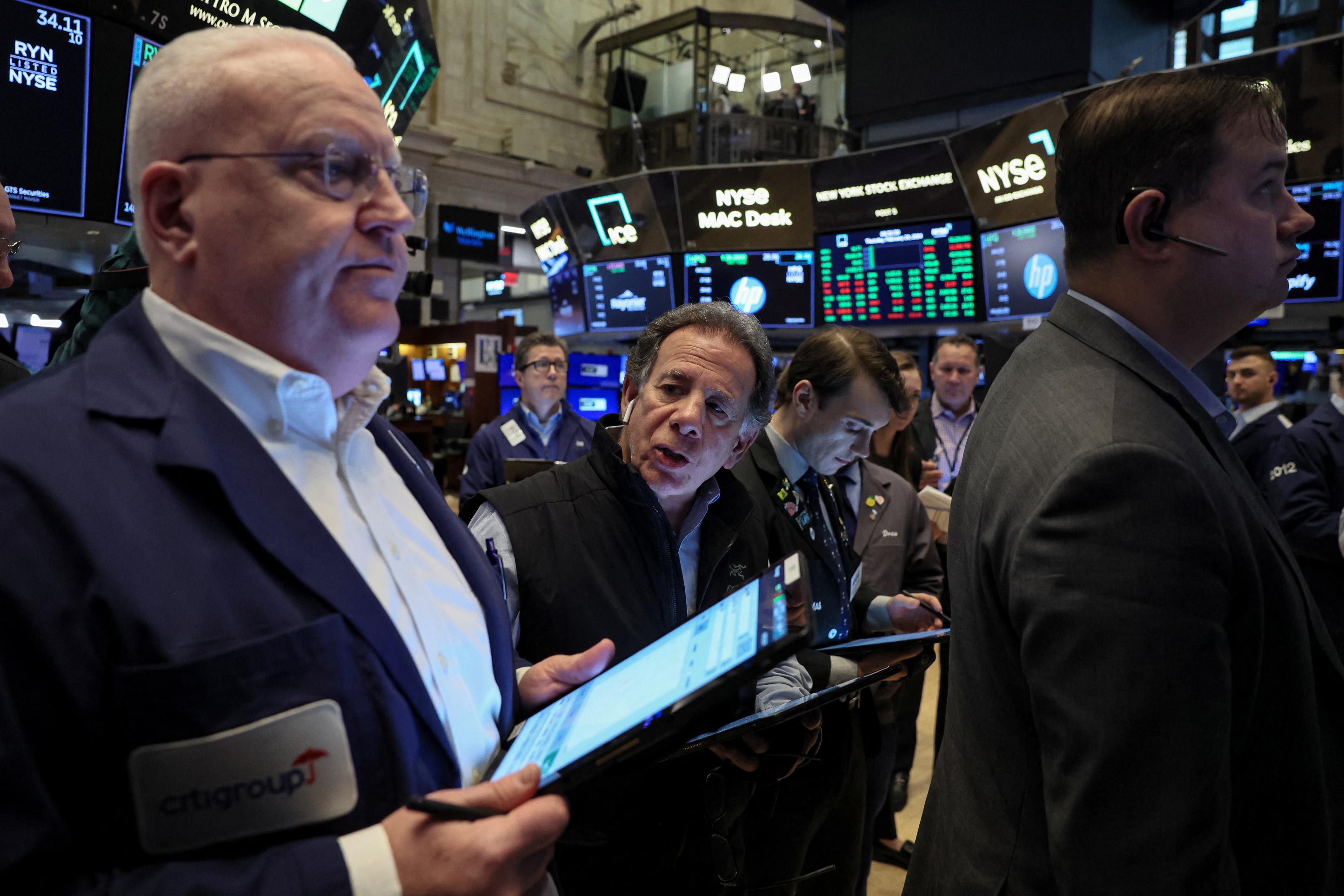
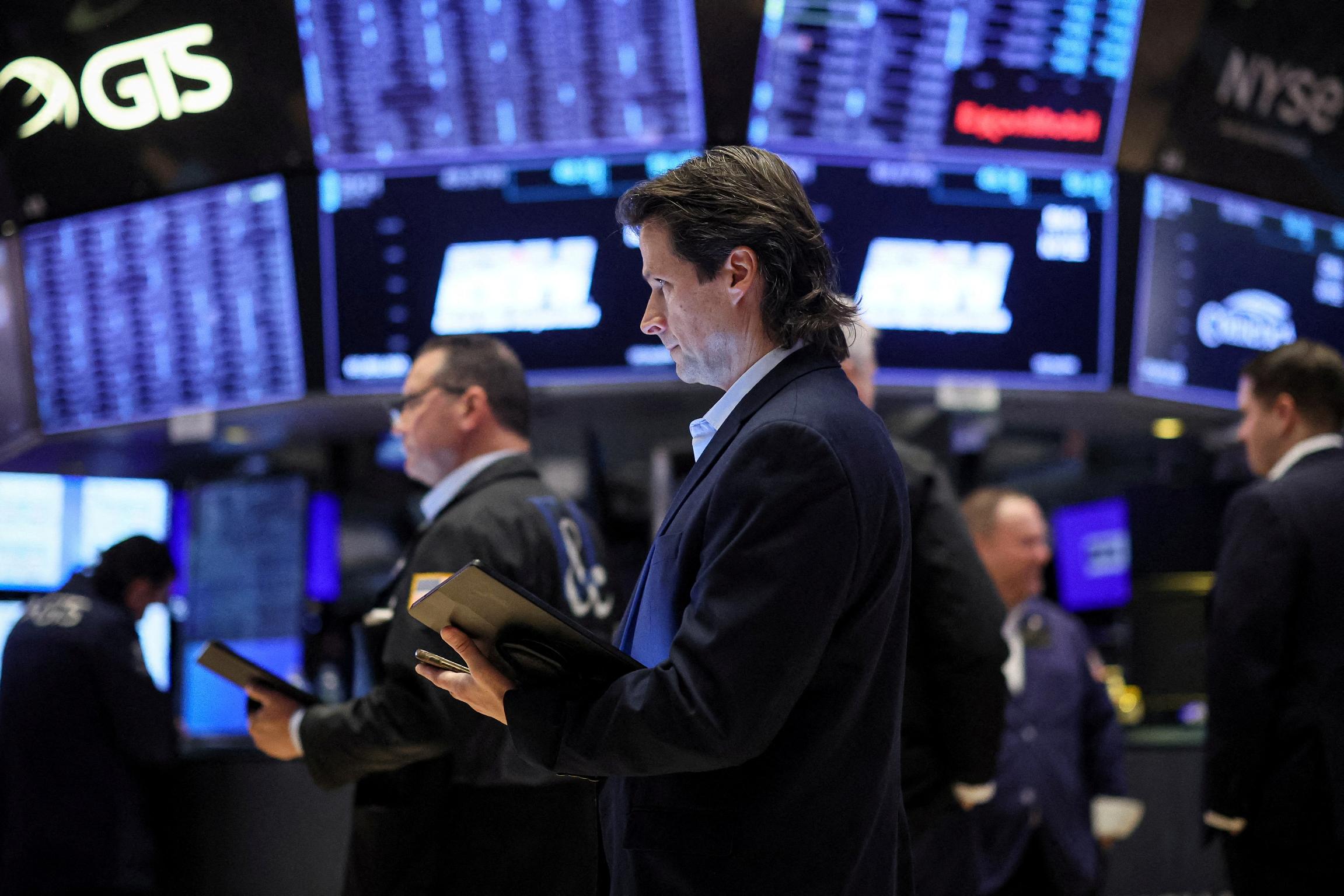
Apple hit by EU antitrust fine in Spotify case Macy's jumps after Arkhouse, Brigade raise buyout bid Super Micro Computer jumps ahead of S&P 500 entry Indexes down: Dow 0.25%, S&P 0.12%, Nasdaq 0.41% March 4 (Reuters) - The S&P 500 closed slightly lower on Monday after a choppy trading day as investors took a pause ahead of economic data and Fed Chair Jerome Powell's congressional testimony. Apple (AAPL.O) , opens new tab closed down 2.5% following a $2-billion EU antitrust fine for preventing Spotify (SPOT.N) , opens new tab and other music streaming services from informing users of payment options outside its App Store. Rallies in chip stocks, including Nvidia (NVDA.O) , opens new tab, helped advance the S&P 500 to fresh intraday records during the session as investors continued to bet on demand for products powering artificial intelligence (AI) even though were broadly cautious ahead of economic data. But the S&P 500, after turning slightly positive late in the day, started to lose ground again in the last hour of trading to fall back into the red in the last few minutes of trading. "This is one of those days where investors are on hold for the economic data that's coming out later this week," said Burns McKinney, portfolio manager, NFJ Investment Group. Investors were waiting for insights into the U.S. economy's health from key monthly data such as readings on the service sector, due on Tuesday, and non-farm payrolls data due Friday, according to Scott Wren, senior global market strategist at Wells Fargo Investment Institute. "The market is still trying to digest what the outlook is for the economy, earnings and the Federal Reserve," said Wren but he noted that both institutional and retail investors have some fear of missing out as they watch stocks hit fresh records. "There's institutional money that can't sit on the books and watch the S&P 500 go higher every day and retail investors are starting to have the fear of missing out," said Wren. "Stocks are expensive but that doesn't mean they can't get more expensive before some kind of a pullback. Momentum is carrying the market and positive thinking is carrying the market." The Dow Jones Industrial Average (.DJI) , opens new tab fell 97.55 points, or 0.25%, to 38,989.83, the S&P 500 (.SPX) , opens new tab lost 6.13 points, or 0.12%, to 5,130.95 and the Nasdaq Composite (.IXIC) , opens new tab dropped 67.43 points, or 0.41%, to 16,207.51. The S&P 500's communications services index (.SPLRCS) , opens new tab was the benchmark's weakest sector, ending down 1.5%, while defensive utilities (.SPLRCU) , opens new tab, which added 1.6%, was its biggest gainer for the day. The Nasdaq had kicked off March by hitting an intraday record high on Friday, also closing at its highest level for two straight days, as the artificial intelligence-driven tech rally continues to steal the spotlight on Wall Street. The S&P 500 has also been on a winning streak recently, jumping over 21% with four straight months of gains through February. BofA Global Research lifted its year-end target for the benchmark index to 5,400, from 5,000, representing a 5% upside from current levels. Along with economic data, investors are also waiting for comments from Fed chair Powell, who is due to testify before lawmakers on Wednesday and Thursday. AI server maker Super Micro Computer (SMCI.O) , opens new tab finished up 18.6% and shoe maker Deckers Outdoor (DECK.N) , opens new tab rose 2.6% ahead of their inclusion in the S&P 500 index. Shares in Macy's (M.N) , opens new tab jumped 13.5% after real-estate-focused investing firm Arkhouse Management and Brigade Capital Management raised their offer for the department store chain. Declining issues outnumbered advancing ones on the NYSE by a 1.20-to-1 ratio; on Nasdaq, a 1.44-to-1 ratio favored decliners. The S&P 500 posted 106 new 52-week highs and 8 new lows; the Nasdaq Composite recorded 194 new highs and 99 new lows. On U.S. exchanges 12.69 billion shares changed hands, ahead of the 11.87 billion moving average for the last 20 sessions. https://www.reuters.com/markets/us/futures-lose-steam-after-wall-st-rally-jobs-data-powell-hearing-tap-2024-03-04/
2024-03-04 11:18
March 4 (Reuters) - EQT (EQT.N) , opens new tab will curtail nearly 1 billion cubic feet per day (bcfpd) of natural gas production through March, the top U.S. natural gas producer said on Monday, as companies respond to persistently low prices of the commodity. The company said the reduction is expected to total nearly 30 to 40 bcf of net production during the first quarter. Natgas prices fell to more than a 3-1/2-year low last week, mostly on mild winter weather and a surge in production towards the end of 2023. Production hit a record 118.2 bcfpd in December, the Energy Information Administration (EIA) said. One billion cubic feet of gas is enough to fuel about five million U.S. homes for a day. Natgas prices jumped 5% after EQT announced production cuts. EQT in its last quarter earnings report lowered its 2024 production forecast range by about 50 billion cubic feet equivalent (bcfe) from its earlier projection in mid-January to 2,200-2,300 bcfe. Chesapeake Energy (CHK.O) , opens new tab — soon to be the biggest U.S. gas producer after its merger with Southwestern Energy (SWN.N) , opens new tab — also cut the amount of fuel it plans to produce in 2024 by roughly 30% due to the recent plunge in prices. Other energy firms Antero Resources (AR.N) , opens new tab and Comstock Resources (CRK.N) , opens new tab planned to reduce drilling this year. U.S. gas drillers have cut the number of gas rigs operating over the past year by 26%, according to energy service firm Baker Hughes (BKR.O) , opens new tab, with most cuts happening in the Haynesville and the Marcellus/Utica shale regions. Oilfield service companies and drillers have also put the brakes on hiring and further job cuts could loom, with some 4,680 oilfield jobs having been lost since December. https://www.reuters.com/business/energy/eqt-cuts-natural-gas-production-2024-03-04/

2024-03-04 11:09
NEW YORK, March 4 (Reuters) - Seemingly endless demand for U.S. top-rated corporate debt has created unease among some investors who think a selloff could be on the cards if liquidity conditions worsen later this year. Expectations of a benign outcome for the U.S. economy despite high interest rates have fuelled a search for yields and supported demand for credit. So far this year investment-grade rated companies have raised record amounts of debt while credit spreads, or the premium companies pay over U.S. Treasuries for issuing bonds, are at their tightest in years. Yet some in the market suspect optimism around the asset class could make it vulnerable to a repricing once the Federal Reserve's efforts to tighten financial conditions start biting into bank reserves left so far unscathed because of excess liquidity in the financial sector. Inflows into the Fed's overnight reverse repo facility, a proxy for excess cash in the financial system, have been declining sharply over the past year. Once cash drains from the reverse repo facility, bank reserves at the Fed are expected to start falling, tightening overall financial system liquidity and potentially hitting demand for risk assets such as stocks and credit. Daniel Krieter, director of fixed income strategy at BMO Capital Markets, said he has observed a strong relationship between the level of excess bank reserves and investment-grade credit spreads, which tend to tighten when reserves rise. "The level of excess reserves in the system, we think, matters for risk," said Matt Smith, fund manager at Ruffer. "Liquidity is going to tighten from here, and on top of that everything is very expensive ... a sharp selloff is something we expect and are positioned for," he said. Estimates vary as to when the reverse repo facility will be depleted. Some analysts expect it to happen between May and July this year, even though benign market conditions in U.S. funding markets in recent weeks suggest the process may take longer. 'FROTHY' MARKETS To be sure, expectations that demand for credit would wane have been proven wrong over the past few years, with the risk of corporate debt defaults fading as the economy showed surprising resilience despite interest rates at their highest in decades. Investment-grade rated companies have raised a record $395 billion so far this year, and order books on new bonds have been on average three to four times oversubscribed, allowing companies to pay little to no spread premium on any new bonds, according to Informa Global Markets data. "The combination of Treasury yields still at relatively high levels and conservatively managed corporate balance sheets, is driving liquidity into high quality bonds," said Jonathan Fine, head of investment-grade syndicate at Goldman Sachs. Barring any unexpected event, credit spreads could widen should the economy slow down but that is likely to happen gradually. "Risks on the horizon are in fact incentivizing corporate issuers to raise debt now rather than later," he said. For Mark Rieder, CEO at La Mar Assets, a credit hedge fund, “frothy” credit markets did not mean exiting credit completely. "Just build a margin of safety at a time when tight credit spreads make future returns more challenging," he said, adding investors should put on interest rate hedges, upgrade the quality of their portfolio and build cash. Still, even in case of continued economic strength, lower liquidity when interest rates remain high could accelerate a decline in bank reserves as investors have more incentive to park money in high-yielding cash, worsening a possible selloff, said Smith at Ruffer. He said he saw the potential for a "1987-style market crash, so it’s not one where we think there are big problems in the economy, it’s more like an endogenous event." "It could be quite quick, but that doesn’t seem impossible to us." (This story has been corrected to fix the job title, in paragraph 7) https://www.reuters.com/markets/us/us-corporate-debt-euphoria-could-stall-fed-tightens-liquidity-2024-03-04/
2024-03-04 11:07
NEW YORK, March 4 (Reuters) - Some investment managers are looking to change the currency their funds do business in to the dollar to prevent their foreign exchange transactions from failing when U.S. securities move to a shorter settlement cycle this spring, specialist currency managers said. The U.S. Securities and Exchange Commission adopted a rule change last year for securities such as equities to settle one business day after the trade, or T+1, instead of two, starting on May 28. It is aimed at reducing market risk. However, the shift is raising some challenges for foreign asset managers who must swap their local currency for dollars to fund their buying and selling of U.S. securities, managers said. Currency trades funding securities transactions currently settle in two days, and investors must make changes so those trades are not left out of CLS, the largest multi-currency settlement system for FX trades. Operating the funds in dollars can reduce the risk of late payments and failed trades because managers would not need to convert their local currency to the greenback in the shortened time frame, managers said. "We've had some clients with Asian-based currencies change the base currency that they operate in," said Joe Hoffman, chief executive officer at Mesirow Currency Management. "So, instead of operating in their local currency, changing that to USD will provide some relief." The move shows how asset managers outside the U.S. are grappling to find the best solution for complying with the rule while avoiding creating risk elsewhere in their business dealings. "Generally speaking, investment managers are trying to take a more simple approach, which is to change the operating currency to USD. There are some thoughts around avoiding trading around market holidays, though this solution is a higher hurdle to overcome," said Natsumi Matsuba, head of FX trading and portfolio management at Russell Investments. Matsuba said a small number of asset managers that Russell works with globally are negotiating with their clients to see if they can change their base currencies. Custodians like BNY Mellon are also looking at ways to give investors in Asia some reprieve by extending the settlement cut-off times for some of the region's largest currencies by about two hours. Ed McGann, global head of FX platforms sales, at BNY told Reuters that the Australian dollar, the Japanese yen and the Singapore dollar are among the currencies being extended. "The later window will allow for same-day executions to continue later into the day," McGann said. At the request of managers overseas, CLS has been exploring adjusting its deadline for submitting instructions for FX trades for next-day settlement. It estimates about $65 billion per day worth of currency transaction from asset managers could miss the deadline. Marc Bayle de Jesse, CEO of CLS said he does not foresee an operational change ahead of the May deadline, and that CLS continues to partner with the market to explore possible solutions to address the challenges. "In the meantime, execution and operational efficiency across the asset manager and fund community will be paramount," said Bayle de Jesse in a statement to Reuters. https://www.reuters.com/markets/us/managers-explore-dollar-shift-handle-faster-us-stock-settlement-2024-03-04/
2024-03-04 11:03
A look at the day ahead in U.S. and global markets from Mike Dolan Record tech-led U.S. and world stock indexes, a recoil in Treasury bond yields and the prospect of fresh Chinese stimulus make for a potent cocktail heading into this week's key testimony from Federal Reserve boss Jerome Powell. Japan's Nikkei (.N225) , opens new tab notched another milestone overnight, topping 40,000 for the first time as the artificial intelligence catalyst fizzed around the world. Chip-testing equipment maker Advantest (6857.T) , opens new tab, which counts AI darling Nvidia (NVDA.O) , opens new tab among its customers, was up 3.7% and chip-making equipment giant Tokyo Electron (8035.T) , opens new tab gained another 2.4%. South Korea's Kospi (.KS11) , opens new tab added more than 1%, while Taiwan's benchmark (.TWII) , opens new tab jumped almost 2%. In the slipstream of Wall St's (.SPX) , opens new tab surge to new records on Friday, as the Nasdaq (.IXIC) , opens new tab set a new intraday peak for the first time in more than two years and the Russell 2000 small cap benchmark (.RUT) , opens new tab hit its highest since early 2022, MSCI's all-country index (.MIWD00000PUS) , opens new tab clocked all-time highs on Monday. Dell Technologies (DELL.N) , opens new tab surged 31.62%, its biggest daily percentage gain ever, after the personal computer maker forecast annual revenue and profit above Wall Street estimates. All of which came just as U.S. manufacturing readouts for February surprisingly slipped further into contractionary territory, despite some indications of stabilisation. But that factory signal saw a sharp retreat in Treasury yields, the biggest daily drop in two-year yields < since January. And that was aided by relatively benign noises on future rate cuts from Friday's long list of Fed speakers, some of whom gave further indications about a possible slowing of the pace of the central bank's balance sheet runoff. The New York Fed reported on Friday that its overnight reverse repo facility, which it uses to help put a floor underneath short-term interest rates, took in $441.3 billion - its lowest level in nearly three years. Dallas Fed president Lorie Logan said the Fed's balance sheet rundown was progressing without much problem, but it would likely need to slow the pace of the runoff once that key reverse repo facility is exhausted. Treasuries were also captivated by indications from Fed Governor Chris Waller, who said he would like to see Treasury holdings shift to a larger share of short-dated securities. All of which tees up Powell's key congressional testimonies this week, starting at the House Financial Services Committee on Wednesday and reprised at the Senate Banking Committee on Thursday. The critical February jobs report is also out Friday. After a booming Friday on markets, S&P500 futures held most of the gains early Monday - though were slightly in the red ahead of the bell. Treasury yields remained on the back foot. Elsewhere, crude oil prices held steady after hitting highs for the year on Friday as OPEC+ countries extended output cuts again. But year-on-year crude gains remained close to zero. China's stocks pushed higher ahead of Tuesday's annual National People's Congress, which is expected to unveil moderate stimulus plans to stabilise growth - even if a detailed roadmap of policies to fix the country's deep structural imbalances may not be forthcoming. Premier Li Qiang is expected to set a growth target of around 5% for 2024. But property worries continue to linger. Real estate developers (.CSI000952) , opens new tab slumped 3.6% to underperform other sectors, with property giant China Vanke (000002.SZ) , opens new tab down 4.7%. Investors sold China Vanke stock and bonds on Monday as concern over the developer's liquidity trumped fundraising plans and assurance from a business partner. Elsewhere, it's a big week for G7 central banks - with the European Central Bank and Bank of Canada both making policy decisions. Britain also unveils its annual budget. And Bitcoin , already up more than 50% this year, rallied to a two-year high, breaking above $65,000 as a wave of money carried it within about 5% of record levels. Key diary items that may provide direction to U.S. markets later on Monday: * Philadelphia Federal Reserve President Patrick Harker speaks * U.S. Treasury auctions 3-, 6-month bills * U.S. corp earnings: Archer-Daniels-Midland, GitLab, Viant Technology, Eos Energy etc https://www.reuters.com/markets/us/global-markets-view-usa-2024-03-04/
2024-03-04 10:41
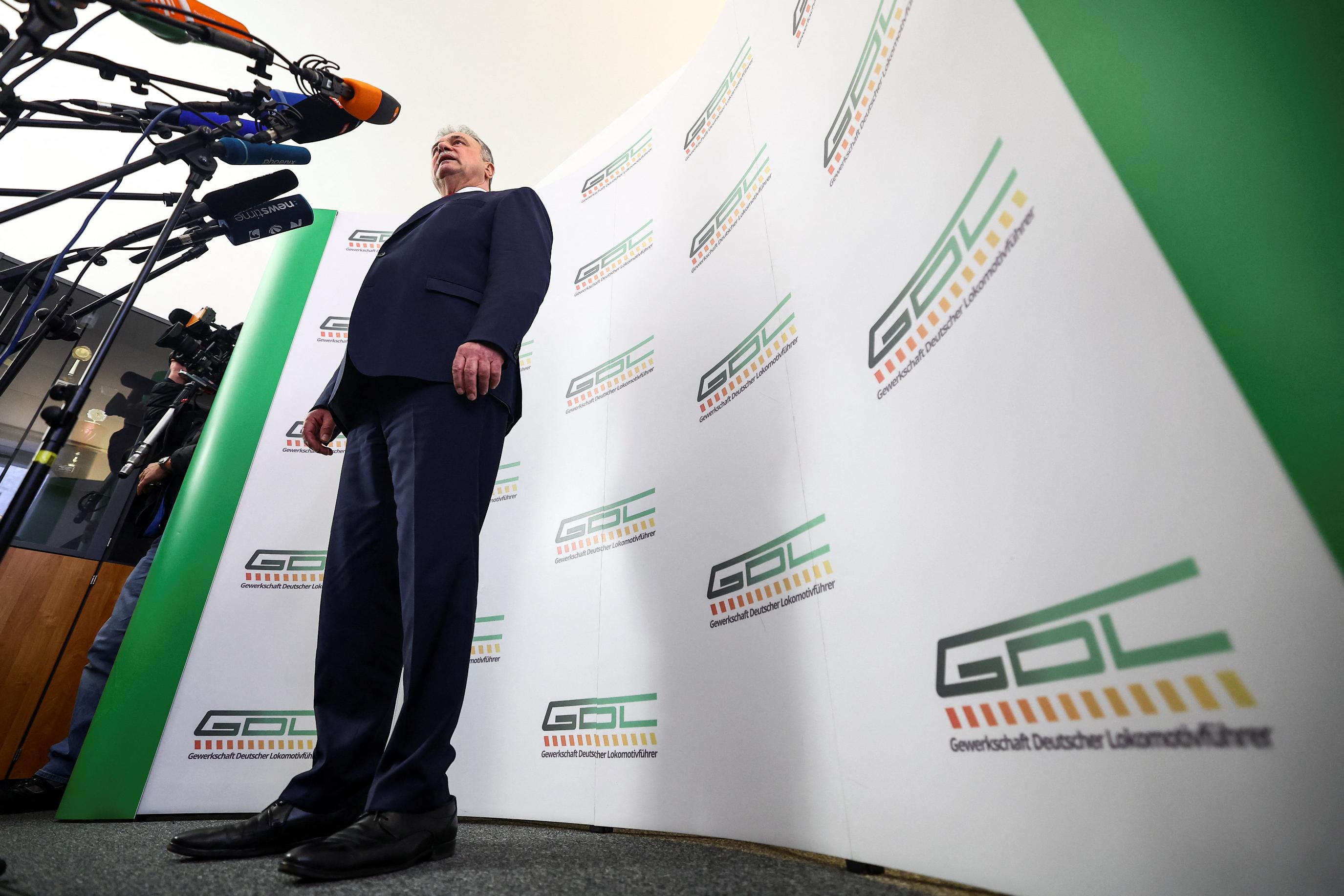
BERLIN, March 4 (Reuters) - The German train drivers' union said on Monday it would commence a fresh round of nationwide strikes as a dispute with national train operator Deutsche Bahn escalated, setting the stage for further travel disruption impacting millions of people. The train drivers' union GDL has staged a series of strikes aimed at reducing its workers' weekly hours at full pay to help offset lofty inflation and staff shortages in Europe's largest economy. The latest rail strikes, due to start on Thursday, will coincide with industrial action by Lufthansa airline's ground staff on Thursday and Friday, which will likely disrupt travel plans for thousands of passengers. The first passenger rail strike will begin at 0100 GMT on Thursday and last 35 hours, GDL union head Claus Weselsky said, adding that information on further worker action would follow. "With this, we begin a so-called strike wave," he told reporters. The planned strikes are a continuation of a dispute that is estimated to have already cost the German economy hundreds of millions of euros. Weeks-long talks between GDL and Deutsche Bahn (DBN.UL) broke down last week. GDL's last national rail strike in late January was set to be the longest in the state-owned company's 30-year history, but ended prematurely as a German economic slowdown led to pressure on GDL to return to the negotiating table. GDL wants a reduced 35-hour working week for shift workers at full pay - a demand that has been rejected by Deutsche Bahn, which accuses the union of refusing to compromise. "We are still prepared to find constructive but realistic solutions. However, the GDL's maximum demands are unrealisable and pose a massive threat to the railway system," said Deutsche Bahn's Martin Seiler. He also pointed to the costs of the strike action to the economy, adding in a statement: "Many millions of euros are being destroyed because a few people are fighting for their own particular interests." Lufthansa, meanwhile, will likely miss its 2024 profit margin goal as it seeks to agree new, higher pay deals to end the prolonged strikes, which have forced it to cancel thousands of flights, analysts and investors say. "With this uncompromising stance, the union is harming the company, many hundreds of thousands of customers and the employees of our companies," Michael Niggemann, Lufthansa's chief human resources officer, said in the statement. https://www.reuters.com/world/europe/german-train-drivers-resume-strikes-thursday-union-says-2024-03-04/