2024-03-04 01:00
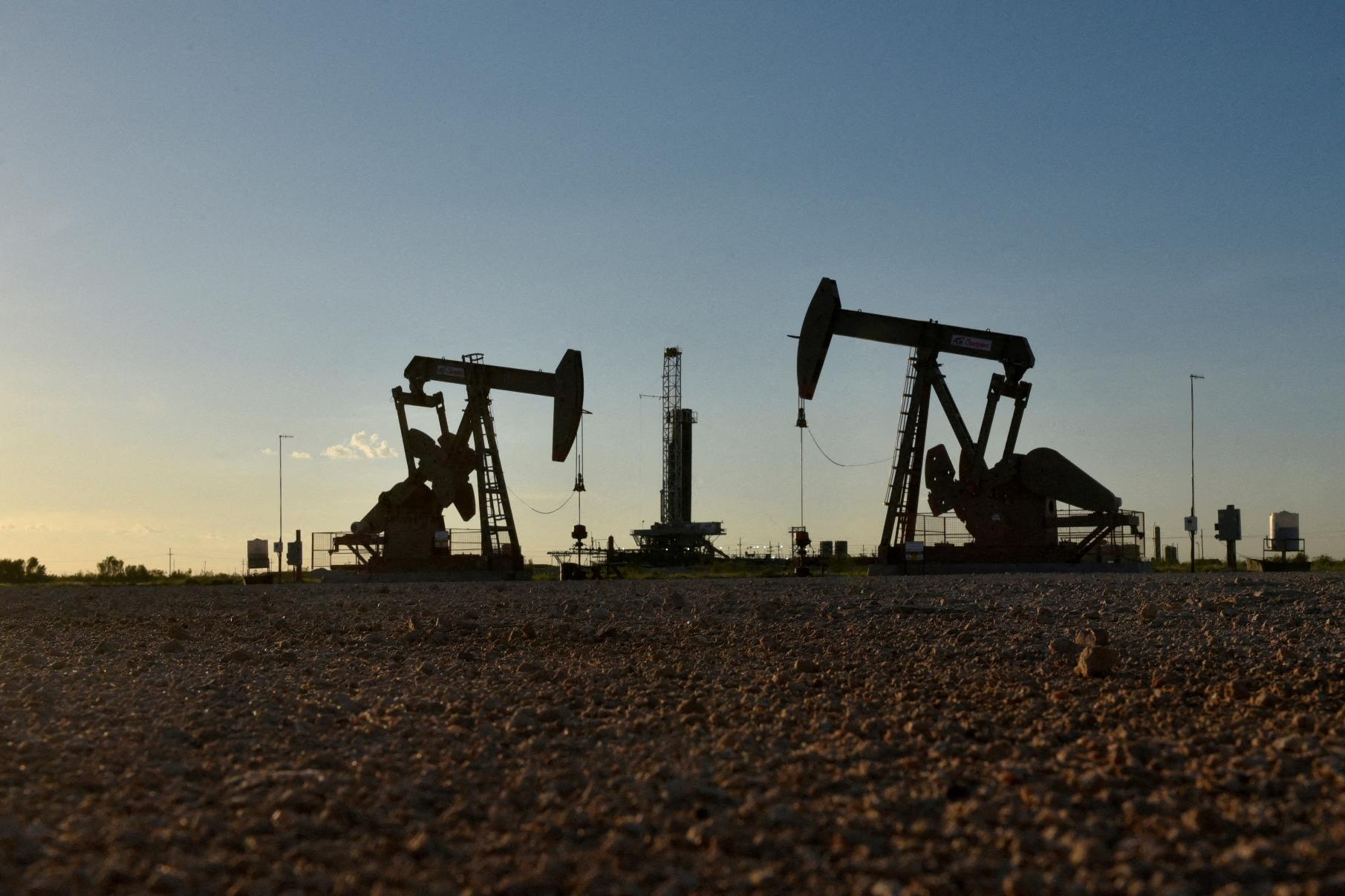
LONDON, March 1 (Reuters) - U.S. production of oil and gas set new seasonal records in December, capping off an unprecedented year, according to data published by the U.S. Energy Information Administration (EIA) on Thursday. Production continued to climb even as prices slumped from the very high levels seen in mid-2022 after Russia’s invasion of Ukraine, contributing to the accumulation of inventories. On the oil side, total production of crude and condensates increased to 413 million barrels in December from 376 million in the final month of 2022 (“Petroleum supply monthly , opens new tab”, EIA, Feb. 29, 2024). Production was running at 13.3 million barrels per day (b/d) in December, an increase of 1.2 million b/d (10%) from a year earlier. The prior-year comparison was flattered by the extreme cold which caused widespread well freeze offs and a brief but sharp drop in production in late December 2022. For the year as a whole, however, output increased to 4,721 million barrels in 2023, up from 4,347 million in 2022, and had doubled since 2012. Chartbook: U.S. oil and gas production , opens new tab Inflation-adjusted front-month U.S. crude futures averaged $72 per barrel (44th percentile for all months since 2000) in December, down from a recent high of $121 (82nd percentile) in June 2022. Oil-directed drilling has slowed in line with the fall in prices, with a delay of around five months, which is typical given the time taken for part-drilled wells to be completed and rig hire contracts to expire. The number of rigs drilling for oil averaged 501 in December, down from 623 in December 2022, according to oilfield services company Baker Hughes. But there was no comparable downturn in output as rigs boosted efficiency by concentrating on only the most promising sites and crews streamlined the drilling process. Horizontal well sections became even longer, maximising contact with the reservoir and allowing more oil to be recovered from each well. In the short term, the U.S. oil industry has become adept at producing more oil, at lower prices, with fewer drilling crews. In the medium term, it is unclear if the industry can continue raising efficiency at the same rate or whether further output growth will depend on higher prices. If production is already starting to flatten out in response to lower prices, the evidence remains inconclusive so far. U.S. GAS PRODUCTION Dry gas production climbed to a seasonal record of 3,300 billion cubic feet (bcf) in December from 3,107 bcf a year earlier (“Natural gas monthly , opens new tab”, EIA, Feb. 29, 2024). For the year as a whole, production hit a record 37,883 bcf, up from 36,353 bcf in 2022, and had doubled since 2006. Inflation-adjusted futures prices slumped to $2.55 per million British thermal units (4th percentile for all months since the start of the century) in December. Prices have since fallen to an average of just $1.80 last month, the lowest in real terms since at least 1990, when the futures contract started trading. As with oil, the number of rigs has fallen, but there has been no decline in production, leaving the market persistently oversupplied. The number of rigs drilling for gas averaged 119 in December, down from an average of 162 in September 2022, the recent peak. But production has continued to climb for the same reasons as oil – concentration on the most promising sites, streamlined work practices and longer well laterals. Output has also continued to rise because lots of gas is recovered as a co-product from new and ageing oil wells. Production has risen much faster than domestic and export demand, causing a huge accumulation of inventories and intensifying the downward pressure on prices. Working gas stocks in underground storage were 461 bcf (+24% or +1.25 standard deviations) above the long-term average on Feb. 23. The surplus has swelled from 64 bcf (2% or +0.24 standard deviations) at the start of the heating season on Oct. 1. Strong El Nino conditions in the Pacific have resulted in a much warmer than average winter across the northern United States, cutting gas consumption. But persistent over-production and the delayed response to falling prices has turned a warm winter into a prodigious glut of gas. Related columns: - El Niño pushes real U.S. gas prices to multi-decade low (February 16, 2024) - Rising U.S. oil production frustrates OPEC⁺ cuts (February 1, 2024) John Kemp is a Reuters market analyst. The views expressed are his own. Follow his commentary on X https://twitter.com/JKempEnergy , opens new tab https://www.reuters.com/markets/commodities/record-us-oil-gas-production-keeps-prices-under-pressure-2024-03-01/
2024-03-04 00:39
LAUNCESTON, Australia, March 4 (Reuters) - In stark contrast to the ongoing weakness in China's key manufacturing index, the imports of key commodities by the world's second-biggest economy are roaring ahead. China's imports of crude oil, liquefied natural gas (LNG), coal and iron ore were all stronger in the first two months of 2024 than for the same period last year, according to data from commodity analysts Kpler and LSEG Oil Research. Yet, though robust commodity imports appear at first glance to be out of alignment with soft property construction and manufacturing data, they can be reconciled when market dynamics such as stockpiling and price moves are taken into account. Crude oil imports were 11.73 million barrels per day (bpd) in February, up from 11.31 million bpd in January, according to LSEG data. Over the first two months of the year, LSEG estimates China's oil arrivals at 11.51 million bpd, which is 1.07 million bpd higher than the 10.44 million bpd official customs figure from January and February last year. China combines import data for January and February into a single release to mitigate the impact of the Lunar New Year holidays, and the official customs numbers for the first two months of 2024 are expected on March 7. China's imports of LNG were 5.7 million metric tons in February, down from January's 7.82 million, according to Kpler. However, the combined 13.52 million tons for the first two months of this year was 22.5% above the 11.04 million tons for the same period last year. Imports of iron ore were estimated by Kpler at 101.5 million tons in February, down from 113.0 million in January, which was the second-highest in Kpler data going back to 2017. The combined 215.5 million tons for the January-February period was 4.6% higher than the 206.1 million tons for the same months in 2023. Imports of all grades of coal were also robust in the first two months of this year, with Kpler estimating seaborne arrivals of 28.4 million tons in February and 34.0 million in January, for a total of 62.4 million. This was 28.1% higher than the 48.7 million tons of seaborne arrivals in the first two months of 2023. The strength in imports of major commodities appears to be at odds with the ongoing run of soft outcomes in China's official Purchasing Managers' Index (PMI). The PMI shrank for a fifth month in February, coming in at 49.1 points, down from 49.2 in January, and staying below the 50-level that separates growth from contraction. While some of the weakness may have been caused by factories closing for the week-long Lunar New Year holidays, the PMI data indicates that China's economy is at best spluttering along. This makes it more likely that further stimulus measures are likely to be adopted, with the focus on this week's meeting of parliament. Whether any new initiatives will be enough to rouse China's economy remains to be seen, but the recent track record of modest steps suggest something bolder than what is likely to eventuate will be needed. STRONG COMMODITIES, WEAK ECONOMY? The question is whether China's strong commodity imports can be reconciled with the evident weakness seen in key sectors of the economy, such as residential housing construction and manufacturing. Each commodity has its own market dynamics and the robust crude imports can be viewed through the prism of lower oil prices when cargoes would have been arranged, and the early release of import quotas for most refiners. Global benchmark Brent crude futures were in a downtrend from October to mid-December, reaching a low of $72.29 a barrel on Dec. 13. The lower prices, coupled with the 60% increase in the first tranche of import quotas, would have encouraged refiners to buy more than they intended to process, thereby boosting inventories as a hedge against possible higher prices later this year. Coal imports have been strong because of high electricity demand and lower than usual hydropower output. A further factor has been some constraints on domestic mine output because of safety checks, which has also kept domestic prices elevated, meaning imports can compete on a price basis. China's top coal supplier is Indonesia, and the price of Indonesian coal with an energy content of 4,200 kilocalories per kilogram , as assessed by commodity price reporting agency Argus, has been relatively stable in recent weeks, hovering near two-year lows and ending at $58.01 a ton in the week to March 1. Iron ore is perhaps the commodity most difficult to fathom, as strong imports don't necessarily align with weakness in the property sector. However, steel mills and traders have been building up inventories in recent weeks, possibly in anticipation of more stimulus measures, with consultants SteelHome reporting port stockpiles rising to 134.9 million tons in the week to March 1., up 28.6% from the seven-year low of 104.9 million in the week to Oct. 23. Overall, the strength in China's commodity imports can be aligned with weakness in other sectors of the economy, and show that the economic story is more nuanced than the simple narrative of sluggish growth. The opinions expressed here are those of the author, a columnist for Reuters. https://www.reuters.com/markets/commodities/china-robust-commodity-imports-confound-weak-economy-narrative-russell-2024-03-04/

2024-03-04 00:21
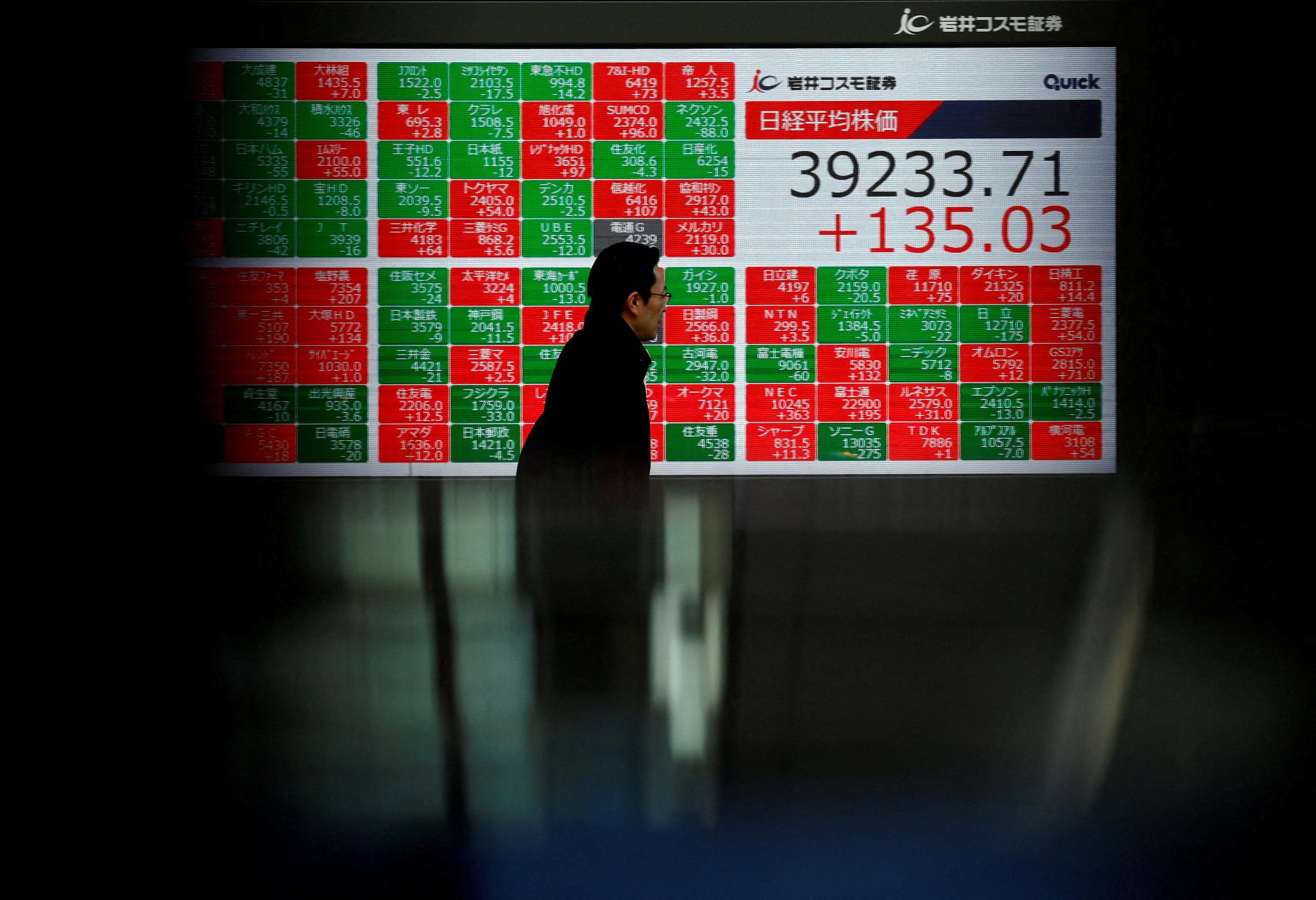
Fed's Powell, ECB meeting to help refine rate outlooks U.S. February payrolls data in focus Bitcoin closes in on record high Oil prices reverse gains after OPEC+ extends output cuts NEW YORK, March 4 (Reuters) - Wall Street stocks closed lower on Monday, backing away from record highs, while U.S. Treasury yields ticked higher as investors looked ahead to key jobs data and Federal Reserve Chair Jerome Powell's congressional testimony later in the week. Bitcoin was being closely watched as the cryptocurrency inched closer to its first record high since November 2021. After European stocks backed off from record highs, the major U.S. equity indexes followed suit, failing to eke out further gains following Friday's record-setting rally. All three U.S. indexes struggled for gains through much of the range-bound session, but lost momentum in the final hour. The S&P 500 closed modestly lower, while the Nasdaq and the Dow registered more pronounced declines. Market participants appeared to be showing caution ahead of Powell's two-day congressional testimony on Wednesday and Thursday, the European Central Bank's policy decision and the Labor Department's crucial February jobs report to be released early on Friday. "Nothing is really happening (Monday) and that's why the stock market is undulating within small boundaries," said Sam Stovall, chief investment strategist of CFRA Research in New York. "The market is waiting for Jerome Powell's testimony to Congress, it's waiting for employment data on Friday and wondering whether we are going to get any kind of meaningful digestion of recent gains." Powell's testimony and the jobs data will be scrutinized for any clarification on the timing and extent of the Fed's expected cuts to its key policy interest rate this year. On average, analysts believe the U.S. economy added 200,000 jobs in February, and the unemployment rate held firm at 3.7%. The Dow Jones Industrial Average (.DJI) , opens new tab fell 97.55 points, or 0.25%, to 38,989.83, the S&P 500 (.SPX) , opens new tab lost 6.13 points, or 0.12%, to 5,130.95 and the Nasdaq Composite (.IXIC) , opens new tab dropped 67.43 points, or 0.41%, to 16,207.51. European shares settled just south of all-time highs as investors digested recent gains and looked ahead to the European Central Bank's monetary policy meeting on Thursday. The pan-European STOXX 600 index (.STOXX) , opens new tab lost 0.03%, and MSCI's gauge of stocks across the globe (.MIWD00000PUS) , opens new tab shed 0.01%. Emerging market stocks rose 0.51%. MSCI's broadest index of Asia-Pacific shares outside Japan (.MIAPJ0000PUS) , opens new tab closed 0.57% higher, while Japan's Nikkei (.N225) , opens new tab rose 0.50%. Bitcoin rose to a more than two-year peak. The cryptocurrency was last up 8.1% at $67,655, approaching an intraday record reached in November 2021. "Bitcoin is a very high-volatility, speculative, momentum-related play and it always has been," Oliver Pursche, senior vice president at Wealthspire Advisors in New York. "The one thing it's good for from an analyst's perspective is it's an indicator of risk sentiment and investors' willingness to take on risk." The dollar was essentially unchanged against a basket of world currencies. The dollar index (.DXY) , opens new tab fell 0.03%, with the euro up 0.16% to $1.0854. The Japanese yen weakened 0.27% versus the greenback at 150.53 per dollar, while Sterling was last trading at $1.2689, up 0.31% on the day. U.S. Treasury yields rose. Benchmark 10-year notes last fell 9/32 in price to yield 4.217%, from 4.182% late on Friday. The 30-year bond last fell 14/32 in price to yield 4.3522%, from 4.327% late on Friday. Oil prices reversed earlier gains as demand concerns offset a widely expected move on the part of OPEC+ to extend its output cuts. "With oil prices down even after OPEC said it's going to keep a rein on output, oil seems to be telling a different story from what equities are saying," Stovall said. "It implies the oil market is worried about global economic growth and there could be more problems to emanate from China that we are currently anticipating." U.S. crude fell 1.54% to settle at $78.74 per barrel, while Brent settled at $82.80, down 0.9% on the day. Gold surged as market participants solidified their bets that the Fed would begin cutting interest rates in June. Spot gold added 1.6% to $2,116.77 an ounce. https://www.reuters.com/markets/global-markets-wrapup-1-2024-03-04/
2024-03-03 23:36
TORONTO, March 3 (Reuters) - Demand for key-battery mineral lithium will continue to grow, underpinned by strong adoption of electric vehicles but the price of the metal is expected to be volatile, Rio Tinto (RIO.AX) , opens new tab(RIO.L) , opens new tab CEO Jakob Stausholm said on Sunday. Still, Stausholm said Rio will steer clear of making any big ticket acquisitions to grow its lithium business and instead look at ways to improve the lithium extraction technology. Rio Tinto, the world's biggest iron ore producer, is one of the few large mining companies betting on lithium even as counterparts such as BHP stay away from investing in the metal, which is used in developing EV batteries. Softening EV demand has knocked down lithium prices, with a basket tracked by Benchmark Mineral Intelligence plunging more than 80% in the past 12 months. That has forced many producers to shutter production and cut jobs. "We have taken a consistent view that prices of battery materials will be volatile," Stausholm told Reuters on the sidelines of the annual Prospectors and Developers Association of Canada (PDAC) conference in Toronto. PDAC, which runs Sunday to Wednesday, is one of the world's largest gatherings of mining companies and their financiers. "Ideally, you will need more battery capacity, so it's not just batteries for EVs but also stationary batteries. So the world will have more batteries, I have no doubt about that. And therefore you need more lithium," Stausholm added. Rio Tinto is developing the Rincon project, a lithium-brine mine in Argentina where it plans to develop a battery-grade lithium carbonate plant with an annual capacity of 3,000 tonnes. Production is expected to start by the end of 2024. Argentina has the world's largest share of salt lake lithium resources. The company also owns the Jadar lithium project in Serbia, which is currently under dispute after Serbia in 2022 revoked the license for the project over environmental issues. Earlier, Stausholm told the PDAC conference that inflation in Western countries will moderate this year, which should help companies to stabilize costs. https://www.reuters.com/markets/commodities/rio-tinto-ceo-bullish-lithium-not-eyeing-big-acquisitions-2024-03-03/

2024-03-03 23:34
WASHINGTON, March 3 (Reuters) - A measure in the U.S. funding legislation unveiled by congressional leaders on Sunday would block China from buying oil from the Strategic Petroleum Reserve. The desire for a hard line on China is one of the few truly bipartisan sentiments in the deeply divided U.S. Congress, and lawmakers have introduced dozens of bills seeking to address competition with China's government. The issue of SPR sales to China heated up after President Joe Biden, a Democrat, announced in 2022 a sale of 180 million barrels of SPR oil to tame gasoline prices that spiked after Russia's invasion of Ukraine. That year the SPR sold 1 million barrels to UNIPEC America, a Houston-based arm of China's Sinopec. In 2017, under former President Donald Trump, some SPR oil was sold to PetroChina International, a subsidiary of Chinese state oil company PetroChina Co Ltd. (601857.SS) , opens new tab The SPR currently holds more than 360 million barrels of oil but is close to 40-year lows due to the sales in 2022. read more Last July, the Democratic-controlled Senate passed a bill 85 to 14 to ban exports to China of SPR oil. Senator Chris Murphy, a Democrat, said at the time it created the illusion of solving a problem while having very little political impact and likely doing more harm than good. U.S. oil companies sold 83 million barrels of oil to China in 2022. Congressional negotiators unveiled the 1,050 page bill on Sunday that lays out funding for six of the dozen segments of the government that Congress is charged with allocating money for, with the next six due by later in the month. The U.S. House will have to vote on the bill first before the Senate can take up the package before Friday, Senate Majority Leader Chuck Schumer said. The House is due to return to Washington on Tuesday. https://www.reuters.com/markets/commodities/us-funding-bill-blocks-china-buying-oil-strategic-petroleum-reserve-2024-03-03/

2024-03-03 21:48
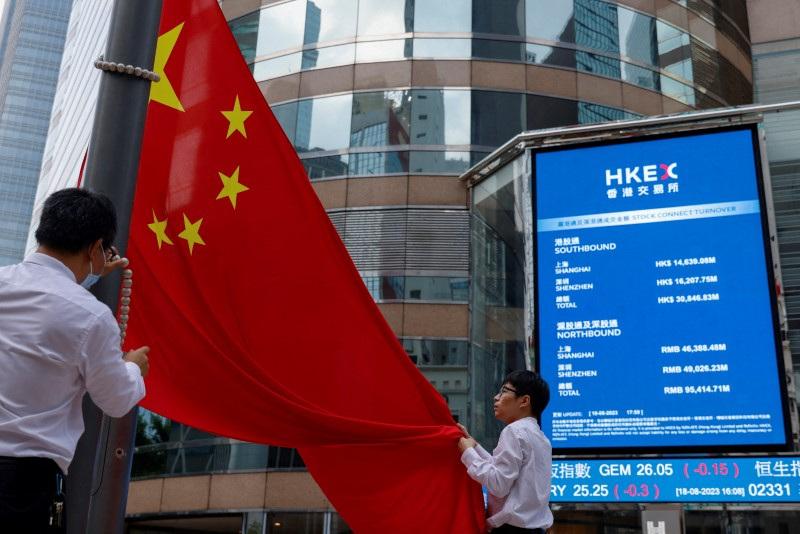
March 4 (Reuters) - A look at the day ahead in Asian markets. With the MSCI World, Japanese Nikkei 225 , opens new tab, Nasdaq, S&P 500 and Europe's STOXX 600 indexes all finishing last week at record highs, Asian markets kick off the new week on Monday with a strong global tailwind behind them. The resilience of the U.S. economy, cooling inflation and an artificial intelligence-fueled frenzy in big tech are setting the positive tone globally, which should put a spring in Asian markets' step on Monday. Industrial production, retail sales and purchasing managers' index data from South Korea; New Zealand trade and Australian housing figures are the main events on the regional economic calendar, but investors' attention will be turning to China. The annual National People's Congress in Beijing opens on Tuesday and what is laid out by parliament could go a long way to determining the 2024 path for assets in China. And beyond. Premier Li Qiang will lay out Beijing's annual growth and other economic targets, and - crucially - a plan for achieving them. Li is expected to set a growth target of around 5% for 2024 - the same as last year - to keep China on a path toward President Xi Jinping's goal of roughly doubling the economy by 2035. If the stimulus policies and measures are credible in the eyes of investors, the rebound in Chinese stocks from the five-year lows a few weeks ago looks likely to continue. If they fail to convince investors, a re-test of these lows in the coming weeks cannot be ruled out. Chinese leaders are under pressure to take more radical steps to shore up the property sector, ward off deflation and revive growth. But capital outflows have weakened the exchange rate, and large-scale fiscal easing could exacerbate that outflow-declining currency doom loop. To be sure, some of the recent numbers have been encouraging. The Caixin manufacturing PMI last week was enough to lift China's overall economic surprises index to its highest level since mid-December. Expectations have been lowered considerably in recent weeks as the data has underwhelmed, so it's not clear that this reflects particularly strong economic activity per se. But positive surprises are preferable to negative surprises. Either way, Chinese equities have regained their footing and are up around 10% from the lows and are now in the green year to date. Looking ahead to the rest of the week in Asia, the main calendar events are inflation data from South Korea, Thailand, the Philippines and Taiwan, as well as GDP figures from South Korea and Australia, China's Caixin services PMI, and an interest rate decision from Malaysia. Here are key developments that could provide more direction to markets on Monday: - South Korea retail sales, industrial output, mfg PMI - Australia housing sector data - New Zealand trade https://www.reuters.com/markets/asia/global-markets-view-asia-graphic-pix-2024-03-03/