2024-03-01 20:01
NEW YORK, March 1 (Reuters) - The U.S. Department of Energy's statistical arm may seek a new survey of bitcoin mining electricity use, which will include a longer approval process, after cancelling its emergency data request following a lawsuit brought by crypto miners, show court records filed on Friday. To pursue a new survey tracking U.S. crypto-mining's power use, the DOE's Energy Information Administration must allow a 60-day comment period, according to an agreement between government agencies and Riot Platforms and Texas Blockchain Council, which sued to block the initial data collection effort. It was unclear how long launching a new survey would take. https://www.reuters.com/technology/us-eia-could-request-bitcoin-power-use-survey-under-longer-timeline-2024-03-01/

2024-03-01 19:49
NEW YORK, March 1 (Reuters) - Gunvor (GGL.UL), one of the world's largest oil traders, agreed on Friday to pay about $662 million to resolve U.S. and Swiss investigations into a scheme to pay bribes to Ecuadorean officials to win business. Gunvor pleaded guilty to conspiring to violate a U.S. bribery law at a hearing in federal court in Brooklyn, New York, marking the end of a long-running criminal probe. The Geneva-based firm also resolved a related investigation by the Office of the Attorney General of Switzerland. Jean-Baptiste Leclercq, Gunvor's general counsel, told U.S. District Judge Eric Vitaliano that the trader joined a conspiracy that ran afoul of the Foreign Corrupt Practices Act (FCPA) by paying intermediaries to win business with Ecuador's national oil company Petroecuador. The payout includes a $374.6 million criminal fine and a forfeiture of $287.1 million. Gunvor will be credited for up to $93 million in payments to both Switzerland and Ecuador. In a statement, Chairman Torbjörn Törnqvist said Gunvor was sorry for past mistakes and committed to enhancing its now "industry-leading compliance program." The deal does not require Gunvor to hire a monitor. The U.S. Department of Justice and the U.S. Commodity Futures Trading Commission had been probing Gunvor since at least 2020, and a former employee in 2021 pleaded guilty over a scheme to bribe Ecuadorean government officials to win business. Reuters reported in December that Gunvor had set aside $650 million to resolve the probe. Authorities said that between 2012 and 2020, Gunvor and other conspirators paid more than $97 million to intermediaries, knowing some of the cash would be used to bribe officials in Ecuador. In exchange, high-level Ecuadorean officials helped front companies for Gunvor win rights to a series of oil-back loan contracts with Petroecuador, authorities said. One Gunvor employee directed an intermediary to bestow an 18-karat gold Patek Philippe watch on a Petroecuador official, the Justice Department said. Switzerland's Attorney General also found Gunvor criminally liable for corruption in 2019, when it was ordered to pay $95 million for bribing officials in Congo Republic and the Ivory Coast. That case was the first where a major trading firm had been found guilty on such charges in Switzerland. U.S. prosecutors have made a multi-year push to root out fraud and misconduct in the commodities sector. Traders who buy and sell raw materials often operate in jurisdictions where corruption is common, putting them at risk of violating the FCPA, which prohibits paying bribes to foreign officials. Glencore (GLEN.L) , opens new tab agreed to pay more than $1 billion in connection with a decade-long bribery scheme covering several countries. And in December, Connecticut-based commodities trader Freepoint Commodities reached a $98 million settlement of bribery and other U.S. charges. Vitol, the world's largest oil trader, resolved U.S. and Brazilian probes in December 2020 by agreeing to pay $164 million and admitting to bribing officials in Brazil, Mexico and Ecuador. One of its employees, Javier Aguilar, was convicted last month of bribing Ecuadorean officials. https://www.reuters.com/markets/us/us-government-unveil-criminal-case-against-gunvor-2024-03-01/

2024-03-01 19:12
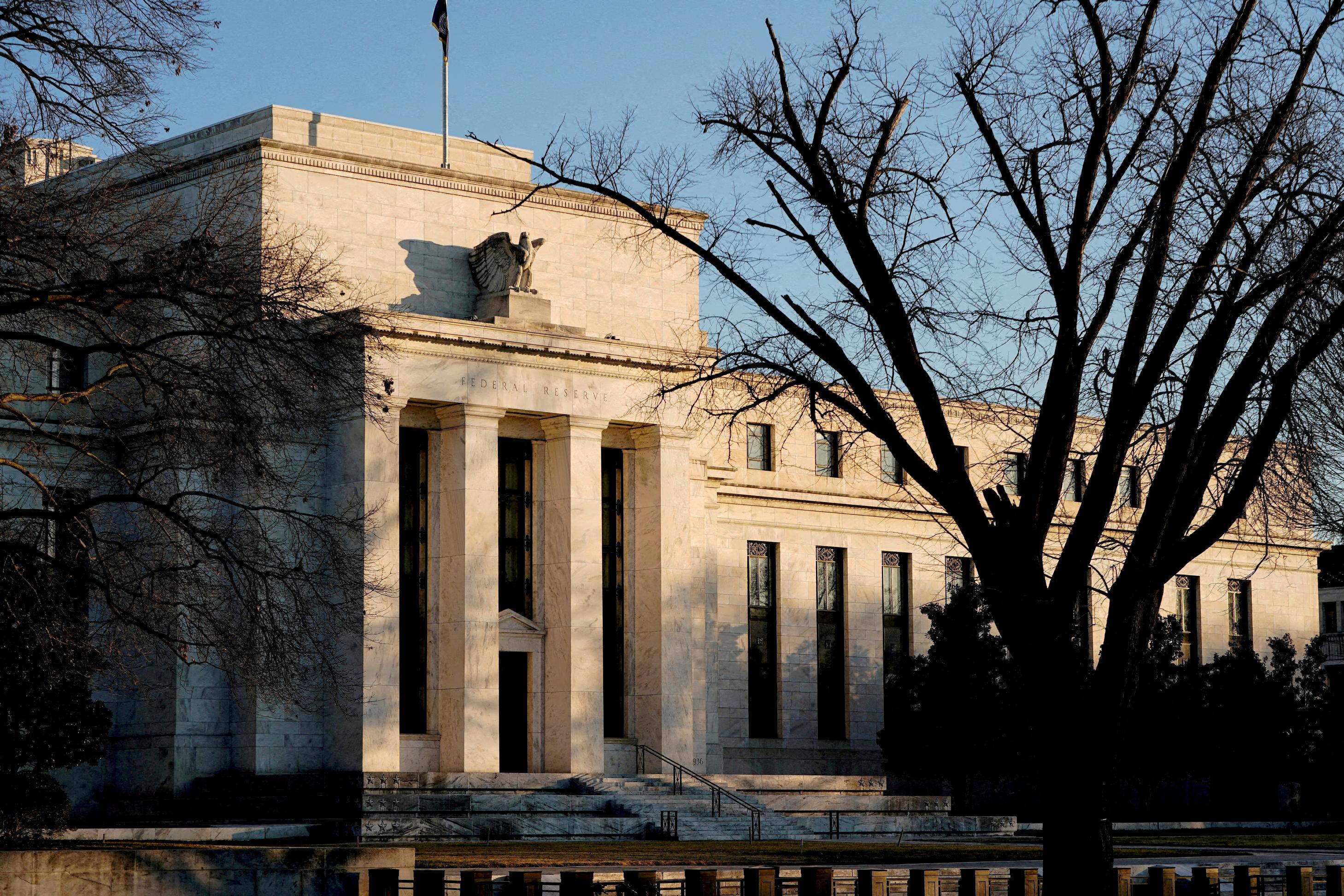
March 1 (Reuters) - The Federal Reserve report released Friday flagged a range of what it deemed "notable" vulnerabilities in financial markets, while adding the stress that roiled the banking sector a year ago has faded considerably. The Fed also used the latest release of its periodic Monetary Policy Report to say that officials will not start moving their short-term interest rate target down until they gain greater confidence inflation is truly moving back to the 2% target. In the report, the central bank noted a number of ways in which borrowing levels, or leverage, were increasing risks in the financial sector. It also said stock prices were "close to historical highs." The Fed said leverage at hedge funds had stabilized at high levels, while life insurers were facing a situation where they were becoming more reliant on non-traditional sources of funding. Meanwhile, while banks' sources of funding remain liquid and stable, funding costs were on the rise, the central bank said. But even with those rising challenges, the Fed report said "the banking system remains sound and resilient" and "acute stress in the banking system has receded since last spring." A year ago, the Fed contended with bank problems of a magnitude that forced it to launch a new liquidity facility, amid surging demand for central bank credit. Much of that borrowing has faded away as a major concern for markets and the central bank, and the Fed will close this month the Bank Term Funding Program stood up to deal with the troubles. The Fed report said credit remains available for most who want it, while acknowledging borrowing's high expense: "Interest rates on both credit cards and auto loans remain higher than the levels observed in 2018 at the peak of the previous monetary policy tightening cycle." On the economy, the Fed reiterated it was committed to getting inflation pressures back to its target and said the rate-setting Federal Open Market Committee "does not expect it will be appropriate to reduce the target range until it has gained greater confidence that inflation is moving sustainably toward 2%." Fed forecasts from the close of last year, buttressed by officials' comments, have all pointed to rate cuts this year amid falling inflation pressures. But economic strength and an uneven path back to 2% have pushed back market expectations of when the easing will start, likely toward the summer. PRELUDE TO POWELL The Fed's twice-yearly report to Congress comes ahead of two days of testimony by Fed Chair Jerome Powell set for Wednesday and Thursday next week. Powell is likely to face a barrage of lawmaker questions about the Fed's tight policy stance and expectations for easing it, a sensitive topic in a presidential election year. The report generally recaps economic developments and actions taken by the Fed in the period since the previous update given to lawmakers. Fed concerns over financial markets' vulnerabilities had already been noted in the release of meeting minutes for the January FOMC meeting, released last week. At the Fed's most recent policy meeting in January, central bank staff briefed policymakers on their assessment of stability within the U.S. financial system, with the minutes saying staff "characterized the system’s financial vulnerabilities as notable." A number of congressional Democrats have already been hounding Powell over high rates, complaining they are exacerbating already-poor housing affordability for low- and middle-income households. Republicans, meanwhile, have been critical about the Fed's initially slow response to inflation and could chastise Powell over indications he may lower rates ahead of the November election. ELECTION-YEAR RATE CUTS The Fed's next interest rate-setting meeting is scheduled for March 19-20, and policymakers are widely expected to leave their benchmark policy rate unchanged at 5.25%-5.5%, where it has been since July. The upcoming meeting will also bring updated forecasts on inflation, employment, growth and interest rates. In December the Fed penciled in three rate cuts, and in comments to reporters on Wednesday, New York Fed leader John Williams said that outlook is a "reasonable" place for Fed officials to think about the monetary policy outlook. But the timing of action remains in question. After a benign run of inflation data through the second half of 2023 led financial markets initially to position for rate cuts as early as the March meeting, the first set of inflation readings for 2024 have at least temporarily stalled some of that momentum on taming the pace of price increases. Market pricing now reflects a prevailing view that the first cut will occur in June, although a first cut at the April 30-May 1 meeting is not out of the question. https://www.reuters.com/markets/us/fed-monetary-policy-report-warns-financial-sector-vulnerabilities-2024-03-01/
2024-03-01 17:39
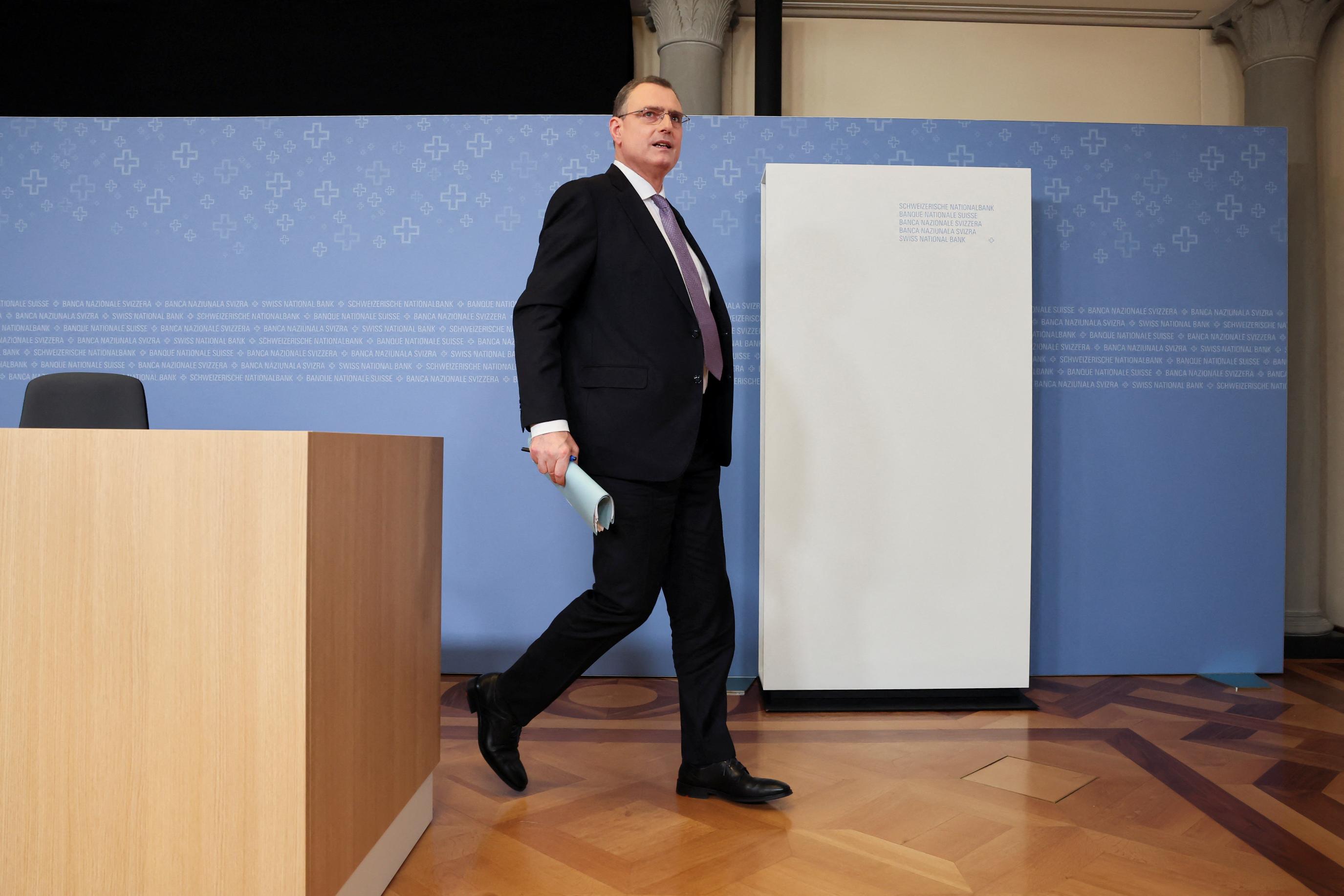
ZURICH, March 1 (Reuters) - The Swiss National Bank has launched a search for a successor to Thomas Jordan, who on Friday announced his decision to step down in September after 12 years as chairman. Although the SNB's supervisory Bank Council will recommend a successor to the Swiss cabinet, Jordan could have a big say. Current Vice Chairman Martin Schlegel is seen by many experts and Swiss media as being in pole position after a rapid rise at the Swiss central bank, but they also identified other possible candidates. Here are some possible successors: MARTIN SCHLEGEL Jordan's current deputy at the SNB, Schlegel is seen as the likely favourite to take over when his mentor steps down. Schlegel started his SNB career in 2003 after studying economics at the University of Zurich and worked in the research department, which was headed at the time by Jordan. "I was Thomas Jordan's intern," Schlegel told Swiss newspaper NZZ in 2019. "And somehow I still am." The 47-year-old was made head of the SNB's foreign exchange and gold unit in 2009 and in 2016 became head of the SNB's Singapore branch office, from where it launched many of its foreign exchange purchases to weaken the Swiss franc. He was promoted to vice chairman in 2022. But he could be seen as too close to Jordan if the bank wants a change in direction. The SNB declined to comment on Schlegel eventually replacing Jordan. "Schlegel knows very well the SNB, having worked his entire career at the central bank, and would likely represent continuity with Jordan's approach," said GianLuigi Mandruzzato, an economist at EFG Bank. "That he has not had any major experience outside the SNB, let alone in the private sector, may be seen as a limit given the rapidly changing financial environment." ANDREA MAECHLER The first woman on the SNB's rate setting governing board left last year after being passed over as vice chairman. She is currently the deputy general manager of the Basel-based Bank for International Settlements, the central bank for central banks. Maechler was appointed to the SNB's governing board in 2015, and was responsible for overseeing the foreign exchange and money market transactions. Being a native French speaker and a woman are seen as advantages after a long period of dominance by male SNB officials from the German-speaking part of the country. She also has broad international experience, having worked at the International Monetary Fund in Washington. But she only recently joined the BIS, and may be reluctant to leave. The BIS declined to comment on Friday. "Maechler would be an excellent candidate, not least because of her excellent past work in the SNB, and would also improve the diversity in SNB's decision making bodies," EFG's Mandruzzato said. RENAUD DE PLANTA A banker from Switzerland's French-speaking region, de Planta has led private bank Pictet since 2019, but has announced he will be stepping down as managing partner in June. Pictet declined comment. The Federal Council said last year it had appointed the 60-year-old to the SNB's Bank Council for a four-year term from May 2024. In the months following last year's collapse of Credit Suisse, de Planta was also involved in an expert commission on banking stability that suggested it should be made easier for banks to tap central bank funding. https://www.reuters.com/markets/europe/snb-chair-jordans-former-intern-leads-list-likely-successors-2024-03-01/
2024-03-01 17:27
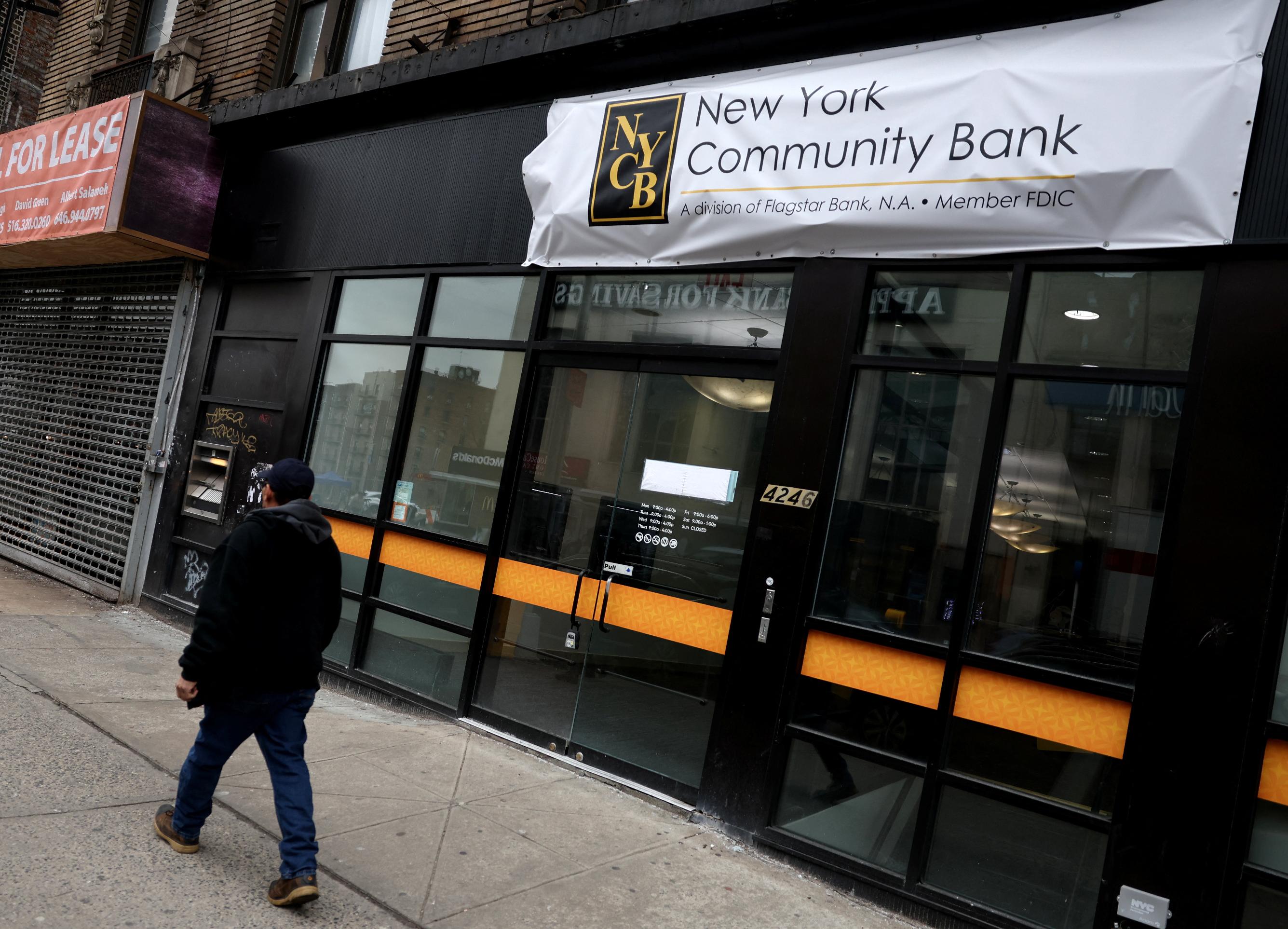
NEW YORK, March 1 (Reuters) - The latest knock to the shares of New York Community Bancorp (NYCB.N) , opens new tab sent traders in the options market looking for defensive positions with renewed gusto on Friday. New York Community Bancorp shares plunged 24% on Friday after it found "material weaknesses" in internal controls related to its loan review, rattling investors already fretting over its commercial real estate (CRE) exposure. New York Community Bancorp options trading volume jumped to 171,000 contracts by 11:10 a.m. (1610 GMT), with contracts changing hands at two or three times the usual pace, according to Trade Alert data. With the shares trading at $3.62, put options that would guard against a dip in the share price below $3 and below $2.50 by Friday, March 8, were among the most heavily traded contracts. "We are seeing lots of defensive positions being opened," said Steve Sosnick, chief strategist at Interactive Brokers. "Those buyers are betting that the situation will continue to worsen in the short term." With the stock down more than 50% for the year as of Thursday's close, short sellers were already up about $150 million in gains for the year, according to an estimate from data and analytics company Ortex. Friday's selloff could see those gains jump by around $43 million if the share price losses hold, Ortex data showed. The bearish sentiment appeared relatively restricted to New York Community Bancorp contracts. Options on the SPDR S&P Regional Banking (KRE.P) , opens new tab ETF drew more balanced trading activity, according to data from Trade Alert. KRE shares were down 1.6% on Friday. https://www.reuters.com/markets/us/nycbs-shares-dive-options-traders-prepare-worse-2024-03-01/
2024-03-01 15:59
NEW YORK, March 1 (Reuters) - The move by major central banks to reduce their asset holdings, begun in 2022 as part of their inflation fight, has had only a modest impact on interest rates and negligible influence on a broad set of other financial indicators, according to new research analyzing the effort's impact. The direct effect of "quantitative tightening" efforts on government bond yields in the seven markets under study, including the U.S. and the euro area, was estimated overall at from 4 to 8 basis points for securities maturing a year or more in the future. In the U.S. it was "close to zero" because of the Federal Reserve's "drip feed" of information that allowed markets to adjust over time. Because the research focused on market moves the day of and the day after balance sheet policy announcements, asset sales, and other key events, the authors cautioned they might not capture slower-moving effects. But their bottom line was that quantitative tightening, while more significant than "paint drying," had far less impact than the central bank bond purchases that stockpiled assets in the first place. The reference was to a comment by former Fed Chair Janet Yellen, as the Fed approached the point of shrinking its balance sheet in 2017 in an earlier round of quantitative tightening, that she hoped the process would be dull and uneventful - like watching paint dry. In the wake of $8 trillion added to central bank balance sheets to support economic activity during the pandemic, seven central banks including the Fed, the European Central Bank, the Bank of England, and others have pared about $2.2 trillion of their holdings through direct sales or passive "roll-off." The authors found that to the extent there is an effect of QT, it is due to central bank announcements of their plans, not the actual transactions. The findings "should give central banks more confidence to unwind asset purchases in the future," wrote the authors, Wenxin Du of Columbia Business School, former Bank of England policymaker and MIT-Sloan School of Management professor Kristin Forbes, and Deutsche Bank economist Matthew Luzzetti. The research was presented on Friday at a monetary policy forum sponsored by the Clark Center for Global Markets at the University of Chicago Booth School of Business. In comments on the research, Fed Governor Christopher Waller and Dallas Fed President Lorie Logan said the "asymmetry" between the two was likely the result of the different economic contexts in which central banks resorted to asset purchases compared to those when they began to reduce their holdings. "The punchline here is that (quantitative easing) is conducted under different market conditions than those that occur when QT is done," Fed governor Chris Waller said. "It is not surprising that the effects will be different." Waller noted that the Fed's roll off of up to $95 billion a month in Treasury and mortgage backed securities, "is not causing substantial strains in financial markets—something that a few years ago would have surprised a lot of people" who felt quantitative tightening would have a similar impact on markets as quantitative easing, just in the opposite direction. The impact of central bank balance sheet policy on financial conditions has been an area of intense research interest since the Fed and others expanded their asset holdings rapidly to try to lift economic activity once interest rates had been cut to zero during a 2009 to 2010 recession, and then again in response to the pandemic. While central bank assets purchases, or quantitative easing, have been found to lower long-term interest rates by perhaps a full percentage point or more and to supercharge equity markets, quantitative tightening does not seem to work with the same force in the other direction - something the authors said could be the result of the different economic, liquidity and other conditions likely surrounding each policy. Central banks including the Fed are now debating how much further to allow balance sheets to shrink, with policymakers cognizant that in the fall of 2019 the Fed let its asset holdings fall too far and touched off a spike in overnight borrowing costs for banks that they had to remedy with a quick resumption of asset purchases. The authors said they could not rule out similar upheaval this time in a process that is still underway. “The challenge will be assessing when this smooth adjustment to date could suddenly transition to a liquidity crunch and have a sharper impact on financial markets – similar to that moment when water suddenly boils,” they wrote. https://www.reuters.com/markets/us/qt-not-quite-paint-drying-having-little-impact-so-far-research-2024-03-01/