2024-03-01 15:47
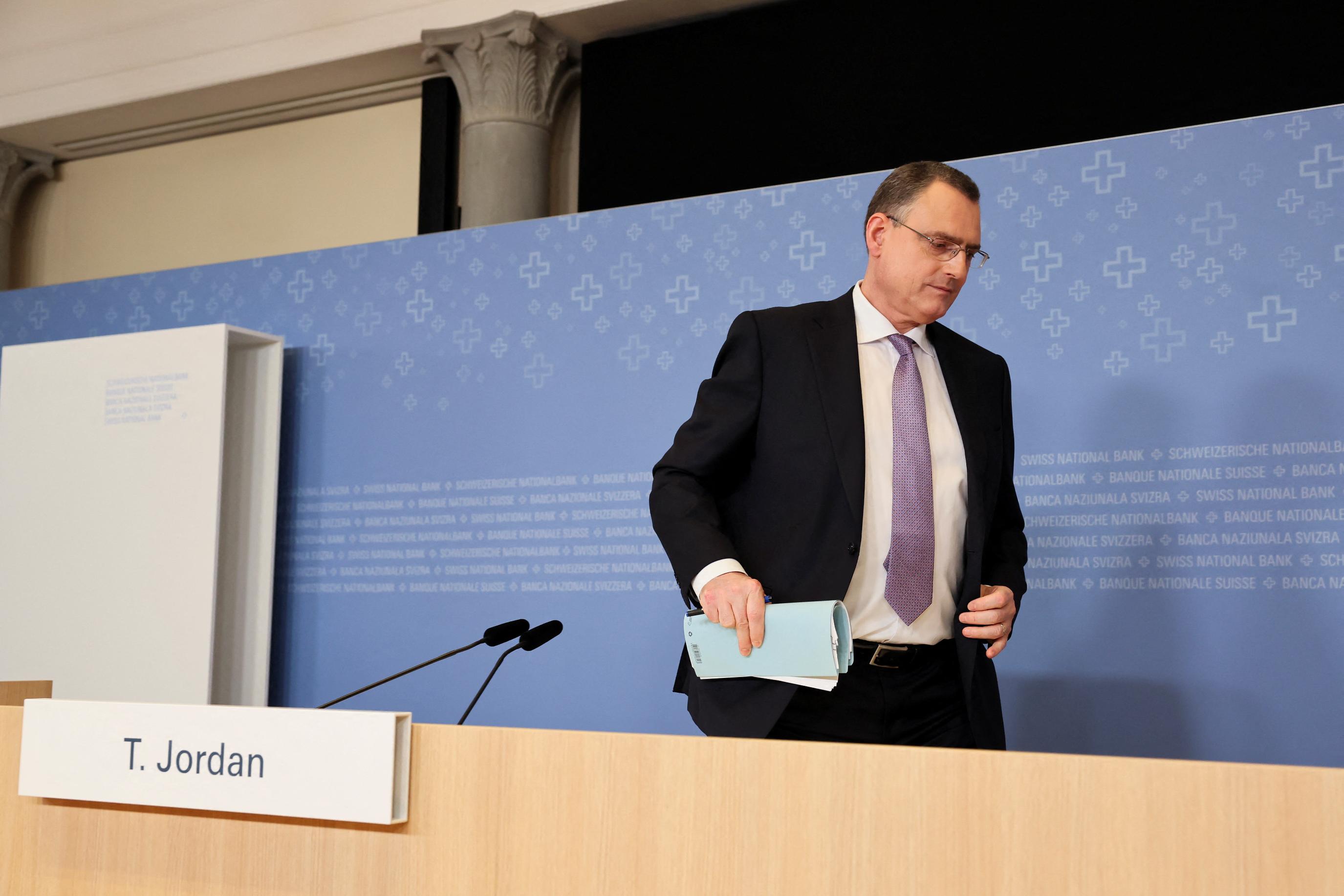
ZURICH, March 1 (Reuters) - Swiss National Bank Chairman Thomas Jordan on Friday defended the central bank's role in managing the demise of Credit Suisse in 2023, as he announced he was stepping down as SNB chief. Jordan said the collapse of the lender had no influence on his decision to leave his role as head of the central bank three years before his current mandate concludes. Speaking to reporters at a press conference to explain his departure, Jordan, 61, faced several questions on whether the pressure and criticism he faced dealing with the crisis around Switzerland's second biggest lender helped to hasten his exit. "My decision was not influenced in any way by the Credit Suisse case," he said, noting that after 12 years in charge of the SNB and with prices stable, it was a good time to step down. Last year, Jordan assumed a key role in the SNB's provision of emergency liquidity to facilitate Credit Suisse's rescue takeover by its bigger rival UBS (UBSG.S) , opens new tab. Nevertheless critics argued the central bank was too slow and too cautious to react to the crisis, despite being concerned about Credit Suisse since as early as February 2020. Jordan said the SNB and Swiss financial authorities had always worked very effectively together, and that this was borne out by the solution reached on the Credit Suisse saga. "The cooperation between the authorities led to a package of measures, and this package of measures prevented a financial crisis," Jordan told reporters. Still, some critics have argued the SNB could have allowed Credit Suisse to ride out the storm if it had delivered robust enough assurances at an earlier stage in the bank's woes. Jordan countered this by saying the bank had had to deal with requests that overstepped its legal mandate. "I don't want to go into this too much here, but with Credit Suisse, this demand that the SNB should respond with a "whatever it takes" - the National Bank doesn't have this role," he said. "It doesn't have this legal authority, it doesn't have this responsibility." https://www.reuters.com/markets/europe/snbs-jordan-defends-credit-suisse-role-he-announces-exit-2024-03-01/
2024-03-01 15:42
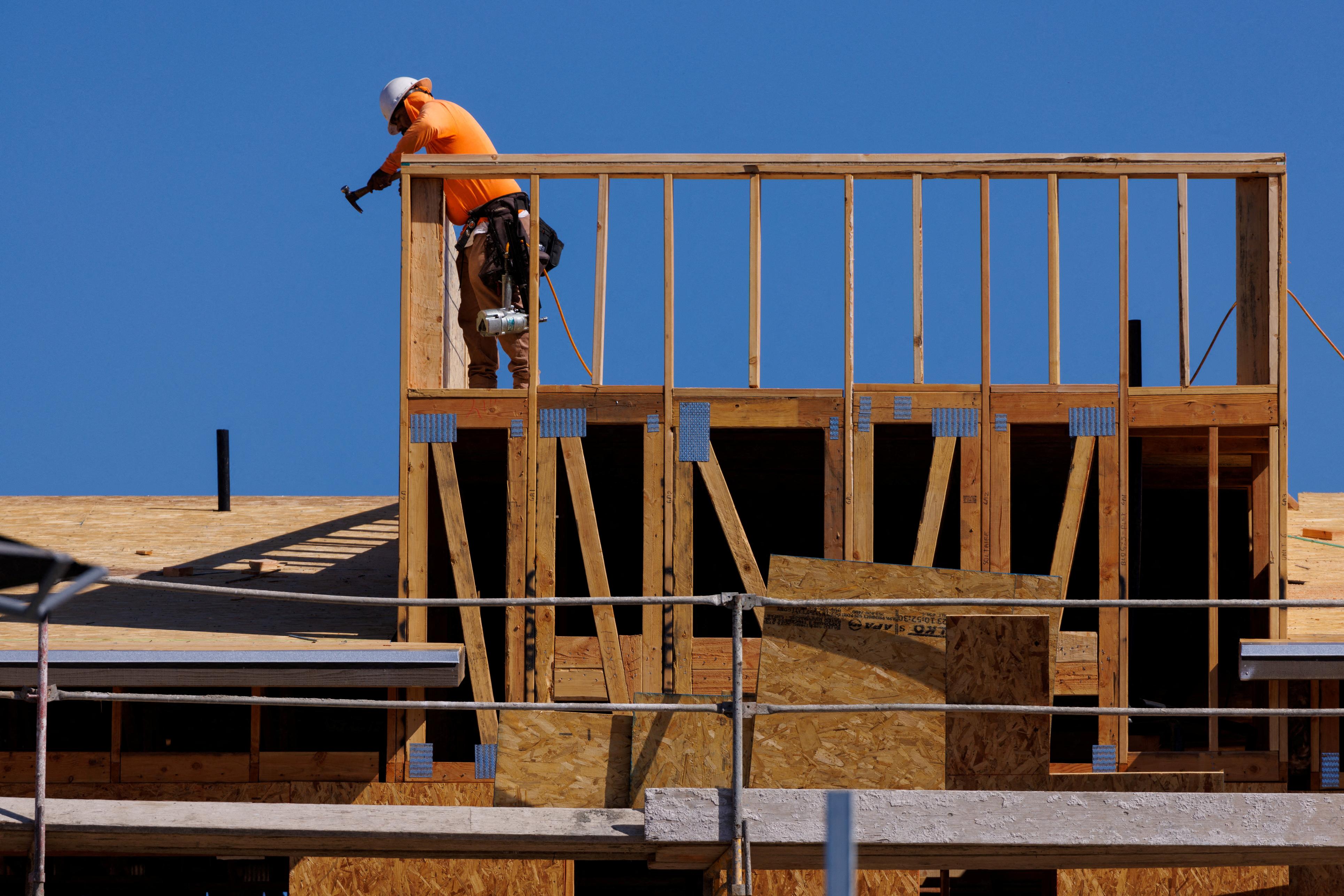
WASHINGTON, March 1 (Reuters) - U.S. construction spending unexpectedly fell in January as weakness in outlays on public projects more than offset a moderate increase in private homebuilding. The Commerce Department said on Friday that construction spending dropped 0.2%. Data for December was revised higher to show construction spending increasing 1.1% instead of 0.9% as previously reported. Economists polled by Reuters had forecast construction spending rising 0.2%. Construction spending increased 11.7% year-on-year in January. Spending on private construction projects gained 0.1% in January after rising 0.8% in December. Investment in residential construction rose 0.2% after surging 1.4% in the prior month. Outlays on new single-family construction projects increased 0.6%. Though demand for new construction remains underpinned by tight housing supply, higher mortgage rates are keeping many first-time buyers out of the market. The average rate on the popular 30-year fixed-rate mortgage is hovering just under 7%, having risen from 6.62% at the beginning of the year, according to data from mortgage finance agency Freddie Mac. It has, however, come down from 7.79% in late October, which was the highest level since 2000. Recent government data showed there were 757,000 housing units for sale in the fourth quarter, well below the 1.145 million units before the COVID-19 pandemic. Outlays on multi-family housing projects dropped 0.4% in January. There is a large stock of multi-family housing in the pipeline, which could limit any rebound. Outlays on private non-residential structures like factories slipped 0.1%. Spending on manufacturing construction projects advanced 2.0%, still benefiting from a policy by President Joe Biden's administration to bring semiconductor manufacturing back to the United States fades. Spending on public construction projects declined 0.9% after rising 2.0% in December. State and local government spending dropped 1.0% and outlays on federal government projects fell 0.2%. https://www.reuters.com/markets/us/us-construction-spending-unexpectedly-falls-january-2024-03-01/
2024-03-01 15:38
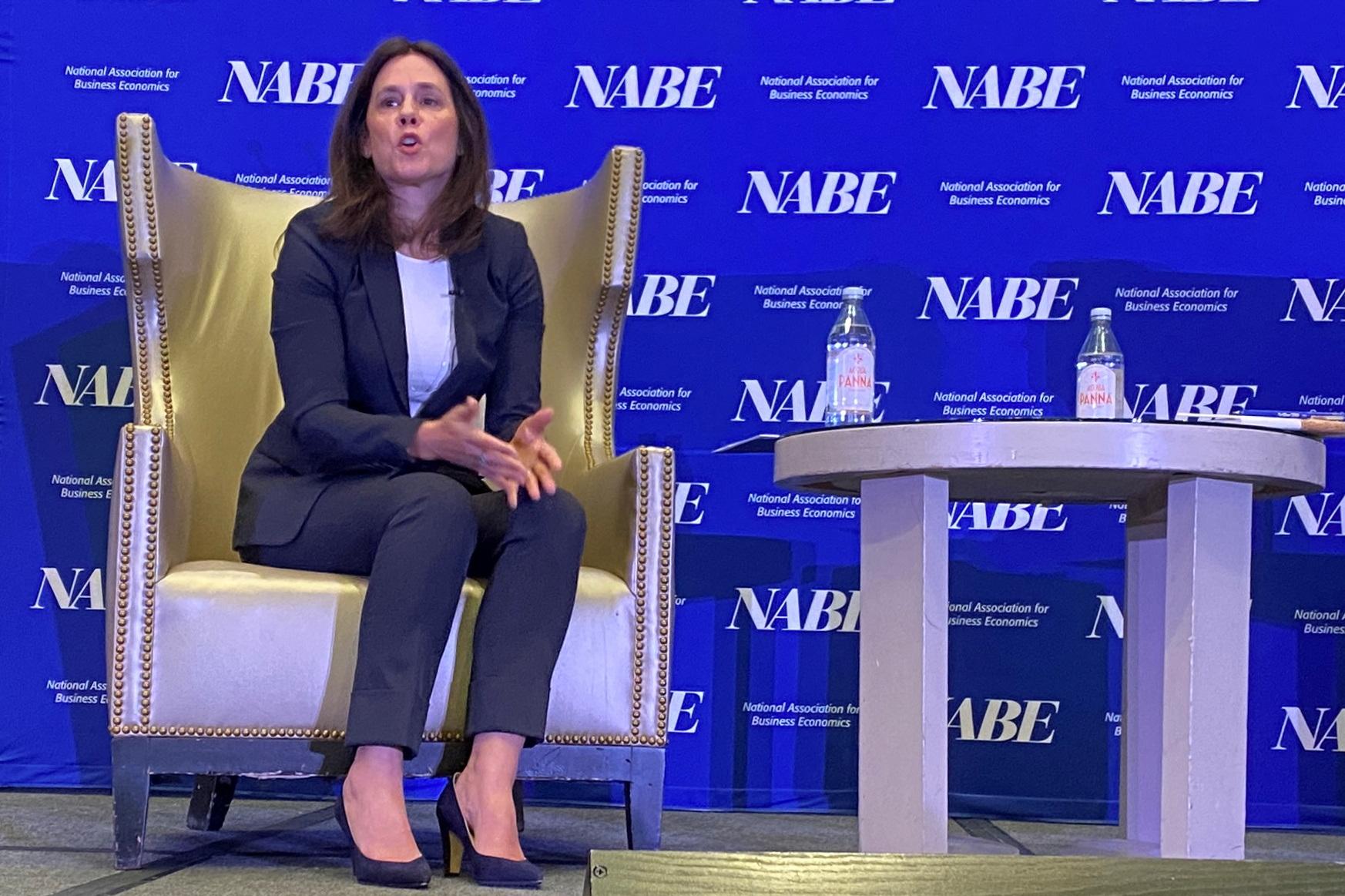
NEW YORK, March 1 (Reuters) - The U.S. Federal Reserve will need to slow its asset purchases and feel the way towards a low point for its asset holdings once a key financial buffer is exhausted, Dallas Fed president Lorie Logan said on Friday. Logan reiterated that as long as financial institutions keep using the Fed's overnight reverse repurchase facility, policymakers can feel confident that banks have enough reserves. But use of the ONRRP program, at it is known, has been declining fast, from a high of around $2.3 trillion last year to about half a trillion as of the end of last month. Fed officials have begun discussing when and how to the slow the runoff of assets accumulated to try to fight the economic impact of the pandemic, and avoid hitting a point where bank reserves become scarce - a potential trigger for market volatility. "When ONRRP balances approach a low level, it will be appropriate to slow the pace of asset runoff. As long as there are significant balances in the ONRRP facility, we can be confident that liquidity is more than ample in the aggregate," Logan said in comments to a monetary policy forum held by the Clark Center for Global Markets at the University of Chicago's Booth School of Business. Once the repo facility hits zero, "there will be more uncertainty about how much excess liquidity remains." "I don’t think we can identify the ample level in advance. We’ll need to feel our way to it by observing money market spreads and volatility," said Logan, former head of the markets desk at the New York Fed. Logan's comments were in response to a research paper documenting that the effort underway by central banks to reduce their asset holdings has had much less impact on markets than the corollary expansion of balance sheets during weakening economic conditions. Logan said she felt the "asymmetry" was largely due to the economic context, with crises coming on fast and "quantitative easing" rolled out quickly as well; tightening programs, by contrast, are typically telegraphed far in advance leaving market adjustments likely more muted and harder to estimate. Logan did not estimate a stopping point for the balance sheet runoff, but did side with the view, mentioned in minutes of the Fed’s January meeting, that a “slower runoff” would make the adjustment easier for banks and possibly allow a lower balance sheet overall. Her remarks dovetail with remarks made by some policymakers at January's policy meeting. Then, according to the meeting minutes released last week, those officials said beginning a gradual taper of QT could allow balance sheet reduction to continue for longer and result in a smaller balance sheet. Wall Street dealers also see that as a likely outcome. The survey of bond dealers ahead of the January meeting and released last week showed firms now expect a QT taper to begin in this summer, with the end of balance sheet run down now occurring in early 2025, versus late 2024 as estimated previously, and the Fed's final bond portfolio holdings settling at about $6.5 trillion, or around $250 billion lower than previously thought. https://www.reuters.com/markets/us/feds-logan-fed-will-feel-its-way-balance-sheet-limit-2024-03-01/
2024-03-01 15:23
NEW YORK, March 1 (Reuters) - The Federal Reserve's upcoming decisions about the ultimate size of its balance sheet has no bearing on the central bank's inflation fight or changes to its policy interest rate, Fed Governor Chris Waller said Friday. "Balance sheet plans are about getting liquidity levels right," Waller said in comments at a monetary policy conference held by the Clark Center for Global Markets at the University of Chicago's Booth School of Business. "They do not imply anything about the stance of interest rate policy, which is focused on influencing the macroeconomy and achieving our dual mandate." "Changing our pace of redemptions will occur when the Committee makes a decision to do so, and the timing will be independent of any changes to the policy rate," Waller said. Waller's comments restate a longstanding "separation principle" between interest rates decisions and balance sheet policy, but at a time when the central bank is trying to decide when to slow and eventually stop an ongoing rundown of its asset holdings. He pointed to some longer-term issues he would like the Fed to address, including what he feels should be a reset of the balance sheet towards shorter-term Treasury bills that would better match the short-term policy rate that the Fed controls as its key monetary policy tool. That would "allow our income and expenses to rise and fall together as the (Federal Open Market Committee) increases and cuts the target range," of the benchmark policy rate, he said. Such an approach would also let the balance sheet contract more quickly if asset purchase programs are needed again in the future. But on the immediate issue of how far to let the current set of Fed asset holdings decline, Waller said he wants to approach the process "carefully," with an eye on the Fed's 2019 experience when the level of bank reserve's drifted too low and led to turbulence in rate markets. Waller, commenting on research into the impact of the common balance sheet tightening underway across central banks, said he agreed that the process had proceeded with little apparent market impact. The current runoff of up to $95 billion monthly "is not a problem," Waller said, "something that a few years ago would have surprised a lot of people" given concerns that a quick pace of "quantitative tightening" but lead to tighter than desired credit conditions. "I support thinking further about how many more securities to redeem," Waller said, though with roughly $500 billion left in a Fed overnight reverse repurchase facility, "we can continue to reduce our holdings for some time." https://www.reuters.com/markets/us/feds-waller-upcoming-balance-sheet-decisions-have-no-bearing-monetary-policy-2024-03-01/
2024-03-01 13:56
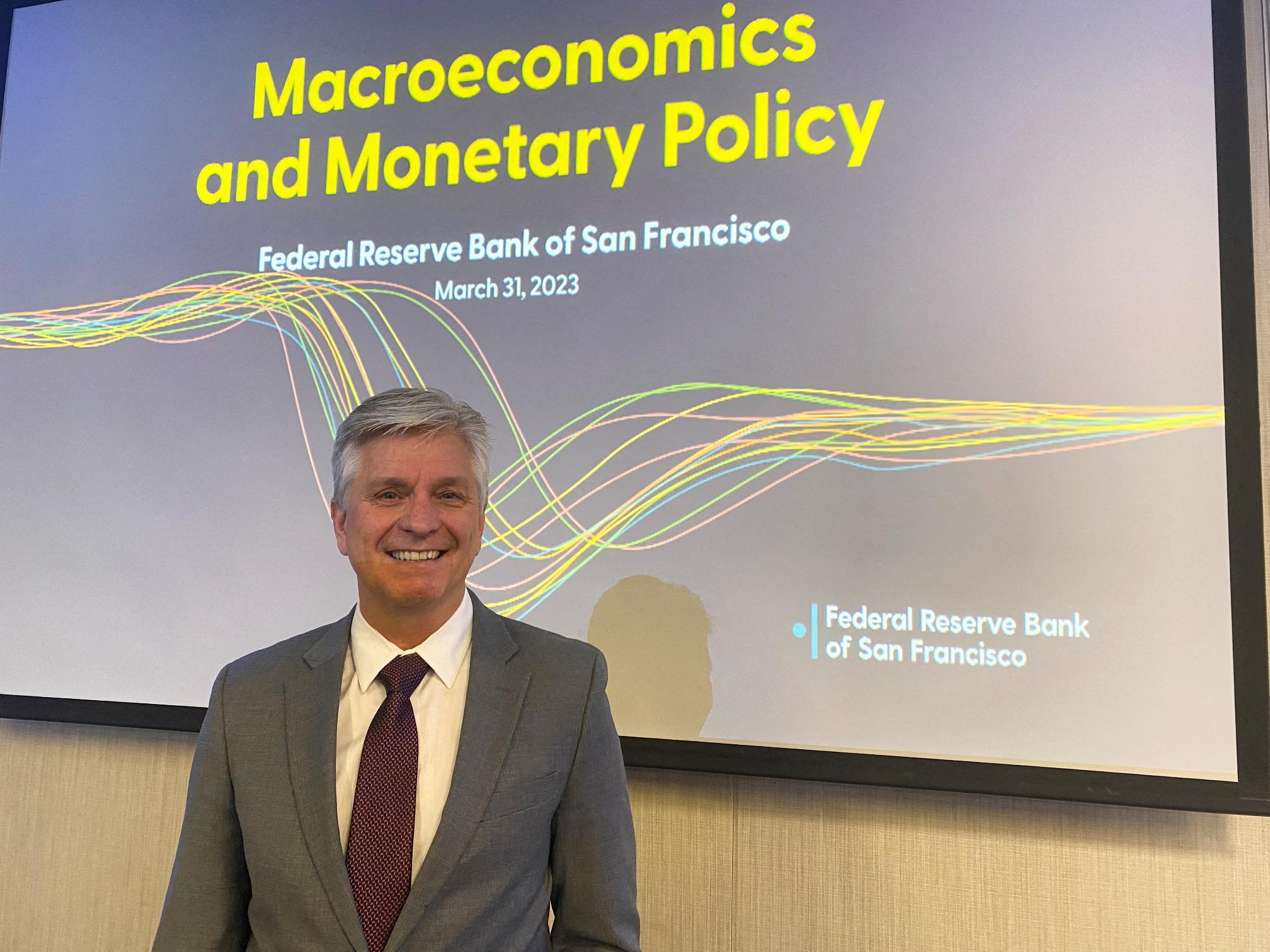
March 1 (Reuters) - Price increase pressures still exist in the U.S. economy and it is too soon to predict when the Federal Reserve will be able to begin to cut its benchmark interest rate, Richmond Federal Reserve President Thomas Barkin said on Friday. "We'll see," Barkin said in an interview with broadcaster CNBC when asked about the possibility of interest rate reductions this year. "I'm still hopeful inflation is going to come down and if inflation normalizes then it makes the case for why you want to normalize rates, but to me it starts with inflation." Barkin added that he still sees "wage pressures, I still see inflation pressures...we just had a high inflation report yesterday... On the goods side inflation is settling. On the services side, not so much." https://www.reuters.com/markets/us/feds-barkin-i-still-see-wage-inflation-pressures-2024-03-01/
2024-03-01 13:49
MUMBAI, March 1 (Reuters) - The Indian rupee ended little changed on Friday after rising to its highest level in a week as dollar demand from importers and a mild uptick in the dollar index eroded gains driven by inflows, traders said. The rupee closed at 82.90 after ending at 82.9125 on Thursday. The local unit notched a weekly gain of 0.04%, its third one on the trot. The dollar index touched a high of to 104.18 and was on course to notch a weekly gain of 0.1%. Most Asian currencies were rangebound and ended the week mixed. Inflows aided the rupee but they were not enough to push it above the resistance at 82.80, a foreign exchange trader at a private bank said. But market sentiment appears broadly in favour of further appreciation, the trader added. The rupee also benefited from optimism sparked by data showing India's GDP growth in the October-December quarter far exceeded expectations, with the economy expanding by 8.4%, against the 6.6% anticipated by economists polled by Reuters. Benchmark Indian equity indices, the BSE Sensex (.BSESN) , opens new tab and Nifty 50 (.NSEI) , opens new tab, ended the day higher by 1.7% and 1.6%, respectively, after touching fresh record highs earlier in the session. But a firmer dollar amid strength in U.S. economic data and delayed expectations of Federal Reserve rate cuts may exert some pressure on the rupee in the near term, analysts said. Despite some of the pressure, the rupee's losses are likely to be contained near 83-83.05, Arnob Biswas, head of foreign exchange research at SMC Global Securities said. Investors now await remarks from multiple Fed officials slated to speak later in the day, which may offer cues on policymakers' thinking about the potential timing of rate cuts. https://www.reuters.com/markets/currencies/rupee-ends-flat-after-shedding-early-gains-logs-third-straight-weekly-rise-2024-03-01/