2024-03-01 12:28
WARSAW, March 1 (Reuters) - Polish farmers protested on the border with Lithuania on Friday against what they say are imports of Ukrainian grain through the Baltic country, something Vilnius denies. Small groups waving Polish flags and carrying banners joined customs officials checking trucks coming over the frontier at the Budzisko crossing, but made no attempt to block the route. Farmers across Europe have been protesting for weeks against constraints placed on them by EU regulations meant to tackle climate change, as well as rising costs and what they say is unfair competition from outside the EU, particularly Ukraine. The EU has waived quotas and duties on imports from Ukraine after Russia's invasion in 2022, angering farmers from neighbouring Poland, Hungary and Slovakia who say it undercuts their prices. Polish farmers argue that some Ukrainian grain which is brought to Lithuania is later re-exported to other countries as European grain. "Today's protest is taking place to draw attention to this uncontrolled inflow of grain into the European market, grain coming from Ukraine, from Russia," protest organiser Karol Pieczynski told Reuters. "It arrives in Lithuania, Latvia, documents are changed and those products are then distributed throughout Europe as a European product, which says it meets all standards, but it meets no sanitary standards." Lithuanian officials denied the accusations. "I think people that are organising such events are mistaken, and this leads us into some escalation and some problems, logistical problems, between European countries, so it's quite sad," Vilmantas Vitkauskas, the head of the Lithuanian National Crisis Management Centre, said. It wouldn't make commercial sense to bring Ukrainian grain to Lithuania and then re-export it to other countries, he added. https://www.reuters.com/world/europe/polish-farmers-take-grain-protests-lithuanian-border-2024-03-01/

2024-03-01 12:28
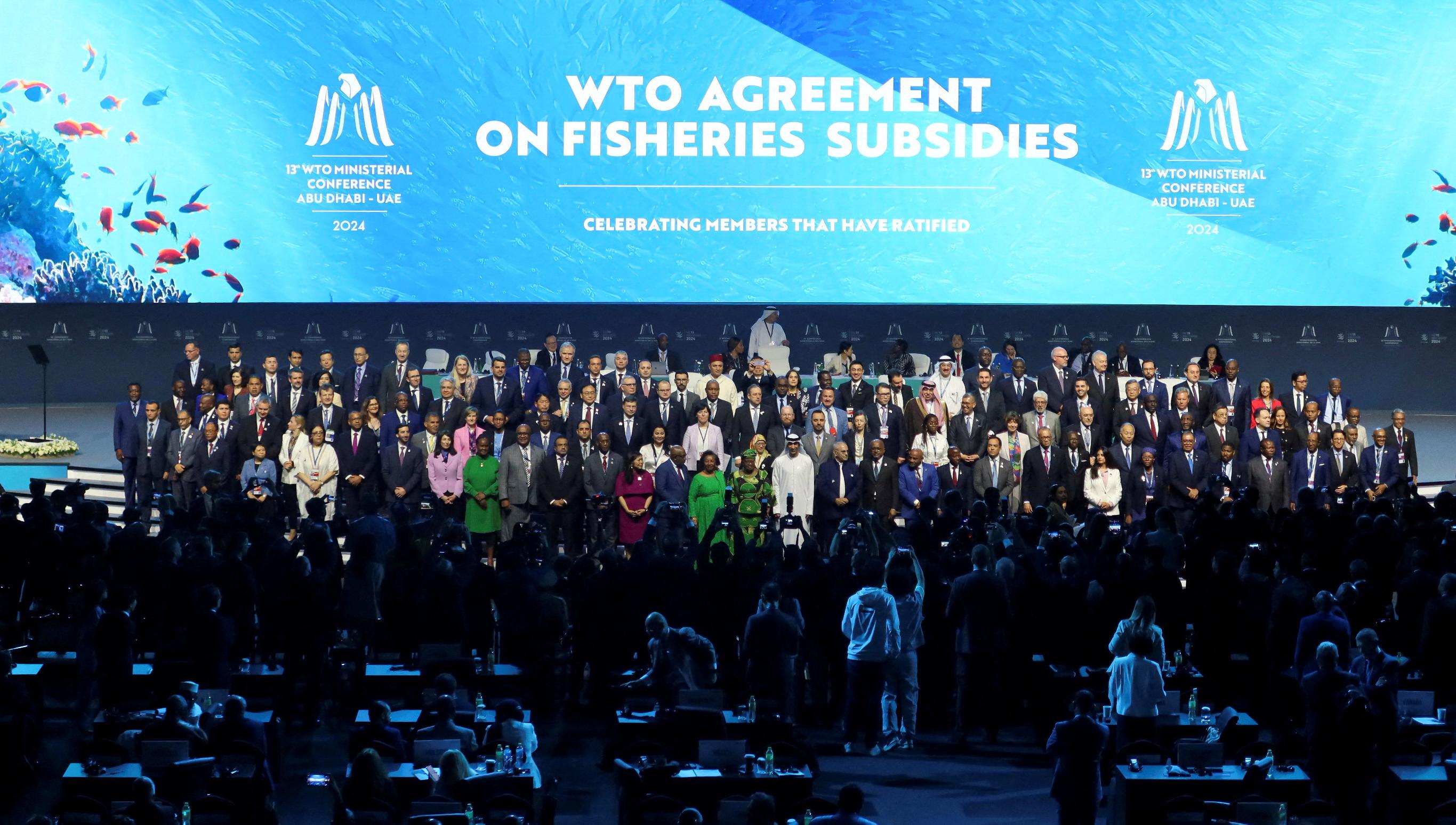
ABU DHABI, March 1 (Reuters) - World Trade Organization (WTO) negotiators released new draft deals on Friday showing that all-night talks in Abu Dhabi had failed to produce a breakthrough on key issues, leading to a third extension for the delegates to reach an agreement. Most of the issues are seen as linked and hostage to each other, although some trade sources say that a deal on fishing could be possible on its own. Here is where things stand on the fifth day of talks. AGRICULTURE - Negotiators say that the success of a series of WTO deals will depend on agriculture talks where India is leading a drive for reforms. U.S. Trade Representative Katherine Tai described these talks as "hard". - India, which is facing farmer protests at home and has elections due by May, wants a permanent solution on public stockholding (PSH) - a term that refers to state policies on food procurement aimed at ensuring food security. - In the latest version of the draft agreement issued on Friday morning two alternative solutions sit side-by-side in parentheses, indicating they have not been agreed. - One aims to find a permanent solution to the issue at this meeting and the other one commits to intensify negotiations and extend to other developing countries the privileges only India currently enjoys under WTO rules. - India rejected the second proposal, intended to appease them, in talks between a few key countries including the United States, Brazil and China, a source in the room said. E-COMMERCE - Several countries, including India and South Africa, remain opposed to the extension of a moratorium on e-commerce backed by the vast majority of countries and seen as vital to businesses to avoid tariffs on digital goods like film downloads. - Trade sources told Reuters that additional countries would also oppose the moratorium, including Brazil, if there is no progress on agriculture talks. Brazil has not publicly commented on its position. - New Zealand's trade minister Todd McClay, who is facilitating the e-commerce talks, told Reuters he would like to see a more durable solution to the waiver, so it is not raised at each biennial WTO meeting. - On the plus side, a draft programme has been agreed for future work beyond Abu Dhabi. FISHERIES - Countries are trying to agree to the second part of an international WTO agreement to curb government subsidies that critics say encourage industrial fishing fleets to empty the world's oceans. A first part was agreed in 2022 and will take effect if and when enough countries ratify it. - Many participants, including USTR's Tai, see this as the most likely topic where a deal can be reached in Abu Dhabi if outstanding issues can be resolved. Environmentalists say it is vital for the world's oceans. - The chair of the talks issued a new draft agreement on Friday morning with a few sections still in yellow, indicating areas of non-agreement. - A major one is rules governing phase-in periods for subsidies for developing countries. This group would usually get special exemptions from WTO rules but, with fishing, includes many of the major subsidisers such as China and India. - The draft text says the rules take effect after "X" years. Negotiators say this could range anywhere between seven and 25 years, as sought by India. - Another question is whether China, the biggest subsidiser, will make good on a pledge to formally forego special rules that apply to developing countries - a condition which many countries say they need in writing in order to approve the deal. - A new article was added in the latest draft aimed at appeasing a grouping of Pacific islands which complained the deal was not ambitious enough. This commits countries to a WTO review in five years and includes the possibility of new "limitations and reduction commitments to subsidies" for big subsidisers like Japan, China and the European Union. DISPUTE SETTLEMENT - Countries are set to agree to commit to continue negotiations in 2024 to try to resolve a crisis in its dispute settlement system whose top court has been hobbled for four years due to U.S. opposition. - This means many trade disputes are unresolved and the WTO's rules cannot be enforced. - India's minister Goyal has said it is "sad" countries are obstructing outcomes. He did not mention Washington directly but said he had raised a lack of progress on fixing the WTO's dispute system with USTR's Tai in a meeting earlier this week. - Tai has said negotiations on this issue are positive and have shown progress. However, delegates say obstacles abound and are privately sceptical of them making much further headway in a U.S. presidential election year. https://www.reuters.com/world/whats-state-play-wto-negotiations-abu-dhabi-2024-03-01/
2024-03-01 12:24
DUESSELDORF, March 1 (Reuters) - Uniper (UN0k.DE) , opens new tab is opposed to being bought by a rival as part of Berlin's efforts to sell down its 99% stake in the German energy trader, which was bailed out at the height of Europe's energy crisis, its chief executive said. Uniper had to be rescued by the German government for 13.5 billion euros ($14.6 billion) in 2022 after former main supplier Gazprom (GAZP.MM) , opens new tab halted flows, but considerations of how Berlin can start selling down its holding have started due to the group's recent turnaround. Options range from the sale of a 20%-30% stake on the open market to the disposal of larger blocks of shares to bigger investors, sources have said. Under German takeover laws, suitors must launch a full takeover bid if they acquire 30% of a listed company. "We do not want to be taken over or integrated into another company. We believe that Uniper can make a special contribution to the energy transition as an independent company," CEO Michael Lewis told Reuters. This marks the first time Lewis has spoken out against a potential takeover as part of Germany's efforts to exit the group, keen not to repeat the ill-fated partnership with Finland's Fortum (FORTUM.HE) , opens new tab which previously sought to buy Uniper. He said it was possible that the state would remain on board as a shareholder, in line with demands by workers for Berlin to keep a blocking minority, or that investors subscribe to shares in the group once the German government decides to sell. Uniper is still recovering from the energy crisis and while it no longer receives Russian gas directly its contract with Gazprom worth around 250 terawatt hours, or roughly 30% of Germany's demand in 2022, still legally exists. Uniper has sought billions of euros in damages from Gazprom and has launched arbitration proceedings that it expects will result in a court ruling in the summer. The crisis has forced Uniper to procure its gas from other destinations, including the United States, while talks with Qatar, one of the world's biggest exporters of liquefied natural gas (LNG), are ongoing. "We are still in talks with Qatar about potential supply contracts," Lewis said. "However, there are still some differences of opinion on the issues of duration, indexation and destination clauses." Qatar recently expanded its LNG output by 2030, which market experts expect it to lead to lower contracting prices and more Asian buyers inking deals. At the same time, competition from the United States has made it easier for European buyers to strike supply agreements with comparably shorter durations. ($1 = 0.9245 euros) https://www.reuters.com/business/energy/no-takeover-please-uniper-ceo-says-state-exit-looms-2024-03-01/

2024-03-01 11:57
LONDON, March 1 (Reuters) - The pound held steady on Friday, refusing to be swayed by upbeat data on the housing market, with the focus remaining solely on inflation and Bank of England interest rates. Sterling was last up 0.08% at $1.2634, after falling 0.8% in February. The euro was also little changed against the pound at 85.59 pence. British house prices rose in annual terms for the first time in more than year in February, according to data from mortgage lender Nationwide released on Friday. House prices were 1.2% higher than in February last year and rose 0.7% month-on-month. It was a relatively sleepy day elsewhere in currency markets, with the dollar index , a benchmark versus six peers, flat at 104.09. The pound was on track to fall around 0.3% across the week but on a two-week basis was up 0.3%. Jane Foley, head of FX strategy at Rabobank, said some investors may be adding a little to their sterling holdings ahead of next Wednesday's budget, where finance minister Jeremy Hunt will announce the government's taxing and spending plans. "I think the market may be just positioning itself a little bit stronger sterling because we might get some degree of tax cuts which could give a bit of a fiscal bump to the economy," she said. "But I think we all understand by now that it's not going to be huge." https://www.reuters.com/markets/currencies/sterling-holds-steady-after-slipping-february-2024-03-01/

2024-03-01 11:08
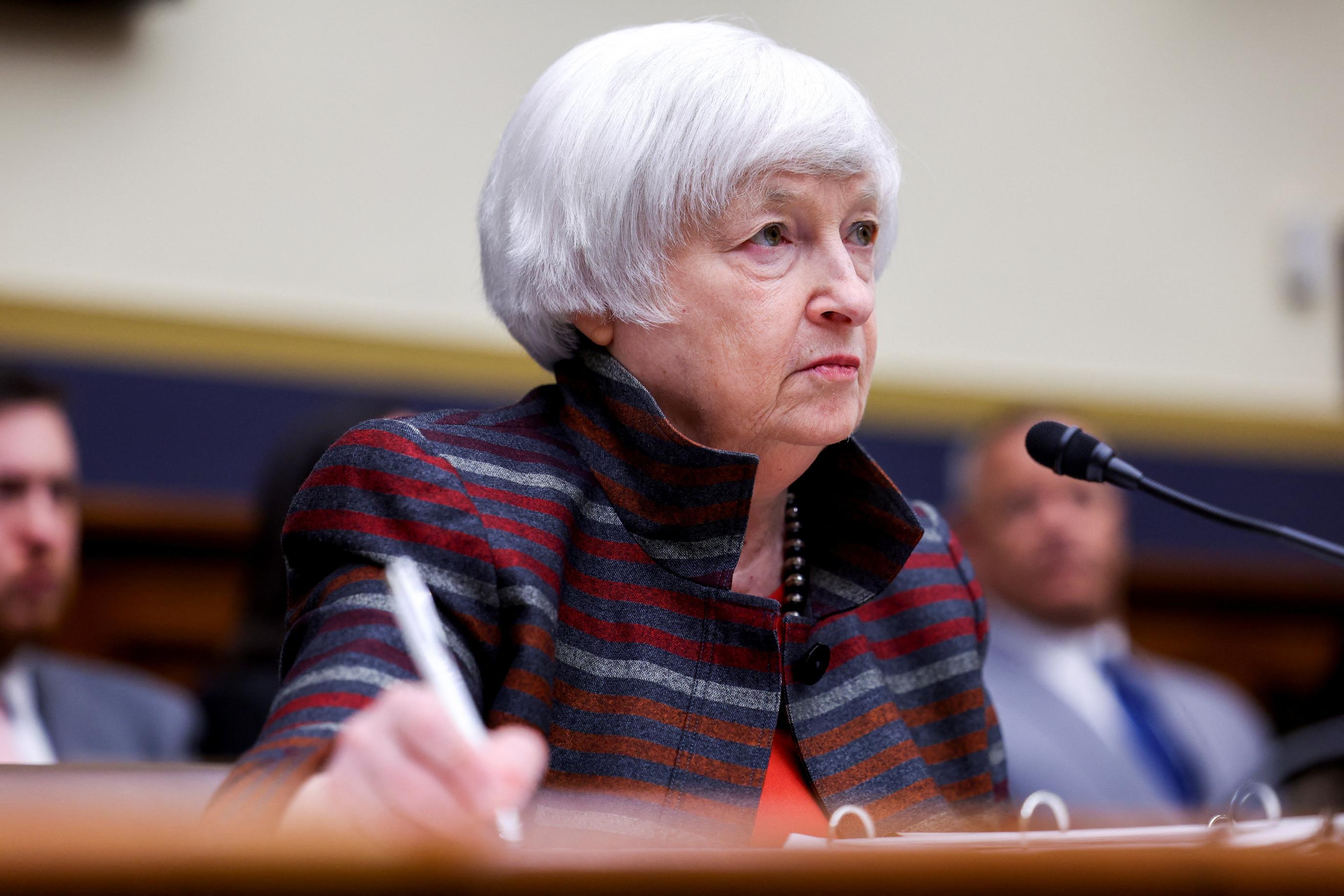
SAO PAULO, March 1 (Reuters) - Argentina is talking to the International Monetary Fund (IMF) about a possible new financing program with different targets for the embattled economy, U.S. Treasury Secretary Janet Yellen said after meeting Economy Minister Luis Caputo. The new government of libertarian President Javier Milei is willing to take "very promising" steps to deal with the South American's economy's underlying problems, Yellen told Reuters on Thursday after her first meeting with Caputo. Milei has pledged to reverse the crisis in Argentina - where inflation is at 250% and a reported 57% of people live in poverty - with tough austerity measures, a message that has gone down well with markets and investors but created tension with unions and regional governors. "They inherited an impossibly difficult situation, and I think the steps that they have announced that they are willing to take are very promising," Yellen said on the sidelines of a Group of 20 meeting in Brazil. "It’s going to be a really tough transition as they try to get fiscal policy under control." Caputo on Thursday denied a media report that the government was negotiating a new IMF loan program at the moment but said the global lender was open to such discussions with its largest debtor. A $44 billion loan program slid off track last year amid rising inflation and a deepening fiscal deficit. The two sides are discussing how to revamp the deal. A new deal would be a more significant step that would involve fresh funds to an economy with foreign currency reserves in the red and tight capital controls. An IMF official, asking not to be named, said the lender was focused on supporting Argentine government policies that help restore macroeconomic stability, adding it would be "premature" for the two sides to discuss details about any new program. Yellen said Caputo was "very open to the IMF's ideas." "They are potentially talking about a new program and setting different targets. They’re working with the IMF and are going to continue to do so," she said. Yellen said Argentina's long history of financial crises and debt defaults was a case study when she taught at the University of California, Berkeley, and most analysts viewed its failure to control budget deficits as its fundamental flaw. "This is a country that used to be one of the richest in the world. For the last 100 years, they’ve apparently had dozens of financial crises and defaulted on their international debt nine times. They’ve suffered from high inflation, hyperinflation and every macroeconomic evil," she said. At their meeting Caputo told Yellen his government knew there were challenging times ahead but he felt confident its reforms would usher in an inflection point. Yellen welcomed what she told Caputo were "important steps" by the Milei government to restore fiscal sustainability, adjust the exchange rate and fight inflation. https://www.reuters.com/world/yellen-says-argentina-faces-tough-transition-open-imfs-ideas-2024-03-01/
2024-03-01 11:07
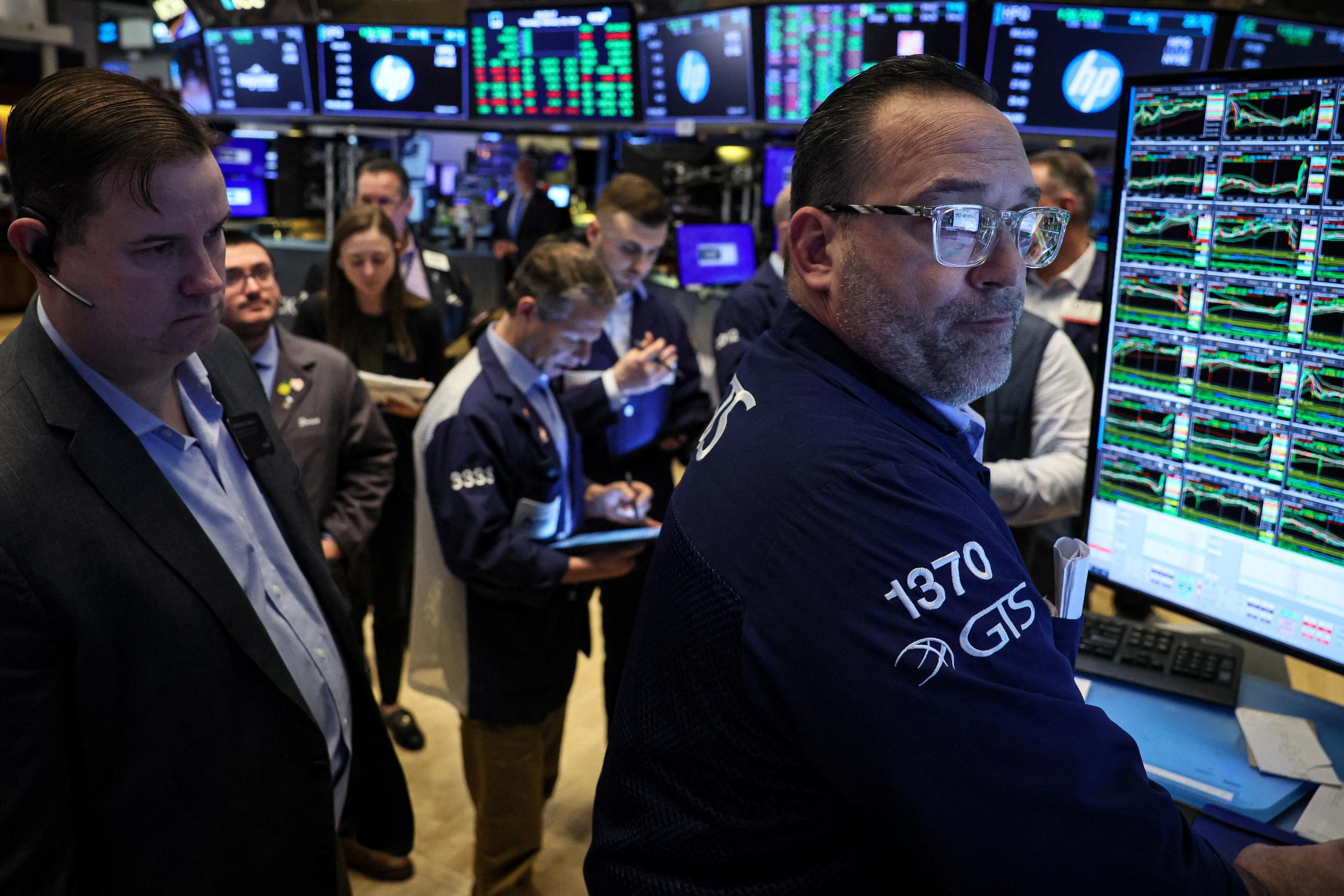
A look at the day ahead in U.S. and global markets from Mike Dolan A new month and new stock market records are giving way already - underpinned by some relief on inflation, stabilising business surveys worldwide and slightly more dovish central banks. Wall St's major indexes (.SPX) , opens new tab, (.IXIC) , opens new tab clocked new record closes on the final day of February and March kicked off with fresh highs for Japan's Nikkei (.N225) , opens new tab and Germany's DAX (.GDAXI) , opens new tab. With U.S. futures pushing higher ahead of the open again, MSCI's all-country index (.MIWD00000PUS) , opens new tab looks poised to take out last week's all-time peak later on Friday. The VIX volatility gauge (.VIX) , opens new tab is back down to three week lows. The Nikkei has now notched up gains of almost 20% since the start of the year, while U.S. and German benchmarks are up 6-7% for the first two months. LSEG data showed investors bought a net $6.98 billion of global equity funds during the week, more than reversing the prior week's net withdrawal of $2.9 billion. Stock market momentum still seems powerful, even if U.S. disinflation momentum seems to have stalled somewhat. January's keenly-awaited PCE inflation gauge on Thursday showed annual headline and 'core' inflation rates ebbing further - but 6-month annualised rates popped back as high as 2.5% from just under the Federal Reserve's 2% late last year. The monthly price pop was in line with forecasts however, fueled by some January and weather-related quirks. And Fed officials seemed more inclined to emphasise their belief that interest rate cuts are still coming later this year rather than simply their patience in executing them. A parade of top Fed officials on Thursday all looked minded to see through any bump in the disinflation road and restated their confidence in being able to ease policy in 2024. "I do expect us to cut interest rates later this year," New York Fed chief John Williams said overnight. It "makes sense with inflation coming down, the economy being in better balance, that we're going to move interest rates back to more normal levels." With futures markets having already halved full-year rate cut expectations since the start of the year to some 80 basis points, and having pushed back the timing of a first cut to June or July, the latest twists were welcomed with some relief. Treasury yields have been calmed and are well off February highs. The dollar (.DXY) , opens new tab seems serene too. The yen's jump on Thursday was quickly reversed overnight as speculation of an imminent Bank of Japan policy tightening was doused once again. BOJ boss Kazuo Ueda pushed back on more hawkish comments from one of his deputies this week and said it was too early to conclude that inflation was sustainably meeting the 2% inflation target. "I don't think we are there yet," he said. February 'core' inflation numbers from the euro zone, meantime, were a little sparkier than many had hoped for. Although headline rates fell again, much like U.S. readings, underlying price gains that strip out volatile food and fuel only declined to 3.1% from 3.3% - missing a 2.9% forecast. There was little reaction in euro or euro zone government debt markets, where the spread between Italian 10-year yields and German benchmarks briefly fell to their lowest in two years earlier. China's tentative stock market recovery also continued on Friday. Even though China's manufacturing activity in February contracted for a fifth straight month, investors are awaiting next week's National People's Congress for signs of a spending package to aid real estate and manufacturing or handouts to households to boost consumption. Short positions in Chinese stocks shrank by a third last month to their lowest in more than three years, reflecting measures by regulators to curb speculation. China's securities watchdog last month suspended brokerages from borrowing shares for lending to short-sellers and investors were banned from short selling stocks bought on the same day. But the United States said it's opening an investigation into whether Chinese vehicle imports pose national security risks and could impose restrictions due to concerns about "connected" car technology, the White House said on Thursday. In company news, cloud firm Snowflake's (SNOW.N) , opens new tab 18% share price plunge on Thursday was offset with better earnings news from Dell (DELL.N) , opens new tab and NetApp (NTAP.O) , opens new tab overnight - and both share prices have surged about 20% before Friday's open. Elsewhere, the Swiss National Bank said its Chairman Thomas Jordan will step down at the end of September, leaving three years early after over a decade at the helm marked by crises including Credit Suisse's collapse and a supercharged franc. Key diary items that may provide direction to U.S. markets later on Friday: * U.S. Feb manufacturing surveys from ISM and S&P Global, University of Michigan's final Feb consumer sentiment reading * Federal Reserve Board Governors Christopher Waller and Adriana Kugler, Dallas Fed President Lorie Logan, Richmond Fed President Thomas Barkin, Atlanta Fed chief Raphael Bostic, San Francisco Fed chief Mary Daly and Kansas City Fed chief Jeffrey Schmid all speak; Bank of England Chief Economist Huw Pill speaks * U.S. President Joe Biden meets Italian Prime Minister Giorgia Meloni in Washington. German Chancellor Olaf Scholz meets Italian President Sergio Mattarella in Rome. U.S. Treasury Secretary Janet Yellen visits Chile * U.S. corp earnings: EchoStar, RadNet etc https://www.reuters.com/markets/us/global-markets-view-usa-2024-03-01/