2024-03-01 10:26
SANTIAGO, March 1 (Reuters) - Top executives of Chile's state-run Codelco, the largest copper producer in the world, expect the company's debt to continue increasing as it adjusts cost estimates to revamp key mines. In a late-December interview with Reuters for a report on the delays plaguing expansion projects meant to deal with a historic drop in production, Codelco Chairman Maximo Pacheco said the company's debt would probably increase above previously reported levels. Chile mining consultancy CESCO said in an August report that Codelco's debt could reach $30 billion by the end of the decade, but an internal Codelco report seen by Reuters showed the company is expecting debt to reach $31.5 billion by 2027. These levels could increase as key projects face delays. Codelco finished 2023 with $20.4 billion in debt, according to company documents. In January, Codelco issued an additional $2 billion in bonds, something CEO Ruben Alvarado said shows market confidence. "It puts (us) at ease that the market keeps trusting in us, keeps trusting in our plans and our business," Alvarado told reporters during a visit to Codelco's Chuquicamata mine in early February. Issuing more debt, Alvarado said, is something the company would keep evaluating "depending on results." "Are we going to keep raising our debt? Probably yes," Pacheco said, adding that debt is solely being used to finance the major construction projects aimed at extending the lifespan of key Codelco mines. Those projects have faced years of delays and cost overruns. One of them - a project to transform the open-pit Chuquicamata into an underground operation - recently filed for a permit to make an additional $720 million investment in infrastructure. Meanwhile, Pacheco said Codelco is expecting to submit a revised cost estimate to the board of directors for its El Teniente expansion project in the first quarter of 2024. "As a norm and as project discipline we bring projects back to the board of directors when they exceed 10% of their original design cost," Pacheco said, noting that the company's finances will improve as the projects come online. He said that the projects reached 94% of their annual target of project advancement in 2023, the highest since they started nearly 15 years ago, signaling that recent efforts are "giving results." Aside from ballooning debt, Codelco has faced a historic drop in production, reaching its lowest point in a quarter century in 2022. This has led credit agencies such as Moody's and Fitch to downgrade Codelco's credit status. Codelco produced 1.325 million tons of copper in 2023, missing its planned target of 1.4 million tons. Pacheco said production would start recovering in 2024 and added that the goal was to reach a production of 1.7 million tons by 2030. "That production valley we fell into the last two years that cost around 300,000 tons of production has stabilized in a way and we're starting to see clear signs of production recovery," Pacheco said. Alvarado said he expects production to reach 1.35 million tons in 2024 and said the company met its production goals in January. He added that 70% of the company's costs are fixed, but "there are always areas" to cut costs. When asked about potential job cuts, something union workers have threatened to strike over, Alvarado said that's not "an objective in and of itself." "We're always revising our structure," Alvarado said. "We talk about those issues whenever it is necessary." https://www.reuters.com/markets/commodities/top-codelco-execs-see-debt-growing-production-recovers-2024-03-01/
2024-03-01 10:24
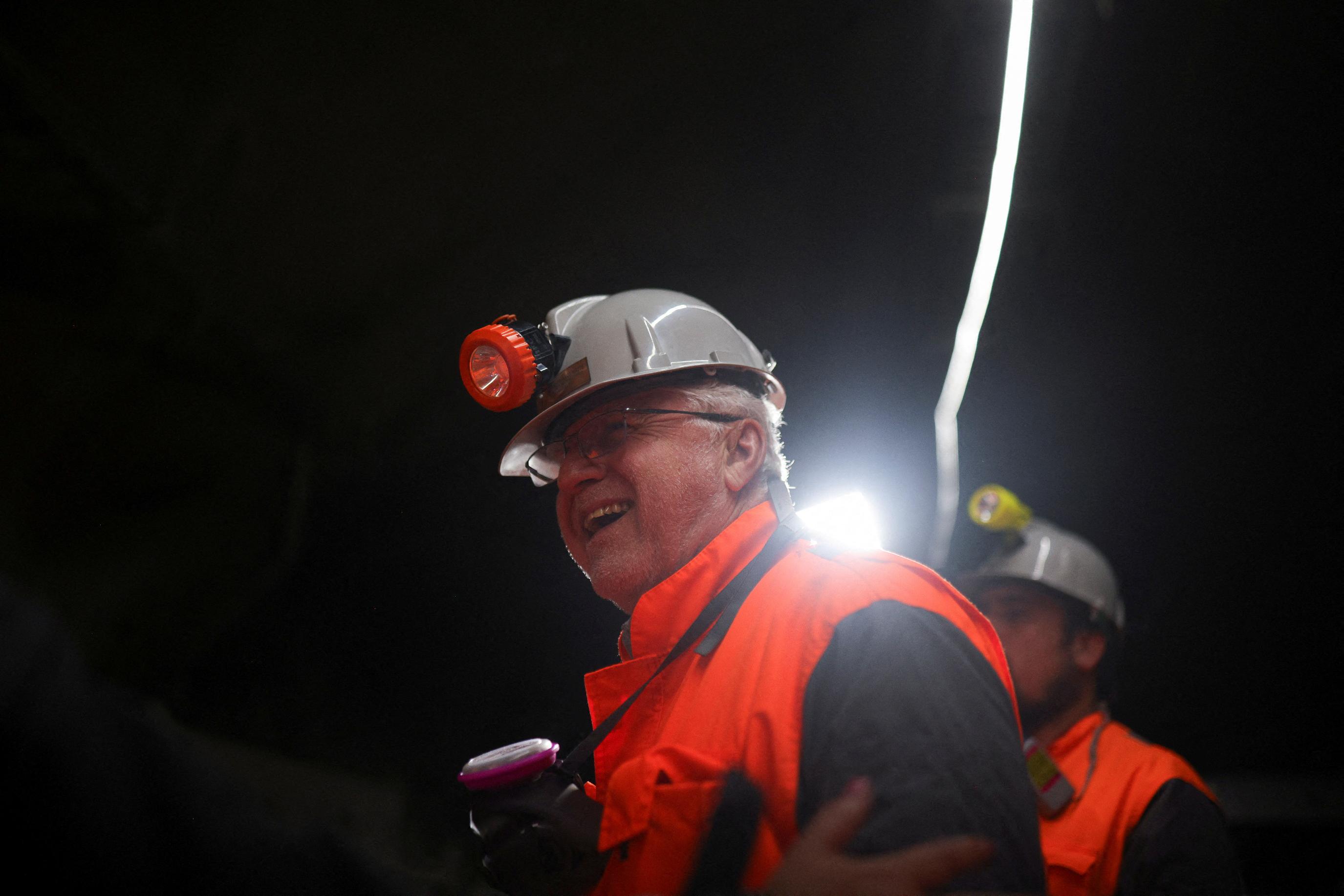
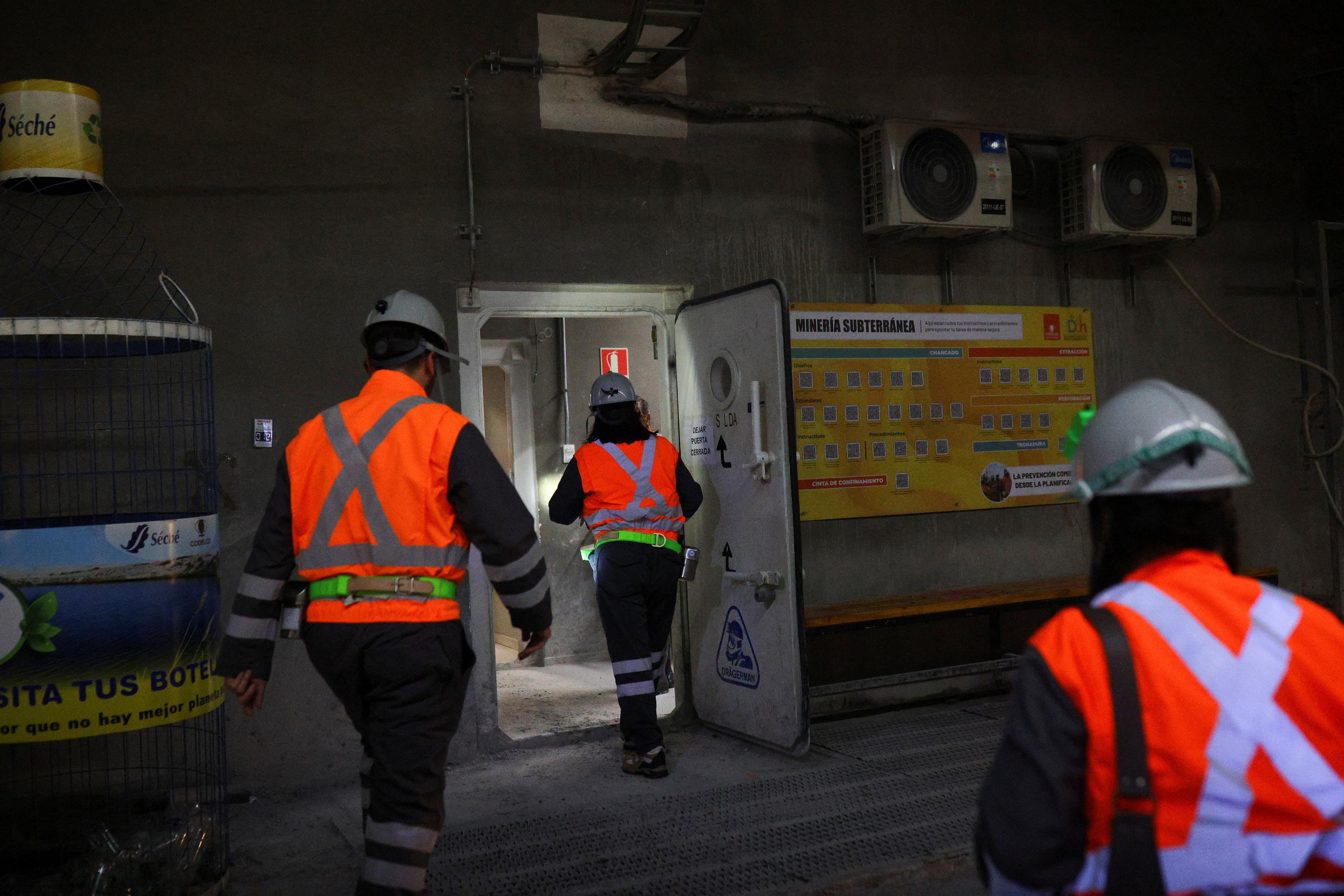
CALAMA, Chile, March 1 (Reuters) - Beneath the world's largest open-pit copper mine in Chile lies a tunnel complex filled with dust so dense that machines frequently break down and workers can't operate without spacesuit-like helmets. Conveyer belts often stall and have caused at least one fire. Construction mistakes have led to collapses and two large electromagnets designed to clear damaging objects haven't been functional in four years. This, according to over a dozen workers interviewed by Reuters, is the situation at Chuquicamata Subterranea (PMCHS), a $5 billion dollar flagship project of Chile's state copper miner Coldelco that was meant to transform the open-pit mine into an underground operation. Codelco Chairman Maximo Pacheco, asked by Reuters about the workers' complaints, did not dispute their accounts and said the company had learned from its past mistakes. PMCHS is one of four mega projects Codelco has launched, called structural projects, designed to extend the life of its key mines and compensate for a drop in ore grades. As the world races towards cleaner energy, demand for copper - used as a conductor in everything from wind farms to solar panels - is skyrocketing. The average electric car uses four times as much copper wiring as an internal combustion car. Chile is the world's largest supplier of the red metal and Codelco accounts for just over a quarter of the country's output. The overhaul at PMCHS should extend the mine's lifespan by 50 years but the underground mine has been dogged by delays, collapses and construction difficulties. After it was inaugurated in 2019, PMCHS was expected to produce 385,000 metric tons in 2023. Instead, it produced 268,000 in 2022 and just 178,000 in the first nine months of 2023 due to the slower rollout of the project. Reuters spoke to more than a dozen Codelco employees at key mines, headquarters and unions, and reviewed hundreds of pages of internal company reports, financial statements and regulatory documents and investigations to assess the causes behind the delays. The employees, who asked not to be identified due to confidentiality agreements, said there had been no accountability for the management team and top-level executives despite financial troubles, worker injuries and even deaths. Chile's Sernageomin mining regulator told Reuters that Codelco had been sanctioned 29 times since 2021 and has had seven fatal accidents. Most of the incidents were in project construction and not routine mining operations, it said. "While the accidents have different causes, there are certain common factors related to breaches in control mechanisms," the agency told Reuters. In an interview at Codelco headquarters in Santiago, Pacheco said there had been a lack of maintenance partly due to supply chain and staffing issues during the COVID-19 pandemic. This caused a series of delays and equipment failures that are still being felt, he said. "We didn't do programmed maintenance during COVID because we focused all our efforts on maintaining production," said Pacheco, appointed in March 2022. "Now we're paying for that." Delays in structural projects also affected maintenance since the company was forced to keep using machinery it had planned on retiring after new projects came online. Pacheco said a drop in ore grade, extreme weather events such as a drought and then heavy floods in 2023, combined with accidents at mines also hurt production. Overall production fell to 1.325 million metric tons last year from 1.62 million in 2021. Pacheco and other executives said they expect the slump to revert in 2024 as more projects come online and Codelco's Ministro Hales mine normalizes operations after a massive landslide in 2022. On Jan. 18, Codelco said it would invest an additional $720 million in PMCHS. The project, originally launched with several others in 2008, was supposed to see construction finished by 2017, but that's now delayed until 2025. Pacheco said the company would dedicate more resources to maintenance and put a strict monitoring process in place. "We make mistakes here," Pacheco said, refering to the workers' complaints about executive impunity. "I understand people want every mistake to be paid with blood. I prefer that mistakes are paid with lessons learned." CHUQUICAMATA'S MAINTENANCE WOES Five of the workers Reuters spoke to said many of the problems stemmed from when management from Codelco's El Teniente mine, the world's largest underground copper deposit, took over the PMCHS project in 2019 but failed to adjust for Chuquicamata's geology compared to the rocky mountains of El Teniente. Located in Chile's northern desert region, Chuquicamata's underground operation has sandier and finer soil than El Teniente. A high-level executive, who asked not to be identified, said the PMCHS management team had made mistakes due to overconfidence in their experience of underground mining at El Teniente. Reuters' request to interview the local mine manager was denied. The workers told the news agency that maintenance had been "completely abandoned" in the mine. They described a dearth of spare parts and a lack of back-up systems, meaning many malfunctions completely halt operations. One worker told Reuters during a December trip to Calama in northern Chile, where the mine is based, that some machines that were supposed to be retired in 2019 were still in use. The worker said only four of the mine's 10 large mining trucks are operational due to failure or maintenance and machinery frequently breaks down due to the abundance of fine material. The worker said two belts should be moving 11,000 metric tons of material a day but haven't been able to move more than 6,000 tons. Reuters could not verify this information independently. A previously unreported 2023 sanction by government regulator Sernageomin, reviewed by Reuters, said a serious tunnel collapse in Chuqui was caused by major construction changes that weren't submitted for approval by the regulator. The report says the company used fewer, weaker rebars that were spaced further apart than originally planned. It also replaced steel frames with insufficiently stable retaining walls. The report pointed to five previous "collapses or landslides" in 2020 that showed changes made by the company were major and inefficient. Pacheco did not comment on the specifics of the report and the company did not reply to further questions on the investigations. STRUCTURAL PROJECTS: FROM SAVIOR TO BURDEN All four of Codelco's megaprojects have been delayed by years, faced cost overruns totaling billions and suffered accidents and operational problems while failing to deliver the promised boost in production, according to the company's own projections. Codelco hands over its profits to the state and the company has often complained that this has hampered its investment abilities and led to its debt problems. Juan Carlos Guajardo, head of the consultancy Plusmining in Santiago, said that while mining projects are rarely finished on time and on budget, Codelco "has had some significant strategic errors," especially attempting simultaneous projects. One of the other megaprojects is expanding El Teniente. An 8-kilometer tunnel that aims to expand the mine's life by 50 years was supposed to go live in 2017. It was advancing at about half a meter a day with 500 meters of tunnel left to go, then-CEO Andre Sougarret said in August. The expansion, done with explosives, generated unexpected seismic events due to built-up pressure from rock blasts. A 2021 report by regulator Sernageomin, reviewed by Reuters, showed that the tunnel fortification wasn't strong enough to withstand blasts it was designed for. The previously unreported document says the tunnel was designed to withstand a 1.9 Magnitude (Mw) event, but a tunnel roof and sidewall collapsed during a 1.7Mw event on Sept. 26, 2020. The report noted there's a high chance such events would continue happening. In July, a seismic event caused by a rock blast led to a collapse that left one worker temporarily trapped. Twelve others were evaluated at health centers but with no serious injuries. In response, Codelco said it was preparing a report by the end of the year investigating the cause and analyzing measures to improve fortification systems. The report has yet to be published. "If it's complex to do one megaproject, it's a lot more complex to do four simultaneously," Pacheco said, adding that the projects were already well underway by the time he took over. "We would have preferred to do them successively." https://www.reuters.com/markets/commodities/inside-copper-output-plunge-no-1-global-producer-codelco-2024-03-01/
2024-03-01 08:05
ZURICH, March 1 (Reuters) - Thomas Jordan, who is stepping down as chairman of the Swiss National Bank, has been no stranger to crises during his 12-year stint running the institution. Viewed widely as the epitome of a diligent technocrat, the Harvard-educated economics professor was not afraid to take big and sometimes unpopular decisions. The 61-year-old took the helm of the central bank after his predecessor Philipp Hildebrand was forced to step down. A contrast to the flamboyant Hildebrand, Jordan assumed the task of steering the SNB through the eurozone crisis. "Thomas Jordan is very Swiss - he's very capable, but also very modest. He knows the SNB from back to front, really knows his stuff, but he's not arrogant at all," said one Swiss economist, who asked not to be named because of the sensitivity of the matter. "He's disciplined and prepared, but always in control and not prone to making gaffes," the economist continued. "He's the sort of person you'd like to be your neighbour." Jordan's first priority was fighting appreciation pressure on the safe-haven Swiss franc. Initially, he maintained the minimum exchange rate policy of his predecessor. But by 2015 the pressure was growing. The SNB was spending billions every week defending the rate, and Jordan scrapped the policy, sending the franc surging in value and upending global currency markets. Despite heavy criticism from Swiss exporters, Jordan stood firm, backed by unconventional policies such as the world's lowest interest rates and foreign currency purchases to deter investor appetite in the franc. He stuck to the policy even as the franc weakened in later years. Meanwhile, the central bank's foreign currency reserves ballooned to a almost a trillion dollars making, the SNB's own earnings highly volatile. In 2022, the central bank racked up a loss of 132.5 billion francs - the biggest in its 117-year history. This meant the SNB would not make a payout to the Swiss government or local governments, but it was not an issue for Jordan, who stressed the importance of fighting inflation, with profits and losses a side effect. He resisted calls for the SNB to uses its massive balance sheet to invest in environmental concerns, or plug holes in the Swiss pension system. As a resolute defender of central bank independence, such moves would be anathema to Jordan, who joined the SNB as an economic adviser in 1997 and occasionally lectures in economics at he University of Bern. When inflation returned to Switzerland in 2022, he changed tack on monetary policy and raised interest rates again. Jordan was criticised by some members of the Swiss business community, who feared the franc would surge again, but the central bank was successful in keeping inflation much lower than other countries. Jordan was also closely involved in the rescue of Credit Suisse last year, providing billions of francs in emergency liquidity to ease its takeover by UBS. https://www.reuters.com/business/finance/thomas-jordan-technocrat-central-banker-who-made-big-decisions-2024-03-01/

2024-03-01 07:51
LONDON, March 1 (Reuters) - U.S. jobs data, testimony by the Federal Reserve chief, a key date in the U.S. election calendar and President Joe Biden's State of the Union address all in one week. That's one side of the Atlantic. On the other, is an ECB meeting and UK budget. Asia's not missing out, China's annual parliament meeting takes place against a backdrop of pain in the world's No.2 economy. Here's your week ahead in global markets from Ira Iosebashvili in New York, Jamie McGeever in Orlando, Kevin Buckland in Tokyo, Li Gu in Shanghai, and Dhara Ranasinghe and William Schomberg in London. 1/ DOUBLE TROUBLE U.S. earnings season is winding down but investors don't have much down time with a Congressional testimony from Fed Chairman Jerome Powell on Wednesday and Thursday, and February U.S. jobs data on Friday. Excitement over AI's business potential has helped drive stocks to fresh record highs, even as a robust economy dampens rate cut bets. Signs of continued jobs market strength or a hawkish message from the Fed could make it harder for investors to shrug off concerns about how higher-for-longer interest rates could impact markets and the economy. Among those effects is a rise in Treasury yields - potentially disruptive for stocks if it continues. Ten-year yields are up 40 bps this year Economists polled by Reuters expect the U.S. economy created 188,000 new jobs, after a blowout 353,000 jobs in January. 2/ HELLO, SUPER TUESDAY It may be too early to properly price and position for November's U.S. Presidential election, but 'Super Tuesday' will shine a light on the political divisions and challenges facing America. And the debt ceiling issue is back as well. U.S. Congress on Thursday approved a short-term stopgap measure to avert a partial federal government shutdown but only by a week. The Treasury market absorbed $169 billion of debt issuance last week with relative ease. But polarized politics over the government's finances are a reminder that the national debt is $34 trillion and counting, so Treasuries could feel some heat. In an election year, however, aggressive fiscal consolidation is unlikely. Muddling through with temporary spending measures is more likely. Super Tuesday is the day in the U.S. presidential primary cycle when the most states vote, with Biden and Donald Trump expected to secure the Democratic and Republican nominations. 3/ ROOM WHERE IT HAPPENS Hopes are high for fresh China stimulus when the National People's Congress begins its annual session on Tuesday, aimed at reviving a crumbling property sector, and invigorating moribund consumers given the worst deflation since the global financial crisis. There's a lot more at stake than meeting what will likely be another 5% economic growth target this year. Chinese stocks (.CSI300) , opens new tab have recovered from five-year lows hit in early February, snapping a six-month losing run with their best monthly performance since late 2022. The main drivers have been state-led stock buying and tighter regulations on short selling. But it's hard to forget that the slide to five-year lows were driven by dashed hopes for steps from Beijing. That puts the market spotlight firmly on what comes out in the days ahead. 4/ TOO EARLY? The ECB meets on Thursday and the focus is on whether policy makers will repeat that it's too early to discuss rate cuts or open the door to a move. Rates have been on hold since September and the ECB has pushed back on rate cut talk, insisting that even if the next move is a reduction, that will be later than traders anticipate. Wage pressures after all, remain high even if they are easing. So, having priced 150 bps worth of rate cuts at the start of 2024, markets now expect roughly 90 bps with a first move fully priced for June. Pricing also suggests the ECB could cut before the Fed does - not surprising perhaps given a relatively weak euro zone economy. The ECB typically moves after the Fed. 5/ HUNT HEMMED IN British finance minister Jeremy Hunt must find a way to cut taxes in Wednesday's budget to help Prime Minister Rishi Sunak's bleak election prospects without causing another upset in the bond markets. Memories of former premier Liz Truss's "mini-budget" crisis are still fresh and the fiscal outlook has shown no improvement since then, leaving Hunt with little room for manoeuvre when he stands up in parliament on March 6. But media speculation has focused on possible income tax cuts or another reduction in social security rates, and investors are expecting Hunt to use most if not all of the fiscal "headroom" he has. https://www.reuters.com/business/take-five/global-markets-themes-takealook-2024-03-01/

2024-03-01 07:49
KUALA LUMPUR, March 1 (Reuters) - Malaysia has decided to reverse an earlier decision and allow foreign vessels to repair undersea cables in its waters, its transport minister said on Friday, adding the move may be made permanent to encourage tech investments and support the digital economy. The government had revoked permission for international vessels from conducting such work in 2020, citing the outflow of foreign funds via freight payments and the need to develop the domestic shipping industry. Major tech companies including Facebook, Google, Microsoft and Amazon had previously sought a reinstatement of the cabotage waiver, due to potential delays in submarine cable repair and maintenance. Such rules regulate shipping or trade activities in a country's waters or airspace. Transport Minister Anthony Loke told reporters the government had agreed to restore the exemption following discussions with international technology and telecommunications industry participants. "We will do everything necessary to ensure (the industries) that there is certainty in terms of this policy... and to attract more international investment not only on undersea cables but also in data centres," Loke said. Loke also announced other changes to Malaysia's shipping rules, including reinstating its cabotage policy on vessels shipping cargo from the country's peninsula to Sarawak state on Borneo island. All local and foreign ships carrying out cargo services in Malaysian waters will also be required to apply for a domestic shipping license due to national security concerns, Loke said, while adding that approval processes will be eased. The new rules are expected to come into effect within the next two months, he said. https://www.reuters.com/world/asia-pacific/malaysia-reinstates-cabotage-waiver-foreign-ships-undersea-cable-repair-2024-03-01/
2024-03-01 07:46
LONDON, March 1 (Reuters) - Investors poured the most cash into technology stocks since August in the week to Wednesday and doubled the amount they put into cryptocurrencies, according to a report on Friday from Bank of America Global Research. Inflows into tech stocks, which include the so-called "Magnificent 7" largest companies by market value, such as Apple (AAPL.O) , opens new tab and Nvidia (NVDA.O) , opens new tab, reached $4.7 billion, the most since August, putting flows on track for an annualised record of $98.8 billion, BofA said, citing EPFR data. Crypto inflows rose to $2.4 billion in the latest week, from $1.2 billion the previous week, as investors rushed into exchange-traded funds, helping push bitcoin to within sight of record highs near $69,000. Investors are growing increasingly confident that the U.S. Federal Reserve will have cut interest rates by the middle of the year, while the economy continues to show resilience, which has ignited a fresh wave of cash into higher-risk assets. "Fed cuts are sparking 'animal spirits' and a push into riskier assets," BofA said in the report. Spot bitcoin exchange-traded funds have seen a swell of money flow in during the second half of February, which helped bitcoin secure its strongest monthly gain since December 2020 with a rise of 45%, and smaller crypto ether , its largest monthly rise since mid-2022, up 47% to near $3,500. Investors put $6.21 billion into the 10 largest spot bitcoin ETFs in February, $4.18 billion in the second half of the month, according to LSEG data. Emerging-market stocks, meanwhile, saw their first outflow since November, down $1 billion, driven by a $1.6 billion shift out of China-exposed funds, which was the biggest outflow since October, BofA said. Chinese equities (.SSEC) , opens new tab staged a recovery from five-year lows in February, thanks to a raft of stimulus measures from the government to shore up markets in the face of a struggling economy. https://www.reuters.com/markets/us/investors-swarm-into-tech-stocks-crypto-bofa-2024-03-01/