2024-02-29 14:01
BENGALURU, Feb 29 (Reuters) - The Bank of Canada is forecast to cut its overnight interest rate in June, according to a majority of economists polled by Reuters who said the greater risk was the first reduction would come later than they expect rather than earlier. The timing roughly coincides with when the U.S. Federal Reserve and the European Central Bank are expected to deliver their first cuts following a pause after a campaign of rapid rate rises to tamp down an inflation surge in the wake of the pandemic. Inflation in Canada has fallen to 2.9% from a peak of 8.1% in June 2022 and is now just within the BoC's 1-3% target range. But policymakers are not yet convinced it is completely under control, despite a recent slowing in economic output. Shelter cost inflation, which makes up about one-quarter of the index used to measure overall inflation, remains elevated. There is a risk that cutting rates too soon could reignite price rises in Canada's already-expensive housing market. Canada's economy grew 1.0%on an annualized basis in the fourth quarter, higher than analysts' expectations, according to data on Thursday. The stronger-than-expected rebound indicated the central bank could keep rates on hold for longer to fight inflation without leading the economy into recession. Over 60% of economists, 19 of 31 in a Feb. 26-28 Reuters poll, expect the BoC to cut its key rate by 25 basis points to 4.75% in June, mostly in line with market pricing. While seven said the first cut would come in the second half of 2024, only five said it would come in April. "The risk is the first rate cut will come later than June...If the Bank is going to make an error here, it's that they'll keep policy too tight for too long to make sure inflation is headed back towards their target or even lower," said Douglas Porter, chief economist at BMO Capital Markets. "They're also concerned about a renewed pickup in the housing market, and just more recently, they've got the added wrinkle the Canadian dollar has started to weaken again." If the survey predictions are realised, the BoC will be the first among major central banks to start cutting as policymakers are scheduled to meet in June before the Fed and the ECB. A further weakening in the Canadian dollar, which has already declined over 3% against the greenback this year, could lead to an unwanted surge in imported inflation and may give the BoC more reason to be patient. Also, a spike in home prices could worsen the inflation outlook. Home prices are set to rise over the coming years as housing supply remains constrained and many already expect a series of interest rate cuts, a separate Reuters poll showed. Asked what is more likely around the timing of the first rate cut, a 75% majority, 15 of 20 economists said the greater risk is the BoC would cut rates later than they currently forecast rather than earlier. Although there was no clear consensus around the number of rate cuts coming this year, nearly 70% of economists, 21 of 31, predicted 100 basis points of cuts or less year, including nine who forecast rates above 4.00% at end-2024. That was in line with how much easing the Fed is expected to do. Of the 30 common contributors between the latest two surveys, 11 economists now expect fewer rate cuts this year while 19 kept their outlook unchanged. None expected more. Although 11 of 14 economists said the magnitude of interest rate cuts could be less than they expect this year, the poll median showed the rate would decline to 3.25% by mid-2025, higher than 3.00% predicted in a January survey. "The reality is prices have gone up a lot in the last three years and the psychology of inflation has changed," added BMO Capital Markets' Porter. "It will take some time to get that psychology turned back towards people really believing inflation has been tamed." (For other stories from the Reuters global economic poll:) https://www.reuters.com/markets/rates-bonds/boc-cut-rates-june-risks-skewed-towards-later-cut-2024-02-29/

2024-02-29 13:51
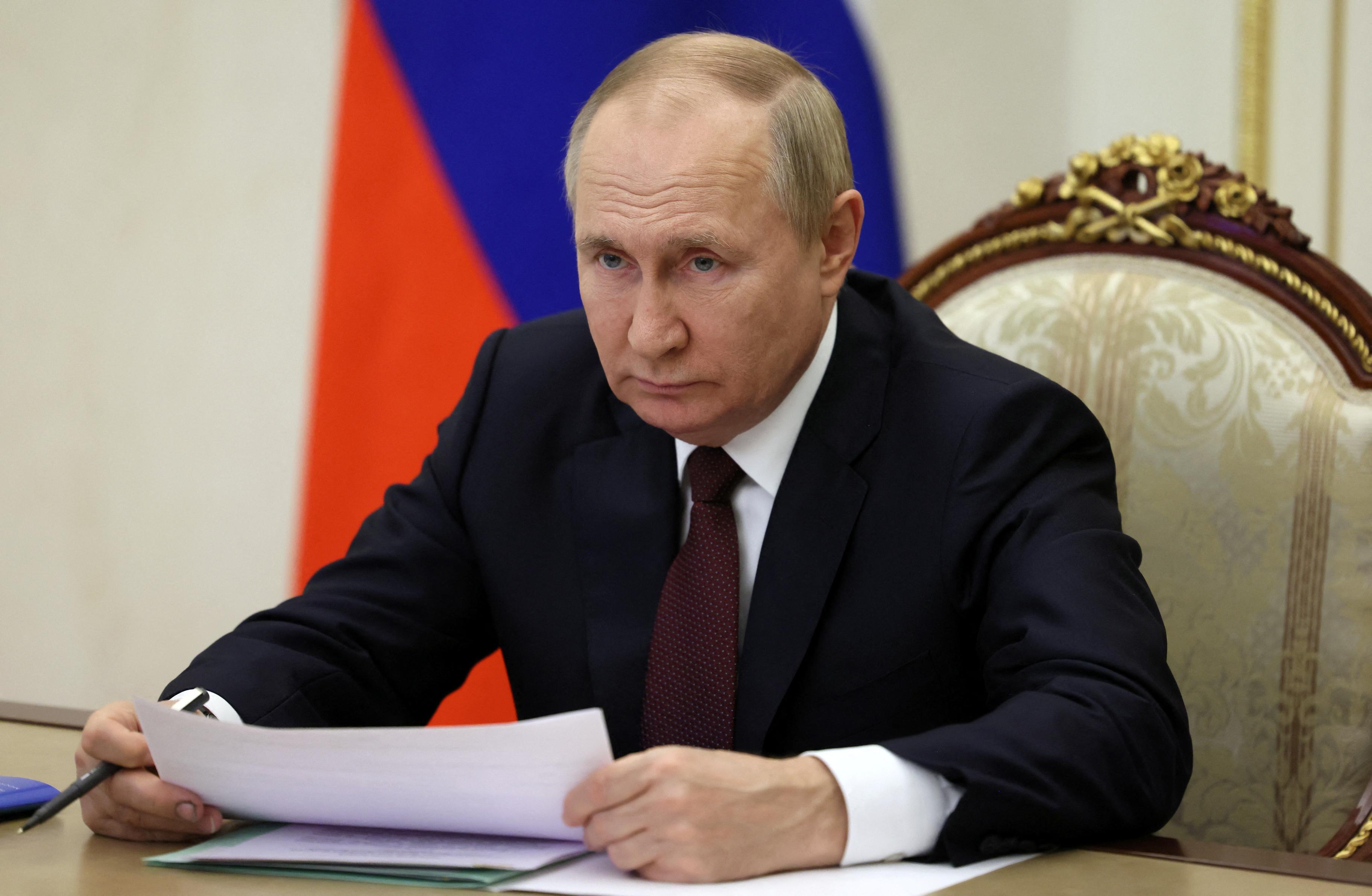
Putin outlines economic goals in speech to elites Russian leader puts infrastructure at heart of plans Russian economy rebounded in 2023 from contraction Personnel, technology shortage still posing threat MOSCOW, Feb 29 (Reuters) - Vladimir Putin outlined sweeping plans on Thursday to revitalise Russia's infrastructure over the next six years, pledging funds to help enhance the nation's economic performance just weeks before a presidential election he is sure to win. Boasting vast natural resources, Russia's economy rebounded sharply last year from a slump in 2022, but the growth relies heavily on state-funded arms and ammunition production for the war in Ukraine, masking problems that are hampering an improvement in Russians' living standards. Addressing lawmakers and other members of Russia's elite ahead of the March 15-17 presidential election, Putin spoke of a six-year programme reminiscent of the five-year plans first used by Soviet leaders to transform the economy 100 years ago. "(We must) prepare not only a draft budget for the next three years but also draw up all major spending and investments for the period up to 2030," he said in a speech that lasted more than two hours and also focused heavily on security issues. "We need to form a six-year forward-looking financial plan for the country's development that we will of course supplement with new initiatives." Russia, pressured by repeated waves of Western economic sanctions, is contending with a rapid, structural shift as the war in Ukraine enters its third year. Putin said some regional debts would be written off and more funds would be directed to the regions, including at least 250 billion roubles ($2.75 billion) in annual infrastructure loans. "Despite the difficult period, despite the current trials and tribulations, we are outlining long-term plans," he said. "These are the programmes of a strong, sovereign country that looks confidently to the future." Putin has long extolled Russia's economic resilience in the face of sanctions. After contracting 1.2% in 2022, the economy grew 3.6% last year, and is set to outpace all the Group of Seven countries this year. It has diversified, too, with non-oil and gas budget revenues climbing 25% in 2023. LABOUR SHORTAGES Putin said Russia's economy would soon be among the world's four largest in terms of purchasing power parity (PPP), but said tackling shortages of qualified personnel and advanced technologies was vital for Moscow to achieve its economic goals. "We need to be proactive here," said Putin, who is seeking a further six-year term in next month's election, adding to his already 24 years as Russia's paramount leader. The International Monetary Fund ranks Russia as sixth in terms of gross domestic product based on PPP, behind China, the United States, India, Japan and Germany. Putin said the pace and quality of Russia's growth should allow it to become one of the world's four largest economic powers in the near future. The IMF said this month, however, that Russia's war economy faced tough times due to outflows of people and shortages of technology. Putin said Russia needed to create globally competitive products in the space, nuclear and technology fields and that priority budget funds would be allocated for this. But with unemployment at a record low 2.9%, productivity growth is a key issue, as outlined this week by First Deputy Prime Minister Andrei Belousov. The finance ministry, already pressured by soaring military spending demands, will also have to find budgetary funds to meet Putin's pre-election promises of more generous tax allowances for families with children, part of efforts to address Russia's low birth rate. "The most important thing to understand is that all those decisions we heard, all those instructions ... will be implemented within the framework of a balanced budget," Finance Minister Anton Siluanov told state television, without disclosing estimated costs. ($1 = 90.8750 roubles) https://www.reuters.com/world/europe/putin-plots-sweeping-infrastructure-boost-pre-election-economic-push-2024-02-29/
2024-02-29 13:05
Feb 29 (Reuters) - India's economy (INGDPQ=ECI) , opens new tab rose 8.4% in the October-December period, the fastest pace seen in six quarters and beating all estimates, partly helped by a surge in manufacturing activity, according to data released by the government on Thursday. The growth rate was much faster than economists' forecasts of 6.6% as seen in a Reuters poll, and higher than the revised growth of 8.1% in the previous quarter. The manufacturing sector, which for the past decade has accounted for just 17% of Asia's third-largest economy, expanded 11.6% year-on-year in the December quarter, compared with a revised 14.4% in the previous three months. The farm sector, which accounts for about 15% of the $3.7 trillion economy, contracted 0.8%, compared with 1.6% growth in the September quarter. COMMENTARY SUVODEEP RAKSHIT, SENIOR ECONOMIST, KOTAK INSTITUTIONAL EQUITIES, MUMBAI Real GDP growth in Q3 FY24 was much ahead of expectations at 8.4%. However, much of the upside surprise was from net taxes. The underlying production growth reflected in GVA (gross value added) growth was closer to expectations at 6.5%. Broadly, GDP data indicated that investment growth continues to outpace consumption growth by a huge margin. The household savings rate dipped in FY23, led by a lower financial savings rate compared with FY22. As expected, the physical savings rate increased marginally. For policy makers, the concern on growth will remain minimal for now with growth staying on a decently strong footing. SAKSHI GUPTA, PRINCIPAL ECONOMIST, HDFC BANK, GURUGRAM GDP growth surpassed expectations in Q3, coming above 8%. However, from the supply side, GVA growth was in line with expectations at 6.5%. This divergence is due to the strong tax growth in the quarter. Broadly, the internals signal that agriculture growth remains weak, while manufacturing and services continue to push up growth. The data revisions to full-year FY24 figures present a downside risk to our current FY25 forecast of 6.4%. ADITI NAYAR, CHIEF ECONOMIST, ICRA LTD, GURUGRAM The Q3 data on India's growth threw up a divergent trend, with the GVA growth moderating broadly on expected lines to 6.5% and the GDP expanding by a much higher-than-anticipated 8.4%. This wide gap followed a surge in the growth of net indirect taxes to a six-quarter high of 32% in this quarter, which is unlikely to be sustainable. In our view, it may be more appropriate to look at the trend in the GVA growth to understand the underlying momentum of economic activity. Investments emerged as the fastest growing component of GDP in Q3 FY2024 and displayed a mild sequential dip, contrary to the sharp slowdown seen in government capex. Amid the sharp upside surprise in the headline GDP growth number, the contraction in the government's revenue expenditure and capital expenditure, as well as the slide in the core sector growth in January 2024, offer some sobering trends. THAMASHI DE SILVA, ASSISTANT INDIA ECONOMIST, CAPITAL ECONOMICS, LONDON Looking ahead, we expect economic activity to moderate over the coming quarters but it should still remain exceptionally strong, which will limit the need for policy loosening for a while. The timelier activity data such as the flash PMI (purchasing managers' index) suggest that the economy has made a flying start to 2024 too. We think that momentum may fade a touch; household consumption is likely to moderate as a result of the tightening of restrictions on unsecured lending and the lacklustre global backdrop is likely to weigh further on exports. That said, any slowdown in growth will be mild, particularly as the government's infrastructure drive is likely to prop up activity. This limits any immediate need for rate cuts. We think the Reserve Bank of India will only start easing policy in Q3 2024, much later than most other major emerging markets. UPASNA BHARDWAJ, CHIEF ECONOMIST KOTAK MAHINDRA BANK, MUMBAI The sharp upward revision to the GDP comes on the backdrop of downward revision to FY23 figures and stronger investment and net exports in FY24, but lagging consumption. More intriguing is that gross value-added estimates for FY24 have been left unchanged, while GDP is sharply higher. RADHIKA RAO, SENIOR ECONOMIST, DBS BANK, SINGAPORE The real GDP posted a strong upside surprise at 8.4%, signalling that India continues to grow at a faster pace than regional and major economies, taking the fiscal year-to-date average for FY24 to above 8%. Investment growth is on the driver's seat as a supply-driven push also helps the economy witness a non-inflationary recovery, while consumption grew at a moderate pace. Risks to the outlook are mainly exogenous, with an unexpected worsening in the geopolitical situation as well as volatile commodity movements. The robust growth report will likely reinforce the central bank's optimism on the outlook, reinforcing their preference to keep policy conditions tight. https://www.reuters.com/world/india/view-indias-oct-dec-quarter-gdp-grows-84-government-data-shows-2024-02-29/

2024-02-29 12:59
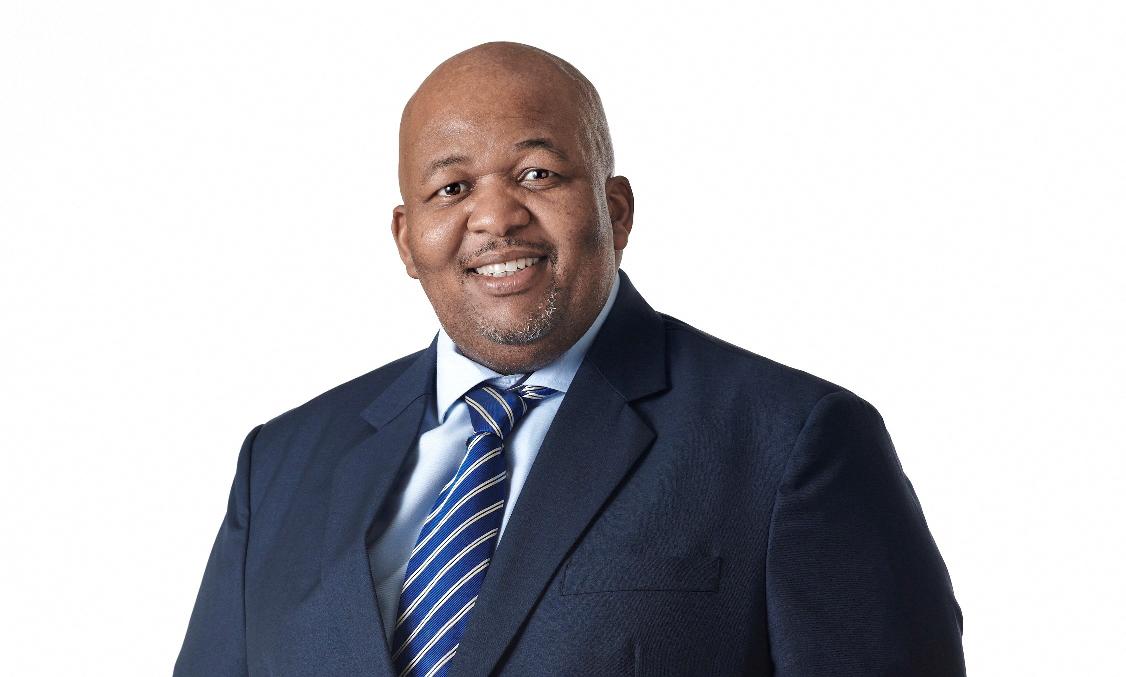
Dan Marokane starts job on Friday South Africa struggles with unprecedented power crunch Utility Eskom faces financial, technical crises JOHANNESBURG, Feb 29 (Reuters) - Dan Marokane is about to tackle the hardest job in South Africa: getting the lights back on. As CEO of state power utility Eskom, he takes on an organisation hampered by alleged coal theft and sabotage, which faces financial and technical crises. He will be working with a government shareholder that has a conflicted vision for the country's future energy mix and is struggling to move forward on a major overhaul of its electricity supply industry. As South Africa heads for national elections in May, turning Eskom around and solving a persistent power crunch could rescue Africa's most industrialised economy from a cycle of decline, Eskom's board chairman told Reuters. Failure would mean the country is stuck with the status quo of crippling blackouts that currently cut off electricity for everything from homes and businesses to traffic lights and hospitals for up to 10 hours every day. "There are two things here that need to be done simultaneously," Mteto Nyati, the chairman of Eskom's board of directors, said in an interview. "One is to fix the current business. And the other is to reposition and restructure Eskom so that it can be relevant for the future." Nyati said the utility's incoming boss, who holds degrees in chemical and petroleum engineering as well as an MBA, possesses the technical know-how and leadership skills to succeed where so many others have failed. Marokane, who Eskom said will not speak publicly until he formally begins his tenure on Friday, previously served as a senior Eskom executive for five years until 2015. "He's going to be able to learn and hit the ground running," Nyati said. Others are less optimistic. Eskom's role in powering the country's economy has made the CEO job South Africa's most high-profile executive position. But its challenges mean fewer and fewer corporate high-flyers are willing to take it on. "Dan is likely the most qualified person on the short list," said Peter Attard Montalto, managing director of the consultancy firm Krutham. "But that is an exceptionally low bar." REVOLVING DOOR Eskom's top job has become a revolving door through which more than a dozen CEOs have passed over the past 15 years, serving in either a permanent or acting capacity. Two of the previous permanent appointees were Phakamani Hadebe and Andre de Ruyter. The former left citing the damage the job had done to his health. The latter allegedly had poison slipped into his coffee. Eskom is still recovering from a period of pervasive corruption that engulfed many South African state-owned companies under former President Jacob Zuma. Zuma denies wrongdoing. Marokane has portrayed himself as a victim of the so-called state capture era, having been suspended from his Eskom job with several other executives. "I was not a moderate performer," he told a commission investigating state capture in 2020. "To be sitting at home with a cloud of suspicion and poor performance on you, it's very painful," he said, based on the transcript of his testimony before the commission. Marokane comes to Eskom after a stint at Tongaat Hulett, where he attempted to rescue the sugar company following an accounting scandal that eventually saw it placed in bankruptcy protection. On his return to Eskom, he will take on a distressed company dependent upon government bailouts and that needs to push through plans to unbundle it into separate generation, transmission and distribution businesses, a process that has become bogged down in bureaucracy and red tape. He will face a daily struggle to keep Eskom's fleet of ageing plants online while assuaging the concerns of donors that have pledged billions of dollars to wean South Africa off coal, which generates some 80% of its power. Marokane will need to push for new generating capacity - largely in the form solar and wind - overcoming resistance to renewable power from some quarters of an African National Congress-led government. "It's an extremely tough job," de Ruyter, who spent three years as CEO before his alleged poisoning and a falling out with the Eskom board, told Reuters. "Maybe he should avoid having a personalised coffee mug." https://www.reuters.com/world/africa/new-eskom-boss-under-pressure-turn-south-africas-lights-back-2024-02-29/
2024-02-29 12:56
NAIROBI, Feb 29 (Reuters) - U.N. delegates on Thursday withdrew a motion calling for more research into technologies that aim to fight climate change by reflecting the sun's rays back into space, amid concerns about health and environmental risks. Some who opposed the draft resolution at the U.N. Environment Assembly (UNEA) were also worried that the use of solar radiation modification (SRM) might let big polluters off the hook, organisations watching the debate said. Switzerland and Monaco first tabled the resolution on examining the geoengineering technology in December and it was discussed during this week's assembly in Nairobi. The original version called for the convening of an expert group that would produce a report examining SRM's possible applications, risks and ethical considerations. One of the best known proposals for using it involves blasting sulphur dioxide - a coolant - into the higher reaches of the atmosphere. There are only a handful of small SRM projects in operation. Some scientists say SRM could be made available when necessary to avert climate tipping points. Critics are worried about possible impacts on weather patterns and agriculture, especially in poorer countries. They also fear SRM could serve as an excuse to delay cutbacks on greenhouse gas emissions. After going through six revisions over the past two weeks, the resolution was withdrawn on Thursday. Robin Poëll, a spokesperson for Switzerland's Federal Office for the Environment, said countries disagreed on how to facilitate better access to information on SRM and "if the gathering of information should only focus on risk and uncertainties or could as well include potential benefits". "We regret that UNEA couldn’t come to a conclusion on this important matter. However, the discussions have been informative and useful and we managed to start a global conversation about this important topic," he said. Nico Esguerra, Director of International Strategy at SilverLining, a non-profit that promotes research on geoengineering methods, said some countries had "significant concerns about equity". The various drafts of the resolution showed countries inserting concerns about the safety of the technology. The Center for International Environmental Law (CIEL) said African nations, the European Union, Pacific Island states, Colombia and Mexico opposed the resolution. "These technologies cannot tackle the root causes of the climate crisis and would instead enable major polluters to delay the urgent need to phase out fossil fuels," Mary Church, Senior Geoengineering Campaigner at CIEL, said. https://www.reuters.com/business/environment/safety-fears-stall-un-bid-examine-sun-blocking-climate-change-tech-2024-02-29/
2024-02-29 12:55
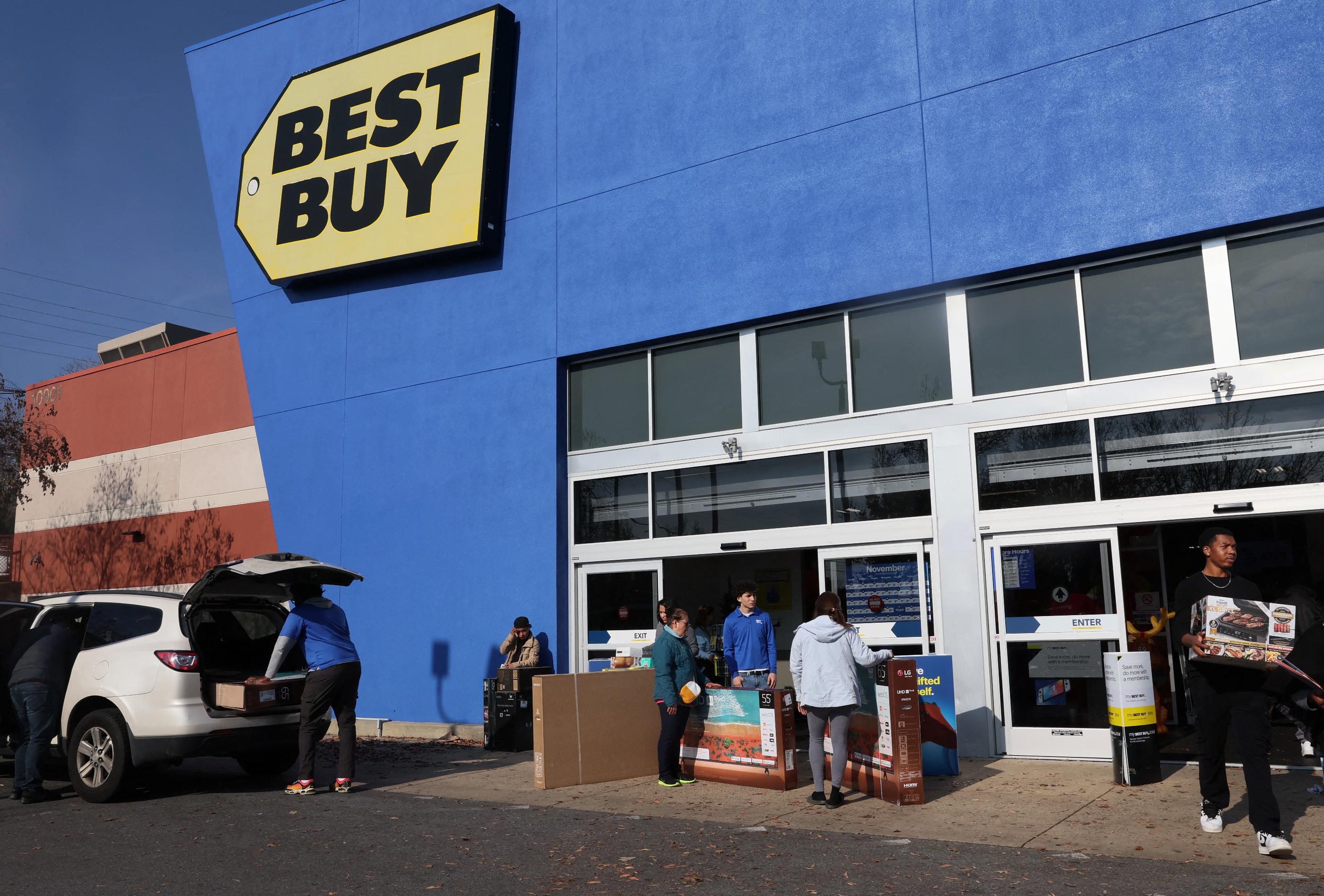
Feb 29 (Reuters) - Best Buy (BBY.N) , opens new tab reported a smaller-than-expected drop in quarterly comparable sales on Thursday, as holiday deals led shoppers to spend on big-ticket purchases like electronics and home appliances, sending its shares up 3% before the bell. Consumers, however, remained cautious as higher borrowing costs force them to make trade-off decisions to cover for household essentials. Domestic revenue weakened about 1% to $13.41 billion in the fourth quarter, driven by softness in demand for home theater, appliances, mobile phones and tablets across its stores and online. Still, Best Buy's focus on its paid membership program during the peak holiday shopping season resulted in customers opting for its product services and delivery. With subscription tiers of $179.99 per year, $49.99 per year and a free membership, the program led to better services margin rates, helping quarterly gross profit rate rise to 20.5% from 20% a year ago. CFO Matt Bilunas said he expects memberships to help expand the rate by about 20 to 30 basis points in fiscal 2025. The company forecast a drop in comparable sales of as much as 3% compared to market expectation of a 0.23% rise. In the fourth quarter, Best Buy took $169 million in charges, mainly related to employee termination benefits tied to its restructuring plan. It earned $2.72 per share, compared to LSEG estimates of $2.52. The top U.S. electronics retailer's comparable sales fell 4.8%, its ninth straight quarterly decline, compared to average analysts' expectation of a 5.36% drop, according to LSEG data. https://www.reuters.com/business/retail-consumer/best-buy-q4-comparable-sales-fall-less-than-expected-2024-02-29/