2024-02-29 11:31
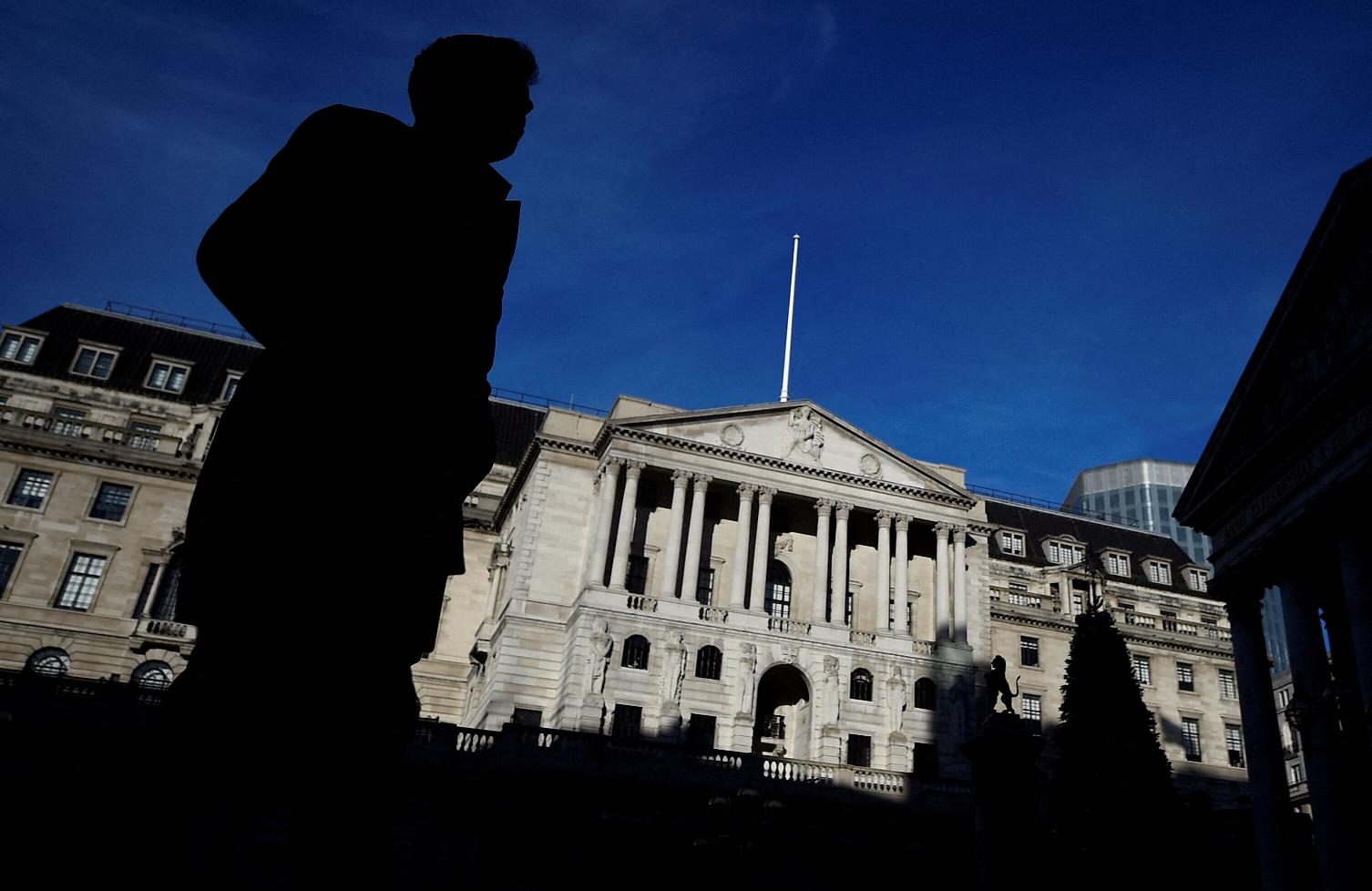
LONDON, Feb 29 (Reuters) - Britain chose Clare Lombardelli, the Organisation for Economic Co-operation and Development's chief economist, to serve as a Bank of England deputy governor, giving the central bank's interest rate-setting panel a female majority for the first time. Lombardelli will start a five-year term at the BoE on July 1, succeeding Ben Broadbent as deputy governor for monetary policy, the government said in a statement on Thursday. "Clare brings significant experience to the role tackling financial and economic issues both domestically and internationally," finance minister Jeremy Hunt said. Lombardelli's recent comments suggest she may be unlikely to embrace the prospect of interest rate cuts at the BoE, at least in the short term while inflation remains stubbornly high. "Central banks are right not to loosen too quickly and to keep a restrictive stance until they are more confident that inflation is going to make it to those targets," Lombardelli told CNBC , opens new tab earlier this month. The finance ministry said Lombardelli would lead the response to recommendations expected next month from former Federal Reserve chair Ben Bernanke to improve the BoE's forecasting process, as well as overseeing monetary policy. The BoE has four deputy governors, responsible for monetary policy, financial stability, markets and banking, and financial regulation respectively. Lombardelli joined the OECD from Britain's finance ministry in May 2023, having spent the previous five years as the finance ministry's chief economist. She started at the finance ministry in 2005 after beginning her career at the BoE. Simon French, chief economist at investment bank Panmure Gordon, said Lombardelli was early to warn about inflation risks as Britain recovered from the COVID pandemic in 2021, at a time when many economists expected higher inflation to be transitory. "She is relatively hawkish on that spectrum," he said, adding that this might bleed into how the central bank's economic forecasts are presented. "At the margin - and it is only at the margin - it raises the hurdle or the burden of proof (for a rate cut)." Financial markets expect a first rate cut by the BoE in August, at what will be Lombardelli's first meeting, where she will be in charge of producing new inflation forecasts. BRITAIN ON DIVERSITY PATH Lombardelli's appointment means five of the nine Monetary Policy Committee members will be female, the first female majority since its inception in 1997. By contrast, the European Central Bank has only two women on its 24-member Governing Council although one of them is President Christine Lagarde. Britain might also have its first female finance minister later this year - Rachel Reeves is the top finance spokesperson for the opposition Labour Party which is running far ahead of the ruling Conservatives in opinion polls. "It helps with the Bank of England and the MPC's long-standing female diversity problem," French said, though he added that the MPC was open to criticism on other metrics, including the high proportion of former Treasury officials in its ranks. Lombardelli's appointment continues the recent pattern of senior roles at the BoE - which has been operationally independent of the government since 1997 - frequently being filled by former finance ministry officials. Deputy governors Dave Ramsden - whom Lombardelli replaced at the finance ministry as chief economist - and Sam Woods are also ex-Treasury officials, as was former deputy governor Jon Cunliffe whose term expired last year. Broadbent also served at the Treasury early in his career. Last year the head of the National Institute of Economic and Social Research think tank, Jagjit Chadha, said there was a perception that the BoE had been "taken over , opens new tab" by Treasury officials since the financial crisis. The finance ministry oversees the appointment process for the BoE's governor, deputy governors and most MPC members. Lombardelli previously served as an economic advisor to David Cameron when he was prime minister and was then-finance minister George Osborne's principal private secretary. Before that, she was seconded to the International Monetary Fund where she was part of a team based in the Greek finance ministry to monitor bailout terms during 2010 and 2011. https://www.reuters.com/world/uk/uk-names-oecds-lombardelli-next-boe-deputy-governor-2024-02-29/
2024-02-29 11:30
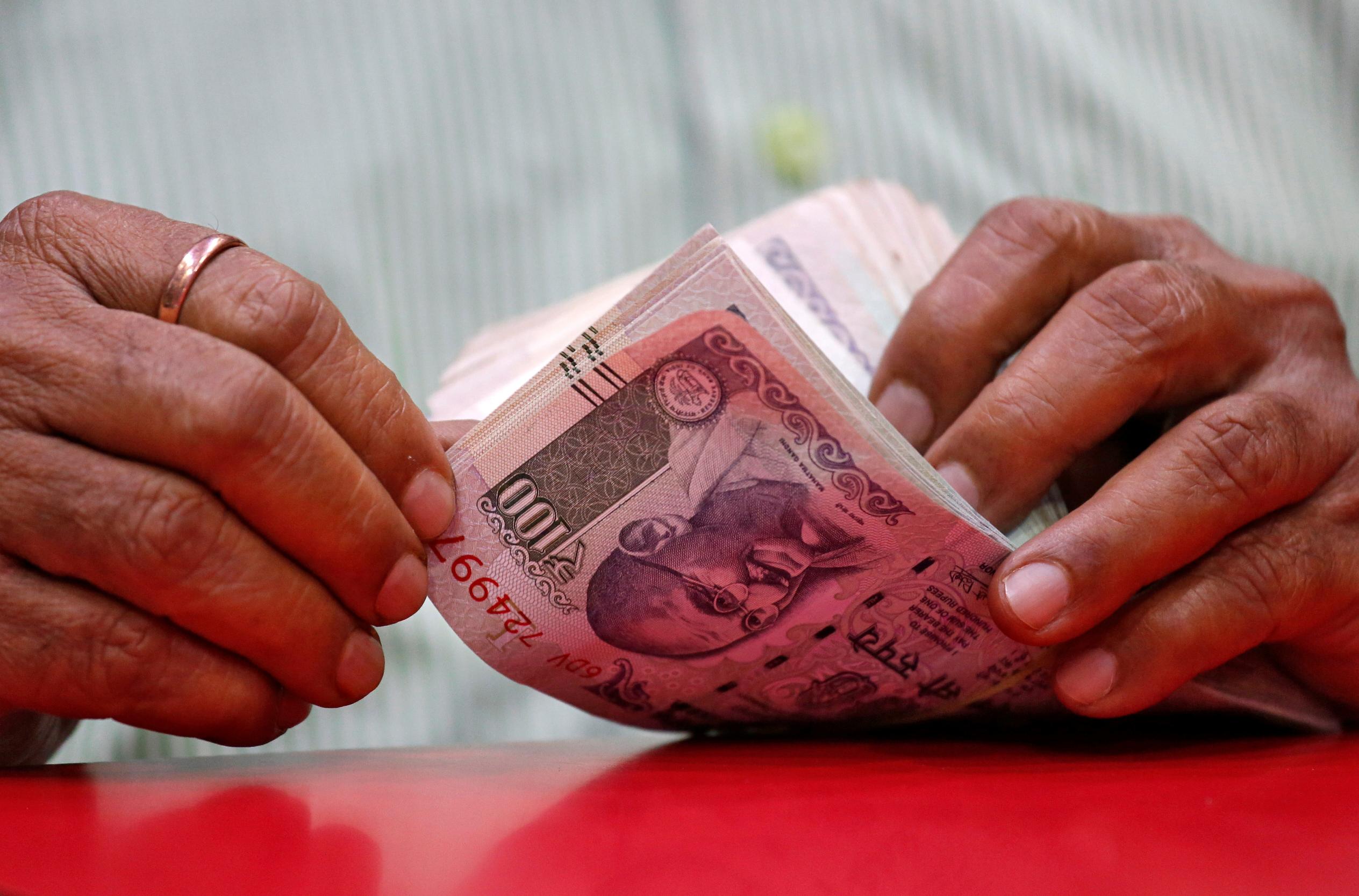
MUMBAI, Feb 29 (Reuters) - The Indian rupee ended little changed on Thursday, as dollar demand from foreign and state-run banks eroded positive cues from an uptick in most Asian currencies, traders said. The rupee closed at 82.9125 against the U.S. dollar, barely changed from its previous close at 82.9225. The currency logged a monthly gain of 0.2%, its third consecutive month-on-month rise. The dollar index was last quoted at 103.78, on course for a second consecutive monthly gain, supported by strength in U.S. economic data which also prompted a pullback in bets of early interest rate cuts by the Federal Reserve. Asian currencies were a mixed bag in the month, with the Indonesian rupiah rising 0.4%, while the Thai baht fell 0.8%. Buoyant dollar inflows supported the rupee's gains in February even as the dollar and U.S. bond yields rose. The 10-year U.S. Treasury yield was last quoted at 4.30%, up 34 basis points this month so far. The rupee is unlikely to gain beyond 82.80 in the near term but the likelihood of depreciation beyond 83.10 has reduced, said Sajal Gupta, head of forex and commodities at Nuvama Professional Clients Group's institutional desk. Meanwhile, dollar-rupee forward premiums were little changed on day, with the 1-year implied yield at 1.65%, hovering close to its lowest level in two-and-a-half months. The 1-year implied yield fell 21 bps in February, pressured by the pared expectations of Fed rate cuts, improved rupee liquidity and mild concerns about dollar scarcity ahead of the March 11 maturity of Reserve Bank of India's $5 billion USD/INR sell-buy swap, traders said. Forward premiums are likely to stay under pressure in the near-term, but 1.60% should hold as a support for the 1-year implied yield, a foreign exchange trader at a private bank said. Investors now await India's GDP data for the October-December quarter and the U.S. personal consumption expenditures (PCE) price index due later in the day. https://www.reuters.com/markets/currencies/rupee-ends-little-changed-logs-third-consecutive-monthly-gain-2024-02-29/
2024-02-29 11:25
BENGALURU, Feb 29 (Reuters) - The European Central Bank will first cut interest rates in June, according to a near two-thirds majority of economists in a Reuters poll, though they were split on the chances of the cut coming earlier or later than they expected. Inflation, which the ECB targets at 2.0%, moderated to 2.8% in January from a peak of 10.6% in October 2022 and is expected to drop further. But policymakers have made clear they are not yet ready to consider cutting rates, even as growth falters. Most members of the Governing Council, including President Christine Lagarde, are aligned with the view that more data, especially on the labour market, will be required before cutting the deposit rate from a record high 4.00%. Last week, Lagarde said negotiated wage data from Q1, due in May, will be especially important for the ECB. That makes June the most likely month to consider a first rate cut, an expectation shared by markets and economists. A near two-thirds majority of forecasters, 46 of 73, said the central bank will first reduce the deposit rate by 25 basis points to 3.75% in June. That consensus view has grown considerably stronger from around 45% in a January poll. "Why June? Because by then actual inflation will have come down a little bit more, we will also have the first quarter wage growth which should also show at least no new acceleration ... So it more or less looks like a good moment to do the first rate cut," Carsten Brzeski, global head of macro at ING, said. Only 17 expected an April cut and 10 said the ECB would wait until the second half of this year. None of the 73 economists in the Feb. 26-29 poll expected a rate cut at the March 7 meeting. Still, economists said it would not be the start of a substantial easing cycle. Medians showed 100 basis points of cuts this year, taking the deposit rate to 3.00% by end-2024, broadly in line with market pricing. While 32 of 73 economists saw the rate higher than that, 23 predicted it would be lower. "There is always a risk that as soon as the economy recovers just a tiny bit, inflation will come back so that argues against aggressive rate cuts," added ING's Brzeski. Despite a strong consensus around the first rate cut, economists were divided on the risks around their forecasts. When asked what was more likely around the timing of the first reduction, a roughly 55% majority of respondents, 17 of 31, said earlier than they expect. The rest said later. An early cut by the ECB could mean a weaker euro and risks of additional imported inflation as a similar Reuters poll found the U.S. Federal Reserve is also expected to reduce rates in June, with a significant risk of a later move. But unlike in the euro zone, growth in the world's No. 1 economy remains resilient and U.S. recession fears are fast fading. "One of the transmission channels is the impact on EUR/USD when policies diverge," Bas van Geffen, senior macro strategist at Rabobank, said. "That does not necessarily prevent the ECB from making the first cut before their U.S. peers do. However, if the ECB is the first to cut, we would expect them to be a bit more cautious with their next steps." Inflation will average 2.3% in 2024 and 2.1% in 2025, according to the poll. Official preliminary data due Friday is expected to show rose 2.5% this month. Economic growth in the 20-country bloc was seen at 0.1% and 0.2% in Q1 and Q2, respectively, and average 0.5% this year and 1.3% next. (For other stories from the Reuters global economic poll:) https://www.reuters.com/markets/europe/ecb-cut-rates-june-economists-split-risk-around-timing-2024-02-29/
2024-02-29 11:18
OPEC+ expected to make a decision in March on output cuts Spare capacity at multi-year highs- analyst For table of crude price forecasts, click Feb 29 (Reuters) - Analysts were less bullish on oil in February for a fourth straight month, with ample supplies seen holding prices near $80 a barrel this year as the Middle East conflict has only a modest impact on crude flows, a Reuters poll showed on Thursday. A survey of 40 economists and analysts forecast Brent crude would average $81.13 per barrel in 2024, slightly down from the $81.44 consensus in January. U.S. crude forecasts were cut to $76.54 a barrel, from $77.26 last month. "Disruption in the Red Sea has less impact because there are alternative routes available," said John Paisie, president of Stratas Advisors, referring to attacks on shipping by Yemen's Houthis. "It is unlikely that the volumes of oils being shipped will be materially impacted, and supply/demand fundamentals will be a more important factor as we move into Q2 and Q3," he added. Wall Street bank Goldman Sachs forecast a summer Brent peak of $87 per barrel, noting that the geopolitical risk premium remains modest, with only a $2 per barrel boost to Brent, and crude production remaining unaffected. "Spare capacity has reached a multi-year high, which will keep overall market sentiment under pressure over the coming months," said Florian Grunberger, senior analyst at data and analytics firm Kpler. The largest OPEC producers and some of their allies - a group known as OPEC+ - have the capacity to pump more oil as a consequence of decisions to curb output. "It is not until larger voluntary cuts get released back into the market during the summer months, once global balances tighten, that we'll see a potential decline in spare capacity and a change in overall sentiment," Grunberger said. OPEC+ in November agreed to voluntary output cuts totalling about 2.2 million bpd for the first quarter. The group is expected to announce a decision in March on whether or not it will extend these cuts to bolster prices. The International Energy Agency estimates that OPEC's total spare capacity is 5.1 million barrels per day (bpd), of which 3.2 million bpd is held by Saudi Arabia. "Production cuts have supported oil prices, but some members appear increasingly eager to increase output," said William Weatherburn, analyst at Capital Economics. "OPEC's own forecasts for oil demand are fairly robust, and this may be used to justify a slight increase in output in second quarter," he added. https://www.reuters.com/business/energy/oil-prices-expected-remain-tethered-near-80-barrel-2024-02-29/
2024-02-29 11:18
Feb 29 (Reuters) - The world likely notched its warmest February on record, as spring-like conditions caused flowers to bloom early from Japan to Mexico, left ski slopes bald of snow in Europe and pushed temperatures to 100 degrees Fahrenheit (38 C) in Texas. While data has not been finalised, three scientists told Reuters that February is on track to have the highest global average temperature ever recorded for that month, thanks to climate change and the warming in the Eastern Pacific Ocean known as El Nino. If confirmed, that would be the ninth consecutive monthly temperature record to be broken, according to data , opens new tab from the U.S. National Oceanic and Atmospheric Administration. NOAA will publish final figures for February around March 14, according to its press office. In the Northern Hemisphere, the record temperatures mean that "springtime comes earlier," according to Karin Gleason, an atmospheric scientist at NOAA said last week. "I was just in the eastern part of North Carolina yesterday and saw some trees in full bloom with blossoms all over the trees and I'm thinking - It's February. This just seems really odd." People in Tokyo similarly snapped photos of pink cherry blossoms that bloomed about a month earlier than usual, while jacaranda trees that normally blossom in late March have filled Mexico City with purple buds since January. As snow melted in Europe this month, ski runs turned to mud and sat idle in Bosnia and Italy, while one French resort rebranded its slopes as a hiking and biking destination. In the United States, temperatures were up to 40 degrees Fahrenheit (22 degrees Celsius) above normal this week, with the town of Killeen, Texas setting a record of 100F (38 C). The added heat from global warming wreaks havoc on global systems, helping melt glaciers in the poles and mountains, raising sea levels, and driving extreme weather, said Anders Levermann, a physicist at the Potsdam Institute for Climate Impact Research. Record high temperatures in the summer - now underway in Southern Hemisphere - generally leads to a spike in heat-related deaths, said Jane Baldwin, an atmospheric scientist at University of California Irvine. "Heat is a substantial silent killer," she said. Heat waves hit Argentina, Peru, Brazil, and Chile this month, with the hot and dry conditions also contributing to wildfires near Santiago killing at least 133 people. Gleason said that the El Nino is expected to dissipate by mid-2024 and could quickly shift to La Nina - a cooling in the Eastern Pacific - which might help to break the hot streak toward the end of the year. Still, NOAA predicts there is a 22% chance that 2024 will break 2023's record as the hottest year, and there is a 99% it will be in the top 5, Gleason said. https://www.reuters.com/business/environment/spring-came-early-february-likely-warmest-record-amid-climate-change-2024-02-29/

2024-02-29 11:10
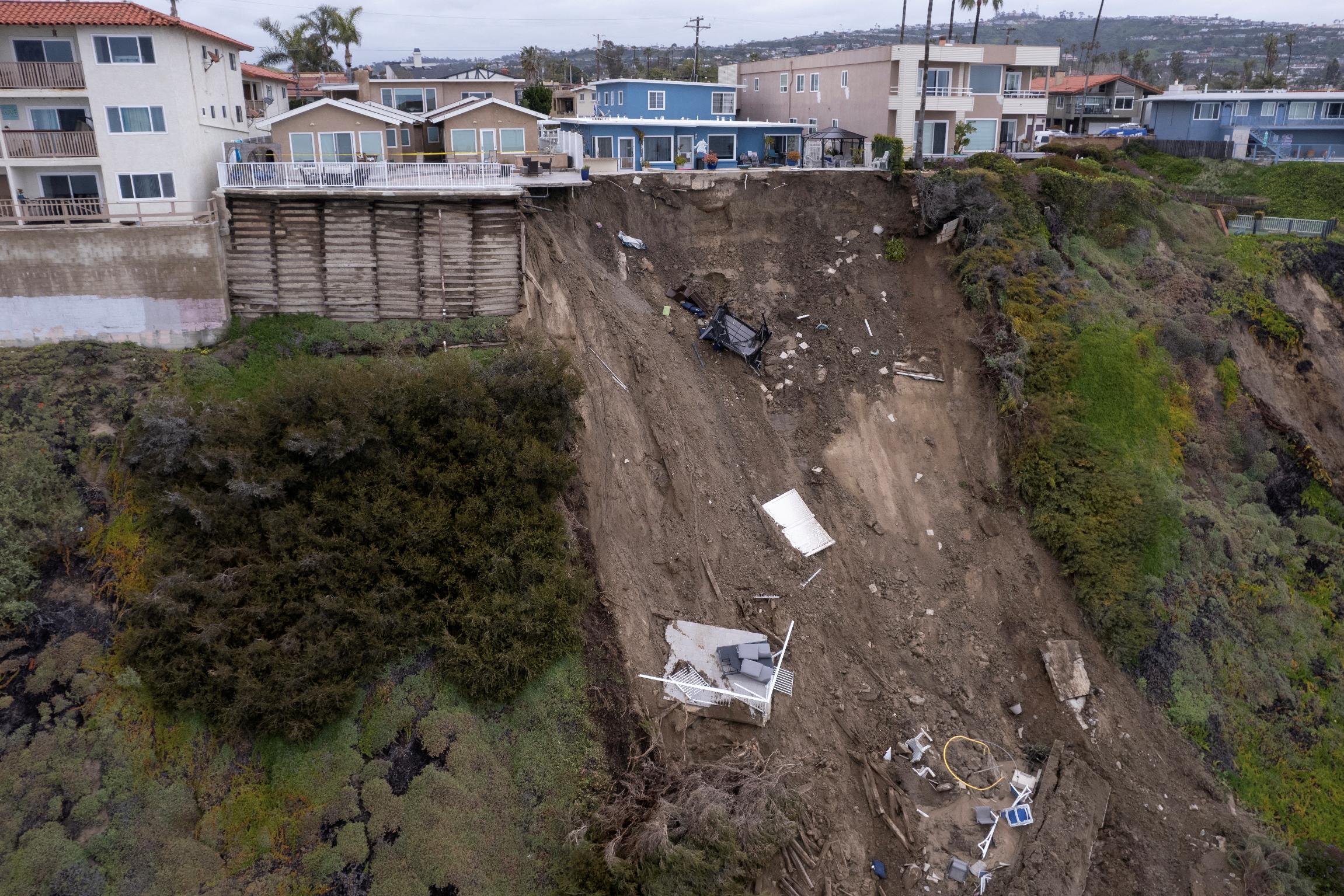
SAN CLEMENTE, California, Feb 29 (Reuters) - The views of the Pacific Ocean from Alan Ashavi's cliff-top property are breathtaking, but underneath lurks a danger to the dream home he has been building for the last 12 years. When the first round of atmospheric rivers battered the California coastline last year, several of his neighbors' backyards collapsed, but Ashavi was spared. The 66-year-old was not so lucky earlier this month, when another atmospheric river caused a landslide underneath his property. “Well it is nerve-wracking because you deal with it on a daily basis and you come in here and check every day or every hour sometimes," Ashavi told Reuters. "I know this is a El Nino year as far as the rain, so I've had it in the back of my mind about being involved with the construction." On Feb. 5, a storm pounded the state with heavy rainfall and hurricane-force winds, initially knocking out power to more than a million customers. It was the second so-called Pineapple Express weather system, or atmospheric river, to hit the most populous U.S. state in a week. California Governor Gavin Newsom declared a state of emergency in eight counties with a combined population of more than 20 million people, and flash flood warnings were issued for parts of Los Angeles, Santa Barbara and San Luis Obispo counties. While such storms are not uncommon to the West Coast, meteorologists say they are likely to become more extreme over the next century if planetary warming from fossil fuel-driven climate change continues at current rates. HOMES ON VERGE OF COLLAPSE Along the Southern California coast, a swimming pool teeters on the edge of an eroded cliff, and several patios have fallen down to the sea, leaving luxury homes on the verge of collapse. Whole cliffsides are covered in tarps and hillside stairways to the beach have been compromised. Kathleen Treseder, a climate change professor at the University of California at Irvine, has some startling news for the Golden State: Experts predict a 100-yard (91 meters) destruction of sea cliffs going inward and any resident or business within that distance should be concerned. With her hand, Treseder easily scrapes away cliffside dirt and rocks, a sign of the vulnerability of the iconic California landscape. "We have these atmospheric rivers coming off the oceans, drops the rain here on these hills and then the hills start eroding as well," Treseder said. "And so not only do we have this erosion right here from the waves, but we also have erosion up inland caused by the rainfall." Over the years, California has built a lot of infrastructure along its coast, and plowed monetary investment into the idyllic and much sought-after real estate. There is a nuclear power plant right on the coast in San Onofre that is vulnerable to erosion and sea rise. The train line along the coast has been closed when landslides cover the tracks. And Treseder cannot sugarcoat what is in store for the owners of some of the most coveted homes in the area. "We have many, many multi-million dollar homes all along this coast that will be falling into the ocean," she said. San Clemente coastal resident Susan Pope, 69, walked along the beach with her husband and lamented the toll on her community. "It's just so sad to see the destruction that is happening, and I hope the future planning is better for that," Pope said. https://www.reuters.com/business/environment/californias-coveted-coastal-cliffs-eroding-atmospheric-rivers-2024-02-29/