2024-02-29 07:03
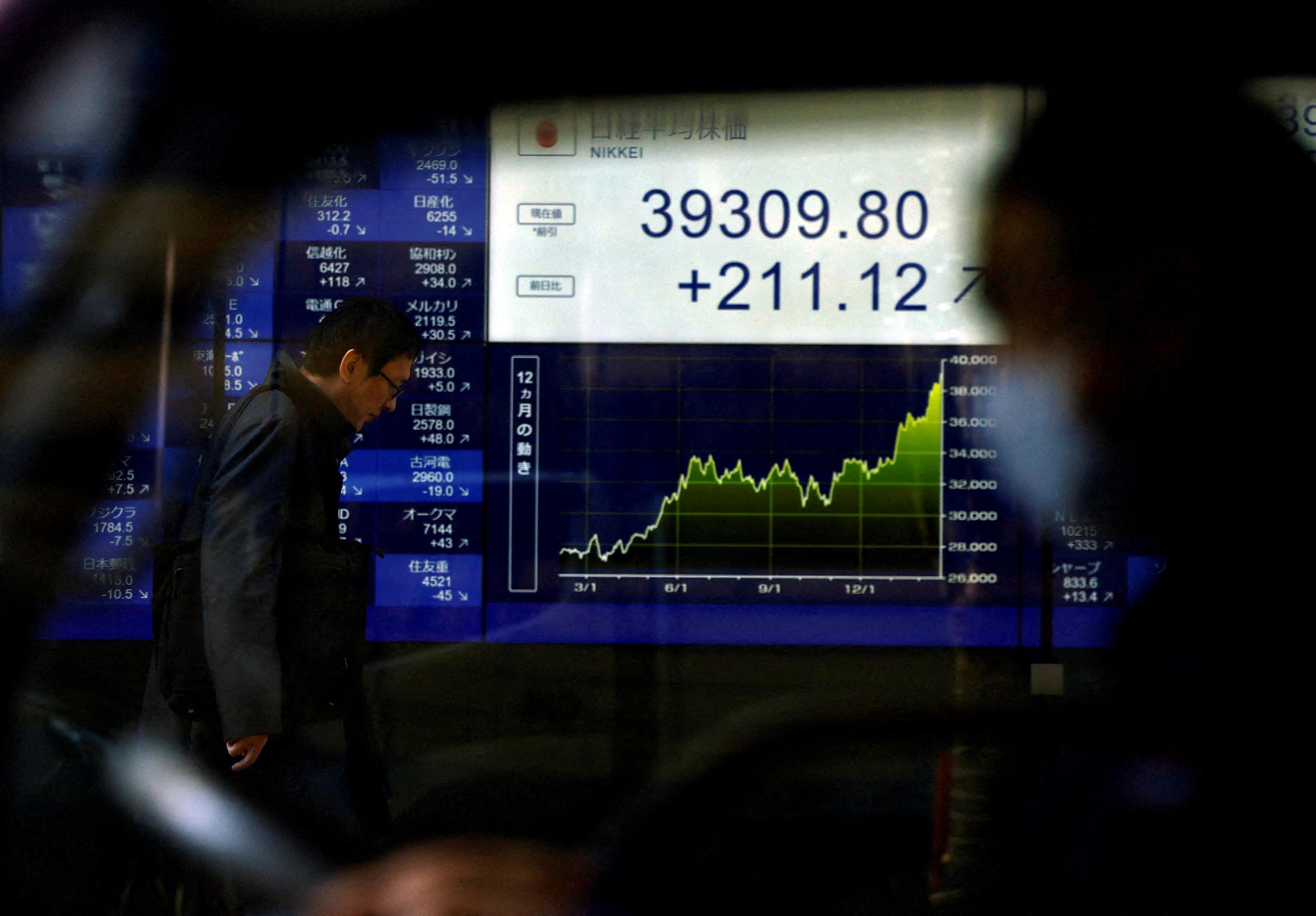
S&P, Nasdaq end at record highs as data supports rate cut view Bitcoin tracks for 6th day of gains, 45% monthly gain NEW YORK/LONDON, Feb 29 (Reuters) - The S&P 500 and Nasdaq closed at record highs and the global equity index advanced on Thursday after a much anticipated U.S. inflation reading provided little surprise for relieved investors and helped push U.S. Treasury yields lower. The Nasdaq registered a record closing high for the first time in more than two years as Wall Street rebounded from the previous session's decline, which was due to investor jitters ahead of the U.S. personal consumer expenditures (PCE) price index data. But in the end, the PCE data, which is the Federal Reserve's preferred inflation gauge, showed the smallest annual increase in inflation in nearly three years, keeping the possibility of a June interest rate cut from the Fed on the table. "Today's market movements really reflect a relief that we aren't seeing a re-acceleration in inflation. That's impacted fixed income markets as well as equity markets," said Sid Vaidya, U.S. wealth strategist at TD Wealth. Investors had been particularly anxious ahead of the PCE data after the most recent consumer price index (CPI) and the producer price index (PPI) data were hotter than expected. "Markets are actually heaving a bit of a sigh of relief that we didn't get the same type of upside surprises we saw in the earlier inflation readings," said Mona Mahajan, senior investment strategist at Edward Jones in New York. The Dow Jones Industrial Average (.DJI) , opens new tab rose 47.37 points, or 0.12%, to 38,996.39, the S&P 500 (.SPX) , opens new tab gained 26.51 points, or 0.52%, to a record closing high of 5,096.27. The Nasdaq Composite (.IXIC) , opens new tab gained 144.18 points, or 0.90%, to end at a peak of 16,091.92. Its previous record close was 16,057.44, hit in November 2021. For the month, the S&P rose 5.17% while Nasdaq gained 6.12% and the Dow increased 2.22%, with all three registering their fourth straight monthly gains. It was the S&P's longest streak of monthly gains since the five months ending July 2023. MSCI's gauge of stocks across the globe (.MIWD00000PUS) , opens new tab was also eyeing a record close as it rose 2.73 points, or 0.36%, to 760.86. The STOXX 600 <.STOXX> index had ended unchanged while the German DAX (.GDAXI) , opens new tab climbed 0.4% to a fresh all-time high after data showed cheaper energy prices slowed inflation down to 2.7% in February. Elsewhere in Europe, French consumer prices rose at a slower pace but slightly higher than forecasts, while in Spain annual inflation dropped but was in line with expectations. In U.S. Treasuries, the yield on benchmark U.S. 10-year notes fell 0.6 basis points to 4.268%, from 4.274% late on Wednesday while the 30-year bond yield fell 2.2 basis points to 4.3884%. The 2-year note yield, which typically moves in step with interest rate expectations, was roughly flat at 4.6477% compared with 4.648% late Wednesday. In currencies, the dollar index, which measures the greenback against a basket of major currencies, regained lost ground after earlier easing following the data, which soothed worries that price pressures could be seeing a renewed uptick. Against the Japanese yen , the dollar weakened 0.47% to 149.96 yen after a Bank of Japan (BOJ) official hinted at the need to exit ultra-easy monetary policies. The dollar index gained 0.17% at 104.11, with the euro down 0.28% at $1.0806. Also in focus was bitcoin , , which gained 1.82% at $61,665.00, eyeing its sixth daily gain in a row as well as its biggest monthly gain in more than three years. Investors are also waiting to see if it can return to its late 2021 record high of just under $69,000. The approval and launch of spot bitcoin exchange-traded funds in the U.S. this year has opened the asset class to new investors and re-ignited the excitement that was sapped when prices collapsed in the "crypto winter" of 2022. In commodities, oil prices slipped after U.S. data sent mixed signals about the outlook for crude demand from the world's top economy. U.S. crude settled down 0.36% to $78.26 a barrel and Brent finished at $83.62 per barrel, down 0.07%. In precious metals, gold scaled a one-month high, boosted by the dollar decline as traders switched their attention from the inflation data and to wait for commentary from Fed officials. Spot gold added 0.43% to $2,043.39 an ounce. U.S. gold futures gained 0.5% to $2,043.10 an ounce. https://www.reuters.com/markets/global-markets-wrapup-1-2024-02-29/
2024-02-29 06:59
PARIS, Feb 29 (Reuters) - French company TotalEnergies (TTEF.PA) , opens new tab announced on Thursday a deal to supply Singapore's Sembcorp Industries with up to 0.8 million tons of liquefied natural gas (LNG) per annum (Mtpa) for 16 years, from 2027 onwards. https://www.reuters.com/markets/deals/totalenergies-signs-lng-deal-with-singapores-sembcorp-industries-2024-02-29/
2024-02-29 06:54
HONG KONG, Feb 29 (Reuters) - Hong Kong's largest bitcoin futures exchange-traded fund saw its assets under management swell five-fold in the past five months to just over $100 million, as local investors chased the rally in the world's best-known cryptocurrency. Hong Kong has been a relative latecomer to crypto trading, approving its first three cryptocurrency futures ETFs in late 2022. CSOP Asset Management, which manages the CSOP Bitcoin Futures ETF (3066.HK) , opens new tab, said demand grew substantially in February. The approval and launch of spot bitcoin ETFs in the U.S. this year has spurred demand from investors who believe the token's limited supply will push prices higher, said Alessandro Zhu, who oversees crypto products and is deputy head of fixed income at CSOP Asset Management. Bitcoin's significant outperformance of Hong Kong stocks (.HSI) , opens new tab has also boosted demand, he added. Zhu noted that although cryptocurrency trading is banned in mainland China, offshore Chinese financial institutions could invest in bitcoin ETFs in Hong Kong. Bitcoin has gained 45% this month alone and, trading around $63,000 on Thursday, is closing in on its November 2021 record highs near $69,000. Assets under management for CSOP Ether Futures ETF (3068.HK) , opens new tab have also benefited, doubling this year. Volumes have surged. Average daily turnover for the CSOP Bitcoin Futures ETF this year has jumped to $2.8 million compared to $0.97 million last year, now at par with turnover in some Hong Kong property giants such as the Wharf (Holdings) (0004.HK) , opens new tab. Some market participants expect Hong Kong to approve the first spot bitcoin ETF this year as officials are keen to develop the city as a hub for virtual assets. "Hong Kong’s bitcoin ETF is showing promising signs with a large number of (spot bitcoin ETF) applications to Hong Kong Securities and Futures Commission in the past few months," said Kennix Chan, executive director of Victory Securities. https://www.reuters.com/technology/hong-kongs-largest-bitcoin-etf-assets-up-five-fold-since-october-2024-02-29/
2024-02-29 06:41
Feb 29 (Reuters) - German chemicals maker Covestro (1COV.DE) , opens new tab on Thursday said it decided not to pay dividends for 2023 after its annual core earnings dropped by a third in a challenging year marked by high energy prices and a weak global economy. "The year 2023 was one of the most difficult for the chemical industry in recent decades," chief executive Markus Steilemann said in a statement. The group, whose main products include foam chemicals used in mattresses, car seats and insulation for buildings, said earnings before interests, taxes, depreciation and amortisation (EBITDA) fell to 1.1 billion euros ($1.19 billion) in 2023, down 33% from 2022, but in line with analysts' average estimates. Covestro's key automotive, construction and furniture end markets, which comprise roughly half of its sales, remained weak during the year, especially in Europe, weighing on the company. Its sales dropped by 15% year-on-year to 3.3 billion euros in the fourth quarter of 2023, while EBITDA rose to 132 million euros, up from a loss of 38 million euros in the same period of 2022. The group said the quarterly core earnings improvement came on the back of a mid-three-digit million euro amount fall in fixed costs in 2023. Covestro forecasts 2024 EBITDA between 1 and 1.6 billion euros, and between 180-280 million euros for the first quarter of 2024. The company is in open-ended talks with bidder Abu Dhabi National Oil Co (ADNOC) over a potential takeover, after a report said ADNOC submitted a preliminary offer of around 60 euros per share. The Abu Dhabi oil firm was itching toward a higher bid after the talks had stalled recently, Bloomberg reported last week. The German chemicals maker did not comment on the talks in its press release. ($1 = 0.9230 euros) https://www.reuters.com/markets/commodities/covestro-cancels-dividend-after-lower-earnings-challenging-2023-2024-02-29/

2024-02-29 06:31
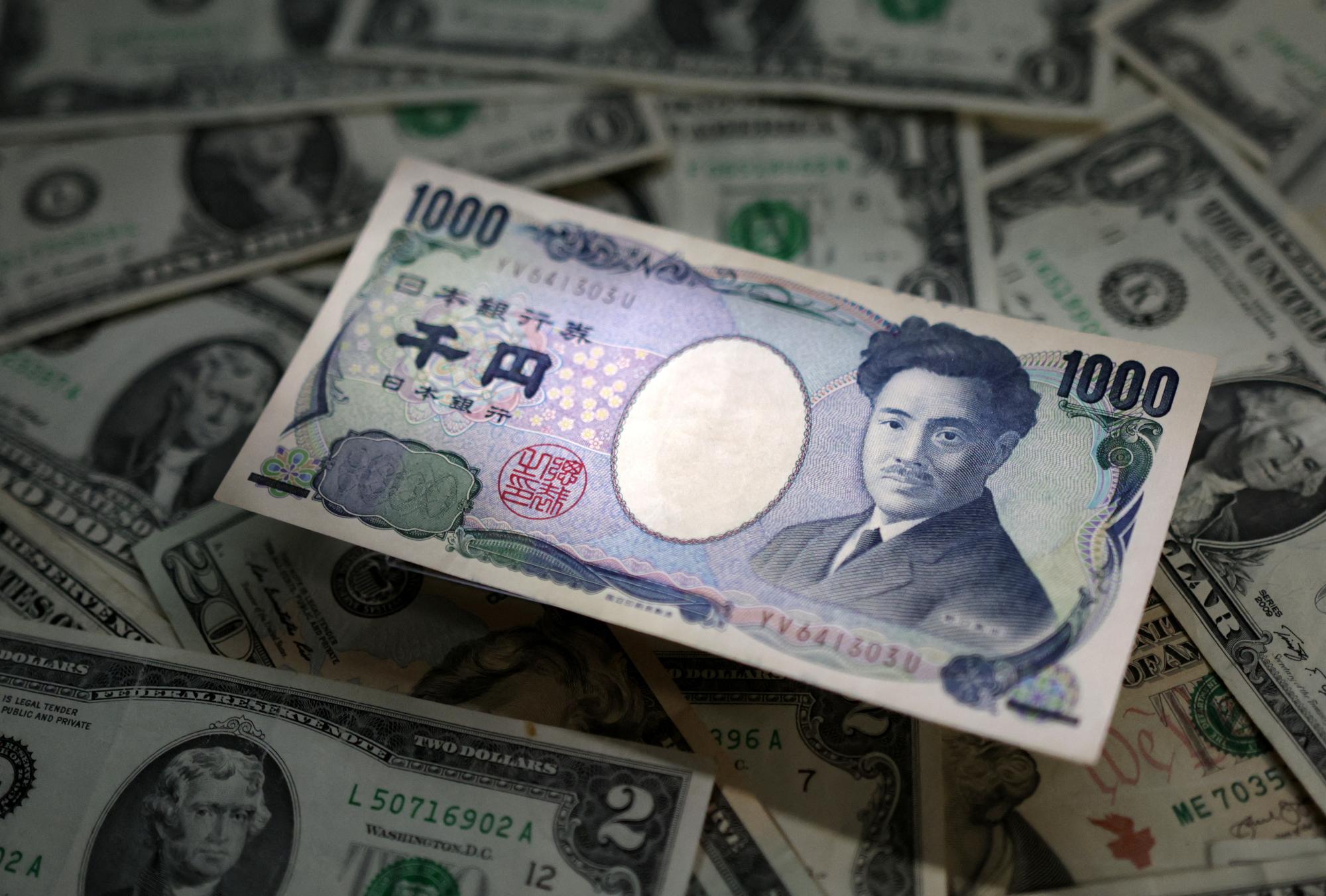
NEW YORK, Feb 29 (Reuters) - The dollar rose on Thursday in choppy trading and was on track for its second consecutive monthly gain against the euro and yen, overcoming an earlier dip after data showed that U.S. inflation was as expected in January. The yen gained after a policymaker hinted at the need to exit ultra-easy policies, while bitcoin held near a more than two-year high reached on Wednesday. The dollar fell earlier on Thursday after data showed that U.S. price gains in January were the smallest in nearly three years, keeping a June interest rate cut from the Federal Reserve on the table. "The worst fears of market participants have been largely alleviated by this print," said Karl Schamotta, chief market strategist at Corpay in Toronto. "The big issue here was that the CPI print did kind of put the fear of God into a lot of traders - there was a lot of concern that underlying pressures could turn out to be hotter than anticipated." The dollar index had hit a three-month high after the Consumer Price Index (CPI) released on Feb. 13 showed prices accelerated more than expected in January. Thursday's dollar drop was short-lived, however, and the greenback soon bounced back. Shaun Osborne, chief foreign exchange strategist at Scotiabank in Toronto, noted that there is "very little conviction behind some of the trading that we’re seeing in FX at the moment," and that "the dollar looks pretty fully priced for the fundamental situation that we have right now." Some of Thursday's moves were also likely due to month-end portfolio rebalancing. Traders are closely watching economic data for clues on when the Fed is likely to begin cutting rates. Many analysts anticipate the U.S. economy will slow in the coming months while inflation is likely to continue to ease closer to the U.S. central bank's 2% annual target. That would prompt the Fed to begin easing and send the dollar lower. "The signs are auguring towards a cooling in a lot of U.S. economic data and that could damage that U.S. exceptionalism trade and lead to flows out of the dollar," said Schamotta. Traders are pricing in a 64% probability the Fed will begin cutting rates in June, up from 63% on Wednesday, according to the CME Group's FedWatch Tool , opens new tab. Thursday's data shows that the path for inflation to return to 2% will be uneven, Atlanta Fed President Raphael Bostic said on Thursday. Chicago Fed President Austan Goolsbee said he believes last year's improvements in the supply of goods and labor set the stage for further declines in U.S. inflation this year. The dollar index was last up 0.22% on the day at 104.15. It is set for a monthly gain of 0.57%. The euro fell 0.33% to $1.0800 and is set for a monthly loss of 0.15%. European data earlier on Thursday showed that price pressures in the region slowed, though there were some pockets of underlying strength. Cheaper energy prices pushed German inflation down to 2.7% in February. Inflation also slowed in France although it was slightly higher than expected, and slowed more sharply in Spain. National inflation data for February is being published by individual euro zone countries before the EU-wide release, slated for Friday, which is expected to show headline inflation slowing to 2.5% year-on-year in February from 2.8% in January. The yen bounced after Bank of Japan board member Hajime Takata said he felt there were finally prospects for achieving the bank's 2% inflation target, paving the way to leave behind negative rates and yield caps. "Takata's remarks should add to conviction that an earlier than expected hike at the March meeting should not be ruled out," said Christopher Wong, currency strategist at OCBC. The yen on Wednesday had neared the 150.88 level reached on Feb. 13, which was the weakest since Nov. 16. The greenback was last down 0.48% against the Japanese currency at 149.96 yen. The dollar is headed for a 2.07% monthly gain against the yen. The yen has remained a popular funding currency in carry trades, in which traders sell or borrow the Japanese currency and invest in higher yielding currencies. In cryptocurrencies bitcoin was last up 1.7% on the day at $61,853, holding just below a more than two-year high of $63,933 reached on Wednesday. It is on track for a 45% monthly increase. https://www.reuters.com/markets/currencies/dollar-braces-us-inflation-reading-yen-gains-boj-comments-2024-02-29/
2024-02-29 06:27
ECB to unveil 'demand-driven floor' system To narrow corridor between lending and deposit rates Announcement might come as soon as March 13 FRANKFURT, Feb 29 (Reuters) - The European Central Bank will continue putting a "floor" under market interest rates in the years to come, but banks will play a greater role in deciding how much liquidity they want, four sources told Reuters. The ECB is reviewing how it steers short-term interest rates in a new era in which inflation is higher and the massive amount of cash pumped into the banking system via stimulus programmes over the last decade is no longer needed and even creates some unwanted side-effects. For much of the past 10 years the mechanism was simple: The ECB kept rates at zero or lower and flooded banks with more cash than they needed via bond purchases and loans, to encourage them to lend and revive inflation that was then too low. This removed the need for banks to borrow from the ECB and pinned the overnight rate that banks charge each other to the one the ECB pays on deposits. This framework needs changing now that interest rates are far above zero and massive amounts of excess reserves are unnecessary -- and are even causing huge losses to the ECB and some of the 20 central banks around the euro zone. Policymakers meeting in Frankfurt last week agreed that the ECB would stick to a "floor" system, where the central bank effectively sets the lowest rate at which banks would lend to each other, the sources said on condition of anonymity because the deliberations are confidential. But there is an important twist: The ECB will not single-handedly decide how much liquidity it provides to the banking system once it has finished draining excess reserves some years from now, the sources added. Instead, policymakers agreed commercial banks would help determine that by borrowing the reserves they need from the ECB, in a similar vein to what the Bank of England is doing , opens new tab. To facilitate this, the ECB will make it cheaper for banks to borrow by lowering the rate on its weekly cash auctions, currently at 4.5%, and bringing it closer to its 4.0% deposit rate, the sources said. This so-called "narrow corridor" would reduce the financial penalty and the stigma for banks that are short of cash, particularly in the transition phase. Policymakers also agreed they would tolerate some fluctuations in the Euro Short-Term Rate (ESTR), the benchmark in the inter-bank market, around the ECB's own deposit rate. They expect to announce this new framework -- known in market parlance as a "demand-driven floor" -- next month, potentially as early as the ECB's non-policy meeting on March 13, the sources added. For now, no change is planned for banks' minimum reserve requirements, which will remain at 1% of customer deposits. But the sources said that some individual policymakers are keen for such a move and may propose it. The sources added that there was still debate on how big the ECB's bond portfolio should be and whether it should mostly be comprised of short-term securities or also of longer-dated ones. An ECB spokesperson declined to comment. For now, this discussion is little more than theoretical. The ECB still owns some 4.7 trillion euros ($5.1 trillion) worth of bonds, meaning the banking sector as a whole will have more reserves than it needs until 2029, according to the ECB's own estimates , opens new tab. This is the result of successive bond-buying programmes through which the ECB massively increased the amount of reserves in the banking system to fight low inflation and the financial impact of the COVID-19 pandemic. ECB President Christine Lagarde said earlier this month the central bank will continue to have "a combination of a portfolio of bonds, but also lending operation of different maturities" on its balance sheet. A staff paper found the ECB could halve its stock of bonds by mid-2026 but would then have to resume purchases to underpin banks' lending to the economy. The ECB's rate on bank deposits is currently at a record-high but ECB policymakers have hinted they expect to start cutting it later this year. ECB board member Isabel Schnabel was the first to suggest the central bank for the euro zone could take a leaf out of the Bank of England's book in a speech last year. ($1 = 0.9229 euros) https://www.reuters.com/business/finance/ecb-keep-floor-under-market-rates-with-eye-demand-sources-2024-02-29/