2024-02-28 07:34
FRANKFURT, Feb 28 (Reuters) - German utility Uniper has sold sizeable quantities of its future hydropower output as part of its hedging strategy, the company said in a presentation for a call with analysts on Wednesday. Uniper has sold 70% of its German hydroelectric output for 2025 at an average price of 128 euros ($138.56) per megawatt hour (MWh) and 5% of the output in 2026 at an average of 113 euros/MWh, it said as it released its 2023 financial report. By comparison, the wholesale benchmark price for round-the-clock German power from all generation sources in 2025 closed at 73 euros on Monday, and 2026 at 66.3 euros , LSEG data showed. The discrepancies come from lower-priced fuel elements in the overall wholesale level. That includes gas-generated power, and hydropower market conditions that are subject to national support schemes and hard to predict weather patterns. Uniper has sold 80% of its 2024 output at 20 euros after achieving an average price of 34 euros for sales in 2023. Producers use hedging to reduce the impact of price volatility and to lock in forward production prices considered favourable at a certain point in time. The wholesale market uses the rates to track price trends and assess a utility's physical asset position. Uniper also operates coal, gas-fired, and nuclear plants as well as wind and solar power generation that was not reflected. Regarding Nordic region prices, Uniper said it sold 30% of nuclear and hydropower in the region for 2025 and 5% of that output for 2026 at averages of 42 euros and 47 euros respectively, having achieved 44 euros for 65% of 2024 Nordic region output and 41 euros in 2023. ($1 = 0.9238 euros) https://www.reuters.com/business/energy/uniper-details-german-nordic-power-hedging-hydro-nuclear-2024-02-28/
2024-02-28 07:13
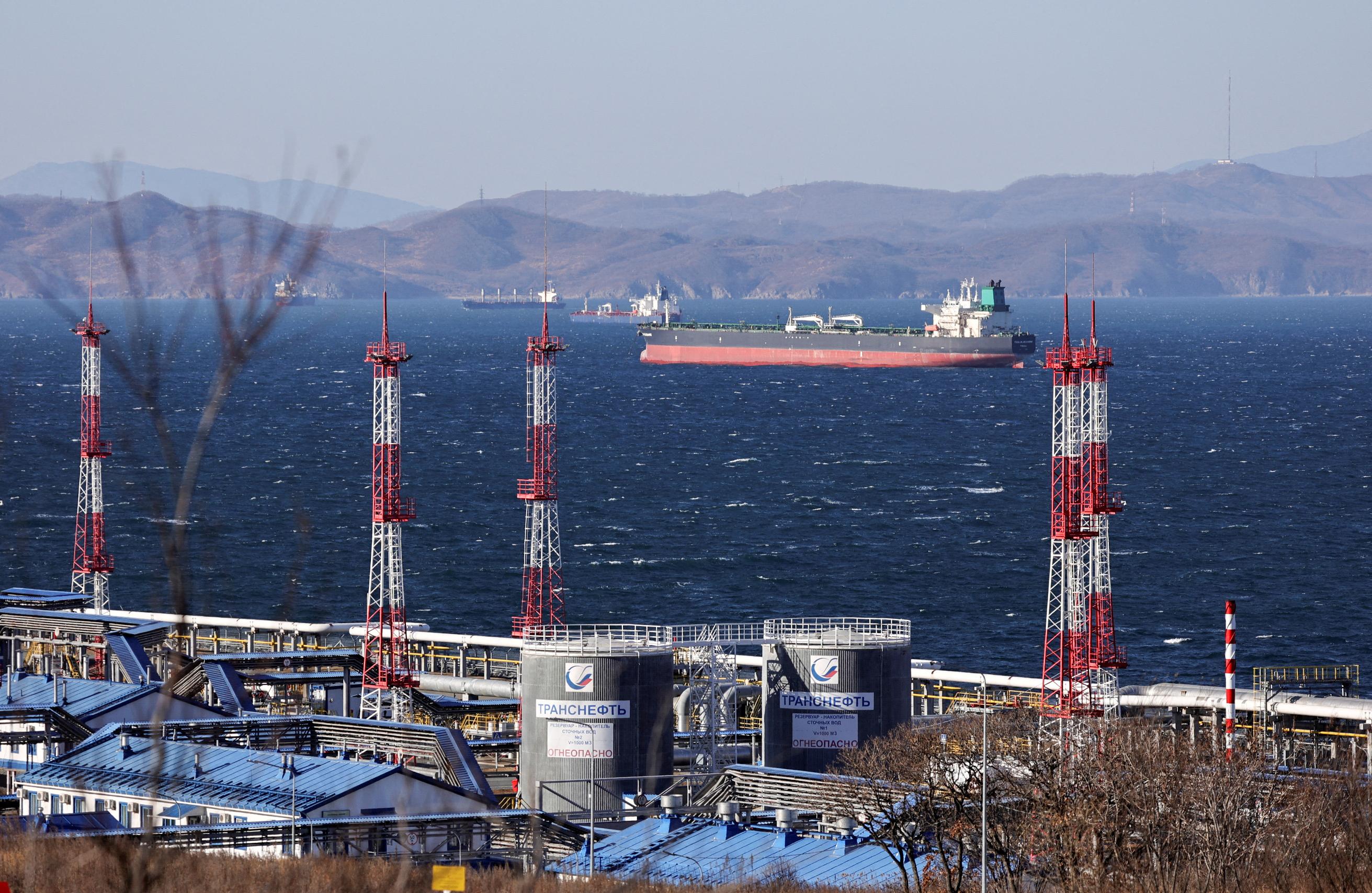
NEW DELHI/SINGAPORE, Feb 28 (Reuters) - Fresh U.S. sanctions on Moscow threaten to dent Russian oil sales to India, the biggest buyer of Russian seaborne crude, and complicate efforts by Indian state refiners to secure annual supply deals, three industry sources familiar with the matter said. Washington on Friday imposed sanctions to mark the second anniversary of Moscow's invasion of Ukraine and retaliate for the death of opposition leader Alexei Navalny. The sanctions target Russia's leading tanker group, Sovcomflot, which Washington accused of being involved in violating the G7's price cap on Russian oil, as well as 14 crude oil tankers tied to Sovcomflot. Sources said Indian refiners are concerned the latest sanctions will create "challenges" in getting vessels for Russian oil and could drive up freight rates. That may narrow the discount for the oil, which is bought from traders and Russian companies on a delivered basis. In addition, Moscow may have to push even more volumes through traders to shield from further sanctions risk, adding to uncertainties, the industry sources said, declining to be named because of the sensitivity of the matter. India rarely bought Russian oil before 2022 due to high freight costs, but refiners in the world's third-largest oil importing nation are now big buyers, benefitting from lower prices, after Europe banned Russian oil imports. Russia emerged as India's top oil supplier in 2023. Through term deals and spot market purchases, the South Asian nation imported about 1.66 million barrels per day of Russian oil in 2023 compared to an average 652,000 bpd in 2022. State refiners Indian Oil Corp (IOC.NS) , opens new tab, Bharat Petroleum Corp (BPCL) (BPCL.NS) , opens new tab and Hindustan Petroleum Corp (HPCL) (HPCL.NS) , opens new tab are in joint talks with Russian major Rosneft for an annual deal to secure a combined volume of up to 400,000 bpd of Russian oil, mainly Urals, for the fiscal year that starts on April 1, sources said. Sources said final volumes under the planned term deals depend on payment terms and discounts offered by Russia. Rosneft has offered a discount of $3-$3.50 per barrel to Dubai prices, two of the sources said, costlier than top refiner Indian Oil's current deal with Rosneft, which ends on March 31, at a discount of $8-$9 to Dubai quotes on a cost and freight basis. Refiners consider the proposed discount to be thin, given the uncertainties brought by sanctions, sources said. Indian state refiners are not seeking supplies of Sokol grade crude under the planned term deal due to payment issues, they added. The three refiners and Rosneft did not respond to requests for comment. An Indian government source said India would continue buying Russian oil only if it is sold below the price cap in a non-sanctioned vessels. The country's oil ministry did not respond to a request for comment. https://www.reuters.com/business/energy/new-sanctions-threaten-russian-oil-sales-india-2024-02-28/
2024-02-28 07:13
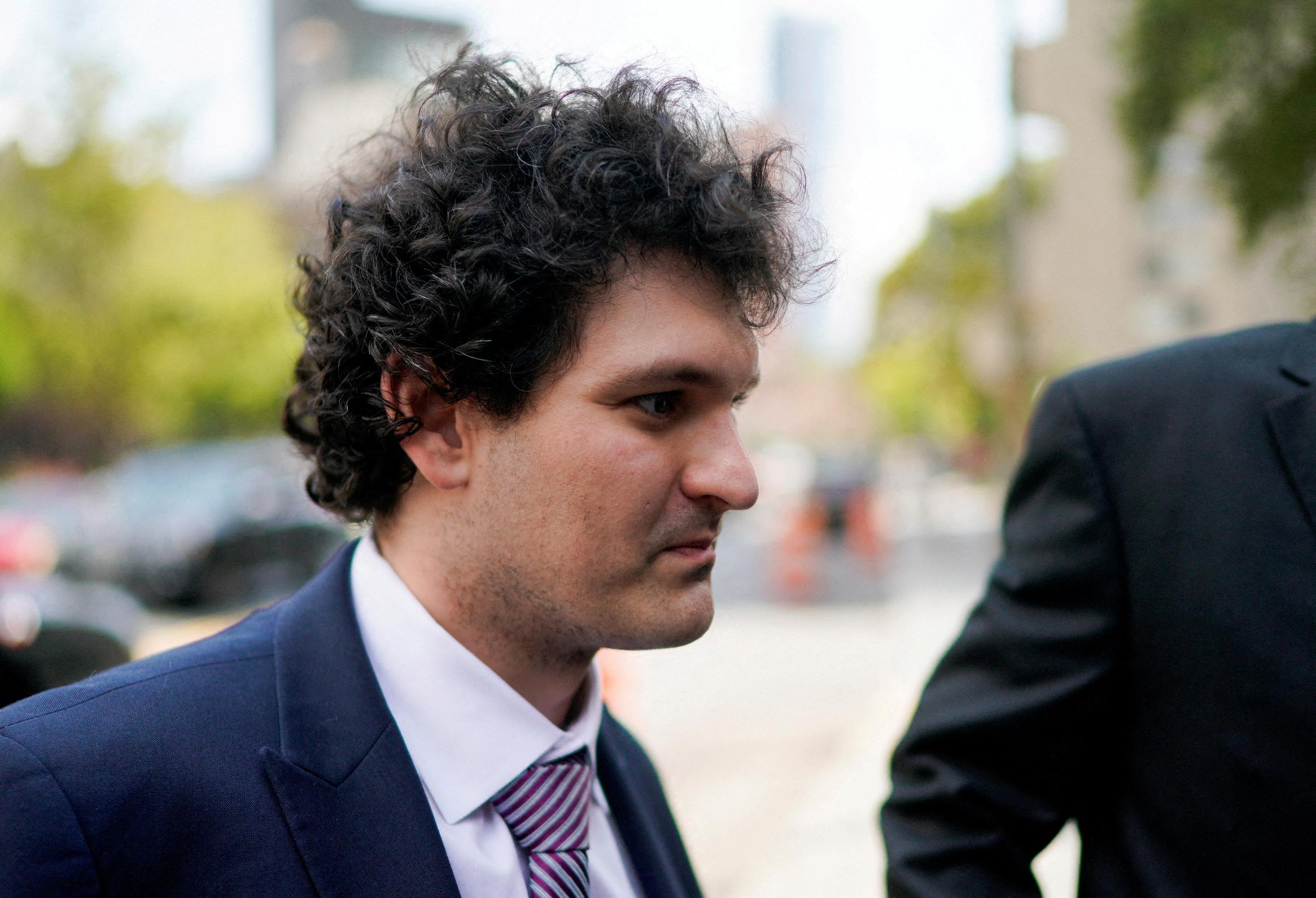
NEW YORK, Feb 28 (Reuters) - Sam Bankman-Fried's lawyer urged a judge on Tuesday to impose a lenient sentence for the FTX founder's conviction for stealing $8 billion from customers of the now-bankrupt cryptocurrency exchange, arguing clients would get most of their funds back. In a sentencing submission, Bankman-Fried's lawyer Marc Mukasey told U.S. District Judge Lewis Kaplan that a guidelines range between 5-1/4 and 6-1/2 years would be an appropriate prison term. That is far less than the maximum sentence of 110 years he faces after a jury found him guilty in November on seven counts of fraud and conspiracy, in what prosecutors have called one of the biggest financial frauds in American history. Bankman-Fried pleaded not guilty and is expected to appeal his conviction and sentence. He acknowledged making mistakes running FTX, but testified at trial that he never intended to steal customer funds. Kaplan is set to sentence the former billionaire, who turns 32 next week, on March 28. The lawyer's submission was accompanied by letters of support from Bankman-Fried's parents, psychiatrist, and others. His parents, the Stanford law professors Joseph Bankman and Barbara Fried, said their son was uninterested in material wealth and worked hard to make customers whole in the month between Bahamas-based FTX's November 2022 collapse and his arrest on fraud charges a month later. "Barbara and I...witnessed firsthand his single-minded focus on getting money back to depositors, long after there was any possibility he would be able to save any of his equity or wealth," Bankman wrote. Mukasey called a 100-year guidelines range calculated by probation officers "barbaric", saying it was based partly on a faulty assertion that FTX's customers lost billions. He pointed to the bankrupt company's recent assertion that it expected to repay all customers in full to back up the argument that Bankman-Fried did not set out to steal. "The conviction does not address whether Sam intended to pay the money back. He did," Mukasey wrote. The probation officers' calculation is not binding on Kaplan. The U.S. Attorney's office in Manhattan is expected to make its own sentencing recommendation by March 15. ELIZABETH HOLMES OR MICHAEL MILKEN? A graduate of the Massachusetts Institute of Technology, Bankman-Fried rode a boom in the values of digital assets such as bitcoin to a net worth Forbes magazine once estimated at $26 billion. His fortune evaporated in November 2022, when FTX declared bankruptcy after a wave of customer withdrawals. At his month-long trial in Manhattan federal court, three former close associates testified that Bankman-Fried directed them to help loot FTX customer funds to plug losses at his Alameda Research hedge fund, even while presenting himself publicly as a responsible steward in the volatile cryptocurrency market. Prosecutors said Bankman-Fried also used customer funds to buy luxury real estate in the Bahamas and to donate to U.S. politicians who might support cryptocurrency-friendly regulations. Bankman-Fried testified that he did not realize how much Alameda owed to FTX until shortly before both failed. Mukasey acknowledged Bankman-Fried's case bore some similarities to that of Elizabeth Holmes, another young entrepreneur who was sentenced to 11 years in prison in 2022 for defrauding investors in her now-defunct blood-testing startup Theranos. But he said Holmes put patients at risk, and suggested Bankman-Fried had more in common with Michael Milken - a Wall Street financier in the 1980s known as the "junk bond king" who was released from prison after serving just two years of an initial 10-year sentence on fraud charges. "Given the same chance, Sam would dedicate his post-prison life to charitable works," Mukasey wrote. MOTHER SAYS SHE WOULD CHANGE PLACES Bankman-Fried has been jailed at Brooklyn's Metropolitan Detention Center since August, when Kaplan revoked his bail after finding that he likely tampered with witnesses. In a letter to Kaplan, Bankman-Fried's psychiatrist George Lerner wrote that he is on the autism spectrum. Mukasey wrote that Bankman-Fried struggles to make eye contact and communicate with others, which could leave him vulnerable in a prison setting. Bankman-Fried's mother wrote that her son had taken responsibility for the errors that led to FTX's collapse and was remorseful, but said she feared for his life in prison. "His father and I face the very real possibility that we will not live long enough to see him freed," Fried wrote. "I would gladly change places with him if I could." https://www.reuters.com/legal/sam-bankman-fried-says-63-78-months-should-guide-sentencing-ftx-fraud-2024-02-28/
2024-02-28 07:09
Technicals indicate spot gold may retest support at $2,025/oz Nine Fed officials due to speak this week PCE inflation data due Thursday Feb 28 (Reuters) - Gold prices steadied on Wednesday, as lower U.S. Treasury yields partially offset a firmer dollar, while traders awaited key inflation data and remarks from Federal Reserve officials this week to gauge when the central bank is likely to cut rates. Spot gold held its ground at $2,030.12 per ounce, as of 0643 GMT. U.S. gold futures fell 0.2% to $2,039.40 per ounce. Benchmark 10-year U.S. Treasury yields slipped to 4.2855% from 4.3150% on Tuesday, while the dollar index (.DXY) , opens new tab rose 0.2%. "The anticipation is that the PCE report, along with the upcoming gross domestic product data, might act as catalysts for gold to break out of its current trading range within the $2,020-$2,050 area," said Luca Santos, analyst, ACY Securities. Data on Tuesday showed U.S. durable goods orders posted the largest drop in nearly four years in January. U.S. consumer confidence also slid in February. Markets now await the U.S. GDP data due at 1330 GMT, while the Federal Reserve's preferred gauge of inflation - the core personal consumption expenditures (PCE) price index - is due on Thursday. Fed Governor Michelle Bowman on Tuesday reinforced the U.S. central bank's patient stance on easing, given upside risks to inflation. At least nine more Fed officials are due to speak this week. Traders are betting on about 79 basis points (bps) of rate cuts for 2024, with a 63% chance of the first quarter-point (25 bps) cut coming in June, according to LSEG's interest rate probability app. Lower interest rates boost the appeal of holding non-yielding bullion. On the technical front, spot gold may retest support at $2,025 an ounce, a break below could be followed by a drop to $2,015, according to Reuters market analyst Wang Tao. Spot platinum fell 0.3% to $885.60 per ounce, while palladium dropped nearly 1% to $927.04, while silver fell 0.1% to $22.40. https://www.reuters.com/markets/commodities/gold-prices-steady-lower-yields-counter-stronger-dollar-2024-02-28/

2024-02-28 07:02
LONDON, Feb 28 (Reuters) - If you believe the options market, the world's major currencies are going nowhere fast this year. A world of rapidly re-routed trade, political standoffs, pivotal elections, sparky inflation and widening growth gaps between G7 nations - it might reasonably be seen as an ideal incubator for volatility in major currencies. And yet, even as central banks hit inflection points in their swinging interest rate hiking campaigns of the past two yeas, implied volatility of the major exchange rates has imploded. Judged by Deutsche Bank's currency VIX index, or CVIX (.DBCVIX) , opens new tab, implied volatility of the world's most traded currency pairs plunged again this month to its lowest level since just before Russia invaded Ukraine two years ago. It's now less than half the levels seen at the peak of the energy shock that followed - a jolt that, in turn, forced monetary policymakers everywhere to scramble to contain the inflationary spur of soaring oil and natural gas prices and which put Europe on the frontline. Other measures tally with that. CME Group's G5 currency volatility index FXVL has subsided to its lowest level since 2021 and within a whisker of pre-pandemic levels. Three-month options prices for the dominant exchange rates of euro/dollar , dollar/yen and sterling/dollar - together accounting for three-quarters of CVIX weightings - are all back to where they were at least as far back as the first quarter of 2022. Sterling "vol" is actually plumbing levels not seen since before COVID-19 hit early in 2020. If you look further out the horizon - one-year measures are higher - but only just. And these have also cratered to about half the peaks of 2022 and nosedived this month too. There is still some "skew" embedded in these prices, with euro and sterling "puts" , - options to sell these against the dollar over the coming year - remaining pricier than equivalent "calls". But even these premiums, or risk reversals, have shrunk dramatically and are as close to zero as they have been since early 2022. At its simplest, all this just reflects a lack of demand to hedge against or speculate on potentially sharp currency swings over the remainder of the year at least - or at least not via options. You could, as many currency sales desks do, argue this represents a screaming buy. But few players are biting. NONPLUSSED OR NONCHALANT? If it were just nonchalance, it would be peculiar. The year ahead includes potentially seismic elections in both the U.S. and Britain and a likely return of Bank of Japan interest rates to positive territory for the first time in eight years. It's tempting, given the historical milestones, to think it may have something to do with "geo-economics". Might a growing "home bias" among investors obviate the need to worry about currency swings? Or maybe there's less urgency among corporate treasurers now frantically "re-shoring" business and re-routing supply chains closer to home. Yet low currency "vol" per se may equally suggest the flipside. It should tempt punters to overseas "carry trades" that seek out higher yielding currencies without fear of being side-swiped by violent exchange rates - or even draw funds from expensive Wall Street stocks to better-valued European or Tokyo bourses without taking an FX hit. All circular arguments, depending on your take. But there's a more familiar culprit in the dock. The dollar is still historically overvalued in most people's eyes - its DXY index (.DXY) , opens new tab remains more than one standard deviation above 20-year averages. And it won't give up the ghost until the Federal Reserve starts easing rates - something U.S. central bank policymakers have spent most of the year pushing back and back. The most surprising aspect - given the yawning gulf in economic performance between a still-booming U.S. and recessionary Europe and Japan - is that the other central banks seem intent on matching the Fed in lockstep. So much so, that markets are now convinced the Fed, European Central Bank and Bank of England will hold off on cutting rates at least until late July and then all take the plunge together in less than two weeks of scheduled meetings - even if the BoE's decision slips to Aug. 1. The upshot is little or no fodder in interest rate differentials for currency markets to feed off. George Saravelos, head of FX research at Deutsche, goes one step further and says that it's less about timing the first cuts and more assessing "terminal rates" of ensuing easing cycles. And he shows that even on that basis it's hard to see any wedge between the Fed and ECB right now. Short-dated interest rate futures out to 2027, for example, put the full extent of the Fed and ECB rate-cut cycles within just 10 basis points of each other - about 170 and 160 basis points of easing, respectively, in total. Using real and nominal 5-year rate spreads as another way to illustrate that, Saravelos questions the setup as unrealistic. Adding that a pickup in U.S. election risk into November is also likely, he reckons markets seem to be underestimating the potential for more dollar strength if anything. "For the dollar to rally more, two things need to happen," the Deutsche strategist told clients. "A more significant reassessment of relative terminal rates between the U.S. and the rest of the world - which we believe is warranted - and a greater pricing of U.S. election risk premium, which remains close to zero." With clarity on all that unlikely until the middle of this year at least - barring a seismic shift in relative economic soundings or unlikely confidence on the outcome of the U.S. election - it seems we're in for months more in the FX doldrums. The opinions expressed here are those of the author, a columnist for Reuters. https://www.reuters.com/markets/currencies/fx-seismograph-quietens-pre-ukraine-invasion-level-mike-dolan-2024-02-28/
2024-02-28 06:44
NEW YORK Feb 28 (Reuters) - A global equities index fell slightly on Wednesday while Treasury yields edged down and the dollar rose against a basket of currencies as investors were wary the day before U.S. inflation data that could influence Federal Reserve policy. January's U.S. personal consumption expenditures price index (PCE), the Fed's preferred inflation measure, is due on Thursday. Economists polled by Reuters poll expect the index to have risen 0.3% on a monthly basis after a 0.2% increase in December. Traders already have dialed back expectations for Fed interest rate cuts after a slew of strong data, including hot consumer price index (CPI) and producer price index (PPI) readings. They expect an easing cycle to kick off in June, compared with the start of 2024 when bets were on March. "We're on hold until we get the PCE print. The market's going to chop around," said Jack Janasiewicz, portfolio manager and lead portfolio strategist at Natixis Investment Managers Solutions. "Between CPI and PPI there's a narrative that inflation is going to be stickier than expected or even potentially having a modest re-acceleration." Janasiewicz noted that U.S. stock indexes remained not far from records reached last week, partly thanks to a better-than-expected fourth-quarter earnings season including a boost from Nvidia (NVDA.O) , opens new tab on optimism about artificial intelligence. "The market's had every chance to sell off but it's holding up pretty well," Janasiewicz said. "It's actually been looking past inflation to an extent because earnings has been better than expected." Other data this week that may shape expectations on Fed policy include a second estimate of gross domestic product, jobless claims and manufacturing activity. MSCI's gauge of stocks across the globe (.MIWD00000PUS) , opens new tab shed 0.33%. On Wall Street the Dow Jones Industrial Average (.DJI) , opens new tab finished down 23.39 points, or 0.06%, at 38,949.02. The S&P 500 (.SPX) , opens new tab dropped 8.42 points, or 0.17%, to 5,069.76 while the Nasdaq Composite (.IXIC) , opens new tab closed down 87.56 points, or 0.55%, at 15,947.74. European stocks dipped as lackluster corporate earnings weighed on sentiment with the pan-European STOXX 600 index (.STOXX) , opens new tab closing down 0.35%. In currencies, the dollar jumped against the euro and yen on Wednesday as investors positioned for U.S. and European inflation data due on Thursday, with month-end portfolio rebalancing also likely to sway market direction. The dollar index , which measures the greenback against a basket of major currencies, rose 0.1% to 103.94. The euro was down 0.08% at $1.0835. Against the Japanese yen , the dollar strengthened 0.12% at 150.69. U.S. Treasuries yields slid across the board with yields on benchmark U.S. 10-year notes falling 4.7 basis points to 4.268%, from 4.315% late on Tuesday, while the 30-year bond yield fell 3.5 basis points to 4.4047% from 4.44%. The 2-year note yield, which typically moves in step with interest rate expectations, fell 6.6 basis points to 4.6457%, from 4.712%. In crypto currencies, bitcoin surged for a fifth day, buoyed by flows into new U.S. spot bitcoin exchange traded products that have driven it up nearly 40% in February, which would mark its largest monthly rally since December 2020. It rose 5.96% at $60,111.00, after hitting its highest level since November 2021. Gold prices ticked up as traders strapped in for economic data and comments from U.S. central bank officials. Spot gold added 0.18% to $2,033.37 an ounce. In commodities, U.S. crude oil settled down while Brent barely gained as traders worried the Fed would be slow to cut rates. Growing U.S. crude stockpiles added pressure. U.S. crude settled down 0.42% at $78.54 per barrel while Brent finished at $83.68, up 0.04% on the day. https://www.reuters.com/markets/global-markets-wrapup-1-2024-02-28/