2024-02-28 05:52
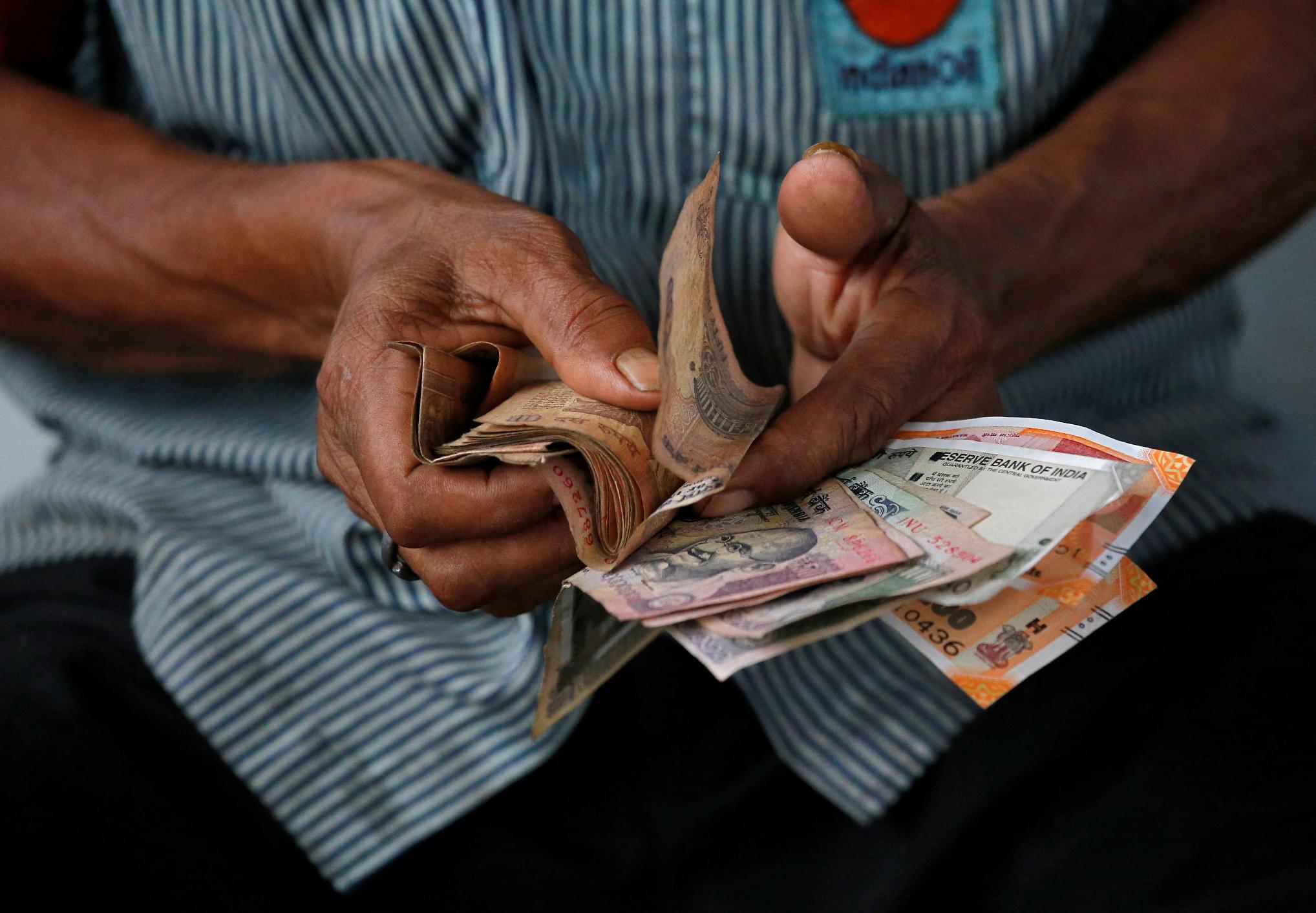
MUMBAI, Feb 28 (Reuters) - The Indian rupee was largely flat on Wednesday as sustained dollar inflows helped ease the pressure from weakness in most Asian currencies. The rupee was at 82.90 against the U.S. dollar as of 11:00 a.m. IST, barely changed from its close of 82.8975 in the previous session. Meanwhile, dollar-rupee forwards premiums extended their decline from the previous session with the 1-year implied yield lower by 3 basis points (bps) at 1.64%, the lowest level in about two and a half months. The 1-year implied yield had dropped 5 bps on Tuesday pressured by strong receiving interest from foreign banks, traders said. "Forward premiums are likely to stay under pressure in the near term ... we could see the 1-year implied yield decline to 1.60% over the next few days," a foreign exchange trader at a state-run bank said. The dollar index inched higher to 103.94 while most Asian currencies weakened, with the Thai baht down 0.4% and leading losses. The rupee's downside appears to be capped around 83.10 with an appreciation bias towards 82.50 remaining on the cards, Amit Pabari, managing director at foreign exchange advisory firm CR Forex said. While data released on Tuesday showed that U.S. durable goods orders in January fell more than expected, markets appeared to be largely unfazed by it. Meanwhile, U.S. Fed officials have continued to push back against expectations of early rate cuts. Loosening financial conditions and additional fiscal stimulus could add to demand and stall progress on inflation, Federal Reserve Governor Michelle Bowman said on Tuesday. Investors are currently pricing in an 81% chance of the Fed keeping rates unchanged in May, up from 65% a week earlier, according to CME's FedWatch tool. https://www.reuters.com/markets/currencies/rupee-flat-far-forward-premiums-extend-decline-2-12-month-low-2024-02-28/
2024-02-28 05:41
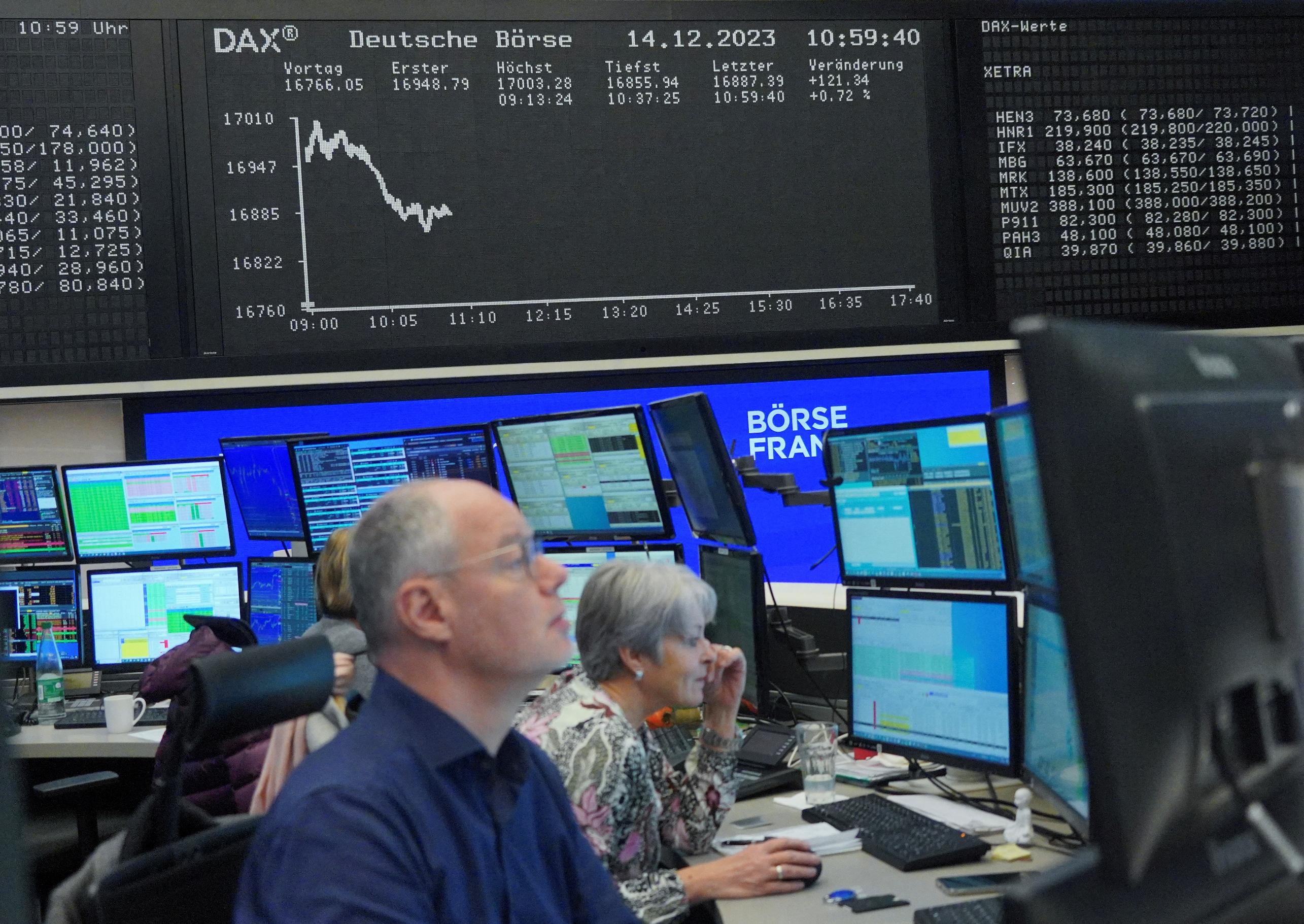
A look at the day ahead in European and global markets from Ankur Banerjee An eerie calm is pervading global markets as traders await new inflation tests later in the week, which will give the next clues on closely watched rate outlooks in the U.S. and Europe. There were pockets of excitement in the Asian day, however, as New Zealand's central bank hinted at a slightly less hawkish stance while South Korean shares kept up this month's relentless rally. The U.S. inflation reading is due on Thursday while the euro zone will weigh in on Friday, and both are expected to dominate market action. Caution will be the driving force in the meantime, with futures indicating a muted open today for European bourses. Traders did get a shock early in the day when the Reserve Bank of New Zealand trimmed its projected policy path for future rates. That was enough to spark a rally in New Zealand bonds, as markets sharply scaled back the risk of further hikes, as well as a 1% dip in the Kiwi to its lowest in nearly two weeks. Asian shares outside Japan (.MIAPJ0000PUS) , opens new tab were a tad lower, while the Nikkei (.N225) , opens new tab was taking a breather after scaling record peaks and closing in on its next target at 40,000. South Korean stocks (.KS11) , opens new tab are on a tear, up 1% on the day and about 6% in February, lifted by the AI frenzy and authorities' moves this week to boost shareholder returns and reduce the "Korea discount". Earnings at Reckitt Benckiser (RKT.L) , opens new tab, maker of Dettol and Lysol cleaning products, are the main event on the corporate diary, with a focus on how consumer demand is faring in the face of rising prices. Two of the world's top consumer goods companies, Danone and Nestle, said last week they would slow the pace of price increases this year, after two years of hikes led many shoppers to seek cheaper alternatives. The M&A chase for Britain's Currys (CURY.L) , opens new tab heats up after the electrical retailer rejected an improved 757 million pound ($959 million) bid from U.S. investor Elliott Advisors. China-based online retailer JD.com (9618.HK) , opens new tab has said it is also considering an offer. Apple (AAPL.O) , opens new tab has cancelled work on its electric car, a source familiar with the matter told Reuters on Tuesday, a decade after the iPhone maker kicked off the project. Key developments that could influence markets on Wednesday: Economic events: Feb euro zone economic, industrial and services sentiment as well as euro zone consumer confidence for Feb Earnings: Reckitt Benckiser (RKT.L) , opens new tab ($1 = 0.7898 pounds) https://www.reuters.com/markets/europe/global-markets-view-europe-2024-02-28/
2024-02-28 02:56
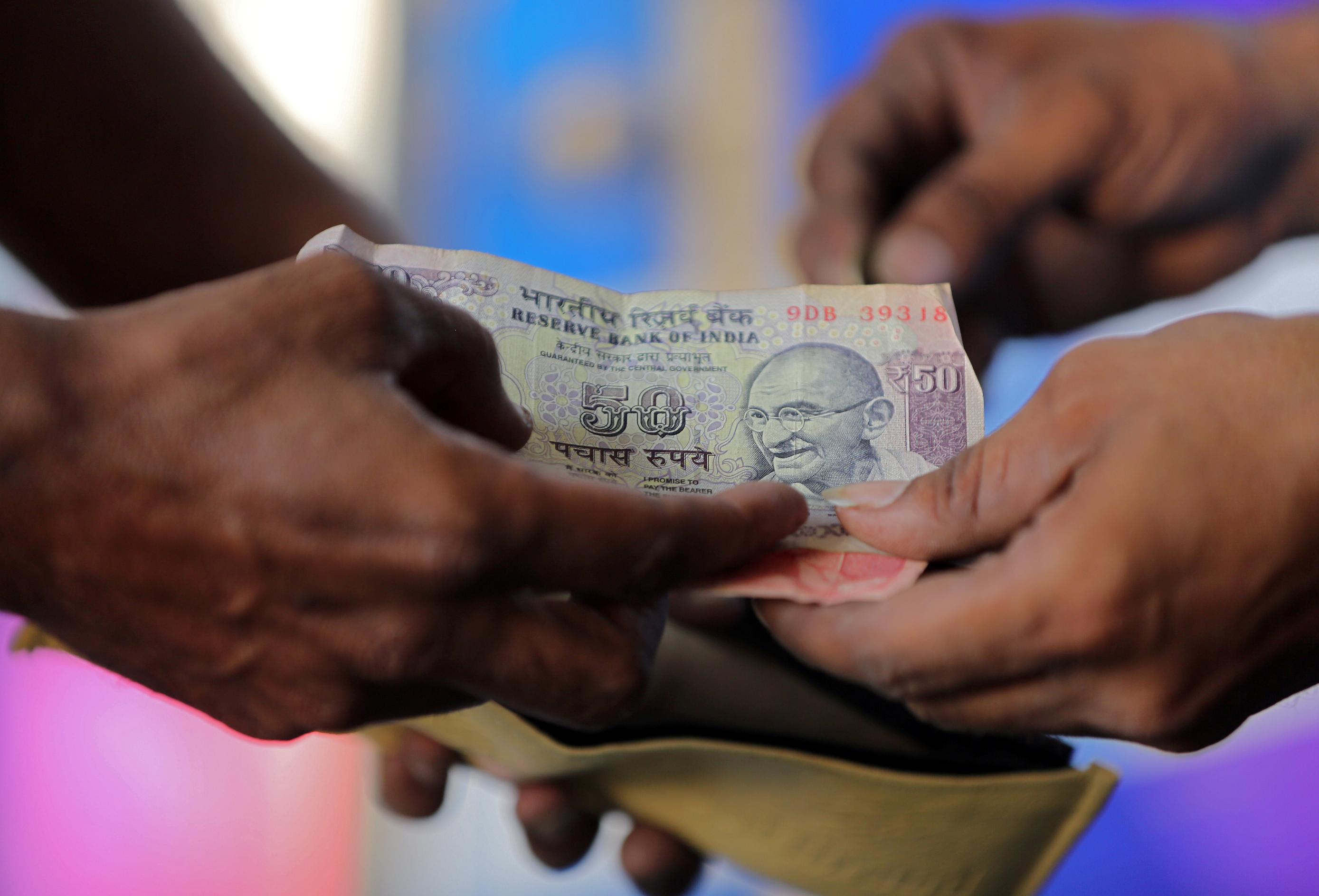
MUMBAI, Feb 28 (Reuters) - The Indian rupee is expected to be under some pressure on Wednesday on the back of losses in Asian peers and following the currency's failure to move past an important resistance. Non-deliverable forwards indicate the rupee will open flat-to-slightly weaker to the U.S. dollar from 82.8975 in the previous session. The domestic currency has not been successful at moving past 82.80-82.85, which traders say is a key level. "Only a dip below this level (for USD/INR) can open up the door for a bigger move," an FX trader at a bank said. "I have been seeing good inflows. It's just that bids (on USD/INR) always seem to appear and we hardly budge." A few traders have pointed to the possibility that the Reserve Bank of India may be mopping up dollars in recent sessions. Asian currencies were mostly lower on Wednesday, while the dollar index was holding just below the 104 handle. Weaker-than-expected U.S. durable and consumer confidence data did not have much of an impact on the dollar. U.S. orders for durable goods fell 6.1% last month, according to data released on Tuesday, exceeding the 4.5% decline forecast by economists polled by Reuters. "This is a messy piece of data and the various core elements and capital shipments figures weren’t soft," ING Bank said in a note. "Tomorrow is the big day for the U.S., with the core PCE (Personal Consumption Expenditures) release." The U.S. core PCE data comes in the wake of higher U.S. inflation data for January, which has prompted investors to dial back the extent and pace of interest rate cuts expected this year. Investors have priced in 80 basis points of rate cuts this year, considerably lower than 175 bps priced in around mid-January. KEY INDICATORS: ** One-month non-deliverable rupee forward at 82.98; onshore one-month forward premium at 7 paisa ** Dollar index marginally higher at 103.87 ** Brent crude futures at $83.38 ** Ten-year U.S. note yield at 4.30% ** As per NSDL data, foreign investors sold $30.9 million of Indian shares on Feb. 26 ** NSDL data shows foreign investors bought $69.1 million of Indian bonds on Feb. 26 https://www.reuters.com/markets/currencies/rupee-may-struggle-repeated-failure-resistance-weak-asian-peers-2024-02-28/
2024-02-28 01:45
WTI futures settle lower, Brent settles marginally higher US crude stockpiles rises amid low refining levels -EIA Fed's Williams: Still ways to go to achieve 2% inflation goal Focus on Thursday's U.S. inflation data HOUSTON, Feb 28 (Reuters) - U.S. crude oil futures settled lower on Wednesday after the Federal Reserve held firm on its decision to hold off cutting interest rates in the near future, while growing U.S. crude stockpiles added further pressure. Brent crude futures settled 3 cents higher, or up 0.04% at $83.68 a barrel. U.S. West Texas Intermediate futures (WTI) settled 33 cents lower, or down 0.42% at $78.54. Both benchmarks had fallen $1 in earlier trading. U.S. crude inventories rose by 4.2 million barrels last week, the Energy Information Administration (EIA) said, surpassing analysts' expectations of 2.74 million. Stockpiles have risen for five consecutive weeks due to unplanned refinery outages following a winter storm in January, along with planned plant turnarounds. "An above forecast rise in U.S. weekly crude inventories has yet again dragged oil futures lower," Gaurav Sharma, an independent analyst, said. U.S. refinery utilization rates edged up 0.9 percentage points last week to 81.5% of total capacity, but were below the 10-year seasonal average. Refineries have operated below 83% utilization rates for the past month, their longest streak in nearly three years. "Refiners are still sidelined to a great degree, and not making a real effort to rapidly come out of the shutdowns experienced in the aftermath of the cold snap," John Kilduff, partner at New York-based Again Capital, said. An ongoing outage at BP's 435,000-barrel-per-day Whiting refinery in Indiana, the largest plant in the Midwest, has also reduced fuel stock levels, Kilduff said. Gasoline stocks, in turn, have drawn down for a fourth straight week to a two-month low at 244.2 million barrels and about 2% below the five-year average for this time of year, the EIA said. "If this trend continues for the next six to eight weeks, we could see gasoline inventories tighten up as we go into the driving season," said Andrew Lipow, president of Lipow Oil Associates in Houston. Reports on Tuesday that the Organization of the Petroleum Exporting Countries and allies led by Russia (OPEC+) will consider extending voluntary oil output cuts into the second quarter likely provided a floor to falling prices. And hostilities in the Middle East may have provided some support, after Hamas called for Palestinians to march to Jerusalem's Al-Aqsa Mosque at the start of Ramadan, raising the stakes in ongoing negotiations for a truce in Gaza, which U.S. President Joe Biden hopes will be in place by then. However, signs that interest rates in the world's largest economy would remain elevated offset potential gains. Federal Reserve Bank of New York President John Williams said that, while inflation pressures have ebbed to a notable degree, he is not yet ready to say the central bank has done all it needs to do to get inflation back to the Fed's 2% target. Williams' comment was in line with Fed Governor Michelle Bowman's signals on Tuesday - that she was in no rush to cut U.S. interest rates, given continuing inflation risks. Higher-for-longer rates could dampen economic growth and suppress demand for oil. Players in the oil market will be looking for clearer direction from Thursday's January U.S. personal consumption expenditures (PCE) price index, the Fed's preferred measure of inflation and a key factor in rate decisions. "In case (Thursday's) U.S. PCE reading comes in above expectations, a temporary top might have been found for oil," Tamas Varga of oil broker PVM said in a note. https://www.reuters.com/business/energy/oil-eases-fed-caution-outweighs-talk-opec-cut-extensions-2024-02-28/

2024-02-28 01:37
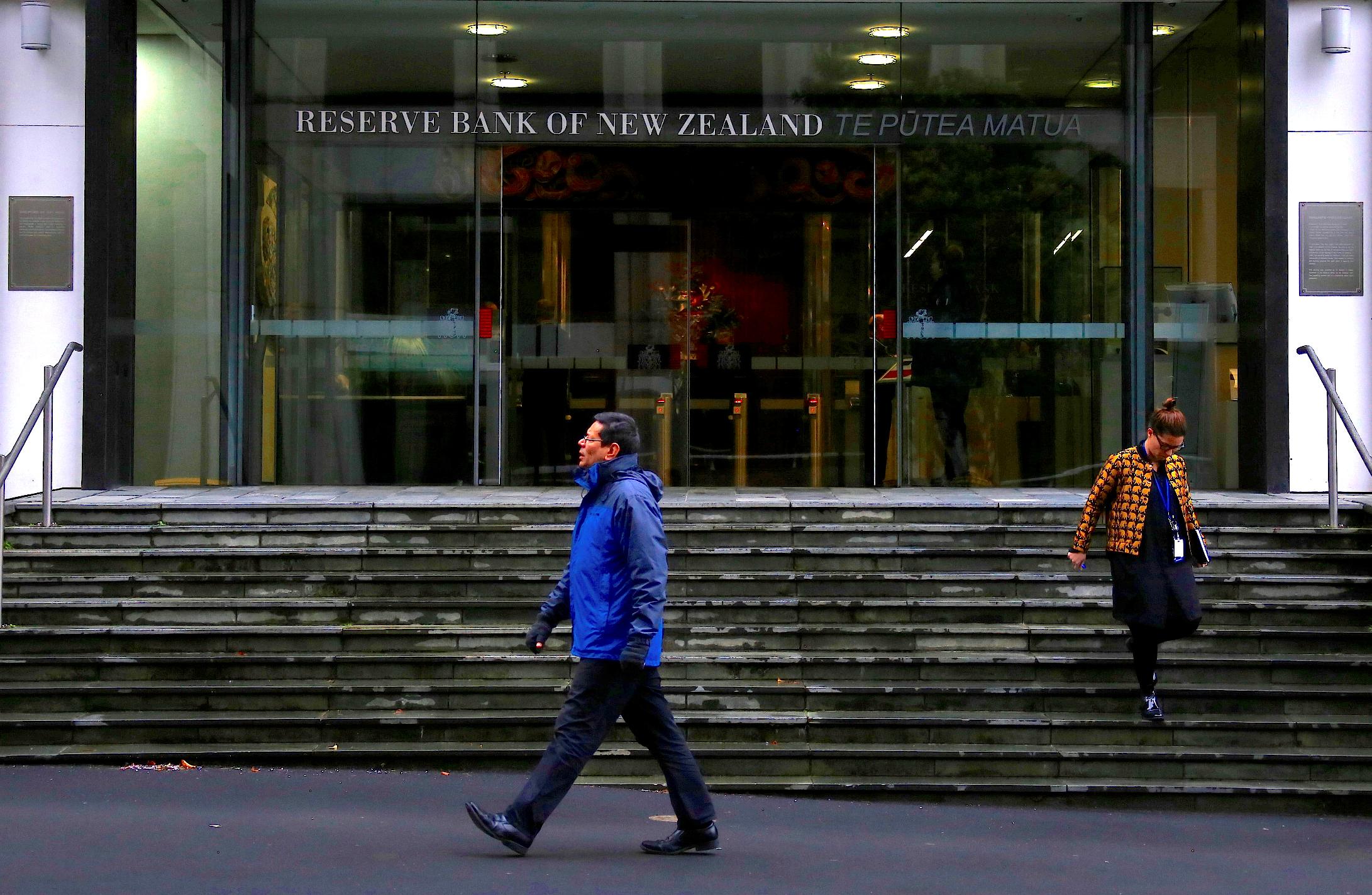
WELLINGTON, Feb 28 (Reuters) - New Zealand's central bank held the cash rate steady at 5.5% on Wednesday and trimmed the forecast peak for rates, catching markets by surprise as policymakers said the risks to the inflation outlook have become more balanced. The Reserve Bank of New Zealand's decision was in line with forecasts but defied some outlying market bets for a rate rise and kept the central bank more in line with global peers, most of whom have called an end to their aggressive hike cycles. The RBNZ's rate forecast track and commentary were also slightly more dovish than some traders had anticipated, triggering a selloff in the New Zealand dollar and a rally in bonds. The bank lowered its forecast cash rate peak to 5.6% from a previous projection of 5.7% - toning down its hawkish stance and effectively reducing the risk of further tightening. "Core inflation and most measures of inflation expectations have declined, and the risks to the inflation outlook have become more balanced," the RBNZ statement said. The market had priced in around a 23% chance of a hike this week. The probability of a move by May more than halved to just 6%, from 47% before the announcement. while two-year swap rates dived to 4.995%, from 5.195% and the kiwi dollar was down almost 0.9% at $0.6112 , breaking support around $0.6152. ASB chief economist Nick Tuffley said that the tone of the statement was not as hawkish as could have been, with the risks now seen as more balanced as opposed to the upward skew noted in November’s statement. “We think over coming months the hurdle for an OCR move in either direction remains high,” he said. RBNZ Governor Adrian Orr told a press conference that while the committee had discussed a hike, "there was very strong consensus that the official cash rate right now is sufficient". In a Reuters poll of 28 economists all but one had forecast the RBNZ would leave the cash rate at a 15-year high for the fourth consecutive meeting. GLOBAL POLICY IMPULSE A front-runner in withdrawing pandemic-era stimulus among its peers, the RBNZ has battled to curb inflation, lifting rates by 525 basis points since October 2021 in the most aggressive tightening since the official cash rate was introduced in 1999. The rate hikes have sharply slowed the economy with recent data showing that it was tracking below previous central bank expectations. Global central banks, led by the Federal Reserve, have recently pushed back against market expectations for an early start to rate cuts given persistent inflationary pressures. The RBNZ's statement was broadly in tune with global concerns about prices, reiterating that it needs to keep policy restrictive for a while in order to bring inflation below the top-end of its 1% to 3% target band. The central bank noted a global impulse towards holding policy tighter for longer. "A more general risk to global growth is that central banks may need to keep policy interest rates at restrictive levels for longer than currently reflected by financial market pricing, to ensure that inflation targets are met," the RBNZ statement said. The central bank also flagged geopolitical risks and a slowdown in China's economy as challenges for policy. New Zealand's annual inflation has come off in recent months and is currently running at 4.7% with expectations that it will return to its target band in the second half of this year. ANZ, which was alone in predicting a hike this week, said in a note the overall tone of the statement was not nearly as hawkish as they had anticipated. "The evidence threshold for the RBNZ committee is clearly much higher than we appreciated, so we have reluctantly parked further hikes back in the risk basket, pushing cuts out to mid-2025," ANZ chief economist Sharon Zollner said. https://www.reuters.com/markets/rates-bonds/nz-central-bank-holds-rates-says-policy-needs-stay-tight-while-2024-02-28/
2024-02-28 01:02
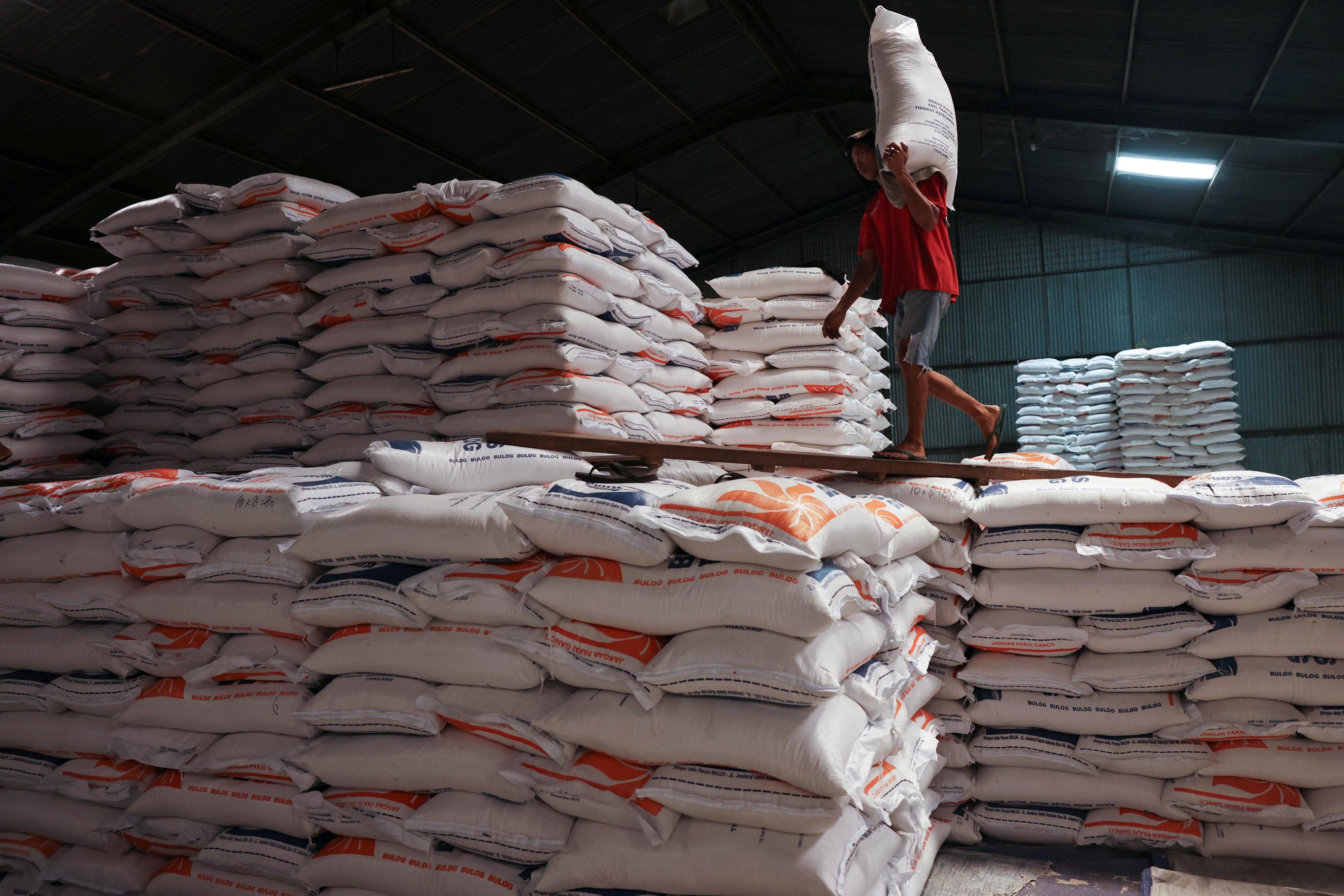
Rice deficit at 1.63 mln tons in Jan, 1.15 mln tons in Feb Price has risen more than 16% since last year Indonesia allocates 3.6 mln tons of import quotas for 2024 JAKARTA, Feb 28 (Reuters) - In the afternoon sun, dozens of Indonesians, mostly women, gather in a snaking queue to buy bags of subsidised rice, their arms poking through a metal gate to grab tickets assuring them a spot to make a purchase. The temporary bazaar run by state food procurement agency Bulog in the city of Bekasi, 25 km (15.5 miles) east of the capital Jakarta highlights the struggle of Indonesia's less fortunate to buy the grain that is at the centre of nearly every meal in Southeast Asia's most populous country. A staple for most of Indonesia's 270 million people, the price of rice has climbed more than 16% since last year, as the El Nino weather phenomenon has cut rainfall across large parts of Asia in 2023, reducing cereal output and sparking food inflation pressure for some of the world's most price-sensitive consumers. Masih, a 55-year-old coconut vendor, was among those jostling to buy a 5 kg (11 pound) bag of rice. "It's better to queue up and have the rice at home. It is expensive in the market, so better to get it cheap here," she told Reuters. Rice prices at the bazaar are capped at 10,600 rupiah (67.8 U.S. cents) per kg, compared with 14,300 rupiah in the open market. Bulog limits sales to 10 kg per customer to prevent hoarding. The government typically steps in to sell food products at subsidised prices when prices climb. Bulog has distributed more than 300,000 metric tons of rice from government reserves since January through hundreds of bazaars around the country, following reports of scarcity at other retail outlets. The National Food Agency, which oversees Bulog, said it conducted 429 of the makeshift bazaars in January and plans 315 more by the end of February. This year in Indonesia, planting delays and lack of rains have delayed the peak harvest by a month, with farm ministry data showing a rice supply deficit of 1.63 million metric tons in January and 1.15 million in February. Indonesia, which imported record volumes of rice in 2023, has allocated an additional import quota of 1.6 million metric tons, on top of 2 million tons previously approved for 2024, potentially triggering further gains in global prices, which are near 16-year highs. ($1 = 15,630.0000 rupiah) https://www.reuters.com/world/asia-pacific/sprawling-queues-subsidised-rice-highlight-plight-indonesias-poor-2024-02-28/